Table of Contents:
- Service Robot Market Growth Trends: Aging Population, Impact of Pandemics, and Technological Advances
- Why is anthropomorphism important for robots?
- Technology Developments: Learning and Combined Intelligence
- Overcoming Fear of Robots: A Step Toward a New Life
- Car Manufacturers and Their Steps into the Future of Robotics
- Tesla Bot: The Path to a Space Colony on Mars?

Internet marketing: 4 professions for 1 free course
Learn moreGrowth trends in the service robot market: an aging population, the impact of pandemics and technological advances
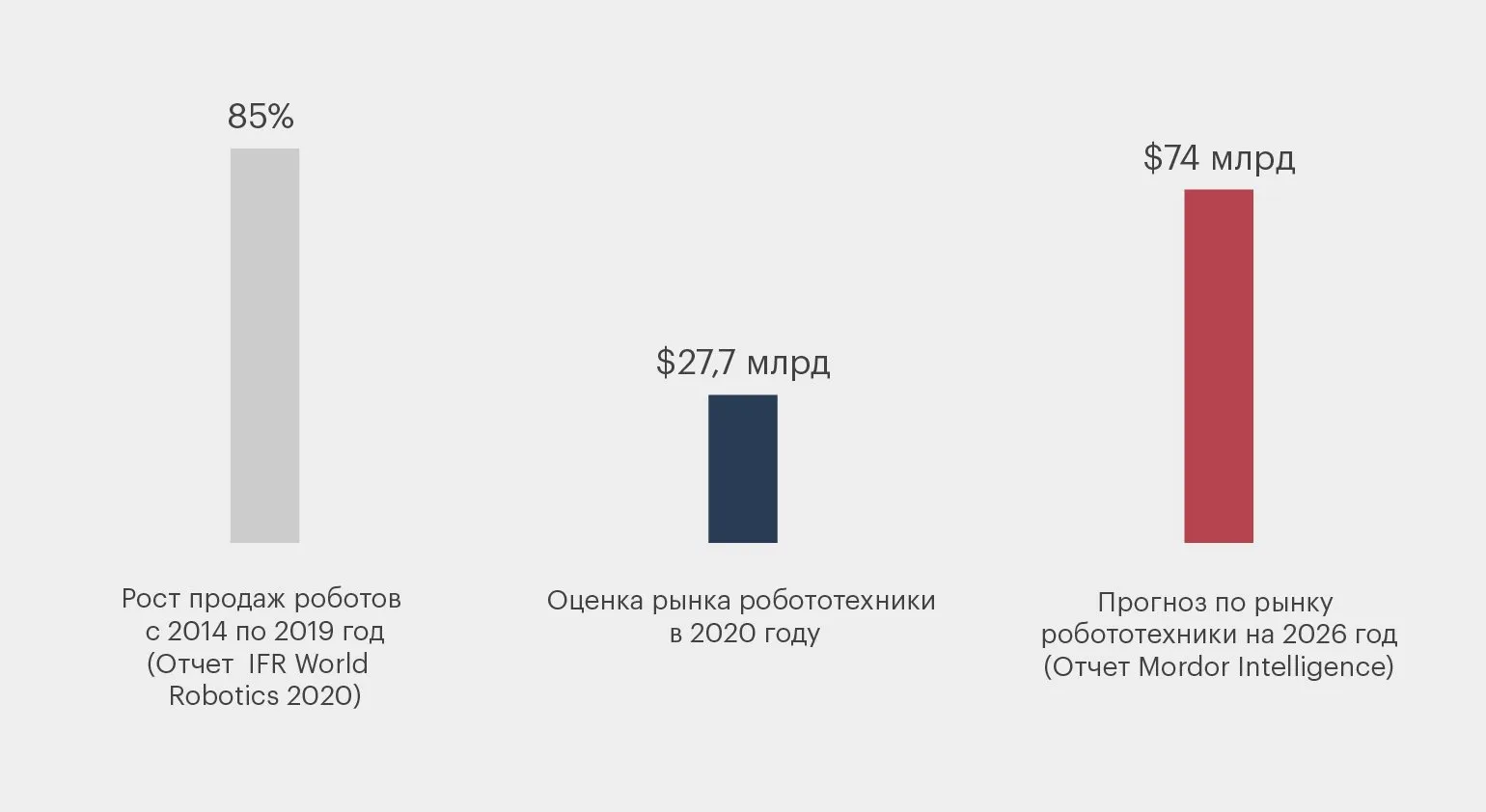
According to the International Federation of Robotics (IFR), the robotics market is divided into two key segments: industrial and service robots. Service robots cover a wide range of devices, from simple vacuum cleaners to more complex systems such as humanoids. These humanoids, while possessing human-like features, are capable of performing a variety of social functions, making them important players in service and user interaction. As technology advances, service robots are becoming increasingly relevant, opening up new opportunities for their application in various fields.
The Sber analytical agency predicts that the humanoid robot sector will develop more actively than the industrial one. This is due to the fact that the industrial solutions market has reached a certain maturity, while interest in anthropomorphic mechanisms is just beginning to form. The increasing demand for humanoid robots opens up new opportunities for innovation and the application of technologies in various fields. It is important to note that the development of this sector can lead to significant changes in approaches to automation and human interaction with robots.
Bill Gates in his article "A Robot in Every Home" emphasizes that the development of robotics is following a similar path as the development of the computer industry three decades ago. He points out that technologies that once seemed like distant dreams are now becoming a part of everyday life. Robots are already beginning to impact various areas, from households to industry, and their role will only increase. The implementation of robotic solutions contributes to increased efficiency and improved quality of life, heralding new horizons for the future.
According to ReportsnReports, the humanoid robot market will reach $3.9 billion by 2023, ten times more than in 2017, when it was $320 million. At the same time, the global service robotics market of various types could grow to $18.2 billion by 2024. This growth is due to the increasing demand for automation and improved robotics technologies, which opens up new business opportunities and improves the quality of life of users.
Key factors driving the growth of the service robots market include the following aspects. Firstly, the increasing demand for process automation in various industries, such as healthcare, hospitality, and logistics, is driving technological development. Secondly, advances in artificial intelligence and machine learning are enabling the creation of smarter and more adaptive robots. Thirdly, population growth and an aging society are creating a need for effective solutions for elderly care and household assistance. It is also worth noting the decreasing cost of technology and components, which is making service robots more accessible to a wider range of users. Ultimately, the combination of these factors is creating favorable conditions for the expansion of the service robot market and their increased adoption in everyday life.
- Aging population;
- COVID-19 pandemic;
- Technological development.
Population aging is a significant challenge, causing a labor shortage that is difficult to fill through migration. According to the UN, by 2050, the number of people over 65 will increase by 181%, accounting for 16% of the world's population. Interest in service robots is expected to be greatest in the Asia-Pacific region, Europe, and North America, where the percentage of elderly people is highest. As societies age, the adoption of innovative technologies such as service robots is becoming essential to providing high-quality care for the elderly and supporting their active lives.
The COVID-19 pandemic, according to Research and Markets, has accelerated interest in service robots, as their use reduces the level of contact between people. Social robots, capable of maintaining conversations and displaying emotions, can be a significant help to people experiencing loneliness during isolation. These technologies not only contribute to improved quality of life but also help cope with the psychological effects of the pandemic by providing emotional support and interaction.
Modern technologies have significantly accelerated the process of creating humanoid robots, making it more economical. The startup Agility Robotics, for example, developed a walking robot named Digit in a short period of time, whereas previous similar developments took decades. This achievement demonstrates how new approaches and innovations in robotics make it possible to create highly functional humanoid machines with minimal time and resources.
In Russia, there are more than 70 organizations specializing in the production of humanoid robots. According to the International Federation of Robotics (IFR), in 2019, Russia ranked second in the world for the number of robots, behind only the United States. One of the leading players in this field is Promobot, the largest manufacturer of service robots in Europe, with revenue of 192 million rubles in 2019. Also noteworthy are the achievements of Alex Robotics and Neurobotics, which developed the Pushkin robot, as well as NPO Androidnaya Tekhnika, whose developments, including the FEDOR robot, have already been successfully used in space missions. These achievements highlight Russia's significant progress in robotics and its potential on the international stage.
Why is anthropomorphism important for robots?
Modern society takes human needs into account, making humanoid robots important in various fields. Experts emphasize that a form close to humankind allows robots to effectively interact with the environment and people. Humanoid robots find application in medicine, education, service, and other fields that require a high degree of interaction and adaptation. Their ability to understand and respond to human emotions opens up new opportunities for improving quality of life and increasing work efficiency in various fields.
Anthropomorphic robots have the ability to perform tasks that require physical adaptation to ordinary conditions. They can, for example, navigate stairs and use familiar tools. Evgeny Dudorov, PhD in engineering and developer of the FEDOR robot, emphasizes that such devices can be integrated into everyday life without the need for significant reworking of existing infrastructure. This makes anthropomorphic robots particularly promising for use in a variety of fields, from home use to industrial processes, where they can facilitate routine tasks and improve work efficiency. Humanoid robots do not require modifications to existing environments. For example, if a non-anthropomorphic robot were to perform tasks in a hospital, this would require refurbishing the premises: removing thresholds, replacing floors and doors. Humanoids, on the other hand, can move freely within existing interiors, making their use more cost-effective and convenient. Thanks to their form and functionality, humanoid robots can be integrated into work processes without significant modifications, reducing the cost of adapting the space. Humanoid robots are widely used in construction and logistics, where their capabilities allow them to perform hazardous tasks and interact with people. These robots can, for example, retrieve tools from workers and efficiently perform various tasks, significantly improving safety and productivity. Their ability to operate in challenging conditions makes humanoid robots indispensable assistants in modern industrial processes.
Specialized robots will continue to be in demand. Dmitry Suvorov, former head of the Lexy intelligent assistant project, emphasizes that at the moment there is no need to create anthropomorphic robots to perform routine tasks such as cleaning or mowing lawns. This indicates that not all tasks require a humanoid solution, and specialized robots can cope with certain functions more effectively.
Androids with realistic faces will be in high demand in areas where emotional interaction is key. D. Hanson notes that an accurate imitation of human appearance is critical for social robots performing the roles of caregivers or consultants. Such robots are capable of establishing trusting relationships with users, which significantly increases their efficiency and improves the quality of service. The realistic faces of androids contribute to a more natural and comfortable interaction, making them indispensable in healthcare, service, and support.
Imagine a scene where two robots accept documents at a multifunctional center. One is a simple box with a screen that calmly reports an error. Meanwhile, the other robot, with a human face, smiles warmly and actively interacts with customers. Users, interacting with humanoids, resolve their problems faster and more effectively. Interacting with friendly robots creates a more positive experience, which contributes to improved service and increased customer satisfaction. The use of such technologies in multifunctional centers not only optimizes work processes but also makes interactions more human.
Ekaterina Alekseeva, PhD in Philosophy and author of the article "Is an Artificial Teacher Possible?", emphasizes that the anthropomorphism and "friendliness" of robots play a key role in their functionality. These characteristics make it possible to combine various aspects of interaction with users in a single device, which significantly increases its ease of use. Importantly, such qualities not only improve the user experience but also contribute to more effective learning and communication between humans and machines.
Technology Development: Learning and Combined Intelligence
Currently, artificial intelligence (AI) is mainly represented by weak AI, which manifests itself in the functions of modern household devices and self-driving cars. Although technologies such as autonomous driving have made significant advances, concepts such as self-awareness and the ability to make moral choices remain inaccessible. The development of AI continues to generate interest and discussion, but true breakthroughs in self-aware intelligence are yet to come. Humanoid robots continue to demonstrate significant progress. They possess the ability to navigate, effectively avoid obstacles, interact with various objects, and engage in conversations comparable to modern chatbots. Despite these advances, technologies in this field are still at the forefront of scientific capabilities and require further research and improvement. The development of humanoid robots opens up new horizons for application in various fields, including healthcare, education, and services, making this topic particularly relevant for the future of technology.
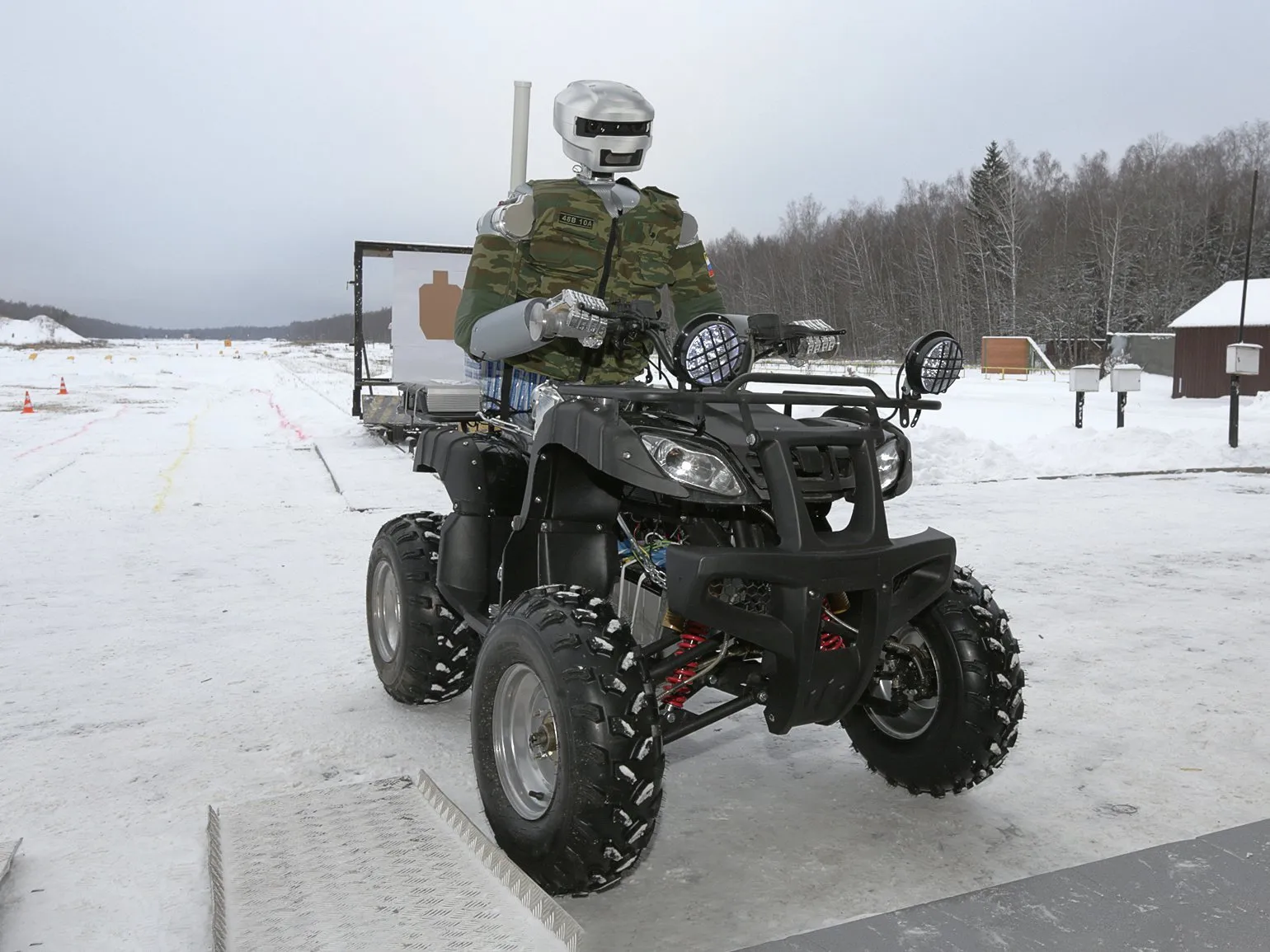
Roman Dushkin, Director of Science and Technology at the Artificial Intelligence Agency, highlights the Moravec Paradox. This paradox states that despite our advances in creating computers capable of performing complex mathematical calculations, we face difficulties programming robots to perform simple human actions. This demonstrates a significant gap between our advances in computing power and the limitations in developing algorithms that can imitate basic motor functions and human behavior.
Dushkin emphasizes that developing a robot that can independently approach a door, recognize it, find the handle, open it, and enter is an extremely complex task. Successfully solving such problems requires the use of advanced technologies, including machine learning. This approach allows robots to adapt to various conditions and facilitates the process of interacting with the environment. The introduction of innovative methods into robotics opens new horizons for the creation of autonomous systems capable of effectively performing complex actions in the real world.
Evgeny Dudorov, developer of the anthropomorphic robot FEDOR, emphasizes that such a robot cannot be programmed to perform a specific task. Instead, it must be trained. This underscores the importance of learning in the development of robotics, where flexibility and adaptability are key factors for successfully performing various actions.
Reinforcement learning is currently widely used in various fields. This approach allows robots to learn by interacting with the environment and receiving feedback on their actions. For example, if a robot is told that colliding with obstacles is a negative outcome, it will adapt its actions, trying to avoid such situations. Thus, learning occurs through trial and error, which facilitates more effective adaptation to changing environmental conditions.
New-generation robots, including Tesla Bot, may exhibit clumsiness at first. However, they will use knowledge from the mistakes of their predecessors, which significantly reduces training time and increases operational efficiency. This will ensure faster adoption and adaptation of technologies across various fields.
Alex Robotics founder Alexander Ambartsumov presents the concept of combined intelligence for robots. When faced with unsolvable tasks, such as opening a door, an operator can wirelessly connect to the robot and take control. Over time, thanks to the accumulation of training data, the amount of human intervention will decrease, allowing robots to handle various tasks more effectively. This innovative system not only increases the functionality of robots but also promotes their independent learning and development, ultimately making technologies more accessible and effective for use in various fields.
From the customer's perspective, the robot demonstrates high efficiency and reliability. It is capable of handling various tasks without delay and does not become confused in complex situations. The customer cannot always determine whether the robot is currently being controlled by artificial intelligence or by an operator, highlighting the high level of technology integration. Ambartsumov notes that such uncertainty creates additional trust in robotic systems.
Overcoming the Fear of Robots: A Step Toward a New Life
For over four decades, researchers have been studying the phenomenon known as the uncanny valley. This phenomenon occurs when robots become too similar to humans, causing us to feel anxious and uncomfortable. The uncanny valley effect can negatively impact societal acceptance of technology. A simple solution is to avoid creating robots with human-like facial features for tasks that don't require them, such as trucking or construction work. Simplifying robot design in such cases can contribute to better acceptance of technology and its wider adoption across various industries.
Interacting with people requires a high degree of robot realism. As the saying goes, "a smile says a thousand words," and that is why the importance of visual and emotional aspects in robot design cannot be overstated. Overcoming the uncanny valley, the phenomenon whereby seemingly lifelike robots evoke discomfort in people, is a pressing challenge. The hope for successfully addressing this problem lies with the younger generation, who are capable of creating technologies that facilitate more natural interactions between people and robots.
Research conducted by psychologists from the University of Michigan involved 240 children aged 3 to 18. The results showed that children under 9 do not experience fear of robots, even if they are human-like. This suggests that fear of machines is influenced by cultural factors and ages. Thus, children's perceptions of technology and robots are influenced by their environment and life experiences, opening new horizons for understanding human-machine interaction.
Children growing up surrounded by humanoid robots are unlikely to perceive them as a threat. According to research, modern technology, including robots, could change future generations' attitudes toward automated devices. This may help overcome existing fears of robots by fostering a more positive perception and understanding of their role in everyday life. Over time, interactions with robots may become a natural part of life, leading to a more harmonious coexistence between humans and technology.
Roman Dushkin, Director of Science and Technology at the Artificial Intelligence Agency, expressed his opinion of the robot Sophia: "Personally, I have unpleasant feelings about her. However, our children will probably perceive her as a normal phenomenon." The issue of perception of artificial intelligence technologies is becoming increasingly relevant, especially in the context of their integration into everyday life. It is important to consider how new technologies impact our society and how they are perceived by different generations.
Evgeny Dudorov, a technology expert, emphasizes the concept of "novelty shock" developed by Alvin Toffler. This phenomenon is a defensive psychological reaction that can lead to a rejection of new technologies. Dudorov notes that over the past ten years, the level of novelty shock has significantly decreased thanks to the continuous flow of information about robots and other innovations. This indicates an increased willingness on the part of society to embrace and adapt to new technological solutions, which, in turn, opens new horizons for the integration of advanced technologies into everyday life.
The perception of robots is directly linked to the level of technological development. David Hanson emphasizes that previous problems with robot acceptance arose from their insufficient implementation. Improvements in robotics technology make it possible to create more realistic and socially adaptable machines, which, in turn, positively impacts public perception of robots. The evolution of robot design and functionality makes them more understandable and acceptable to people, which facilitates deeper interaction between humans and machines.
Evgeny Magid, head of the Laboratory of Intelligent Robotic Systems at Kazan Federal University, concludes: "When robots become an integral part of our daily lives and their operating principles become clear, the fear of the unknown will disappear, and technologies will begin to bring significant benefits to humanity." It is important to understand that the development of robotics opens new horizons and opportunities, contributing to an improvement in the quality of life and the optimization of processes in various fields.
Automakers and their steps into the future of robotics
In recent years, leading automakers have significantly increased investments in robotics, seeking to expand their capabilities and improve production processes. In 2020, Hyundai acquired a stake in Boston Dynamics, a company renowned for its innovative developments in the field of robotics. Honda, with over 30 years of experience, continues to develop androids. Companies such as GM and Toyota are also actively researching this area, seeking to incorporate new technologies into their products. Ford, meanwhile, is testing an autonomous delivery project using robotic solutions, highlighting the growing interest of automakers in automation and robotics technologies.
Tesla has joined a new trend, which highlights Elon Musk's desire to expand the company's horizons beyond the traditional production of electric cars. Dmitry Suvorov, developer of the Lexy assistant, emphasizes that this step is important for maintaining Tesla's competitiveness in a rapidly changing market. Actively implementing innovative technologies and new solutions will help the company not only maintain its position but also strengthen its leadership in the industry.
Elon Musk emphasizes that Tesla must become more than just an electric vehicle manufacturer. The company is committed to creating innovative technologies and a sustainable future, focusing on clean transportation and renewable energy. Tesla is focused on developing infrastructure that supports electric mobility and implementing advanced solutions that improve quality of life.
According to artificial intelligence expert Roman Dushkin, automakers' interest in developing humanoid robots is a logical step. Automakers have accumulated significant experience in creating autonomous systems, such as cruise control and automated parking. Furthermore, they are already actively working with industrial robots on assembly lines. This allows them to effectively integrate new technologies and develop innovative solutions that can improve the functionality and safety of both vehicles and robotic systems. In the future, this field can be expected to rapidly develop, opening new horizons in automation and human-machine interaction.
Manufacturers of self-driving cars have unique expertise in developing control systems for real-world objects. Dushkin emphasizes that these companies are the ones capable of overcoming Moravec's paradox. With rapidly advancing technology and increasing data volumes, controlling autonomous vehicles requires innovative approaches and in-depth research. This knowledge enables the creation of safer and more efficient systems that can adapt to complex environmental conditions and make decisions in real time.
Tesla has the opportunity to achieve significant advances in robotics by applying its developments in neural networks and the Dojo supercomputer, which was presented at Tesla AI Day. Dojo is designed to train artificial intelligence using video data obtained from electric vehicle cameras. The integration of these technologies will allow Tesla not only to improve its cars, but also to advance the creation of autonomous robots, which will open new horizons in the field of automation and technology.
Company specialists claim that Dojo will be one of the most effective tools for training neural networks in the world. Thanks to its capabilities, Dojo is ideal for both autopilot systems and humanoid robots. It is able to quickly and accurately process images of the environment, which allows for informed decisions in real time. This makes Dojo an indispensable solution for the development of modern autonomous systems, where the speed and accuracy of data processing are critical.
Tesla Bot: The Path to a Space Colony on Mars?
The Tesla Bot prototype, although impressive, may not live up to the declared characteristics presented at the initial presentation. In the early stages, the main goal is to demonstrate the capabilities of the technology and collect data. Artificial intelligence expert Roman Dushkin emphasizes that Elon Musk will likely begin by sending several robots for testing in various conditions: one in a metropolis, another in a rural area, and a third in mountainous regions. This will allow them to evaluate the Tesla Bot's effectiveness and adaptability in different environments and identify its strengths and weaknesses.
Dushkin emphasizes Elon Musk's ambitious plans to use the Tesla Bot to colonize Mars. This project is under active development at SpaceX, a company that has already established itself as a leader in rocket technology. Musk aims to create autonomous robots capable of performing various tasks on the Red Planet, which is an important step toward creating a sustainable colony. Innovations in robotics and space technology can significantly accelerate the process of colonizing Mars and open new horizons for humanity.
Elon Musk is a man who constantly strives to achieve his goals, notes Dushkin. His ambitious projects, including the construction of tunnels and the Hyperloop concept, are seen as important steps towards establishing bases on Mars. These initiatives highlight his vision of a future in which humanity can colonize other planets and use innovative technologies to solve transportation problems on Earth.
Space radiation poses a serious threat to the health of future colonists on Mars. In this regard, Tesla Bot can have a significant impact, from establishing bases on the red planet to preparing the infrastructure for comfortable human habitation. Using Tesla Bots, we can minimize the risks associated with radiation and ensure the efficient construction and maintenance of colonies, which is an important step towards the successful colonization of Mars.
In the future, Tesla Bots may become physical representatives of humanity. The development of Neuralink technology, led by Elon Musk, may make it possible to transfer human consciousness into a robotic body. This combined device will be significantly better adapted to the conditions of spaceflight than our biological body. This concept is closely related to the philosophy of transhumanism, which suggests using technology to enhance human capabilities and overcome the limitations of nature.
As technology advances, Elon Musk aims to send his robots into space, starting from low-Earth orbit, then heading to the Moon, and ultimately to Mars. This ambitious plan raises serious ethical questions, especially in the context of transferring human consciousness to androids. This could lead to a reconsideration of our understanding of identity and human nature. Such experiments could not only expand our horizons in space exploration but also force society to reflect on the nature of consciousness and what it means to be human in the age of artificial intelligence.
Ideas that once seemed like science fiction could become reality in the next ten years. Elon Musk has repeatedly surprised the world with his innovative projects that significantly change our perception of the future. We will follow his future initiatives and developments with interest.
Additional materials about artificial intelligence, robotics, and Elon Musk are available at Skillbox Media. Here you will find relevant articles, videos, and research that will help you gain a deeper understanding of these topics and their impact on the modern world. Skillbox Media offers unique content that covers the latest advances in AI and robotics and analyzes Elon Musk's contribution to the development of technology. Explore materials to enhance your awareness and professional skills in these in-demand fields.
- Why Boston Dynamics is changing owners and not becoming profitable
- Citizen Sophia and other amazing robots by David Hanson
- An NVIDIA engineer talks about the future of neural networks, self-driving cars, and salaries in IT
- They returned to a completely different Earth, which has almost lost interest in space
- Money, space, Elon Musk: how to make money in space
- 5 IT projects by Elon Musk that changed our world
- How Elon Musk motivates employees to do the impossible
- Digital immortality. How a Russian startup creates digital twins
Starting a business in 2025: 5 steps to success
Want to start a business in Russia? Find out 5 key steps for a successful start! Read the article.
Find out more