Contents:

4 professions in internet marketing: free Mini-course!
Learn moreThe rise of cryptocurrency crime: current data for 2021
Cryptocurrency crimes saw a sharp increase of 79% in 2021. Criminals were able to earn a record $14 billion, which is almost double the $7.8 billion recorded in 2020. By the end of 2021, criminals had more than $10 billion in their crypto wallets, indicating a growing interest in illicit operations in the crypto industry. This trend highlights the need for stronger security measures and regulation in the cryptocurrency space to protect users and prevent further financial losses.
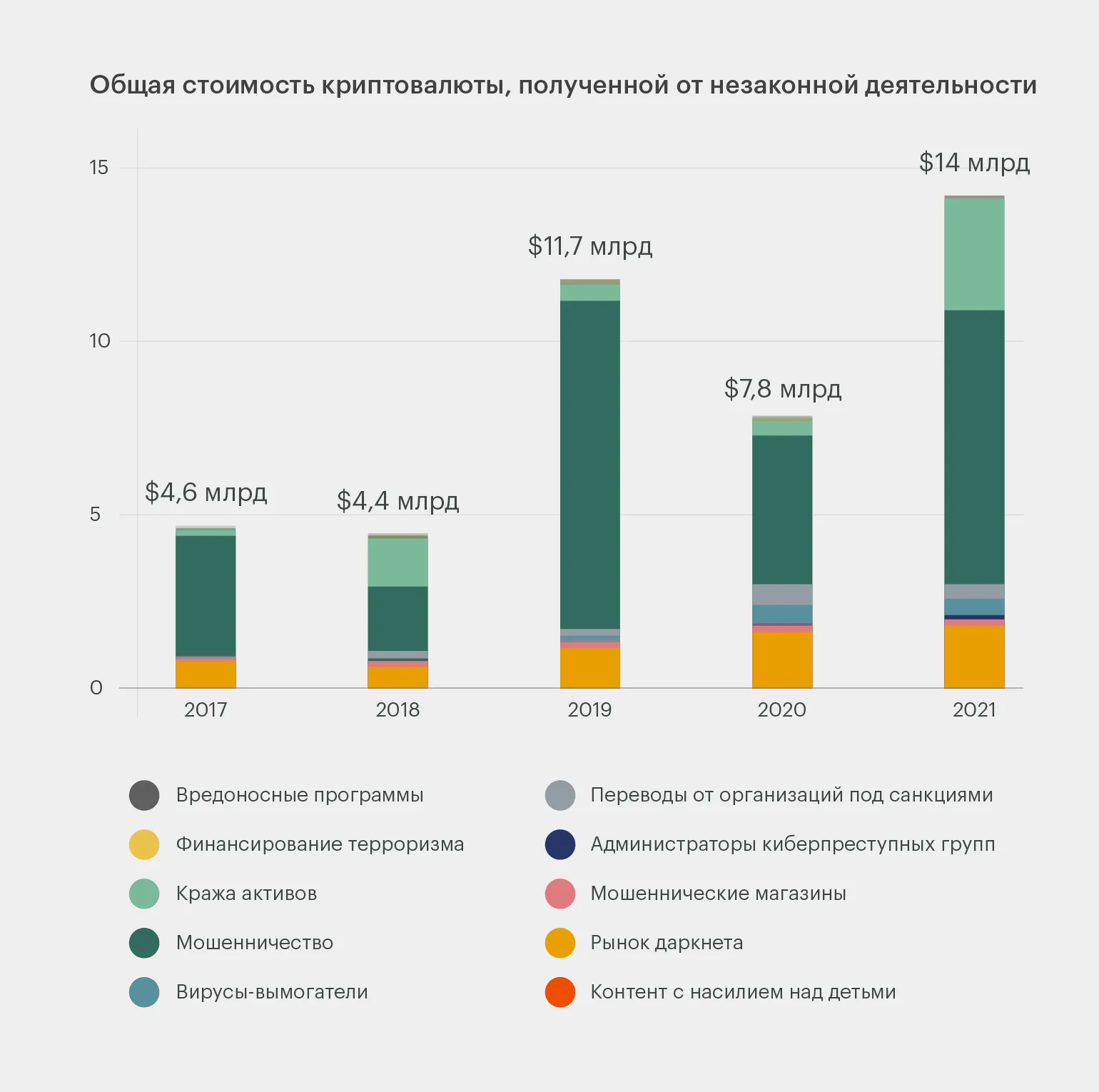
Given the rapid growth of the cryptocurrency market, the total volume The volume of transactions in 2021 amounted to $15.8 trillion, a 576% increase from $2.3 trillion in 2020. Despite a 79% increase in illicit transactions, this number remains relatively small compared to the overall growth of cryptocurrency transactions. Cryptocurrencies continue to attract the attention of investors and users, fueling the continued growth of the sector.
The $14 billion in illicit activity in cryptocurrency poses a significant challenge to the entire ecosystem. Experts at Chainalysis point out that the criminal use of cryptocurrency poses significant barriers to the further adoption of this technology. Protecting legitimate users and ensuring security in the digital space requires immediate action by governments, including the implementation of strict regulatory measures. Taking such measures will not only help reduce crime but also increase trust in cryptocurrencies, which in turn will facilitate their wider adoption in society.
On January 21, 2021, the Bank of Russia presented the report "Cryptocurrencies: Trends, Risks, Measures," in which it recommended banning the issuance, mining, and use of cryptocurrencies in the country. This decision was made to minimize the risks associated with cryptocurrency fraud. In response, the Russian Ministry of Finance developed a concept for regulating the cryptocurrency market and submitted it to the government for consideration. Regulation of cryptocurrencies is essential for protecting investors and ensuring the stability of the financial system.
Despite the significant increase in illegal activity in the cryptocurrency space, it is important to consider the rapid development of this market and the need for its regulation. Effective control measures will help ensure the secure and sustainable functioning of the cryptocurrency space in the future. Regulation can not only help protect investors but also create a more transparent and secure ecosystem for all participants.
Security Concerns in DeFi: What's the Cause?
Recent studies show that the number of crimes related to fraud and asset theft in the cryptocurrency space has increased significantly. Decentralized finance (DeFi), a set of applications and services powered by blockchain technology, stands out in particular. While DeFi offers users independence from regulators and opens up new financial horizons, it also faces significant security challenges. The rise in attacks and fraudulent schemes threatens user trust in these innovative financial instruments. Ensuring security and asset protection are becoming a top priority for market participants to maintain DeFi's appeal to investors and users.
Chainalysis analysts report that the share of laundered funds through decentralized finance (DeFi) platforms increased to 17% in 2021, up from 2% in 2020. This increase is due to the fact that DeFi systems, despite their promise of decentralization and innovative solutions, create favorable conditions for fraud. This development highlights the need for increased security and oversight in the DeFi space to minimize risks and protect users from potential financial losses.
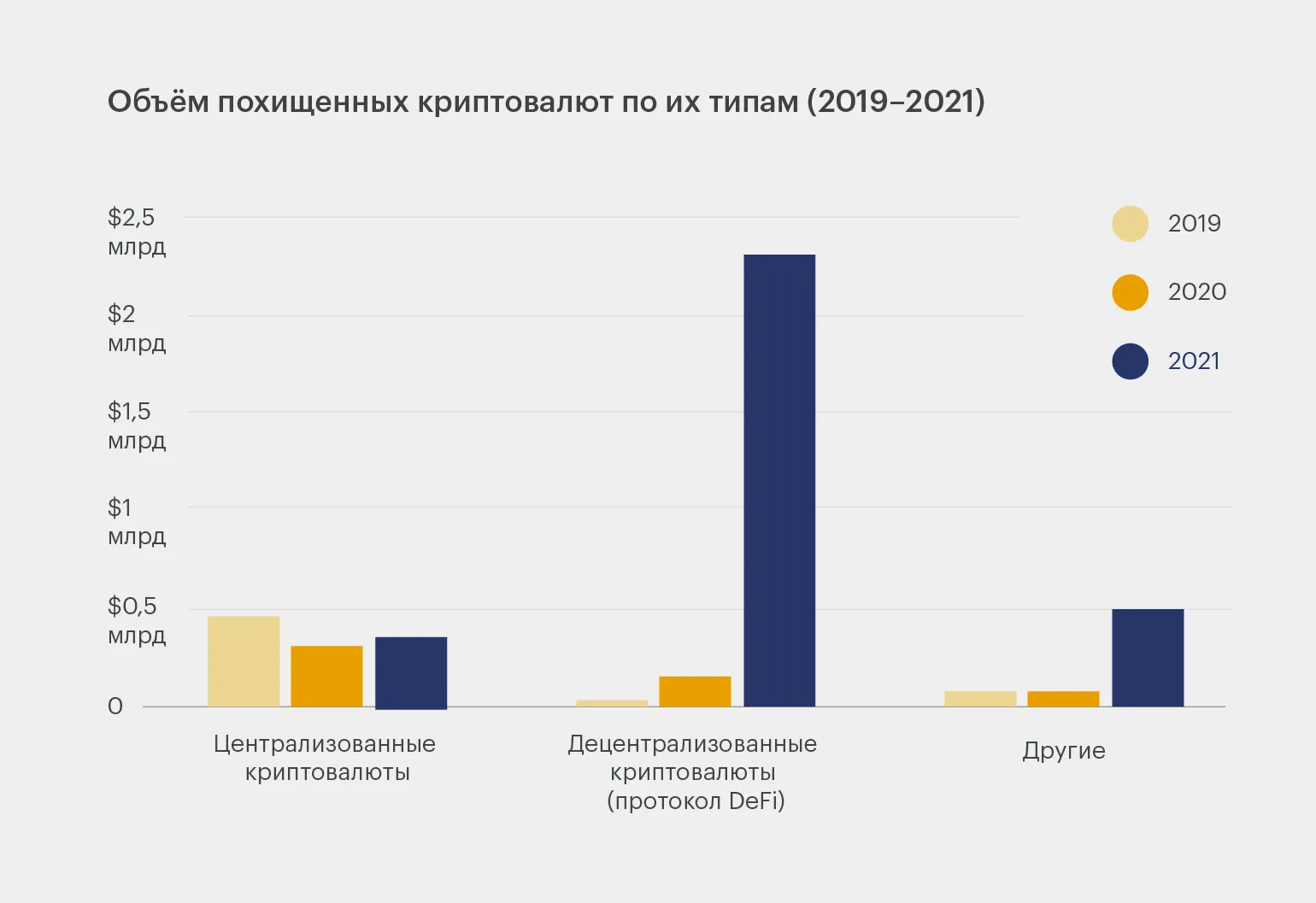
Criminal interest in decentralized financial projects (DeFi) is explained not only by a significant increase in transaction volume, which grew in 2021 10 times, but also because creating and listing a new token on an exchange has become significantly easier, often without the need for mandatory code audits. This has led to over 72% of all crypto asset thefts, representing approximately $2.2 billion, being linked to DeFi projects. Given the growing popularity of DeFi and the lack of user protection, it's important to pay attention to security issues and the risks associated with investing in such projects. Igor Fitz, an information security expert at Infosystems Jet, notes that many decentralized finance (DeFi) developers are not sufficiently focused on the security of their applications. He points out that the rush to quickly enter the market often leads to code errors that hackers can exploit to expose vulnerabilities in projects. This highlights the importance of integrating security measures throughout the development of DeFi applications to protect users and prevent potential data breaches or financial losses. Experts believe that decentralized platforms may increase the number of cyberattacks. User anonymity makes users more vulnerable, allowing attackers to operate with impunity. While this anonymity is initially perceived as an advantage, it actually poses serious security risks for the entire system. It's important to recognize that without proper security measures, decentralized platforms can become targets for fraudulent activity and other threats, requiring users and developers to pay increased attention to security issues. Many of the technological foundations of decentralized finance (DeFi) are being borrowed from one project to another, which facilitates the spread of similar vulnerabilities. Hackers don't have to develop new attack methods; they can exploit existing system weaknesses. This highlights the importance of a careful approach to security in the DeFi space, where technology duplication can pose a serious threat to users and investors.
Cryptocurrency Crime: The Russian Context
In recent years, there has been a significant increase in ransomware-related cybercrime, which generates enormous profits for attackers. According to Chainalysis, scammers earned over $692 million in 2021, highlighting the seriousness of the problem. The average ransom amount reached a record high of $118,000, up significantly from $88,000 in 2020 and $25,000 in 2019. The increase in these figures indicates a growing cybersecurity threat and the need to take measures to protect information.
Research confirms that approximately 74% of all ransomware-related cyberattack revenue was generated by hackers with ties to Russia. These attackers stole over $400 million in cryptocurrency. These facts highlight the importance of understanding Russia's influence in global cyberspace and the need to strengthen cybersecurity to protect against such threats.
Experts believe that Russia is home to highly skilled hackers due to the country's high level of IT education and limited economic opportunities. These factors contribute to many talented professionals seeking opportunities to apply their skills in cyberspace. As a result, Russian hackers are becoming known worldwide for their involvement in various cyberattacks and cybercrimes.
Chainalysis establishes links between hacker groups and Russia based on various criteria, including the geographic origin of IP addresses used for cyberattacks and the analysis of transactions on cryptocurrency networks. Additionally, the methods used by hackers to conceal their actions and create money laundering schemes are examined, which may also indicate their possible ties to Russia. This data helps in the detection and investigation of cybercrimes, as well as in the development of strategies to counter cyberthreats.
- avoiding attacks on companies from the CIS countries;
- use of the Russian language on forums;
- ties to the Evil Corp group, also known as "Russian hackers".
According to Chainalysis, the Evil Corp group controls approximately 10% of all ransomware revenue. US and UK intelligence agencies have associated this group with Russia for years. In 2019, Russian citizen Maxim Yakubets was charged with embezzling funds from bank accounts and is believed to be managing Evil Corp. This information highlights the importance of international cooperation in combating cybercrime and the need to improve security in the financial technology sector.
Expert Timur Sadykov, head of the Artificial Intelligence Laboratory at the Plekhanov Russian University of Economics, cautions against jumping to conclusions based on such data. He notes that accusations against Russian hackers are often unsubstantiated, and many reports merely reflect the current political situation. It's important to approach such claims critically and recognize that they may be part of an information war.
Sadykov notes that the term "Russian hackers" is vague and requires clarification. It's unclear who exactly is meant by this term: Russian citizens, people from the former Soviet Union, or simply people who speak Russian. These ambiguities often go unanswered, leading to confusion in discussions of cybercrime. It is important to clearly define the target audience and context to avoid misinterpretations and stereotypes associated with this term.
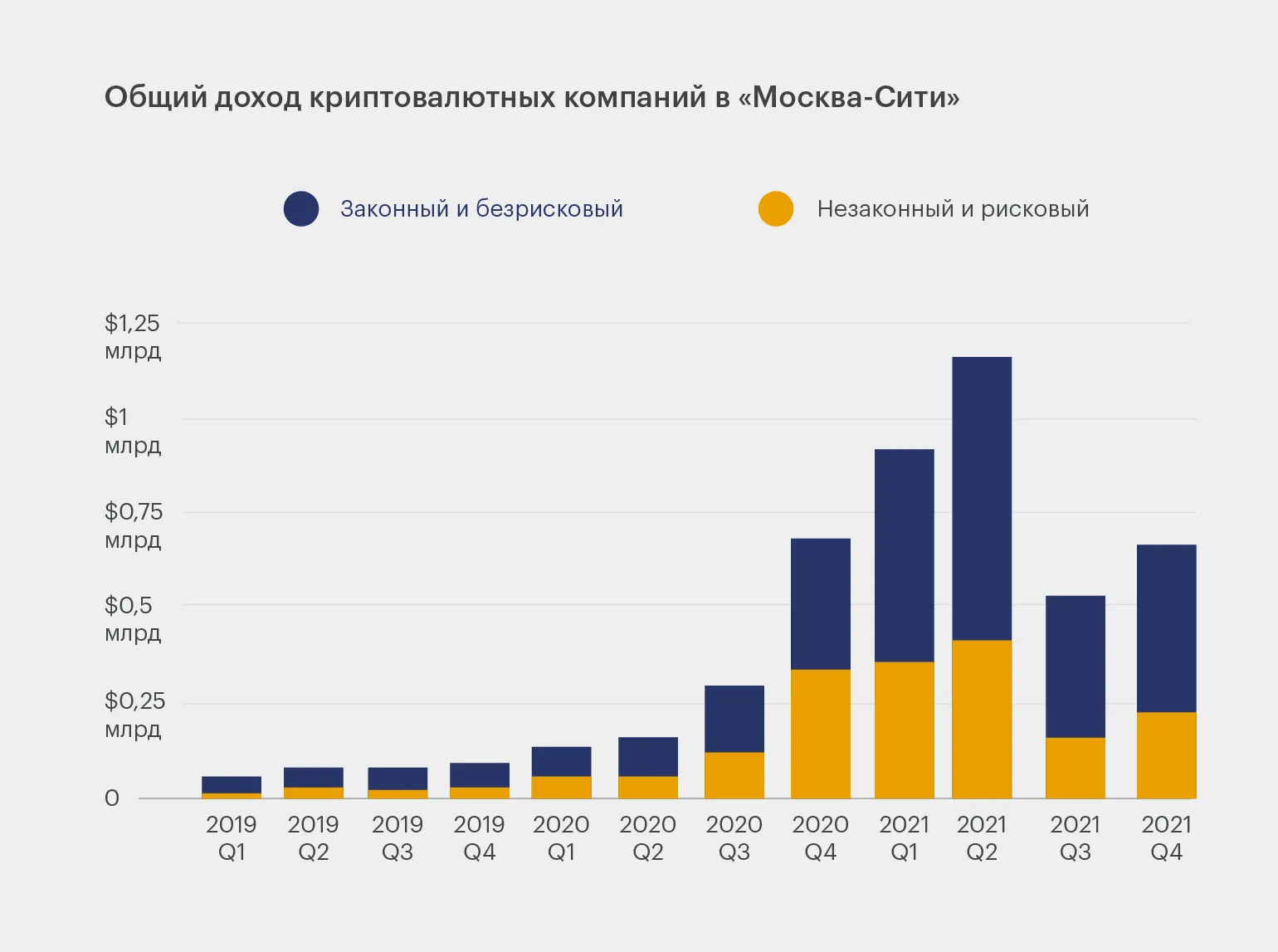
The report notes that Numerous cryptocurrency companies are active in the Moscow City complex, which experts believe may be involved in laundering millions of dollars. Approximately half of these companies are located in the Federation Tower. Among the companies mentioned are Bitzlato, Garantex, Eggchange, Buy-bitcoin, Tetchange, Cashbank, and Suex, which are alleged to have been linked to money laundering between 2019 and 2021. This information highlights the importance of monitoring and regulating the activities of cryptocurrency companies in Russia to prevent financial crime and ensure user safety.
It is estimated that between 29% and 48% of all financial receipts into the accounts of these companies may be of illicit origin. The second quarter of 2021 showed that these companies' combined cryptocurrency revenue amounted to nearly $1.2 billion. This highlights the importance of oversight and regulation in the cryptocurrency space to minimize the risks associated with money laundering and other illicit activities.
NFT Impact on the Market: Growth and Risks
2021 has been a year of significant growth for non-fungible tokens (NFTs), as confirmed by research from Chainalysis. According to analysts, NFT transaction volume reached a record $44.2 billion, significantly exceeding the mere $106 million in 2020. This sharp rise has also attracted the attention of scammers, raising concerns in the community and highlighting the need for improved security in the NFT space.
Analysis by Chainalysis found that 110 fictitious traders were able to earn approximately $8.9 million through NFT manipulation. These figures only reflect trades completed using Ethereum and Wrapped Ethereum, highlighting the vulnerability of the current market. This situation highlights the need for greater transparency and security to protect investors and users from NFT scams.
Wash trading is a term used by Chainalysis to describe schemes in which the same seller transacts with their own assets. Fraudsters resell NFTs between their own wallets, creating a false sense of liquidity and artificially inflating the tokens' value. This allows them to subsequently sell the NFTs to victims at an inflated price, misleading them about the asset's true value.
According to experts, the $8.9 million raised from wash trading likely came from NFT sales targeted at unsuspecting buyers. These buyers believed the value of the NFTs they were purchasing was increasing due to active trading among collectors. Wash trading creates a false impression of demand and can significantly distort the digital asset market.
The growing popularity of NFTs creates new opportunities for investors and collectors, but also carries significant risks. It is important for market participants to be attentive and well-informed about the potential threats associated with investing in non-fungible tokens. Thorough research and understanding of the NFT market will help minimize potential losses and make more informed decisions.
For up-to-date information on the state of the NFT market and the risks associated with it, it is recommended to review the latest reports on platforms such as CoinDesk and The Block. These resources provide in-depth analysis of current trends, price changes, and factors influencing the NFT market. Reviewing these reports will help you develop a more complete understanding of the prospects and potential risks of investing in NFTs.
Terrorist Financing: Cryptocurrency and Russia's Hydra
According to research by Chainalysis, by the end of 2021, a number of terrorist organizations began actively using cryptocurrency to finance their activities. For example, the al-Qaeda group, banned in Russia, organized fundraising through Telegram and Facebook platforms in 2019 and 2020. In 2021, the military wing of Hamas, known as Izz ad-Din al-Qassam, managed to raise over $100,000 in cryptocurrency. The use of digital currencies by terrorist groups highlights the need for stronger control and monitoring in the field of cryptofinance to prevent their use for illicit purposes.
Experts emphasize the importance of using modern technologies, including blockchain analysis, as a means of countering terrorism. These tools provide governments with effective opportunities to track financial flows and block the financing of terrorist organizations. Blockchain-based data analysis helps identify suspicious transactions and strengthen security systems, significantly reducing the risks associated with terrorist activity. The implementation of such technologies is becoming a critical step in the fight against international terrorism and ensuring public safety. Research shows that countries using blockchain analytics technologies have been able to seize millions of dollars in cryptocurrency. This underscores the effectiveness of such methods in the fight against terrorist financing and money laundering. The implementation of blockchain analytics not only helps identify suspicious transactions but also tracks financial flows, significantly strengthening the security of financial systems. In 2021, the darknet set a record for revenue, reaching $2.1 billion in cryptocurrency. Notably, approximately $300 million was generated from the sale of stolen logins and credit cards, while $1.8 billion went to drug dealers. These statistics highlight the growing activity of illicit trade online, raising concerns among law enforcement agencies and cybersecurity specialists. With the continued advancement of technology and the anonymity offered by the darknet, it is important to prioritize measures to protect personal data and combat cybercrime.
Darknet sites offering illegal services are increasingly resembling standard marketplaces. According to Maxim Kharaska, Head of Industry Expertise at Softline, this transformation makes them more accessible and understandable to users. Increasing similarity to traditional platforms simplifies navigation and finding the necessary goods and services, which may lead to an increase in the number of users of these resources.
The darknet is becoming increasingly popular, and users are able to easily find and use a variety of services, including hacking and cybercrime. Simplified access and a wide range of offerings are attracting more new users. This phenomenon is causing concern among cybersecurity specialists, as increased interest in illegal services may lead to an increase in criminal activity online. It's important to be aware of the risks associated with using the darknet and understand the potential consequences, including legal issues and the leakage of personal information.
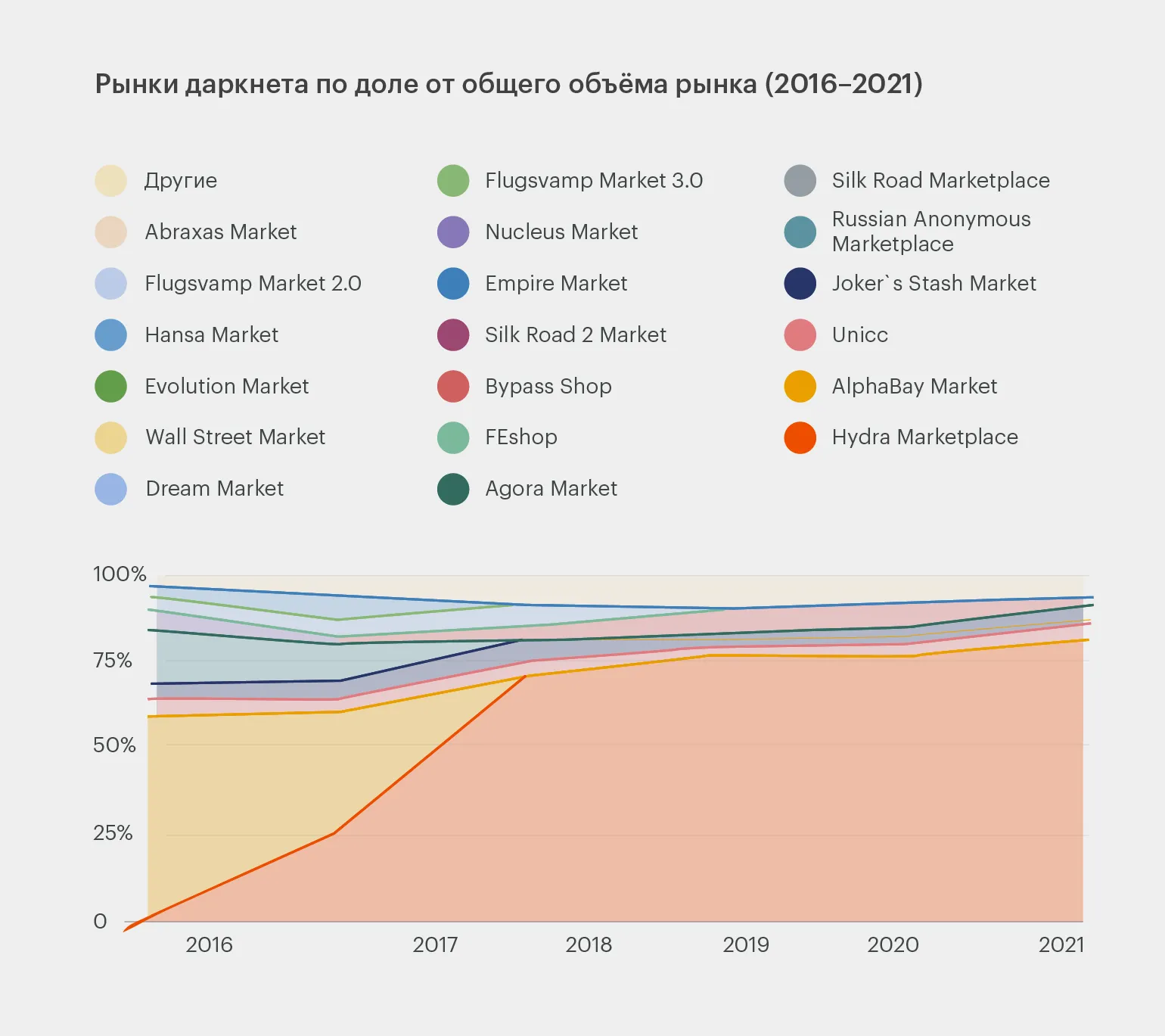
The Russian darknet marketplace Hydra remains a leader, controlling 80% of the global darknet market revenue in 2021. Hydra offers users a wide range of illegal goods and services, including drugs. This makes the platform one of the most influential and popular on the darknet. Having such a large percentage of market control indicates a high level of user trust in Hydra, which attracts new participants and strengthens its position on the darknet.
Hydra continues to maintain its popularity thanks to its user-friendliness and innovations, such as a built-in review and rating system. According to Maxim Kharask, users prefer ease of use, hoping that the level of control over digital security will not increase significantly.
Starting a business in 2025: 5 steps to success
Want to start a business in 2025? Learn 5 key steps to successfully implementing your idea!
Learn more