Contents:

4 Professions in Internet Marketing: Free Mini-Course
Find out moreDigitalization of Funeral Services: From Online Farewells to NFC Technologies
Since the onset of the COVID-19 pandemic, strict restrictions on farewells to the deceased have been introduced in Russia. During social distancing, when funerals were limited to 5-7 people, funeral homes began offering online streaming services. While virtual farewells had already been available, 2020 marked a significant milestone for the adoption of digital technologies in the funeral industry, helping to transform traditional funeral practices. Online streaming allowed distant relatives and friends to participate in the farewell, making the process more accessible and humane.
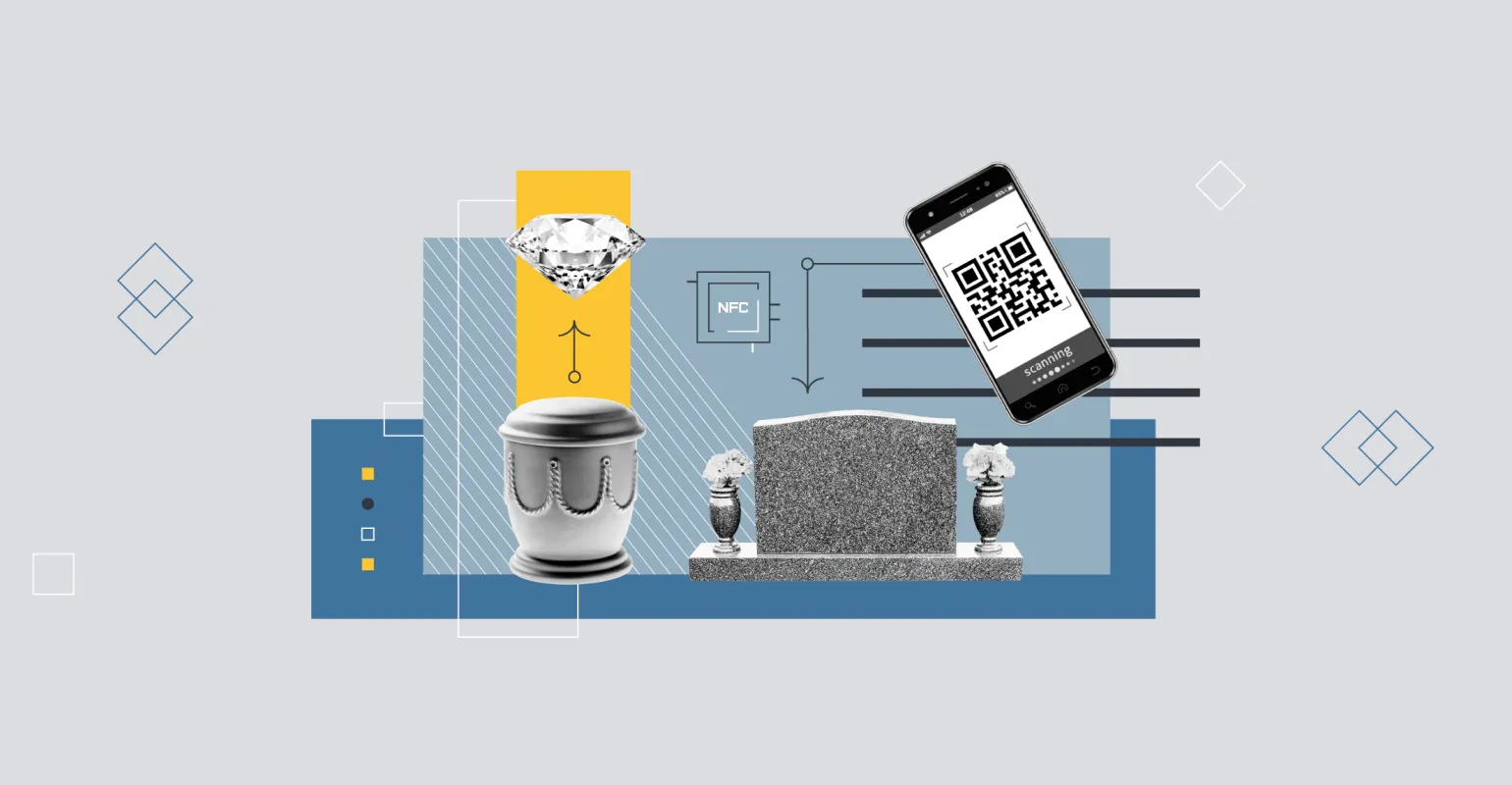
In Ufa, relatives who were unable to attend the funeral received invitations to closed Zoom or WhatsApp groups. Funeral service providers used smartphones to record the farewell, allowing participants to follow the ceremony remotely. In Moscow, crematoriums installed cameras for online streaming, a common practice during the pandemic. These measures have enabled distant people to attend the funeral service and have become an important step in adapting funeral services to the new reality. Innovations in the funeral industry are not limited to the burial process. Cemeteries are actively implementing modern technologies. Galina Rubleva, director of the UfaRitual funeral service, notes that one cemetery in Ufa occupies an area comparable to 903 football fields, making it difficult to locate a relative's grave. To simplify this task, clients are offered NFC tags with GPS, which can be installed on the headstone. These devices can be designed to match the headstones, making them virtually invisible. Thus, new technologies significantly improve the cemetery visiting experience and help preserve the memory of loved ones.
Users can easily find monuments using GPS technology, and NFC chips provide access to memorial pages for the deceased. This can be a dedicated landing page or a link to a social media account, such as VKontakte. Simply hold an NFC-enabled smartphone near the memorial, and the deceased's page will automatically open in the browser, significantly simplifying the process of interacting with their memory. Using such technologies makes preserving the memory of loved ones more accessible and convenient.
The funeral industry is undergoing significant changes due to technology and the pandemic. The introduction of digital solutions simplifies the farewell process and makes it more accessible for everyone. Online services, virtual memorial events, and digital monuments are becoming important tools that allow people to conduct their final farewells in a convenient format. These innovations not only provide access to funeral services but also contribute to the creation of new traditions in modern society. Technology helps preserve the memory of loved ones and provides the opportunity to participate in farewells, even from a distance.
Innovations in the Funeral Industry: Uber for Funerals
In 2017, Dmitry Geranin, head of Yandex.Weather, proposed an innovative idea with the potential to transform the funeral services market. He unveiled the concept of the Umer app, designed to quickly calculate funeral costs and provide up-to-date information on all aspects related to burial. Despite the creation of a landing page and promises of a quick launch in app stores, by 2021 Umer had not yet been released in the App Store or Google Play. The project attracted interest, as such solutions can significantly simplify the funeral process, making it more transparent and accessible to users.
Geranin's idea was successfully continued in the Moscow region. The company "Honest Agent" developed a modern IT platform that unites all participants in the funeral process. Over a thousand funeral companies and agents are registered in the system, ready to assist with paperwork, funeral arrangements, and graveside landscaping. This platform significantly simplifies interactions between funeral services and clients, ensuring transparency and efficiency. Pavel Sosnovy, Development Director of Honest Agent, describes their platform as a "Swiss knife for funeral agents." This solution offers clients a high level of convenience, allowing them to interact with funeral agents through a mobile app. Users can easily book a crematorium appointment, select a suitable cemetery, and order 3D models of monuments. Thanks to this, Honest Agent makes the process of organizing funeral services more accessible and transparent.
The system notifies clients at every stage of the process: from booking a cemetery plot to the readiness of the urn. This allows relatives to focus on the ceremony and arrive at the appointed time, without worrying about details, which will be handled by professionals. Our support doesn't end with the funeral; clients may also require services such as installing a monument or maintaining the grave. We provide a comprehensive approach that addresses all the needs of families during this difficult time.
The modernization of funeral services using technology such as the Honest Agent platform is a significant step in the development of the funeral market. This initiative simplifies the funeral planning process and makes it more transparent and accessible for those grieving the loss of loved ones. Modern technology makes it possible to arrange all necessary services online, significantly saving time and effort during this difficult time. Platforms like Honest Agent provide users with up-to-date information on available services and prices, encouraging more informed choices. Thus, the implementation of such solutions not only improves the quality of funeral services but also increases the level of trust among clients.
Digital Cemeteries: A New Era of Memory
In today's world, where technology is developing at an incredible speed, the concept of remembering our loved ones is also changing. The digital traces we leave online can serve as the basis for creating unique memorial spaces – digital cemeteries. These sites allow us to preserve the memory of the deceased, continuing their lives through an online presence. Digital cemeteries are an innovative solution that combines technology and human emotion, providing the opportunity not only to preserve memories but also to share them with others. This approach to perpetuating memory opens new horizons for interacting with the legacy of the deceased, allowing their loved ones to find comfort and support in a community that shares their grief.
The expert notes that the concept of a state digital cemetery could become a reality in the coming years. QR codes will be placed on gravestones, directing visitors to the memorial pages. Relatives will be able to update information by adding photos from the funeral service, sharing significant moments, and receiving notifications about memorable dates. This initiative will provide an opportunity to maintain a connection with the memory of loved ones and preserve their legacy in a modern way. The digital cemetery will be an important step in preserving memory and providing access to information about the lives and achievements of the deceased.
Private initiatives such as "Kladbischarossii.rf" and "Pomnim-skorim.ru" already exist in Russia. However, they are not yet legally binding and lack a unified database. These platforms offer opportunities to preserve the memory of the deceased, but further development and legalization are needed for their full functionality. Creating a unified database will not only help preserve memory but also simplify the search for burial information, facilitating more effective public interaction with these resources.
Social networks are actively adapting to modern realities, taking into account the need to preserve the digital memory of users. Facebook offers a "guardian" feature that allows you to choose a trusted person to manage your page after your death. Similar features have been implemented on VKontakte, where the pages of deceased users receive special statuses indicating their status. These measures highlight the importance of preserving heritage in the digital space and allow loved ones to maintain contact with the deceased, preserving their memory.
The future of digital cemeteries may include the creation of a unified service for all burial sites both in Russia and abroad. This approach will significantly simplify access to information about the deceased, which in turn will facilitate the development of genealogical research. By simplifying data searches, such a service will help strengthen family ties and create family trees, which is important for understanding family history and preserving cultural heritage. The integration of modern technologies in this area can be an important step toward a more conscious and respectful treatment of the memory of our ancestors.
Experts, including Archpriest Pavel Velikanov of the Moscow Sretensky Theological Academy, argue that the concept of digital cemeteries is not objectionable. The memory of people continues to exist, regardless of where we store photographs and memories—on smartphones or online. These new forms of storage represent a modern way of preserving our history and cultural heritage. Digital cemeteries can be an important tool for perpetuating memory and providing access to memories for future generations.
Starting a Business in 2025: 5 Steps to Success
Want to open a successful business in 2025? Learn 5 key steps to start and earn money!
Learn more