Contents:

VR Development: Become a PRO in 5 Steps
Learn MoreWhat is the Metaverse and Web 3.0: Key Concepts Explained
Web 3.0 is the proposed third evolutionary phase of the internet, which aims to Addressing the shortcomings of Web 2.0. Unlike the current internet, controlled by a limited number of multi-billionaires and their platforms, Web 3.0 focuses on restoring control over data to users. Key technologies of this new era include blockchain, cryptocurrency, NFTs, and decentralized governance systems. Web 3.0 proponents believe that these changes are already happening, and that we are on the threshold of a new era of digital interaction. This new direction offers users more control, security, and transparency, making the internet more open and accessible to everyone. The metaverse is a concept that connects the physical, virtual, and biological worlds, creating a space where virtual reality significantly enriches the human experience. It is not just a collection of technologies, but a grand vision of the future of digital progress. For the metaverse to function effectively, a developed infrastructure is necessary, including powerful data storage and processing systems, which are currently underdeveloped. The introduction of 6G networks plays a key role in realizing this concept, providing the necessary speed and stability of connections. It is important to understand that the development of the metaverse depends not only on technology but also on the integration of various aspects of our lives, opening new horizons for interaction and information exchange.
Existing platforms such as Roblox, Immersed, and Meta's Horizon Workrooms are important steps towards creating a full-fledged metaverse. They provide users with the ability to create digital avatars and interact in virtual spaces. However, current applications do not yet reveal the full potential of future metaverses. The emergence of more advanced technologies and expanded functionality can significantly change the user experience, opening new horizons for interaction, learning, and entertainment in virtual reality.
It is important to note that the terms "metaverse" and Web 3.0 are often confused, but this is not entirely correct. Web 3.0 represents a specific set of technologies, while the metaverse is a broader and more abstract concept. Nevertheless, Web 3.0 will be one of the fundamental technological foundations for the formation of the metaverse. Key areas that will also contribute to the development of the metaverse include virtual reality (VR) and augmented reality (AR), the Internet of Things, and neural interfaces. These technologies together will create a unique experience of user interaction with digital spaces, providing a deeper integration of the virtual and real worlds.

The Problems of Decentralization in Web 3.0: Myths and Reality
Web 3.0 promised to transform the internet, focusing on decentralization and giving users greater control and privacy. However, in practice, this transformation has not yet occurred. Many elements of the Web 3.0 infrastructure still depend on the outdated principles of centralized control inherent in Web 2.0. As a result, users have not received the expected benefits, and real decentralization remains at the theoretical level. To achieve the goals of Web 3.0, it is necessary to create more efficient and secure solutions that give users control over their data and interactions on the network.
Moxie Marlinspike, a leading cryptographer and founder of the Signal messenger, first drew attention to the existing problem. In his blog, he noted that Web 3.0 remains dependent on centralized platforms, which calls into question its stated principles of decentralization. This dependence could negatively impact the reliability and security of user data, as well as true freedom in the digital space. To achieve a truly decentralized internet, these limitations must be overcome and a sustainable ecosystem built on the principles of openness and autonomy must be created. Decentralized applications require a node hosted on a remote server to interact with the blockchain. Since most users prefer not to set up their own servers, the market for node API access is being filled by large companies. Currently, Infura and Alchemy are leaders in this field. However, neither company verifies the blockchain state, which compromises the security and decentralization of data. This creates a need for alternative solutions that provide a higher level of control and verification for users seeking to maintain the trustworthiness of their decentralized applications.
Marlinspike raised an important question about the security of non-fungible tokens (NFTs). An NFT is a link to a web page hosting an artwork, often without proper security. This creates a vulnerability, as anyone with access to the server can modify or delete the asset that is supposed to be protected. NFT security remains a critical issue, especially in light of the growing interest in digital assets and their importance in the art world. It is important to consider these risks when investing and developing new projects to ensure the rights of creators and collectors are protected.
Marlinspike demonstrated the vulnerability of the system by creating an NFT that changes the image depending on who views it. To the token owner, the image appears as a poop emoji. Following this, OpenSea, a leading NFT trading platform, removed the work, citing a terms of service violation, even though no specific rules existed for this. This incident highlights the importance of discussing standards and regulations in the digital art and NFT space.
This event highlights the vulnerability of user data, which should be protected by blockchain. Cryptocurrency wallets like MetaMask and Rainbow merely display NFTs, but the actual owner of the work remains the one who controls the server. Thus, despite blockchain's promises of security and decentralization, real risks to the security of assets and user data still exist. It is important to recognize that technologies that are supposed to provide protection may have their vulnerabilities.
Despite promises to minimize the influence of platforms, Web 3.0 remains focused on them. This is because users and many companies prefer the convenience of using intermediaries' services rather than developing and maintaining their own servers. Convenience and ease of interaction with existing platforms remain the main factors influencing user choice. As a result, despite the potential of decentralized technologies, traditional solutions continue to dominate the market.
Decentralization is not a universal solution to all problems. As Marlinspike notes, protocols evolve significantly more slowly than centralized platforms. Email, for example, remains unencrypted even after 30 years, while WhatsApp implemented full end-to-end encryption in just one year. This highlights how decentralization can hinder technological advancement compared to more flexible centralized systems.
Marlinspike notes that when a decentralized ecosystem begins to shift toward centralization, it combines the negative aspects of both decentralized and centralized systems. This leads to centralized control that does not bring any of the real benefits inherent in decentralization. As a result, users lose freedom and control over their data, jeopardizing the core idea of decentralized technologies.
OpenSea could function more effectively without Web 3.0 components, but the appeal of decentralization continues to attract the attention of users and investors. This fact underscores the importance of innovative technologies in the field of digital asset trading. Despite the possible improvements associated with traditional approaches, the concept of decentralization remains popular and relevant in the NFT market. Investors and developers continue to explore the opportunities offered by Web 3.0, confirming its importance in the future of the digital economy.
To address existing problems, Marlinspike offers a number of solutions. These recommendations are aimed at optimizing processes and improving user interaction. The implementation of the proposed measures will help increase efficiency and improve the quality of services provided. The implementation of these changes contributes to a more stable and secure environment, which is an important aspect for achieving the set goals.
- Develop architectures taking into account that users will not create their own servers, and improve trust between clients and servers.
- Simplify the software creation process so that technologies become more accessible and focused on the vast needs of humanity, and not on the interests of a narrow circle of developers.
The Metaverse: Utopia or Dystopia? Risks and Dangers from Western Researchers
The metaverse represents a space where human dreams can become reality. Unlike simple avatars in games like Second Life or The Sims, new digital entities will be complete projections capable of conveying a full range of sensations. This will open up unique opportunities for travel and interaction with the surrounding world, including the ability to return to the past or explore other planets. The metaverse will become a platform for social activity, learning, and creativity, where users will be able not only to communicate but also to create new forms of art and business.
This image evokes conflicting feelings: for some, it symbolizes the rapid development of technology, while for others, it signals the possible end of humanity. The idea of the complete integration of physical and virtual reality is perceived by many as a threat, as clearly demonstrated by the works of authors such as Stanislav Lem, as well as the films "The Matrix" and "Ready Player One." These works raise important questions about the future of humanity in the age of high technology and reflect fears associated with the loss of control over reality and identity.
Some experts believe that virtual reality has the potential to replace real life and lead to serious exploitation by both corporations and governments. Researchers, including Juan Ortiz Freuler and María Fernanda Soria Cruz, express concerns that the metaverse could become a means of control, where human interactions will be subject to the logic of the corporate system. This raises important questions about privacy, freedom of choice, and social interaction in the digital age. Modern technologies should be used with caution to prevent possible negative consequences for society.

While apocalyptic scenarios have not yet come to fruition, some risks associated with the metaverse are already beginning to emerge.
As interest in the metaverse grows, new startups and companies offering unique services are emerging. Currently, only the largest tech corporations have the resources to invest significantly in this promising field. These companies could become major players in the metaverse market, similar to how IBM has successfully maintained its position for over a century. Investments in the metaverse open new horizons for innovation and development, which in turn can lead to the creation of new business models and opportunities for users.
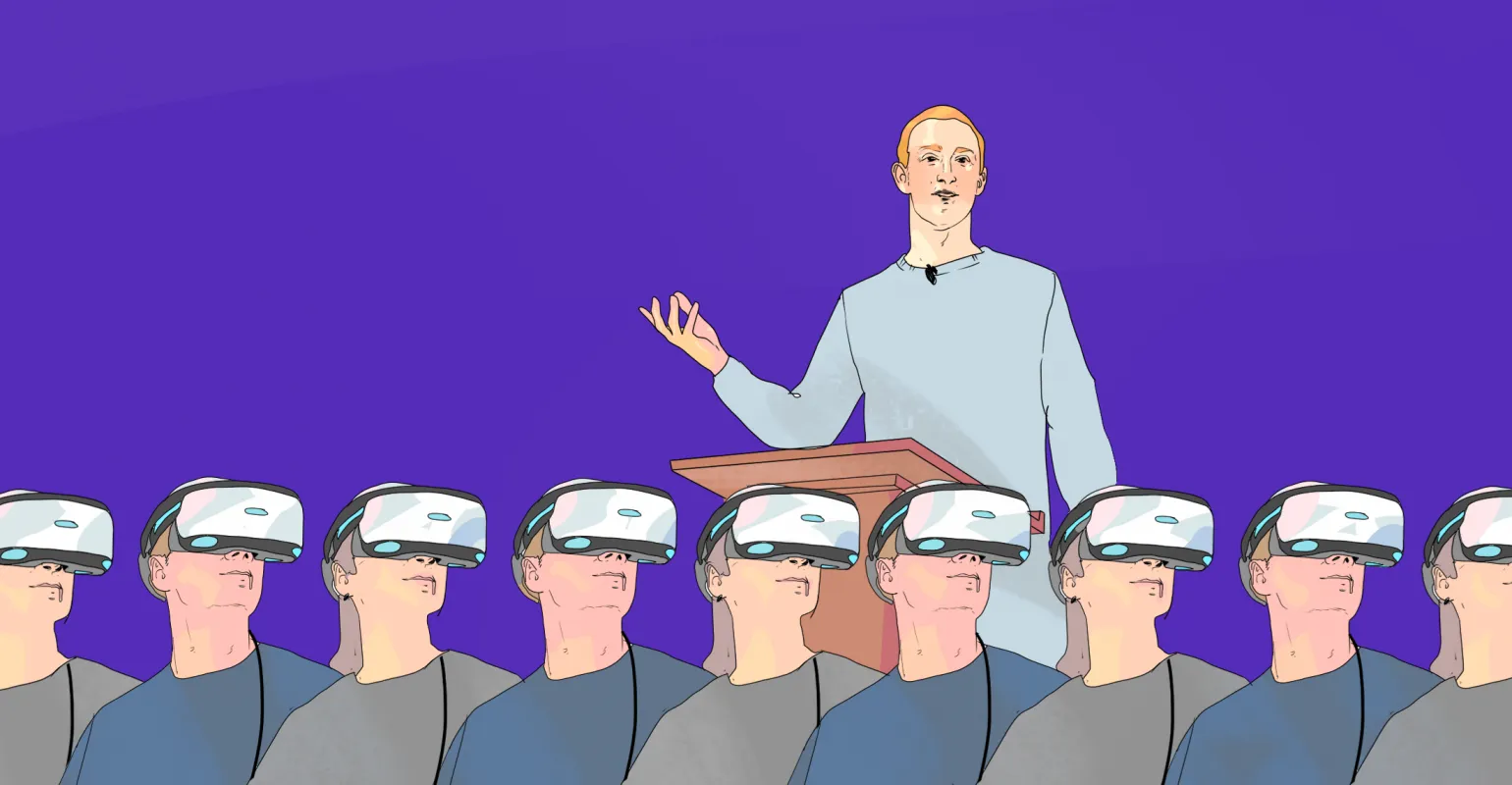
Mark Zuckerberg is a leading proponent of the metaverse, which has become especially important following the large-scale investigation that revealed abuses at Facebook. Renaming the company to Meta can be seen as a strategic attempt to change its image and distance itself from previous scandals. The creation of the metaverse implies a new era of digital interactions, where users will be able to collaborate in virtual spaces. This concept has the potential to not only change the way we approach social media but also impact many other areas, including business and education. Amid growing competition and public criticism, Meta is striving to take a leading position in the future digital world, making this process relevant for users and investors.
For Meta, user data is a key resource, used to generate profit and, according to some experts, to eliminate competitors from the market. Management innovation researcher Tom Wheeler points out that by becoming a leader in the metaverse, the corporation could continue to engage in data abuse at a new level. This underscores the importance of protecting user privacy and the need for transparency in data use in the digital environment.
In the metaverse, those with the data to tailor virtual experiences to user needs will have an advantage. Wheeler notes that this is comparable to the current realities of the online space. In the face of increasing competition in the metaverse, the ability to effectively use data will become a key factor in success and user attraction. It is important to understand that a personalized approach to user interaction will allow a company to stand out from the crowd and create a unique experience.
According to Wheeler, an effective solution to this problem requires the active involvement of government agencies in regulating this new industry. Governments have the ability to set necessary standards and norms in a way that private companies alone cannot.
The expansion of the internet has become an important tool for terrorist organizations, allowing them to attract supporters on a global scale. The Islamic State project has clearly demonstrated how social media can be effectively used to expand influence and recruit new members. Virtual platforms serve as a means of spreading ideology and organizing actions, posing a serious security threat.
Researchers from the US National Counterterrorism Center, including Joel Elson and Austin Doctor, believe that the metaverse will create new opportunities for terrorists in the recruitment process. The virtual environment will provide terrorist groups with unique tools for interacting with potential supporters, which could significantly increase their scale and effectiveness. The metaverse, with its anonymity and access to a global audience, will become a platform for spreading ideology and building communities, which requires the attention of law enforcement and security professionals.
The metaverse offers unique opportunities for attack planning and preparation, providing terrorists with a platform for training and learning to use weapons unavailable in real life. This virtual environment can be used to create scenarios, simulate situations, and practice skills, significantly increasing the security threat. It is important to understand the potential risks associated with the development of virtual reality technologies and take measures to prevent their use for criminal purposes.
Terrorist organizations are already actively using platforms for money transfers and other illicit transactions. In the context of the metaverse, the possibilities for such actions will increase significantly, which creates new threats to security and financial stability.

The metaverse could also become a target for cyberattacks. Experts emphasize that virtual spaces can be used for provocative actions, including attacks on memorial events. This raises important questions about the safety and security of digital spaces, as well as the need to create effective measures to prevent such incidents.
To prevent the threat of extremism in the metaverse, it is necessary to establish strict standards and measures to combat this phenomenon before it spreads widely. This will create a safe digital environment where users can interact without fear of violence and hatred. Effective content control and monitoring measures will help mitigate risks and ensure user protection, thereby promoting the development of a healthy online community.
In the metaverse, users will be able to interact on a deep level, which will allow for the formation of an independent economic system similar to the real economy. This opens up new opportunities, but also attracts the attention of criminals who can exploit virtual spaces for their illegal activities.
Timothy Lloyd, a cybercrime specialist, emphasizes that the development of the metaverse will create new opportunities for criminal activity. This is due to the fact that government control in virtual spaces will be significantly limited. Lloyd notes that criminals can exploit anonymity and the lack of strict regulations to carry out various illegal activities, which poses a serious threat to users and their security in the digital world.
The most common types of crimes in the metaverse include fraud, cyberbullying, copyright infringement, and the illegal sale of virtual assets. Fraud can manifest itself in the form of deceiving users when selling virtual goods or services. Cyberbullying is aggressive behavior in the digital space that can negatively impact the psycho-emotional state of victims. Copyright infringement is becoming a pressing issue due to the creation and distribution of content without the consent of copyright holders. Illegal trading of virtual assets such as NFTs and cryptocurrencies also requires attention, as it can lead to financial losses for users. These offenses highlight the need for effective user protection mechanisms and legal compliance in the metaverse.
- Money laundering through NFTs and cryptocurrencies.
- Online advertising fraud.
- Theft and illegal collection of personal data.
- Fraudulent schemes that trick people into making payments.
- Exploitation of children using avatars.
The Impact of Metaverses on Politics and Thinking: A Russian Expert's View
We discussed the influence of metaverses on political reality and human perception with Sergey Karelov, founder of Witology and author of the "Little-Known Interesting" Telegram channel. Metaverses have the potential not only to change the ways we interact and communicate, but also to transform our political system. Virtual spaces can become new platforms for discussing pressing issues, changing approaches to political participation and civic engagement. We explored how these technologies influence public opinion and democratic processes, as well as the potential for new forms of interaction between citizens and government.
Karelov believes that the influence of metaverses on people's consciousness is a continuation of the effect of social media, which is already noticeable in our daily lives. Metaverses, like social platforms, shape the perception of reality and interaction with the outside world. They can change user behavior and contribute to the creation of new social norms. Thus, the influence of metaverses is becoming an important aspect in the analysis of modern communications and psychology.
According to experts, metaverses do not pose an immediate threat. However, as people spend more time in virtual worlds and communicate through screens, certain consequences arise. We are entering a new media environment, and its influence on society is becoming increasingly significant and integral. It is important to understand that interaction in virtual reality can change social norms and perceptions of the real world, which requires careful analysis and awareness of the possible risks.
Historically, humanity has exchanged information face-to-face. With the development of technology, the volume of data received has increased significantly. Previously, newspapers and radio were the main sources of information, but with the advent of the digital age, the speed of information acquisition has increased many times over. Today, thanks to the internet, people have access to vast amounts of data in real time. This shift to digital communication channels has transformed the way we perceive and process information and has opened up new opportunities for knowledge sharing and interaction.
Changes in our environment can be viewed as a natural evolution that facilitates transformations in thinking. These changes can have both positive and negative consequences. It is important to recognize how new conditions influence our perceptions and decision-making.
Modern people are able to quickly process large amounts of information and effectively switch between different sources. However, this leads to the loss of some important skills. Research shows that today's children demonstrate higher IQ levels compared to their peers ten years ago, but they also show a decline in skills related to the physical world. These skills include spatial perception and the ability to manipulate objects. This highlights the need for a balanced approach to learning, where not only intellectual activity is important, but also the development of practical skills.

The older generation may perceive this as degradation, but in reality, it is an adaptation to virtual reality, which is becoming the primary environment of life, the expert asserts. In the context of rapid digital progress, it is important to understand that changes in perception and interaction with information are a natural reaction to new technologies. Adaptation to the virtual world opens up new opportunities and forms of communication, which confirms the importance of this transformation for modern society.
Modern people spend more time in the digital space than sleeping. Karelov calls them inforgs, emphasizing that they will be radically different from previous generations, just as modern humans differ from Neanderthals. This new personality type is shaped by technology and the information flow, which affects their way of thinking and perception of the world. Inforgs have unique skills in working with information and adapting to a rapidly changing environment, making them important players in modern society.
The most troubling aspect of metaverses is their impact on politics. Experts such as Karelov note that metaverses could become a powerful tool for government agencies. They offer the potential for expanded control over citizens, potentially leading to total surveillance of their personal lives and behavior. This raises important questions about privacy and freedom that must be discussed in the context of technological advances.
Current technologies, including CCTV cameras and internet activity monitoring, allow for the collection of extensive information about individuals. In the future, with the increasing integration of digital, physical, and biological measurements, surveillance capabilities will increase significantly. This raises important questions about privacy and data security, as control over personal information becomes more accessible and effective. Given the advancement of technology, consideration must be given to the ethical aspects of using such systems to maintain a balance between security and human rights.
Currently, facial recognition technologies allow for the identification of people participating in rallies, and the analysis of online comments helps reveal their opinions. In the era of metaverses, monitoring physical responses such as heart rate and blood pressure will be sufficient to determine users' political views. These technologies open new horizons in analyzing citizens' behavior and preferences, raising important questions about privacy and data security.
Sergey Karelov emphasizes that in the future, surveillance of people in metaverses will become commonplace. This will affect all countries, regardless of their political system—both democratic and authoritarian—if such practices are beneficial to the authorities. He notes that law enforcement agencies in various countries, including the democratic United States and authoritarian China, are already using similar surveillance methods.
Read also:
- "The Metaverse is the Distant Future": Why Zuckerberg's Project Might Fail?
- The Singularity is on the Doorstep: How Technology is Changing Laws and Society
- An Emigrant Engineer on Russian Processors and New Technologies
- Likes of War: How Roskomnadzor is Fighting Social Media and What Awaits Us Next
VR development: from zero to PRO in 30 days
Want to become a VR developer? Learn how to master game and app creation in a month!
Learn more