Contents:
- Public art formats: diversity and innovation
- Advantages of public art for business
- Using public art in various business segments
- How to evaluate the business effect of investing in art objects
- The cost of creating public art for business
- Efficient use of public art in business projects
- Examples of public art objects: Innovative approaches and unique projects
- 5 key facts about public art
4 Professions in Internet Marketing: A Free Mini-Course
Learn MorePublic Art Formats: Diversity and Innovation
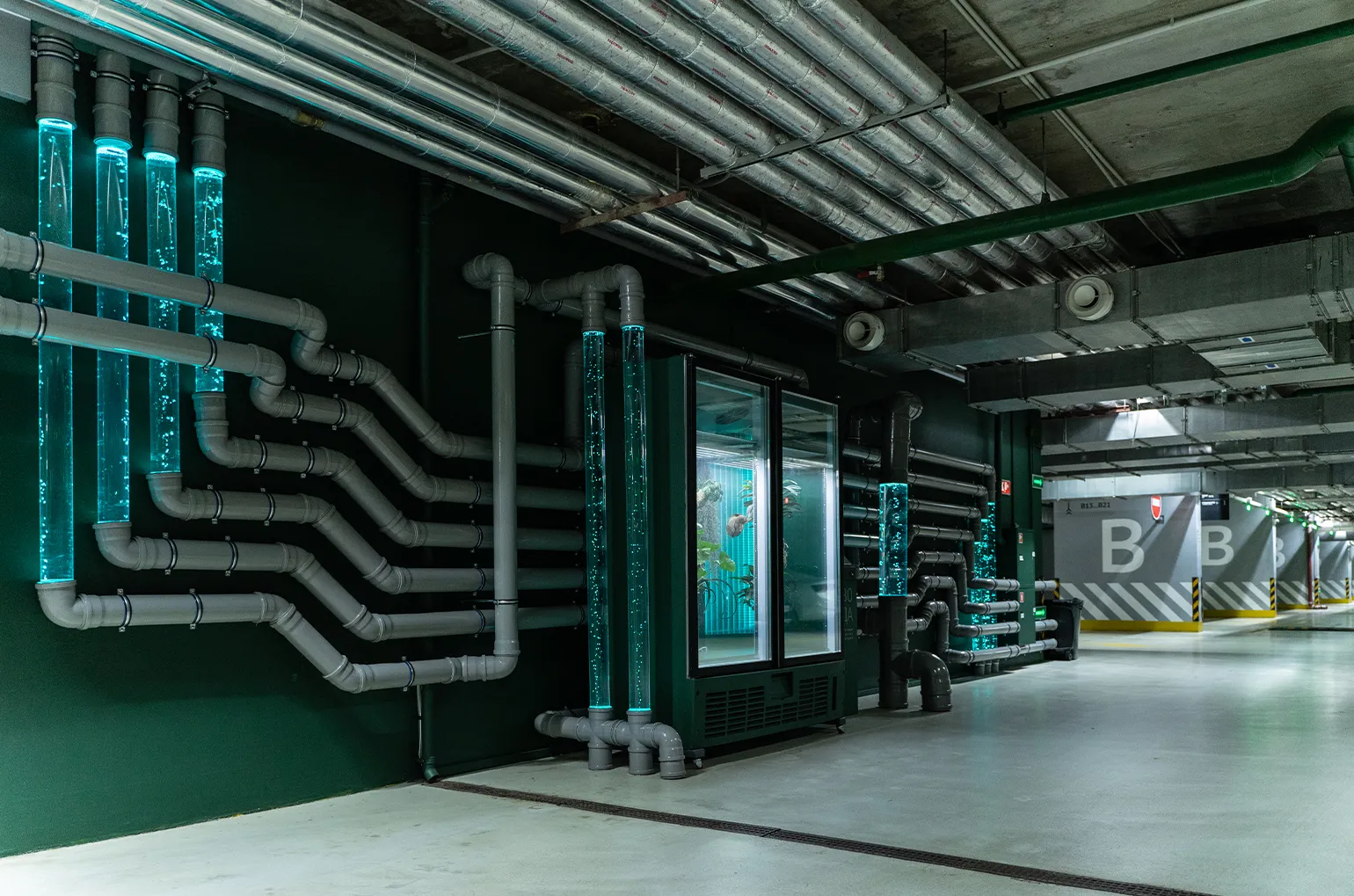
Public art, unlike traditional works of art exhibited in museums and galleries, has the unique ability to be found in the most unexpected places. This type of art is not limited by strict formats, which gives artists ample opportunities for creativity and experimentation. Public art can be presented in urban spaces, on streets, in parks, and even on buildings, making it accessible to a wide audience. This approach to art promotes public interaction, inspires, and generates interest in cultural initiatives. Public art is becoming an important element of the urban environment, bringing diversity and uniqueness to the daily lives of city residents. Public art installations can occupy a variety of spaces: they can "crawl" along building facades, "float" in bodies of water, "grow" among park greenery, or even "descend" into underground parking garages. These creative approaches contribute to the creation of unique artistic objects that seamlessly integrate into the urban environment. Public art not only enriches the aesthetics of public spaces but also promotes citizen engagement with art, creating new cultural routes and drawing attention to important social issues. A variety of forms and materials allows artists to convey their ideas and emotions, creating a unique image of the city.
Contemporary trends in public art are manifested in its integration into building interiors, including sterile and public spaces. A striking example of this is the Morozov Children's Hospital, where the placement of numerous art objects contributes to a friendly and positive atmosphere. Such initiatives not only decorate the space but also help children feel more comfortable in a medical environment, which is important for their emotional well-being and recovery. Integrating art into everyday spaces is becoming an important aspect of contemporary design, helping to improve the quality of life and people's interactions with the world around them.
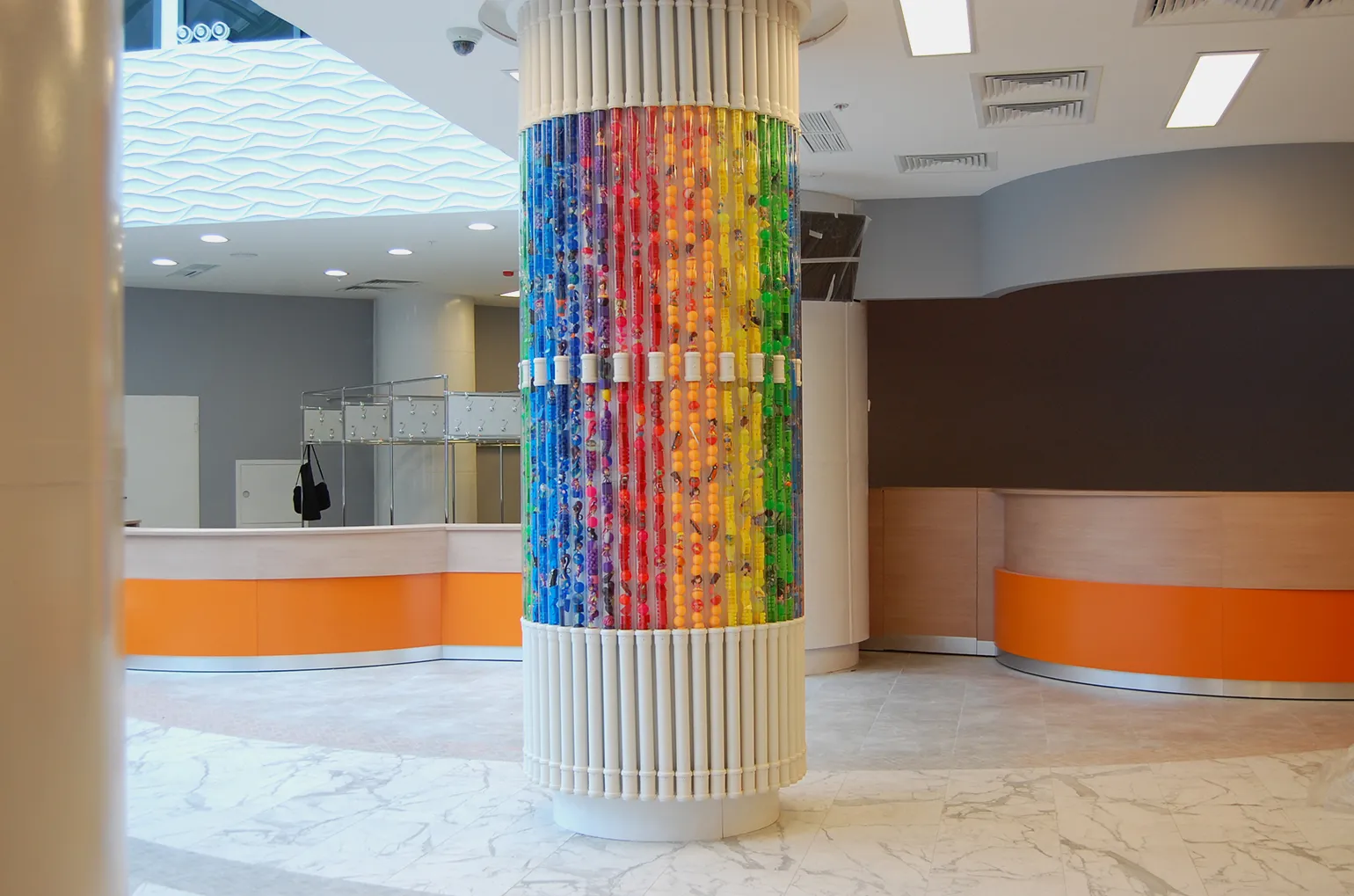
The variety of public art formats can be classified into three main categories based on the objects' lifespan. Each of these categories has its own characteristics and purpose, allowing artists and urban planners to create unique works that interact with the surrounding environment. Temporary objects are typically created for specific events or exhibitions and may disappear after the event's conclusion. Semi-permanent objects, on the other hand, can remain in public spaces for several months or years, gradually losing their relevance or changing over time. Finally, permanent objects are typically installed with the intention of serving as a long-term element of the urban environment, becoming an important part of the cultural heritage and identity of the place. Each category of public art plays a role in shaping public space and interacting with its residents.
- Permanent art objects with a service life of 5-7 years, such as projects in the underground parking garage and at Morozovskaya Hospital.
- Seasonal art objects that operate during a certain time of year.
- Temporary art events that last only a few minutes, hours, or days.
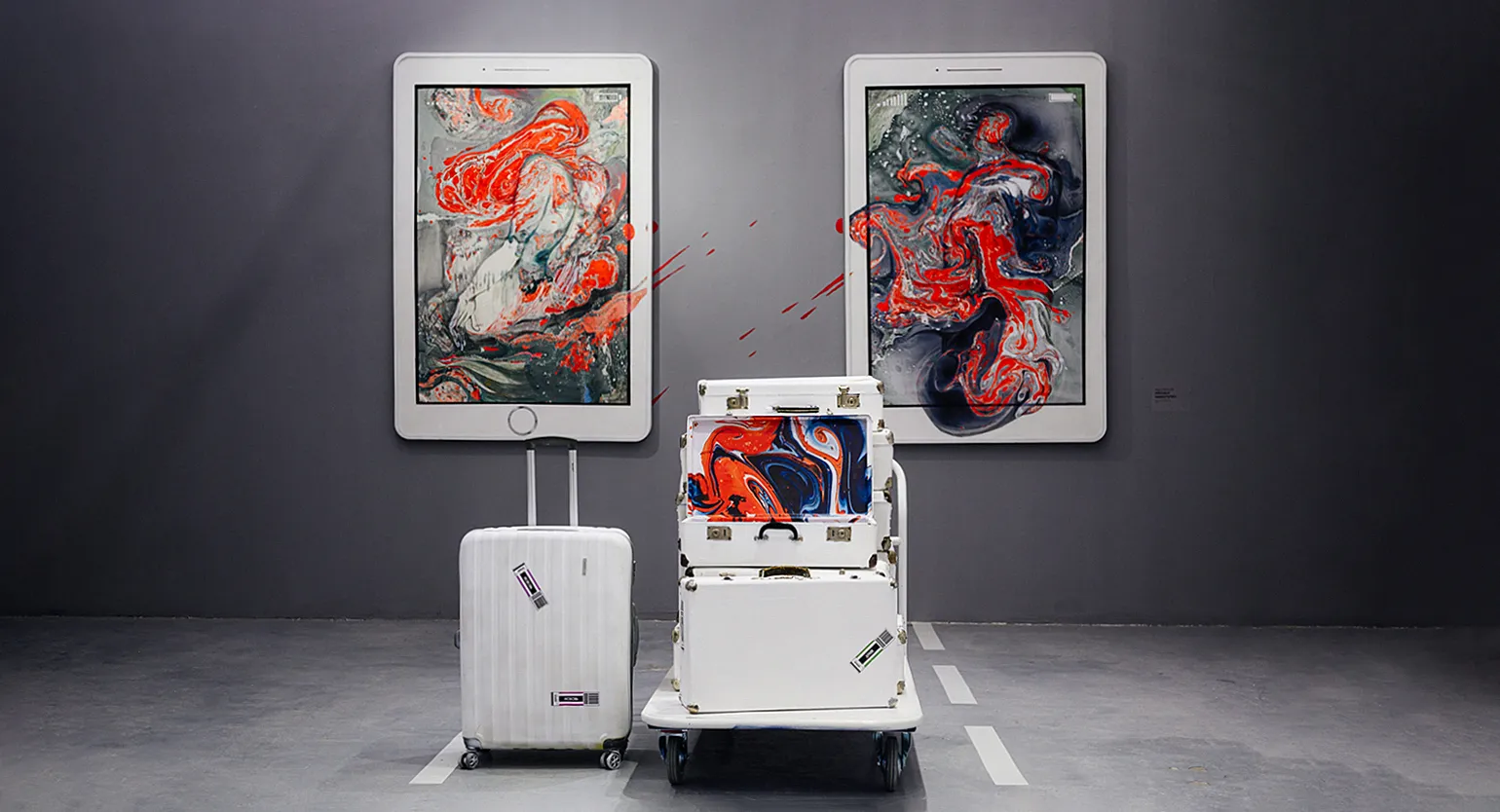
A striking example of temporary public art is the world's first flying exhibition, "Delivery of Emotions," which took place in February 2022 in Lyubertsy. For an hour and a half, drones lifted paintings 26 stories high, flying past the windows of residential buildings. This unique event attracted the attention of viewers and demonstrated new possibilities for integrating art into the urban environment. The phenomenon of public art, such as "Delivery of Emotions", promotes community engagement and creates unforgettable experiences, making it an important element of cultural life.

Public art offers a variety of formats that not only inspire artists but also create new opportunities for brand communication. We will explore further how public art can be effectively used to promote brands and create unique user experiences. This outdoor art allows companies to engage with audiences, enhance brand image, and create memorable consumer experiences.
Benefits of Public Art for Business
Public art has become a valuable tool for companies seeking to increase their visibility and strengthen their reputation. Integrating public art into business projects not only draws attention to the brand but also significantly increases consumer trust. Effective artistic interventions in public spaces create a positive image and foster an emotional connection with the audience. Using public art in marketing strategies demonstrates a company's innovative approach and social responsibility, making it more attractive to the target audience.
Modern companies are actively seeking innovative methods of engaging with their target audience. Public art is becoming an important tool that not only beautifies urban spaces but also serves as an emotional trigger. It can inspire potential clients, business partners, and new employees to interact with the brand. Effective use of public art can significantly increase company recognition and create a positive public image.
Installing a modern art piece in a new residential complex can significantly increase visitor traffic. Residents of neighboring areas come to see and capture this unique work of art. This draws attention to the residential complex and can become an additional incentive for apartment purchases. As a result, such interest can contribute to an increase in real estate values.
Public art has a unique ability to convey meaningful messages without the use of overt advertising. This art represents an alternative to traditional marketing methods, allowing viewers to interpret and interact with the works. This makes public art an important tool for shaping public opinion and raising awareness of social and cultural issues. The public not only observes but also engages in dialogue, making art accessible and relevant to a wide audience.
Unlike marketers, artists engage with abstract concepts, creating unique symbolic products. They achieve this through expressive imagery and individual interpretations of concepts such as love and morality. Artists are able to convey profound ideas and emotions using visual media, allowing them to inspire and provoke reflection in viewers. Thus, art becomes an important tool for exploring human feelings and social issues.
A recent study found that contemporary art is perceived as a method of meditation and a way to escape the daily grind. For example, developer Stone, in collaboration with the Moscow Committee for Architecture, held a competition to create an art piece for an office block. The winning entry was "Angel" by artist Evgeny Zhelvakov. This confirms that public art is actively supported by the city and should find its place in public spaces. Creative initiatives such as these not only contribute to the aesthetic enrichment of the urban environment but also create opportunities for residents and visitors to interact with art in their everyday lives. Stas Okrukha, owner of the creative agency SmartHeart, asserts that city initiatives to popularize contemporary art play a key role in enriching the urban environment with meaning and aesthetics. Such projects are important for both business and society, contributing to the development of the cultural environment and drawing attention to current issues. The creation and support of such initiatives not only improves the city's image but also promotes the development of an active civil society, making them essential for the modern urban landscape.
The Use of Public Art in Various Business Segments
Public art plays an important role in industries such as development, retail, and the HoReCa industry. This trend is becoming increasingly significant as companies seek ways to stand out from the growing competition. The introduction of public art helps not only improve the aesthetic appeal of spaces but also create a unique brand image that attracts customer attention. Thus, the use of public art is becoming a strategically important tool for businesses striving for innovation and originality.
In recent years, developers have increasingly incorporated public art into residential complex projects. Art objects not only highlight the uniqueness of buildings but also attract the attention of potential buyers. This approach helps create the image of a residential complex as a work of art, which enhances its appeal in the real estate market. Public art is becoming an important tool for creating a unique atmosphere and value for properties, as well as improving the overall perception of the urban environment. According to Oksana Diveeva, Sales Director at Capital Group, art objects play a key role in creating the uniqueness of projects in the premium segment. In the White Khamovniki project, for example, an impressive four-meter sculpture was installed in the courtyard, and works by contemporary artists and antique sculptures were placed in the lobby. Such elements not only attract potential buyers but also create a community of people with shared aesthetic and cultural values. It is important to note that art objects enrich the space, make it more attractive and create an emotional connection with residents.
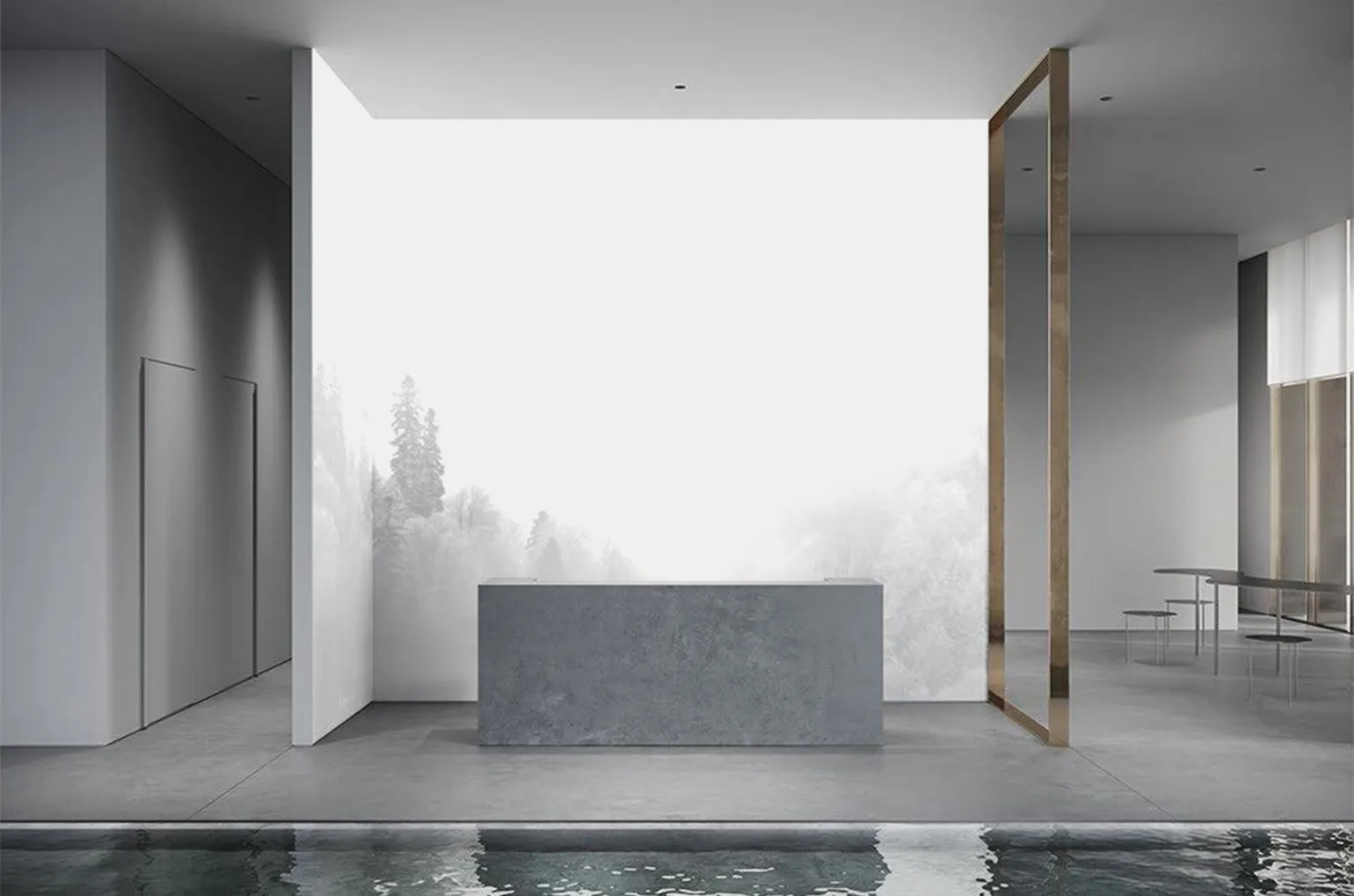
In the HoReCa industry, unique art objects are becoming key elements that distinguish restaurants and hotels from the competition. They not only attract customer attention but also contribute to the creation of viral content on social media. This, in turn, leads to increased brand awareness and a growing number of repeat customers. Investments in original decor and art objects can significantly impact the image of the establishment and its attractiveness to the target audience.
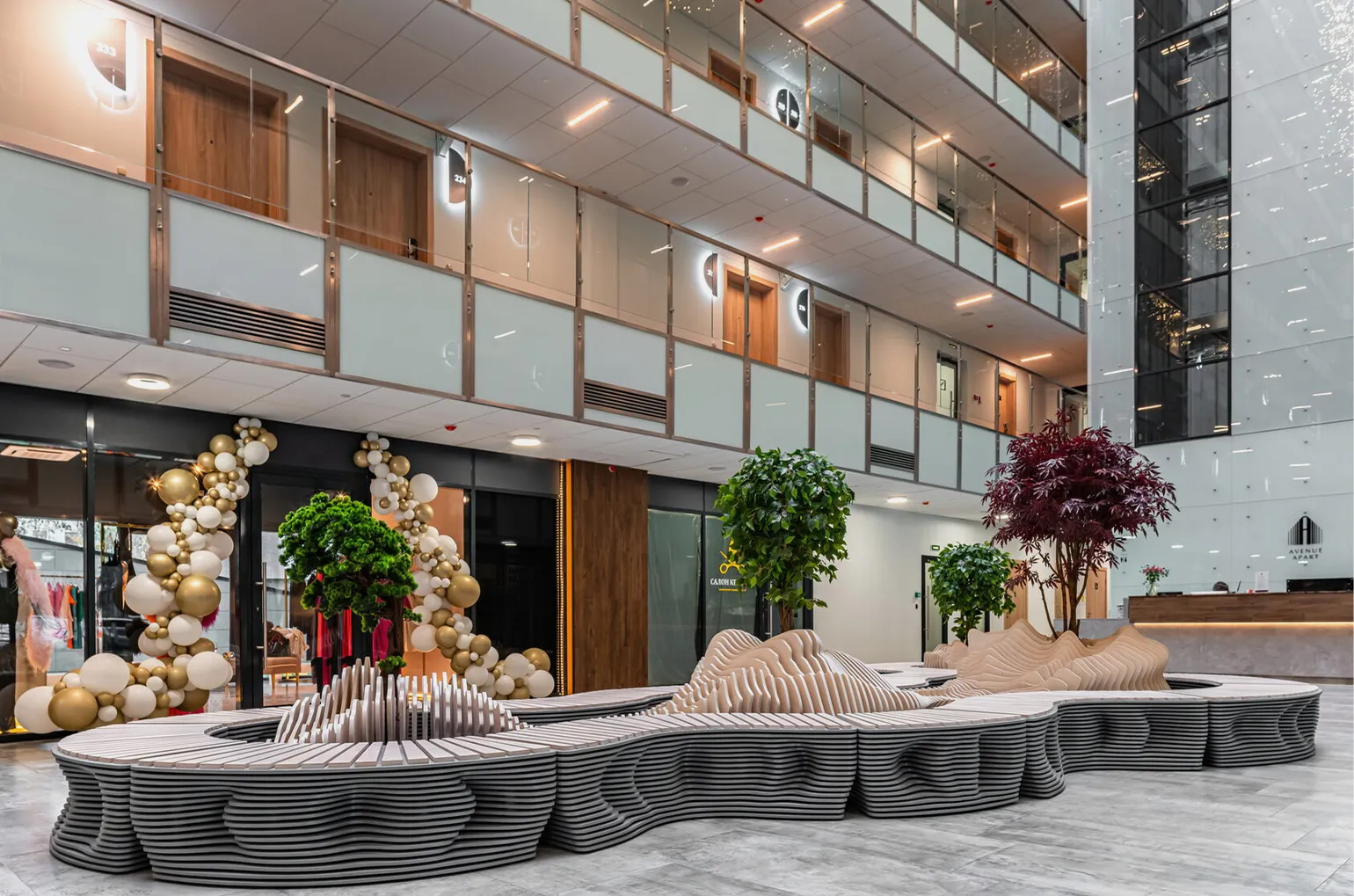
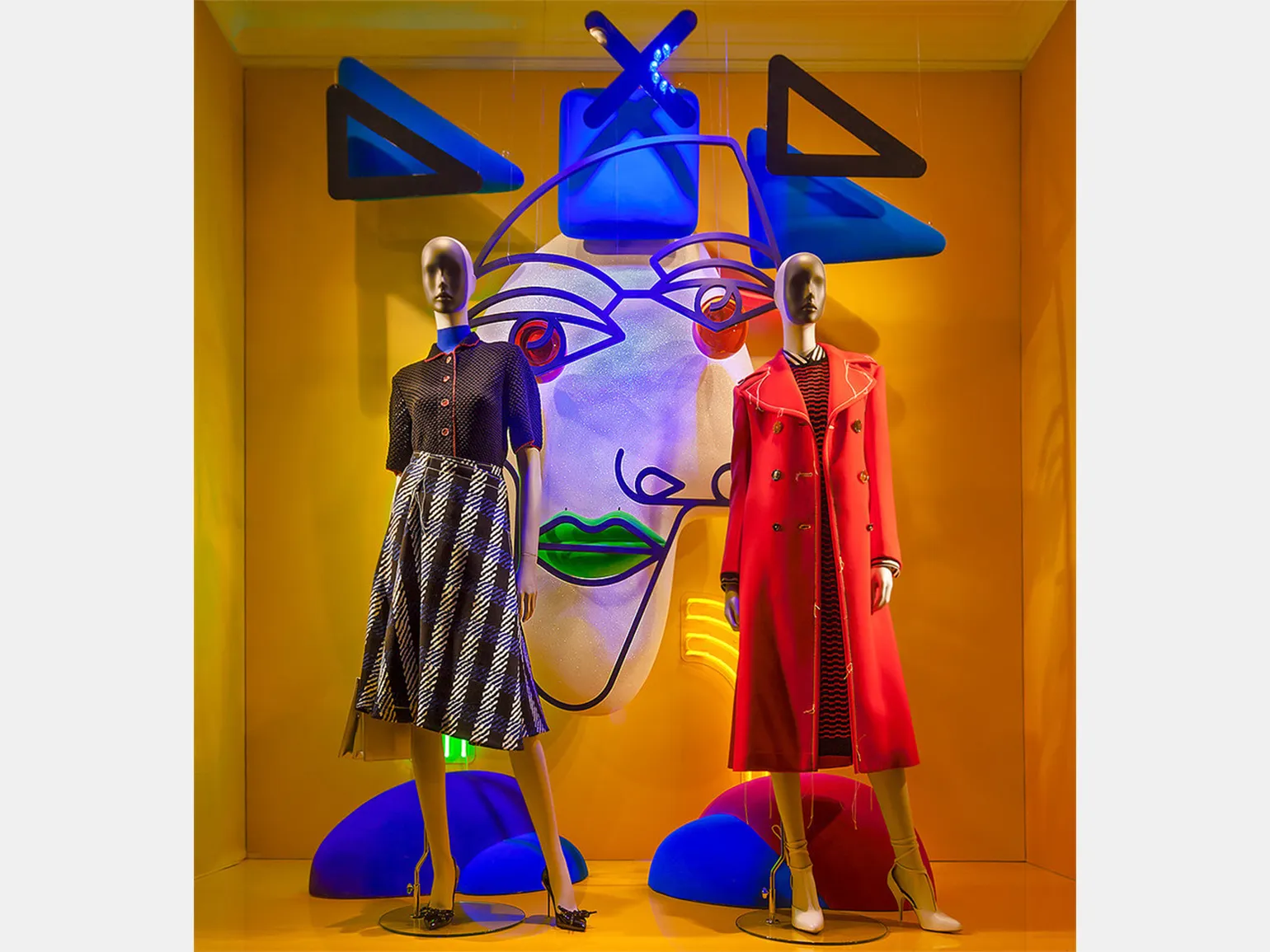
In retail, public art is actively used to decorate windows and create hanging installations in high-traffic areas. This is an effective way to draw attention to new products and seasonal offers. Bright and creative window displays decorated for the holidays can significantly increase customer traffic and improve a store's image. The use of public art not only distinguishes a brand from its competitors but also creates a unique atmosphere that encourages customers to linger and make a purchase.
Public art is actively being studied in the context of online services. Over the past two years, as an artist, I have noticed increasing interest from mobile banking and online cinemas, who are turning to me to create unique projects. This underscores the importance of engaging with audiences not only offline but also digitally. The development of public art in the online environment opens new horizons for creative solutions and effective communication with clients.
Public art is actively developing and becoming a key tool in marketing and branding. Its use not only enriches the visual environment but also creates unique communities around brands, which significantly impacts their success. Effective use of public art helps brands stand out from the competition, attracts the attention of the target audience, and creates an emotional connection with consumers. Thus, public art not only decorates urban spaces but also serves as a powerful means of increasing brand awareness and loyalty.
How to evaluate the business impact of investing in art objects
Measuring the direct impact of art on people is a challenging task. Therefore, the results of integrating public art objects into business projects can only be assessed indirectly. Analyzing this impact requires considering various factors, including the audience's emotional response and changes in brand perception. Public art can increase the attractiveness of business spaces and contribute to the creation of a unique atmosphere, which, in turn, can positively impact the customer experience and increase consumer loyalty.
A brand should clearly define the criteria for evaluating effectiveness, based on the goals it wants to achieve with art objects. One such goal may be to increase the customer base or increase the average order value. The key is the artist's ability to understand the target audience, identify their needs, and offer solutions that help businesses meet them. This interaction between art and commerce not only increases sales but also strengthens the brand's image in the marketplace.
Contemporary art is an effective tool for attracting customers. A striking example of the successful implementation of this strategy is the Benua Art Garden project, launched in 2019. The main goal of this project is to make the Benua Garden an art center in the Kalininsky District of St. Petersburg and to dispel the stereotype that one must travel to the city center for a cultural experience. Each year, we present new public art exhibitions to residents, where they can view the works of contemporary Russian artists, as well as participate in lectures and tours. This undoubtedly attracts the attention of guests and clients, adding value to the entire project and shaping the positive image of our group of companies. We do not aim to measure direct business impact, as our profits are not derived from the sale of art, but from investments in the objects into which it is integrated, thereby increasing their added value.
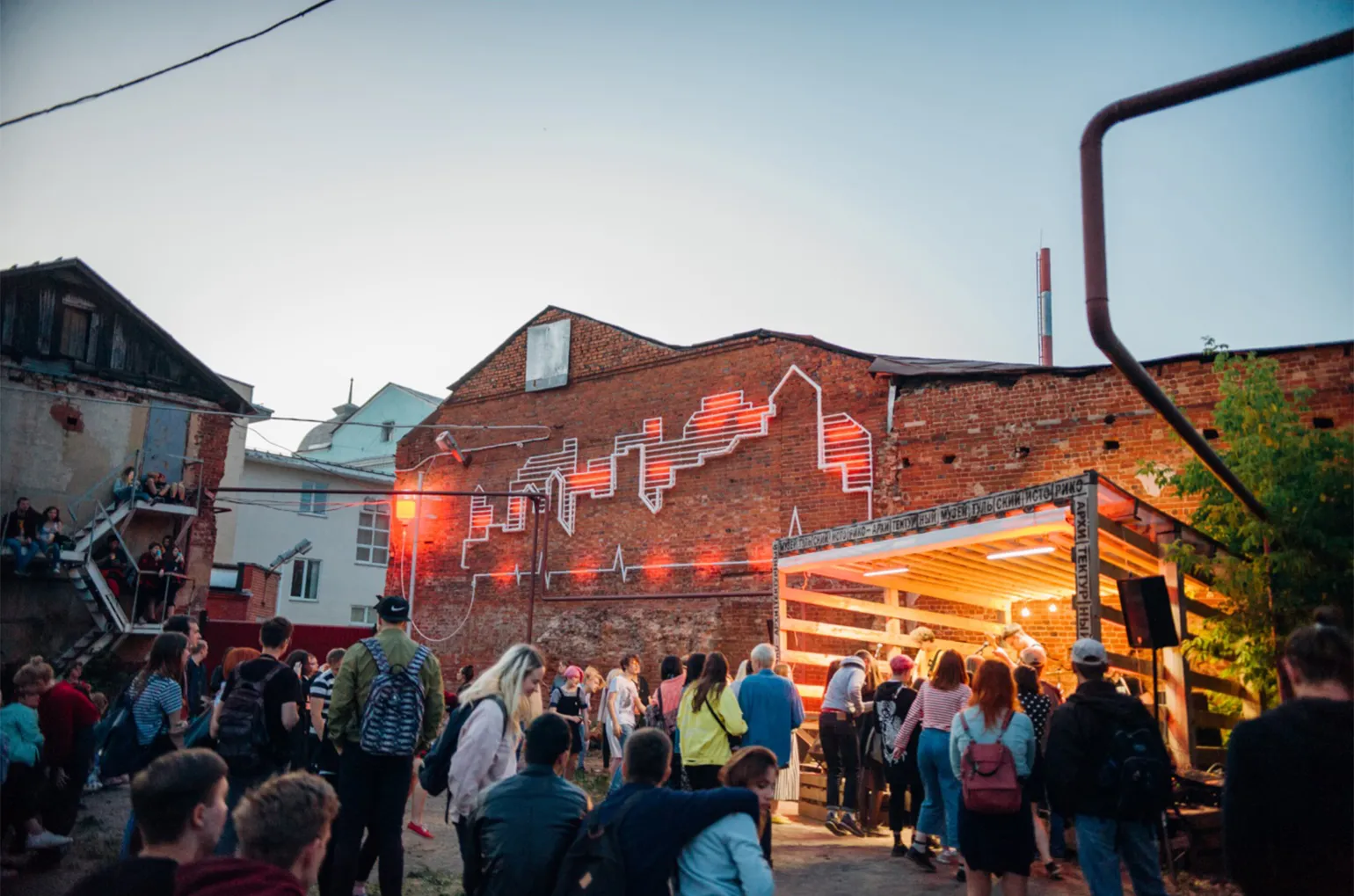
In 2014, I oversaw the "Art Vaccination" project, aimed at improving conditions at the Morozov Children's Hospital. The project's primary goal was to create a more comfortable atmosphere for children, thereby reducing their fears and stress during their stay at the hospital. The project included installing public art pieces, such as children's road signs in the stairwells, watermelon stumps in the playroom in place of traditional chairs, and a giant cardiogram on the hospital facade, made of transparent tubes filled with toys. These elements not only beautified the space but also made it more welcoming and inviting for young patients.
The completed project received positive feedback from psychologists, despite their lack of consultation during the concept development process. Key performance indicators (KPIs) for the artists included reducing children's crying. Although the number of tears was not measured before and after the implementation of the public art, a noticeable increase in children's happiness and calm among parents and medical staff was evident. This project demonstrated how art can impact the emotional state and overall well-being of children, as well as improve the atmosphere in medical institutions.
The Cost of Creating Public Art for Business
Creating public art for business requires a significant financial investment, which includes both the budget for the implementation of the art object and the artist's fee. Understanding these costs will allow you to plan and manage your project more effectively. Investing in public art can significantly enhance your company's image and attract customers, so it is important to carefully calculate all expenses during the preparatory stage. Proper budgeting will help avoid unexpected financial problems and ensure the successful completion of the project.
The price range for developing an art object can be up to 15 million rubles. The cost is influenced by several key factors, such as the complexity of the project, the materials used, the artist's experience, and the completion time. Also important are the concept of the art object and its uniqueness, which can significantly increase the price. Correctly assessing these factors will help customers understand which elements affect the overall cost.
- the materials and technologies that will be used, as well as the technical complexity of implementation;
- the stylistic preferences and working technique of the artist;
- the service life of the art object. For example, the durability requirements for objects intended for use for 5-7 years are often higher than for temporary installations;
- the location of the object. Placing an art object on the facade of a building or in bodies of water requires compliance with additional safety standards.
The average fee for public art artists in Russia ranges from 300-400 thousand rubles. However, many artists do not achieve this amount. The cost of developing a creative concept for advertising campaigns can significantly exceed this amount, reaching 1.5 million rubles. Public art has become an important tool for brand promotion, and its impact on audiences requires a high level of creativity and professionalism from artists. Due to the growing interest in street art, fees for such projects are likely to continue to rise. Elena Plakhtiy, Marketing Director at Best Group, emphasizes that the cost of a project depends on its concept. We have worked with galleries in St. Petersburg, organizing public art projects using their collections. In such cases, costs were minimal, including delivery, installation, and navigation. However, if a project is developed from scratch, including developing ideas, engaging curators, and holding open competitions for artists, costs increase significantly depending on the scale of the project. This emphasizes the importance of careful planning and budgeting at all stages of art project implementation.
Effective Use of Public Art in Business Projects
Before engaging a public art artist, you need to clearly formulate the task you want to solve through art. This could be creating a unique image for your brand, attracting attention to a product, or improving urban infrastructure. A clear understanding of the project's goal will not only facilitate communication with the artist but also help adapt the task during the process, if necessary. A successful public art project should be based on a clear concept, which will achieve maximum impact and make art an integral part of your brand or urban environment.
Choosing the optimal location for installing an art object plays a key role in the successful implementation of the project. The location directly affects the approval process with local authorities and can determine further stages of work. If the public art installation is planned outside the company's premises, it will be necessary to coordinate the design documentation and technical details with the relevant authorities. This will help avoid legal complications and ensure compliance with local rules and regulations. Choosing the right location will not only simplify the approval process but also increase the visibility and impact of the public art installation.
Once the goals and location for the public art installation have been determined, it's time to begin searching for a public art artist. It's recommended to prepare references in advance to simplify the process of selecting a specialist with the necessary experience and style. This will not only save time but also ensure that the future artwork meets your vision and requirements.
An artist creating public art installations should have significant experience working with a variety of materials and a detailed understanding of safety requirements and installation features. Long-term public art installations require careful planning and a professional approach. It's important to avoid hiring novices who are only experienced with temporary installations, as this can negatively impact the quality and durability of the artwork. A professional is able to consider all nuances, ensuring not only aesthetic value but also safety for those around them.
In public art projects, other professionals are actively involved in addition to the artist themselves. Public art artists typically have reliable contractors who assist in the implementation of the concept. Key factors include the artist's ability to supervise the work, as well as the contractors' willingness to accommodate any changes that may arise during the process. This ensures flexibility and the quality of the final result, which is especially important for the successful completion of street art projects.
Clients sometimes independently prepare project documentation and coordinate the work of a team of technical specialists. This is especially common when implementing projects for residential complexes or factories. However, in most cases, the artist assumes responsibility for all technical aspects of the project. This approach ensures higher quality of execution and consistency of all design elements and functionality.
A public art project typically involves 10 to 15 people, including representatives of both the artist and the client. The client's team may consist of various specialists, such as curators, architects, designers, as well as representatives of local administration and public organizations. Each participant contributes to the successful implementation of the project, from the conceptual stage to the final implementation. Established cooperation between all parties plays a key role in creating a high-quality and meaningful work of art in a public space.
- A marketing or project director who is interested in the successful implementation and can communicate effectively with the artist.
- A group of technical specialists responsible for installation, including a coordinator who will interact with the artist.
- Packaging specialists Project staff, such as designers and PR managers, who help convey the meaning of the art object to the audience.
- A maintenance team, which is especially important for long-term projects, ensures the object's care into the future.
Elena Plakhtiy, Marketing Director at Best Group, emphasizes that the key is the idea, and the team is formed depending on the specific project. It is important that the team includes specialists with the necessary skills and experience. This allows for the effective implementation of the project and the achievement of its goals. Having a variety of competencies on the team facilitates deeper analysis and idea generation, which in turn increases the chances of successful implementation. This approach ensures flexibility and adaptability, which is especially important in a rapidly changing business environment.
- an exhibition curator who organizes all implementation processes;
- an artist who creates the art objects;
- a designer responsible for the design and packaging of the project;
- a PR specialist who promotes the project.
For the successful implementation of a public art project, a passion for art, patience in coordinating with authorities, and trust in the artist are essential. These qualities will help overcome potential difficulties that arise on the path to creating a unique art object. Furthermore, it is necessary to take public opinion into account and involve the local community in the process, which contributes not only to a better understanding of the project but also to its successful integration into the urban environment. Strong communication with stakeholders also plays a key role in achieving a positive outcome.
Examples of Public Art Objects: Innovative Approaches and Unique Projects
Public art is a significant component of contemporary artistic expression, distinguished by two key characteristics: site-specificity and participation. Site-specificity implies that a work of art is created with a specific place in mind, which strengthens its connection with the environment. Participatory nature emphasizes the involvement of the local community, allowing people to actively participate in the creation or perception of art. These characteristics contribute to the formation of a unique cultural context and strengthen the interaction between art and society, making public art an important tool for socialization and cultural exchange.
Site-specific art objects are developed taking into account the unique characteristics of a location, including cultural features and architectural elements. This approach ensures their harmonious integration with the surrounding environment, contributing to its enrichment and creating a unique visual experience. These works of art not only decorate the space but also emphasize its individuality, attracting visitors' attention and creating new opportunities for interaction with the cultural context.
The "Memory Map" installation, located on the premises of the Fabrika Center for Creative Industries, is a striking example of a contemporary approach to art. This large-scale work is a microchip matrix, covering an area of approximately 4,500 square meters and created using a special road paint. The installation attracts attention not only with its size, but also with the original use of materials, which makes it a unique object for study and discussion in the context of contemporary art and the urban environment.
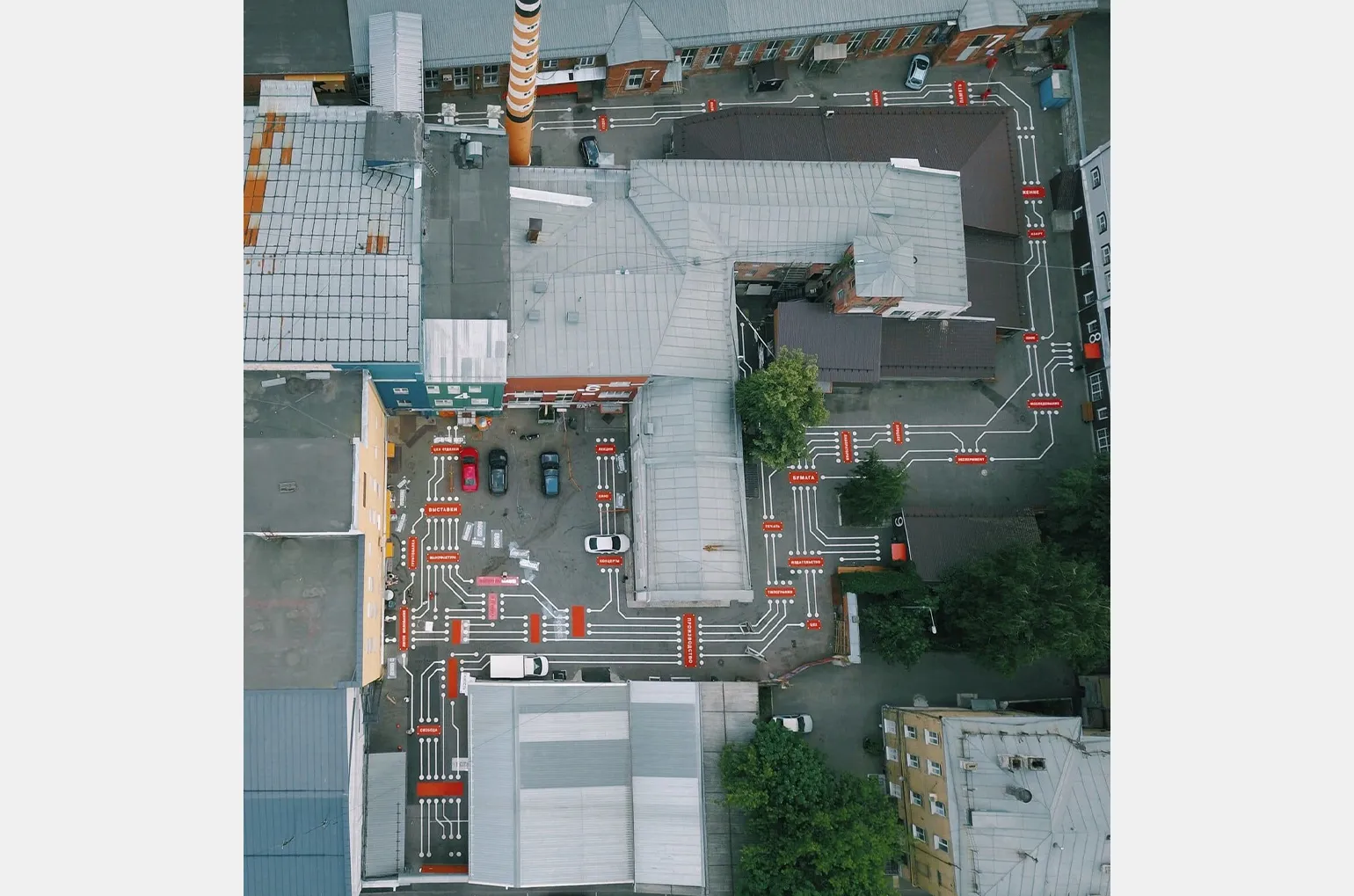
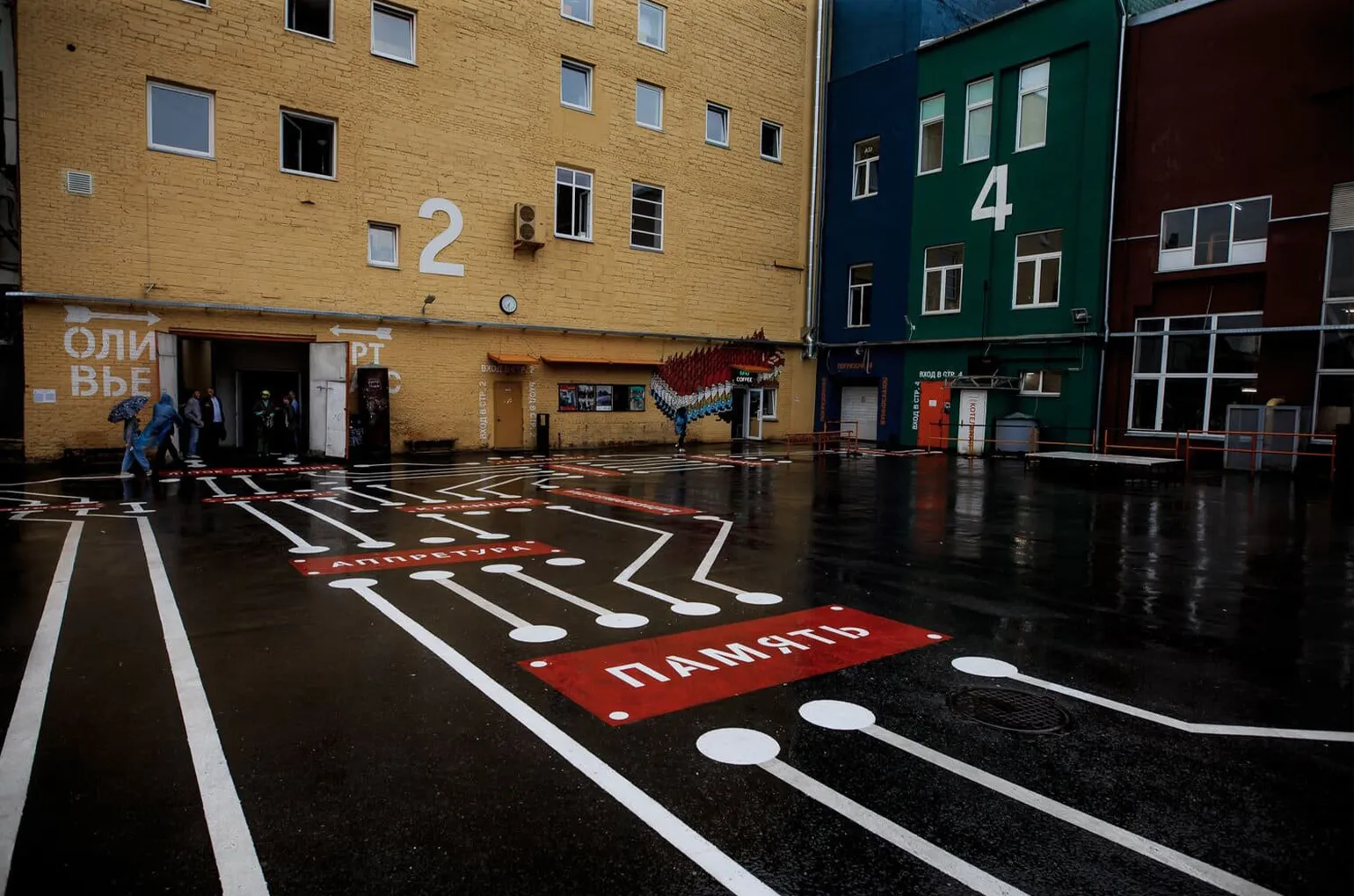
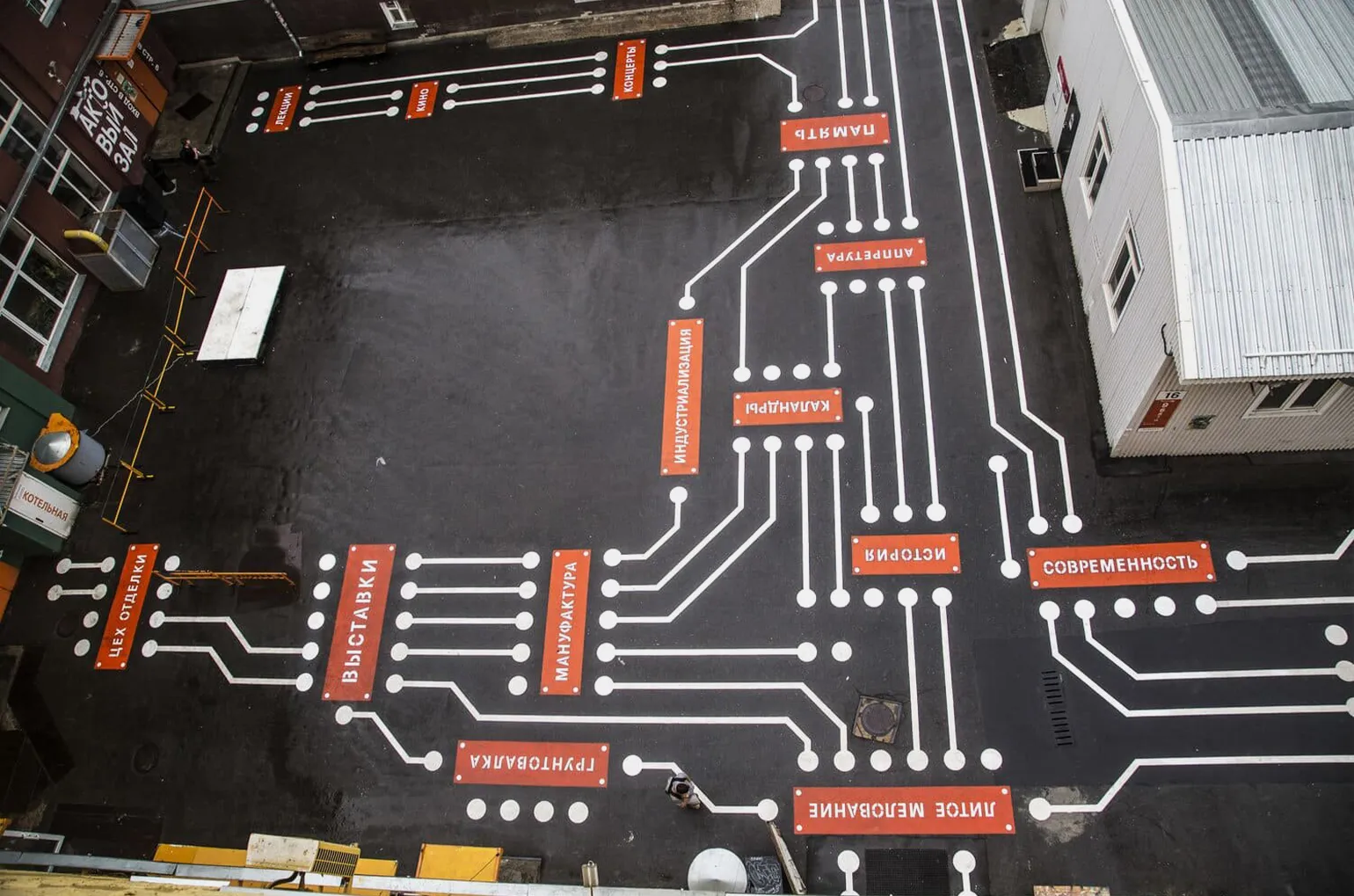
The installation route passes through the courtyards of the historic factory, focusing on significant symbols chosen by local residents. This is not only a form of artistic expression but also a navigator in a complex post-industrial space, facilitating a new interpretation of the history of a given place. The installation allows for a deeper understanding of the cultural heritage and uniqueness of the territory, creating a dialogue between the past and the present.
Participatory art objects are formed through interaction with the community for which they are created. The artist's primary task is to develop a concept and imbue it with meaning, drawing on the opinions and ideas of the participants. This approach fosters deeper audience engagement and creates unique works of art that reflect the collective experience and values of the community.
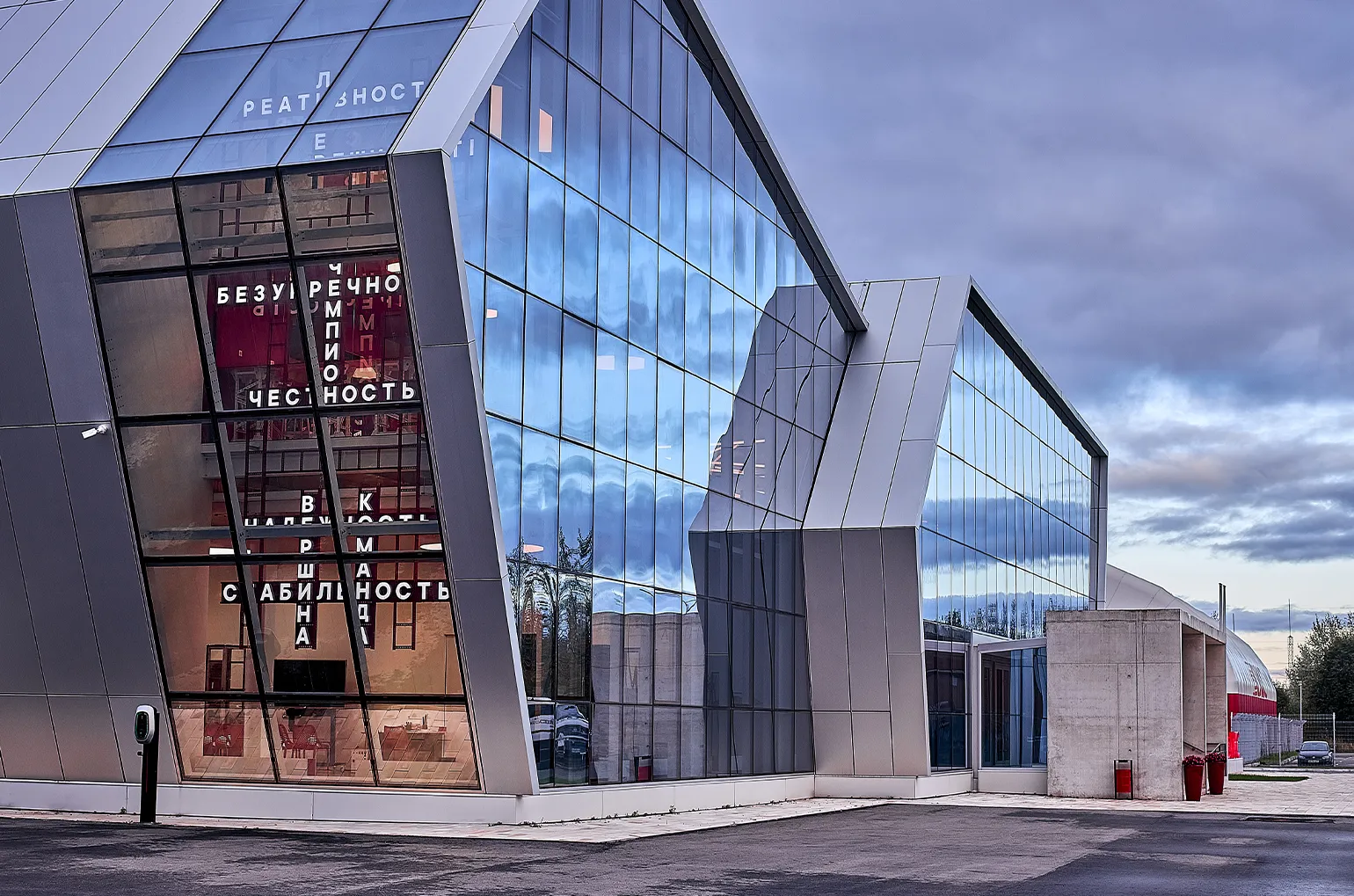
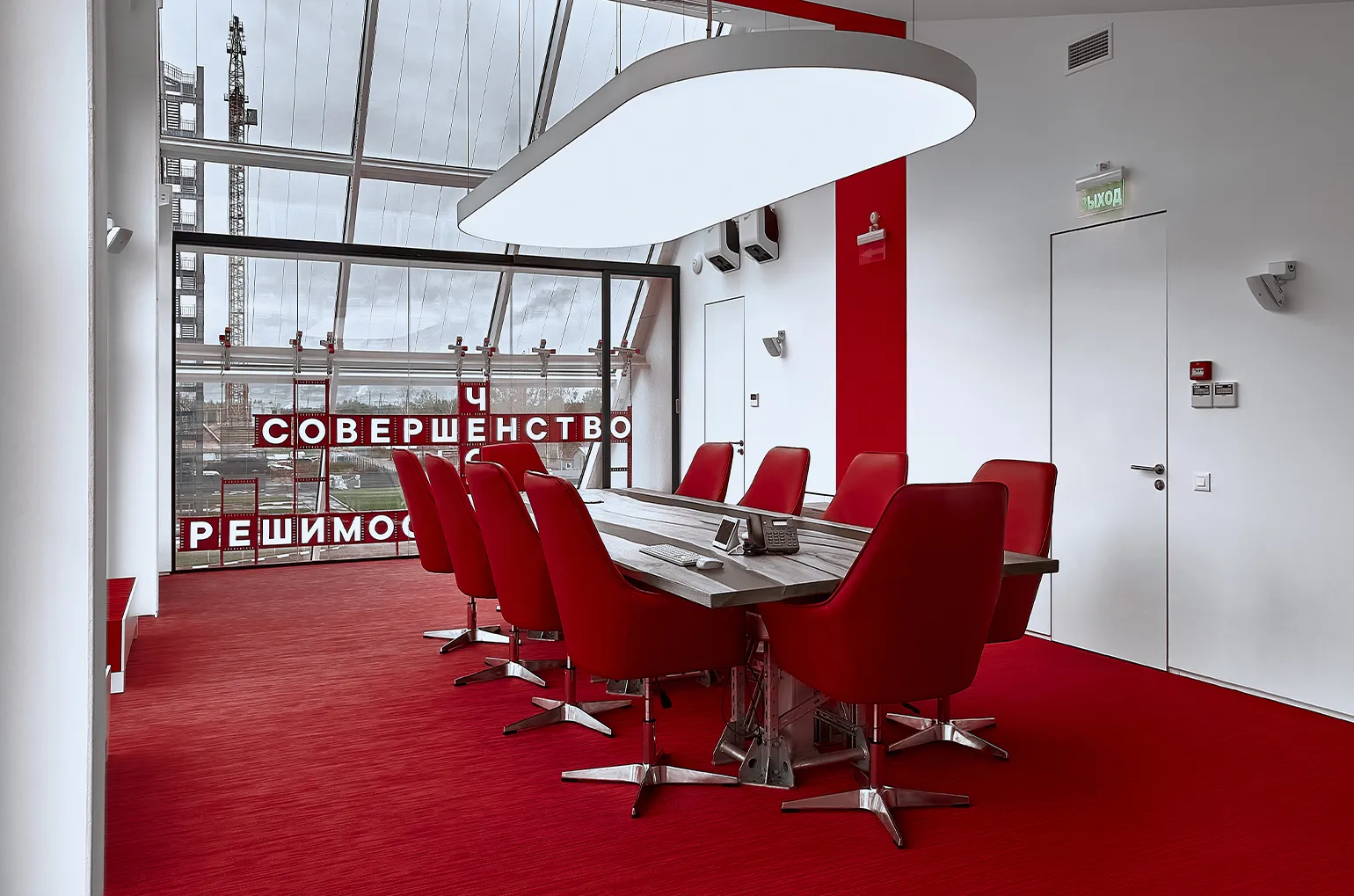
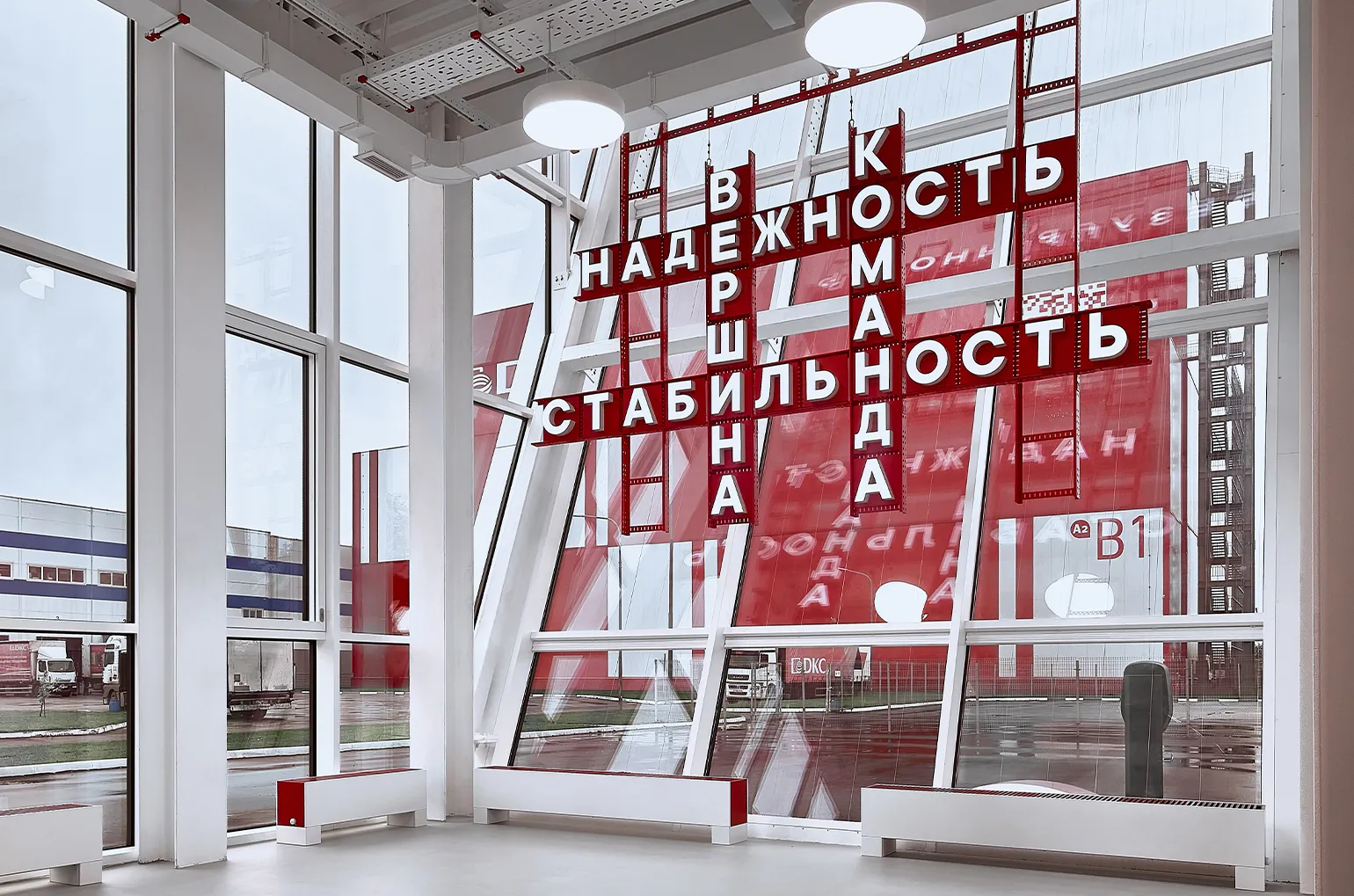
An example of a participatory project is "Stairway Up," implemented at the training center of DKC, one of the leading manufacturers of electrical and telecommunications equipment in Russia. This eight-meter crossword puzzle includes words that reflect the company's corporate values and was chosen by more than 500 employees. The project emphasizes the importance of employee engagement in shaping corporate culture and creates a unique atmosphere conducive to developing team spirit and strengthening brand identity. The result was a 225-kilogram "ideological poster" that symbolizes collective identity and unity. This project demonstrates how art can unite people and shape a corporate culture based on shared participation. Such initiatives emphasize the importance of interaction and teamwork, helping to create a positive atmosphere and strengthen corporate values.
5 key facts about public art
- Public art is a form of art intended for a wide audience and placed in public spaces. Unlike traditional art, such objects can be located in the most unexpected places: on the walls of buildings, in underground passages, in squares, and even in bodies of water.
- Brands actively use public art to create a unique image, increase recognition, and foster positive perceptions. This allows them to stand out from the competition and attract the attention of their target audience.
- The most active users of public art are developers, retailers, and hotel and restaurant chains. In recent years, companies from the digital services sector have also joined this practice—such as online cinemas, mobile banking, and bookmakers.
- Evaluating the effectiveness of public art objects is difficult, but indirect indicators, such as an increase in visitor flow or an increase in the average bill, can indicate a positive impact of these objects on business.
- The cost of creating a public art object varies from 1 to 15 million rubles. The artist's work is additionally paid from 300 to 400 thousand rubles on the Russian market, depending on the complexity of the project.
Weight loss in a month: 5 proven tips
Want to lose weight without stress? Find out 5 proven methods in the article!
Find out more