
Contents:

Learn: Free career guidance
Learn morePugacheva — Songwriter
In 1978, the film "The Woman Who Sings" was released, starring the famous pop singer Anna Streltsova. The character's life story echoed the life of Alla Pugacheva, who played the central role. The film's musical score was created by Alexander Zatsepin, a prominent Soviet film composer known for his work on such cult films as "Operation Y," "Ivan Vasilievich: Changes Profession," "Kidnapping, Caucasian Style," and "The Diamond Arm." His talent and skill made the film not only spectacular but also musically memorable, which contributed to its popularity and success.
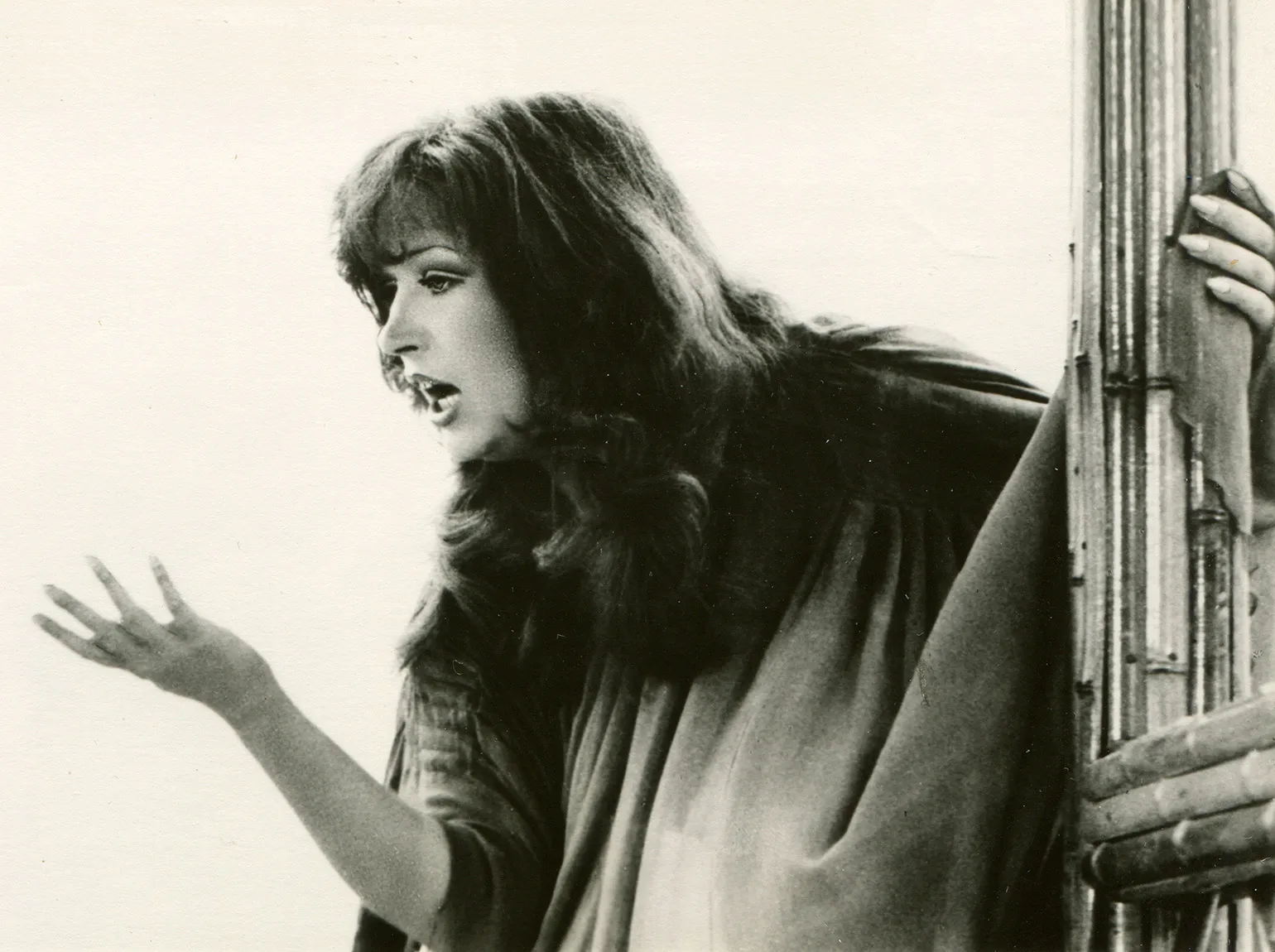
Pugacheva strove to include her own songs in the film. Despite her already established stellar career, competing with Zatsepin seemed impractical. Performing music and writing songs were two different tasks, requiring different skills. Only true professionals could perform this work. The USSR Composers' Union meticulously monitored the quality of musical content, which put the singer in a difficult position. Alla decided to resort to a ruse. She presented the filmmakers with four songs by an unknown Boris Gorbonos. All they knew was that Boris, who lived in Lyubertsy, suffered from an incurable disease and was unable to come to Mosfilm to discuss his participation in the project. The songs made a good impression, and they were approved for use in the film. Zatsepin was outraged to learn that the film's soundtrack included music by an unknown, disabled composer. However, his shock intensified when he discovered that Boris, in fact, did not exist. This fact made him reflect on the nature of creativity and how art can be connected to fictional characters. Pugacheva created the character of Gorbonos to be able to perform songs that were truly close to her heart. It was important to her to gain recognition not only as a performer but also as a songwriter. The film became an excellent tool for promoting her career, as at that time she was rarely seen on television, although Pugacheva's voice was known thanks to the hit "Harlequin" and the film "The Irony of Fate," in which she performed songs for Barbara Brylska. She had been on stage for over ten years, but all this time, others decided which songs she should sing. Thanks to Boris Gorbonos, the film included several of Pugacheva's original compositions: she wrote the music for three songs—"The Woman Who Sings," "Come," and "Sonnet No. 90"—and also wrote the lyrics for "Come." These works later became part of her first solo album, "Mirror of the Soul," which was released in 1978.
After the release of Alla Pugacheva's album and film, she was given the opportunity to independently determine the direction of her musical career. For her third album, "Rise Above the Vanity!", the singer wrote all the songs herself, which emphasized her creative independence and unique style.
Alla Pugacheva's music contrasted with the neat and restrained pop music of the Soviet Union, which focused on classical orchestral sounds. Her compositions were distinguished by their emancipation, emotion, and energy, as well as rich instrumentation, which included saxophones, flutes, and a variety of keyboard instruments, including synthesizers. Pugacheva's work seamlessly blended elements of Western genres such as rock, funk, blues, jazz, and baroque pop. Let's look at one of her albums, which showcases the unique features of her musical style and her influence on Soviet pop music.
The title track boasts an energetic sound, combining a disco beat with a funky rhythm section. A lively piano riff is beautifully complemented by synthesizer lilts, and a slap bass adds dynamics to the composition. Mesmerizing saxophone rumbles create a unique atmosphere, introducing elements of jazz and soul to the track. This song is an excellent choice for those who appreciate a vibrant and memorable musical accompaniment.
Composition “That’s how it happened, Mom!” "What the Atom Can't Do" is a sophisticated blues that harmoniously blends a glamorous piano part with jazzy brass instruments. The song "What the Atom Can't Do" captures attention not only with its lyrics but also with its musical accompaniment, which enhances the overall impression. In this composition, Pugacheva touches on important themes, talking about a future without nuclear bombs and how nuclear energy will be a boon for all humanity. The music is country-inspired, and the lyrics are a translation of a song by renowned American country singer Woody Guthrie. The country style, in this context, symbolizes the idea of reconciliation between the USSR and the USA, emphasizing the importance of international cooperation in the fields of peace and energy.
Artemy Troitsky, recognized in Russia as a foreign agent, considers Alla Pugacheva an underrated author. Among her works, he highlights such songs as "Queen," "Three Happy Days," and "Find Me." He especially notes the last composition, describing it as a striking example of rock 'n' roll.
Pugacheva - a rebel
From an early age, Alla showed confidence in her views. At the age of 14, she quarreled with her mother and, without hesitation, left the house, spending the whole night in the entranceway. After completing the eighth grade, Alla entered the Ippolitov-Ivanov Music College, where her behavior was defiant: she ignored the rules, smoked, drank alcohol, and wore extravagant clothes. This period became a period of self-expression for her and the search for her place in the world of music.
Alla Pugacheva's first song, "Robot," was performed in 1965, when she was only 16 years old. This composition was featured on the comedy program "Bang-Bang, or Satirical Shots on Misses." The song's author, Levon Merabov, recalled that upon first hearing it, he wasn't impressed by Alla's vocals, but her sincerity and inner content caught his attention. The show's director, Boris Levinson, after speaking with the young performer, remarked to the team that she didn't need special training—her talent was obvious. This talent was shaped by the emotional and sensual French pop music that Pugacheva actively listened to as a child. She especially admired Edith Piaf, whose powerful performance impressed with its depth and strength, despite her fragile appearance.
Reading is one of the most important skills that contributes to the development of thinking and broadening of horizons. It helps to improve vocabulary, grammar and creativity. In addition, reading books, articles and other materials helps to increase the level of knowledge in various fields. Don't forget to take the time to read to enrich your inner world and learn new things.
Read also:
The Parisian Sparrow: Memories of Edith Piaf
Edith Piaf, known worldwide as the "Parisian Sparrow", left an indelible mark on the history of music and culture. Born in 1915, she overcame difficulties and trials to become a symbol of French chanson. Her unique voice and emotional delivery made Edith Piaf's songs true masterpieces that still touch the hearts of listeners.
Each of Piaf's compositions is imbued with deep feelings of love, loss, and hope. Famous hits such as "La Vie en rose" and "Non, je ne regrette rien" have become classics and continue to inspire new generations of musicians. Edith Piaf possessed an incredible ability to convey her emotions through music, making her work timeless.
Beyond her musical career, Piaf's life was filled with dramatic events, which were also reflected in her songs. Her struggles with personal demons and losses made her image even more powerful and memorable. Piaf became not only a musical icon, but also a symbol of resilience and fortitude.
Edith Piaf's legacy lives on today. Her songs are heard on stages around the world, and her story has inspired numerous films and books. Memories of the "Paris Sparrow" remind us how music can touch hearts and unite people, transcending time and cultural boundaries.
In the sixties, the radio airwaves were controlled by officials who sought to ensure that only professional performers were heard. This meant that only musicians with the appropriate education, a perfectly trained voice, and instrumental skills were allowed to perform on the radio. Furthermore, all performers had to be officially employed by cultural institutions. This approach ensured rigor and compliance with the ideals of the time.
Pugacheva was often considered an amateur artist. Despite her musical education, her sound lacked respectability and academicism. She didn't simply sing, she sang, demonstrating a free and uninhibited demeanor on stage. Her performance style, accompanied by energetic gestures, distinguished her from other singers.
The energy and liveliness of the singer's performances delighted listeners, but caused discontent among conservative officials. For example, the chairman of the State Television and Radio Broadcasting Company, Lapin, banned showing her close-up, believing that her manner of bringing the microphone to her lips could be perceived as a hint at oral sex. This decision highlighted the contradictions between art and traditional moral norms in society.
Pugacheva violated safety rules at her show, striving to create an unforgettable spectacle. Her legendary performance during the song "Million Scarlet Roses" under the circus dome became especially memorable. This moment became a symbol of her creative courage and artistic mastery, captivating the audience and creating a unique atmosphere.
In the early 1980s, Alla Pugacheva hosted the famous show "New Year's Attraction," which was filmed at a circus. While preparing for her performance, she developed the urge to sing while swinging on a trapeze and reach heights that would impress the audience. Realizing that the organizers might disapprove of her risky idea, Pugacheva decided not to discuss it with them. Instead, she persuaded a stagehand to raise the trapeze to the top of the dome at the right moment, bribing him with an autographed record. As a result, before the astonished audience, the superstar soared into the air, serenely performing her famous song "Million Scarlet Roses." Of course, she wore no safety harness, which added even more drama to her performance. This moment became one of the most memorable chapters in Pugacheva's career and a shining example of her creative daring.
Pugacheva – a Rock Star
Alla Pugacheva's first solo album, "Mirror of the Soul," caused a real sensation on the Soviet stage. This album became an example of art rock and progressive rock, which at that time was completely innovative for the USSR. Its musical foundation combines elements of blues, funk, and baroque pop, creating a unique sound that was unimaginable in the 1970s. It can be compared to Nirvana performing alongside the classic image of Elvis Presley in the 1950s in the USA. The album "Mirror of the Soul" became a symbol of the musical revolution and opened new horizons for Russian music.
The album's opening track immediately strikes with its power—the seven-minute composition "Shaman's Tambourine" features an impressive bass line reminiscent of the style of Yes's "Roundabout." It combines a funky groove, fast brass instruments, and a wah-wah guitar playing a short solo in the middle. This song would fit perfectly into the atmosphere of the Soul Train show with its funk bands, as well as the musical context of King Crimson albums.
The arrangement of the song "I Believe in You" creates a feeling of symphonic rock, although it has less guitar sound. This can be paralleled with the classic progressive rock composition "Nights in White Satin" by the Moody Blues. The atmosphere, immersing in detachment from the Earth, and the transitions between parts of the composition are executed in the style characteristic of "Starless" by King Crimson.
Alla Pugacheva's main rock period was the second half of the 1980s and the early 1990s. During this time, she performed songs by composers such as Yuri Chernavsky and Vladimir Kuzmin. One of the first compositions written by Kuzmin for Pugacheva was "Nado Uzhe." This electro-disco song includes a bright guitar arrangement, as well as a memorable guitar solo. This period became significant in the singer's career, emphasizing her unique style and musical experiments.
Kuzmin and Pugacheva are known for their joint performances, in particular, in the song "Nekhodno," where they perform a duet in unison. This composition stands out for its energetic guitar glam metal, accompanied by a synthesizer. Their joint work attracts the attention of listeners and remains popular in the music scene.
In 1987, Alla Pugacheva took part in the "Rock for a Nuclear-Free World" concert, which was held in Duisburg. As part of this event, she, together with German rock musician Udo Lindenberg, performed the pacifist song "Wozu sind Kriege da?" ("Why are wars necessary?") in German and Russian. This performance became a significant moment in the history of musical activism, emphasizing the importance of peaceful coexistence and opposition to war.
In 1988, Alla Pugacheva and Udo released a joint album, "Songs Instead of Letters." One side of the vinyl record features Udo's song-letters in English, while the reverse side features Alla Pugacheva's compositions in Russian. Udo's track, "Horizon," features Pugacheva providing backing vocals, adding a unique touch to the work. The album became a landmark event in the musical careers of both artists and demonstrated their creative collaboration.
Pugacheva — the prima donna
Alla Pugacheva is a symbol of the era that everyone is talking about today. Even in 2023, her influence is felt everywhere. At the end of 2022, the BBC noted her as one of the most inspiring and influential women in the world. This status is confirmed not only by the opinion of critics, but also by the love of the people, which is reflected in popular anecdotes about her. Pugacheva continues to be an important figure in culture, inspiring new generations of artists and fans.
The son asks his father a question:
Leonid Ilyich Brezhnev was a Soviet politician who served as General Secretary of the Communist Party of the Soviet Union from 1964 to 1982. He played a key role in shaping the domestic and foreign policy of the Soviet Union during the Cold War. Brezhnev is known for his policy of "stagnation," characterized by economic stagnation and a lack of significant reforms. His reign was also marked by strengthening relations with the West, signing a number of international agreements, and active involvement in global conflicts, such as the intervention in Afghanistan. Brezhnev became a symbol of his time, and his legacy continues to spark debate among historians and political scientists.
My father consults an encyclopedia. He seeks information to better understand the topics that interest him. His thirst for knowledge inspires those around him. He often shares new facts and discoveries, which encourages discussion and exchange of opinions within the family. This demonstrates the importance of constant self-education and the desire to develop, both for him and for all of us.
Leonid Ilyich Brezhnev was a political figure who occupied a significant place in the Soviet political system during the period when Alla Pugacheva's popularity reached its peak. His work spanned important stages in the country's development and influenced the cultural and social processes of the time. Brezhnev became a symbol of a certain era, when politics and culture intertwined, creating a unique context for the development of Soviet society.
The nickname "Prima Donna of the Russian Stage" stuck with Alla Pugacheva relatively late, after the collapse of the USSR. This occurred after her performance at Eurovision 1997, where she sang a song of that name. In operatic tradition, the term "prima donna" refers to a singer performing leading roles. Alla Pugacheva, thanks to her talent and charisma, earned this title, becoming a symbol of Russian music and an iconic figure on the stage.
Long before Eurovision, Alla Pugacheva had established herself not only as an outstanding singer but also as a leading figure in the Russian pop scene, earning the status of godmother of pop. She played a key role in uncovering the talents of many performers and songwriters, among whom Igor Nikolaev stands out. He wrote the famous song "Iceberg" for Pugacheva, after which he himself launched a successful solo career. Pugacheva's contribution to the development of Russian music remains invaluable, and her influence is still felt today.
Alla Borisovna supported not only popular pop performers, but also underground musicians, demonstrating her true nature as a rocker. She played a key role in the recording of the album "Prince of Silence" for the young band "Nautilus Pompilius" and even taught vocals to Vyacheslav Butusov. She also sang backing vocals on the famous song "Doctor of Your Body." This confirms her significance and influence on the development of Russian music, both in the mainstream and alternative scenes.
In 1986, Alla Pugacheva, leveraging her name and authority in Soviet society, initiated a large-scale crowdfunding project. In response to the Chernobyl disaster, she organized a charity concert, "Account 904," to support the liquidators. The event featured well-known bands such as Bravo, Kruiz, Avtograf, and Recital, as well as renowned artists including Kuzmin and Gradsky. The concert, held at the famous Olympic Sports Palace, drew a full house and raised 543 million Soviet rubles, the equivalent of about $2 billion today. This campaign not only demonstrated the power of public support but also demonstrated how art can unite people in difficult times.
A few months after the events, she performed in Chernobyl. At this concert, Pugacheva danced with a liquidator, who soon died of radiation sickness. This concert became a serious test for Alla Borisovna—she developed endocrine problems, and within a few years, her voice noticeably lost its former softness. Despite this, we still love her voice for what it has become.
Pugacheva — performer
Have you met this Alla yet?
Free career guidance
• Determine what you want from a new profession• Take the test and find out which professions are right for you• Understand what such specialists do
Find out more