Contents:

Free test: which digital profession is right for you? Find out the answer in 15 minutes and try your hand at a new specialties.
Learn moreWhy Richard Strauss is confused with other composers
There are three famous composers with the last name Strauss. The first of them, Johann Strauss the Elder, was born in 1804 in Vienna. He founded his own orchestra and became famous for his waltzes, which gained popularity in the 19th century. Despite his significant contribution to music, the work of Johann Strauss the Elder is not often performed today, and only a few pieces, such as the "Radetzky March", retain their fame.
Johann Strauss founded a musical dynasty, in which his three sons also became composers. The most famous of them was Johann, named after his father. To make it easier to distinguish their names, the following designations are used: "Johann Strauss - father" and "Johann Strauss - son." This musical family had a significant influence on the development of classical and dance music, and their works are still popular today.
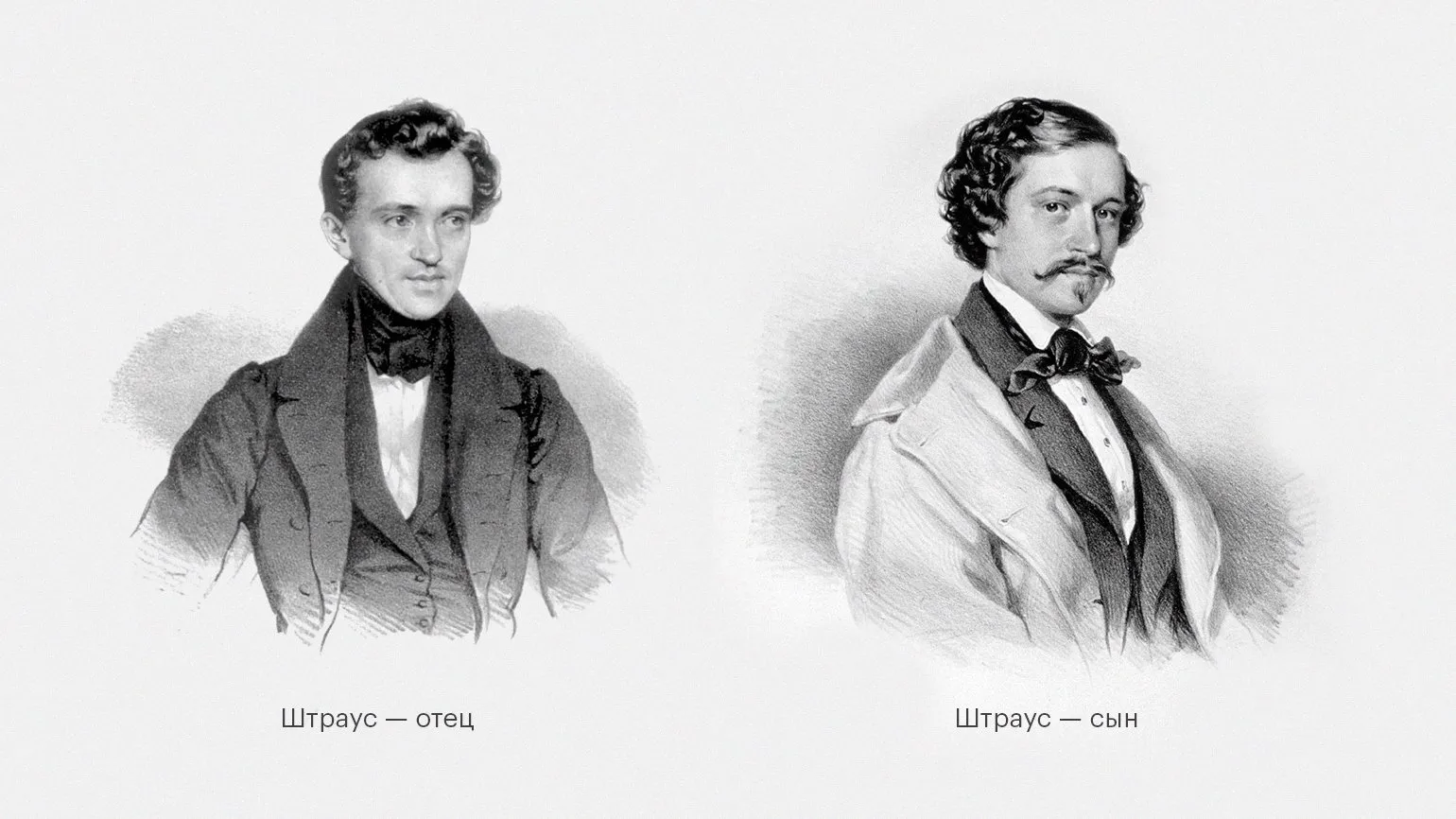
Johann Strauss — Strauss's son, born in 1825, continued his father's musical legacy and became one of the most famous waltz composers. His creative legacy includes nearly 500 waltzes and several famous operettas. Strauss's music is featured in such iconic works as Stanley Kubrick's film 2001: A Space Odyssey and the animated series Tom and Jerry. Among his most popular works is the waltz "Tales from the Vienna Woods," which continues to attract listeners to this day, confirming the high esteem in which his work is held in the world of classical music.
Richard Strauss, the third composer in our review, was born on June 11, 1864, in Munich. He is not related to the Austrian composers of the same name, and over time, his fame gave way to the popularity of Johann Strauss the Younger. Johann's waltzes remain relevant and easy to perceive, while the music of Richard Strauss is intended for true connoisseurs. His works are distinguished by their complexity and depth, which makes them especially interesting for listeners seeking a deeper understanding of music.

Throughout his long life, he wrote numerous works. Let's look at his most famous works.
The Symphonic Poem "Don Juan"
This work made Richard Strauss famous in the musical arena. At the age of 24, the composer was inspired by Nikolaus Lenau's poem, based on the legend of Don Juan, a famous Spanish seducer. This womanizer swears his love to women, but, having achieved his goal, leaves them. Strauss's creation became a symbol of his talent and drew attention to his musical style, which combines drama and emotional depth.
Don Juan, the legendary seeker of the ideal woman, does not find his happiness. When he is challenged to a duel, he decides to throw himself on his opponent's blade, realizing that life has lost meaning for him. His search for love and the ideal turns out to be futile, and in this search he never finds his true half.
In 1888, composer Richard Strauss created an outstanding programmatic work for symphony orchestra, based on the texts of Nikolaus Lenau. His poem "Don Juan", saturated with emotion and passion, brought Strauss great success and recognition. However, some critics expressed dissatisfaction with the choice of theme, pointing to Don Juan's moral character as an immoral libertine. At the time, there was a tradition among classical musicians of embracing lofty themes, as exemplified by the works of such masters as Wagner and Liszt. Thus, Don Juan became not only a landmark work in Strauss's work, but also a symbol of musical protest against the established norms of his time.
Read also:
Moonlight Sonata: history, legends and musical legacy of the work
Moonlight Sonata, written by Ludwig van Beethoven's Moonlight Sonata is one of the most famous works of classical music. Officially called the Piano Sonata No. 14, it was composed in 1801 and quickly gained popularity due to its deep emotional intensity and expressiveness.
The legend about this work says that it was inspired by the composer's love story. Beethoven is believed to have dedicated his sonata to a girl named Giulietta Guicciardi, with whom he had a romantic relationship. This story adds a special charm and mystery to the perception of the music.
The structure of the Moonlight Sonata consists of three movements: Allegro, Adagio sostenuto, and Allegretto. Each of them has its own unique atmosphere and emotional coloring. The first section, Allegro, is distinguished by a dynamic tempo and bright melodies, while the Adagio sostenuto immerses the listener in a world of tender and melancholic moods. The final movement, the Allegretto, concludes the piece on a more upbeat note.
The Moonlight Sonata has had a significant influence on the development of music, inspiring many composers and performers. It remains popular today, often performed in concerts and recorded by various musical groups.
Thus, the Moonlight Sonata is not just a musical work, but a true legend that continues to live on and inspire generations of listeners.
The Symphonic Poem "Thus Spoke Zarathustra"
Strauss's poem, written in 1896, was inspired by the works of Friedrich Nietzsche. It focuses on Zarathustra, the ancient Persian prophet and philosopher who promotes the concept of the superman. This titan, according to Nietzsche, is capable of transcending the ordinary and surpassing the achievements of previous generations. Thus, the poem becomes an important cultural and philosophical work, reflecting ideas about the development and evolution of human potential.
Strauss's poem is based on nine chapters from Nietzsche's book. The composer arranged them in his own order and expressed them in musical form. The opening notes of the work are distinguished by their grandeur and majesty, creating the image of the rising sun, which symbolizes a new day. This part is called "Sunrise" and sounds at the beginning of the program "What? Where? When?".
Opera "Salome"
The opera, based on the tragedy by Oscar Wilde, was first staged in 1905. This one-act work reveals the scandalous story of King Herod and his young stepdaughter, Salome, for whom he harbors a forbidden passion. The opera's plot immerses audiences in a world of passion, fear, and betrayal, highlighting the complex relationships between the characters. This production continues to captivate audiences with its emotional depth and vibrant musical moments.
Salome fell in love with the imprisoned prophet John the Baptist, but he rejected her with anger and contempt. In response, she performed a sensual Dance of the Seven Veils for Herod and, as a reward, demanded the prophet's head. It was brought to her on a silver platter. Overwhelmed by love, Salome kissed John's lips, which disgusted even Herod. He soon ordered his stepdaughter's execution.
The combination of biblical motifs, erotic elements, and crime stories made a shocking impression on audiences. Strauss's opera faced bans in various cities, and, for example, it was only seen in Vienna in 1918. Some performers refused to perform explicit dances, which forced directors to look for replacements. These factors highlight the controversial nature of the work and its impact on public perception of art during that period.
Opera "Electra"
This opera, created in 1908, continues the tradition of scandalous plots characteristic of the composer's work. The basis for the opera was the tragedy of the same name by the ancient Greek playwright Sophocles. The libretto was written by the famous playwright Hugo von Hofmannsthal. The opera explores deep human emotions and conflict situations, which makes it relevant to this day.
The plot centers on the cruel Queen Clytemnestra, who kills her husband and banishes her son. Her daughter, Electra, remains in the castle, where she faces cruel treatment and ridicule from the servants. Surrounded by dogs, she endures humiliation and begins to hatch a plan for revenge. This plot emphasizes the themes of betrayal, revenge, and the strength of a woman willing to fight for justice.
Richard Strauss emphasized Electra's emotional state and character. The mythological aspect of the plot is minimized and serves only as a backdrop for her obsession. The themes of revenge, violence, and bloody massacres create parallels between Electra and Salome, which has led to controversial public reactions to both works. Both works explore deep internal conflicts and psycho-emotional experiences of the heroines, which makes them relevant in a modern context.
The Opera "Der Rosenkavalier"
"Der Rosenkavalier" is a vibrant creation resulting from the collaboration between Richard Strauss and Hugo von Hofmannsthal. Completed in 1910, the opera is a playful comedy that combines elements of romance and social satire. The work masterfully interweaves musical and dramatic techniques, making it relevant and in demand in the repertoires of theaters around the world. "Der Rosenkavalier" continues to captivate audiences with its lightness, grace, and profound human emotion, making it a true gem of operatic art.
The Princess of Werdenberg, in her declining years, begins an affair with the young Count Octavian. To preserve her secret and hide the relationship from prying eyes, she decides to disguise her lover as a chambermaid. Against this backdrop, a comic story unfolds, full of unexpected situations, intrigues, and intertwined love lines. The plot is filled with colorful characters and fascinating twists, which makes it attractive to a wide audience.
The opera "Der Rosenkavalier" lasts four hours, which is a significant time even for operatic works. According to legend, the composer Richard Strauss, who also conducted, expressed dissatisfaction with the length of his opera after the performance. He admitted that when writing the work, he did not take into account how difficult it would be to conduct such a long performance. This feature makes "Der Rosenkavalier" not only an outstanding work, but also a real challenge for performers.

Please note the following materials:
Music has a significant impact on the brain, activating various areas and causing a variety of emotional reactions. Research shows that listening to music can improve mood, reduce stress, and even enhance cognitive function. Music has the ability to evoke memories and associations, making it a powerful tool in therapy and rehabilitation. It stimulates the release of dopamine, which promotes feelings of pleasure and happiness. Furthermore, musical practice, such as playing an instrument, develops brain activity and helps improve motor skills. Overall, music is an important aspect of the human experience, having a profound impact on mental and emotional well-being.
Free test: which digital profession is right for you?
IT, design, marketing or management? Find out the answer in 15 minutes. And then try your hand at a new specialty for free.
Find out more