
Thinking about a new profession, but don't know where to start? Find out what suits you: IT, design, game development, management or marketing. Take a free career guidance.
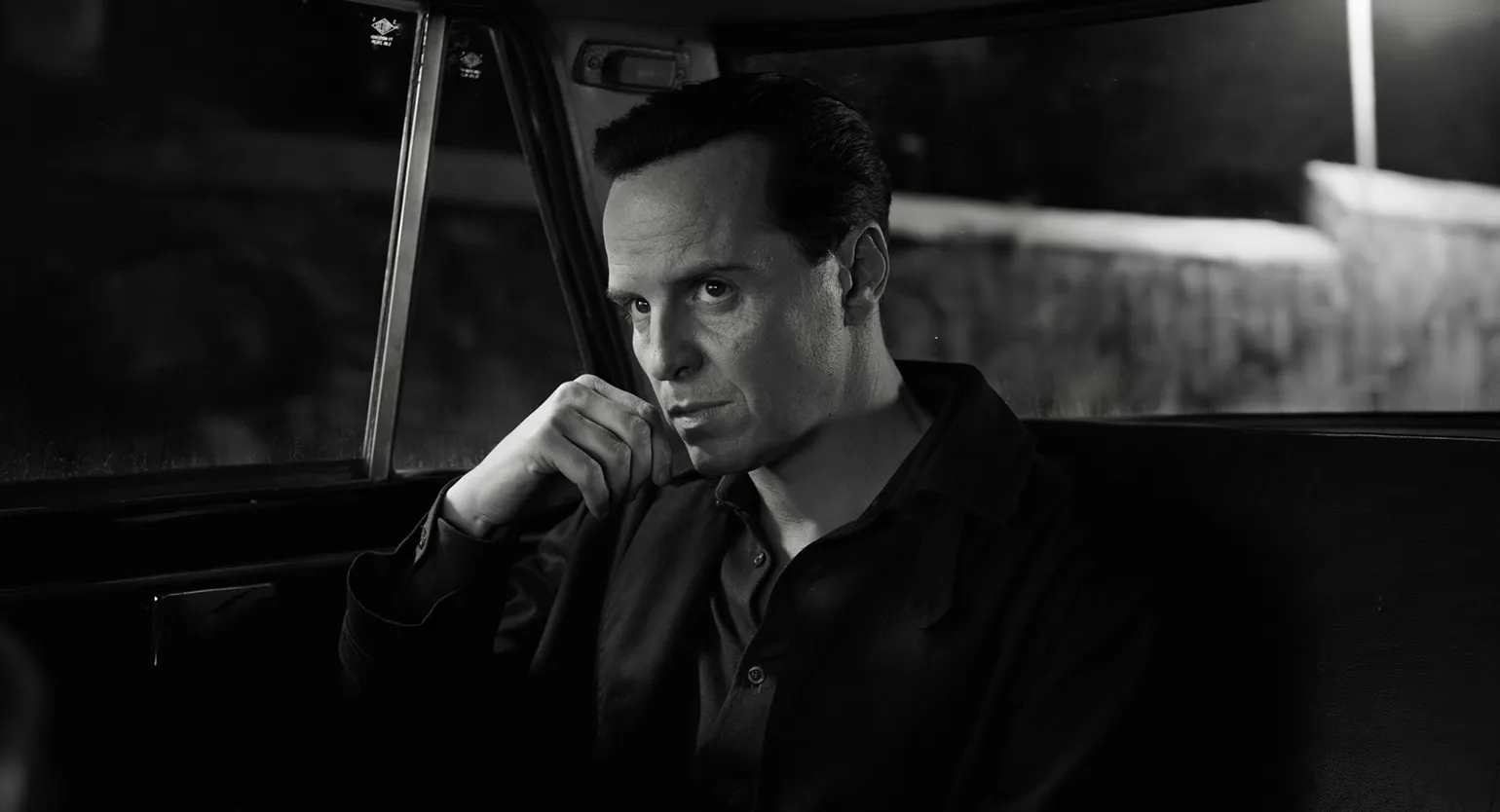
Learn MoreOn April 4th, Netflix premiered the series "Ripley," based on Patricia Highsmith's novel about a charismatic criminal. The lead role is played by Andrew Scott, known for his roles as Moriarty in "Sherlock" and the priest in "Fleabag." In this article, we will consider how Mr. Ripley was interpreted in the new series, which character traits were emphasized, and also recall previous adaptations and their unique approaches to the character. Equally interesting is how elements of art are intertwined in the plot, including references to Caravaggio, which adds additional depth and context.
Subscribe to the "How Are You?" Telegram channel. On this channel, our specialists share deep and scientific knowledge about psychology and self-development. We also publish trending film and music selections on weekends to enrich your time. Join us and expand your horizons of knowledge and inspiration.
Plot
Thomas Ripley is a small-time con man and swindler operating in New York City during the 1950s and 1960s. He's barely making ends meet when a golden opportunity unexpectedly arises: wealthy shipowner Herbert Greenleaf mistakes him for a close friend of his son, Dickie. Dickie has long lived in Europe, enjoying a carefree life on the Italian beaches with his girlfriend, Marge. He fancies himself an artist, drinks, and squanders his father's money, with no intention of growing up. This situation opens new horizons for Thomas, and he begins to exploit Greenleaf's trust, leading to confusing and dangerous consequences. Greenleaf Sr. suggests that Ripley go to Dickie to persuade him to change his ways and return to running the family business. Mr. Greenleaf will cover all expenses for the trip. The penniless con man gets a unique opportunity to change his life. He travels to Italy, where he meets Dickie and admires his luxurious lifestyle. Inspired by this, he devises a cunning plan to take Greenleaf Jr.'s place, spending his money, enjoying yacht trips, and wearing his stylish clothes. In the eyes of the talented Mr. Ripley, he considers himself more worthy of this life than the slacker Dickie.
Book
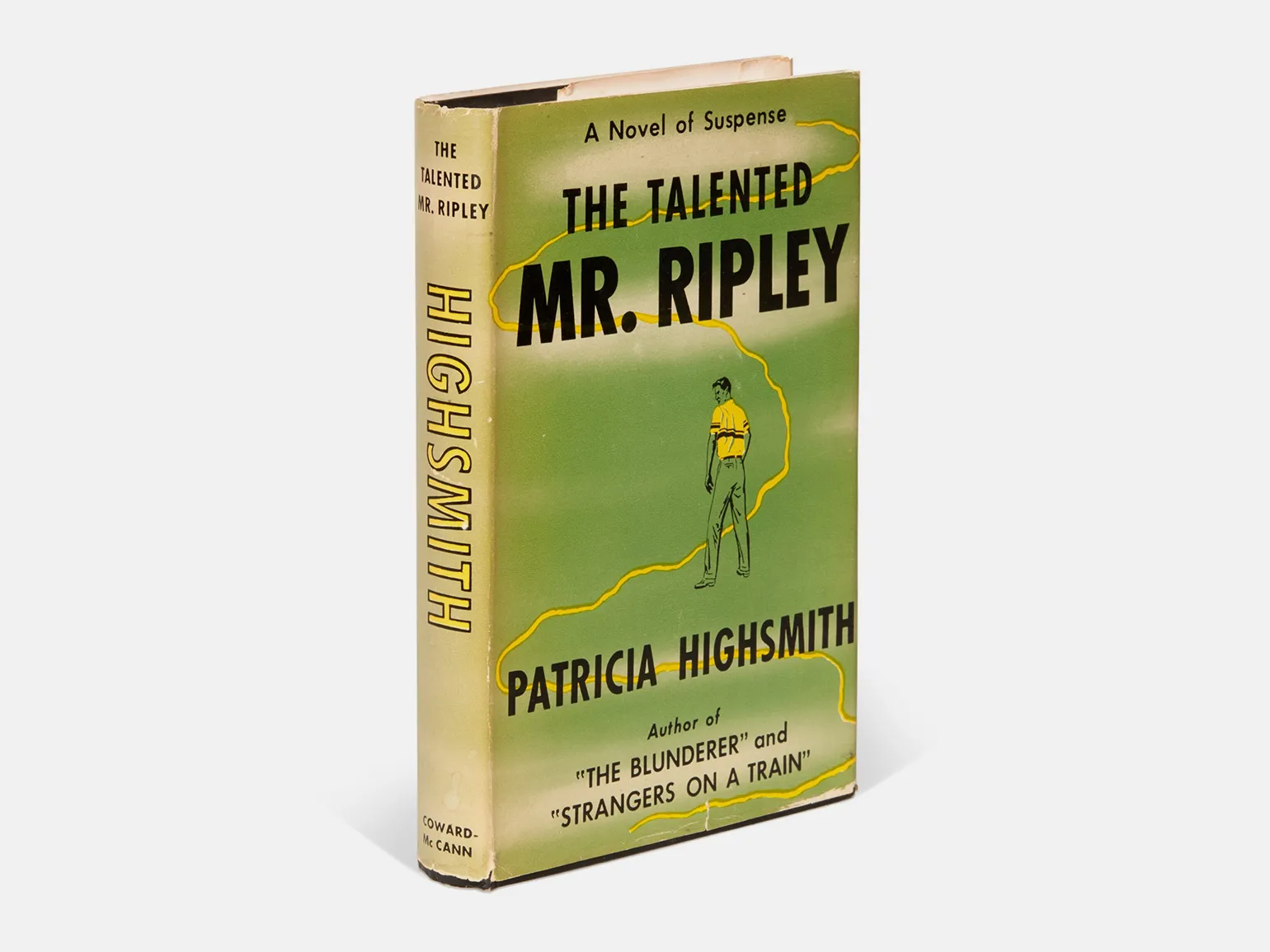
Patricia Highsmith's psychological thriller The Talented Mr. Ripley, published in 1955, quickly gained recognition and was nominated for the Edgar Allan Poe Award for Best Detective Novel the following year. The author subsequently created four more Ripley books, in which his victims numbered ten. This book series has received numerous awards and has been adapted for the screen several times. Thomas Ripley, the protagonist, became the archetype of a charming and polite criminal with an outstanding intellect and the capacity for complete transformation. He combines cunning, practicality, unscrupulousness, and ruthlessness, making him one of the most memorable antiheroes in literature.
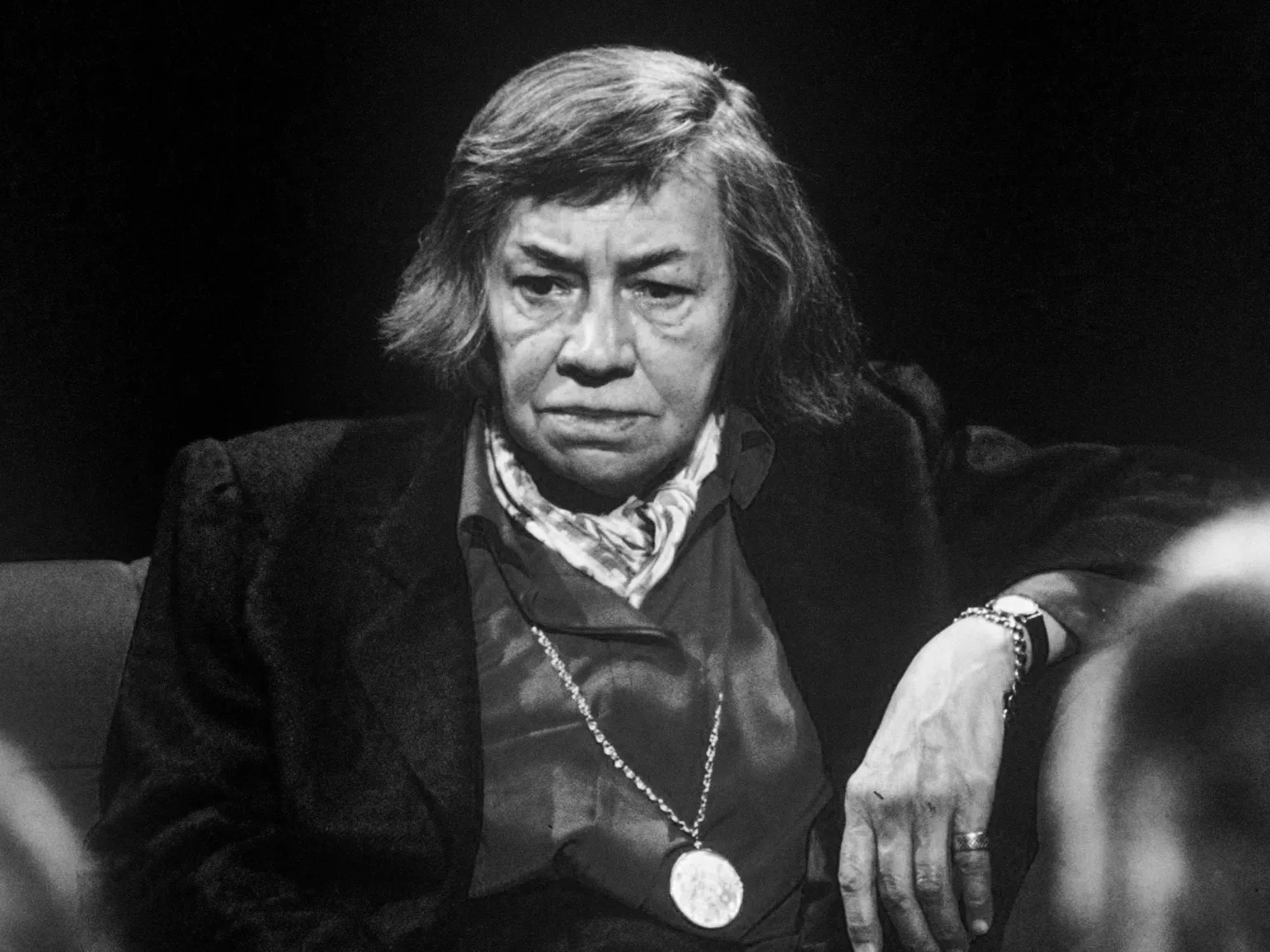
Patricia Highsmith was interested in psychopathology from a young age, immersing herself in reading relevant literature. However, her knowledge of mental disorders was formed not only on the basis of what she read. The writer faced a difficult relationship with her mother and the problem of alcohol addiction, which had a significant impact on her life. In her personal life, Highsmith experienced loneliness, preferring communication with cats and snails to people. These circumstances became important factors in shaping her unique creative style and deep understanding of human nature.
Patricia Highsmith, known for her brilliant detective novels, created dark and atmospheric works that immersed readers in the world of crime. The 20th-century English classic Graham Greene called her "the poet of apprehension," emphasizing the unique style and tension of her work. Highsmith's books create anxiety and make readers carefully observe their surroundings, turning around in dark streets and checking if the door is locked. Her works remain relevant and in demand, attracting the attention of lovers of the detective genre and the psychology of crime.
Author Patricia Highsmith was ruthless in her exploration of psychopathy, delving deep into the dark corners of her characters' minds. Andrew Wilson, her biographer, noted: "She will be remembered as one of the greatest cartographers of criminal psychopathology." The author's impartiality does not mean hostility; Highsmith argued that "a psychopath is an ordinary person" who "allows himself more than society allows." Interestingly, Patricia signed some of her letters as "Pat H., alias Ripley," emphasizing her connection to the darker aspects of human nature.
Five Film Incarnations of Ripley
It's no surprise that Ripley's image has become a focus for filmmakers. Tricksters, con artists, and scoundrels—from Loki to Ostap Bender—have always attracted audiences. They possess an amazing vitality: they never lose optimism and are able to survive in any circumstances. Moreover, we are drawn to the darker sides of personality that are present in each of us and which we are not always prepared to face. This interest in the complex nature of the human soul is what makes characters like Ripley so fascinating to study and interpret on film.
Ripley has been portrayed in film adaptations as a multifaceted character, making him a true chameleon. In Wim Wenders' thriller The American Friend, Dennis Hopper's Ripley emerges as a mystical American in a Stetson hat. In Ripley's Game, played by John Malkovich, the character becomes elegant yet dangerous—a true shark accustomed to harsh reality. A more frivolous and playful portrayal of Ripley was presented in The Return of Mr. Ripley, starring Barry Pepper, best known for his role as the sniper in Saving Private Ryan. Each interpretation of Ripley reveals new facets of his character and demonstrates how adaptation to different circumstances and situations shapes his personality.
There are two main incarnations of Tom Ripley in cinema. The first is associated with the film "In the Bright Sun," which was released in 1960 and was filmed by the famous French director René Clément. In this film, the role of Tom Ripley was played by Alain Delon, a 23-year-old actor just beginning his career. This role became a significant step in his acting career and opened the door to future success. Interestingly, Delon was originally planned to play Greenleaf, which has an ironic subtext, since in the novel Ripley himself dreams of becoming his own friend.
Alain Delon, like the embodiment of the Neapolitan heat, creates the image of a hero focused exclusively on himself. In one of the key scenes, trying on Greenleaf's clothes, Delon's character, Ripley, approaches the mirror and greedily examines her reflection, reminiscent of the ancient Narcissus, ready to merge with his image in a kiss. He is not interested in anyone else; he is full of ambition and self-confidence. Deception, forgery and murder do not cause him any embarrassment. This character reflects a profound psychology of selfishness and indifference to others, which makes it particularly relevant in today's society.
In 1999, Anthony Minghella adapted the novel, creating his own interpretation of Ripley, which is radically different from Delon's version. The film's opening credits describe his character: "Innocent, mysterious, yearning, secretive, sad, lonely, puzzled, confused, loving, musical, gifted, intelligent, handsome, gentle, sensitive, haunted, passionate, talented Mr. Ripley." This characterization emphasizes the multifaceted and complex character of Ripley, which makes him one of the most memorable characters in cinema. Minghella's adaptation not only captures the essence of the original but also adds new nuances to Ripley's personal story, which has attracted the attention of audiences and critics.
The role that Leonardo DiCaprio was considered for was ultimately given to Matt Damon, which turned out to be a good choice. Damon brings a special vulnerability and timidity to his character. In this film, he is not as attractive as DiCaprio or Delon: his pale and thin appearance does not evoke associations with cruelty. His sincere and unrequited love for the glamorous Dickie (Jude Law) makes him even more vulnerable. Dickie's murder occurs accidentally, in a moment of self-defense, but the subsequent maelstrom of events, fears, and desires draws him into a dark world forever. Ripley, played by Damon, is unable to stop, continuing to commit evil, even if he does not want to. Along with him, the viewer, feeling sympathy for the character, becomes morally involved in this endless cycle.
By the time of her death, Highsmith would likely have been skeptical of the portrayal of Ripley as a weak character. As Minghella noted, “I didn’t set out to make a film about a man who commits murder without remorse. That doesn’t appeal to me… Fans of the original work might argue that I’ve completely lost the essence of the book.”
Ripley on Netflix
The Netflix series “Ripley” differs from all previous adaptations. Director Steven Zaillian, renowned as a talented screenwriter, took on the creation of this interpretation. Known for his work on films such as Gangs of New York, The Irishman, and Mission: Impossible, and an Oscar-winning screenplay for Schindler's List, Zaillian masterfully crafts stories about characters who toil on the edges of reason, law, and morality. The series promises a captivating immersion into a world where moral standards are questioned and the lines between good and evil blur.
The film's opening shot immediately immerses the viewer in a gloomy atmosphere: a dark silhouette in a hat drags a lifeless body up the stairs, which hits its head on each step. The ominous shadows and slanted line of the stairs refer us to the works of Alfred Hitchcock and the noir films of the 1950s, as well as the traditions of German Expressionism. The killer is closely watched by a luxurious cat, which, in the spirit of the works of Edgar Allan Poe, unwittingly leaves footprints in a pool of blood. Although many are familiar with the outcome of this story, this is precisely where the difficulty lies in adapting well-known works. Zaillian doesn't strive to surprise the viewer with unexpected plots, but rather emphasizes original interpretations of classic themes.
The bloodiness of Ripley is softened by a monochrome palette: it's shot entirely in black and white. The eye quickly adjusts to the absence of color, and within minutes, the grayscale is perceived as deeper and more saturated than any bright colors. How cinematographer Robert Elswit, known for his work on Paul Thomas Anderson's seminal films, achieves this effect remains a mystery.
The details are striking in their elegance. From the marks on Ripley's typewriter desk to the roughness of business cards, the dampness of the pavement, and the beads of sweat on the forehead of a con man trying to extricate himself from yet another awkward situation. It all feels particularly impressive, like you're leafing through a gorgeous art album while feeling a slight sense of unease at participating in something that seems largely pointless.

Ripley is a series with a slow, measured pace, Reminiscent of the ticking mechanism of Greenleaf's expensive wristwatch, the series emphasizes the details. Every character's movement, whether riding an elevator or talking to a receptionist, a taxi driver, or a police officer, is accompanied by a completely immersive atmosphere. We follow Ripley through every floor, observing his interactions that may seem drawn-out, but this is precisely what creates a unique depth and vacuum in the narrative. This vacuum is not only filled with the visual beauty of the surrounding world but also leaves room for deep reflection on the characters' motives and inner lives. The series masterfully combines detail and atmosphere, making every scene meaningful and memorable, contributing to a deeper understanding of the story.
Andrew Scott — Ripley
Andrew Scott's Ripley will be remembered by viewers for his vibrant and memorable roles. He is especially known as the sexy priest in the series "Fleabag," but his greatest popularity came from the role of Moriarty in the BBC series "Sherlock." In this role, Scott demonstrated mastery in creating a character who is a first-class strategist, an ironic manipulator, and a demonic sadist. His performance left a deep mark on the hearts of viewers and made him one of the most memorable antagonists in modern television history.
Scott is perfect for the role of a psychopath and con man, although he should have been cast for this role about twenty years ago. The plot of "The Talented Mr. Ripley" tells the story of youth, the golden youth, and an aspiring con man striving to get into this closed circle. Scott is currently forty-seven years old. Dickie, played by musician and actor Johnny Flynn, resembles Marlon Brando in his prime, with a sad, resigned look and a sadly downturned mouth. Marge, played by Dakota Fanning, is not just a young party girl, but a mature woman. Freddie Miles, played by Sting's non-binary child, Eliot Sumner, also looks ageless.
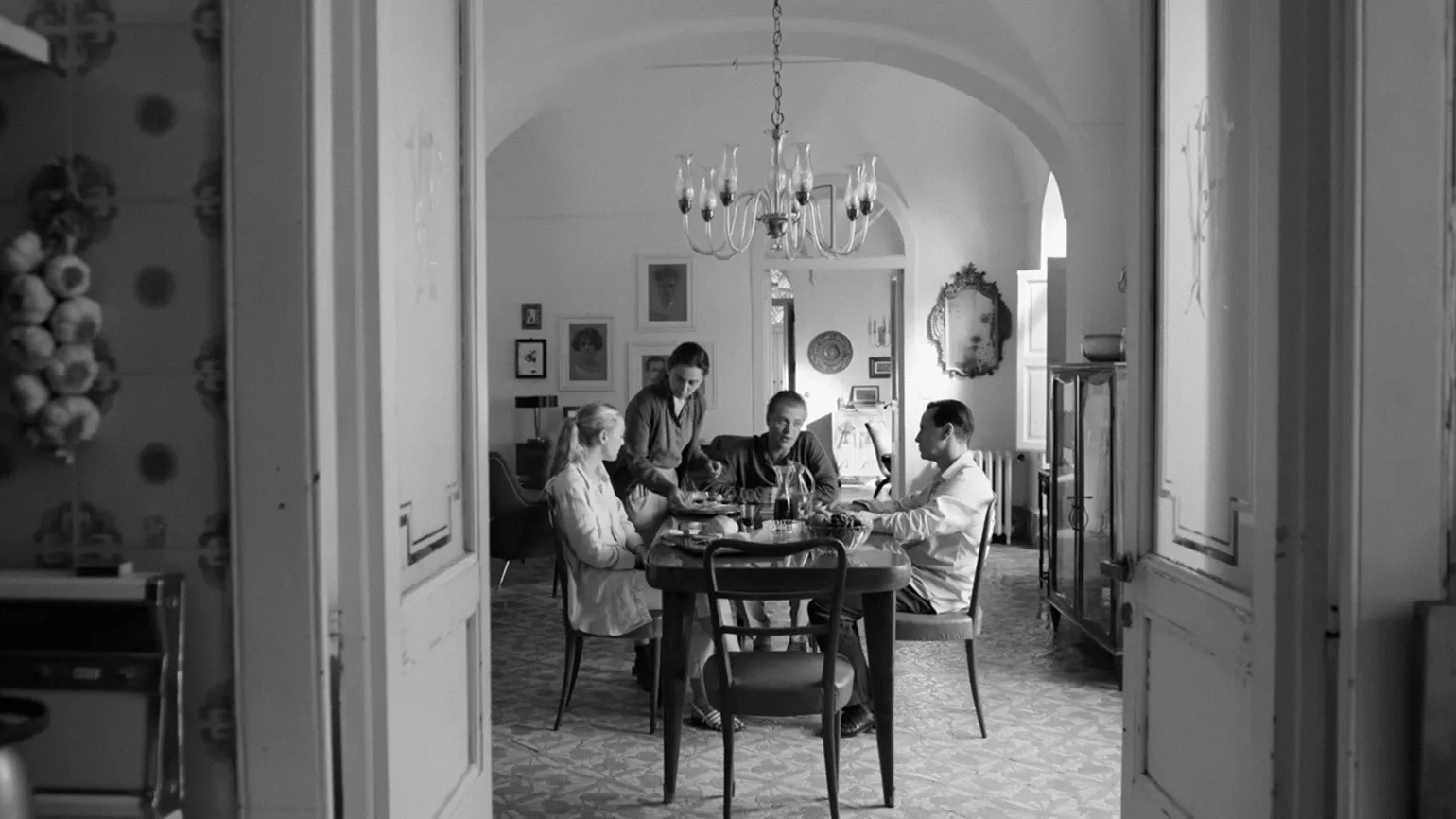
The title of the work does not mention Mr. Ripley's "talent", which emphasizes his character. While Delon's Tom is focused on narcissism, and Damon's on Dickie, Scott's character is devoid of any feelings or emotions. He lacks the ease that could serve as a weapon. He is a charmless, withdrawn, asexual, and awkward man with an unpleasant smirk. Murder presents no difficulty to him, and interaction with living people evokes disgust—he is much more comfortable with dead bodies or objects. One wonders why Greenleaf decides to associate with such an unpleasant character? How does he manage to deceive Dickie's friends, the police, and property owners? And how is he capable of such transformations? This becomes especially evident when Ripley appears before a seasoned inspector wearing an unconvincing wig and beard—and goes unpunished.
Director Zaillian demonstrates equal disregard for both color schemes and the formal aspects of the plot. He actively—perhaps even excessively—hints that his work is a tragedy, comparable to classical antiquity or Shakespearean works, replete with numerous allusions. The characters are viewed from various angles by classical figures, sphinxes, cupids, and figures from Caravaggio's paintings, with whom Ripley immediately establishes an association. This visual multilayering creates a deep context and enhances the perception of the tragedy, making it more relevant and resonant in the modern world.
The work contains symbols that clearly point to key themes. Ripley learns Italian by listening to a record that persistently repeats "This is mine. Give me the money." In a perfume shop, he encounters the inscriptions Vanitas and Non cuique datum. The blood of one of the victims effectively stains a painting depicting an ancient battle. The most intriguing symbol appears at the end: Ripley meets an elderly con man, played by John Malkovich. Young and old Ripley exchange knowing glances and smirks: Ripley lived, Ripley is alive, Ripley will be... This dialogue between the characters emphasizes the eternity of their existence and the continuous cycle of scams.
Free career guidance
• Determine what you want from a new profession • Take the test and find out which professions are right for you • Understand what such specialists do
Find out more