Contents:

Thinking about a new profession, but don't know where to start? Find out what's right for you: IT, design, game development, management, or marketing. Take a free career guidance course.
Learn moreIn the late 1970s, synthesizers began to dominate pop music, heralding the early 1980s era of rave, techno, and house. However, the origins of electronic music can be traced much earlier, to the futurism of the early 20th century, which ushered in experimentation with new sound technologies and forms. These early experiments paved the way for the development of various genres of electronic music that continue to influence contemporary music.
Risveglio di una Citta
Release date: 1914. This year was significant in history, as it was in 1914 that the First World War began, which influenced many aspects of life and the development of countries. In the cultural sphere, 1914 was also marked by many significant events and works that are still relevant today. It is important to study this period to better understand the consequences of these events for modern society and art.
Electronic music of the early 20th century is closely linked to the Futurism movement, which embraced various forms of art. Luigi Russolo, in addition to his musical work, also created paintings. The unifying element of his work was an enthusiastic dream of high technology and the society of the future. A fascination with technology led composers, including Russolo, to explore Newtonian noises, which became an integral part of musical experimentation. This discovery marked the beginning of a new direction in music that continues to develop today.
Russolo, a true Futurist, created a manifesto. In his work "The Art of Noises," he calls for a rejection of conventional concepts of rhythm and melody. Instead, he proposes an appreciation for the sounds that surround us in everyday life, such as the hum of trams, the sound of engines, and the hum of city crowds. This approach opens new horizons in the perception of music and art, emphasizing the importance of noise as an integral part of our existence.
Russolo identified six categories of noise for his futuristic orchestra: hums, whistles, whispers, scrapes, metal bangs, and squeals. To create these sounds, the composer developed intonarumori—unique instruments in which strings vibrate thanks to wheels covered in rosin. In the work "Risveglio di una citta," one can hear this innovative instrument, which demonstrates new possibilities in sound art and expands the boundaries of musical perception.
A Symphony of Hooters
Release Date: 1922. This year became significant in history, as many events took place in it that influenced various areas of life. In the film industry, 1922 was marked by the release of a number of iconic films that later became classics. Literature also experienced rapid growth, with many authors experimenting with new styles and genres. This period became an important stage in cultural development, leaving a mark on the history of art and social change.
The Futurists are famous for their grandiose projects. Avraamov took the concept of emphasizing urban sounds to a dramatic level: the composer conducted the city using signal flags from a rooftop in Baku. This experiment became a significant event, emphasizing the connection between music and urban culture and opening new horizons in the perception of the city's sonic space. The avant-garde composer created a unique sound composition, combining factory whistles, steamship horns, cannon shots, the roar of airplanes, shouted chants, and the whistle of steam. In this sound symphony, two artillery batteries played the percussion part: machine guns sounded like snare drums, and large artillery played the role of large drums. The main part belonged to "Magistral"—a sound machine consisting of 50 locomotive whistles, mounted on the torpedo boat "Dostoiny." This composition reflects the synthesis of industrial sound and military might, creating a powerful auditory experience that immerses the listener in the atmosphere of a dynamic era.
The "Symphony of Horns" features fragments of such famous musical works as "La Marseillaise" and "The Internationale Hymn". However, they are not the central elements of the composition, but rather serve as a complement to the wider musical context.
Poème symphonique
Release date: 1928. This year became significant in the history of cinema, as it saw the release of a number of iconic films that influenced the development of cinematography. Films released in 1928 continued the evolution of silent film and prepared audiences for the transition to sound. Cinema of that time actively experimented with new techniques and plots, which contributed to the creation of unique works that still attract the interest of viewers and researchers.
In "Symphonic Poem," composer Lévidis, together with Maurice Martenot, first introduced the Martenot waves. This unique musical instrument combines piano-like keys and a special thread with an attached ring, which allows for the creation of unique sound textures. The Martenot wave piano has made a significant contribution to the development of modern music, opening up new horizons for composers and performers.
The sound is generated by an electrical oscillator and can be produced by either pressing the keys or tugging the string. The performer plays the melody with the right hand and adjusts the timbre with the left. The instrument also features an octave switch, allowing the player to vary the pitch and add variety to musical compositions.
The Martenot wave piano keys are highly sensitive compared to those of a piano. A slight hold of the finger on the key can produce a powerful sound, reminiscent of a menacing roar or a roll of thunder. This unique feature allows musicians to imitate "non-musical" sounds, expanding sonic horizons and creating new possibilities for musical creativity. The instrument has become an important tool in contemporary musical art, allowing for experimentation with unusual sonic textures and effects.
Deep Night
This work was released in 1930. This year was a significant moment in history, as it saw the release of several influential works that had a profound impact on culture and art. Works of 1930 continue to attract the attention of researchers and art lovers, as they reflect the spirit of the times and the social changes taking place in society. Thus, 1930 can be considered an important milestone that determined many subsequent trends in literature and other forms of expression.
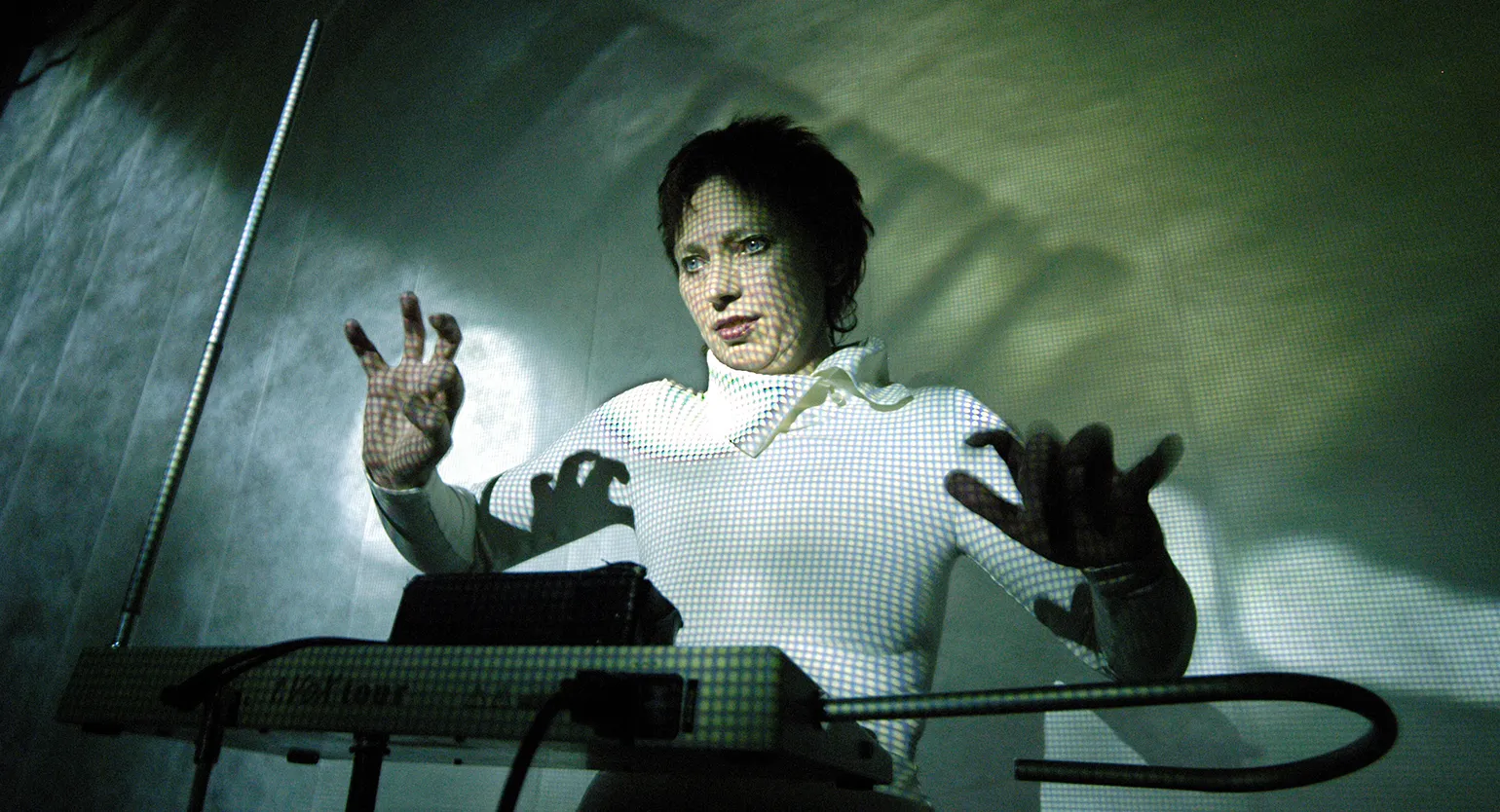
Electronic experiments significantly advanced the music industry, and this was made possible not only by composers but also by inventors of unique instruments. One of the first and most significant innovations in this field was the theremin, developed by Soviet engineer Lev Theremin. This instrument opened new horizons in sound creation and influenced numerous musical genres, from classical music to modern electronic sound. The theremin became a symbol of the synthesis of music and technology, inspiring a generation of musicians to experiment with electronics.
The theremin is a unique musical instrument that requires no keys or strings to produce sound. It operates using two high-frequency oscillators: one maintains a constant frequency, and the other a variable one. A key component of the theremin is an antenna that detects the movement of the performer's hands in an electromagnetic field. This interaction allows for the creation of unusual sound effects and melodies, making the theremin a popular instrument in electronic music and experimental genres.
Lev Theremin anticipated the future of musical instruments that create sounds radically different from traditional music. On this recording, Theremin himself performs the jazz standard "Deep Night," imbuing it with a unique duality. The music retains its tenderness and sensuality, yet simultaneously acquires a new, robotic sound. This combination of traditional melodies and innovative technology opens up new horizons in musical art.
Imaginary Landscape No. 1
Film release date: 1939.
Cage created musical compositions by combining random fragments and using innovative instruments. In his essay "Goal: New Music, New Dances," he argued that the music of tomorrow would be electronic, and its creators would be dancers working for other dancers. This approach emphasizes the interaction of music and dance, opening new horizons in the world of contemporary art.
John Cage's music was not always suitable for live performance, as in his studio work he actively used various effects that changed the original sound. Cage's ability to emphasize individual instruments made his work less predictable. While DJs of the late 20th century employed technology to add effects, Cage's use of manual methods underscored his unique approach to musical creation.
This piece was created for performance by four musicians, two of whom function as DJs. They play a single recorded note, varying the speed of the record from 33 to 78 rpm. To achieve this effect, the performers raise and lower the needle. Manipulating the needle creates additional sounds, enriching the musical palette of the piece.
Etude aux tourniquets
Film release date: 1948. This year was significant in the history of cinema, as many classic works were released that influenced the further development of cinema. Among them, especially notable are films that are still relevant today and are studied in film schools. 1948 was a time of new ideas and innovative approaches to filmmaking, which resulted in the emergence of unforgettable characters and plots that left a lasting mark on culture.
Pierre Schaeffer is the founder of musique concrète – a genre in which various sounds are recorded on film and then processed to create new musical works. This process involves manipulation of sound recordings, such as changing the tape speed, editing, and superimposing sounds. Musique concrète opens new horizons in the art of sound, allowing composers to create unique sonic textures and musical compositions based on real sound sources.
Schaeffer, like Cage in Imaginary Landscape, can be considered a protodej. He actively experimented with musical equipment, using various sound manipulation techniques. Speeding up and slowing down recordings, playing them backwards, layering multiple tracks in a mixer, applying filters, echo, and feedback—all of this constituted his creative process. Feedback, an acoustic effect, occurs when a microphone captures sound from speakers and feeds it back, creating a closed loop. These approaches to music production became the basis for new tracks and remixes during the rave era. Schaeffer's experiments opened up new horizons in the world of sound and had a significant influence on the development of electronic music. Schaeffer's compositions were not the result of a preconceived idea, but were formed from existing sounds that acquired new meaning. Unlike the Futurists, who sought to convey the sound of the surrounding world, Schaeffer was engaged in constructing a new musical experience. In this etude, the French composer uses a children's spinning top as a musical instrument, highlighting his innovative approach to music and experimentation with sound.
Poème électronique
Release date: 1958. This year became a landmark in history, when many significant events and works were born. 1958 is marked by important cultural and social changes that influenced the future. The film industry released films that left their mark on history, and hits appeared in music that are still heard on air today. In addition, significant events took place in the political arena that shaped international relations. 1958 was a time when the world began to change, and its legacy lives on today. Electroacoustic music emerged from musique concrète, which used sounds of various origins. This genre emphasizes experimental sonic textures and compositional methods. Often, composers did not establish strict rules for performance, allowing musicians to independently determine the order and duration of individual sections. This principle of chance opens new horizons in musical creativity, allowing for the creation of unique and unrepeatable sound works. Electroacoustic music explores the boundaries of sound perception, combining electronics and acoustics to achieve new artistic solutions. Electroacoustic music focuses not on melody, but on the nature of sound, its timbre, color, and physical characteristics. Edgard Varèse was one of the first composers to use unusual instrument timbres. He changed them during performance and retuned the instruments live, which laid the foundation for the further development of DJ mixing. These innovations opened up new horizons in musical creativity and influenced modern approaches to music production.
The piece "Poème électronique," created by Edgard Varèse for the pavilion at the World's Fair, was designed by the architect Le Corbusier. Varèse developed a unique system of more than 400 speakers, making music an integral part of the space. He modified the acoustics of the walls with asbestos and synchronized music tapes with lighting. This approach to sound design later became the basis for the work of club owners who hosted raves, creating a special atmosphere of interaction between music and space.
Kontakte
The film was released in 1960.
In the 1950s, a significant school of electronic composers emerged in Germany. In response to the marginalization of the avant-garde during the Third Reich, musicians from Darmstadt and Cologne sought to create new sounds that had not previously existed in music. Like physicists, they explored oscilloscopes and modulators, attempting to open up a new musical space accessible only through technological experimentation. This era marked a significant stage in the development of electronic music, paving the way for further innovations in sound design and composition.
The movement's goal was to separate electronic instruments from traditional orchestral accompaniment and create unique structures for them that did not imitate the sound of violins and cellos. Karlheinz Stockhausen became the leader of this movement, striving for complete programming of all aspects of a composition, including timbre, dynamics, duration, loudness, and spatial sound. Stockhausen actively explored the new possibilities opened up by electronics, which contributed to the creation of unique musical works and the expansion of the boundaries of musical art.
The work "Kontakte" is presented in two versions: the first includes a combination of electronic and traditional instruments, while the second version is based entirely on electronic formats. Importantly, it is the electronic components that form the main structure of the work, which makes it unique in the modern context.
Dr Who’s Theme
Film release date: 1963.
For electronic music to become part of popular culture, it had to penetrate it in an unconventional way. From the very beginning of the 20th century, its futuristic sound attracted the attention of science fiction directors, who boldly included complex compositions performed on unusual instruments in their soundtracks. This interaction of electronic sounds with cinema helped popularize the genre and made it more accessible to a wider audience.
The Doctor Who series is a striking example of the successful combination of experimentation, simplicity, and widespread popularity. Created by Delia Derbyshire at the BBC Workshop, it has become a cult phenomenon. Despite a limited budget, the studio's sound engineers used the full capabilities of their equipment to create unique sound effects for the broadcast. Engineers developed an innovative method that allowed a single keyboard, consisting of recycled piano keys, to control 12 sound wave generators at once. This approach became the basis for creating the series' memorable audiovisual elements, which significantly contributed to its success and longevity.
The Doctor Who theme continues to be one of the most popular among science fiction fans. Many fans consider it outstanding due to its unique plot, memorable characters, and innovative approach to storytelling. With each new season and a new Time Lord, the series attracts more and more viewers, confirming its status as a genre classic. Unsurprisingly, Doctor Who is discussed on forums and social media, and it continues to inspire a new generation of creators and viewers.
Trans-Europe Express
Release date: 1977.
Kraftwerk is a key link in the development of electronic sound, combining avant-garde experiments with modern music. Their harsh German style led to the creation of an almost danceable sound that became the basis for techno, the first rave genre of the 1980s. Comparisons with Detroit techno pioneers like Cybotron reveal minimal differences in approach and aesthetics, highlighting Kraftwerk's influence on the electronic music scene.
Kraftwerk became a shining example of "dance" music, attracting the attention of even black youth who traditionally favored American genres like funk and disco. Despite its apparent calm and seriousness, their music possessed a powerful rhythm that set people on the move. This underscores the universality of their sound and their influence on various musical cultures. Kraftwerk demonstrated that even experimental European electronic music could generate interest and become popular in dance circles.
Free career guidance
Take a short test and find out which profession is right for you, and then try your hand at your chosen specialty. At the end of the course, you will have a session with a career guidance specialist. He will help you decide on your career path.
Find out more