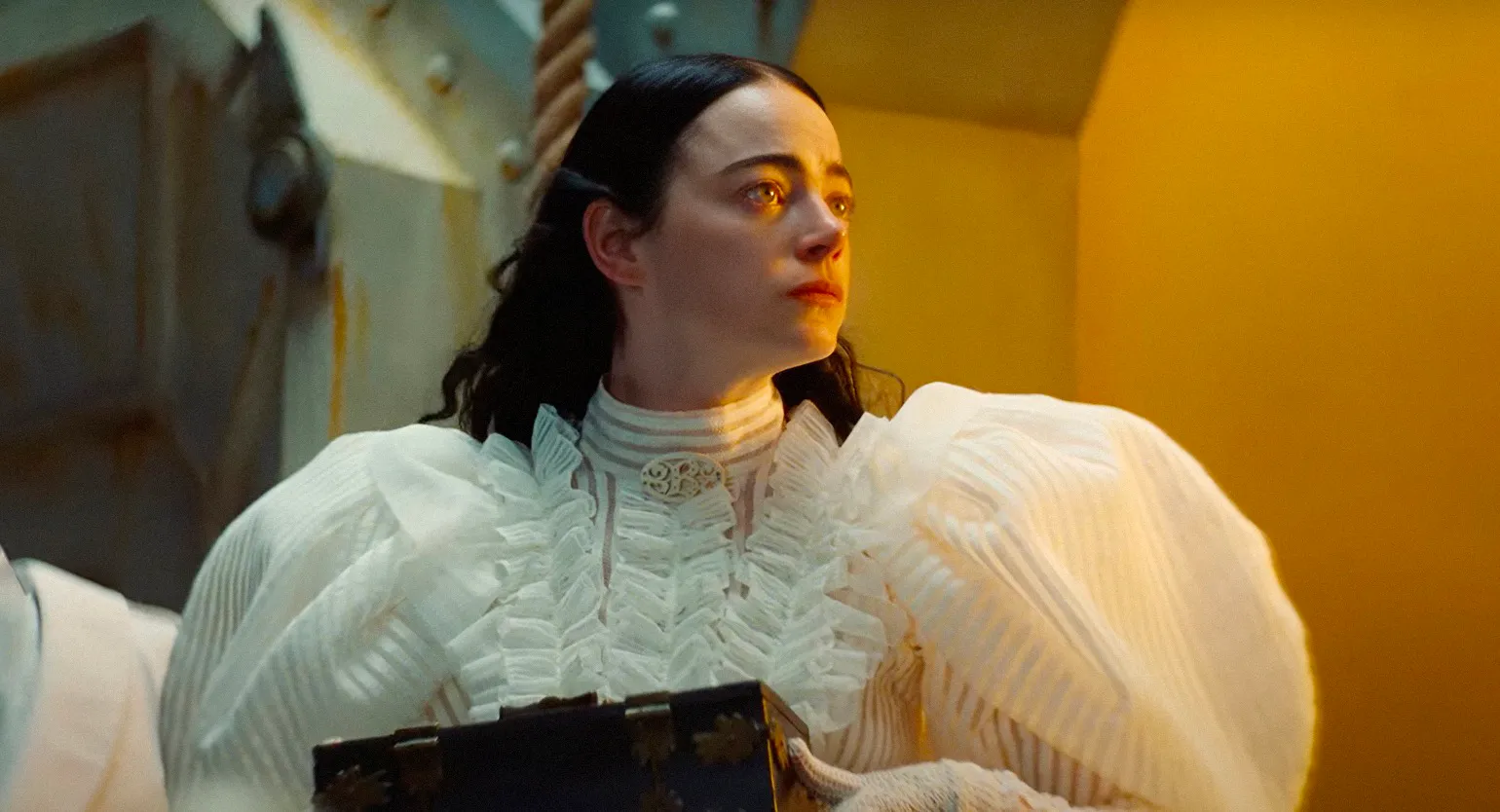
Contents:

Thinking about a new profession, but don't know where to start? Find out what suits you: IT, design, game development, management or marketing. Take a free career guidance course.
Learn MoreYorgos Lanthimos's Golden Globe and Venetian Lion-winning film is captivating audiences and critics alike. Ahead of the Oscar results, we analyze this fairy tale about a mysterious princess, exploring its themes and imagery. We also consider the film's connections to Barbie and feminism, revealing how these elements intertwine throughout the plot and create narrative depth.
In this article, you will learn about:
- what director Yorgos Lanthimos is known for;
- who created "The Poor, the Unfortunate";
- how the film was filmed;
- who are the "poor, the unfortunate"?
Subscribe to the "How Are You?" Telegram channel. On this channel, our colleagues discuss psychology and self-development with a soulful approach and scientific precision. Every weekend, we'll delight you with new film and music selections that will help you broaden your horizons and find inspiration. Join our community and stay up-to-date on current topics related to personal growth and culture.
What made the film's director, Yorgos Lanthimos, famous?
In the early 2010s, a financial crisis erupted in Greece, which in 2015 led to default, mass strikes, and political unrest. These turbulent times inspired the creation of the "New Greek Wave" in cinema—a group of young directors who sought to reflect the realities of the turbulent period in their art. These directors include Athina Rachel Tsangari, Babis Makridis, Panos Koutras, and Alexandros Avranas. Their auteur films explore the breakdown of human relationships, the destruction of social institutions, and the transformation of the body, which sometimes leads to absurd human behavior. These strange arthouse films were in harmony with the surrounding reality and offered viewers some answers to questions about how to adapt in the face of profound crisis.
Among these directors, the young filmmaker Yorgos Lanthimos stands out. He has previously created advertising, music videos, and commercial films. Lanthimos also worked on the opening and closing ceremonies of the 2004 Athens Olympic Games. It was there that he met Athina Rachel Tsangari, with whom he subsequently collaborated on various projects.
Giorgos Lanthimos's first significant success was with his film Dogtooth, in which he presented an unusual, self-isolated family living by strange rules. The film can be seen as an experiment in the spirit of the classic Pavlovian experiment. At the Cannes Film Festival, Dogtooth won the main prize in the Un Certain Regard program and was nominated for an Oscar for Best Foreign Language Film.
In The Lobster, the action takes place in an isolated sanatorium, where lonely people are subjected to an experiment: if they do not find their partner within a set time, they are turned into animals. This theme of experimentation is particularly poignant, and the characters become the personification of biological beings, composed of reflexes, fears, and desires. As the famous absurdist Daniil Kharms noted, "man is made up of three parts... "A beard and an eye, and fifteen arms." The film makes you think about the nature of human existence, about how social norms and the fear of loneliness shape our actions and choices.
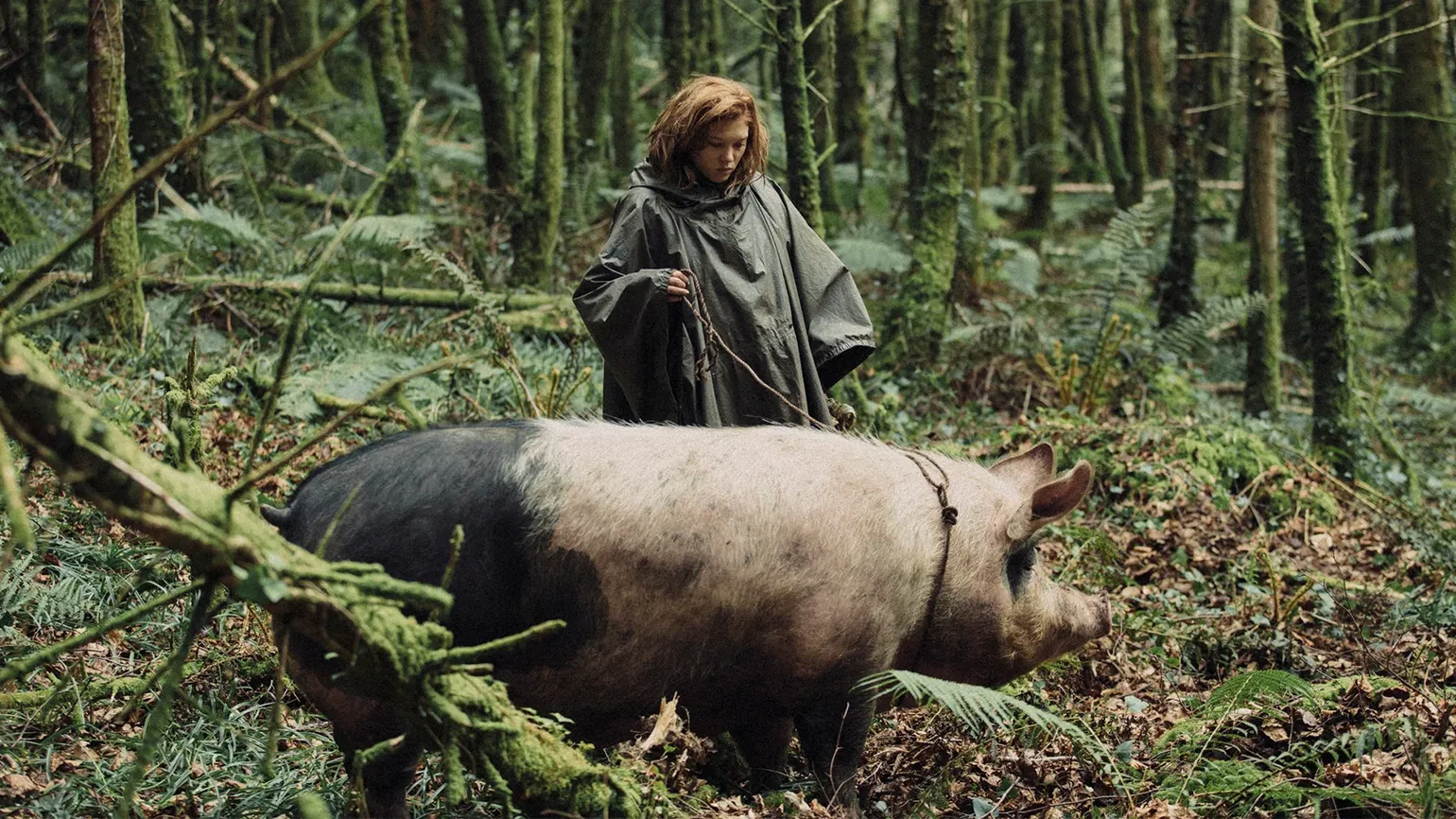
In his film "The Killing of a Sacred Deer," director Yorgos Lanthimos moved away from literal metaphors in interpreting Euripides' tragedy "Iphigenia in Aulis." He successfully combines modern elements with the traditions of ancient Greek culture. The ancient Greeks, who lived over two thousand years ago, formulated fundamental themes that remain relevant today: fate, passion, power, and war. These themes also occupy a central place in Lanthimos's work. His works can be considered modern myths, in which he interprets and reinterprets ancient ideas. In his penultimate film, The Favourite, the director masterfully combines issues of power and human relationships, using techniques familiar from the works of Euripides and Shakespeare. Lanthimos creates deep, multi-layered narratives that resonate with audiences through his ability to explore timeless questions about human nature.
Who Invented "The Poor and the Unlucky"
In 1992, British writer Alasdair Gray published his novel "The Poor and the Unlucky," which won prestigious literary awards such as the Whitbread Novel Award and the Guardian Fiction Prize. Alasdair Gray, who passed away in 2019, was known as a socialist and supporter of Scottish separatism. His work encompasses the genre of "weird fiction," placing him in the company of authors such as H.P. Lovecraft, Philip K. Dick, and Jorge Luis Borges. His novels skillfully blend elements of fantasy, realism, and science fiction, allowing him to rethink and develop the foundations of the genres from which they originated. Gray is a postmodernist interpretation of the Victorian autobiography of physician Archibald McCandless. The story centers on the fate of his wife, Bella Baxter. McCandless suspects that his colleague, Dr. Godwin Baxter, conducted an experiment by transplanting Bella's own child's brain after her failed suicide attempt. As a result of this experiment, Bella, initially possessing an infantile consciousness, begins to develop rapidly. She elopes with the cunning lawyer Wedderburn, discovers the joys of life, including sexual relations, gambles with Dostoevsky, works in a brothel in Paris, and ultimately rediscovers her humanity. The novel explores themes of identity, love, and human experimentation, immersing the reader in a complex Victorian world with elements of fantasy and psychological analysis.
In the second half of the book, the fantastical elements seem to fade into the background. Bella shares with the reader her reflections on how her husband has become caught up in romantic and gothic clichés, while she has simply realized her long-held dreams. However, this statement can also be questioned.
Director Yorgos Lanthimos had long dreamed of adapting the novel for the screen, and already in 2009 he met with the author of the work to obtain permission for the adaptation. The writer supported Lanthimos's idea and even gave him a tour of Glasgow, showing him the places described in the novel. This collaboration was an important step towards creating a film that promises to bring new life to the literary work while preserving its essence and atmosphere.
How the film was made
Following the commercial success of The Favourite, director Yorgos Lanthimos returned to a new project, having the opportunity to realize more ambitious ideas. In The Favourite, Emma Stone, star of Zombieland and Spider-Man, played her first role under Lanthimos's direction. It was then that the director decided to invite her to play the lead in his next film. The collaboration between the actress and director reached such a level of trust that Stone also became a co-producer of The Poor, Poor Things. This project promises to be not only interesting, but also a significant contribution to contemporary cinema.
In addition to Emma Stone, other famous actors have joined the project. Emma Stone's leading role is Willem Dafoe, who plays Dr. Godwin, Bella's "father." Friends call him simply God, which translates as God.
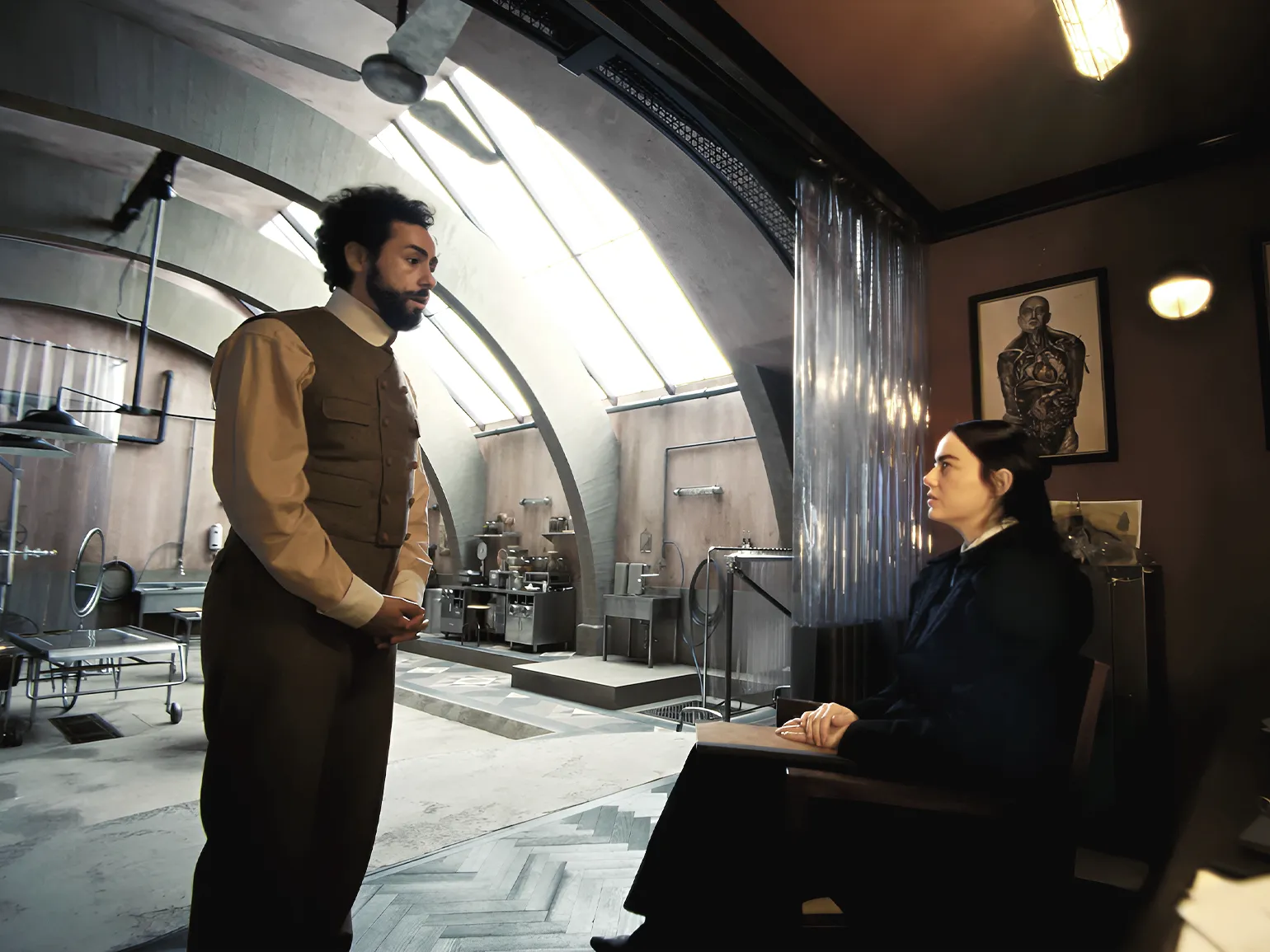
The central role in this story is played by Max McCandless, a delicate and shy character who falls in love with Bella. He is played by Ramy Youssef, an actor and stand-up comedian of Egyptian descent. Alfie, Bella's first choice, is played by Christopher Abbott, known for his work on the series Girls and Catch-22. Felicity, played by Margaret Qualley, star of Once Upon a Time in Hollywood and Cleaning Women, also appears in the film, representing Dr. Godwin's second project. These characters create a multi-layered plot filled with emotion and unexpected twists.
Mark Ruffalo was cast as lawyer Wedderburn in the film, which was a pleasant surprise for audiences, as he appeared in a completely different guise, different from the image of the Hulk. In this role, he demonstrates an unexpected and charismatic character, presenting a laid-back character with a well-groomed mustache. The role of the owner of the Parisian brothel, Madame Sweeney, was played by the talented theater actress Kathryn Hunter, known for her expressive performances and, in particular, remembered by audiences for her role as Miss Figg in the film "Harry Potter and the Order of the Phoenix." This cast of actors brings a unique atmosphere to the film and creates an intriguing plot dynamic.
The film was shot in London, where director Yorgos Lanthimos, perhaps contrary to the idea of screenwriter Alasdair Gray, moved the plot's beginning. However, the action quickly moves to Lisbon, Paris, and Alexandria. It is important to note that geography does not play a key role - "The Poor, Unfortunate Ones" is set in a steampunk world. Airships soar above the city, steam carriages ply the streets, and funiculars run between the buildings. In Dr. Baxter's courtyard, you can meet dog-gooses and other fantastical creatures, the inhabitants of his little Eden. The doctor himself resembles a Frankenstein monster, stitched together from fragments of flesh—actor Dafoe spent six hours a day in the makeup chair. He is also hooked up to complex machinery, causing soap bubbles to periodically come out of his mouth with an eerie sound. Unlike the novel's postmodern, vague approach, the film is crystal clear: Bella was indeed resurrected by the doctor.
Who are the poor and unfortunate here?
As a big child, Bella, who embodies Adam and Eve, is not frightened by the world, but rather attracted. At first, her perception appears black and white, since newborns are color-blind. Later, everything becomes filled with vibrant watercolor hues. Bella strives to absorb all the joys of life, which worries her male patrons. For the doctors, she is primarily an experimental result; for others, she is either a convenient toy or heavenly perfection. However, one way or another, everyone wants to possess her. The heroine, abandoning her childish naivety, plunges into teenage rebellion. She begins wearing extravagant dresses and becomes fascinated with dancing and intimate relationships, which she calls "furious leaps." Bella tries oysters and discovers the cruel reality of the world, experiencing the pain of the surrounding injustice, observing an epidemic among the poor in Alexandria. The cynical philosopher Harry, her traveling companion, remarks: "If we went down to them, they would rape and kill us, and we would do the same in their place." However, Bella does not allow these thoughts to overshadow her desire to understand what exactly she can change in this reality.
Men often find themselves in a state of confusion as they try to adapt to new circumstances. Some, like Wedderburn, strive to turn her into a submissive companion who only admires their achievements, uttering phrases like "wonderful," "delightful," and "how do they manage to make such crispy pastries?" However, there are more worthy representatives, like the doctor and McCandless, who try to establish an equal dialogue with her. She is willing to forgive their efforts if they learn to communicate with her on the same level and perceive her as an equal.
Men, who possess public rights and freedoms, often find themselves trapped by their own principles and expectations. These "poor-unfortunate" individuals, squeezed into the strict framework of social norms and standards, lose the opportunity to express their individuality and freedom of choice. As a result, they become prisoners of their own images, which leads to internal conflicts and a feeling of unhappiness.
The stories of Eve, created from Adam's rib, and Galatea and Pandora represent archetypical images created for men. These stories can be seen as a metaphor for the influence of patriarchy on the formation of female identity from a very early age. They illustrate how traditional ideas about women and their roles in society are shaped by social norms and expectations.
The idea of women as autonomous individuals was touched upon in the works of the Brontë sisters and Edith Wharton, and this theme remains relevant today. An example is Leela from The Fifth Element, a powerful being in the universe for whom a kiss with Bruce Willis proves crucial. In the film Barbie, directed by Greta Gerwig, an artificial woman embarks on a quest for life experience and self-discovery. However, despite their aspirations, both Barbie and Bella find only a cozy but limited world that represents a privileged paradise for themselves. Changing the world around us has not yet been possible, which highlights the need for further research and discussion of the role of women in modern society.
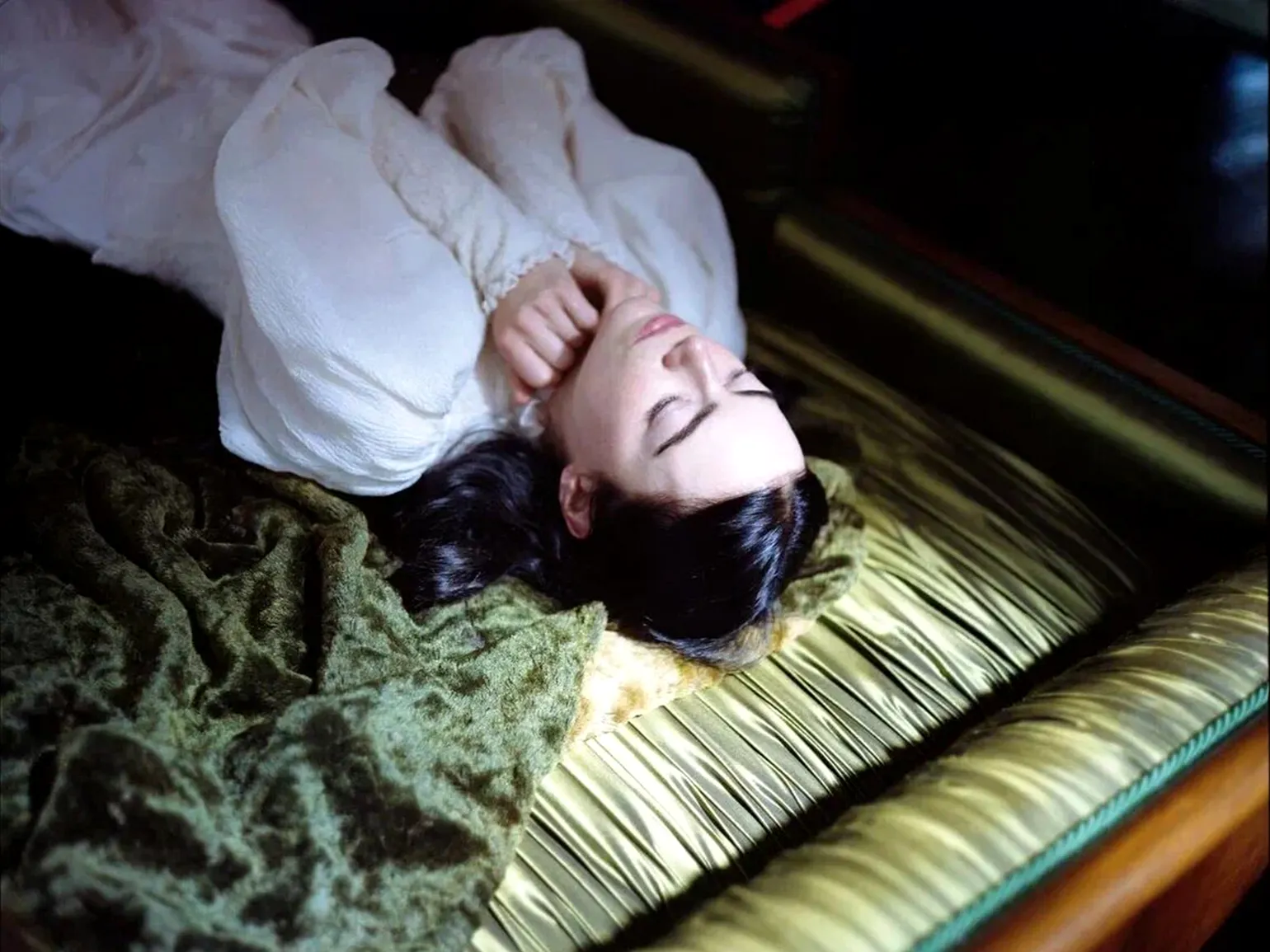
There is something special in the air, and this feeling is becoming more and more obvious. The popularity of films about Barbie and Bella confirms this trend. Both films became the subject of controversy, receiving a ten-minute standing ovation at the Cannes Film Festival, winning the Golden Lion, and boasting a 92% fresh rating on Rotten Tomatoes. Furthermore, they received 11 Academy Award nominations, including Best Picture, Best Director, and Best Actress. These achievements highlight the importance and influence of these films in contemporary cinema.
Free career guidance
• Determine what you want from a new profession• Take the test and find out which professions are right for you• Understand what such specialists do
Learn more