Contents:

Thinking about a new profession, but don't know where to start? Find out what suits you: IT, design, game development, management or marketing. Take a free career guidance course.
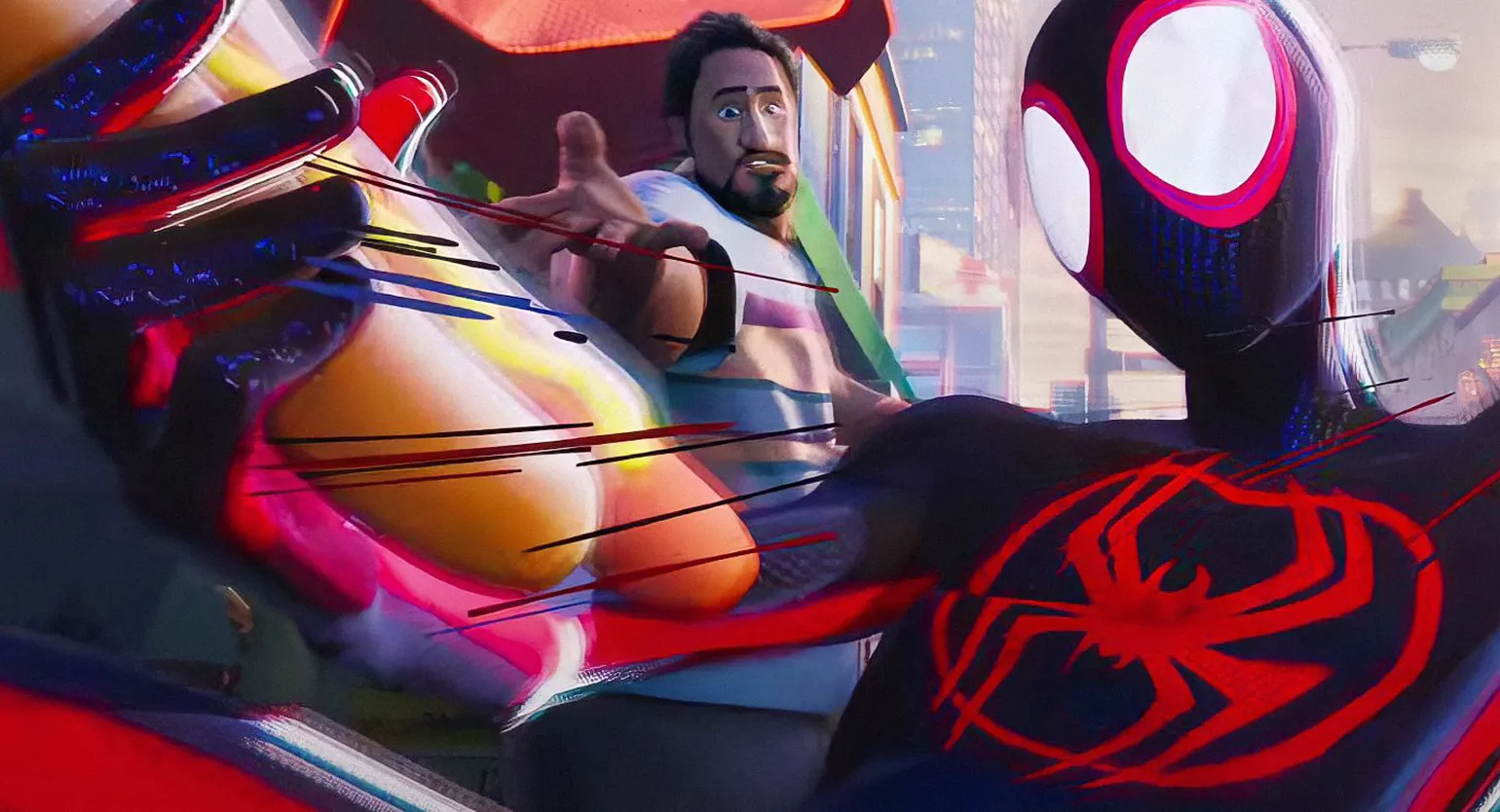
Learn moreThe superhero in the red and blue tights first appeared in comic books in August 1962. Since then, Spider-Man has quickly gained popularity, moving to the screen and appearing in a variety of formats: from the naive cartoons of the 1960s to the low-budget Japanese television series of the 1970s, from the serious interpretations of the 2000s to the large-scale multiverse crossovers of recent years. However, until 2018, there was no high-quality full-length animated film dedicated to this character. With the release of the animated Spider-Man film in 2018, audiences were introduced to a new take on the hero, combining comic book elements with modern visuals and a compelling story, making it a landmark event in the world of animation and film. Sony Pictures Animation noticed audience fatigue with familiar plots and decided to create something unique, which led to the emergence of the Spider-Verse franchise. The first film was released in 2018, and the second in 2023. The third installment was expected to premiere on March 29, 2024, but was delayed due to a strike. This franchise has attracted attention for its innovative animation and deep storytelling, making it one of the most talked about in cinema.
In this material, we will consider in detail a topic that interests many. We analyze the key aspects related to this problem and provide useful recommendations. Our goal is to help readers better understand the essence of the issue and offer practical solutions. Stay with us to get complete and up-to-date information.
- the plot of the first and second parts;
- the creators and reinventors of Spider;
- animation style of exceptional beauty and depth;
- what we understood about spiders and about ourselves.
Subscribe to the "How are you?" Telegram channel. In this channel, our colleagues discuss topics of psychology and self-development with a sincere approach and a scientific basis. We'll also be sharing trending movie and music selections every weekend to inspire you. Join our community to stay up-to-date with interesting content and helpful tips.
What's Happening in the New Spider-Verse
Let's discuss this one last time.
Peter Parker is the man who became famous for his transformation into Spider-Man after being bitten by a radioactive spider. For ten years, he remained the one and only superhero, using his abilities to protect people and fight crime. His brave actions and willingness to help made him a symbol of hope. He not only saved lives but also experienced romantic relationships, which added depth to his character. Peter has repeatedly become the savior of his city, facing new threats and overcoming difficulties time and again.
This is the story of Miles Morales, a teenager who became the new Spider-Man. His life changed dramatically after being bitten by a radioactive spider from another dimension. Along with the classic abilities of the original Spider-Man, Miles gained unique skills such as invisibility and an electric sting. A crucial moment in his development came when he met Peter B. Parker, a Spider-Man from a parallel universe, who became his mentor. Peter must return home, and Miles strives to gain the necessary skills and confidence to become the one and only Spider-Man in his world. This is a story about growth, friendship, and finding your place in the world of superheroes.
The duo is joined by Spider-Verses from various universes. Their arrival in Miles's dimension was made possible by the collider and the persistent Kingpin, who is desperate to bring back his dead wife and daughter. The Spider-Squad joins forces to gather the data needed to hack a giant machine capable of returning them to their home worlds. Gwen Stacy longs to return to her pink-and-blue watercolor world, Pig to his cartoonish one, Penny to an anime reality, noir Peter to his black-and-white everyday life, and Peter B. Parker to a world resembling our own. Teamwork and courage become key factors in this fight to return home, demonstrating the importance of friendship and mutual assistance in difficult situations.
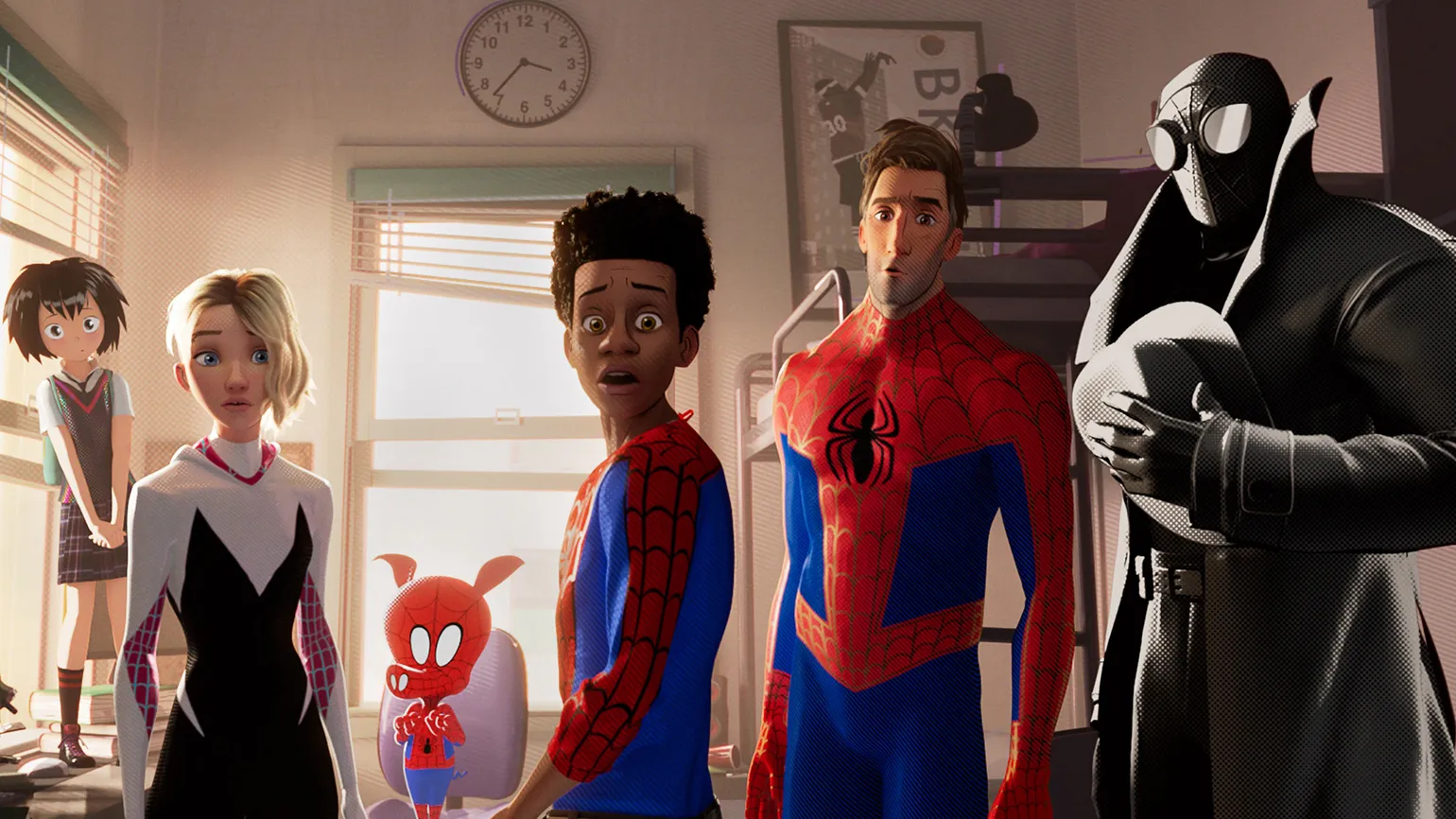
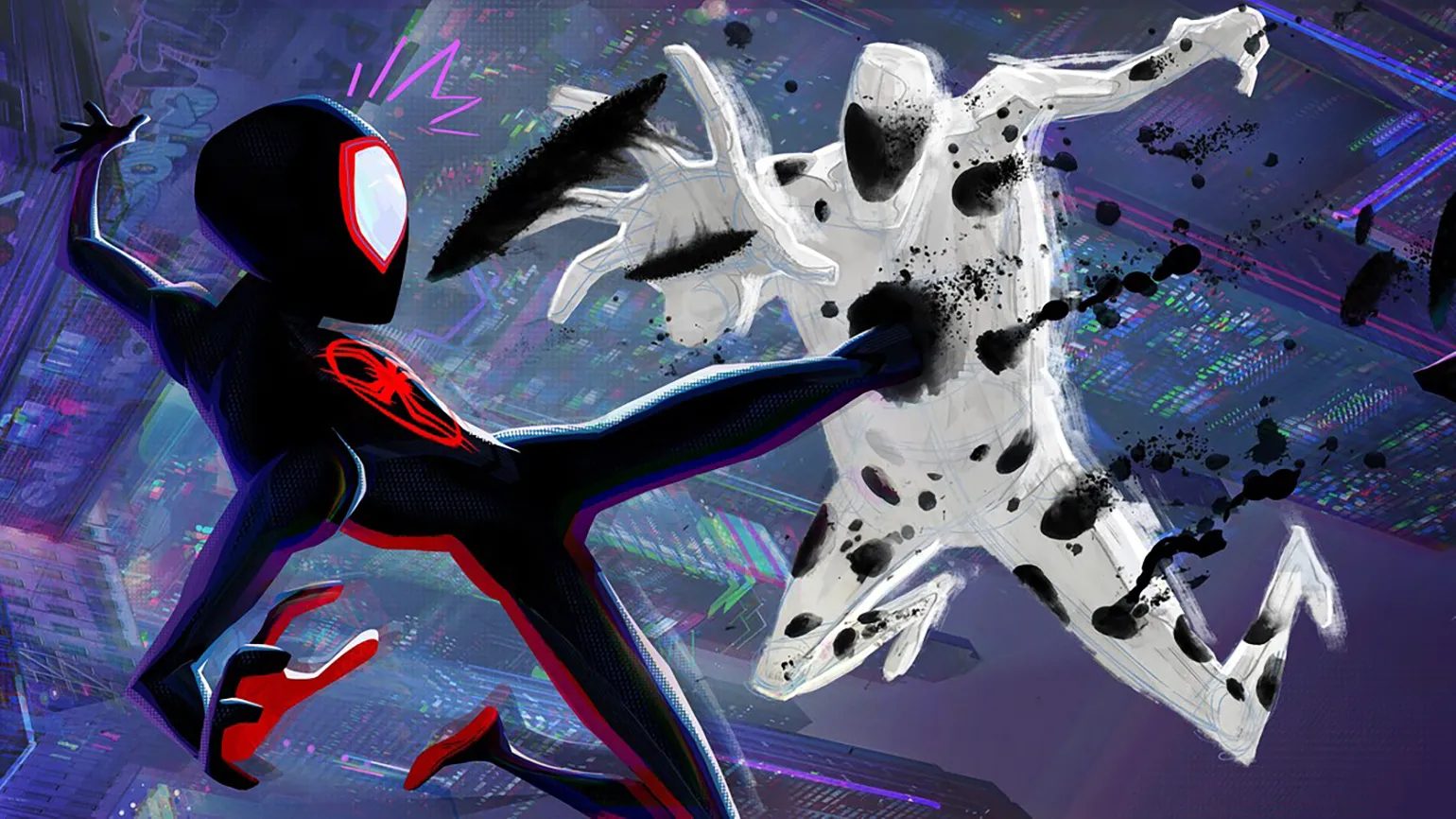
In a short period of time Over the course of two hours, Morales goes through many changes: he faces the challenges of adolescence, changes schools, buys an unusual suit from Stan Lee, nearly destroys Spider-Man, fights with his parents, loses an uncle, finds confidence in himself and his abilities, creates his own suit, overcomes his inner demons, and ultimately sends all his enemies home. Miles's story is filled with both ups and downs. He simultaneously resembles the famous superhero and his devoted fans. His character and worldview are dominated by teenage insecurity, impulsiveness, and high empathy, which sets him apart from Parker. They are united by a love of their work and optimism, thanks to which the Spider-Verse always finds a way out of difficult situations. But this is only part of his fascinating story, which has much more to offer. Her name is Gwen Stacy, and one day she became the victim of a radioactive spider bite. Gwen is a unique Spider-Woman, raised without a mother and experiencing the loss of her best friend, Peter Parker. Her father, a police officer, hunts Spider-Woman, believing her to be responsible for Peter's death. Seeking support, Gwen finds a new friend in Miles, but this friendship proves temporary. Gwen's fate is full of unexpected twists, and after a conflict with her father, she escapes her world, joining the Spider-Squad of Miguel O'Hara, a Spider-Man from the future. Together, they confront changes to canonical events and battle a new supervillain named the Spot, who is able to create portals from his body and travel across the multiverse. His main enemy is Spider-Man of Earth-1610, the one where the one and only… lives…
Miles Morales continues his He fights crime, combining the superhero life with the ordinary problems of a high school student. However, it becomes increasingly difficult for him to cope. His parents are becoming increasingly distant from him, and he misses his friends, especially Gwen. Thoughts form in his head, then materialize, and his blonde friend briefly appears. Miles secretly decides to follow her, passing through a portal into Miguel O'Hara's world. Here, he not only learns why he was rejected from the club but also discovers that another Miles Morales exists in one of the universes. This meeting opens up new horizons and possibilities for him, and forces him to rethink his role as a superhero and a person.
The story is not over yet.
Who is Alberto Mielgo and why you need to learn copyright
In the 1990s, Marvel actively sold the rights to its characters to various studios to avoid bankruptcy. The Japanese studio Sony Pictures acquired the rights to Spider-Man for $ 7 million. Since 2002, Sony began producing films about the superhero, which have generated huge profits. This does not include profits from related products, including computer games.
In 2007, the first Spider-Man trilogy ended, and Sony decided to reboot the hero's story in a new on-screen dilogy called The Amazing Spider-Man. This reboot turned out to be surprising only in its name. The second film in the duology was chaotic and disjointed, driven by the studio's desire to create a unified Spider-Man universe capable of competing with Marvel's popular Avengers.
In 2014, following the disappointing release of the second film, The Amazing Spider-Man, Sony Studios fell victim to a massive hacker attack. The leak revealed emails between Sony Pictures Entertainment co-chairman Amy Pascal and company president Doug Belgrad. These messages revealed that Sony was planning to "rejuvenate" the Spider-Man character and develop his first major animated project. These events marked a significant milestone in the franchise's history, influencing the studio's future decisions regarding Spider-Man's future in the film industry.
Despite the public attention, Amy Pascal decided to give the project another go. The idea was entrusted to close friends Phil Lord and Christopher Miller, young, talented filmmakers who had previously received acclaim for their work on the successful The LEGO Movie. They began writing the script and developing the concept of the future cartoon, striving to create a unique and exciting product.
At the initial stage of the film's production, it was necessary to develop not only a concept but also a unique visual style that would set the tone for the entire story and avoid associations with previous failures. For this task, a specialist was brought in, whose name will appear in the credits under the modest designation "Visual Consultant." This was Alberto Mielgo, a Spanish artist and animator who had previously worked on such projects as Tim Burton's "Corpse Bride," "Harry Potter," and the animated film "Tron: Uprising." Mielgo assembled a team of professionals and began developing visual concepts for the film "Enter the Spider-Verse." Alberto Mielgo, appointed art director for the project, began his work even before the directors and producers joined the team. His task was to research the comic book and cinematic legacy of Spider-Man, as well as to find a unique language and style for the animated project. Mielgo sought to disrupt the traditional visual style that large corporations had used for years in their animated products. At the beginning of his work, he dedicated himself to creating sketches that inspired the studio, which was open to experimentation and new ideas. Alberto's style is distinguished by a rough realism in the depiction of the characters' bodies. His characters, although flexible, often appear awkward, and their movements are sometimes bizarre. Alberto's interpretation of Spider-Man resembles a weightlifter, not the slender gymnast seen in traditional comics. Mielgo, with a keen knowledge of the source material, sought to create a unique image in which the hero emerges as a rough-and-tumble man in a harsh and unwelcoming world where the lines between good and evil are blurred. This is evident in both the pencil sketches and the test animation frames, highlighting Mielgo's individual approach to character creation and their interaction with the environment.
Mjelgo presents a frightening Peter. He stands in his suit in a filthy toilet, staring intently into the mirror. The camera moves closer, capturing the hero in close-up, periodically losing focus and stepping back, as if afraid of Spider-Man, but at the same time feeling admiration for him. This contrast creates a tense atmosphere, emphasizing the character's internal contradictions and his complex emotions.
Alberto has a deep affection for the human body and its exploration. In his paintings, he often depicts naked people in a state of despair or confusion, which emphasizes their vulnerability. Despite the presence of nudity, the artist avoids sexualization of bodies, believing that desecration of individuality expressed in physical form is a grave sin. His work, provocative and sensual at the same time, is even reflected in commercials, for which Alberto also collaborates as an animator.
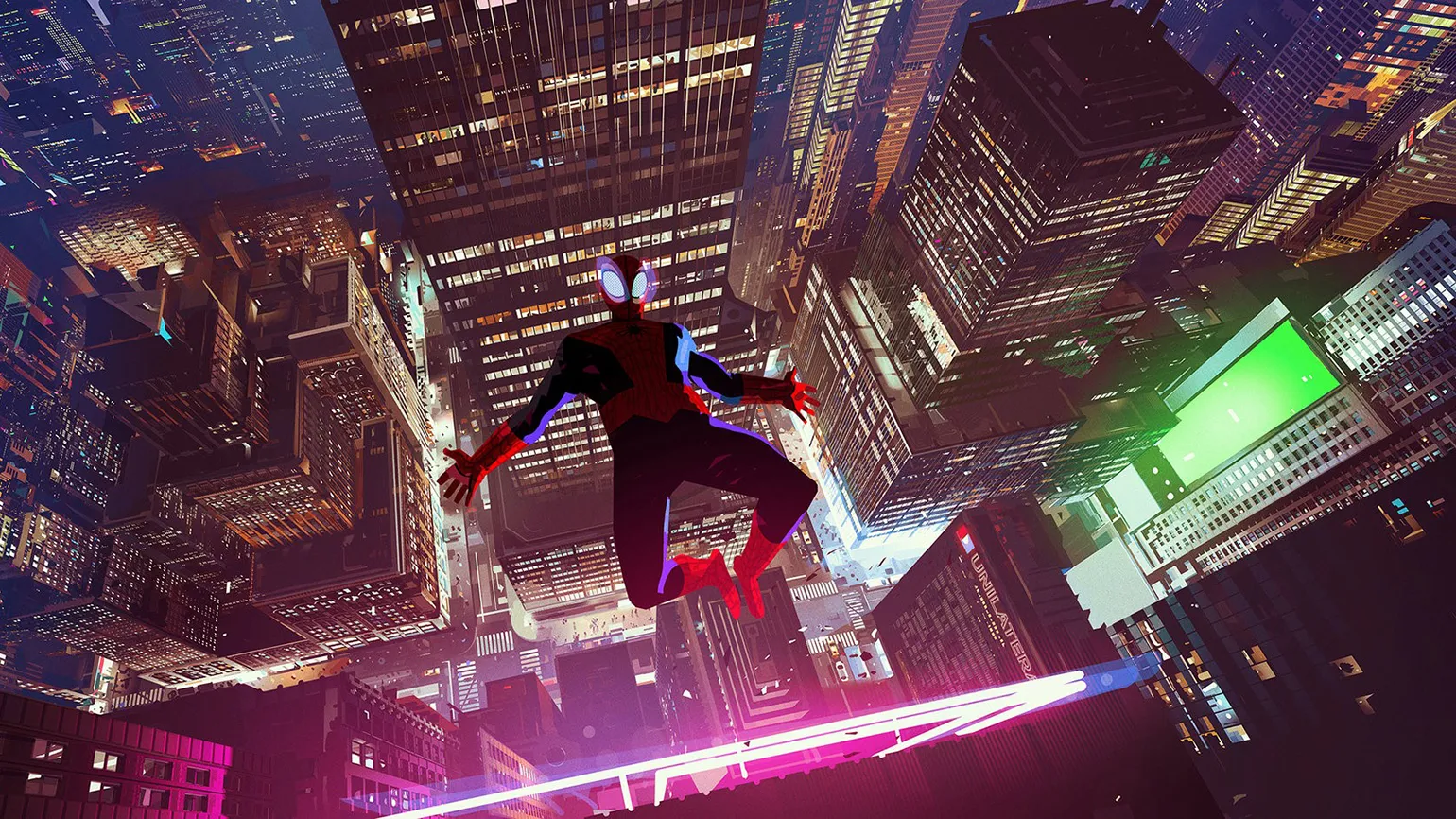
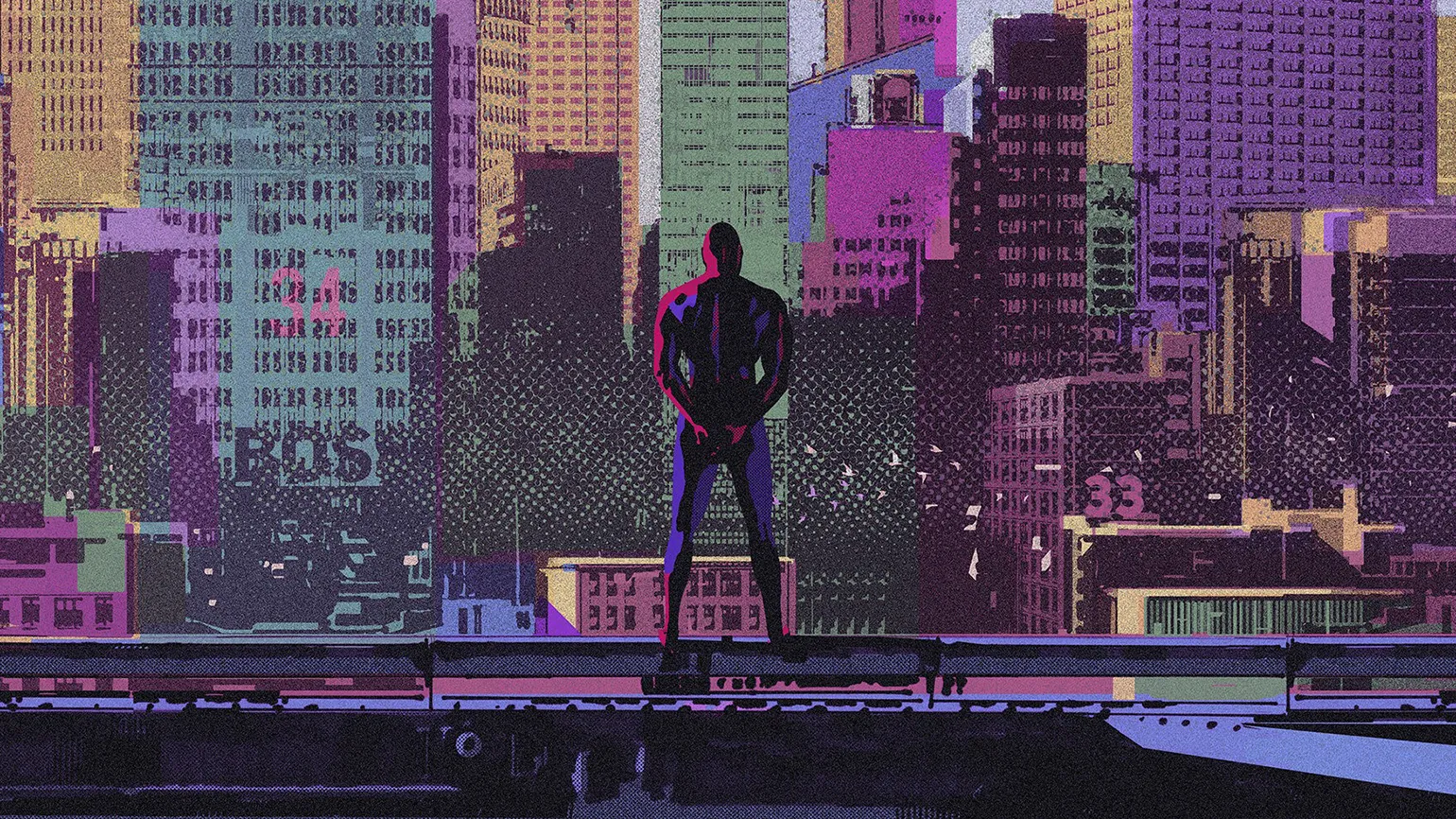
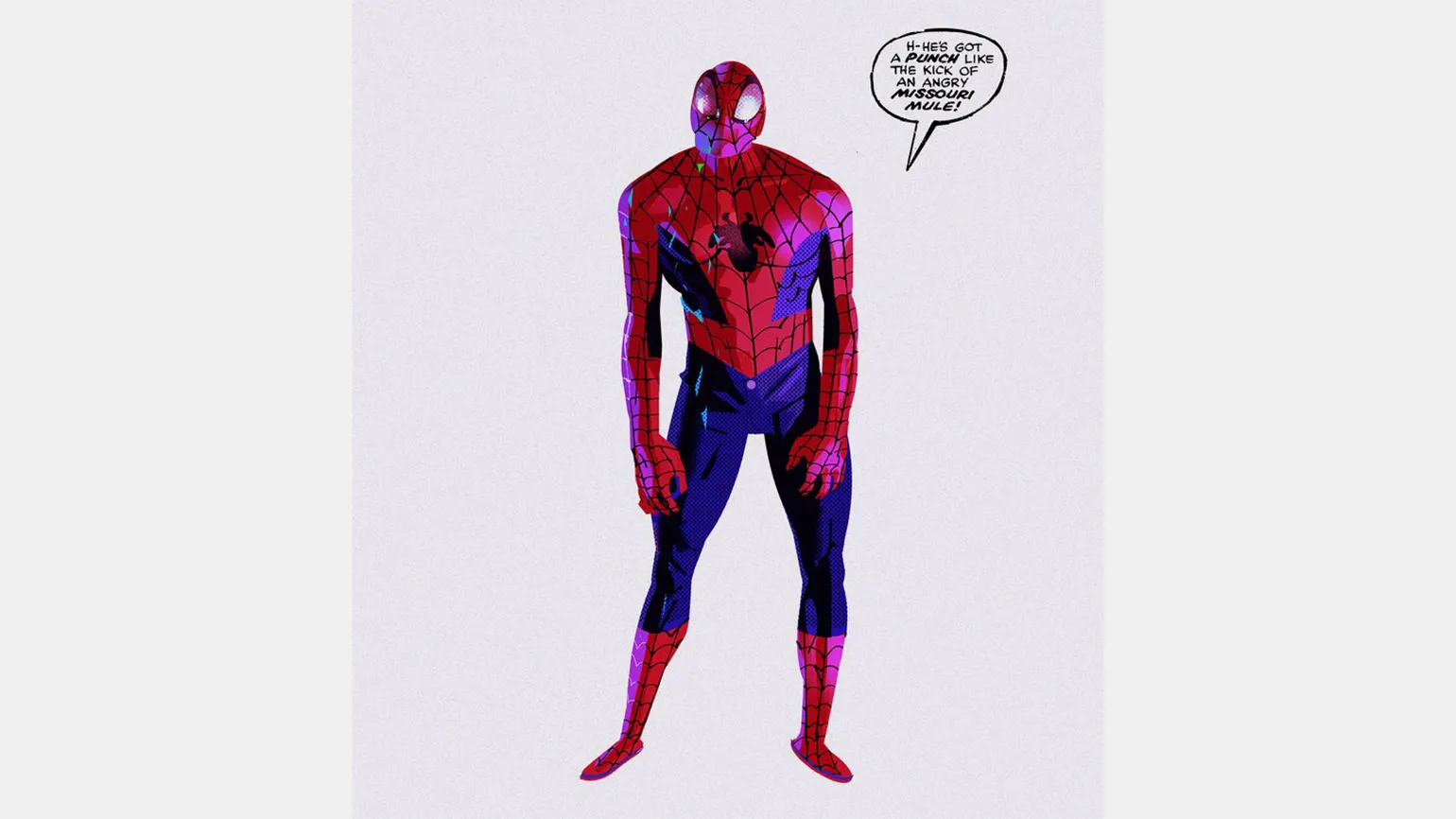
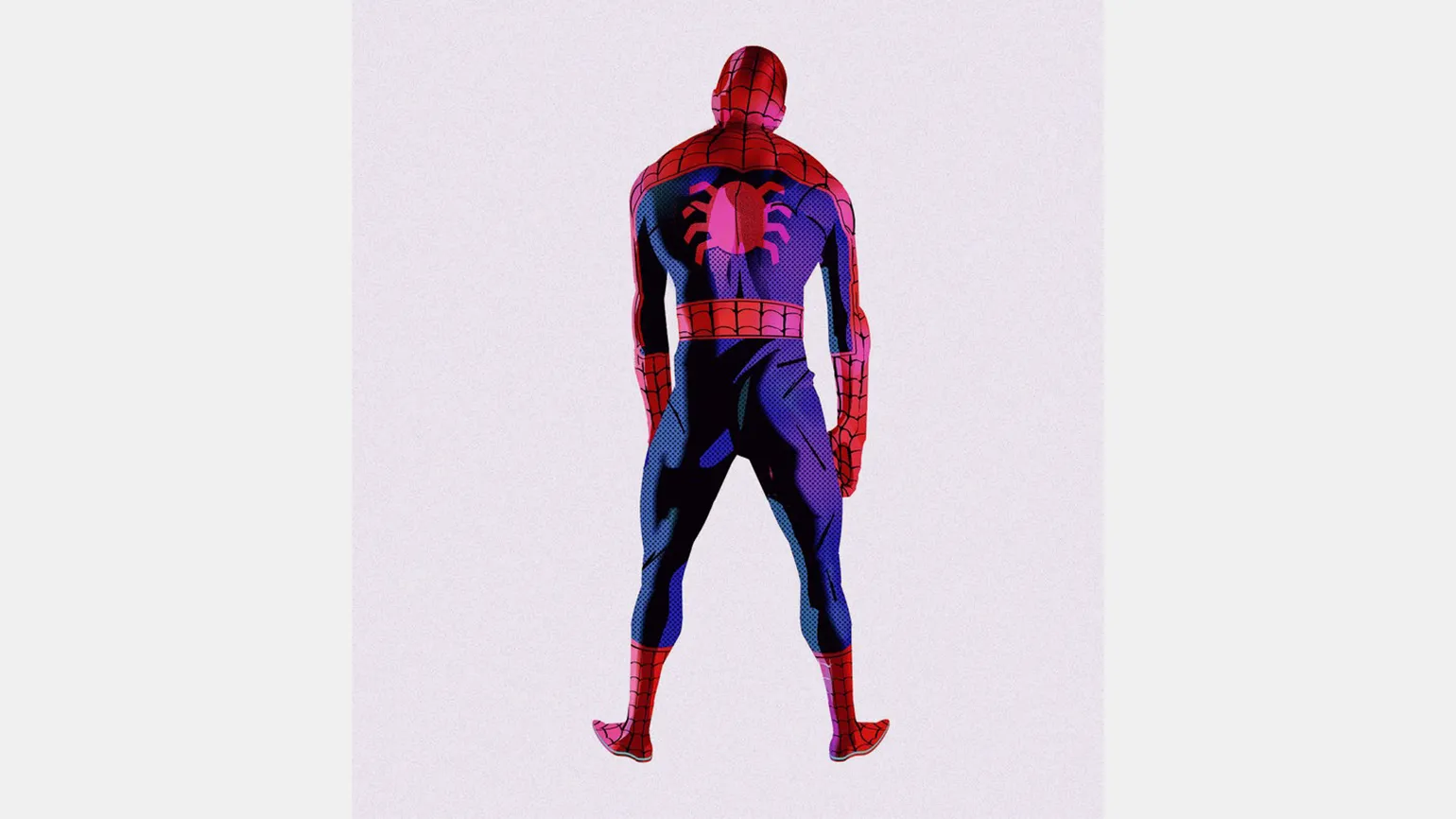
The Spanish artist prefers abstract lines and angular geometry, which gives his works a unique style. His drawings are rich in detail, but they never reach photorealism, which distinguishes him from the style of Pixar. Mielgo maintains that he is against turning animation into a live-action film, emphasizing the importance of preserving its original character and expressiveness. Alberto values traditional 2D work and draws by hand. He uses computer technology only rarely, to refine already-created images. This commitment to classical methods brings him close to Hayao Miyazaki, who also prefers to spend weeks perfecting a single frame rather than relying on neural networks for rapid completion. Alberto and Miyazaki demonstrate the importance of maintaining individuality and creativity, even in the digital age. Why involve an unusual creative specialist in a comic book project if the target audience is children and teenagers? The answer to this question turned out to be simple and brutal. The studio used Mielgo's ideas regarding the visual style, character movements, city scaling, and other unique features, such as a reduced frame rate. Ultimately, the artist was fired and not allowed to contribute to the final version of the project. This underscores the importance of considering the creative input of specialists, even when the project is aimed at a younger audience.
The initiator of the dismissal remains unknown, but it's clear that Sony has run out of patience for creative initiatives. The dismissal was a heavy blow—the artist, who had quickly assembled his team, was hastily saying goodbye to his colleagues and leaving the studio where he had worked for a year and a half.
Alberto sums up his involvement in the project, noting that his unexpected dismissal was due to his insufficient legal knowledge and disdain for intellectual property protection. He realizes that ignoring these aspects has negatively affected his professional reputation and career.
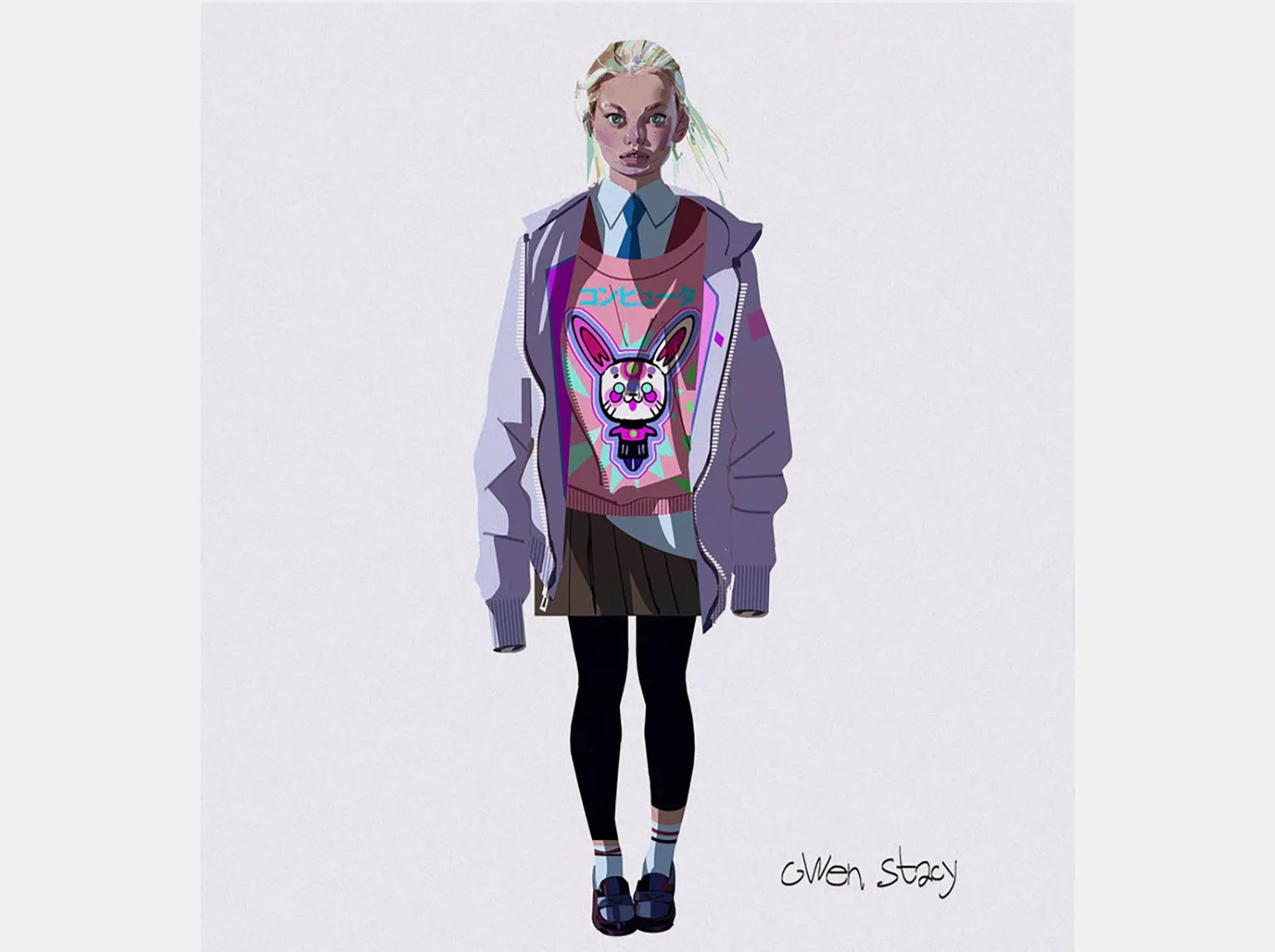
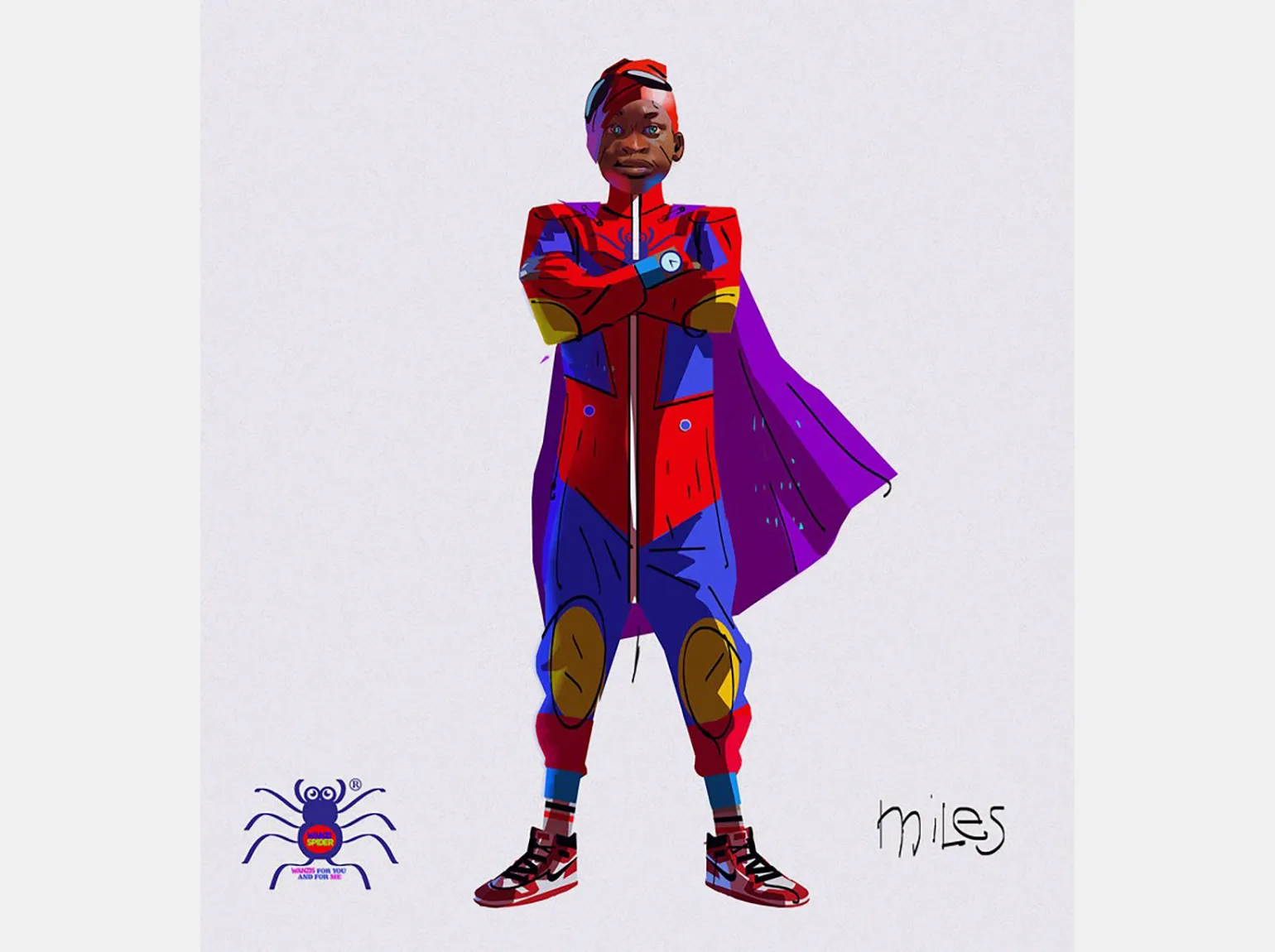
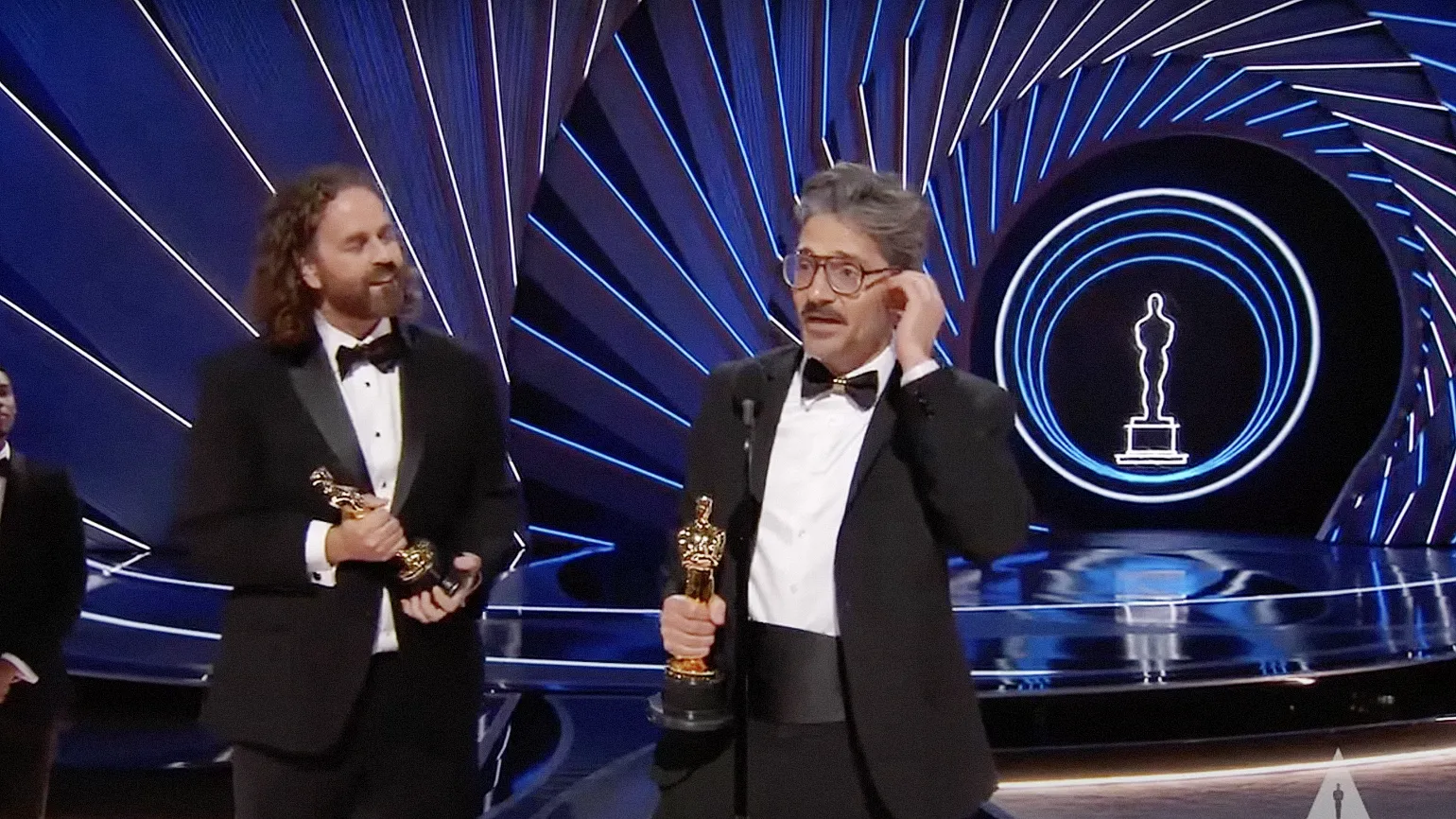
Sony Pictures has created a solid visual foundation for its film, getting rid of the excessive creativity of the Spanish artist. Mjelgo would later win an Oscar for the animated short film "Windshield Wiper," and also create impressive episodes for the anthology series "Love. Death. Robots." He would also develop a commercial for the game Watch Dogs: Legion, incorporating elements from his interpretation of Spider-Man.
The vacant position of production designer was filled by talented animator Patrick O'Keefe. He made significant improvements to the project's visual design, bringing it to the level presented in the first teaser. O'Keefe's creativity and professionalism played a key role in the creation of high-quality animation, which positively impacted the audience's perception of the work.
The finished version can be compared with Mjelgo's sketches, and the conclusion will be obvious. Patrick was able to provide Sony Pictures with exactly the Spider-Man world they were looking for - close to the comics. In his interpretation, the colors are slightly less bright and acidic, the characters look more slender and graceful, and the city does not seem so bulky and gloomy. This creates an atmosphere that better matches the original spirit of the comics and attracts the attention of the audience.
The work retains unique elements of Mjelgo's style, such as bubbles with the characters' thoughts and yellow rectangles that describe the events. Verbalized sounds like "bang" and "twip" accompany moments when Spider-Man uses his webbing. The animators experimented extensively with frame movement, minimizing blur and varying the frame rate. This created a "crispy" effect, which appears jerky rather than smooth, reminiscent of the experience of reading a comic book. This approach emphasizes the distinctive visual style and enhances the perception of the plot.
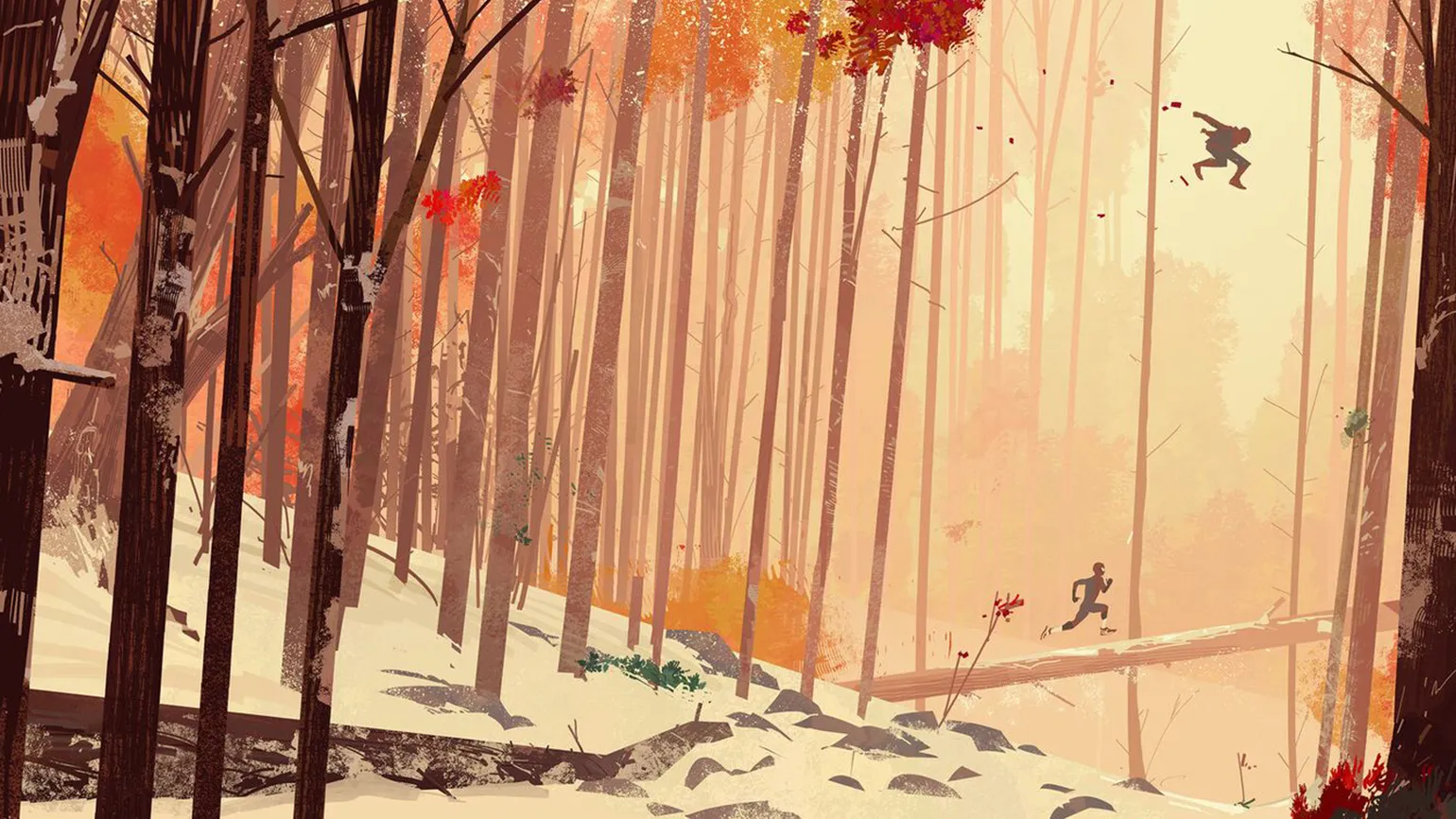
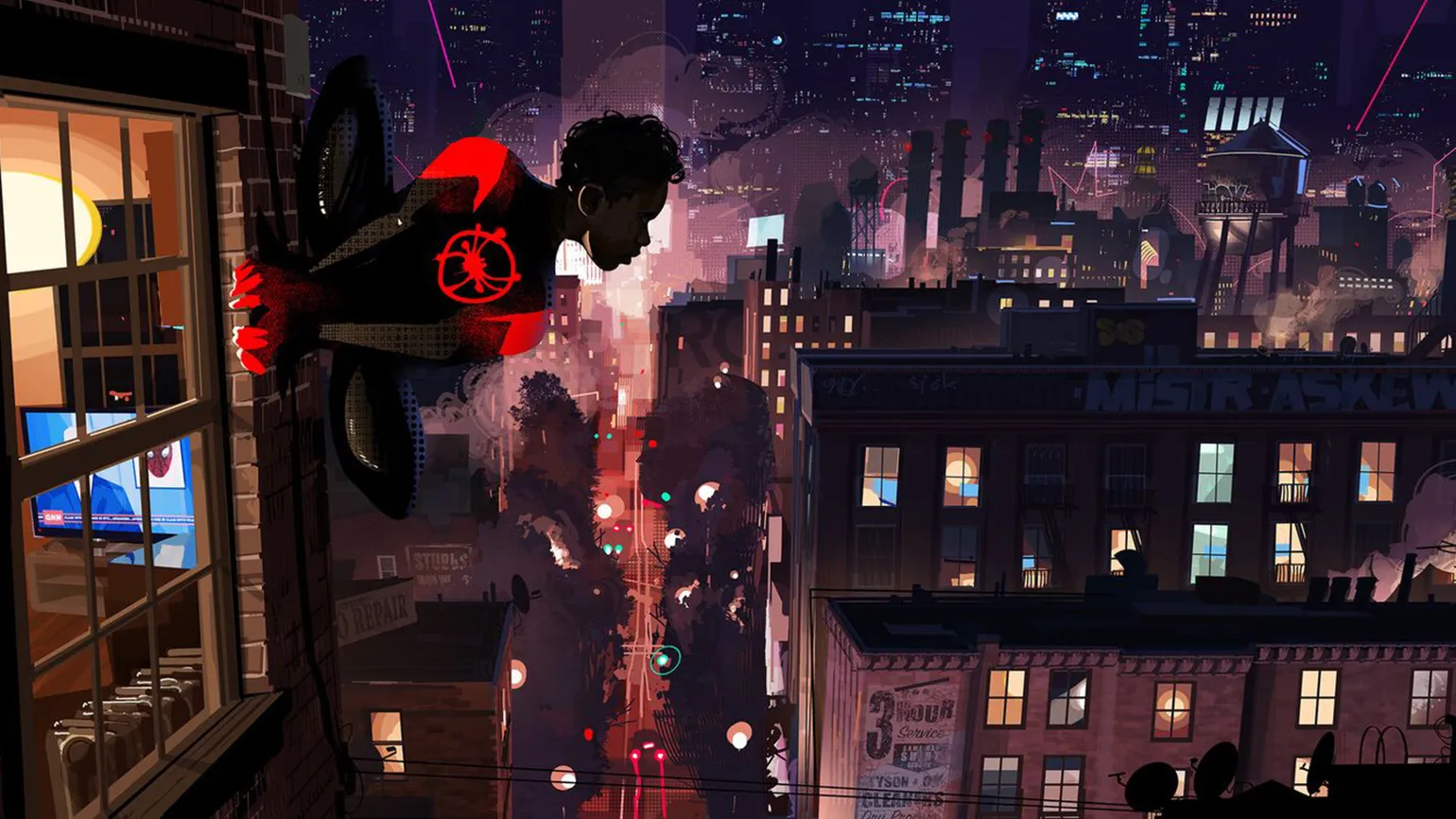
Work on the animation was completed in October 2018, two months before the official theatrical release. Mjelgo remained in the background, mentioned only in the credits as «Visual consultant». According to Sony Pictures, the unique visual style of the entire franchise was developed by a consultant alone. This highlights the misunderstanding about his contribution and importance in the creation of animation.
How the visual style of an animated film reveals characters and conveys emotions
Creating a style is only the first part of the task. Visual elements must harmoniously integrate with the narrative, supporting storylines, deepening character development and enhancing the overall impression. In addition, they can "lighten" a complex plot structure or fill in gaps in it. The creators of "Spidey" succeeded in fully achieving this.
Let's look at web-slinging. The changes in the way Spider-Man flies at the beginning and end of the film clearly demonstrate the evolution of the character. Without further explanation, the viewer can see his skills and self-confidence develop, emphasizing his personal growth throughout the story.
Miles, who gained his superpowers from a spider bite, initially doesn't realize his potential and, instead of flying, falls endlessly. The animation in these scenes resembles moments of dialogue and everyday life—choppy due to the reduced frame rate and slightly blurry. The city appears as a bright, multicolored haze. Morales's falls reach their ultimate conclusion with the death of Peter Parker. For Miles, this is a moment of complete loss, when there is nowhere left to fall. The only path left is to rise to new heights.
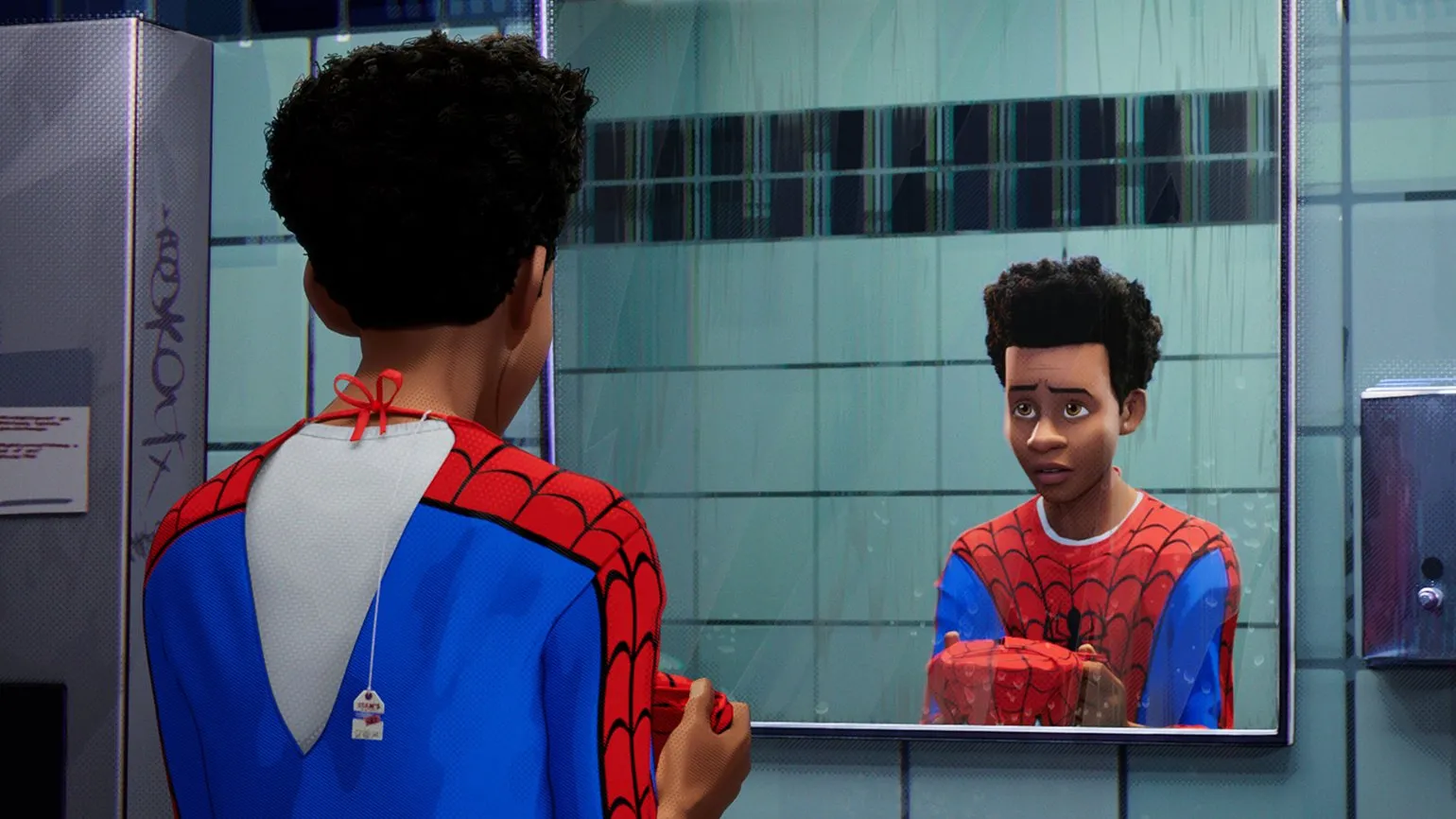
When Miles comes to the cemetery to visit Peter, he unexpectedly encounters his doppelganger from an alternate reality. After a humorous encounter, the heroes must join forces to escape a difficult situation. In this adventure, Miles realizes that his heroic journey is inextricably linked with serious risks and dangers.
The animation becomes more dynamic, and the street-level cityscapes become more detailed. Morales is currently at a low altitude, but will soon rise to the rooftops of skyscrapers when he fully embraces his new identity. At this point, the animators will create a completely unique visualization, giving the project a fresh and engaging style.
After the loss of his Uncle Aaron, Miles experiences deep grief and struggles to cope with this loss. Nevertheless, he finds the strength to continue living. In the process of finding inner balance, he manages not only to master his superpowers but also to organize his thoughts and feelings. This transformation helps him cope with grief and move forward, demonstrating that even in the most difficult times, one can find the strength to change and grow.
Miles receives his true suit and takes his first real flight. This moment becomes the culmination of his character development, as he becomes a unique Spider-Man. The ability to rise from falls, both literally and figuratively, perfectly reflects the hero's inner world and his desire for growth and self-realization. Flight symbolizes not only physical freedom, but also emotional overcoming of difficulties, which makes this episode especially significant in his journey.
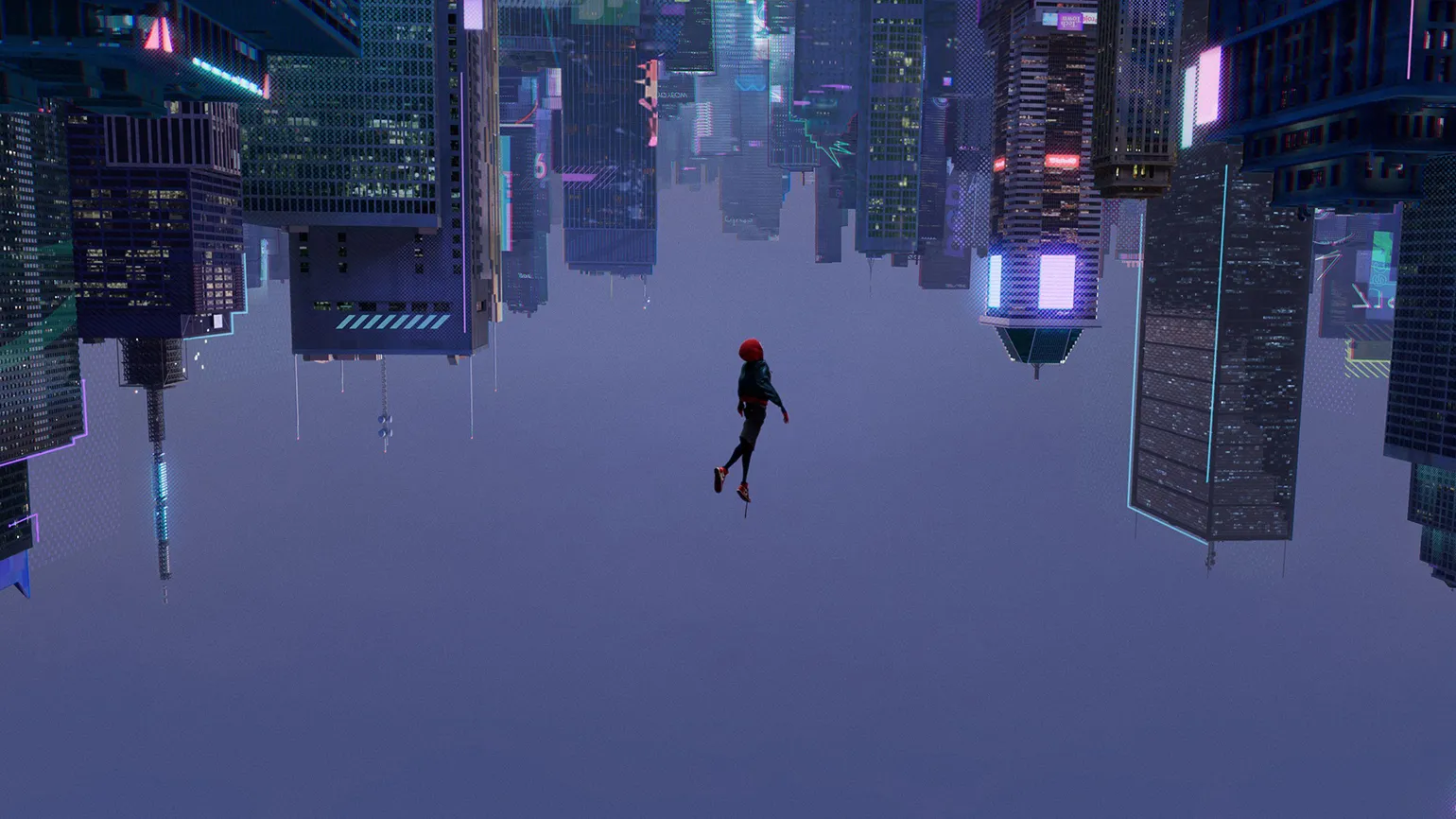
Night New York opens its Spectacular bird's-eye views present viewers with a captivating spectacle. The city glows with lights, vibrant signs, and sparkling reflections in the glass facades of buildings. This spectacle is not only magnificent but also exciting, emphasizing the unique atmosphere of a metropolis that never sleeps. The New York nightscape, with its bright lights and dynamism, becomes a true symbol of urban life and appeal.
In the second part of the animated trilogy, Gwen Stacy experiences significant personal growth. Her world is depicted in watercolor pink and mint tones, creating a unique atmosphere. People and places around her often become blurred, as if dissolving into a multicolored mass, symbolizing her inner experiences and emotional instability. This visual aesthetic heightens the sense of transformation and uncertainty Gwen faces along her journey.
Like most teenagers, Gwen is focused on her own experiences and internal conflicts, blinding her to the beautiful yet deceptive world around her. Behind its visual charm lies a harsh reality, where evil can prevail if you don't continue to fight. It's a world where even the closest friend can become a victim of bullying at school, and even a superhero finds herself powerless against it. It's important to remember that every day is a new opportunity to make a difference and prevent evil forces from winning.
Gwen's character unfolds through two key scenes that also advance her individual storyline. These moments help to better understand her motivation and character, and also influence further events in the story.
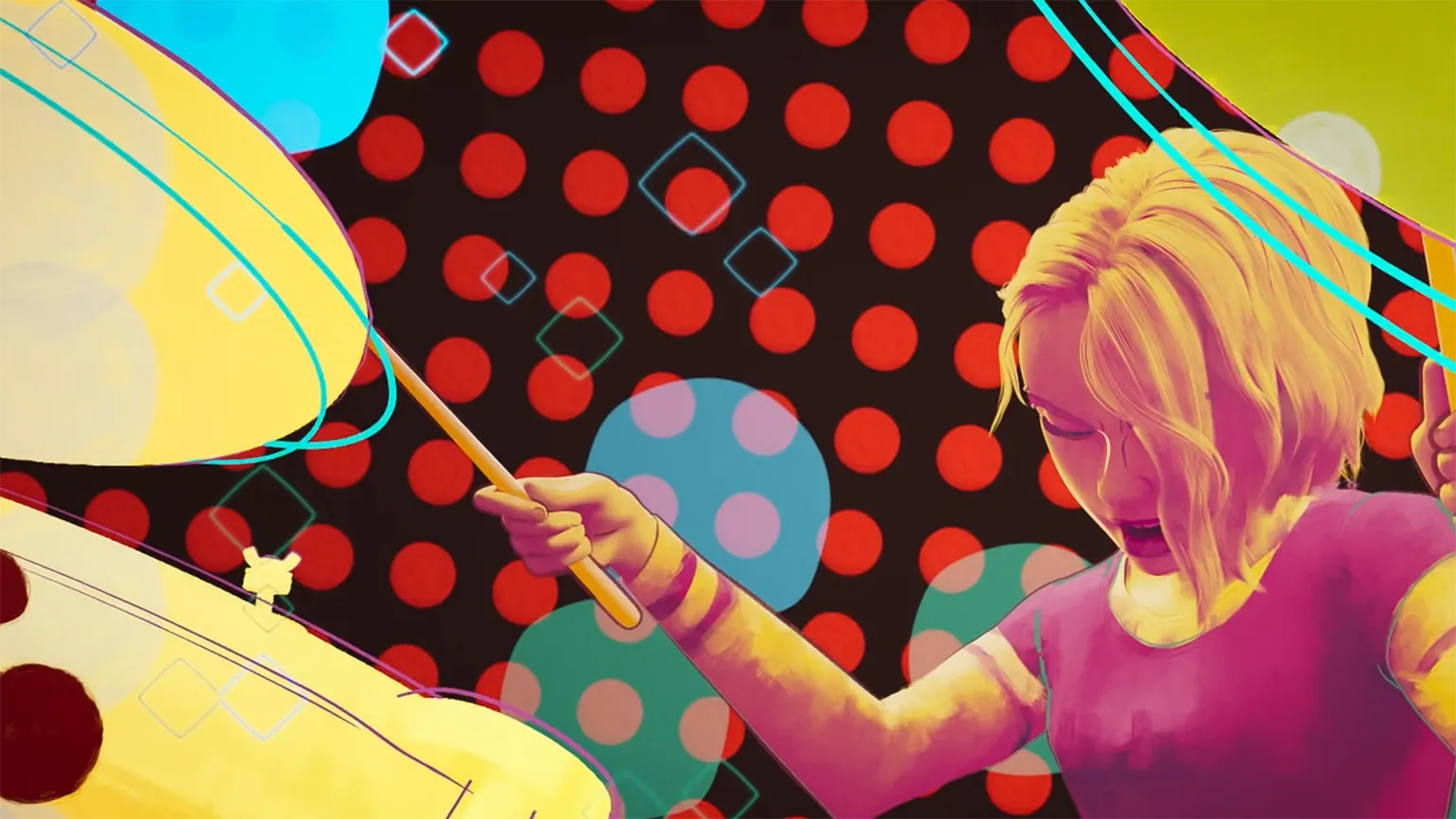
In the opening scene, Gwen performs a musical composition On the drums, she recounts the events of the first part and recounts her past. She recalls Miles and his story, drawing parallels with her own experiences. Her emotional reflections are intensified by the rising rhythm of the percussion instruments. Gwen delves into the memories of difficult moments in her past, combining her inner reflections with the musical accompaniment.
The deeper you delve into the thoughts, the faster and more choppy the image changes. Frames replace one another, overlapping and intertwining, the comic style turns into expressionism. Frame after frame, you feel the rhythm - a blow, another blow, another... stop. Gwen comes to her senses. The cartoon begins.
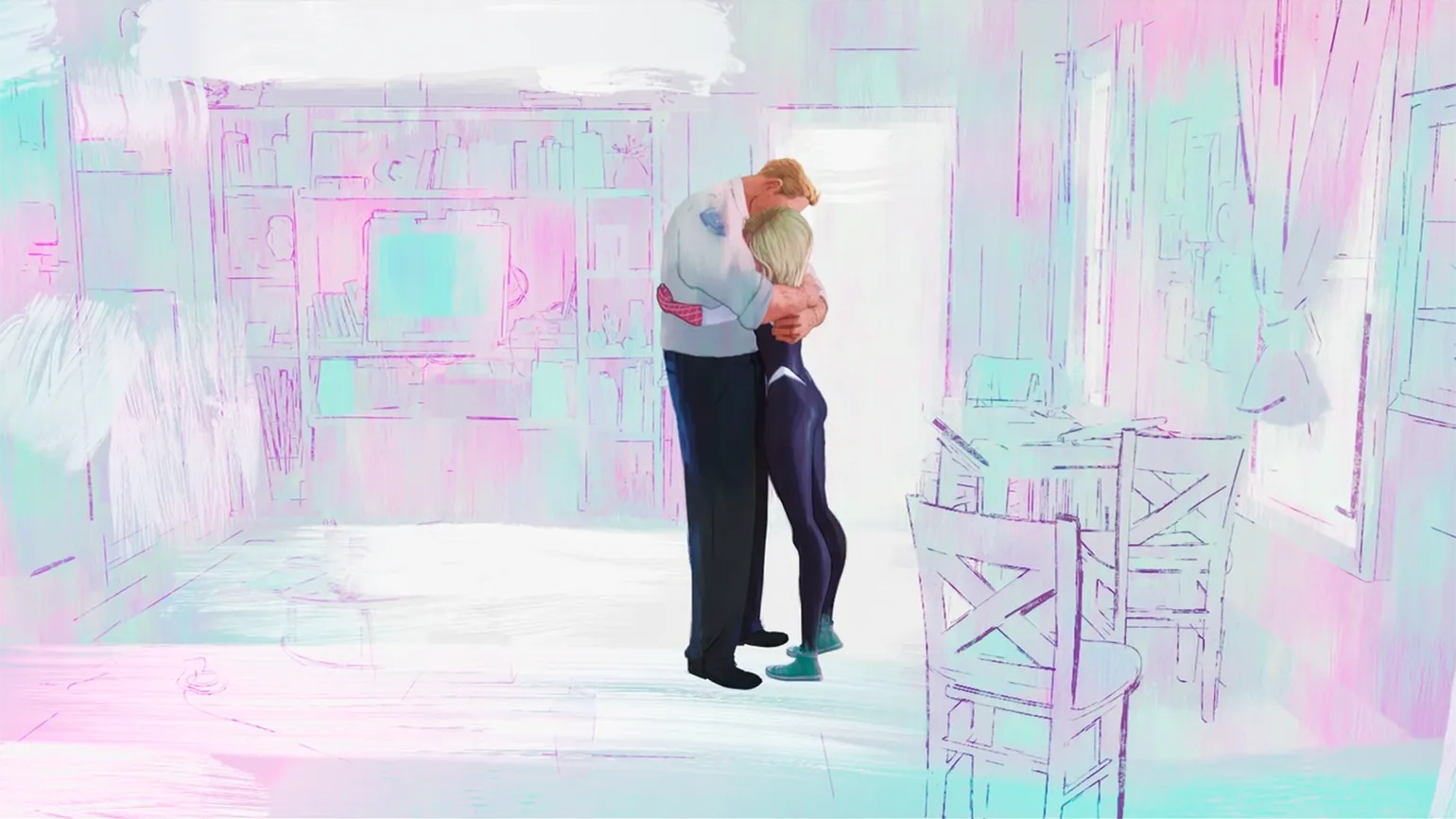
A crucial scene in the plot is Gwen's reunion with her father. Here we see not just a superhero and a police officer, but a parent and child who are facing difficulties in understanding each other. This moment focuses on their dialogue, which becomes the central element of the scene. Everything around seems blurred, serving as a background for their communication. Colors constantly change, and the paint seems to drip off the walls, emphasizing the emotional tension and dynamics of their conversation. The scene demonstrates the depth of the relationship and the complexity of interactions, which makes it key to the development of the plot.
As the climax of the scene approaches, the chaos around the heroes mounts. The apartment's interior transforms into abstract geometric shapes that swirl around them. Entropy reaches its peak at the moment of their embrace—the cacophony of colors fades. Their relationship becomes a blank slate, with no more room for secrets or hidden feelings.
In the story of Miles Spider-Man, visuals play a key role in conveying meaning conflict, even in the absence of words. The animated Spider-Verse demonstrates that visual art can be not only attractive, but also a self-sufficient language that allows the viewer to deeply understand the storylines and emotional experiences of the characters. This approach makes animation not just a pretty shell, but an important element of the storytelling, capable of conveying the atmosphere and essence of the action.
Excelsior!
Spider-Man first appeared in comics in 1962 in Amazing Fantasy #15. He was created by writer Stan Lee and artist Steve Ditko. These two creators revolutionized the world of superheroes, imbuing the character with problems and experiences familiar to many readers. Spider-Man became a symbol of the struggle against difficulties and a role model thanks to his humanity and sincerity. This unique concept made him one of the most popular and beloved superheroes in comic book history.
Before Spider-Man, comic book characters were mostly demigods, billionaires, or patriotic super-soldiers, making their stories exciting but difficult to follow. Stan Lee took a different approach: he created a hero who was not only unique but also relatable to many readers. He used a spider as a symbol, which can be frightening for some, and combined it with the image of a 15-year-old schoolboy facing teenage problems. This added realism and emotional depth, making Spider-Man one of the most relatable characters in the world of comics.
It really worked. Children and teenagers recognized themselves in the character and genuinely empathized with him. Although Peter Parker was a nerd and an outspoken moralist, this did not cancel out the creators' efforts. His honesty and fairness gave him a vulnerability, which made him even more appealing to the younger generation. Understanding the complexity of his character helps readers and viewers better understand their own experiences and moral dilemmas.
He faced personal tragedies: he lacked a prestigious job, lived with his aunt, constantly sacrificed himself, lost close friends, and kept his family safe. Society often viewed him as a scapegoat. His heroism was manifested not because of his superpowers and costume, but in spite of them. Even without a mask, Peter Parker remained a true hero. The radioactive spider didn't create unbreakable principles for him; it merely helped him realize them, while depriving him of his personal life and happiness. This is a story about how to remain human despite the difficulties and trials of fate.
Miles Morales first appeared in the Ultimate comic book universe in 2011. In this universe, he temporarily replaced the deceased Peter Parker until Peter from another reality appeared. While Miles isn't a complete replacement for the iconic superhero, he represents a refreshed version that echoes the heroes once adored by kids of the 1960s and 1970s. The original Peter has grown up, and his problems have become less relevant to younger generations. The rejuvenated Miles Morales, with his own unique style and story, has revived interest in the character and attracted a new audience, demonstrating the importance of diversity and fresh ideas in the world of comics.
The main difference is skin color. This requirement of modern reality creates additional challenges for Miles the Spider-Man compared to his predecessor. Skin color changes present new challenges and issues that require attention and discussion in the context of cultural identity and the representation of characters in contemporary society.
The animated Spider-Verse trilogy includes familiar comic book themes such as the responsibility for one's strength and actions, self-doubt, and heroism viewed not as a privilege but as a burden. Moral dilemmas and love for loved ones also play a significant role in the plot. The overarching theme unifying both films and the anticipated third installment is growing up and finding one's true self. These elements give the story depth and relevance, allowing audiences to empathize with the characters and their internal conflicts.
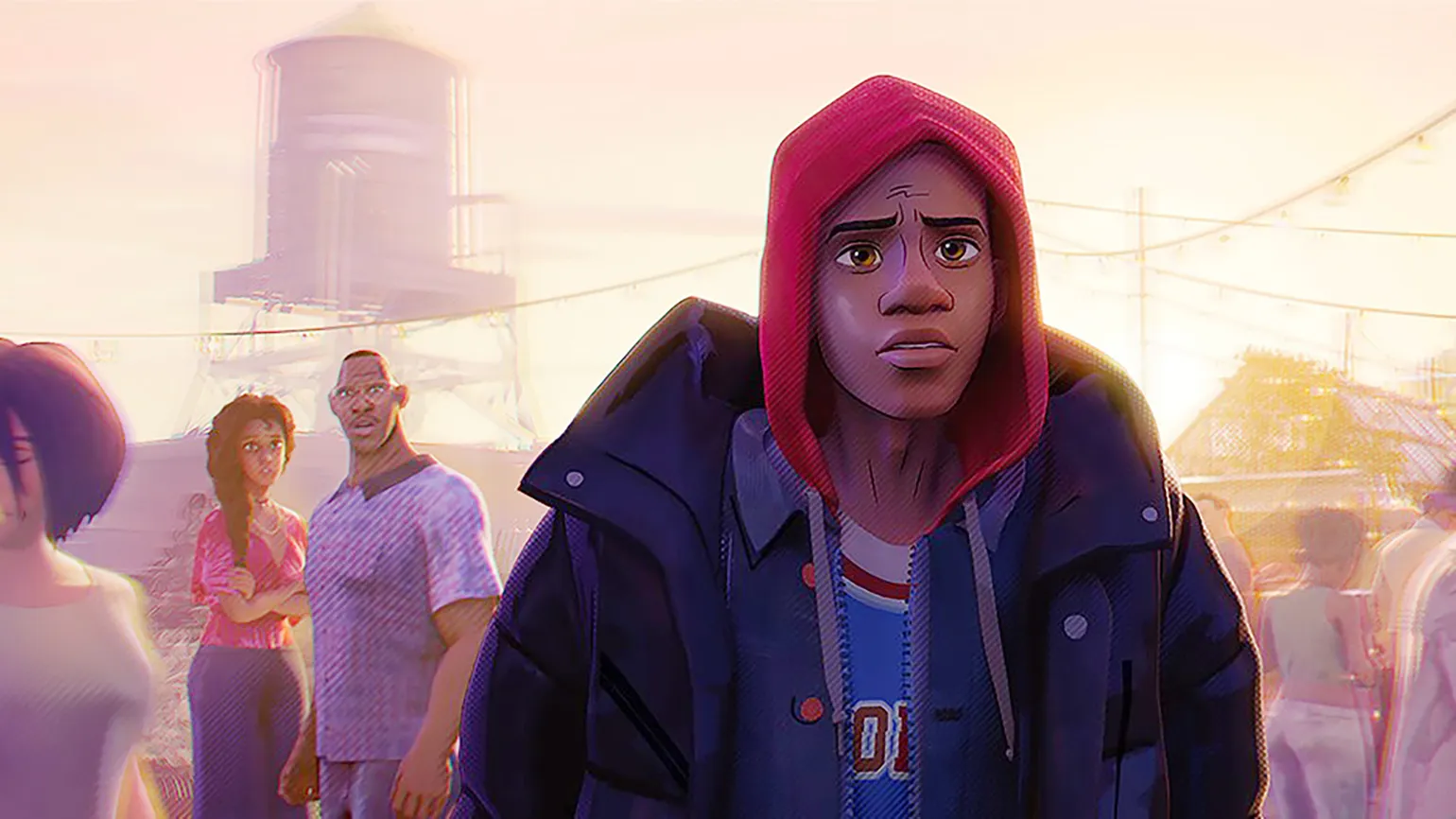
Before gaining his superpowers, Miles faces internal conflicts. He can't write an essay on "Great Expectations," doesn't know what the future holds, and doesn't understand who he wants to be. This is due to pressure from his parents, the demands of a privileged school, the expectations of his teachers, and the influence of the "adult" world around him. Miles is unprepared for the challenges that lie ahead. However, as often happens in life, circumstances force him to take decisive action and move forward. Miles wryly notes that gaining superpowers is reminiscent of puberty. This is true: significant physical changes occur, the inner voice becomes too loud and alarming, and those around him look on with bewilderment. At first, new abilities can seem burdensome and even distance the hero from his true self. However, when he reaches a critical point, such as during unsuccessful flights, it almost leads to his collapse, but ultimately makes him stronger. Overcoming such difficulties becomes an important step on the path to self-awareness and acceptance of one's unique abilities.
Only after surviving all the difficulties, facing losses and making new friends, Miles finds his true identity. Those around him play an important role in his journey, but his own integrity becomes key. He understands his abilities and clearly defines the direction he wants to go. This is the essence of true superheroism.
In the second part of Miles's story, he faces a new reality: those around him do not support him, but, on the contrary, become his adversaries. His father is dying, and the other Spiders worry that the teenager may try to save him, which will lead to the disruption of an important canonical event. This can have irreversible consequences for everyone, because in their world everything is interconnected. Thus, Miles learns that sometimes others make choices for him.
Spider-Man faces not only public opinion but also real pressure, which becomes an important stage in his growing up. This is a period when it seems like the whole world is against you. Teenage rebellion grips the hero as he begins to realize his first "great hopes." How Miles will cope with the cruelty of the world around him will be revealed in the final chapter of the story.
The new animated film about Spider-Man emphasizes that superheroes are a reflection of ourselves. We face various challenges and sometimes discover that our true enemies lie within. By conquering our inner demons, we can create a more harmonious world. In the next battle, don't forget to don your red and blue suit, grab your web shooters, and stock up on humor. It's important to remember that with great power comes great responsibility. However, sometimes simple things like baby powder can provide unexpected help.
Free career guidance
• Determine what you want from a new profession• Take the test and find out which professions are right for you• Understand what such specialists do
Learn more