Try 4 top design professions. Free ➞ In 5 days, you will get acquainted with illustration, UX/UI, web and graphic design. Add 4 cool cases to your portfolio and decide which direction to develop in next.
Find out moreLast November, the Amur Waves studio presented a documentary dedicated to the 60th anniversary of Viktor Pelevin. The film received mixed reviews from both audiences and critics. Some praised the dynamic narrative and unique photography, while others criticized the lack of new information and unconvincing gameplay sequences. However, most agree that the animation, created by Zhi-Shi Studio, was one of the project's strengths. In this article, we will take a closer look at animation and its impact on the perception of a film.
About the film
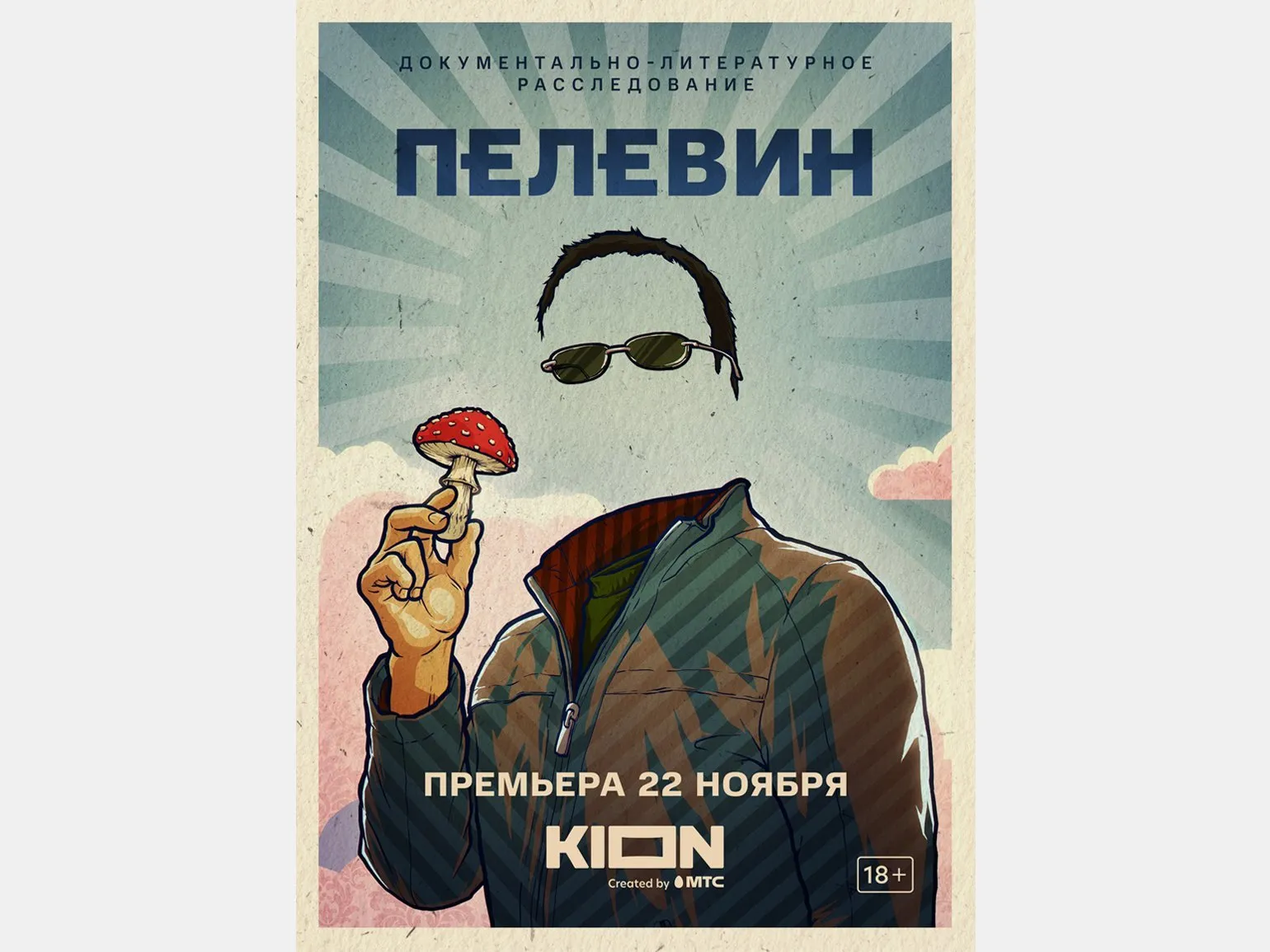
"Pelevin" is a documentary film lasting one and a half hours, created by the director Directed by Rodion Chepel, known for his films "Durov" and "Listyev. A New Look," this film explores the life of Viktor Pelevin, from his childhood to his period of "disappearance" from public life. The film's primary goal is to understand how the writer's character evolved and what prompted his decision to distance himself from the public eye. The film offers an in-depth analysis of Pelevin's personality, revealing his inner world and creative transformations. The film utilizes four main formats: interviews, photographs, feature film, and animation. Each format has its own unique characteristics and is used to convey different emotions and stories. Interviews provide a deeper understanding of the characters and their motivations, photographs capture moments, creating a visual narrative, feature film brings scripts to life through acting, and animation opens doors to a world of fantasy and creativity. Each of these formats plays an important role in contemporary cinema, offering viewers a variety of ways to experience it.
Interviewees include literary critic Galina Yuzefovich, artist Hermes Zaigott, and former editor-in-chief of Interview Russia and Vogue Russia Alena Doletskaya. These experts share their opinions on contemporary trends in art and literature, as well as the influence of media on cultural processes. Their views will help to gain a deeper understanding of current issues in the field of creativity and editorial work.
Photographs play a key role in the film, serving as important documentary materials. There are many of them, and they are seamlessly integrated into the narrative using collage animation. Most of the images will be familiar to viewers, but the filmmakers also presented a unique series of photographs from Pelevin's trip to China. In these shots, he interacts with locals, explores landmarks, relaxes on a plastic chair, and spends time with fellow travelers over drinks. These visual elements not only enrich the film but also create a deeper understanding of the journey and its cultural nuances.
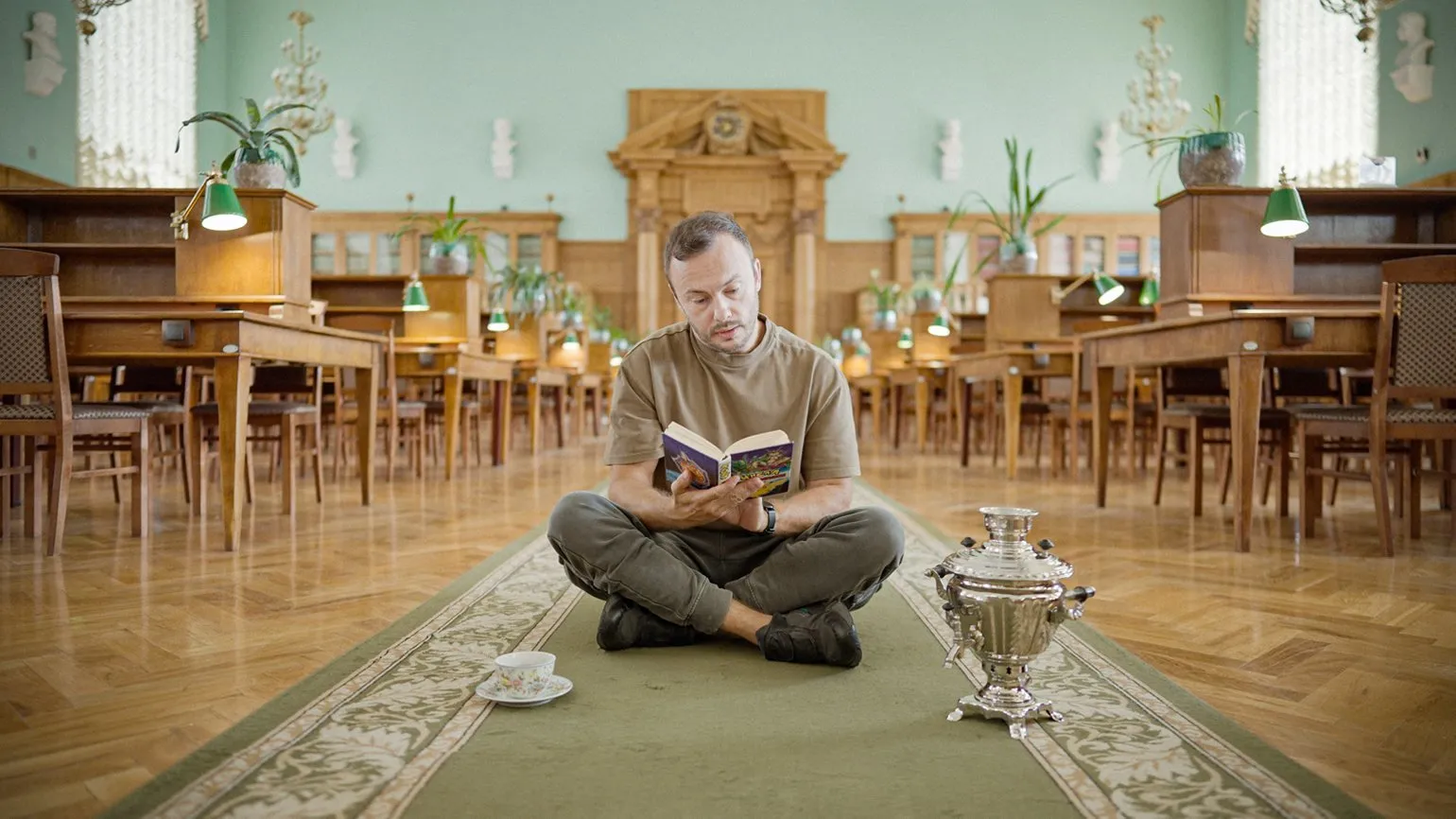
The scenes featuring Rodion Chepel were filmed in the Lenin Library, Chertanovo, and Bitsevsky Park. The director, acting as an actor, reads excerpts from Viktor Pelevin's works, engages in dialogue with his own copies, and performs unexpected actions: ripping up book pages, eating noodles, and drinking tea from a samovar while sitting on the library floor. These elements make the video unique and memorable, emphasizing the originality of both Rodion himself and his creative approach.
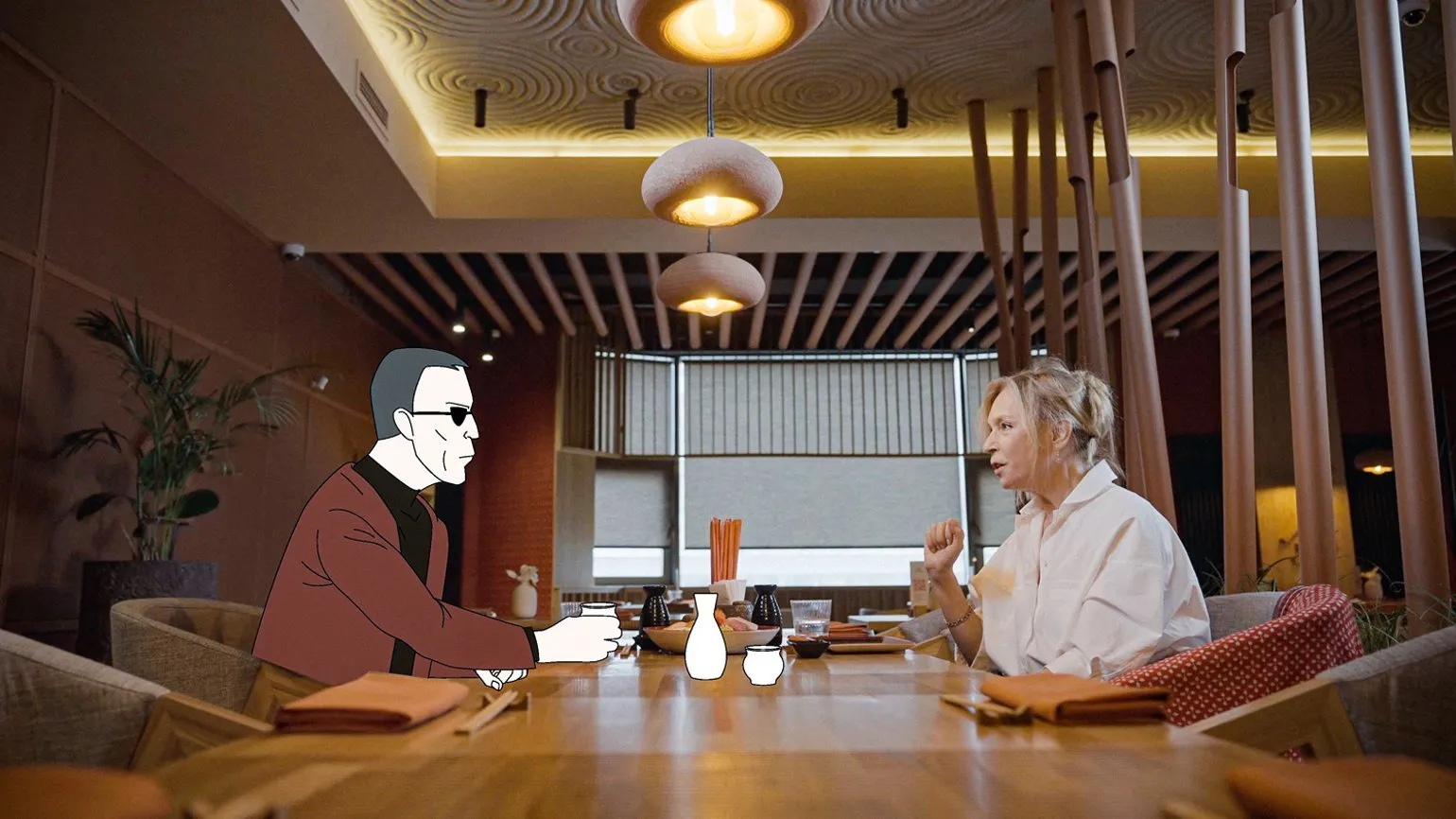
The fourth part of the film is dedicated to animation, which is bright and dynamic fragments. These elements illustrate the surreal fantasies of Viktor Pelevin's works and interesting, yet undocumented, stories about him. Animation appears in the film approximately ten times, sometimes combined with documentary footage. For example, in one segment, Alena Doletskaya shares memories of interviewing Pelevin in the 1990s at a sushi bar where he was avid sake drinker. These moments add uniqueness and depth to the narrative, highlighting the creative and cultural context in which his works were created.
About the Studio
The Zhi-Shi production studio, founded by Artem Shcherbakov and Alexey Novikov, has been successfully operating in the Russian market for almost ten years. Initially, the company produced hundreds of commercials annually, which were used in popular shows such as "Kvartirny Vopros." The studio also created video content and graphics, which allowed it to establish a strong position in the industry. Today, Zhi-Shi continues to develop, offering a wide range of services in the field of video production and graphic design, which makes it popular among clients looking for high-quality solutions to promote their brand.
Studio Zhi-Shi has established itself as a leading producer of high-quality trailers, music videos, and cinematics using 2D and 3D animation. Its main areas of activity include post-production and visual content creation. The studio's CG artists worked on the video for "Austin" for Zemfira, collaborating with the Koshta and Petrick studios, and also created the video for "1190" for the group "Aigel." Zhi-Shi is actively involved in advertising projects for companies such as Dodo Pizza, Yandex, Sber, and many other major brands from various industries. In addition, the studio has created cinematics for world-famous games, including Dota 2, League of Legends, and CS:GO. Zhi-Shi continues to create video content, albeit on a smaller scale. The team currently consists of 30 specialists, most of whom focus on graphics. The team includes CG generalists, animators, producers, as well as motion graphics and compositing experts. To expand its expertise and implement new visual solutions, the studio actively collaborates with freelance computer graphics artists. In recent years, Zhi-Shi's main focus has shifted to patron animation and advertising post-production, which allows it to achieve high-quality results and meet client needs.
About animation
Our team was inspired by collaborating with Amur Waves and Rodion Chepel on a captivating project. Artem Shcherbakov, creative director of Zhi-Shi, noted that the scale of the graphics initially raised concerns, but we strove to create a unique visual language by combining various styles and elements. We began work on several episodes simultaneously, which allowed us to explore eclecticism and creative approaches in design.
Project screenwriter Alexey Kobylkov provided our mini-teams with materials based on the life and work of Viktor Pelevin. He developed numerous hidden references and "Easter eggs" that fill the episodes. We viewed each animated fragment of the documentary as an independent short film, capable of existing independently of the others. This approach allowed us to create unique content that attracts attention and engages viewers.
According to Shcherbakov, a significant portion of the film's inserts are done in 2D. Overall, the work is distinguished by a minimalist style: characters and backgrounds are rendered in outline, but the color scheme is predominantly monochromatic, without complex light and shadow transitions. This approach creates a unique atmosphere and focuses the viewer's attention on the main elements of the plot.
The simplicity of color imposition is often deceptive. The animation becomes much more complex when the plot takes on realistic features. The film opens with Pelevin, who, after graduating from university, finds a job as an engineer in the electrical transport department at Moscow Power Engineering Institute. This scene features detailed animation, a warm color palette, and a retro feel that emphasizes the connection to the past.
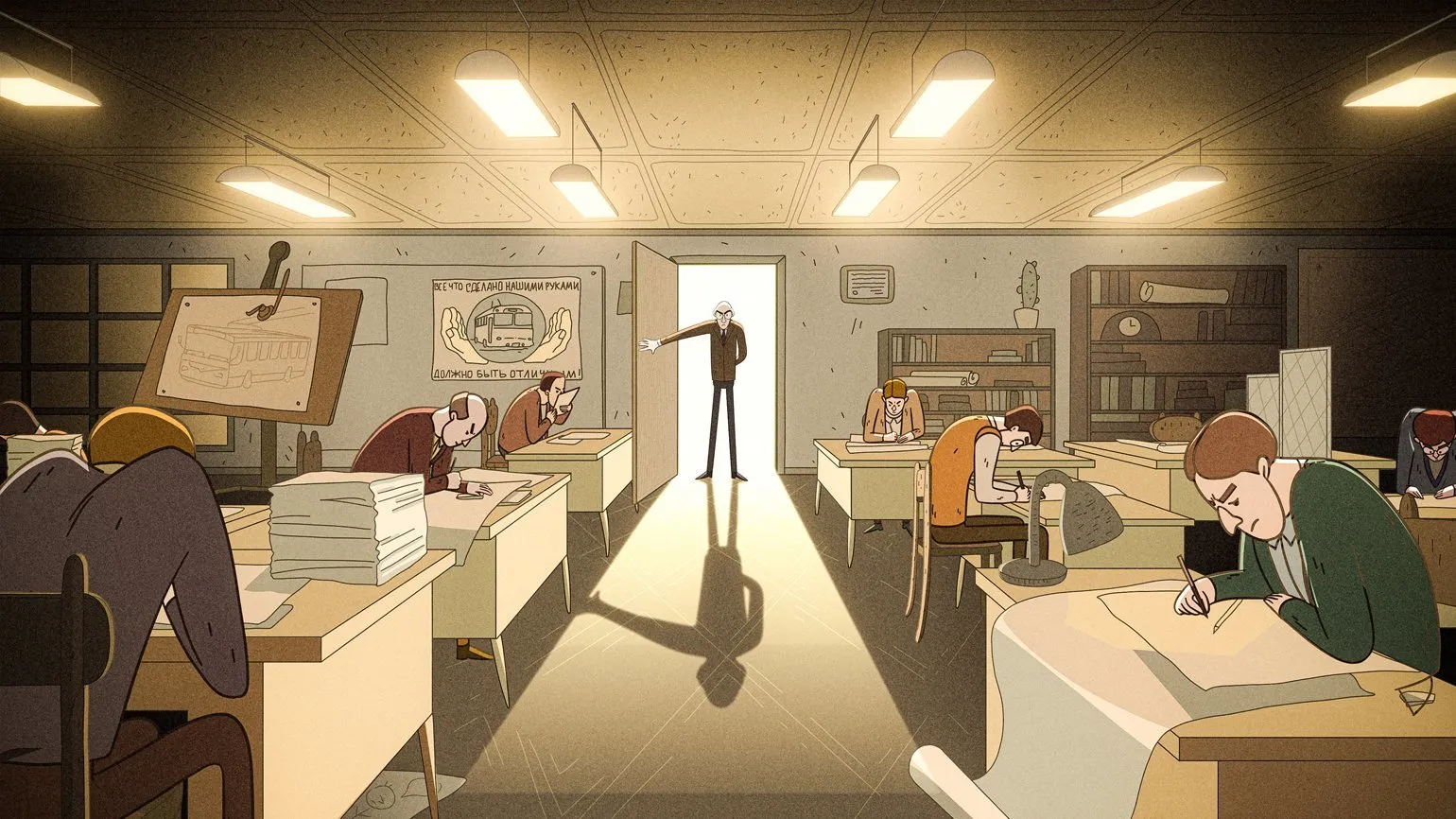
In the next scene, unusual events unfold: Pelevin goes to A transforming trolleybus that takes the form of a combat robot and shoots back at monsters. It soon becomes clear that the writer has fallen asleep at his desk, and the viewer finds himself in his dream. In this world, the colors become bright and saturated, and the style is reminiscent of comics and superhero cartoons.
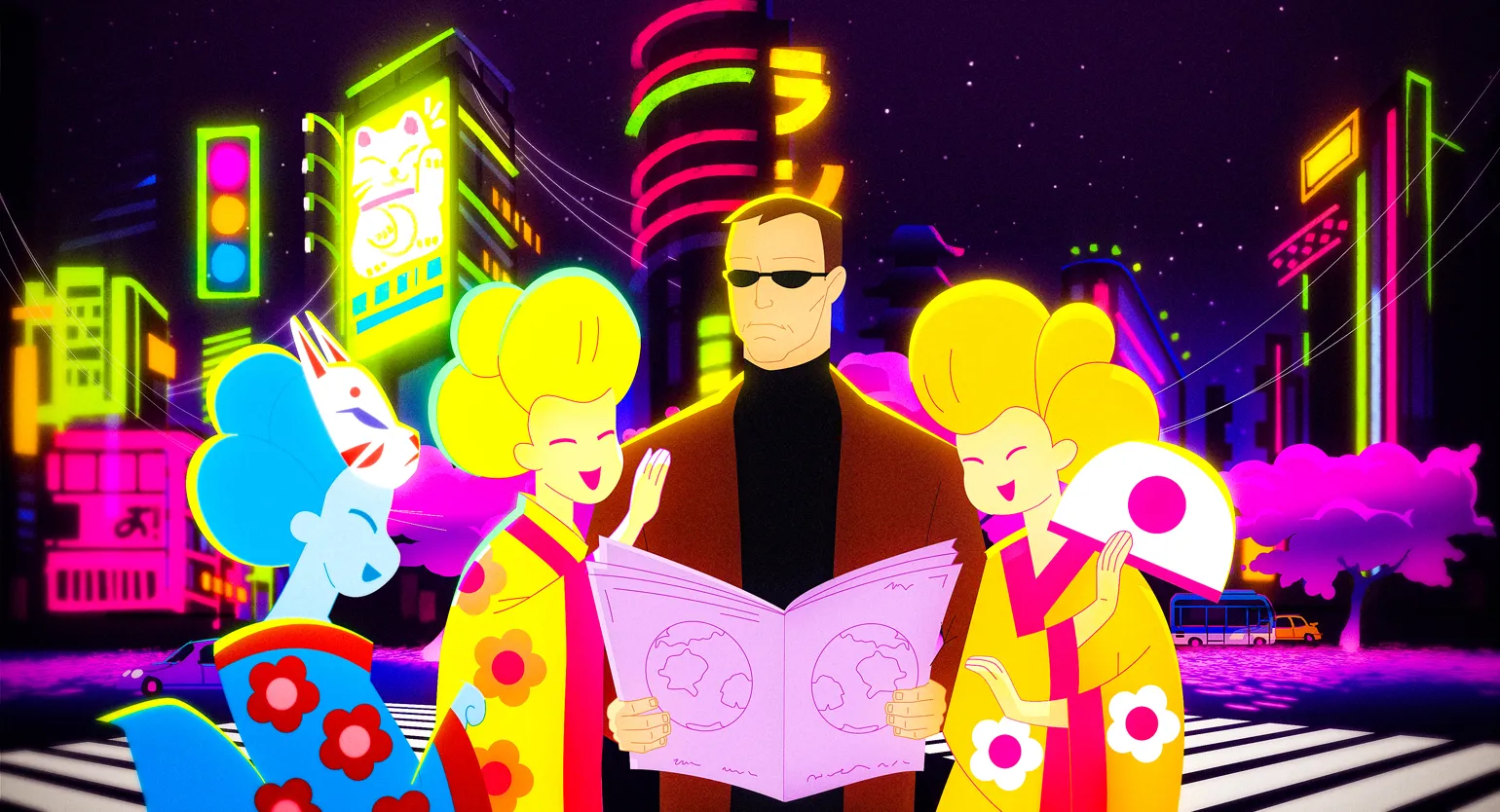
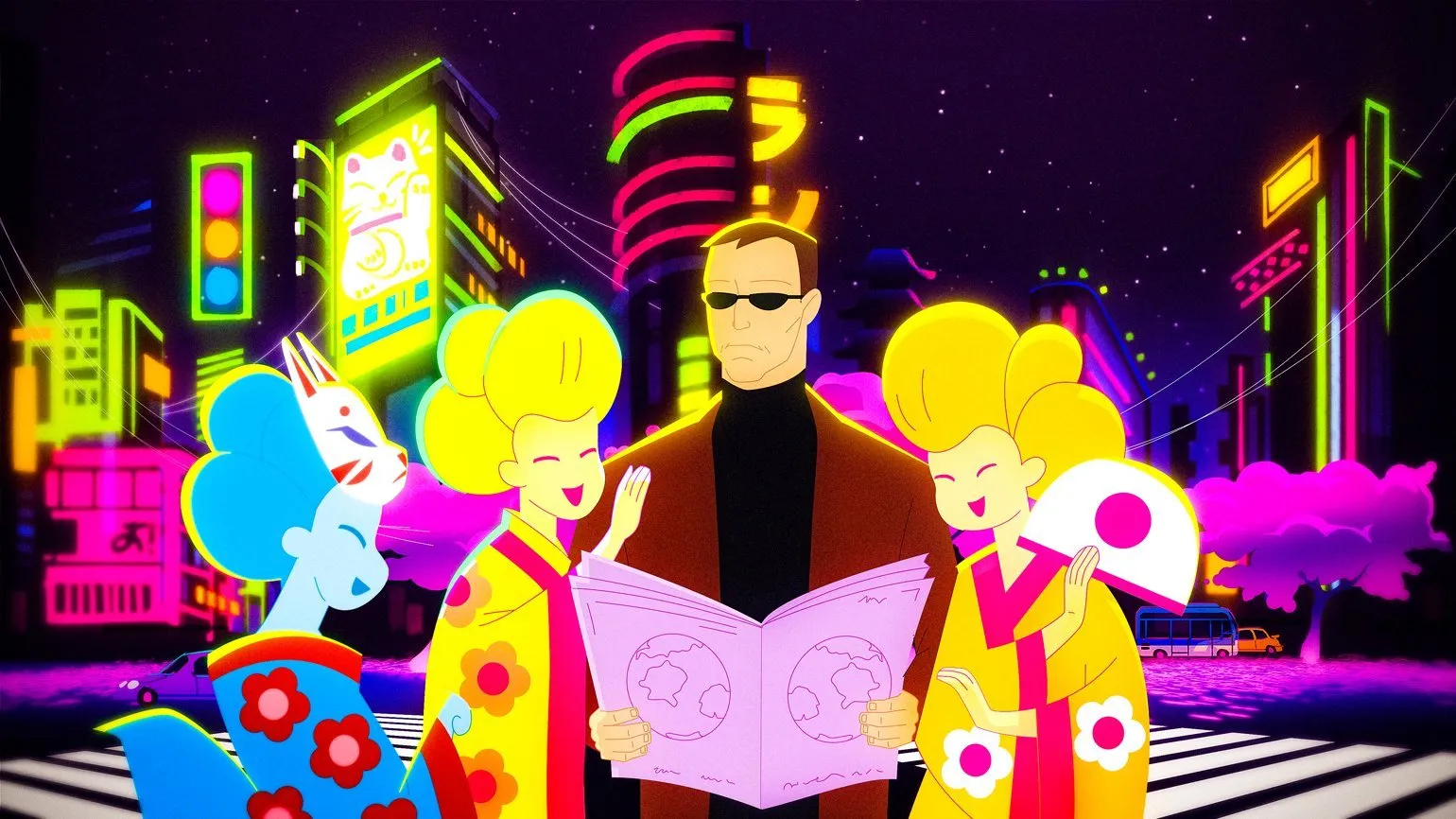
The film's characters speculate about where the writer might be, and their ideas vary in style. In one version, the exotic Pelevin finds himself in Japan, surrounded by neon-glow kimono-clad women. Against the backdrop of this vibrant image, a metropolis advertisement can be seen, creating a contrast between traditional culture and modern urban realities.
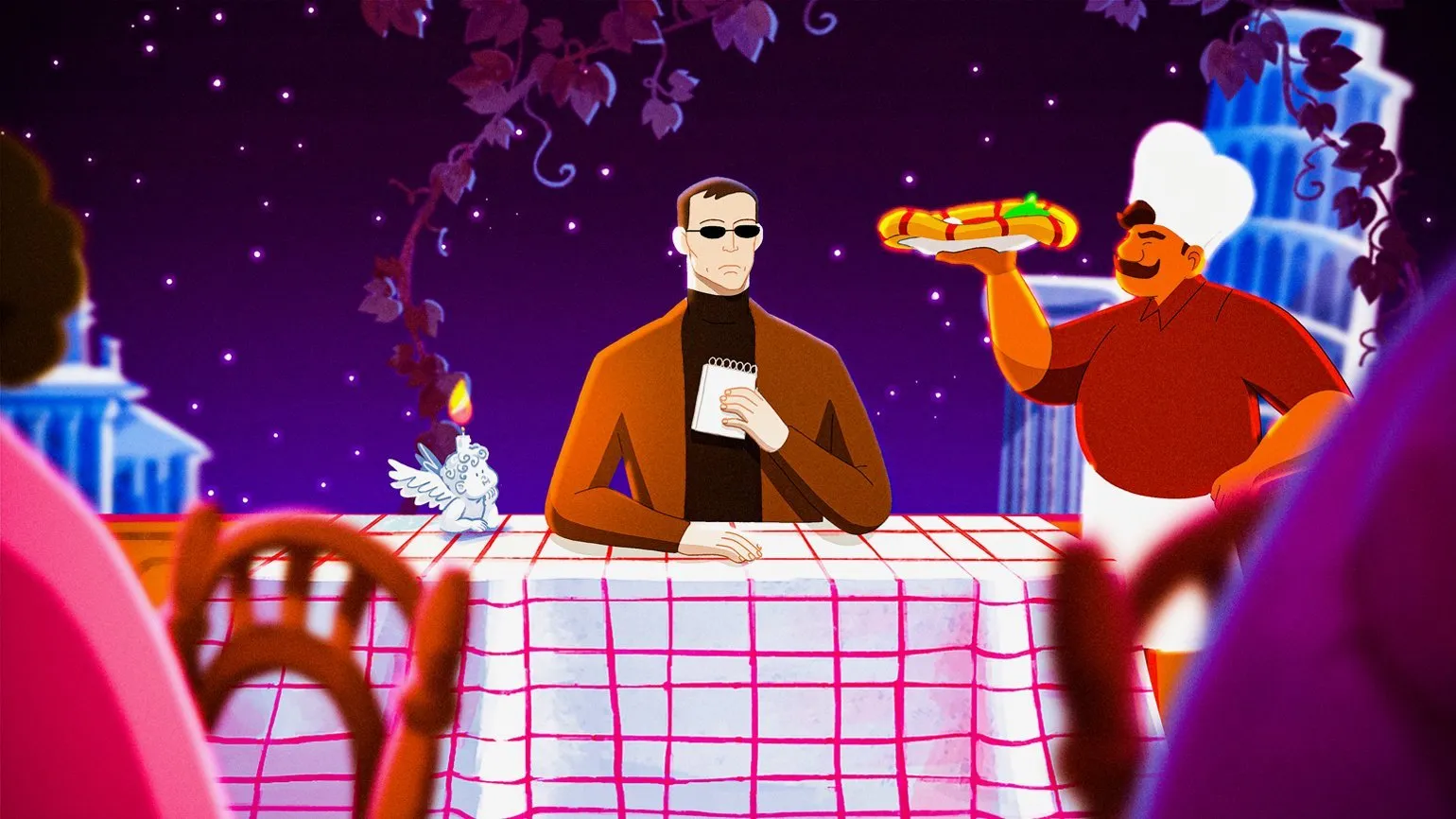
Pelevin in Italy creates a romantic atmosphere, surrounded by a Cupid-shaped candle, grapevines, and the famous Leaning Tower of Pisa. These elements highlight his creative nature and bring a special charm to his world. Italy, with its rich history and picturesque landscapes, serves as the perfect backdrop for inspiration and reflection.
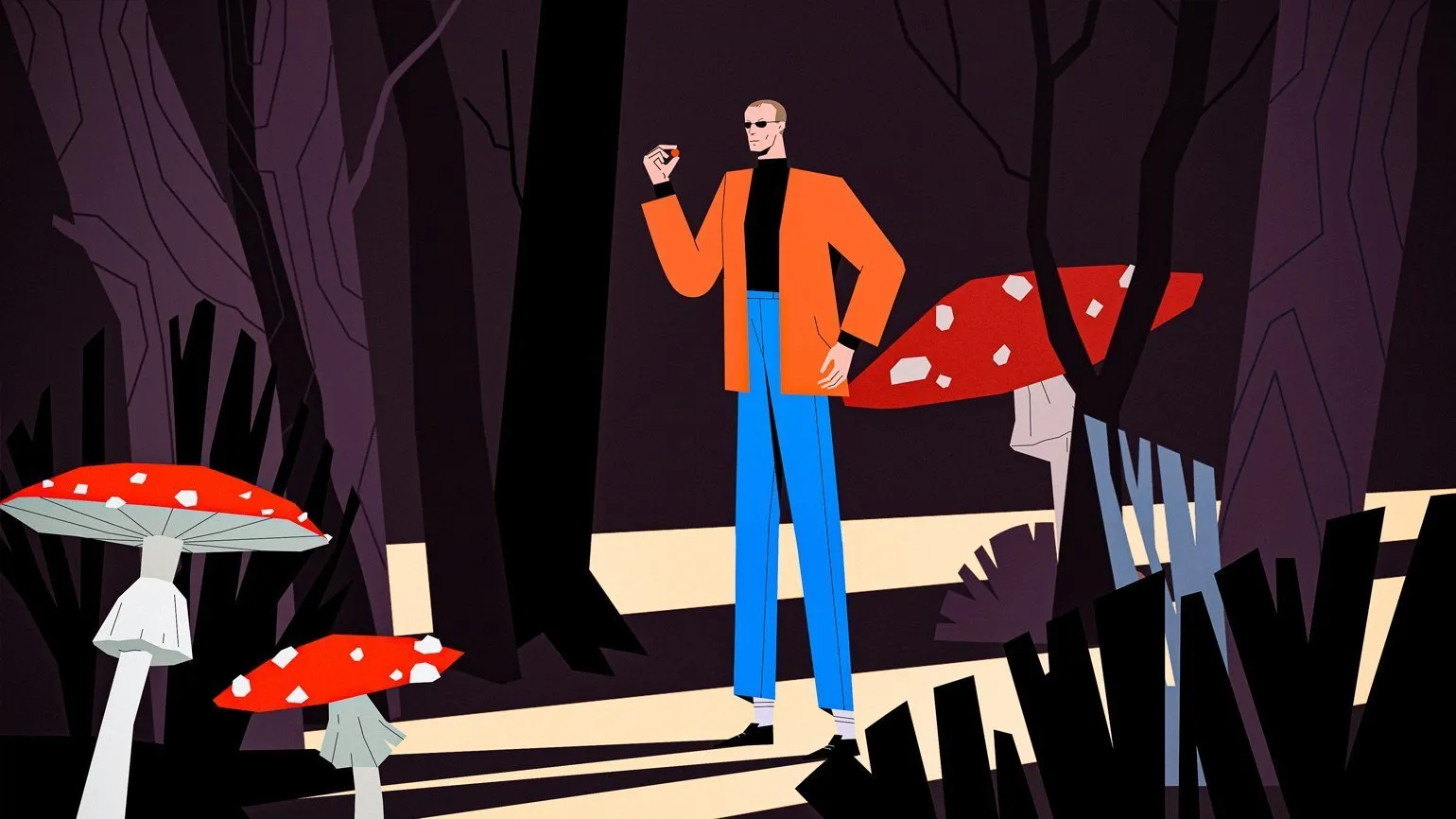
When Pelevin appears in a surreal interpretation of Bitsa Park, the animation is saturated with sharp lines and long, contrasting shadows. These artistic elements effectively convey the gloomy atmosphere of the Russian forest, creating a unique visual perception.
The film contains plots that are not subject to time and space. The animators at Zhi-Shi Studio collaborated with Prand, which explains the noticeable stylistic shift in these scenes. A unique form was chosen for them. To connect the various sections of the film with abrupt transitions, such as Pelevin's sudden trip to China or the intensifying mythologization of his biography, the motif of escape or chase is used. These elements not only enrich the narrative but also create a dynamic that highlights the characters' internal conflicts.
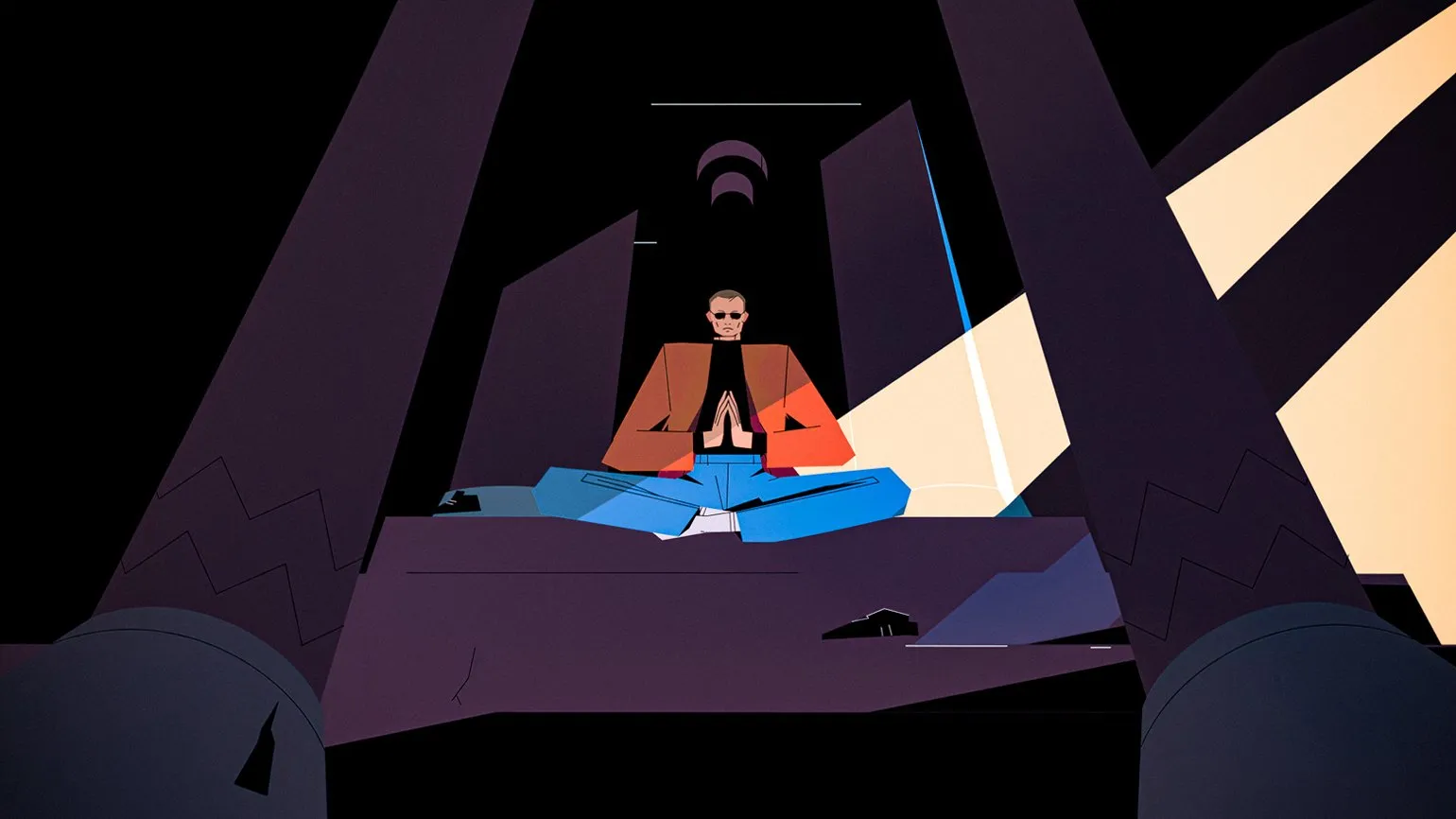
In the sequence where Pelevin flees from a Chinese pagoda, the animation incorporates an intense gradient, grain, and an abstract black background with realistic abrasions. These visual elements, combined with the writer's figure and the half-colored photograph, create a sense of otherworldliness. They also resemble a splash screen or loading screen, which enhances the effect of immersion in an unusual reality.
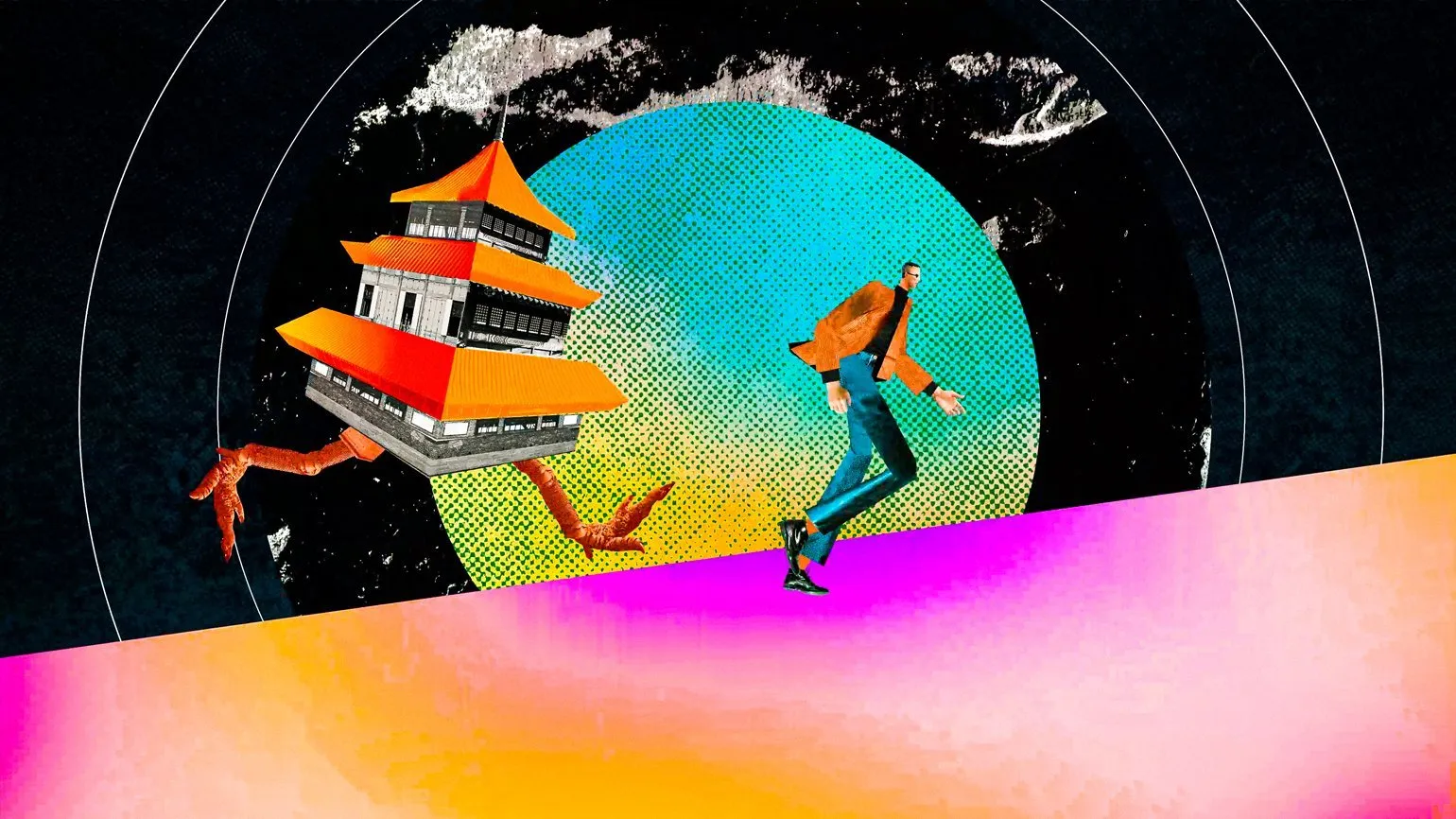
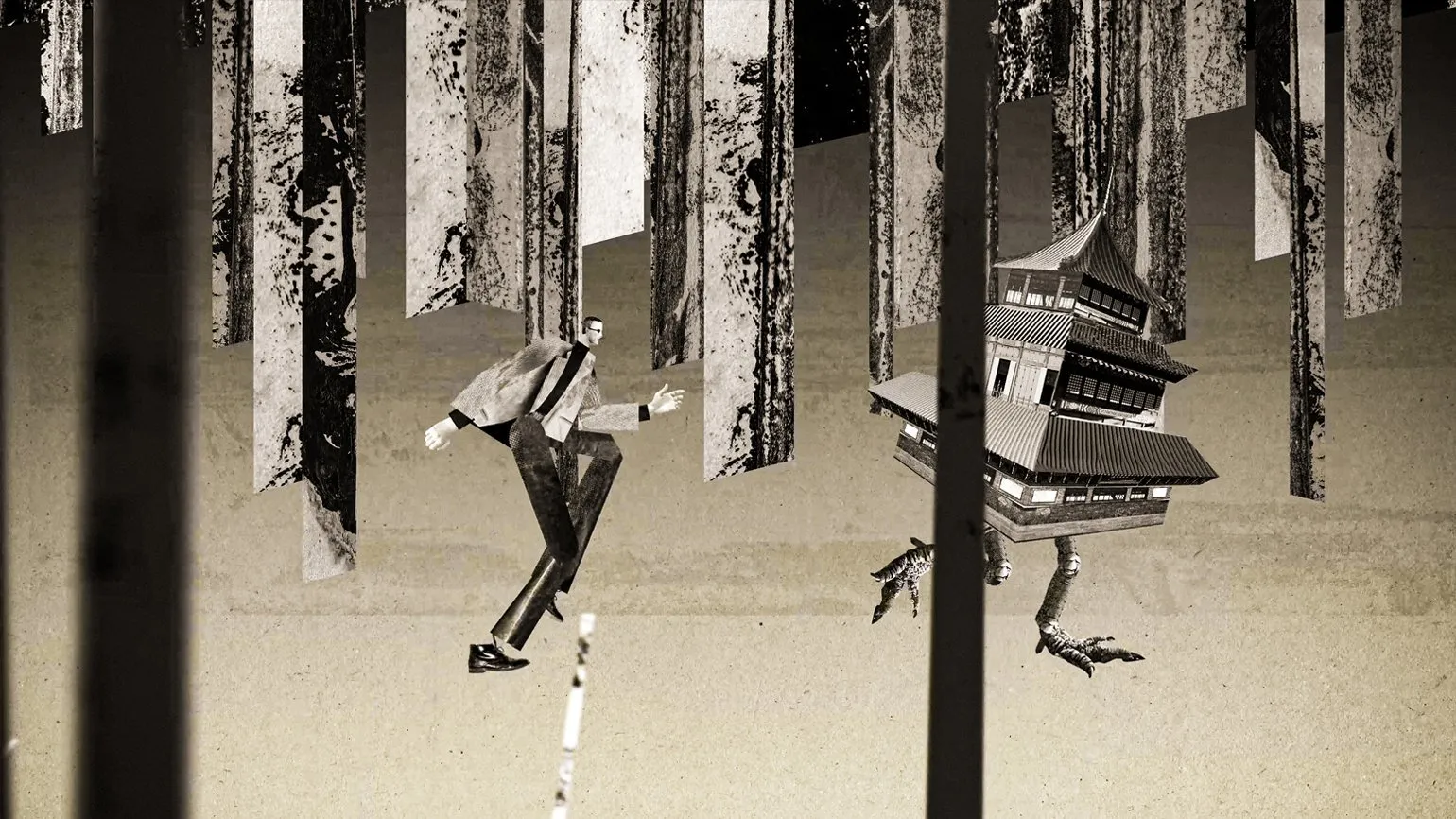
The chase scenes in the film are repeated several times, and in one of them, the animators decide to conduct an interesting experiment. They maintain the overall visual style but turn the scene entirely in black and white, giving it the appearance of an archival recording. At this point, Pelevin himself is running after the pagoda, while the surrounding elements are arranged in the form of a rough photographic collage. This technique creates a unique atmosphere and emphasizes the central themes of the plot, making it more memorable for the viewer.
Each video for the "Pelevin" project was developed according to a unique script, which determined its implementation and visual style. Anton Chistyakov, the project's creative producer, notes that such flexibility allowed the team to experiment with various animation techniques, including transitions from "cutaway" to classical 2D animation, and then to 3D. We also considered the possibility of creating fragments in the style of stop-motion animation and clay performance, as well as the use of pixel art and other visual styles. However, these ideas were not implemented in the final version of the project.
The animation for Pelevin's work demonstrates the multifaceted and carefully thought-out approach of the Zhi-Shi studio to the material. Each episode has an internal color logic that seamlessly adapts to the plot, taking into account the place, time, and level of realism of the events. This approach allows for a deeper understanding of the work's meaning and creates a unique atmosphere that enhances the perception of the story.
Artem Shcherbakov shares his admiration for documentaries, noting the high level of graphics and design in Netflix and HBO projects. He expresses joy at being able to be part of a similar project on the Russian market, emphasizing the importance of high-quality visuals in documentaries.
Learn more about design by subscribing to our Telegram channel. Here you will find the latest news, tips, and inspiration from the world of design.
Also explore:
- Space, philosophy, and alternating styles: the comic book "Chronosis" by Reza Negarestani
- What's so special about that? About the design of the cover of Goo by Sonic Youth
- What's so special about that? About the design of a poster for the election campaign of Barack Obama
Profession Graphic Designer PRO
You will learn how to create elements of corporate identity and graphics for business. You will put together a portfolio that reflects your style and confirms your skills as a designer. You can start a career in a studio or as a freelancer.
Find out more