Contents:
Learn: Cybersecurity Specialist Profession
Learn MoreBasic Number Systems
A number system is a mathematical language that uses symbols to write numbers according to specific rules. It provides a foundation for numerical calculations and allows for the efficient representation and processing of numerical information. There are different number systems, such as decimal, binary, octal, and hexadecimal, each with its own unique features and applications. Understanding number systems is an important aspect of mathematics and computer science, allowing for a better understanding of algorithms and computer technology.
Throughout human history, many methods of writing numbers have been developed, but in the modern world, two main types are distinguished: natural numbers and integers. These categories of numbers play a key role in mathematics and everyday life, providing the basis for various calculations and financial transactions. Understanding these types of numbers is important for solving mathematical problems and analyzing data, making them indispensable in educational institutions and professional activities.
- Non-positional systems are the oldest number systems in which the value of a symbol remains the same regardless of its place in the number. For example, in the Roman numeral system, the symbol X always represents 10, regardless of whether it is at the beginning (XVI = 16) or at the end (LX = 60).
- Positional systems are number systems in which the value of a digit is determined by its position in the number. For example, in the number 333, each triple has a different meaning: the first represents 300, the second represents 30, and the third represents 3.
Number systems have different areas of application, which influences their use in everyday life. Positional systems, such as the decimal system, are convenient for arithmetic calculations because they allow for easy addition and subtraction. For example, adding 23 and 45 is much easier than adding XXIII and XLV in the Roman numeral system. Non-positional systems, although less common, find their use in specific cases, such as numbering chapters in books (I, II, III) or marking centuries (e.g., the 20th century). Understanding different number systems helps us better navigate mathematics and history, making them important for teaching and use in various fields.
In the following sections, we will examine non-positional and positional number systems in detail. We will begin by analyzing non-positional systems to understand the reasons for their replacement by positional systems. We will then move on to examining positional systems, becoming familiar with their varieties and mastering methods for converting numbers between different formats. This will help you better understand the fundamentals of numbers and their representation in various number systems.
Non-Positional Number Systems
Non-positional number systems arose naturally during the evolution of human society. The main prerequisites for their emergence were the need for accounting and exchange, as well as the limited tools for calculation. These systems, without a fixed value for each symbol depending on its position, became an important stage in the development of mathematical concepts. They played a key role in the development of basic counting skills and subsequently facilitated the transition to more complex positional systems.
- Ancient civilizations needed a reliable way to keep track of goods, land surveying, construction, and astronomical observations.
- The development of writing made it possible to record numerical values.
- Using individual symbols to write numbers proved to be an intuitive way of counting.
Some of the most well-known non-positional number systems include the unit, ancient Egyptian, Roman, Greek, and Slavic systems. In this text, we will examine in detail the unique characteristics and historical significance of each of these systems. Non-positional number systems have played an important role in the development of mathematics and the cultural traditions of various peoples, reflecting the peculiarities of their thinking and perception of numbers.
Unity Number System
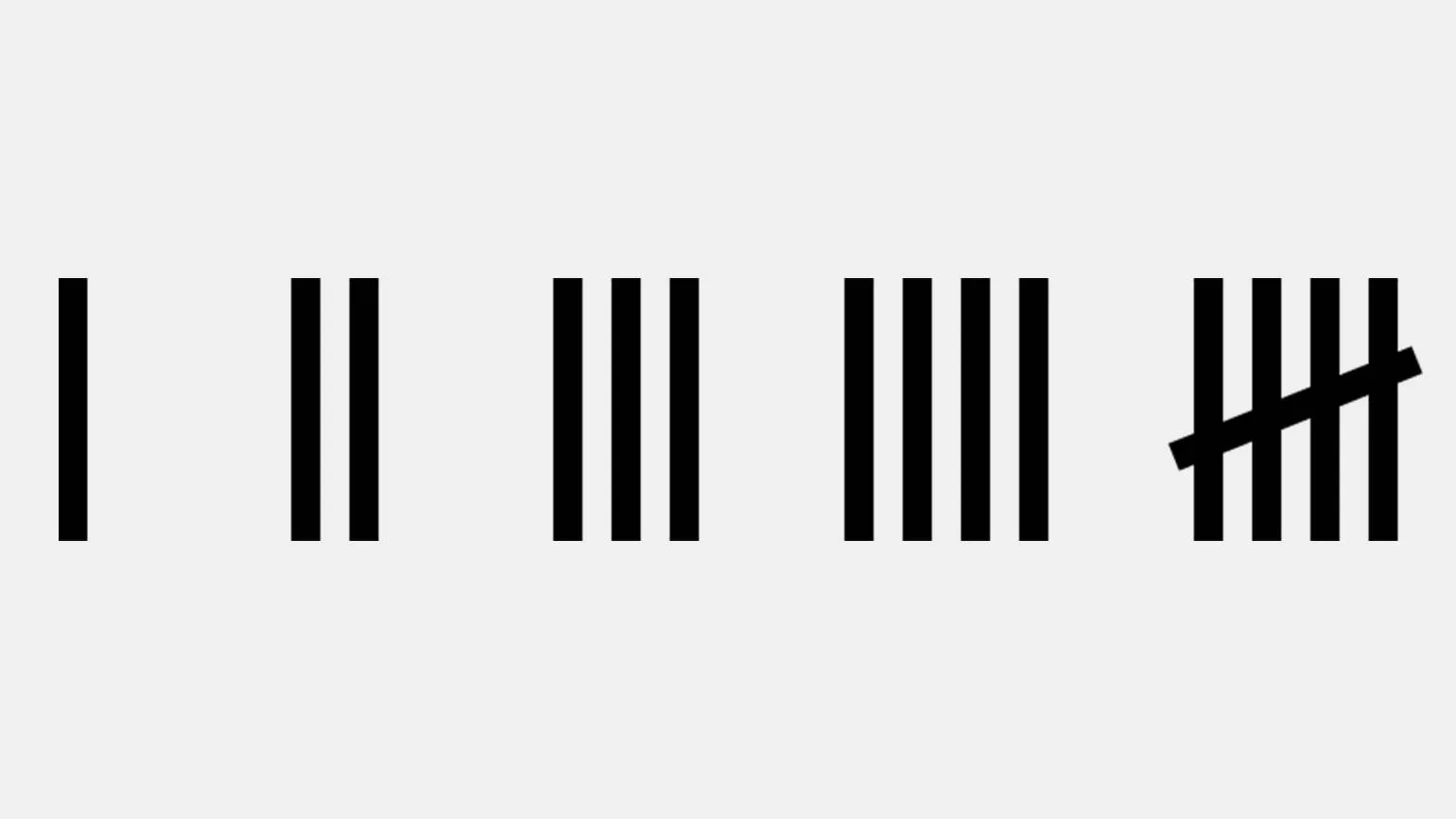
The unit number system is a basic method of writing numbers in which quantity is denoted by repeated symbols. This number system arose naturally in the process of counting objects before more complex mathematical concepts were developed. The unit number system provides a foundation for understanding numbers and mathematics, allowing us to visualize the quantity of objects. It illustrates how ancient people counted and organized information, an important step in the development of number systems.
People have long used various symbols to represent numbers: sticks, pebbles, knots—whatever was available. This system has been used in a variety of settings, from ancient methods of counting days using notches on wood or stone to modern games where it helps keep score. It's very easy to write a number in this system: for example, the number 5 is represented by five sticks (|||||), and the number 3 by three sticks (|||). These primitive methods of counting became the basis for more complex mathematical systems and demonstrate the evolution of numerical representation in human culture.
The unit system was convenient for performing simple arithmetic operations such as addition and subtraction. However, when working with larger numbers, the risk of errors in both notation and calculation increased. For example, to write the number 100, one would have to represent one hundred individual sticks, which was extremely inconvenient. As a result, as civilization developed, people began to group symbols, which contributed to the creation of more efficient number systems. These new systems made it possible to significantly simplify calculations and minimize the likelihood of errors, which was an important step in the development of mathematics and science.
Ancient Egyptian Decimal System
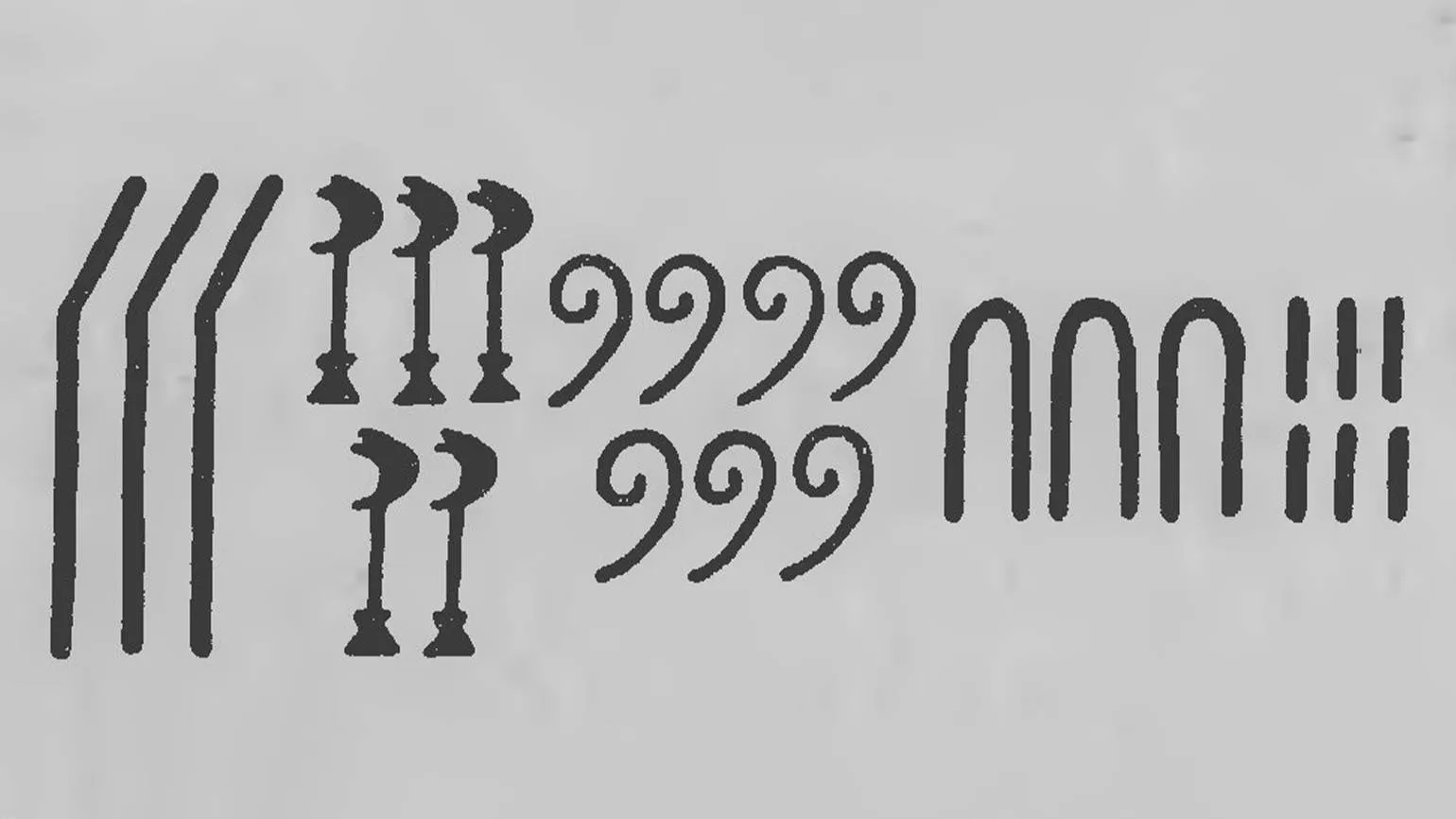
The ancient Egyptian decimal system, based on the number 10, was an important part of the culture and daily life of the ancient Egyptians. This system was used in various fields, including trade, construction, agriculture, and astronomy. Unique hieroglyphs were used to represent numbers: a stick represented one (1), an arch corresponded to ten (10), a ball of string signified a hundred (100), a water lily signified a thousand (1000), a bent finger symbolized ten thousand (10,000), a frog or tadpole pointed to one hundred thousand (100,000), and a man with raised arms represented a million (1,000,000). This system allowed the ancient Egyptians to effectively manage resources and keep records, which contributed to their prosperity.
The ancient Egyptians did not pay much attention to the direction of numbers and could write them from left to right, right to left, or top to bottom. Scholars have discovered that they had a special symbol that served as a zero, which was depicted as a heart with a trachea. This symbol was used in accounting papyri to indicate the full expenditure of funds, as well as in drawings to indicate ground levels. Elements of their numeric system and the methods of recording numbers reflect a unique approach to mathematics and accounting in ancient Egyptian culture.
The Egyptians actively used fractions in their calculations. They used a unique notation in which a special hieroglyph resembling a mouth was placed above the number, denoting part of the whole. This system allowed for the efficient expression and processing of fractional values in the mathematics of Ancient Egypt. The use of fractions was an important aspect of their calculations, which indicates a high level of mathematical knowledge of the Egyptian sages.
Roman Numeral System
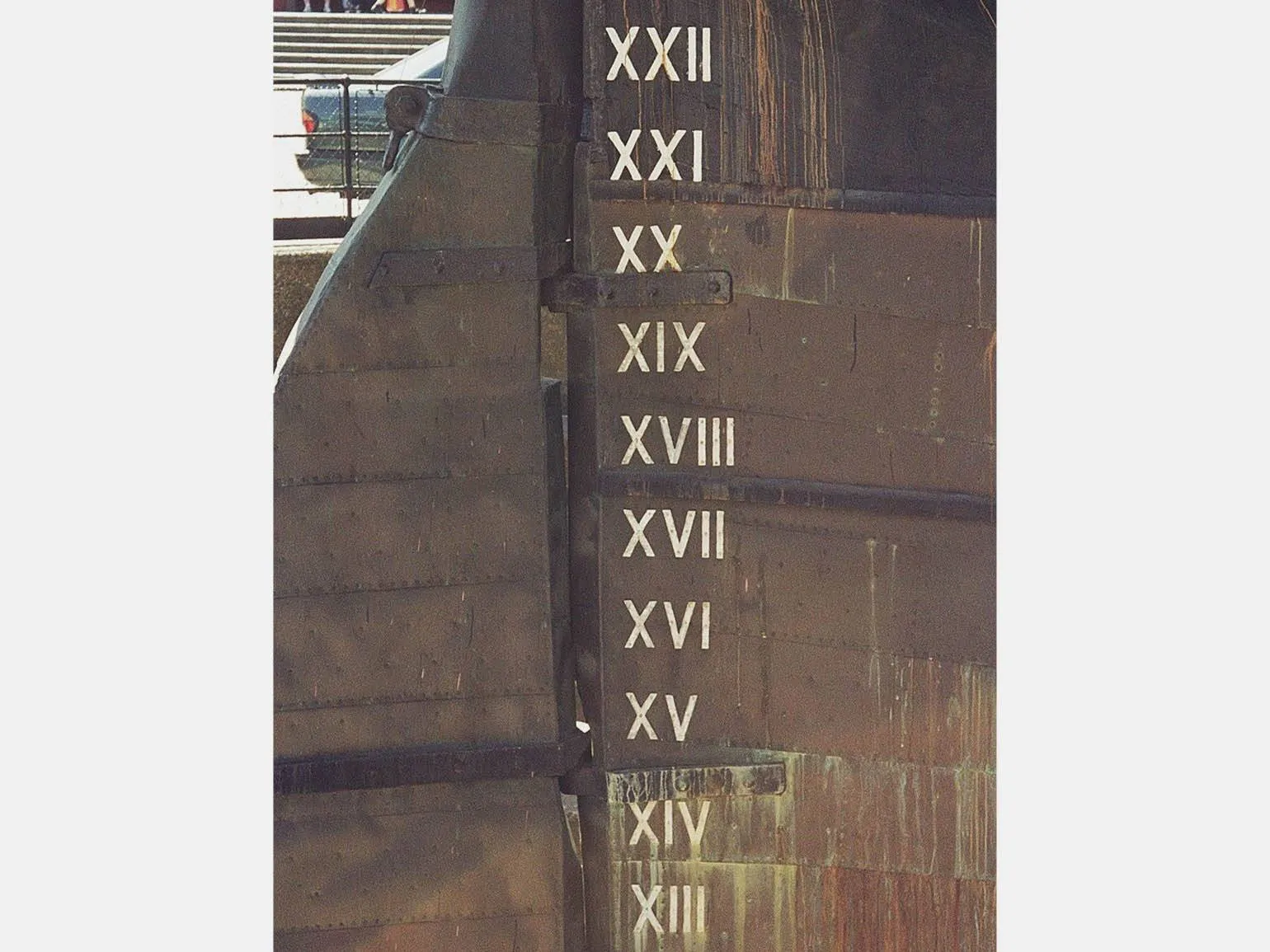
The Roman numeral system is a method of writing numbers using the letters of the Latin alphabet. This system is based on the principles of addition and subtraction of the values of symbols, where each letter corresponds to a specific number. The numeric symbols include: I (1), V (5), X (10), L (50), C (100), D (500), and M (1000). Roman numerals were used in ancient Rome and are still used in a variety of settings, such as marking centuries, chapters in books, and on clocks. Understanding the Roman numeral system is useful for historical and cultural context, as well as for solving mathematical problems.
Each number is a sequence of symbols that is written according to certain rules. The value of a number is formed from the values of all its symbols. For example, the number 32 in the Roman numeral system is represented as XXXII, where 30 (XXX) and 2 (II) are added together to get the final value 32. Understanding numbers and their symbolic representation is an important aspect of mathematics and the history of counting.
When a smaller symbol is placed to the left of a larger one, its value is subtracted from the value of the larger one. For example, the number 48 is represented as XLVIII: 10 (X) is subtracted from 50 (L), then 5 (V) and 3 (III) are added. Note that only one smaller symbol can be placed to the left of a larger symbol. This means that writing XXL is invalid and cannot represent the number 30. A proper understanding of the rules for writing Roman numerals helps avoid errors and ensures accuracy in their use.
In modern society, Roman numerals are used for a variety of purposes, such as marking centuries, chapters in literature, hours on clock faces, and the ordinal numbers of monarchs and significant events. For example, the 21st century, chapter IV, Charles V, volume III and Peter I. The use of Roman numerals gives the text a historical and official flavor, making them relevant and useful in various contexts.
Greek and Slavic Numeral Systems
The Greek and Slavic numeral systems are alphabetic methods of writing numbers, in which numerical values are conveyed using letters. The Greek system is based on the Greek alphabet, while the Slavic system uses the Cyrillic alphabet. These systems were widely used in religious texts, chronicles, and business documents, underscoring their importance in the culture and history of their respective peoples. Each system has its own unique features and rules, making them interesting to study and analyze in the context of historical arithmetic and lexicography.
In the Greek system, letters had numerical values: "alpha" corresponded to 1, "beta" to 2, and "iota" to 10. In the Slavic system, letters also had their own numerical designations: "az" meant 1, "vedi" to 2, and "i decimal" to 10. A special sign was used to denote thousands, and the numerical value of a letter was distinguished by a titlo, which was a superscript sign. These number systems were important elements of culture and mathematics, allowing for the efficient recording and communication of numerical information.
Numbers are written from left to right, starting with the largest value and moving to the smallest. A special case is the numbers from 11 to 19, where the units are indicated before the tens. This principle is preserved in modern language when pronouncing numbers of different orders. For example, in the number "sixty-one," the tens digits are pronounced first ("sixty"), followed by the units digits ("one"). For the number "sixteen," the order is reversed: the units digits ("six") are pronounced first, followed by the suffix "teen," denoting addition to ten. Thus, an interesting pattern in the structure of numbers is observed, which helps to better understand their sequence and logic.
The main advantages of these systems were their harmonious integration with writing and their accessibility to educated people of the era. This ensured effective interaction and contributed to the dissemination of knowledge among intellectuals.

Positional Number Systems
Non-positional number systems, despite their historical importance, have significant drawbacks, leading to their displacement by positional systems in most fields. The main problems with non-positional systems include the complexity of arithmetic operations, inefficiency in representing large numbers, and a lack of universality in use. These limitations have made positional systems preferable for scientific, technical, and everyday calculations. Positional systems, such as decimal and binary, offer simplicity and convenience, which has contributed to their widespread adoption and application in various areas of life.
- Complexity of arithmetic operations - for example, in the Roman system, multiplication and division require complex step-by-step calculations.
- Lack of universality - each system requires a unique set of symbols, which complicates international interaction.
- Bulkiness - large numbers require an excessive number of symbols.
Positional number systems are highly convenient. In such systems, misreading of numbers is eliminated, since each number is represented uniquely through the use of a fixed number of digits. Moreover, in positional systems, there is no limit on the number of digits, which allows numbers of any magnitude to be written. This makes positional notations indispensable in mathematics and programming, where the accuracy and clarity of number representation are paramount.
Positional notations fall into two key categories: homogeneous and non-homogeneous (mixed). It is important to consider the unique characteristics of each of these systems. Homogeneous notations have a constant base, which simplifies calculations and makes them more predictable. Non-homogeneous notations can include different bases, which allows for a greater number of symbols and diversity in number representation. Understanding these characteristics will help you better navigate the field of number systems and their applications.
A homogeneous notation system is a positional notation in which a single base is used for all digits of a number. The value of a number in this system is determined by both the digits and their arrangement. Each position has a specific "weight", which corresponds to the base of the system raised to the power corresponding to the position number. To calculate the value of a number, it is necessary to multiply each digit by the weight of its position and add the resulting values. Homogeneous number systems are fundamental to understanding more complex mathematical concepts and are widely used in various fields, including computing and computer technology. The most popular positional number systems are binary, octal, decimal, and hexadecimal. These systems are widely used in computer science and mathematics to represent numbers. The binary system consists of two digits, 0 and 1, and is the basis of computer technology. The octal system operates with eight digits, 0 through 7, and is used in some areas of programming. The decimal system, consisting of ten digits, is the most familiar to humans and is used in everyday life. The hexadecimal system includes sixteen symbols, 0 through 9 and A through F, and is often used in programming to simplify the representation of binary data. Each of these systems has its own application and importance in various fields of science and technology.
The binary number system uses only two symbols: 0 and 1. In this system, each position of the number corresponds to a power of two, starting with the power of zero on the right. For example, the number 42 in the binary system is represented as 101010. In this representation, each position corresponds to a specific power of two: 32 (2^5) + 0 (2^4) + 8 (2^3) + 0 (2^2) + 2 (2^1) + 0 (2^0) = 42. Understanding the binary system is important for working with computers and digital technologies, since all information in them is processed in this format.
This system has found wide application in the field of computing. It is used to optimize data processing, increase computing efficiency and improve equipment performance. Due to its versatility, the system is actively implemented in various fields, including information technology, scientific research and industry. The efficiency of this system contributes to its popularity among developers and engineers, making it a key element in modern computing solutions.
- Ease of implementation - electronic circuits operate efficiently with two states: the presence or absence of electric current.
- Reliability - the use of only two states significantly reduces the likelihood of errors in signal transmission and processing.
- Efficiency - binary data processing requires a minimum of components: transistors, resistors, capacitors, and microcircuits.

Read also:
The binary number system, also known as the binary system, is a system based on two digits: 0 and 1. It is the basis for the operation of modern computers and digital devices. Unlike the decimal system, which uses ten digits (0 through 9), the binary system uses only two.
Understanding the binary system is important for professionals in information technology, programming, and computer science. Basic operations such as addition, subtraction, and multiplication are performed in the binary system similarly to the decimal system, but with only two possible values.
To convert a number from the decimal system to the binary system, you must divide the number by 2 and write down the remainder. The resulting remainders are read in reverse order. For example, to convert the number 10 to the binary system, divide it by 2, getting 5 with a remainder of 0. Next, divide 5 by 2, getting 2 with a remainder of 1, then 2 by 2, getting 1 with a remainder of 0, and finally 1 by 2, getting 0 with a remainder of 1. Reading the remainders from the end, we get 1010 - this is the binary representation of the number 10.
The binary system is also used in programming, especially in low-level languages such as Assembly. Understanding the binary system allows developers to optimize code and work efficiently with memory.
In conclusion, the binary number system is a fundamental concept in the IT field, and knowledge of its basics is necessary for successful work in this field.
The octal number system, based on eight digits (0 through 7), is a way of writing numbers where each place value is determined by multiplying by the corresponding power of 8. For example, the number 147₈ in the octal system can be decomposed as follows: 1 × 8² + 4 × 8¹ + 7 × 8⁰, which ultimately gives 64 + 32 + 7, equal to 103 in the decimal system. The octal system is often used in programming and computer science, as it simplifies the representation of binary data.
The octal number system was developed to simplify working with binary numbers by providing a more compact representation of data. This was especially important in the early days of computing, when memory was limited. For example, the octal number 7₈ corresponds to the binary number 111₂, while the number 6₈ corresponds to 110₂. Using the octal system significantly reduces the number of digits required to represent binary data, which is especially important in the context of programming and working with computer memory.
In modern computer systems, the octal number system is still used, but in practice it is often replaced by the hexadecimal system. The hexadecimal system is more efficient for representing bytes, as one byte of data can be represented with just two hexadecimal digits. This property makes the hexadecimal system particularly convenient for low-level programming and software debugging. Using the hexadecimal system simplifies the perception and work with data, which is especially important for developers and system administrators.
Studying current topics and news is important for expanding your horizons and obtaining up-to-date information. Maintaining awareness of current events helps not only in personal development but also in the professional sphere. Discussing new ideas and technologies promotes the exchange of experience and knowledge, which in turn improves the quality of life and work. Therefore, it is important to monitor trends and analyze their impact on various fields of activity. Don't miss the opportunity to stay up to date with the latest developments and discoveries to remain competitive and adaptive in a rapidly changing world.
Bit and Byte: A Guide to Units of Information Measurement
In the digital world, bits and bytes are the fundamental units of information measurement. A bit (binary digit) is the smallest unit of data that can take one of two values: 0 or 1. It is the basis of all digital systems, from the simplest to the most complex.
A byte consists of eight bits and is used to store more complex information. It can represent various symbols, such as letters, numbers, and punctuation marks. Because of this, the byte has become the standard unit for measuring the amount of data in computer memory and for transmitting information.
It is important to note that larger units of measurement, such as kilobyte, megabyte, gigabyte, and terabyte, are also used in the context of data storage and transmission. These units make it easier to understand the amount of information that can be stored or transmitted.
A kilobyte (KB) is equal to 1024 bytes, a megabyte (MB) is equal to 1024 kilobytes, a gigabyte (GB) is equal to 1024 megabytes, and a terabyte (TB) is equal to 1024 gigabytes. Understanding these units will help you better navigate the world of technology and issues related to data storage and transmission.
Knowledge of bits and bytes is fundamental to understanding many aspects of working with information, including programming, systems administration, and computer networking. This knowledge is also important for selecting appropriate storage devices and evaluating their performance.
The system of writing numbers using ten digits (0 through 9) is based on the fact that each position in the number represents a certain power of ten. For example, the number 567 can be represented as 5 × 10² + 6 × 10¹ + 7 × 10⁰, which is equivalent to the simplified expression 500 + 60 + 7. This is the decimal number system, which is widely used in mathematics and everyday life to represent numbers.
The decimal number system arose thanks to a natural factor—the ten fingers of the human hand, which have been used for counting since ancient times. It became widespread in India in the 5th–6th centuries CE. Through Arab mathematicians, the decimal system came to Europe, replacing Roman numerals. This substitution significantly simplified complex mathematical calculations and became the basis for the further development of the modern decimal system.
The decimal system plays an important role in our daily lives and is used in many areas, including trade, banking, science, and technology. In monetary transactions, we use rubles and kopecks, where 1 ruble equals 100 kopecks. When measuring temperature, degrees Celsius with decimal fractions are often used, for example, 36.6°C. To accurately represent fractional numbers in the decimal system, a decimal point or comma is used, allowing numbers to be expressed with the required degree of precision. This makes the decimal system a universal tool for quantitative calculations and analysis in various fields.

The hexadecimal number system uses 16 symbols to record data. It includes the digits 0 through 9 and the letters A, B, C, D, E, F, which represent values 10 through 15. This system was developed to efficiently work with computer data, as it provides a compact representation of binary numbers. The hexadecimal system is widely used in programming and computer hardware, as it makes it easier to read and write large amounts of data.
Today, the hexadecimal system is widely used in various fields, including programming, web development, and computer graphics. It allows for efficient data representation and simplifies working with large numbers. In programming, hexadecimal values are often used to denote colors in web design, as well as in data encoding, making them indispensable for developers. Furthermore, the hexadecimal system is used in machine code systems, which facilitates interaction with low-level programming languages. Using the hexadecimal system improves performance and improves code readability.
- In web development - to denote colors in CSS. For example, the code #FF5733 represents the color orange.
- In cryptography - to represent hash values. For example, the code 8A4B2C1D is used to verify data integrity.
- In network technologies - to record IP addresses. For example, the address 2001:0db8:85a3 is used in the IPv6 protocol.
- In the gaming industry - for debugging programs and testing games, for example, the code 0xDEADBEEF indicates a software failure.
- In systems programming - to indicate errors and system states, where the code 0×0000FFFF indicates the type of failure.
Read also:
The First Computer: What It Looked Like and Who Created It
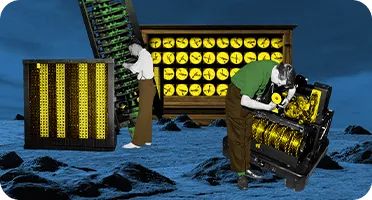
The first computer, which can be considered the predecessor of modern computing machines, appeared in the middle of the 20th century. This historical device, known as ENIAC (Electronic Numerical Integrator and Computer), was developed in the USA. The creation of ENIAC was the result of the work of scientists John Mauchly and Presper Eckert in 1945.
ENIAC was a huge device, taking up an entire room. It used over 17,000 vacuum tubes and consumed a huge amount of power. The main task of the computer was to perform complex mathematical calculations, which significantly accelerated the process compared to manual calculations.
Other early computers, such as UNIVAC and Z3, also made significant contributions to the development of computing. UNIVAC was the first commercial computer, and Konrad Zuse's Z3 was one of the first programmable computers.
These early computers had limited capabilities and used punched cards for data entry. However, their creation laid the foundation for further innovation in information technology. Today's highly productive and feature-rich computers built on those early ideas and technologies.
By looking at the history of the first computer, we can better understand how far computing has come and how it has changed our lives.
Mixed Number Systems
Heterogeneous, or mixed, number systems are a unique type of positional system in which each base can be different for different digits. In such systems, numerical values are written using different bases, depending on the position of each digit. The main feature of these systems is that the weight of each digit is determined as the product of the bases of all the least significant digits. This makes mixed number systems interesting and challenging to analyze, since they require accounting for different bases to calculate values accurately.
Let's study a mixed number system in which each digit corresponds to its own unique base: the first digit uses base 2, the second uses base 3, and the third uses base 4. This representation is written as [2, 3, 4]. In this system, the number 123 is broken down into components that are determined based on the bases of each digit.
- The first digit (1) is multiplied by the product of all the minor bases: 1 × (3 × 4) = 12.
- The second digit (2) is multiplied by the base of the least significant digit: 2 × 4 = 8.
- The third digit (3) is multiplied by 1: 3 × 1 = 3.
- The sum of all the values (12 + 8 + 3) gives the number 23 in the decimal system.
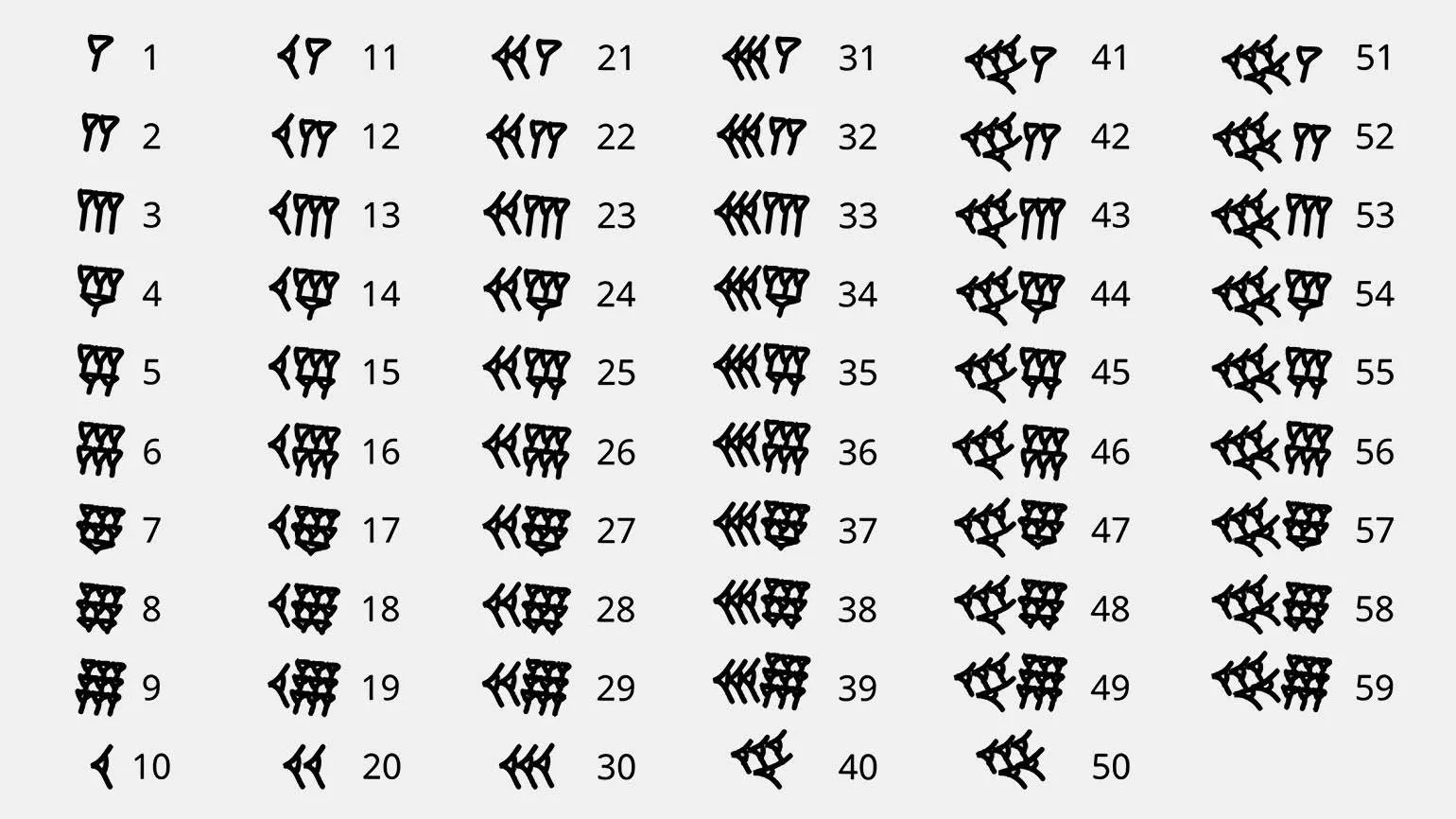
The Babylonian sexagesimal system of numbers is one of the most ancient mixed number systems. This system uses symbols representing values from 0 to 59, with each digit corresponding to a power of 60. The value of each symbol is determined by its position in the number, with each subsequent digit increasing the value by 60. This unique system was widely used in ancient Babylon and had a significant influence on the development of mathematics and astronomy.
The Babylonian numeral system was based on two key symbols: a vertical wedge representing units and a horizontal wedge representing tens. Numbers in this system were written from right to left, with a new digit beginning after a specific combination of symbols. The vertical wedge served a dual purpose, representing both one and the number 60 and its powers, leading to the term "sexagesimal system." The positional nature of this system meant that the value of a symbol (1 or 60) depended on its position in the number, allowing for the efficient expression of larger values. The Babylonian system had a significant influence on the development of mathematical concepts and number systems, making it an important object of study in the history of mathematics.
With the development of trade and astronomy, the Babylonians began to write not only whole numbers but also fractions. They refined their numeric system by adding additional digits after the integer part. Thus, a mixed notation was created: the integer part was represented in a sexagesimal system, and each digit of the fractional part represented a division by 60. This innovation allowed for a more precise representation and processing of numerical values, which was especially important in trade and scientific calculations. As a result, the Babylonian number system had a significant influence on the development of mathematics and astronomy in subsequent eras.
The Babylonian system of timekeeping had a significant impact on the development of modern measuring instruments, including wristwatches and high-precision GPS navigation systems. Let's consider how this is demonstrated using a modern clock with a precise time, for example, 10:45:30. In this format, each component of time uses its own unique numbering system: hours can be displayed in either a 12- or 24-hour format, while minutes and seconds follow a base-60 system, with values ranging from 0 to 59. This diversity of numbering systems demonstrates how ancient methods of measuring time continue to influence our lives and technology today.
Conversion from One System to Another
Developers often encounter different number systems. There are many situations in which it is necessary to convert between them. For example, when working with databases and programming, it is important to convert numbers from decimal to binary, octal, or hexadecimal. Conversions may also be necessary when working with various data transfer protocols that use specific number formats. Understanding and being able to perform such conversions is a key skill for developers, allowing them to solve problems more effectively and optimize their projects.
- When working with bitwise operations and masks to optimize code and improve program performance. For example, the number 1111 in binary (0b1111) corresponds to F in hexadecimal (0xF).
- In analyzing and debugging programs for efficient memory management and error detection. Example: the memory address 4095 in decimal corresponds to 0xFFF in hexadecimal.
- When setting up network equipment for device configuration and diagnostics. For example, the IP address 127.0.0.1 in decimal corresponds to 7F.00.00.01 in hexadecimal.
- In cryptography and information security for processing and verifying encrypted data. For example, an encryption key can be represented in both binary and hexadecimal form.
- When working with color codes in web development and graphic design. Thus, the pure blue color RGB (0, 0, 255) in the decimal system is written as #0000FF in hexadecimal.
There are three main methods for converting numbers between number systems: division with remainder, multiplication with accumulation, and the use of lookup tables. Each of these methods has its own characteristics and is suitable for different tasks. Division with remainder allows you to efficiently convert numbers from the decimal system to another, while multiplication with accumulation is more often used to convert to more complex systems. Lookup tables provide quick access to values and can significantly simplify the conversion process. The choice of method depends on the specific task and the user's preferences.
The division with remainder method is used to convert numbers from one number system to another. The process involves dividing the original number by the base of the new system and recording the remainder. These actions are repeated with the resulting quotient until it becomes zero. The remainders are then written in reverse order, which gives the desired result. Let's convert the number 83₁₀ to binary notation.
- 83 ÷ 2 = 41 (remainder 1);
- 41 ÷ 2 = 20 (remainder 1);
- 20 ÷ 2 = 10 (remainder 0);
- 10 ÷ 2 = 5 (remainder 0);
- 5 ÷ 2 = 2 (remainder 1);
- 2 ÷ 2 = 1 (remainder 0);
- 1 ÷ 2 = 0 (remainder 1);
- Result: 83₁₀ = 1010011₂.
The method of multiplication with accumulation is an efficient way to convert numbers from one number system to another, for example, From binary to decimal. This method involves two main steps. First, each digit of the original number is multiplied by the base of the system, raised to the power corresponding to the position of that digit (positions are counted from right to left, starting with zero). Then, all the resulting products are added together to obtain the final value in the new number system. Let's look at an example of converting the number 101₂ to the decimal system:
The method of multiplication with accumulation is an efficient way to convert numbers from one number system to another, for example, from binary to decimal. This method involves two main steps. First, each digit of the original number is multiplied by the base of the system, raised to the power corresponding to the position of the digit. Positions are counted from right to left, starting with zero. Then, the results of the multiplications are summed, which allows us to obtain the final value in the target number system. This method is an important tool in mathematics and computer science, allowing for easy conversion of numbers between different number systems.
To convert the binary number 101₂ to the decimal system, the value of each bit must be taken into account. In the binary system, each bit represents a power of 2, starting with 0 from right to left.
In this case, the number 101₂ can be broken down into individual bits: 1, 0, and 1. Let's use the conversion formula:
1 * 2² + 0 * 2¹ + 1 * 2⁰.
Now let's calculate each expression:
1 * 2² = 4,
0 * 2¹ = 0,
1 * 2⁰ = 1.
Now let's add the resulting values:
4 + 0 + 1 = 5.
Thus, the binary number 101₂ in decimal is 5.
- First digit from the right (1): 1 × 2⁰ = 1.
- Middle digit (0): 0 × 2¹ = 0.
- The last digit (1): 1 × 2² = 4.
- Add: 4 + 0 + 1 = 5₁₀.
Conformance tables are an effective way to convert numbers. They are based on pre-prepared tables that display the correspondence between digits of different number systems. Using such tables significantly simplifies the process of converting numbers. There are many resources available online that offer these tables, making them accessible to everyone.
- RapidTables — A universal online converter for all major number systems.
- BaseCalc — A service for converting numbers between number systems with bases from 2 to 36.
- Online Binary-Decimal Converter — A tool for quickly converting between binary and hexadecimal numbers.
- Calculator.net — A calculator with support for hexadecimal, binary, decimal, and octal calculations.
- Math Is Fun — A useful educational resource with detailed explanations of the number conversion process.
- WolframAlpha — An advanced math resource that not only converts numbers but also shows a step-by-step solution.
Modern programming languages offer powerful tools for converting between different number systems. Using the built-in functions of these languages significantly simplifies the data conversion process, saving time and reducing the likelihood of errors. This makes them an excellent complement to the methods already described, allowing developers to effectively solve problems related to number conversion. JavaScript offers many methods that allow developers to effectively manage the functionality of web pages. Popular methods include event handling, manipulation of DOM elements, and interaction with the server via AJAX. Using JavaScript methods, developers can create dynamic and interactive user interfaces. For example, array methods such as map, filter, and reduce optimize data processing, providing fast and convenient work with collections. In addition, JavaScript's asynchronous programming capabilities using async/await and Promises make it a powerful tool for creating responsive web applications. These methods not only improve performance but also enhance the usability of the applications you create.
For information on working with number systems, we recommend referring to the official documentation. Detailed guides are available for popular programming languages such as Python, JavaScript, Java, C++, Ruby, PHP, and Go, allowing developers to effectively use various number systems in their projects.
Cybersecurity Specialist Profession
You will develop analytical thinking, learn to look for vulnerabilities and Ensure the security of IT systems. Master a sought-after profession even with zero IT experience. The course program is the most comprehensive on the market!
Find out more