
Contents:
For those considering becoming a trainer or coach, the books in this collection provide a complete understanding of the profession. For practicing professionals, they offer methods for individual and group work, as well as competency models that facilitate professional self-development. These publications will also be useful for those organizing corporate training, allowing them not only to select the most effective offers on the market but also to develop coaches, trainers, and mentors among their employees. Reading these books will help deepen your knowledge and skills, which is key to a successful career in training and coaching.
"Coaching and Mentoring"
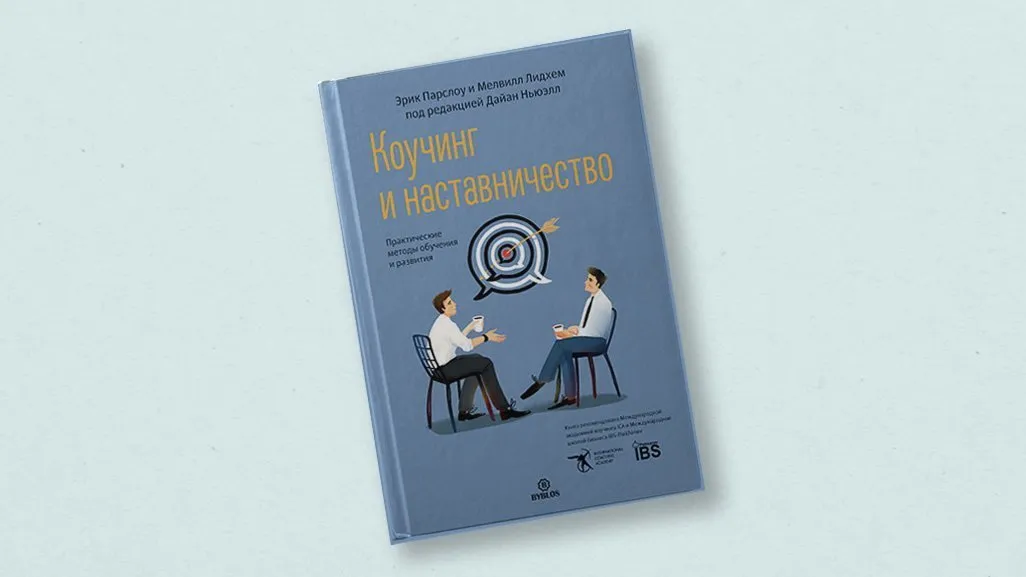
Written by Eric Parslow, co-founder of the European Council on Mentoring and Coaching, and his co-author Melville Leedham, this book is divided into two parts. This work is an essential resource for mentoring and coaching professionals, offering in-depth analysis and practical recommendations. Readers will learn about the key aspects of effective mentoring, as well as modern coaching methods, making this book indispensable for anyone seeking to develop their skills in these areas.
The first part of the training material is devoted to the basics of individual and group coaching. It offers recommendations and useful tools for aspiring coaches and mentors. This section helps develop an understanding of the work of professionals in this field, revealing key aspects of their work and providing practical advice for a successful start in coaching.
The second part is aimed at those seeking to implement a coaching and mentoring system in their company. The authors examine in detail the benefits of this approach to training for business, as well as potential challenges that may arise during its implementation. In addition, they share methods for evaluating the effectiveness of the implemented coaching and mentoring program.

Reading plays an important role in our development and education. It helps us expand our horizons, improve analytical and critical thinking skills. Books, articles, and research provide valuable information that contributes to personal and professional growth. Regular reading also helps improve vocabulary and grammar. In today's world, where information is available in a variety of formats, it's important to choose quality content that will stimulate intellectual development. Maintain a reading habit to stay up-to-date on current topics and trends. This will not only enrich your knowledge but also help you become more confident and successful in life. Modern mentors must master a number of key skills to effectively fulfill their role. First, they must be able to listen and ask the right questions, which will help them better understand the needs and motivations of their mentees. Second, it's important to develop analytical thinking skills to be able to assess situations and provide constructive feedback. Furthermore, mentors must be prepared for continuous learning to stay relevant in a rapidly changing world. Also key is the ability to create a trusting atmosphere where mentees feel comfortable and confident sharing their thoughts and concerns. Mentors must be flexible and adapt to individual learning styles, providing a personalized approach. It's important to remember that successful mentoring requires not only the transfer of knowledge, but also support in personal growth and professional development.
«Psychogymnastics in training»

The manual is intended for trainers, both beginners and experienced ones. Both experienced and experienced professionals wishing to implement the psychogymnastics method in their practice. This method includes a variety of non-verbal techniques that facilitate establishing rapport and building trust in a group. Psychogymnastics helps relieve emotional tension, develop attention, and improve other important psychological aspects. Using these methods in working with groups helps create a more comfortable atmosphere and effectively solve psychological problems.
The psychogymnastics exercises described in this book were developed by experts at the Training Institute, an educational center in the field of business training and strategic consulting. The founders of the Institute, Nina Khryashcheva and Sergey Makshanov, are pioneers in this field and began training future trainers and consultants back in the 1990s. These exercises are aimed at developing mental resilience and improving interaction skills, making them a valuable tool for professionals in various fields.
The manual includes theoretical and practical sections. The first part examines the history and basic principles of effective training, as well as the psychogymnastics method. The second part describes the exercises and provides instructions for their use. The exercises are grouped by purpose: maintaining participants' performance, developing communicative competence and creativity, and managing emotions. This manual will be useful for trainers, teachers, and psychologists seeking to improve the effectiveness of their classes and enhance interaction with participants.
"Co-active Coaching"

We present a new book from the founders of The Co-Active Training Institute (CTI), a leading organization in the field of personal coaching. Henry and Karen Kimsey-House, Laura Whitworth, and Phillip Sandahl share with readers a time-tested model of co-active coaching. In this book, they explain in detail the key principles and methodology, based on many years of experience in coaching practice. This publication will be useful for both professional coaches and those just starting out in this field, allowing them to deepen their understanding of the co-active approach and its application in life and career.
Co-activity is a unique type of interaction between a coach and a client, which involves working together on the problems and challenges of the coachee. The first chapter of the book focuses on the formation of this relationship. The following chapters examine the key aspects of coaching and the most important coaching skills, and offer exercises for their development. The authors support their ideas with numerous examples from coaching conversations, which allows for a better understanding of the concepts and practical approaches in this area.
"Living Theater of Training"

This practical guide from Natalia Samoukina, founder of a training school with 25 years of experience, represents a unique approach to training. The title reflects the key element of effective training—theatrical production and direction of a "performance" that engage participants and inspire their development. Natalia Samoukina emphasizes that without this motivational aspect, even the most informative and practice-oriented training risks becoming boring. Participants are unlikely to remember the material, much less implement it in their professional practice. This guide will help trainers create engaging and memorable training sessions that will truly contribute to the professional growth of participants.
Natalia Samoukina shares exercises and techniques for solving various problems, from establishing rapport in a group to developing practical skills. She provides examples of successful cases from her own practice, making the material more visual. The author emphasizes the key qualities and competencies required of any trainer and offers a step-by-step algorithm for developing and delivering training. This approach allows not only for effective training but also for creating a productive atmosphere in the group.
Read also:
Business training has undergone significant changes in modern conditions. In the context of a dynamically changing economy and technological advances, trainers must adapt to new market demands. In this article, we will consider five key issues regarding the transformation of business coaching in the new reality.
How have approaches to employee training and development changed? With distance learning and online formats, coaches have begun to use new technologies to ensure effective training and interaction. Virtual platforms allow for a wider audience and lower training costs.
What are the new trends in business coaching? In recent years, there has been a growing interest in flexible learning methods, such as coaching and mentoring. These approaches help develop employee skills and competencies in real time, adapting training to the specific needs of the business.
Which skills are becoming most in demand? In a constantly changing market, adaptability, creativity, and digital literacy are becoming key to successful professional growth. Business coaches should focus on developing these competencies in their clients.
How is technology impacting business coaching? Technologies such as artificial intelligence and data analytics allow trainers to more accurately evaluate the effectiveness of training programs and tailor them to the individual needs of participants. This leads to improved training quality and client satisfaction.
What challenges do business trainers face in this new environment? One of the main challenges is the need to constantly update their knowledge and skills to remain competitive. Business trainers must be prepared for change and respond effectively to new challenges to provide their clients with relevant and useful solutions.
Therefore, business training in today's environment requires flexibility, an innovative approach, and continuous self-development. Adaptation to new conditions and the use of modern technologies will help trainers remain in demand and successful in their work.
"Integral Coaching"

Integral coaching is an approach that encompasses all aspects of a person's life and promotes transformational change. It's not just a method aimed at new actions, but a process that helps shift internal attitudes and move toward holistic, sustainable development. Integral coaching considers psychological, emotional, physical, and spiritual aspects, enabling harmony and an improved quality of life.
Marina Danilova, Yana Melville, and Alexander Savkin highlight the core principles of integral coaching, sharing their original models and session examples. Several chapters of the book examine aspects of coaching training, including key personal qualities of a coach, as well as the skills and knowledge necessary for effective work in this area. The authors also offer a unique training program that will help develop the necessary competencies for successful coaching practice.
The practical part of the book includes exercises and methods for coaching sessions that promote the development of universal competencies. In particular, an emphasis is placed on communication and management skills, as well as goal-setting and creative thinking. These tools will help readers effectively develop the necessary skills to achieve personal and professional goals.
"Training of Trainers. How the Steel Was Tempered"

This book is intended primarily for experienced trainers who understand that clear methodological instructions are not always able to effectively solve professional problems or answer complex questions. It will help deepen understanding of the nuances of coaching and offer alternative approaches to training and development.
Leonid Krol and Ekaterina Mikhailova, renowned coaches and business trainers, discuss current issues in the training industry. They highlight the lack of ready-made solutions, which is essential for the professional growth of coaches. The authors emphasize that coaches must not only expand their repertoire of techniques and methodologies but also develop flexibility of thought and reflection. These qualities will help them consciously select and apply the right tools in their work. According to Krol and Mikhailova, an abundance of arbitrary and artificial standards may be convenient, but it hinders development. They argue that the true goal of coaching development is the ability to work in conditions of uncertainty and the absence of clear rules. This ensures a deeper understanding of client needs and the effective application of training approaches.
This book proposes a framework for professional trainer competence, including six key aspects: contextual, communicative, technical, adaptive, conceptual, and integrative. Attention is also paid to the attitudes of a professional trainer, including ethical standards, the formation of a professional identity, the desire for competitiveness in the market, and the motivation for continuous learning. These elements play a significant role in the development of a trainer as a specialist and contribute to the improvement of their work.
Learn more about the field of education in our Telegram channel. Subscribe to stay up-to-date with interesting news, useful tips, and current research in the field of training.
Explore additional materials:
- 6 books that will help in the training and development of employees
- 6 books on how to teach adults
- Research: how corporate training has changed and what awaits it next
- "First of all, you need to work on yourself." An expert on the profession of a business coach.
- How to motivate an employee to become a mentor or buddy: 7 ideas.
Mentoring and management coaching.
Master mentoring and coaching in practice. You will be able to share your experience with others, competently manage employees, and lead yourself and your team to the desired results.
Find out more