In April, SberUniversity, as part of the EduTech Club, held an event for specialists in corporate training and adult education. Yulia Maksina, former development director of the publishing house "MYTH" and founder of True Education, which specializes in corporate training, spoke at the seminar "Microlearning: what to learn over a cup of coffee?" Yulia shared information about the challenges microlearning solves and presented several microformats used by her company in its corporate client courses. Microlearning is becoming an increasingly popular tool for improving the effectiveness of training in organizations, allowing knowledge to be absorbed quickly and in a convenient format.
A recording of the seminar is available on the SberUniversity website. This article provides a summary of Yulia's presentation, allowing you to familiarize yourself with the main ideas and topics of discussion.
Myths about Microlearning and Microformats
Yulia Maksina notes that customer companies sometimes approach providers with a request for microlearning, assuming that simply dividing an eight-hour training session into smaller chunks is sufficient. However, simply dividing large amounts of material into 10-20 minute segments does not correspond to the concept of microlearning. This approach ignores the fact that the material was originally developed for different learning purposes and methods of engaging with the content. Microlearning requires that each piece of material be specifically designed and packaged to achieve a specific learning objective. Each segment should convey a single, clear idea and contribute to a specific learner outcome. Some clients are biased against microlearning, viewing it as "fast food" and preferring more serious programs. While microformats do have limitations and are not always effective for deep learning of complex skills or concepts, experience shows that they can be quite useful in long-term training courses covering a significant amount of material. For example, if a training program lasts three to six months or longer, participant attention and engagement may significantly decline. In such cases, microformats can serve as an excellent supplement to the main content, helping to maintain interest and active participation. They are also convenient for reinforcing and reviewing learned material, making learning more effective and focused.
The speaker strongly recommends diversifying course content with a variety of formats to avoid student fatigue from monotony. For example, in a text-heavy longread course, it is useful to include videos, podcasts, diagrams, and checklists. This will not only make learning more engaging but also help students better absorb the information. A variety of formats promotes active student engagement and improves comprehension of the learning material, which ultimately improves the quality of learning.
Yulia noted the results of a study conducted by the audit and consulting firm Deloitte. According to the study, on average, employees can devote only 1% of their working time to training and development. In a 40-hour workweek, this amounts to less than five minutes a day. In a time-pressured environment where employee training is essential, microlearning is the perfect solution to maximize your time and maximize the value of short training sessions.

Reading is an important part of our lives, and it helps us develop our mental abilities, broaden our horizons, and gain new knowledge. In today's world, access to information has become easier, and everyone can find literature to suit every taste. Reading books, articles, and blogs helps improve vocabulary and critical thinking. It's also a great way to relax and unwind from everyday worries. Don't miss the opportunity to enrich your knowledge and develop skills through reading.
Microformats, or microlearning, are becoming increasingly popular in corporate training due to their effectiveness and convenience. They are short, focused training modules that allow employees to quickly absorb information and skills. This is especially useful in a fast-paced work environment where it is important to respond quickly to changes.
The use of microformats in corporate training helps increase employee engagement. Short and focused lessons allow employees to learn anytime and anywhere, making the learning process more flexible. Furthermore, microlearning provides the ability to re-access materials, which promotes better retention of information.
To effectively use microformats in corporate training, companies can use a variety of methods. These can include video tutorials, interactive quizzes, infographics, or short articles. The key is that the content is relevant, understandable, and related to the real-world challenges employees face.
Thus, microformats not only increase the effectiveness of corporate training but also contribute to the development of a culture of continuous learning within the company. Integrating microlearning into corporate training allows organizations to remain competitive and adaptive in today's marketplace.
What formats are used in microlearning?
Yulia Maksina identified several microformats that are effectively used to package training content. Some of these formats are used in stand-alone projects, while others serve as supplementary materials within longer, more comprehensive educational programs. These microformats help improve information comprehension and make the learning process more structured and accessible to users.
Smart maps, also known as mind maps, are an effective information visualization method that demonstrates systemic connections between ideas and topics, as well as their interrelationships. In the context of True Education, according to Yulia, smart maps are a set of online cards dedicated to specific topics. They typically contain concise and concise information, such as checklists, algorithms, techniques, and methods, making them particularly useful for quickly absorbing material. The main advantage of smart cards is their convenience: they can be easily viewed on a smartphone and used as cheat sheets during the learning process. This approach allows for efficient organization of knowledge and facilitates the memorization of important concepts.
Yulia presented cards illustrating team roles based on the Belbin model. Each card includes the functions of the role, as well as its strengths and weaknesses. For clarity, the roles are illustrated with pop culture characters; for example, Sherlock Holmes is associated with the role of an analytical strategist. Another interesting example is a 70-card deck dedicated to delegation, created for warehouse employees. These cards contain specific steps and recommendations that help effectively delegate tasks, monitor results, and provide feedback. This approach helps increase productivity and improve teamwork, which is especially important in today's business environment.
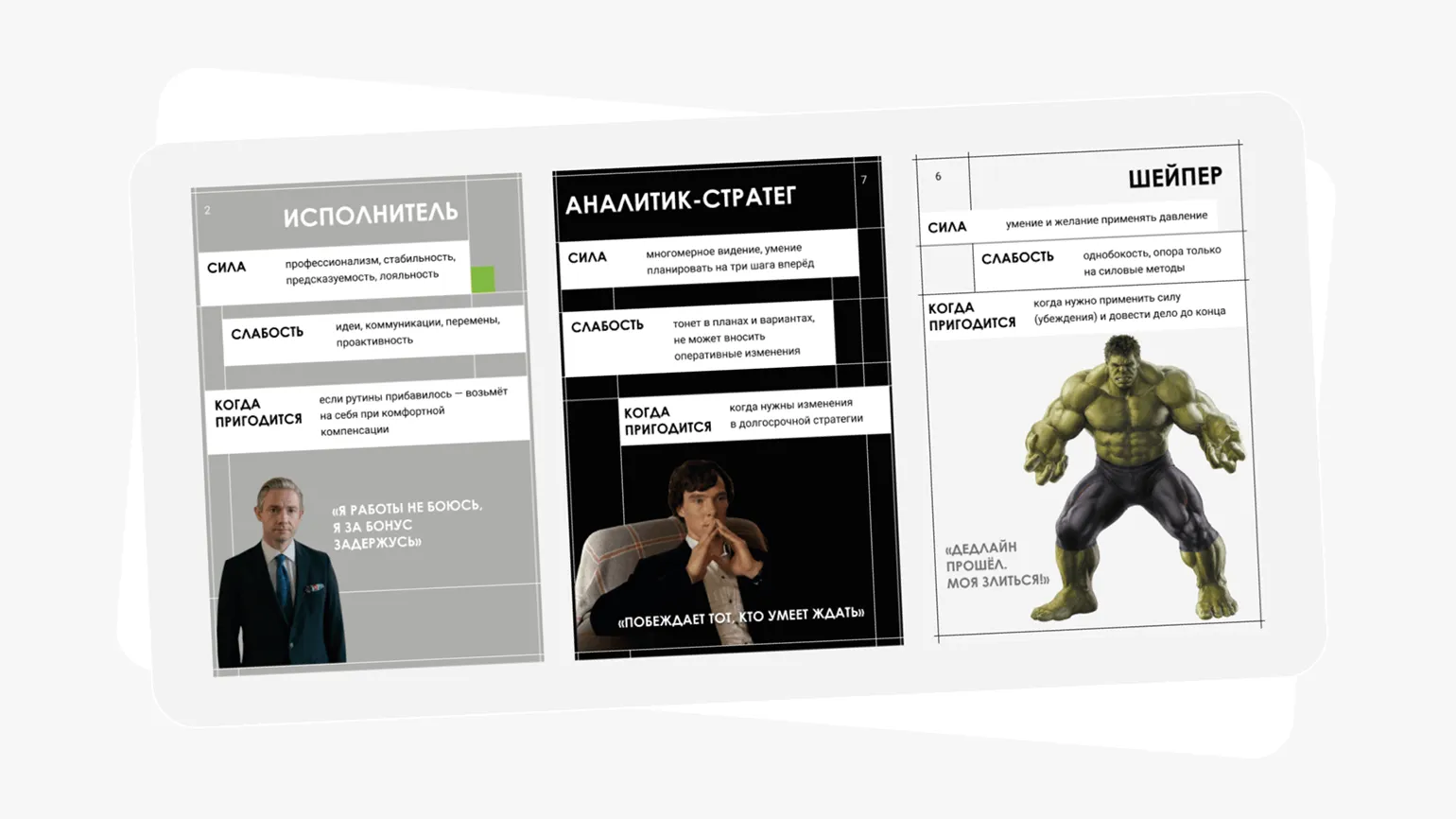
Smart cards are an effective learning tool. They can be used as stand-alone learning materials or integrated into longer courses to summarize and reinforce key information. This approach promotes better knowledge acquisition and enhances the quality of the educational process.
Mini-videos, less than one minute long, are designed primarily for viewing on smartphones, similar to formats available on popular social media platforms such as TikTok. These short videos are ideal for quickly conveying information and entertaining content, making them appealing to audiences who tend to consume media quickly.
This format is used primarily for audience engagement. It is not so much an educational tool as an auxiliary one. It can be used to clearly demonstrate the importance of a specific skill, convey to students the significance of the learning process in general, and convey the values shared by the company. This approach promotes deeper understanding and motivation among participants, which in turn increases the effectiveness of training and contributes to the formation of a positive image of the organization.
Yulia gave an example of using short inspirational videos in a course for support staff. These videos emphasized the value and significance of their work, as well as the importance of caring for their own well-being. Furthermore, short videos were used as part of a promotional campaign for a longer course, informing employees about the training content and the benefits they could gain from it. This approach helps increase employee motivation and engagement, and improves the overall perception of the learning process.
The speaker notes that employee engagement can be increased through "circles" in Telegram created by experts or managers. Such content, perceived as informal and situational, allows employees to receive important information while creating an atmosphere of lively communication. This helps strengthen corporate culture and increase trust among colleagues, which in turn affects overall team productivity.
Positive emotions contribute to increased learning engagement, which is a good reason to introduce humor into the learning process. Yulia Maksina notes that using memes can simplify the understanding of concepts and add an emotional component to the learning topic. This makes the material more engaging and easier to understand and remember. Memes can serve as an effective tool that helps students better retain information and maintain motivation for learning. In 2017, Filipino researcher Paulo Baysak, who works at the University of Perpetual Help System Laguna, interviewed faculty at the university. During the conversation, they noted that using memes in the educational process contributes to more effective student preparation for classes. Memes help attract student attention, create a positive atmosphere in the classroom, and clearly present key concepts and theories on various topics. This approach not only makes information easier to perceive, but also makes learning more engaging and memorable.

Rework the text, keeping the main topic. Optimize it for SEO, without adding unnecessary information. Avoid emoticons and unnecessary symbols. Avoid using numbers or bulleted lists; simply provide plain text.
We also recommend checking out other materials.
Modern educational methods are becoming increasingly creative. One interesting assignment a teacher might offer is creating memes. This innovative approach to homework not only helps students develop creative thinking but also master important skills, such as working with visual content and understanding cultural trends. Creating memes helps reinforce educational material in an engaging way, which promotes better retention and increases student engagement. Using memes as homework opens new horizons for discussing relevant topics and promotes critical thinking.
A screencast in microlearning is a short video, no longer than five minutes, recorded from a computer or smartphone screen. Short screencasts can be combined into a series, allowing for a deeper dive into a specific topic. This format effectively demonstrates how to work with various software and solve technical problems. Screencasts are ideal for situations where it's necessary not only to explain but also to clearly demonstrate the process of completing tasks. Using screencasts in microlearning promotes better retention of material and increases learning effectiveness.
The speaker notes that screencasts are effectively used in soft skills development courses. Using screencasts, you can show chat recordings with fictitious dialogues between colleagues or between an employee and a client in instant messaging apps. Such examples clearly illustrate how to properly and ethically conduct business communication and highlight common mistakes to avoid. Screencasts are becoming a powerful tool for training and improving communication skills.
Yulia Maksina explained that management riddles represent problematic situations involving characters, each with their own motivations and facing challenges. It's important to note that these riddles don't always have a single correct answer. Their main purpose is to analyze a person's thinking, identify the strategies they employ, and determine what they pay attention to first and how they react to various phenomena. Management riddles help to understand approaches to solving problems and promote the development of critical thinking.
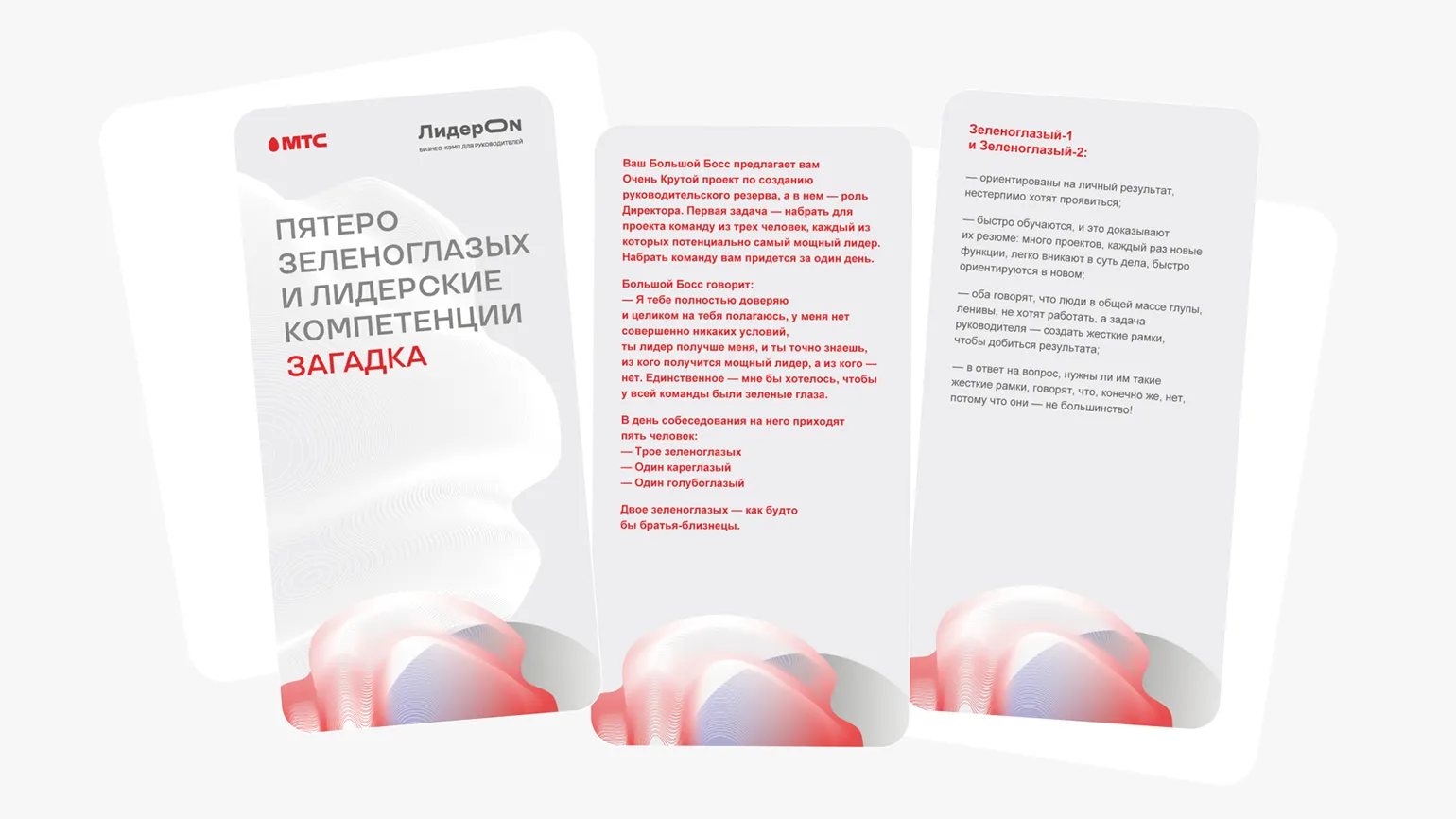
When creating riddles, Julia suggests using Pop culture stories are used to help students unravel the references and engage with the learning process. For example, one leadership training course incorporated a riddle based on The Lord of the Rings, adapted for a corporate management context. This approach not only makes the learning process more engaging but also helps develop critical thinking and creativity in students.
As the speaker notes, riddles effectively foster engagement between sections of theoretical material. They are perceived not as traditional learning, but as an interesting challenge that generates excitement and a desire to understand. Furthermore, employees actively share riddles, which helps engage those who are not yet fully engaged in the learning process. This creates a more dynamic and interactive atmosphere, which ultimately promotes better knowledge acquisition.
When developing an interactive longread, the True Education team formats the course in a game format, incorporating characters and an evolving plot. This approach effectively engages students through an engaging narrative. A complex and multi-layered scenario is not always required; Sometimes a well-organized illusion of choice is enough to maintain students' attention and motivation.
Yulia presented a course developed at True Education, the purpose of which was to educate employees on the company's norms and rules of conduct, as well as inform them of the consequences of violating them. The standard rules document was transformed into a series of ten interactive longreads, each focusing on a separate rule. This approach makes the learning process more engaging and effective, promoting better information absorption and raising the level of corporate culture.
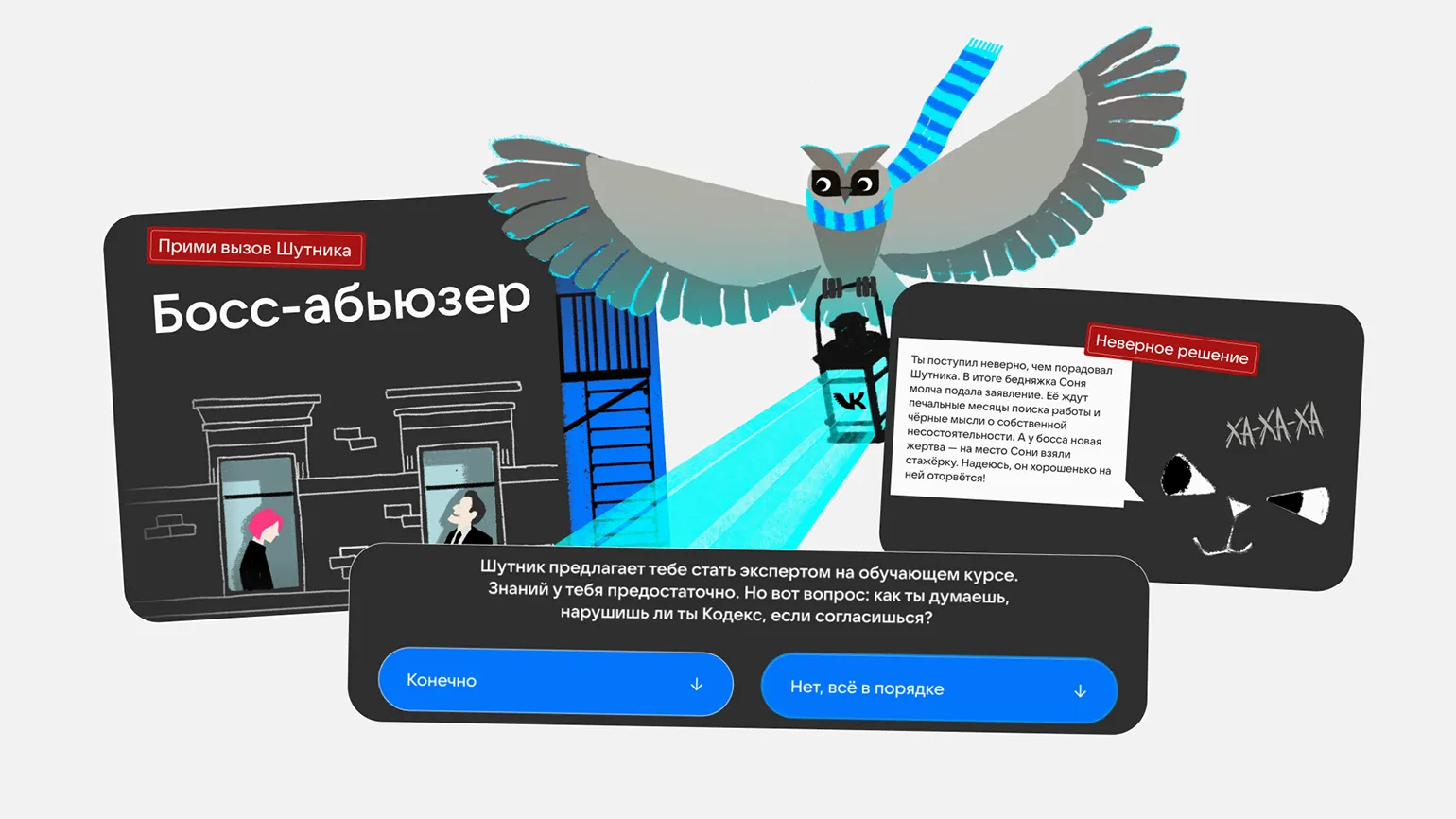
Longreads are interactive narratives in which readers make decisions that influence the course of the story. These stories feature two key characters: a wise owl, symbolizing responsibility, and a cunning cat, who encourages reckless behavior and rule-breaking. These elements create an engaging experience that allows users to choose how the story unfolds, such as "go left" or "go right," although these decisions don't significantly impact the overall plot. According to Yulia, the course has gone viral among employees, as evidenced by the creation of sticker packs featuring the characters and their memorable phrases. This highlights the popularity and engagement of the content, making it a great tool for learning and entertainment.

Learn more about the world of education in our Telegram channel. Subscribe to stay up-to-date with the latest news and interesting facts.
Read also:
- How to consider emotions when designing corporate training
- Videos shorter than three minutes are the most popular type of training content for employees
- What is a branched quest and how to use it to bring learning to life
- Microlearning today and tomorrow: experts share their vision
- Longreads and slide courses: what are the differences and how to choose the right format