Contents:
The variety and complexity of challenges faced by leaders at various levels make it difficult to make informed decisions. Facilitation, or moderation, can significantly ease this task, making meetings and workshops more effective. Using facilitation helps structure discussions, ensure the active participation of all participants, and achieve specific results. This allows leaders to better cope with challenges and make informed decisions based on collective opinion and analysis.
Facilitation and moderation are management processes aimed at optimizing communication within a group. These methods help remove communication barriers and promote the achievement of specific goals, such as problem solving or making difficult decisions. Effective facilitation creates a productive atmosphere, which in turn promotes deeper interactions between participants and improves the quality of discussions.
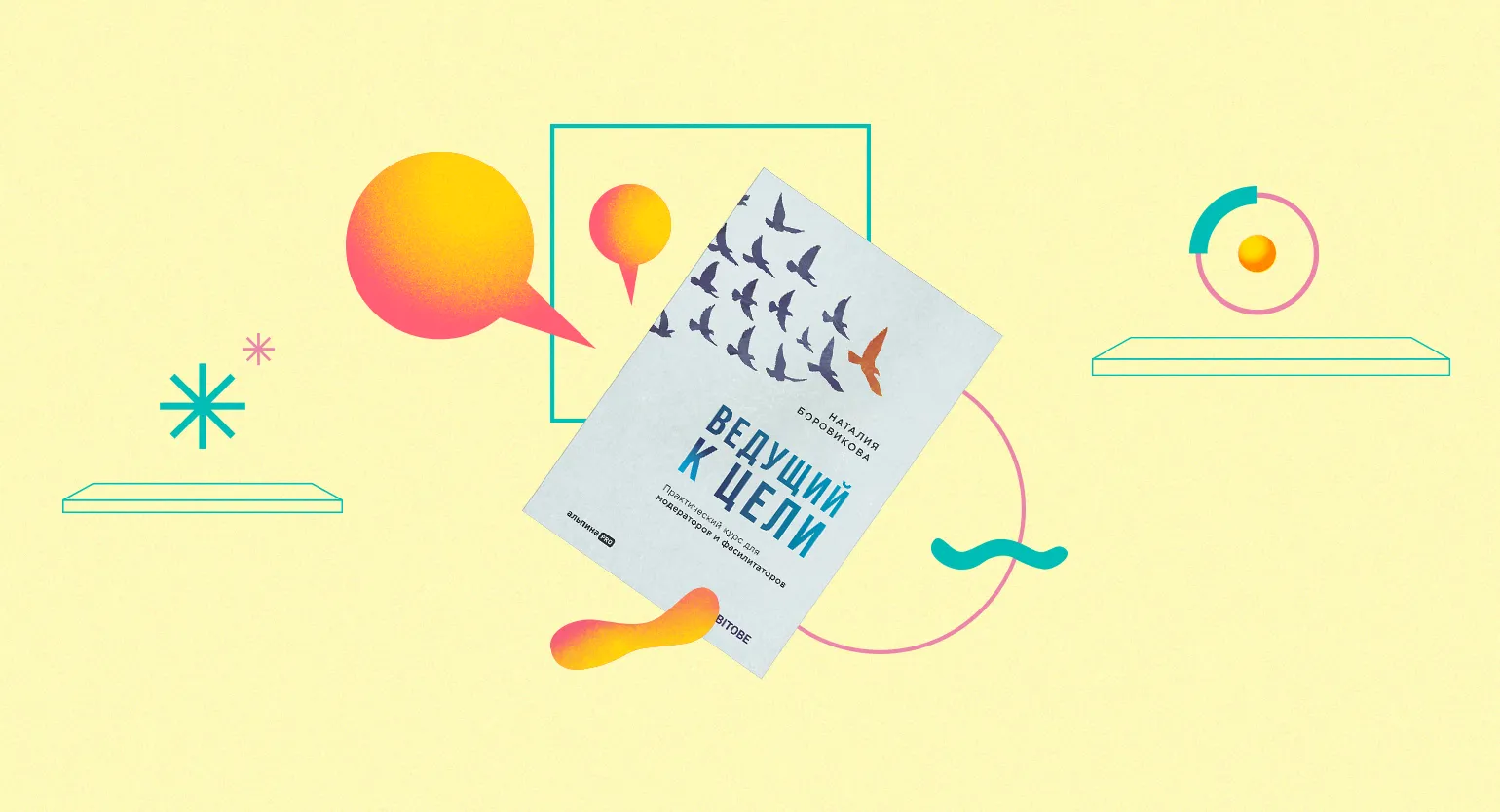
Whether we practice regularly, face crises, or plan a business transformation, this tool is key to achieving team and business goals. Natalia Borovikova, founder of the BITOBE consulting group, coach, and author of the book "Leading to the Goal: A Practical Course for Moderators and Facilitators," published in 2022 by Alpina Pro, emphasizes the importance of this approach. Using effective tools and methods not only helps move a team toward success but also ensures sustainable business development in an environment of uncertainty.
Natalia Borovikova notes that attempts have been made in the professional community to clearly distinguish between the concepts of facilitation and moderation. This distinction is based on the meanings of these terms. Facilitation implies a process in which the facilitator helps the group achieve goals by creating conditions for productive interaction. While moderation is more often associated with managing a discussion or debate, guiding participants and maintaining order. Understanding these differences is important for effectively performing roles in group processes.
- to facilitate (from Latin facilis - "easy, simple") - to help, ease, facilitate;
- to moderate (from Latin moderari - "to preside over a dispute, debate") - to restrain, moderate, curb.
Both terms, as the author points out, mean the same thing - the effective organization of group work to achieve set goals. In the Anglo-American context, the concept of facilitation is used, while in German-speaking countries, the terminology of moderation is common. Professionals in this field may call themselves either facilitators or moderators, depending on their preferences and professional context. The book "Leading to the Goal" will be a valuable resource not only for aspiring facilitators and moderators, but also for managers, T&D specialists, and business coaches. It presents the fundamentals of moderation and facilitation, as well as a comprehensive set of methods and tools to help conduct effective meetings, workshops, and sessions. With the publisher's permission, we invite you to familiarize yourself with a description of several techniques from the chapter "Moderation Tools" that will significantly improve the quality of interaction in teams and increase the productivity of discussions.
"Plumin" ("Plus. Minus. Interest")
The task takes from 5 to 20 minutes.
The number of participants can vary from 3 to 20 people.
The "Plumin" tool (PMI) is used in situations where the topics under discussion can evoke strong emotions in the participants. It also helps the moderator understand the personal attitudes of the participants to the issue under consideration. Each participant receives a sheet of paper with the heading "Plus. Minus. Interest", on which they must note what they like about the topic (from an emotional perspective), what they do not like, and what seems interesting. This approach facilitates a more in-depth analysis of opinions and helps identify key aspects of the issue under discussion.
The PMI method is an effective tool for assessment and decision-making, particularly popular among young people. This method is suitable for both working with young professionals and for developing a talent pool. The assessment process uses three categories: "Plus," "Minus," and "Interest." Each of these columns has a scoring system, allowing the participant not only to structure the information but also to conduct a quantitative analysis. This enables more informed and informed decisions based on the data obtained. Using the PMI method can significantly improve the quality of choice and increase employee involvement in the decision-making process.

Surveys can be conducted both confidentially and publicly. This is an effective tool that's convenient to use after discussions. Using surveys allows ideas to be filtered through an additional personal lens, which promotes better retention and assimilation of information. It's important to keep in mind that the format of the survey can significantly impact the quality of the data obtained and its interpretation.
«MeWeUs»
The optimized time for completing the task is 10-15 minutes.
The number of participants is from 15 to 20 people.
«MeWeUs» (MeWeUs) is a method aimed at actively involving silent participants in the discussion and collecting ideas from each team member to achieve a collective result. In this process, each participant expresses their opinion, recording it in writing or orally, which contributes to a more complete consideration of various points of view and improves the quality of the discussion. This technique helps create an atmosphere of openness and collaboration, which in turn leads to effective decision-making and project implementation.
«MeWeUs» consists of three key stages. Each of them plays an important role in achieving the set goals. The first stage focuses on individual needs and desires, providing an understanding of the main request. The second stage is focused on team interaction, which allows for the integration of various opinions and ideas, creating a more comprehensive solution. The third stage involves the implementation and analysis of the results obtained, which allows for the evaluation of the effectiveness of the decisions made and the necessary adjustments. This structure ensures a systematic approach to problem solving and contributes to the successful implementation of projects.
- Me — each participant formulates an opinion on the proposed problem and writes down their thoughts on the topic of discussion.
- We — an exchange of opinions takes place in small groups, everyone gets the opportunity to get acquainted with the personal positions and ideas of other subgroup members.
- Us — finally, the entire range of group opinions is considered, which is recorded on a flipchart in a convenient and visual form (ranked or unranked list, table, diagram, mind map).
The success of the "MeWeUs" technique lies in the fact that each participant has the opportunity to speak up. All discussion results are recorded on a flipchart, which allows the group to avoid wasting time on presenting the results of their work. This approach promotes more effective interaction and involvement of all team members, and also improves the perception of information.

"Dividing "Line"
The task takes from 20 minutes to 1 hour.
The number of participants can vary from 5 to 100 people.
The "MeWeUs" technique is aimed at helping participants identify their preferences and priorities. This method is effective for resolving fundamental and ideological difficulties, and not just practical issues. It allows for a deeper understanding of the motivations and beliefs of each participant, which contributes to more informed decision-making. Using this technique can significantly improve interaction in a group and increase the level of trust between its members.
The moderator begins by drawing a line with chalk or using colored tape to mark the boundaries of the discussion. He reminds participants of the problem, raising an important question in a provocative manner: "Do you agree that...?" Among the participants, it is expected that there will be both those who agree and those who disagree; otherwise, the exercise loses its meaning. It's important to ask questions sequentially to ensure clarity and in-depth discussion of each topic. On one side of the line will be those who fully support a given opinion, while on the other will be those who categorically disagree. Participants in the same group are encouraged to discuss the reasons for their position on the topic under discussion. After exchanging opinions with their peers, participants may reconsider their own point of view and possibly switch to the opposite side. This process continues until they clarify their own position on the issue. This approach promotes a deeper understanding of the issue under discussion and allows for the consideration of different points of view.
Petition
The task takes 10 to 15 minutes.
The number of participants ranges from 10 to 25 people.
The "Petition" technique, known in English as roundrobin, is a method of organizing signatures in which signatures are arranged in a circle, thereby concealing the priority of the signatory. It is a form of collective petition addressed to a single addressee, for example, a high-ranking official. It is important to note that there is no hierarchy of signatories, which makes both the authors and the initiators of the petition anonymous. This approach helps create a sense of solidarity and unity among signatories, and reduces the risk of a negative reaction from the authorities to specific petition authors.

In progress During the Petition, the moderator carefully walks around the room, giving each participant the opportunity to express their opinion. They do not interrupt or respond to criticism, creating a comfortable atmosphere for open dialogue. After the presentations, the moderator may offer comments or clarifications based on the participants' opinions. Finally, they summarize the discussion and formulate key thoughts and ideas. Comments are typically not recorded, and each participant may speak only once. However, depending on the time and purpose of the discussion, a second floor may be allowed.
A round-robin discussion is an effective initial stage of interaction, which helps to identify the main issues for discussion. This approach helps to overcome impasses in the discussion and find common ground between participants. The main goal is not to reach consensus, so everyone is given the opportunity to freely express their thoughts and concerns. It is important that participants do not try to dominate the discussion, as this can lead to an uncontrollable situation. A round-robin discussion creates a space for an open exchange of opinions and allows for deeper interaction between participants.
"Consultation"
The optimal time for completing a task is from 15 to 30 minutes. This allows for an effective organization of the workflow and the achievement of maximum results within the established deadlines. Given the variety of tasks, the time may vary, but maintaining this range contributes to high-quality work and increased productivity.
The number of participants should be from 8 to 20 people. This is the optimal range for effective interaction and achieving set goals. In such a group, it is convenient to exchange opinions, share ideas, and conduct discussions. Having from 8 to 20 participants allows for a balance between the active participation of each group member and process control.
The "Consilium" technique is similar to the "Petition", but has its own characteristics, including an emphasis on identifying contradictions between the participants' positions and excluding their comments. Typically, a "Consilium" is organized to reflect the mood of the group. For example, you can conduct the "Aquarium" technique with one subgroup, while another group simultaneously or later participates in the "Consilium". This allows all participants to analyze the processes and factors that either unite or divide the team. This approach fosters a deeper understanding of group dynamics and improves interaction between participants.
During a "Consilium," to maintain the order of the discussion, a participant may pass a symbolic object, such as a microphone or a card, to another participant to symbolize the right to speak. The number of these objects is determined depending on the situation, as is the time allotted for speaking. Participants may also have the option of passing their cards back and forth, adding flexibility to the discussion.
Consiliums should be held at reasonable intervals. This technique is aimed at deepening the discussion and creating an atmosphere of candor. It is important to prevent defensive behaviors such as laughter, jokes, or critical remarks during such meetings, as these can negatively impact the perception of information and the mood of the participants. Effective management of consultations requires attention to the emotional climate and maintaining constructive dialogue.
Carousel
The task takes from 10 minutes to 1.5 hours.
The number of participants can vary from 3 to 30.
Each participant takes turns speaking for a set amount of time (1 to 3 minutes), and no one is allowed to interrupt. This method allows for the active participation of all participants and prevents complacency. Firstly, no one can remain on the sidelines, and secondly, it requires each person to clearly and reasonably convey their point of view. This approach promotes a deeper understanding of the topic under discussion and improves the quality of interaction between participants.

The tool is similar to the "Consultation", However, it does not involve identifying differences. Its main goal is to keep the participants active and to encourage their willingness to express and justify their opinions.
"Take a Position"
The task takes from 20 minutes to 1 hour.
The number of participants can vary from 5 to 100 people.
The method in question is similar to the previous one and is aimed at analyzing the diversity of opinions on complex issues. The moderator plays a key role, giving each participant the opportunity to express their point of view and justify it. This process involves finding the most convincing arguments, as well as comparing them with the arguments of other participants. This approach promotes a deep understanding of the topic and helps to identify different aspects of the issue under discussion.
Posters with the inscriptions "Yes", "No" and "I don't know" are placed on the board or on three separate flipcharts. The moderator poses a question or introduces a topic for discussion and invites participants to express their opinions on the issue in question. Participants approach a poster that aligns with their position. They are then asked, either individually or in a group, to develop a rationale for their position by compiling several compelling arguments that could influence the opinions of other participants. This approach promotes deeper discussion and helps develop argumentation and critical thinking skills. If participants change their position after the discussion, they move to another poster and highlight the most compelling idea or argument presented by the opposing side. This approach promotes deeper analysis and a better understanding of different positions, which in turn can lead to more informed conclusions and decisions. This method is effective for discussing complex issues, often related to ethical aspects and corporate values. For example, this technique can help determine which charitable project should be funded now, or what non-material support is most needed by veterans. Using this method allows for a more in-depth analysis of needs and the making of informed decisions in the area of social responsibility.
The Hot Seat Method
The optimal time required to complete a task is 10-15 minutes. This allows you to effectively organize your workflow and achieve your goals without undue haste. This time period is suitable for a variety of tasks, including planning, analyzing, and implementing actions. Setting clear time frames helps improve productivity and allows you to focus on key priorities. Given the possibility of process optimization, 10-15 minutes is the ideal time to achieve significant results.
The number of participants is from 10 to 20 people.
Participants are located in an outer circle. Inside the circle, there are 3-5 chairs for those who will lead the discussion. One chair remains free and is called the "hot chair". The discussion is focused on finding solutions to a specific problem.
The inner discussion circle is open only to its participants. If someone from the outer circle wishes to join, they must move to the inner circle and take the "hot seat." This requires one of the current participants to leave the inner circle and move to the outer circle, making room for the new participant. Reasons for this move may include a desire to pass the floor to someone else, communication fatigue, or a lack of compelling arguments. This format promotes discussion dynamics and allows for the involvement of new participants, maintaining active interaction.
Under the same conditions, outer circle participants can formulate and write questions for inner circle members. Questions are voiced out loud, but do not always require an immediate answer. The answer can be passed on to another participant in the discussion. It is important to note that inner circle participants do not ask questions of outer circle participants.
Moderation begins with clarifying participants' expectations, which allows everyone to express their opinions. It is important that all participants have the opportunity to share their thoughts. The moderator can also periodically assess the current state of the group, creating a "mood barometer." To maintain order in the discussion, you can use a microphone, passing it around, which promotes equal participation by everyone.
"The Gap"
The task takes from 20 to 40 minutes.
The number of participants in the event is from 10 to 30 people. This is an optimal range that allows for active interaction between participants and a comfortable atmosphere for discussion. The presence of such a number of people contributes to a deeper exchange of opinions and ideas, and also allows each participant to contribute to the overall discussion.
The method proposed by advertising specialist Jean-Marie Dru in his book "Breaking Stereotypes" represents an entire direction in the field of creative thinking. Based on the concept of three zones - stereotype, gap, and vision - this approach allows you to effectively analyze and overcome habitual thinking patterns. Each of these zones corresponds to a specific stage of the session, making the methodology structured and understandable. This method promotes the generation of innovative ideas and the solution of complex problems by going beyond conventional wisdom.
- At the first stage, stereotypes regarding the task at hand are diagnosed: standard approaches to its solution, and the perceptions of consumers and customers.
- At the second stage, these stereotypes are broken, not by trivially changing all properties to their complete opposite, but by replacing the failing elements.
- At the vision stage, participants mentally travel into the future and imagine the solution found after some time has passed.
Jean-Marie Dru described his method as a "catalyst of imagination." Studying the advertising traditions of various countries and regions, he came to the conclusion that it is possible to develop the Cartesian tradition, which implies questioning conventional approaches and focusing on higher values that contribute to the formation of new trends in the market. For advertisers, it's important not only to offer a product in attractive packaging but also to encourage consumer reflection, creating a deep connection between the product and its values. This approach allows you to stand out from the competition and build trust with your audience.
Rework the text, but stay on topic. Avoid adding unnecessary information. Adjust the text for SEO and supplement its content if necessary. Avoid using emojis and unnecessary symbols. Do not use numbers or bullets to define sections. Please provide clear text.
Check out the latest materials:
- 7 Roles in Corporate Training: Who Are T&D, L&D, and Others?
- 5 Principles for Corporate Training in Unclear New Conditions
- How to Develop Leaders: 8 Tips from Experts
- How to Adapt Exercises from Face-to-Face Training for a Synchronous Online Class
Soft Skills for Hard Times
You will learn to manage teams, recognize colleagues' emotions, and speak in public. You will learn how to maintain productivity in stressful situations, cope better with work, and feel more confident.
Find out more