
Contents:
- "Meaningful Learning. 13 Rules for Those Who Teach Adults"
- "Education, Upbringing, and Science in the Culture of the Renaissance"
- "Cases of Russian Universities. Issue 4, 2022–2023"
- "From Commands to Nodes"
- "Interactive Questioning Workshop"
- "Mind Reading. How Books Change Consciousness"
- "Team Building Doesn't Work"
- "Everything Is Decided. Life Without Free Will"

Learn: The Profession of a Methodologist from Scratch to PRO
Find out moreThis selection presents interesting and useful new books of 2024 for professionals in the field of education, as well as for everyone who is interested in educational topics. These publications will help expand knowledge, provide new ideas and inspiration for work in the learning environment.
"Learning with meaning. 13 Rules for Those Who Teach Adults"

This material will be useful to everyone who develops courses and educational programs for an adult audience. It's important to consider the characteristics and needs of adult learners to enhance the effectiveness of the learning process. High-quality educational programs for adults should focus on the practical application of knowledge and take into account their experience and motivation. Using modern teaching methods and technologies will help make courses more engaging and accessible, which in turn facilitates successful learning. This book by Elena Tikhomirova, CEO of eLearning Center and an expert in adult learning, focuses on the principles of effective learning and the design of high-quality educational programs. With years of experience in corporate education and the author of the popular Telegram channel "Live Learning," Tikhomirova shares her knowledge on how to create successful training courses for adults. The book offers practical recommendations and strategies to help develop programs that meet learners' needs and promote their professional development. This work will be a useful resource for training specialists, HR managers, and anyone interested in improving the quality of adult learning.
The book begins with theoretical aspects related to the specific features of adult learning that must be considered when designing educational programs. The author examines the basic principles of classical instructional design and explains how to effectively integrate them with concepts from behavioral economics and workflow analysis. This allows for the creation of training that meets the real needs of adult learners and promotes their successful development.
All subsequent chapters can be summarized by the phrase from the book itself: "Practice, practice, and more practice." Elena Tikhomirova provides a detailed step-by-step guide to help you create training focused on practical tasks and real-life examples. The focus is on confident application of the material covered. This approach promotes better knowledge acquisition and development of necessary skills, which makes learning more effective and targeted.

Learn more about our topic. We offer relevant and useful information that will help you understand the issues related to this topic. Our goal is to provide readers with quality content that meets their needs and interests. Don't miss the opportunity to expand your knowledge and gain useful tips. We are constantly updating our content so you always have access to the latest information. Stay tuned for the latest news and recommendations.
Creating effective corporate training requires not only basic knowledge but also a number of non-obvious skills that can significantly improve its results. First, it is important to be able to analyze the needs of employees and the company as a whole. Understanding the specifics of the business allows you to develop training that is relevant and useful. Second, communication skills play a key role. The ability to convey information clearly and understandably helps people better absorb the material.
The third important aspect is creativity. The ability to apply unconventional approaches and methods in training makes the process more interesting and engaging for participants. The fourth skill is adaptability. The willingness to change plans and approaches depending on the reactions of learners helps maintain their engagement.
The fifth skill is analytical skills. The ability to evaluate the effectiveness of training programs and identify strengths and weaknesses helps to continuously improve the process. Finally, the sixth non-obvious skill is proficiency in technology. Knowledge of modern learning platforms and tools allows for the most effective implementation of educational programs.
In conclusion, developing these six skills will help create truly effective corporate training that will contribute to the growth of both employees and the entire company.
"Education, Upbringing, Science in the Culture of the Renaissance"
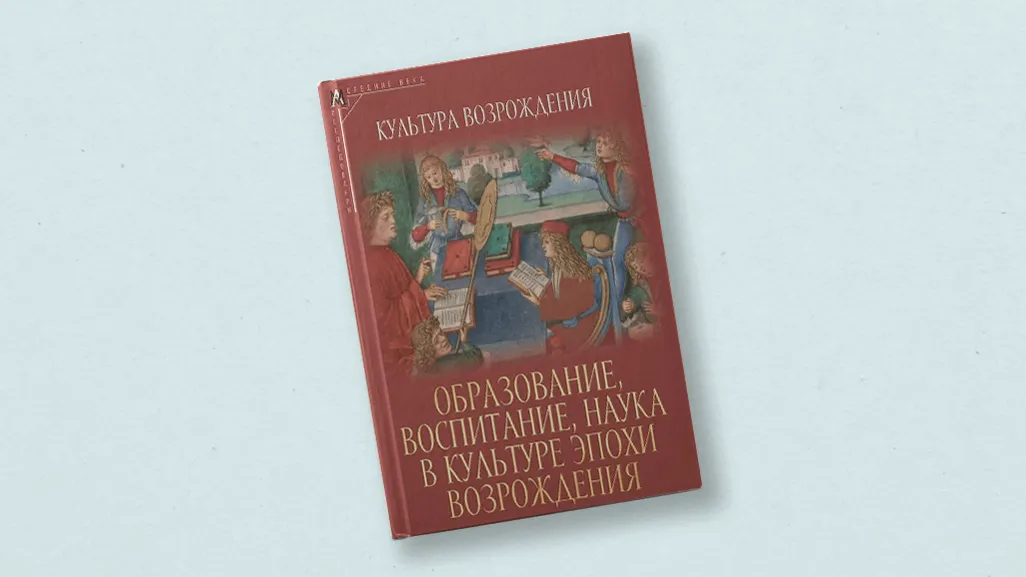
This text will be of interest to anyone interested in Renaissance culture, as well as the history of education and science. The Renaissance was an important period in the development of European culture, when significant progress occurred in the fields of art, science, and philosophy. This time is characterized by renewed interest in ancient culture, which contributed to the emergence of new ideas and approaches in education. Studying this period will help better understand the key changes in European society and their impact on the modern world.
The Renaissance is distinguished by its humanistic ideas, in which man and his mind occupy a central place in the philosophy of the leading thinkers of the time. Humanism had a significant influence on educational approaches and upbringing, as well as on the attitude towards knowledge. Although pedagogy as an independent science began to take shape later, many pedagogical concepts that emerged during the Renaissance remain relevant today. These ideas emphasize the importance of individual development and critical thinking, making them relevant to contemporary educational practices.
This collection presents the ideas, their authors, and practical implementations, which can be learned from the articles. The collection is based on the materials of conferences held by the Renaissance Culture Commission of the Scientific Council "History of World Culture" of the Russian Academy of Sciences in 2019 and 2020. Readers will be able to explore topics such as the civic education of Florentine youths, the influence of printing on the development of female education, the professional training of artists and architects in France and Italy, and the design of special rooms (studiolo) for intellectual pursuits by educated individuals. The collection will be of interest to anyone seeking a deeper understanding of the development of culture and education during the Renaissance.
The collection includes interesting documents from that era that have not previously been published in Russian. Among them are Erasmus of Rotterdam's instructions for teachers of rhetoric and grammar, a report by the chief proofreader of the German printing house, Christopher Walter, who criticizes the "pirated" editions of Martin Luther's works, as well as the memoirs of the Hungarian prince Pál Esterházy about his studies at a Jesuit gymnasium. These materials not only enrich our historical understanding of the period but also make a valuable contribution to the study of the pedagogy and literature of the time.

Explore our collection of materials to gain a deeper understanding of the topic. We offer relevant articles, research, and practical recommendations to help you improve your knowledge and skills. Don't miss the opportunity to learn more about current trends and best practices in your field.
Erasmus of Rotterdam: Biography and Pedagogical Ideas of the "Prince of Humanists"
Erasmus of Rotterdam, a prominent humanist and scholar of the 16th century, had a significant influence on the development of education and philosophy. His life and work were focused on the ideas of humanism, which emphasized the importance of man and his reason. Erasmus was born in 1466 in the Netherlands and became one of the most famous representatives of the humanist movement.
In his works, Erasmus advocated for educational reform, emphasizing the need to study classical languages and literature. He believed that education should promote critical thinking and moral qualities. His work, "In Praise of Folly," is a satirical analysis of society and shows the importance of recognizing human weaknesses.
Erasmus also emphasized the importance of moral education and ethical values in education. He advocated the idea that education should be accessible to all, which contributed to the dissemination of knowledge and cultural values. His pedagogical ideas are still relevant in modern education, emphasizing the importance of critical thinking and an ethical approach.
Thus, Erasmus remains a key figure in the history of pedagogy, and his ideas continue to inspire new generations of scholars and educators.
"Cases of Russian Universities. Issue 4, 2022–2023»

This material will be useful for both current and future managers in the field of higher This publication is intended for education professionals, educators involved in educational management, and anyone interested in current issues in higher education in Russia.
Since 2016, the Institute of Education has been publishing the "Cases of Russian Universities" series, dedicated to the problems and challenges of higher education in Russia, as well as methods for addressing them at various universities. The fourth issue of this series was published in 2024 and is available for free download on the HSE website. It includes eight case studies covering universities from various industries and regions of the country. This series of materials helps explore current issues in higher education and offers practical solutions, making it an important resource for education professionals.
The new collection examines key topics such as the implementation of a technological entrepreneurship ecosystem and the development of soft skills in engineering students. It also analyzes progress in research activities at creative universities, as well as strategies for attracting international students and exporting educational programs abroad. These aspects highlight the importance of integrating innovative approaches into the educational process and their impact on the international competitiveness of universities.
Cases can be a source of inspiration and valuable material for training future managers using the case method. To achieve this goal, each case description should be clearly structured and include sample questions that will help find solutions and stimulate group discussion. This approach promotes the development of critical thinking and analytical skills, which are key to successful management.
"From Teams to Nodes"
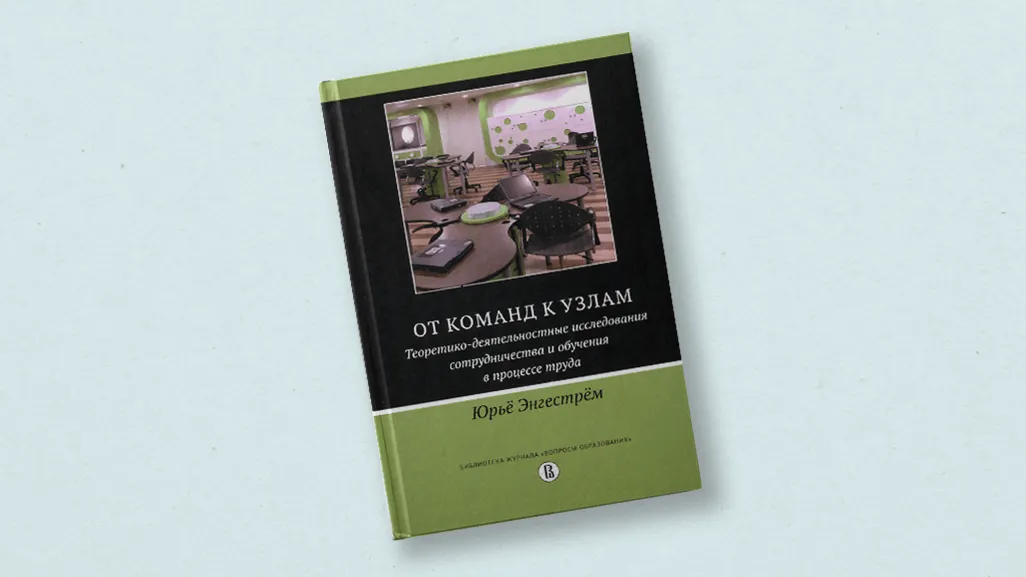
This text will be useful to researchers and practitioners in the field of adult education and organizational learning. It provides information and strategies that will help specialists improve the quality of educational programs and increase the effectiveness of training. A deeper understanding of the methods and approaches in this area contributes to the development of professional skills and the implementation of innovative solutions in practice.
This book is a collection of case studies devoted to corporate training and organizational development. The author, educator and professor Yrjö Engeström, who heads the Center for Research on Action, Development, and Learning at the University of Helsinki, deeply analyzes problematic situations faced by various organizations, such as schools, courts, clinics, engineering factories, television companies, and call centers. The focus is on the theory of expansive learning, which argues that it is through identifying and overcoming these problematic situations that organizations can achieve significant growth and development. The book offers valuable insights for training professionals and managers seeking to optimize processes and improve the effectiveness of their organizations.
Expansive learning becomes especially important in conditions where the traditional transfer of knowledge from experienced mentors to newcomers is ineffective. This phenomenon is typical of the modern world, where companies face unforeseen challenges and situations for which ready-made solutions do not exist. In such conditions, it is necessary not only to seek innovation but also to actively generate new knowledge. This requires practical training and the implementation of new forms of work organization that will help adapt to a rapidly changing environment.
The title of the book "From Teams to Nodes" reflects an important aspect of modern interaction in the field of intelligent products. The author understands a node as collaboration between producers and consumers, which allows the product to constantly adapt to user needs. This approach contributes to its long-term development, ensuring successful evolution and meeting market needs.
«Interactive Questioning Workshop»

The text will be Useful for anyone involved in teaching children and adults. It's important to understand that effective teaching requires a comprehensive approach, incorporating a variety of methods and strategies. This will not only help impart knowledge but also develop the skills necessary for successful learning. Teaching children and adults requires patience and creativity to adapt material to different levels of perception. The use of modern technology and interactive methods can significantly increase interest in learning and improve information absorption. The method of interactive questioning remains a rare phenomenon in educational practice, despite its roots in the ancient heuristic method of teaching. It has been developed over many centuries in the works of philosophers, psychologists, and educators. This method represents a unique approach to thinking in which a person constantly asks questions of themselves and others, focusing on the unclear and unknown. Incorporating interactive questioning into the educational process can significantly increase student engagement and deepen their understanding of the material being studied. This approach promotes the development of critical thinking and independent information search skills, making it relevant in modern education.
The International Laboratory of Interactive Questioning is actively developing and disseminating this practice. Vadim Karastelev, co-coordinator of the laboratory and associate professor in the Directorate of Educational Programs at Moscow State Pedagogical Univ., shared his knowledge of interactive questioning in an interview with Skillbox Media. Together with his colleagues, he has also published several books on this topic, emphasizing the importance and relevance of interactive questioning in the modern educational process.
In 2024, Vadim Karastelev and Vera Danilova, psychologist and scientific director of the G. P. Shchedrovitsky Institute for Development, published a manual entitled "Interactive Questioning Workshop." This publication is intended for anyone who seeks to master the art of asking the right questions and apply the method of interactive questioning in the learning process. This manual offers practical recommendations and techniques to help improve communication skills and enhance the effectiveness of the educational process.
The authors present 12 questioning techniques, referred to as "questioning paths," and explain how teachers, tutors, and trainers can effectively apply these methods. The book includes a guide to conducting online questioning sessions, an analysis of common problems and difficulties, such as participant resistance and passivity, and practical exercises for group work. The final part of the book is devoted to the methodology of interactive questioning and an overview of global practices, which allows readers to better understand and implement these techniques in their professional activities.

Read also:
Why don't students ask questions? This question often arises in the educational environment. In "Interactive Questioning," the author explores the reasons why students may avoid actively participating in discussions and not taking the initiative to ask questions. One of the main reasons is the fear of appearing incompetent or stupid in the eyes of peers and teachers. A lack of self-confidence or an inability to formulate their thoughts may also play a role.
Furthermore, students may not recognize the importance of questions as a tool for deepening their understanding of the material. In some cases, the educational atmosphere may not be supportive enough, which also discourages students from asking questions. To create a more interactive and open learning environment, it is necessary to encourage active participation and value any attempts by students to ask questions. This will help improve the learning process and increase student engagement.
"Mind Reading. How books change consciousness"

The text will be useful to anyone interested in the internal mechanisms of reading and thinking processes. Understanding these aspects can significantly improve information comprehension and analytical thinking skills. Learning how we read and process text helps develop critical thinking and improve cognitive abilities. This knowledge can be applied both in the academic environment and in everyday life, improving decision-making and understanding the world around us.
This new book by Veronika Reichl, a writer, illustrator, and lecturer, continues her previous work, "Im Schaum dieser Sprache: Hegel lesen" ("In the Foam of Language: Reading Hegel"). This book brings together stories based on interviews with various people who share their experiences reading Hegel, one of the central thinkers of Western philosophy. Reichl delves deeper into Hegel's influence on modern consciousness and offers readers a unique perspective on his ideas through the lens of personal stories and perceptions. This book will be a valuable resource for anyone interested in philosophy and its cultural influence. Published in Russian in 2024, "Mind Reading" is based on the principle of in-depth analysis. The author conducted nearly 50 interviews with men and women actively interested in philosophical literature: students, teachers, professors, and creative individuals. As a result of her research, she created engaging stories that combine documentary evidence and fiction. These stories demonstrate how reading thinkers such as Thomas Aquinas, Kant, Heidegger, Derrida, and Barthes can be a meaningful personal experience. Books by these philosophers open new horizons of self-knowledge, helping us better understand others and the world in which we live. Reading philosophy not only enriches the intellect but also deepens our emotional perception of life. The author carefully explores the inner experiences and reflections of her characters as they immerse themselves in philosophical ideas. This process is often associated with the mechanism of insight: moments when a person searches for an answer to a complex question or struggles to express their thought, and suddenly grasps the essence. Reading philosophical texts, as the characters' stories demonstrate, often turns into a struggle with the content or a dialogue with the author. However, having overcome these difficulties, the reader receives a generous reward in the form of insight and deep understanding.
"Team building doesn't work"

This material will be useful for company executives, HR, T&D, and L&D specialists, as well as trainers and organizers of team events. It will provide practical tips and recommendations to help develop your team, improve communication, and increase work efficiency. Regardless of your role, you will find information here to promote growth and strengthen team spirit.
This book reimagines team building as more than just a fun corporate event. Ivan Osipov, an expert in team building and team-building gaming technologies with 15 years of experience, asserts that team building has significant potential as a tool for employee development and solving business problems. Despite this, many companies fail to fully utilize its potential.
The author identifies three key areas in which properly organized team building contributes to successful business development. First, it diagnoses team problems, allowing for the identification and resolution of internal conflicts and misunderstandings. Second, team building serves as an effective tool for staff motivation, which contributes to increased productivity and employee engagement. Third, it helps solve communication and functional problems, such as strengthening ties between departments and relieving tension in stressful situations. Thus, a well-organized team building event not only improves team atmosphere but also directly impacts the company's overall results. Ivan Osipov offers an effective step-by-step algorithm for organizing team events aimed at achieving various goals. Depending on your preferences, you can choose either an external provider or utilize the resources of your in-house staff. The methodology is based on the author's practical experience and includes examples of successful events. The appendix provides checklists that will be a useful tool for organizers, providing a structured approach to planning and conducting events.

Read also:
Corporate training technologies and formats have undergone significant changes over the past ten years. Previously, training in companies was often conducted in a traditional format, including lectures and seminars. However, with the development of information technology and the internet, corporate training has become more flexible and accessible.
In recent years, online courses and webinars have become increasingly popular. Using distance learning platforms allows employees to complete training at their own time and pace. Furthermore, the introduction of virtual and augmented reality technologies opens up new possibilities for immersive learning, creating more engaging and interactive experiences.
Mobile learning apps are also becoming increasingly common, allowing employees to access materials on any device. This is especially relevant for companies with distributed structures or remote teams.
Data analytics plays a key role in modern corporate training. By analyzing learning outcomes, companies can evaluate the effectiveness of programs and adapt them to employee needs.
Thus, corporate training technologies and formats have evolved, emphasizing individualization, accessibility, and interactivity, which contributes to increased employee effectiveness and engagement.
"It's all decided. Life without free will"

The text will be useful for teachers, methodologists and anyone interested in brain functioning. This material provides valuable insights into the functioning of neural networks and their impact on learning and development.
Robert Sapolsky, a professor of biology, neurology, and neurosurgery at Stanford University, is an outstanding scientist and popularizer of science. His books on neurobiology and human behavior quickly gain popularity and become bestsellers. Sapolsky successfully combines scientific research with an accessible presentation of complex concepts, making his works interesting for both specialists and the general public.
The book "It's Decided" continues the author's many years of research into explaining human behavior from a naturalistic perspective. In his previous work, "The Biology of Good and Evil," Robert Sapolsky gradually introduces the reader to the concept of the absence of free will. In his new book, he consistently substantiates this idea, delving into the mechanisms that influence our actions and decisions. "Everything's Decided" offers readers a scientific analysis that will help them better understand how biological and environmental factors shape our behavior. Drawing on research from various fields, primarily neuroscience, the author demonstrates that our every action and decision is influenced by a host of factors beyond our control. These factors shape not only our behavior but also our perception of reality, highlighting the complexity of the interaction between the individual and the environment. Understanding these influences can help us better understand decision-making mechanisms and increase mindfulness in everyday life. While this book does not directly address the topics of education and learning, it provides valuable information for teachers and mentors. It raises important questions regarding the factors that influence a student's ability to solve problems at any given moment. Student academic success depends on a multitude of interrelated factors that should be considered in the educational process. Understanding these factors can help teachers better adapt their methods and approaches, thereby promoting more effective learning and achieving long-term results.
Despite the presence of scientific terminology and complex biological mechanisms, the book is easy and engaging to read. This is achieved thanks to the author's style and humor, masterfully conveyed by translator Galina Borodina in Russian. Readers will be able to immerse themselves in the world of science without complications, enjoying accessible presentation and fascinating examples.
Explore other materials:
- 13 books about the history of education in Russia: how our ancestors studied and taught
- Books about education: new releases of 2023
- 5 novels about the life and work of university professors
- 5 books about school teachers who found themselves in difficult situations
Profession Methodologist from scratch to PRO
You will improve your skills in developing curricula for online and offline courses. Master modern teaching practices, structure your experience, and become a more sought-after specialist.
Find out more