
Contents:
The adult training system, including the corporate sector, has faced serious challenges over the past two years. These changes have affected both the formats and the content of educational programs. Denis Konanchuk, Director of the Corporate Training Department at the Skolkovo School of Management, spoke about this in detail at the conference "More than Training. New Priorities in a Changing World," organized by SberUniversity. In the session "Learning Approaches: How Can EdTech Ensure the Effectiveness of Educational Programs?", he discussed how modern technologies can improve the quality and effectiveness of education in a constantly changing environment.
In this section, we will present the key points of the presentation. The speaker's key ideas and conclusions are essential for understanding the topic. The presentation highlights the significance of the issues discussed and offers new approaches to addressing them. Participants had the opportunity to gain a deeper understanding of the subject and ask questions, which facilitated active dialogue and exchange of opinions. The key points of the presentation may be useful for further study of the topic and the application of acquired knowledge in practice.
- What are the three big issues facing corporate training?
- How has the content of corporate training changed?
- Which skills have become top-priority?
How corporate training responded to crises
In the past two years, corporate training has faced three significant global crises, each of which brought its own unique challenges. These crises required companies to adapt and revise their approaches to employee training, making the training process more flexible and effective. It is important to take into account that in conditions of instability, organizations must be ready for change and actively implement new training methods in order to maintain a high level of qualification of their employees.
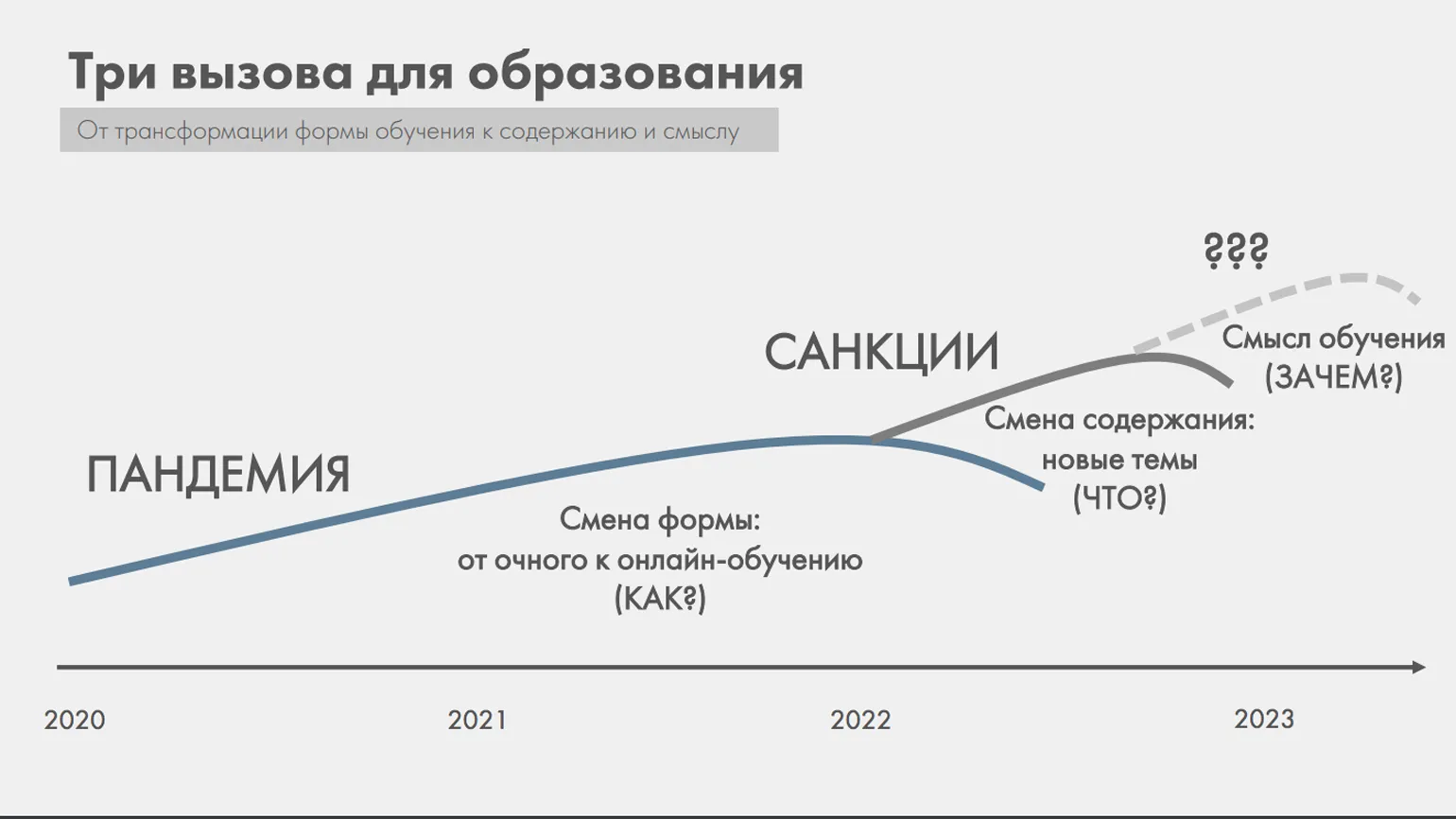
The pandemic was the first significant crisis in corporate training. It posed an important question for specialists: "How can training be effectively organized in this new environment?" This situation required the adaptation of traditional teaching methods and the implementation of innovative solutions to ensure the quality of the educational process. Specialists began actively using digital platforms and online courses, which opened up new opportunities for employee development.
Denis Konanchuk noted that this was an extremely interesting period, with all attention focused on EdTech. With the need to conduct training without in-person meetings, key questions regarding distance learning methods and technologies arose. This time became a catalyst for changes in educational approaches and knowledge transfer methods.
The second crisis, which began in February 2022, coincided with the introduction of sanctions and necessitated a revision of educational programs. In this changed reality, the focus began to shift to the question "What to teach?" As a result, many previously relevant educational topics have lost their relevance. According to the expert, finding an answer to this question quickly is impossible, which underscores the importance of adapting educational content to new conditions.
The question of what should be taught is more complex. Using modern technology, we can easily answer the question of how to implement training. We are all practical people, capable of adapting any program to the desired format. However, the problem arises of how to effectively accumulate new knowledge. This process requires time and effort, involving both practitioners and academics, and can take years. How can we overcome this challenge? This is the challenge we face today.
The third crisis was the partial mobilization of the fall. This phase provoked questions among many about the advisability of obtaining an education. People's planning horizons have significantly shortened, and they are experiencing difficulties in predicting their future. Under these conditions, as Denis explains, doubts arise about the necessity of education and whether it is worth investing time and money in it. People are thinking about the value education can bring in an uncertain situation and how it can help adapt to new realities.

Read also:
Digitalization of corporate training: myths and reality
In modern business, digitalization of corporate training is becoming an important element of the development strategy. However, there are many myths surrounding this process that hinder companies from effectively implementing new technologies.
One common misconception is that digitalization completely replaces traditional teaching methods. In fact, the integration of digital technologies allows for the creation of hybrid formats that provide deeper learning and a variety of approaches.
Another myth is that digital training is only suitable for large companies with big budgets. In fact, modern solutions are available to organizations of any size and can be tailored to specific needs.
Some argue that digitalization of training reduces interaction between employees. However, properly organized online programs can promote teamwork and the sharing of experience.
It is important to understand that digitalization of corporate training is not simply the implementation of new technologies, but a complex process that requires analyzing employee needs and adapting content. The reality is that the proper implementation of digital solutions can significantly increase training effectiveness, improve knowledge acquisition, and facilitate the growth of employee professional skills.
Thus, digitalization of corporate training is a powerful tool capable of transforming a company's approach to training. When used correctly, it opens up new opportunities for professional development and staff advancement.
How the Content of Corporate Training Has Changed
The content of education has evolved along with approaches to training. Denin Konanchuk analyzed the results of surveys of HR specialists at leading Russian companies conducted by Skolkovo over several years. The most recent study as part of the accelerator was conducted in the spring of 2022. Companies were classified into three categories based on the number of employees: 1,000 to 5,000, 5,000 to 25,000, and more than 25,000.
At first glance, the speaker said, the new data doesn't show anything outstanding.
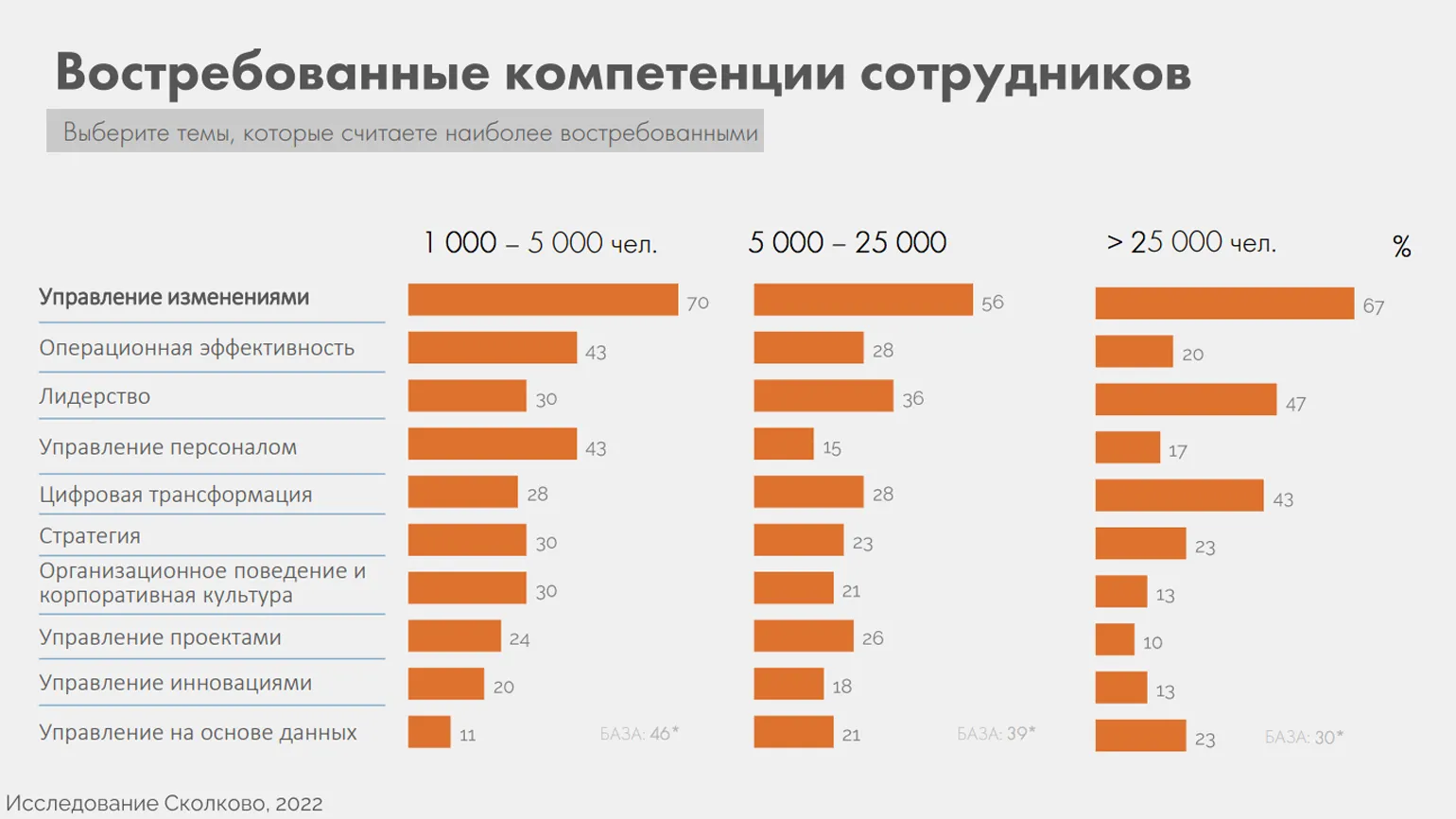
In 2022, five key competencies in demand in the labor market emerged. Change management took a leading position, as this area remains a priority for most companies. Operational efficiency also plays a key role, especially in the context of rapidly changing plans and strategies. However, in-depth interviews revealed that the titles of training topics do not always accurately reflect their essence. For example, in the area of leadership, the emphasis was previously on a universal approach to developing all managers as leaders. Currently, the emphasis has shifted to developing a specific leader profile that takes into account modern realities and challenges.
The situation with soft skills is similar. Soft skills, such as communication, teamwork, and critical thinking, are becoming increasingly important in today's work environment. Successful professionals must develop these skills to adapt to rapidly changing market demands. It's important to understand that soft skills not only facilitate personal growth but also enhance competitiveness in the labor market. Developing these skills helps not only in the professional sphere but also in everyday life.
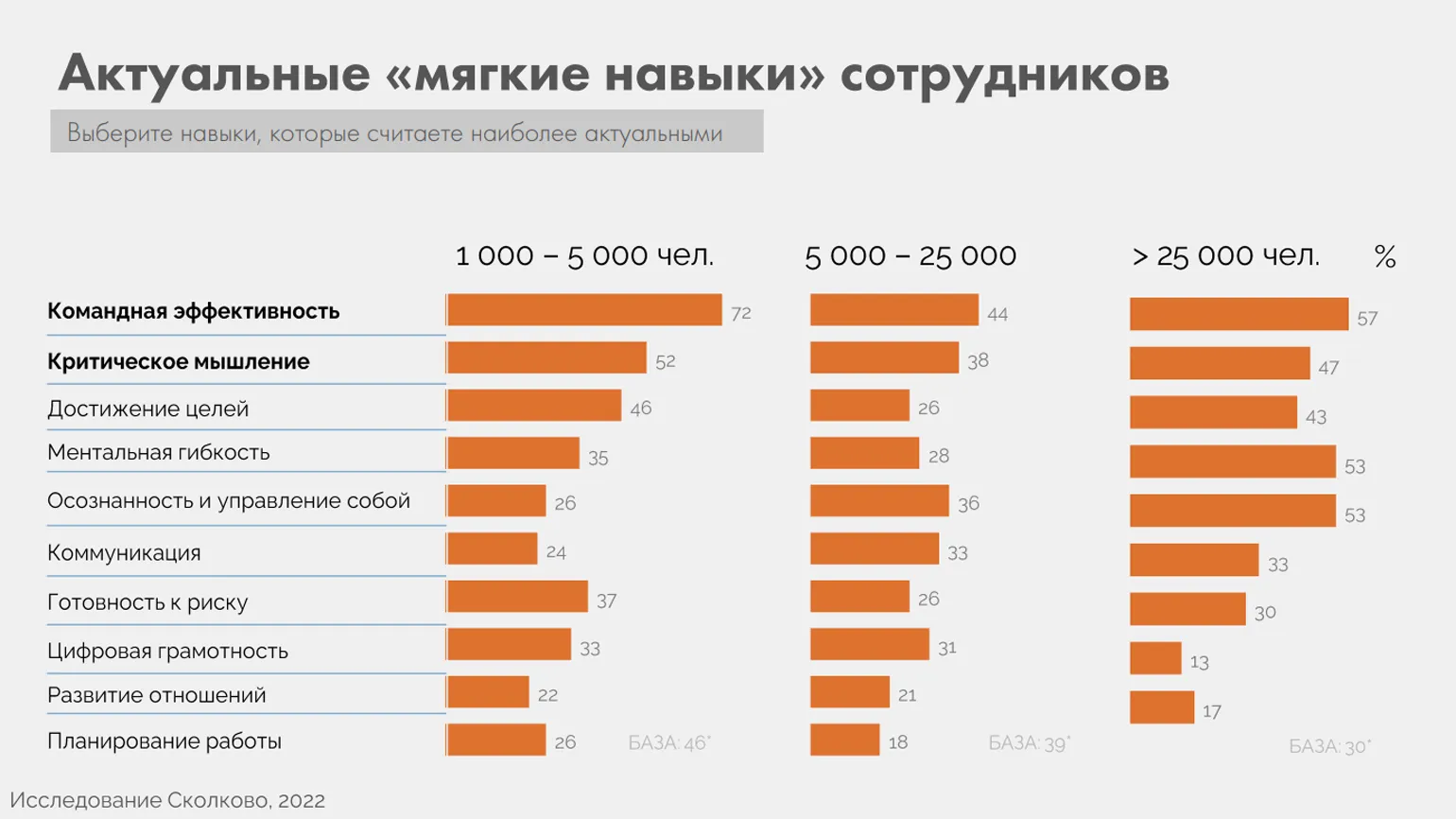
The skill "team effectiveness" remained relevant in 2020 and will remain important in 2022, but its content has undergone changes. While previously the emphasis was on managing remote teams and methods of remote motivation, now the emphasis has shifted to psychological resilience and the overall well-being of the team. Denis Konanchuk discussed this. It is important to note that to achieve high team effectiveness, it is necessary to consider not only the professional qualities of team members but also their emotional state, which allows for the creation of more cohesive and productive work groups.
Over the past two years, certain skills, such as critical thinking, have become especially relevant. Denis Konanchuk attributes this phenomenon to general fatigue from the enormous volume of information that people encounter daily. In a world of data overload, it's important to be able to analyze information, evaluate its reliability, and draw informed conclusions. Critical thinking is helpful not only in your personal life but also in your professional life, allowing you to make more informed decisions and avoid manipulation. Mental flexibility and mindfulness are essential skills today. Experts note that just five years ago, people were cautious about mental health, especially in the work context. The pandemic has changed people's attitudes toward this topic, facilitating more open discussion. Surveys indicate that interest in mental health continues to grow, and this topic is becoming increasingly relevant in society. Mindfulness and personal development are becoming increasingly relevant and widespread. The speaker noted how this approach is actively being integrated into everyday life and becoming the norm in society. It is interesting to observe how mindfulness influences our perception of the world and interactions with others. In today's world, it's important to pay attention to your inner state, which allows you to achieve harmony and improve your quality of life.
Please check out these additional resources:
- Research: How Corporate Training Has Changed and What's Next
- How the Continuing Professional Education and Corporate Training Market Has Adapted to the 2022 Shocks
- "Everything Burns, and They Burn": How to Train Employees During a Crisis