Contents:
What was wrong with regular training
It is important for employees of large corporations to adhere to certain rules to prevent professional burnout. How can you maintain composure in the face of constant mental stress and new challenges in teamwork? Evgenia Igolnikova, Head of Strategic Competency Development at Gazprom Neft, and her colleagues pondered these questions. Key recommendations include effective time management, regular breaks for recuperation, and mindfulness practices to help manage stress. Developing communication and teamwork skills is also crucial, as they contribute to a healthier and more supportive work environment. Maintaining a work-life balance also plays a key role in preventing burnout. Despite the complex title of her job, Evgenia Igolnikova fulfills an important task: researching and identifying the skills that will help employees remain relevant in the future. Having begun her research a couple of years ago, she and her team concluded that emotional intelligence is one of the key qualities for successful work in uncertain environments. Emotional intelligence enables one to better understand and manage one's emotions, as well as interact effectively with colleagues, which is becoming especially relevant in the changing world of work.
Professionals of the future must be able to recognize and manage their emotions. This key skill will enable them to effectively interact with colleagues and successfully handle complex projects. Emotional intelligence is becoming an important aspect of professional growth and contributes to the creation of a harmonious work environment. The ability to regulate one's emotions helps minimize conflicts and maintain productive collaboration within a team.
Emotional intelligence is a key competency for many professionals, including directors, managers, and project managers. Evgeniya Igolnikova emphasizes the importance of developing this ability for successful teamwork and achieving business goals. Emotional intelligence helps not only in managing one's own emotions but also in understanding the feelings of others, which contributes to the creation of an effective work environment and increased productivity.
How to develop emotional intelligence? Conventional trainings and courses often fail to produce the expected results. Igolnikova, who has previously conducted similar programs, notes: "After classes, participants say, 'It's wonderful that we have two hundred emotions. It's wonderful that emotions are more important than IQ. But what should we do with this information? What specific tools should we use?' In response, we advised, 'Pay attention to your emotions. Develop mindfulness.'"
To effectively develop emotional intelligence, it's important not only to be aware of your feelings but also to be able to regulate them. Self-reflection techniques, such as keeping an emotion journal or meditation, are helpful. These techniques help you better understand your reactions and strengthen emotional resilience. It's also important to interact with others, discuss your feelings, and learn empathy, which helps improve interpersonal relationships. By developing emotional intelligence, you not only enrich your life but also improve the quality of your interactions with others.
The problem was that participants in one- or two-day training sessions were only superficially familiar with the concepts of emotional intelligence and mindfulness. As a result, they weren't receiving meaningful training. Participants didn't have enough time to develop the habit of monitoring and managing their emotions. This underscores the importance of long-term programs that allow for a deeper dive into the topic and the development of essential skills. Emotional intelligence and mindfulness require practice and time to integrate into everyday life, which is impossible to achieve in such a short period.
There was a need for a training format that would combine information content, convenience, and duration. This approach would ensure deep learning and a comfortable environment for students, promoting more effective learning.
Why a Chatbot Solved the Problem Better
After a series of brainstorming sessions, it became clear that a chatbot was the most effective format. Igolnikova's senior colleague, Denis Fedotov, Head of Strategic, Cross-Functional, and Meta-Competency Development Programs at Gazprom Neft, notes: "We closely monitor global trends not only in education. In 2019, chatbots began to gain popularity. We thought: why not adapt this tool for educational purposes?" Chatbots can improve interaction with students by offering up-to-date information and support in real time.
The Department of Strategic Competencies, where Fedotov and Igolnikova work, already has successful experience implementing a chatbot, which promotes employee creativity. The previous program was held for a week. In a new project dedicated to emotional intelligence, training will last for up to a month. It includes three weeks of theoretical lessons combined with practical assignments to reinforce new skills, followed by a week dedicated entirely to practical training.
The key feature of our chatbot is that when communicating with it, it feels as if you're talking to a close friend. This makes the interaction more natural and comfortable, which is a key advantage of our service. Evgeniya Igolnikova emphasizes that this approach significantly improves the quality of communication and helps users obtain the information they need faster and easier.
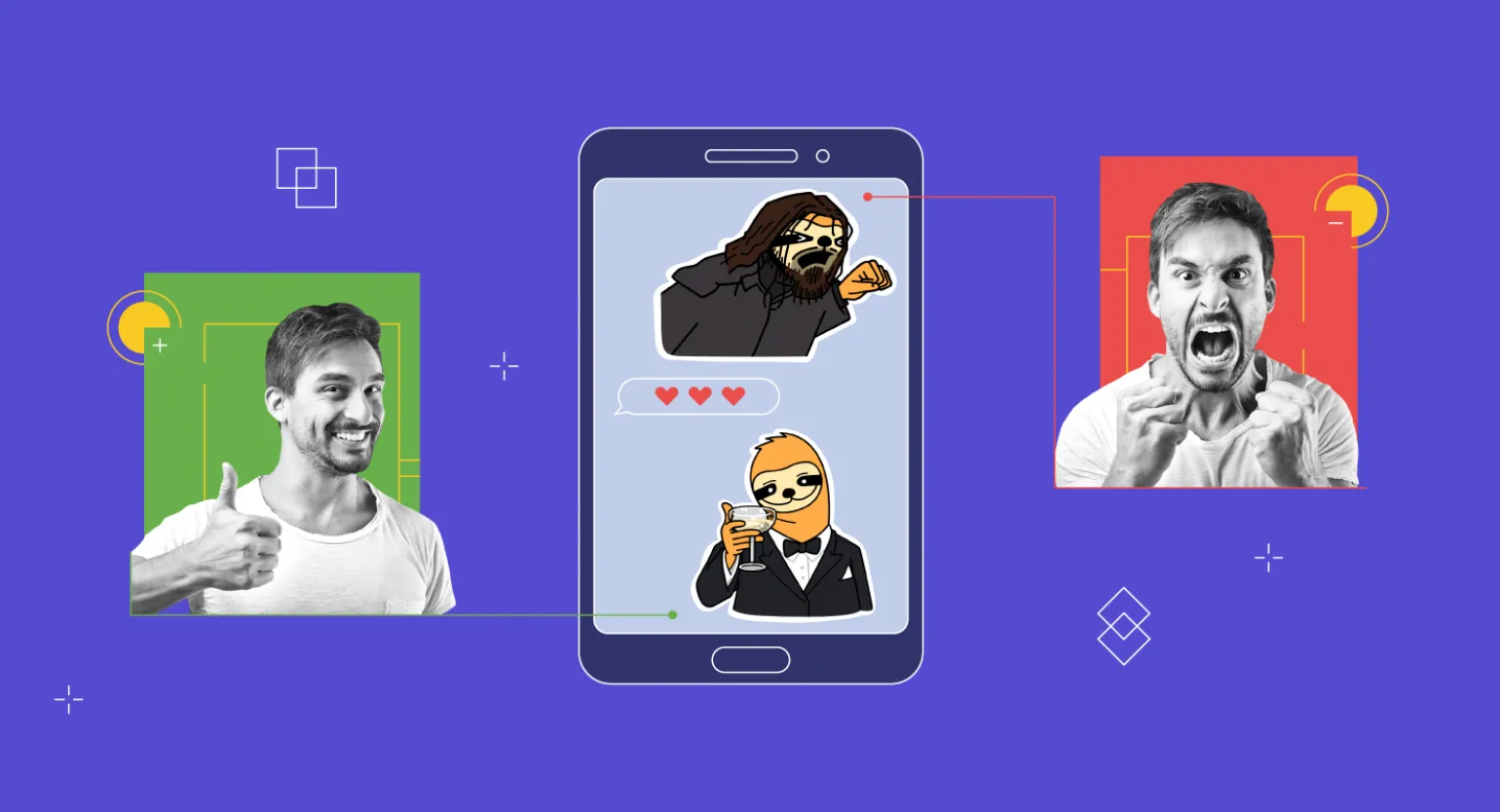
The friend named Leo, who will accompany the participant throughout the four weeks, was inspired by the works of artist Konstantin Brilevsky. The image of a sloth, symbolizing a relaxed attitude toward life, perfectly complements memes about Leonardo DiCaprio. Leo will not only be a faithful companion but also a source of motivation for the participants, helping them overcome challenges and achieve their goals.
The methodologists and I realized that the course is lengthy and it is important to maintain the participants' interest. Visual imagery plays a key role in this. I suggested that my colleagues brainstorm ways to visualize user progress. We discussed various ideas, such as "catching the wave" and other concepts. The result was the image of a sloth, which symbolizes the development of emotional intelligence. This sloth helps the participant grow and ultimately wins an Oscar for Best Actor, emphasizing the significance of achievement and progress in learning.
Evgenia Igolnikova is the Head of Strategic Competency Development at Gazprom Neft. In her role, she is responsible for the development and implementation of strategies aimed at improving the company's efficiency and competitiveness in the oil and gas industry. Her experience and professional skills contribute to the development of key competencies, allowing the company to adapt to market changes and implement innovative solutions.
Every day, Leo conducts short conversations with the user, inquiring about their thoughts and mood. He shares educational videos and shortreads, and then suggests relevant exercises for self-improvement. This approach helps the user not only improve their skills but also maintain a positive emotional state.
The chatbot's creators emphasize that their format complies with microlearning requirements. Each material or task takes no more than five minutes, making the training accessible and convenient. The entire course is designed to last no more than three hours per week, allowing for effective time management and the absorption of information without significant investment.
The course developers emphasize achieving four key goals: "name, capture, understand, and tame." Participants learn to identify their emotions, record them, and understand their sources. This process helps them effectively use emotions to their advantage, improving their personal and social lives. The course offers practical methods and techniques to help you gain a deeper understanding and manage your emotions, which promotes personal growth and the development of emotional intelligence.
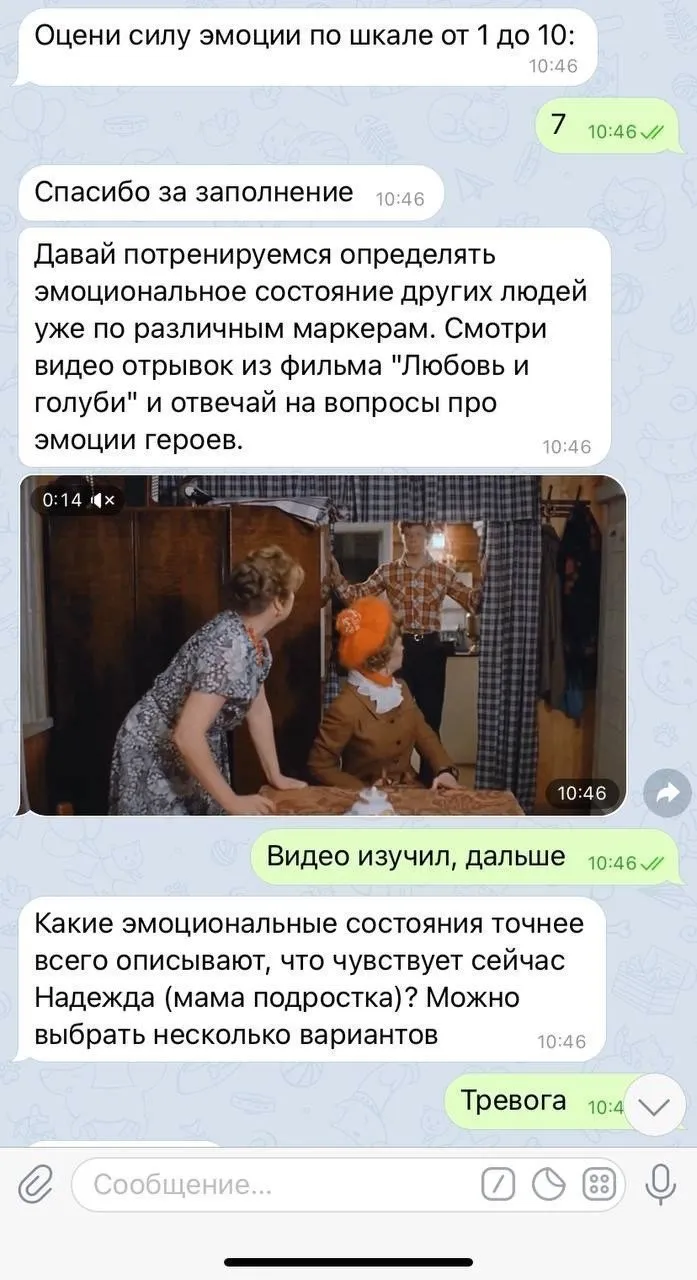
Each step of the course is a module, comprising theoretical and practical components. At the beginning of the course, users are provided with information on how emotions are formed in the brain, including the functions of the reptilian brain, the limbic system, and the neocortex. As a practical task, the chatbot helps develop emotion recognition skills through the analysis of images and fragments of musical works.
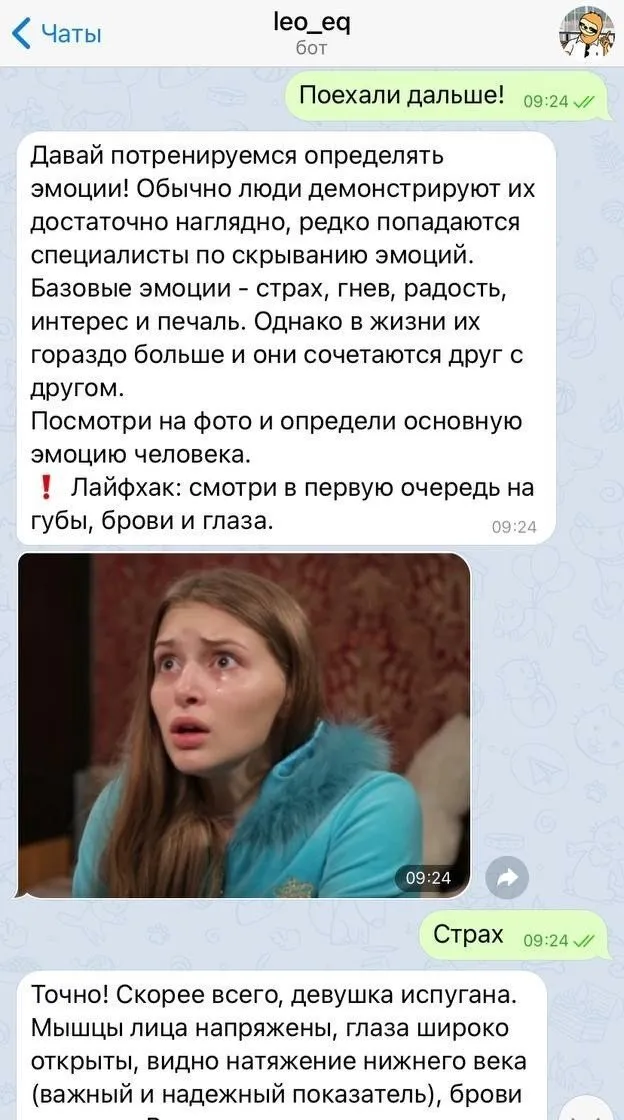
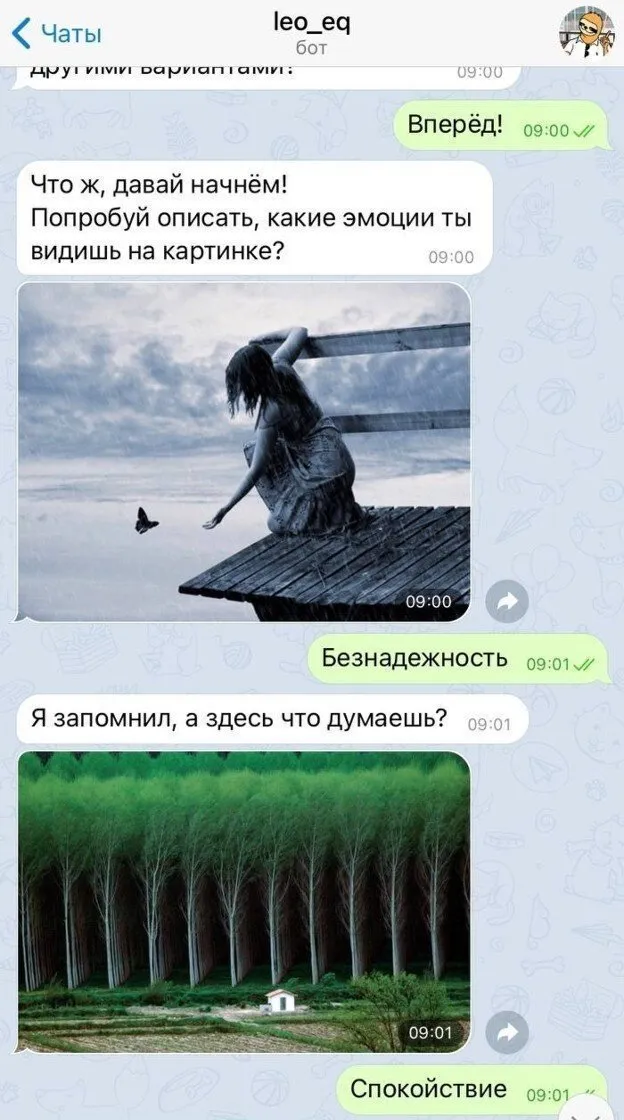
At more advanced levels, participants are asked to analyze specific situations based on theoretical knowledge. For example, they can choose which behavior will demonstrate empathy in different contexts, or identify the causes of certain emotions. The chatbot provides instant feedback. If the participant chooses the wrong answer, the bot explains why this decision is incorrect. In the case of the correct choice, it supports the user and provides additional explanations, which contributes to a deep understanding of the material, notes Evgeniya Igolnikova.
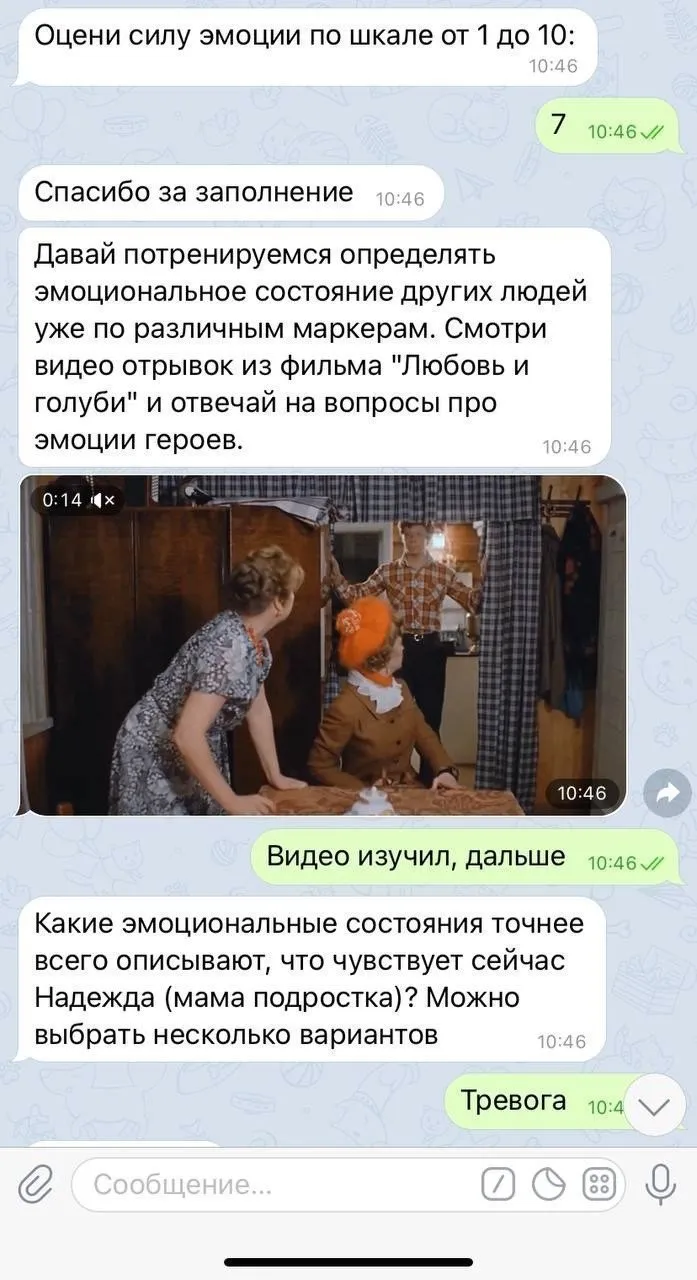
Emotional intelligence plays a key role in our lives, helping us better understand our feelings and reactions. It is important not only to be aware of emotions, but also to be able to control them, which helps improve our personal and professional life. It is recommended to start keeping a diary of emotions, which will become a useful tool for developing emotional intelligence. The chatbot will remind you to record your emotions every day by asking questions about the situations you've encountered, your feelings, and how you might have responded differently to these events. This practical exercise will help you understand your emotions more deeply and learn to manage them better.
The chatbot accumulates a wealth of data, which it then shares with users to facilitate the analysis of this information. This helps ask important questions: "Why do I act the way I do? What do I want to change? How do I want to respond? What tools or strategies can help me?" All of these aspects are aimed at achieving success, happiness, and increased efficiency, as Igolnikova explains. Interestingly, even negative emotions, such as anger, can be used constructively. For example, anger can become an incentive to achieve a budget or solve other problems.
The training program includes not only interaction with the chatbot but also two synchronous meetings with an expert on the webinar platform. During webinars, the bot provides participants with homework assignments, which are then reviewed by Oksana Nechaeva, a certified emotional intelligence trainer. She provides individualized feedback to participants using the chatbot for easy communication. This approach ensures a deep understanding of the material and promotes the development of emotional intelligence skills.
Course participants have the opportunity to share their problems, analyze them, and receive expert interpretation. The course includes two synchronous meetings with the expert on the webinar platform. During the webinars, participants summarize the program, discuss additional questions, and exchange opinions in real time. This allows you to deepen your understanding of the material and receive useful recommendations for solving current problems.
How the chatbot was created
Emotional intelligence is not about a constant state of joy, but about the ability to consciously choose emotions in different situations. It includes the ability to control your reactions, avoid outbursts of anger and not withdraw into yourself. Our project aims to teach users these important skills, which will help them respond more effectively to life's challenges. Developing emotional intelligence improves interpersonal relationships and enhances quality of life.
The chatbot was developed in a relatively short period of time: work on the project began in November 2019, and training for the first group of participants began in May 2020. This process allowed us to quickly implement innovative solutions and provide users with effective interaction tools.
The project involved experts in emotional intelligence, instructional designers, programmers, and an artist. The majority of the time was spent developing the concept. After successfully formulating it, the team began writing scripts, creating theoretical modules, and developing simulators. A chatbot for Telegram was also developed, which serves as an additional tool for user interaction and training.
Telegram was chosen as the native communication platform, as participants do not need to install additional apps or remember passwords. The Telegram bot allows for personalized interactions: it addresses users by name, takes their time zone into account, and automatically tracks task completion. This makes communication more convenient and efficient, which is especially important in today's world, where time and simplicity are at a premium.
When creating scenarios, specialists emphasize the need to maintain intrigue throughout the learning process. "It's important to keep users engaged, maintain a rhythm, avoid a sense of monotony, and constantly introduce new elements," notes Igolnikova. Denis Fedotov highlights the chatbot as an effective tool that provides complete immersion in the topic being studied, which facilitates deeper learning.
Of course, I'm happy to help with text editing. Please provide the text you wish to change.
The decision to abandon traditional webinars, expert interactions, and training sessions in favor of creating a full-fledged digital ecosystem around the user is an important step. This allows for deeper interaction and a personalized approach to learning and development. A digital ecosystem creates the conditions for more effective information absorption and also offers access to a variety of resources and tools that facilitate self-development. This approach not only optimizes the learning process but also makes it more accessible and convenient for each user.
Denis Fedotov is the Head of Strategic, Cross-Functional, and Meta-Competency Development Programs at Gazprom Neft. His responsibilities include developing and implementing strategies for developing key competencies that contribute to improving the company's performance and adapting to market changes. Under his leadership, innovative approaches and best practices are implemented, aimed at developing cross-functional collaboration and creating sustainable competitive advantages.
Communication with the bot, shortreads, videos, and quizzes create a rich information environment for users interested in learning. Fedotov, who completed the pilot training, notes that interacting with Leo felt like communicating not with a soulless machine, but with a living character who engenders a sense of responsibility. For example, when Leo reminds users to fill out an emotional diary, and they put it off until later, it creates discomfort. The user begins to realize that they have not fulfilled the promise made to "the person," which emphasizes the importance of personal responsibility in the learning process. This approach makes learning more emotional and engaging, promoting deep learning.
The Result
The new product exceeded the team's expectations. From April 2020 to April 2021, 282 people took the course, and almost 90% of them completed it. Participants rated the course satisfaction at 4.8 out of 5, and the relevance of the knowledge gained at 9.3 out of 10. About 70% of users are willing to recommend the course to others. The course scored 8 out of 10 in mindfulness and self-management, and 7 out of 10 in improving interaction skills. Employees who completed the Leo course also report positive changes, confirming the program's effectiveness. Many course participants continue to develop their skills, for example, by continuing to keep an emotional diary. The course creators are often asked about the possibility of continuing it. This underscores the importance of the knowledge gained and the participants' desire to deepen their understanding and practice. The Leo development team presented their chatbot at three awards, demonstrating innovative solutions in the field of artificial intelligence and communication automation. The Leo chatbot offers effective tools for interacting with users and optimizing business processes, making it attractive to companies seeking to improve customer service. Participation in awards highlights the high quality and uniqueness of the product, as well as its relevance to modern market requirements. We entered the top three at one prestigious awards and won two others. WOW! HR is an international business award, and our victory in the special "Psychology and Self-Awareness" category at EdCrunch was a pleasant surprise.
Denis Fedotov heads programs aimed at developing strategic, cross-functional, and meta-competencies at Gazprom Neft. In his role, he is responsible for implementing innovative approaches and effective practices that facilitate the company's growth and development. Under his leadership, projects are implemented that help strengthen Gazprom Neft's competitive position in the market, as well as enhance employee skills and improve collaboration between various departments. Denis Fedotov actively works to create and maintain a culture of continuous learning and adaptation to changes in the industry.
Following his presentations at the awards, Fedotov noted that many viewers expressed interest in the "Leo" project. They asked questions about accessing it, purchasing Leo merchandise, and downloading stickers for Telegram. Currently, Leo is available exclusively to Gazprom Neft employees.