
Contents:
- Where and in what status do online course developers work?
- Developers have to be generalists.
- The typical functionality of developers is slide courses, and they are created in designers.
- Learning developers are learning themselves, but they want more.
- How much do online course developers earn and are they happy with their careers?
Community Digital Learning conducted its first census of Russian online learning developers, marking an important step in its market research. Participants answered 69 survey questions, and the results were presented at an event on September 20th. Pavel Bezyaev, community leader, and Vladimir Kazakov, leading distance learning specialist at Raiffeisenbank, spoke. This study provides a better understanding of the current state and trends in online education, as well as identifies key skills and requirements for specialists.
The survey included 150 participants representing various fields of online education. The study focused primarily on the corporate segment and B2B providers, but access was also open to specialists from the B2C sector. However, an analysis of the questions and answers revealed that the majority of respondents came from the corporate learning industry.
The term "online learning developer" was not clearly defined in the survey, allowing various specialists, including methodologists and instructional designers, to identify themselves as falling into this category. The name of the function does not play a key role, as the professional community lacks a unified approach to both the terminology and the content of this role. This creates difficulties in understanding and assessing the professional competencies of online learning developers, which in turn can affect the quality of educational programs and their perception by participants. To develop effectively in this field, it is important to establish clear criteria and standards that will help define the skills and knowledge necessary for successful work in the field of online education.
The survey results, although based on a small sample, can be scaled, as they coincide with data from other studies. We analyzed the census results and highlighted the main aspects that are of significant importance.
Where and in what status do online course developers work?
According to the survey results, the majority of participants live in large cities. 56% of respondents noted that they live in Moscow and St. Petersburg. Another 20% of respondents live in cities with a population of over a million. Meanwhile, only 18% of survey participants live in towns with populations of less than a million, including small towns. This indicates a concentration of population in large urban centers, which may impact social and economic conditions.
These research data can be compared with the results of other surveys. For example, the results of a survey by Equio show that most regional companies located outside of large cities practically do not use learning management systems (LMS) and do not automate training processes. This may indicate that such companies are not prepared to invest in hiring qualified specialists.
According to the survey results, 65% of participants are full-time employees, demonstrating the stability of traditional employment. Freelancers make up only 6% of the total number of respondents, underscoring the low popularity of this form of employment among respondents. Furthermore, 24% of respondents combine several types of work, accepting private orders in addition to their main activities. This indicates a growing trend towards a variety of employment forms and the desire of professionals for additional sources of income.
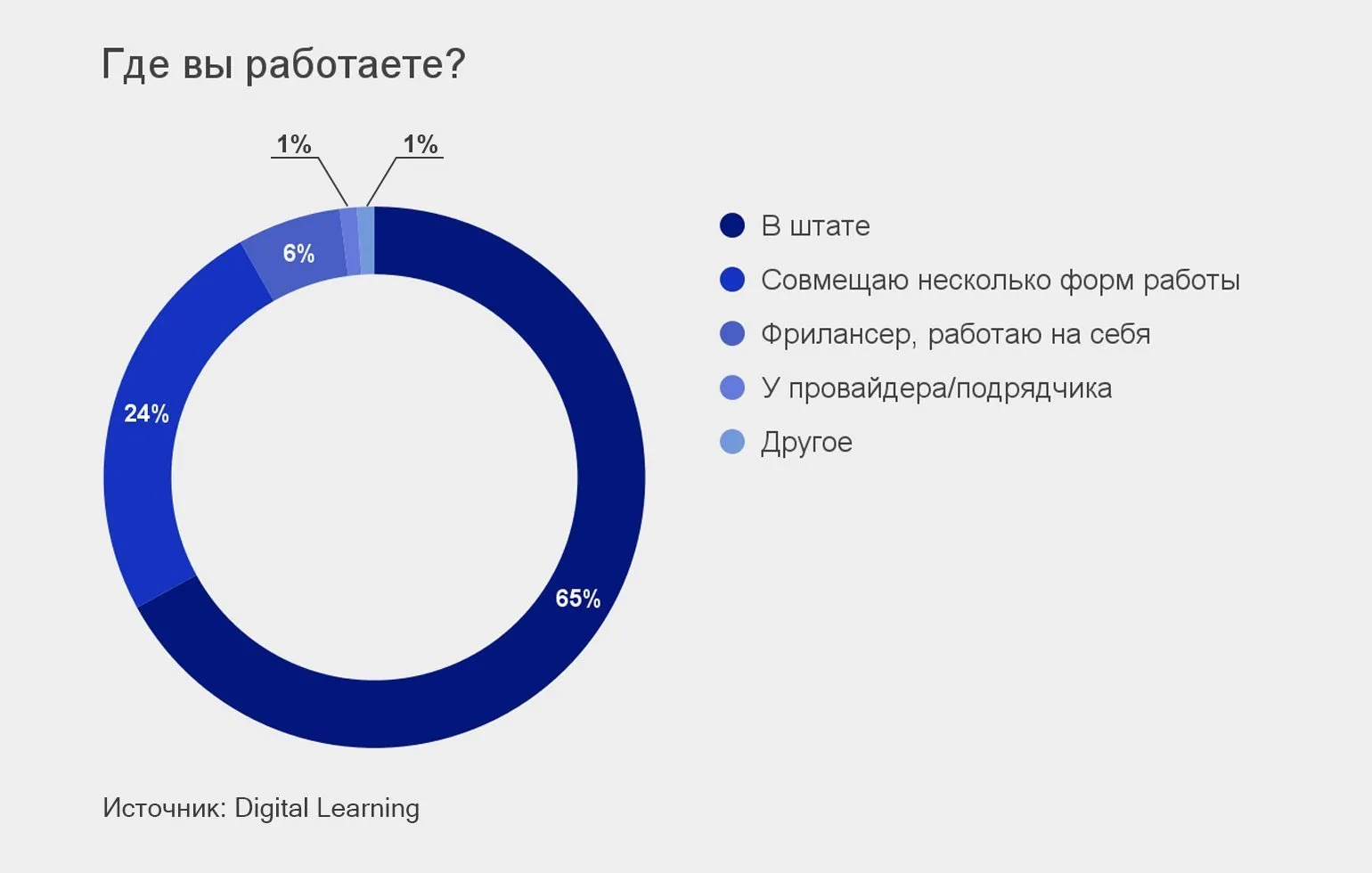
Freelancers often choose self-employment, which This is due to the simplified tax system and low tax rate. This also reflects market prices for online course developers. Self-employed professionals can earn up to 2 million rubles per year, after which they must register as individual entrepreneurs. This situation highlights the importance of properly assessing the cost of online education and course development services.
According to the survey, 5% of respondents work without official registration, concealing their income. However, only 3% of survey participants are registered as individual entrepreneurs.
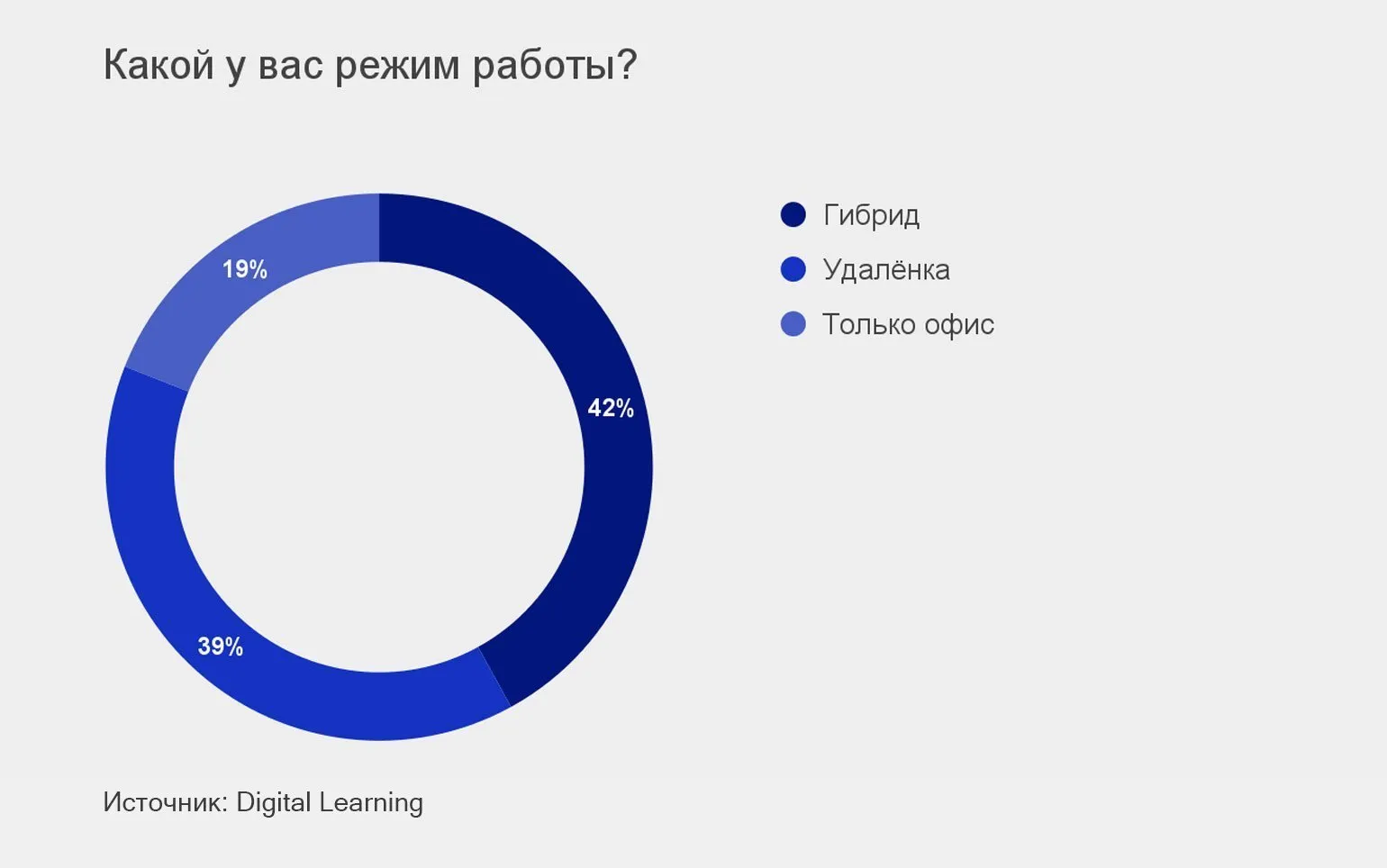
The number of employees working in a hybrid format, that is, combining remote work and office hours, is almost equal to the number of those who work entirely remotely. This indicates the growing popularity of hybrid work models in modern companies.
According to the survey, 40% of workers believe that the standard eight hours there is enough work to complete all its tasks. However, almost the same number of respondents (38%) face the need to stay late after work hours, and 12% of employees regularly work overtime.

Read also:
Creating a corporate course under an urgent deadline may seem like a daunting task, but with the right approach it is quite Feasible. First, define the key goals and target audience of your course. A clear understanding of what you want to convey will help you focus on the core topics and avoid unnecessary details.
Then, create a course plan, identifying the main modules and topics to be covered. Make sure the structure is logical and consistent. Use existing materials, if available, to reduce development time. These could be presentations, videos, or even text documents that can be adapted to your needs.
Choosing the right format for your course is also important. Depending on the audience and content, this could be a video lecture, an interactive webinar, or a text-based course. Use online platforms to quickly assemble and publish content.
Don't forget about testing and feedback. Even if time is tight, try to test the course on a small group of users to identify potential issues and make adjustments.
Finally, after completing the course, collect feedback and analyze the results. This will help you not only improve the current course but also prepare for the creation of future programs. Creating a corporate course under a tight deadline requires focus and organization, but with the right plan, you can achieve your desired results.
Developers Have to Be Generalists
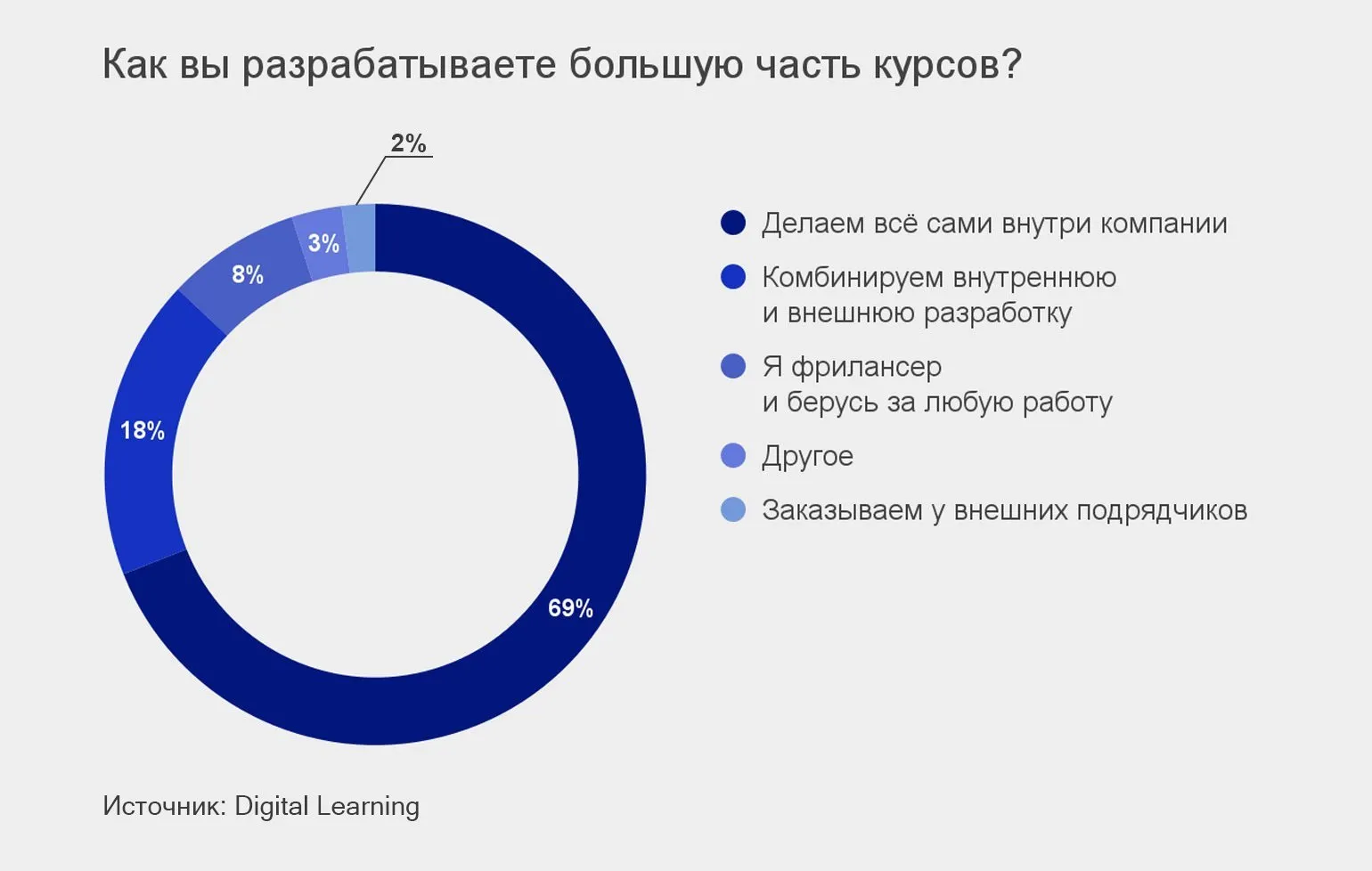
Most survey respondents organize their own internal training at their companies, refusing to use third-party contractors. They prefer to develop training programs and materials in-house, which allows them to better tailor training to the specifics of their business and the needs of their employees. This approach promotes deep involvement of employees in the learning process and increases its effectiveness.
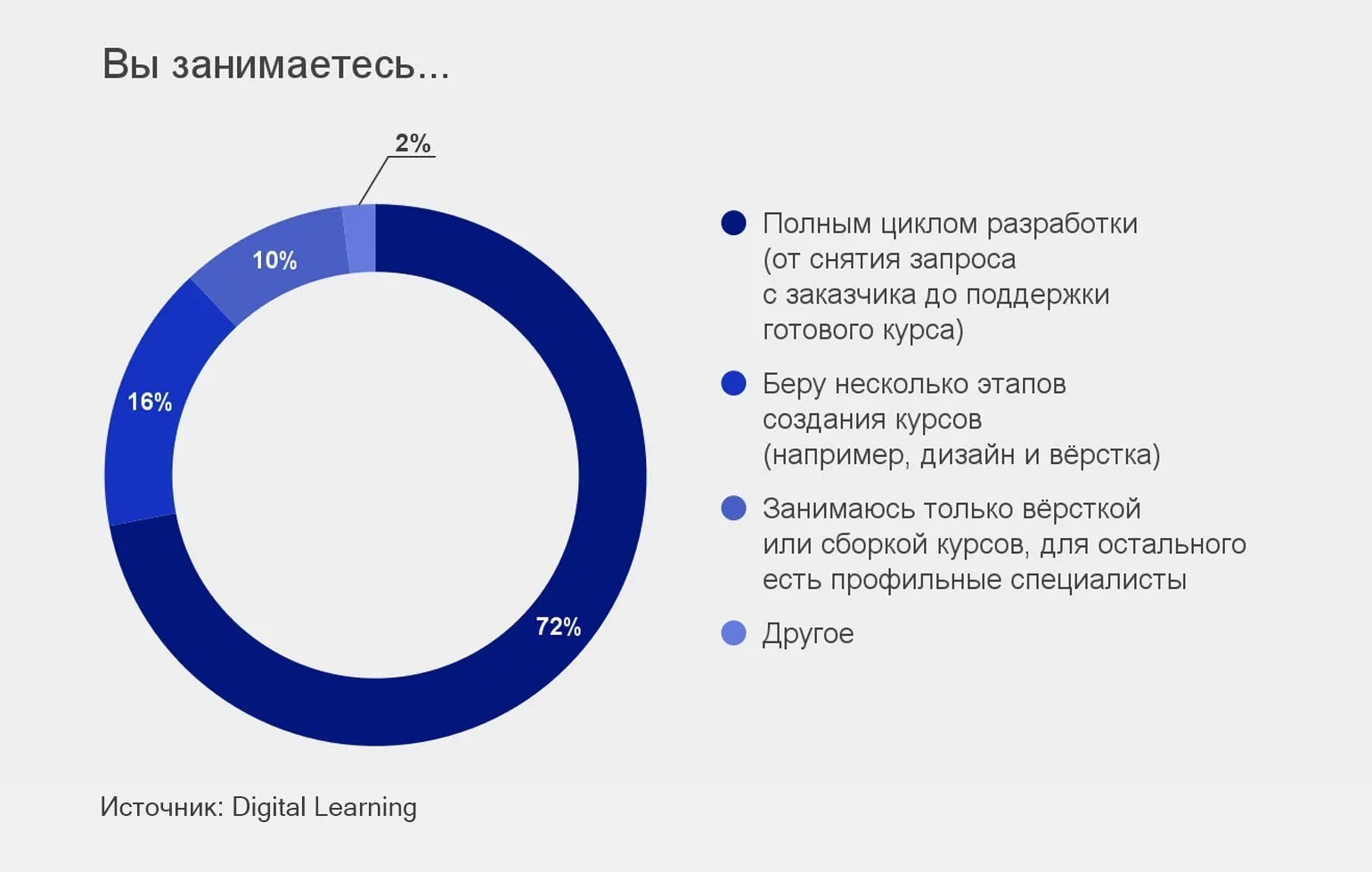
The workload of developers is characterized by an average level. They most often work on two or three projects simultaneously, although some respondents manage up to four. It's rare for developers to manage only one or two projects, and working on more than four is exceptional. Most specialists are involved in the full course development cycle, from client interaction to support of the finished product. Only 10% of respondents said that they are engaged exclusively in the assembly of courses.
The need to be a generalist is often due to the fact that 42% of respondents work in small teams of just two people. In such settings, each team member must possess a variety of skills and be able to perform a variety of tasks. This allows for the most efficient use of resources and the ability to adapt to changing project requirements. Generalists become key players in small teams, contributing to their success and productivity.
Apparently, many are satisfied with the current state of affairs. About 35% of participants prefer to focus on developing individual stages of the process, while 36% are willing to take on the entire training cycle. This indicates an even distribution of interests and approaches in development, which can facilitate more effective collaboration and streamlined workflows.
Many online learning developers take on additional responsibilities in addition to their main job. They typically administer the learning portal, test courses, and edit learning materials. In addition, developers may participate in the preparation of video content and the creation of graphic elements. These tasks require not only technical knowledge but also a creative approach, which makes the course development process more comprehensive and multifaceted.
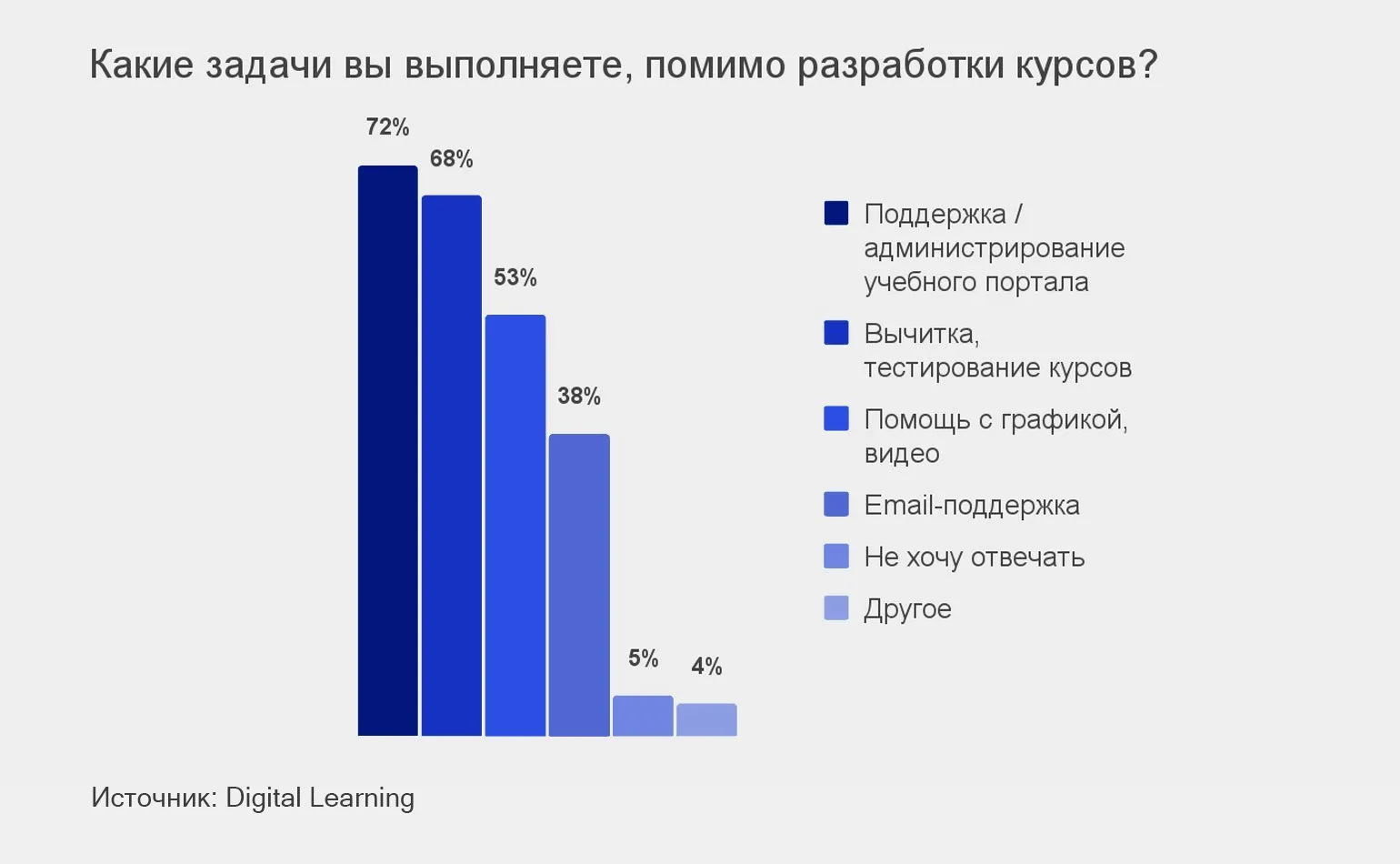
Universality is a common practice Among Russian companies, as noted by Pavel Bezyaev, leader of the Digital Learning community. It often happens that the administrator of a training portal has course development skills, or a T&D specialist independently manages the portal. When hiring a specialist for a single position, companies strive to assign them additional responsibilities. This not only improves efficiency but also reduces training and development costs. Vladimir Kazakov, Leading Distance Learning Specialist at Raiffeisenbank, noted that the current situation points to uncertainty in the role of online training specialists. Many companies don't always understand exactly what they are looking for. Job postings on major job search platforms often require a broad range of skills from training developers, which is inconsistent with reality. As a rule, new employees focus exclusively on tasks they are familiar with. This indicates a lack of specialization in internal training, as the expert emphasizes. It's important for companies to clearly define candidate requirements to improve the quality of online learning and enhance the efficiency of educational processes.
This trend, observed in the spring of 2022, is confirmed by data from Equio. According to the survey, 77% of participants noted that their employees are required to perform a variety of tasks, including developing training materials. This demonstrates the need for universal skills in specialists, which are becoming increasingly important in the modern labor market.
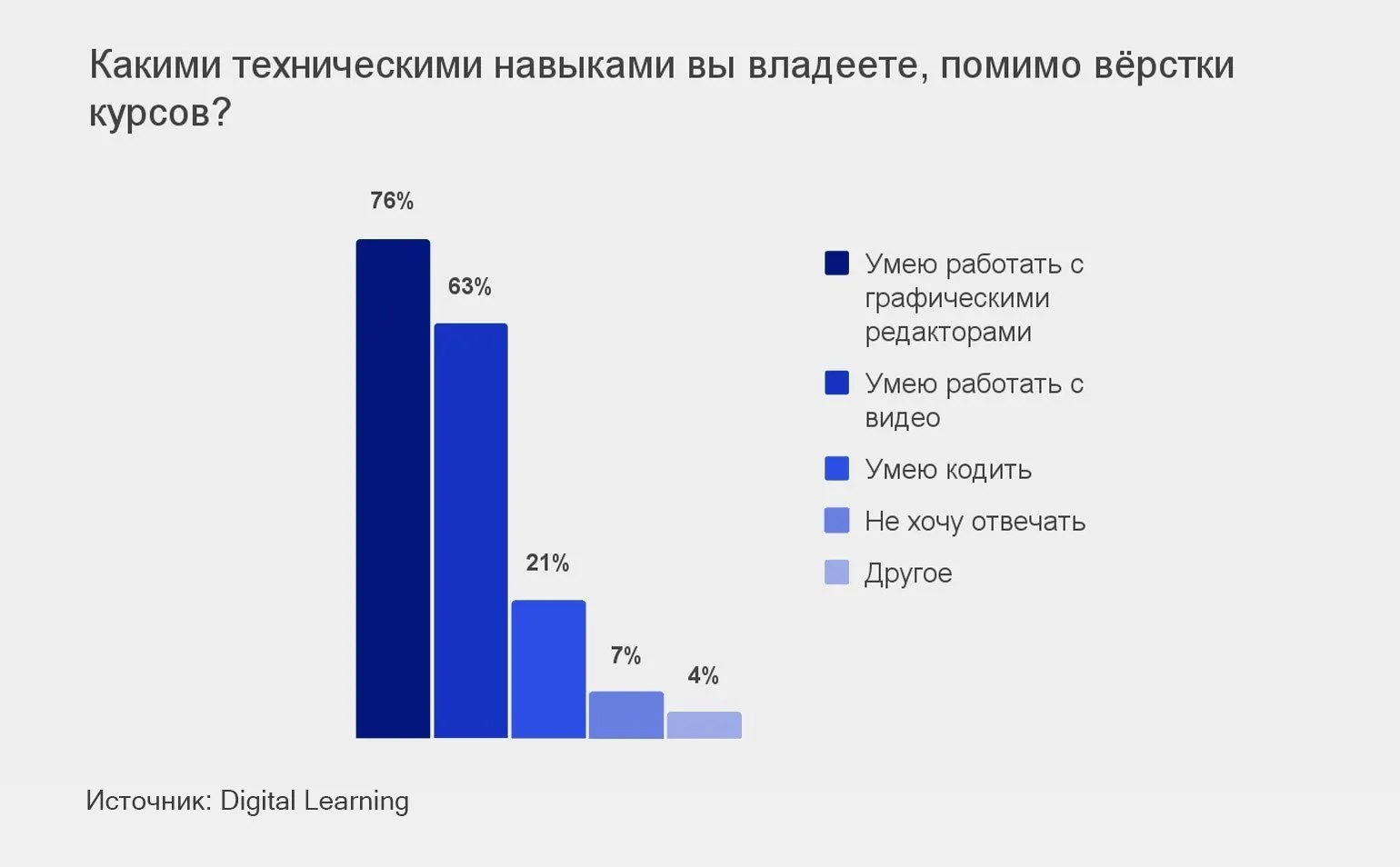
Developers demonstrate a wide range of professional skills. According to the survey, 76% have experience with graphic editors, highlighting their ability to create visually appealing content. 63% of developers have video skills, allowing them to effectively combine various media formats. Furthermore, 21% of respondents are proficient in programming, opening up additional opportunities for project development and optimization.
According to the study, 29% of respondents are interested in creating graphic content, while more than one-third of respondents expressed a desire to master the skills programming.
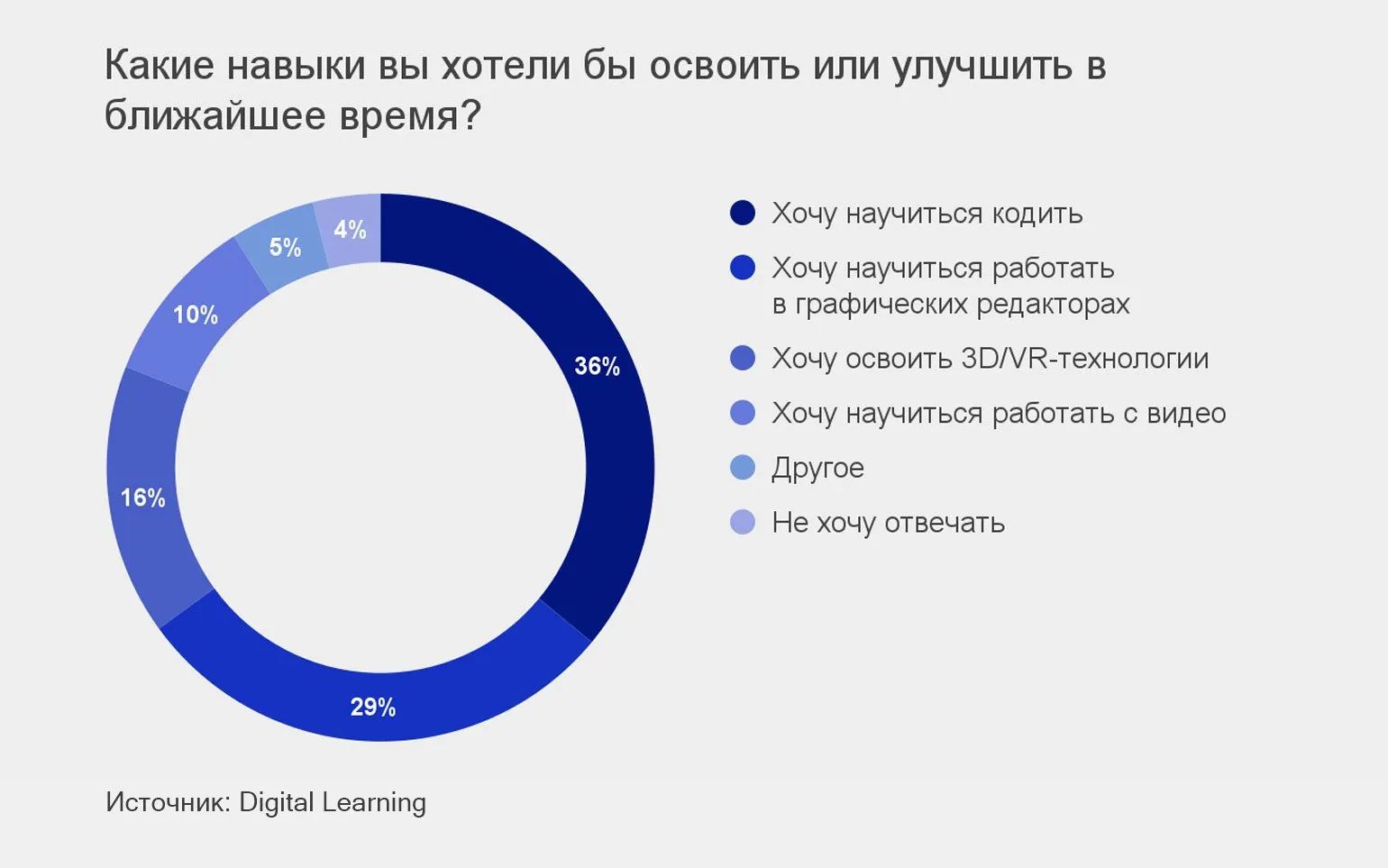
The organizers of the study showed particular interest in programming skills. Many corporate training experts believe these skills will become essential in the future, as Pavel Bezyaev noted. However, the survey results show that this is still a long way off, and only a small percentage of people truly understand how learning occurs outside of course-based methodology, Vladimir Kazakov added. According to the expert, there is a significant gap in training, as professionals should more often inquire about the experience of colleagues in other fields. However, the desire of survey participants to learn programming is most likely not related to this, but rather to the hope of a salary increase. This underscores the importance of adapting skills in a rapidly changing labor market, where programming is becoming increasingly in demand. Mastering new technologies and skills can not only open up new career prospects but also significantly increase the income of specialists.

Read also:
Creating effective corporate training requires not only knowledge of pedagogy and methodology, but also other, less obvious, skills. The first essential skill is the ability to analyze the needs of employees and the company as a whole. Understanding the knowledge and skills needed to achieve business goals allows you to create targeted training programs.
The second skill is adaptability. Corporate training must be flexible and respond quickly to changes in the business environment. This includes updating content and training methods in line with new technologies and trends.
The third, less obvious skill is cross-functional collaboration. Creating effective training programs requires interaction with various departments, so it is important to be able to work in a team and take into account the opinions of different specialists.
The fourth skill is the ability to use technological tools. Modern training methods increasingly rely on digital platforms, so knowledge of technologies such as LMS (Learning Management System) or e-learning is becoming essential.
The fifth skill is critical thinking. The ability to analyze information and select the most effective training methods allows you to create high-quality content that promotes employee growth.
Finally, the sixth skill is the ability to evaluate training results. This not only allows you to determine the effectiveness of programs but also helps in further improving training approaches.
These six skills will help you create an effective corporate training system that promotes employee development and the achievement of the company's strategic goals.
A typical feature of developers is slide-based courses, and they are created in designers.
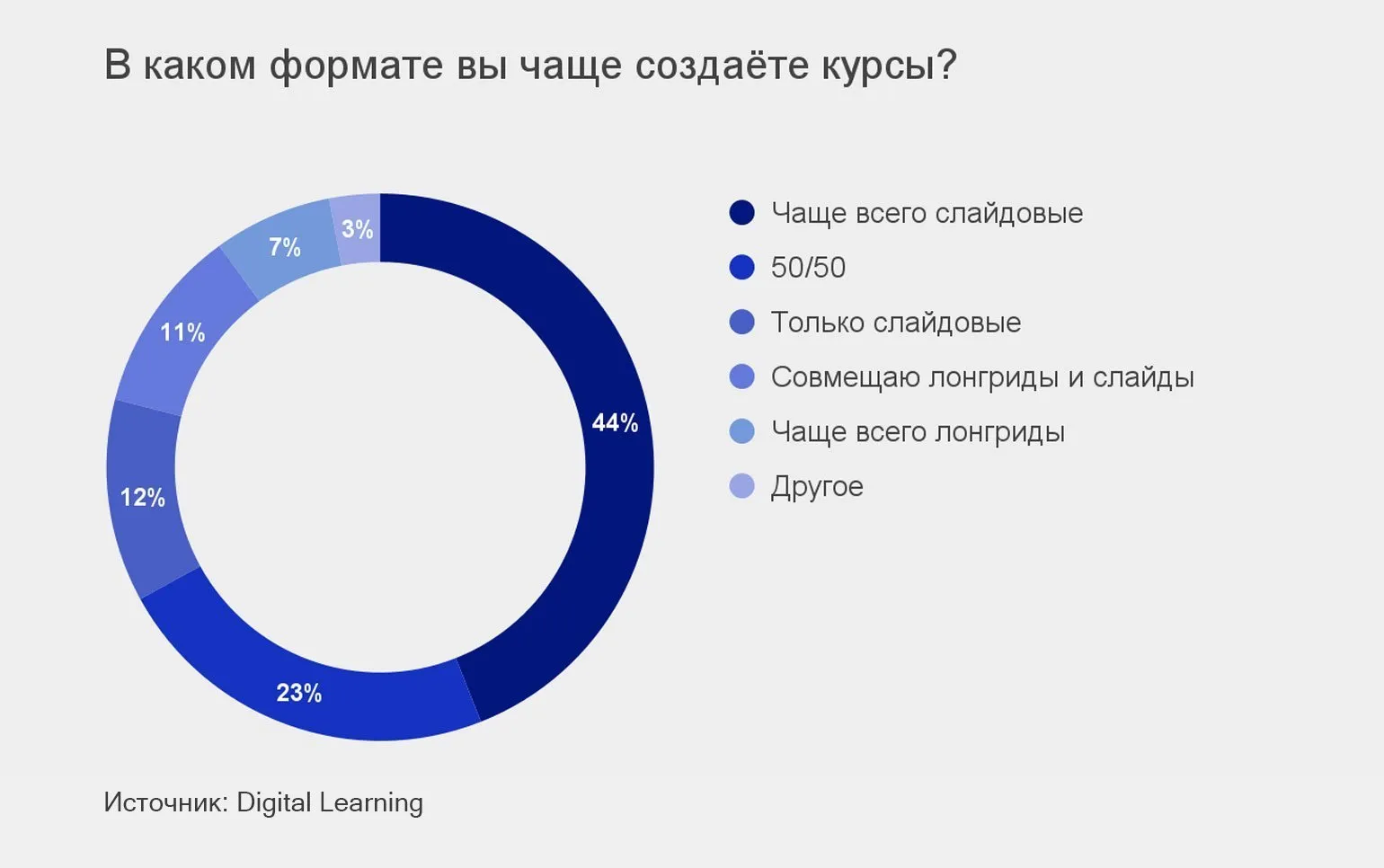
Despite active discussions around virtual reality and other modern technologies, traditional slide-based courses continue to be the most popular online training format. According to the survey, 44% of respondents noted that they create these types of courses most often, and 12% of specialists are completely focused on developing this type of training. This underscores the enduring interest in classical methods, which remain effective and popular among learners.
Vladimir Kazakov noted that slides still predominate in our field. Despite the fact that conferences feature a variety of formats, such as longreads, interactive videos, and even virtual reality, slides continue to occupy a significant place in presentations and discussions. This highlights the importance of traditional methods of information visualization, which, despite new technologies, remain relevant.
Most developers (58%) use designers to create courses, but about a third prefer custom solutions, fulfilling orders with non-standard elements. Research by Equio shows that Russian companies prefer custom programs. This trend is also confirmed by EdTech experts.
Among the leading e-learning builders, iSpring is the undisputed leader. Articulate products are a significant second. These tools have become the most popular among developers, eager to learn them in the near future. For creating longreads, iSpring and Articulate Rise remain the most popular. However, it's worth noting that 65% of users consider the functionality of these builders insufficient for all tasks.
A 2021 study by Netology confirms current trends in corporate training. The study found that course builders like iSpring have become the most sought-after tools in this field. Data from Equio's research also confirms the growing popularity of such systems. Using course builders allows companies to effectively create and implement training programs, which contributes to employee development and professional skills enhancement.
A survey conducted by the organizers revealed growing interest among specialists in 3D engines such as Unity and Unreal Engine. This may indicate that developer tasks are gradually becoming more complex and multifaceted. Additional data confirms this trend: 16% of respondents expressed a desire to master 3D and VR technologies, and 38% are interested in developing interactive courses using these technologies. This indicates that professionals are eager to expand their skills and apply the latest technologies in their projects.
Learning developers are learning, but they want more
The survey authors explore how online course developers learn and improve their skills. An important aspect of this process is constantly updating their knowledge, which allows them to remain competitive in the educational technology market. Survey participants share their self-study methods, including participating in webinars, reading specialized literature, and sharing experiences with colleagues. This emphasizes the importance of professional development for the successful creation of high-quality content in the field of online education.
The most effective way of professional development is active participation in and monitoring of topical communities. This is obvious, given the location of the survey. However, other methods also showed high popularity. For example, 90% of respondents noted that they use information available in open sources, including videos and various guides. Fifty-seven percent of survey respondents participate in training and specialized education, while 51% prefer reading specialized literature. These data highlight the importance of diverse approaches to learning and professional development.
According to the survey, 76% of developers noted that they have taken paid courses to systematize and improve their skills. Another 9% of respondents plan to enroll in such courses in the future. Most developers finance their own education, and only about a third of survey respondents reported receiving support from their employer.
Specialists lack master classes demonstrating processes and detailed guides for professional growth. Unlike related professions, such as marketing, our field offers insufficient resources. As a result, we are forced to seek answers on forums and in Telegram chats, asking questions. This highlights the need to create high-quality content and educational materials for professionals looking to improve their skills and knowledge.
How Much Do Online Course Developers Earn and Are They Satisfied with Their Careers?
Respondents were asked about their incomes (amounts are before taxes).
When analyzing salary data, it is important to consider the respondents' experience level. Many of them identified themselves as "between junior and middle", which accounted for almost a quarter of respondents. This suggests that they already have some experience, but have not yet confidently reached the middle level. About 21% of respondents identified themselves as middle, while 19% indicated that they were junior. Developers with more experience or holding management positions make up about 30% of the total number of respondents. These data highlight the importance of experience in determining salaries in the IT sector.
Given this fact, it is necessary to pay attention to the salary levels indicated by respondents.
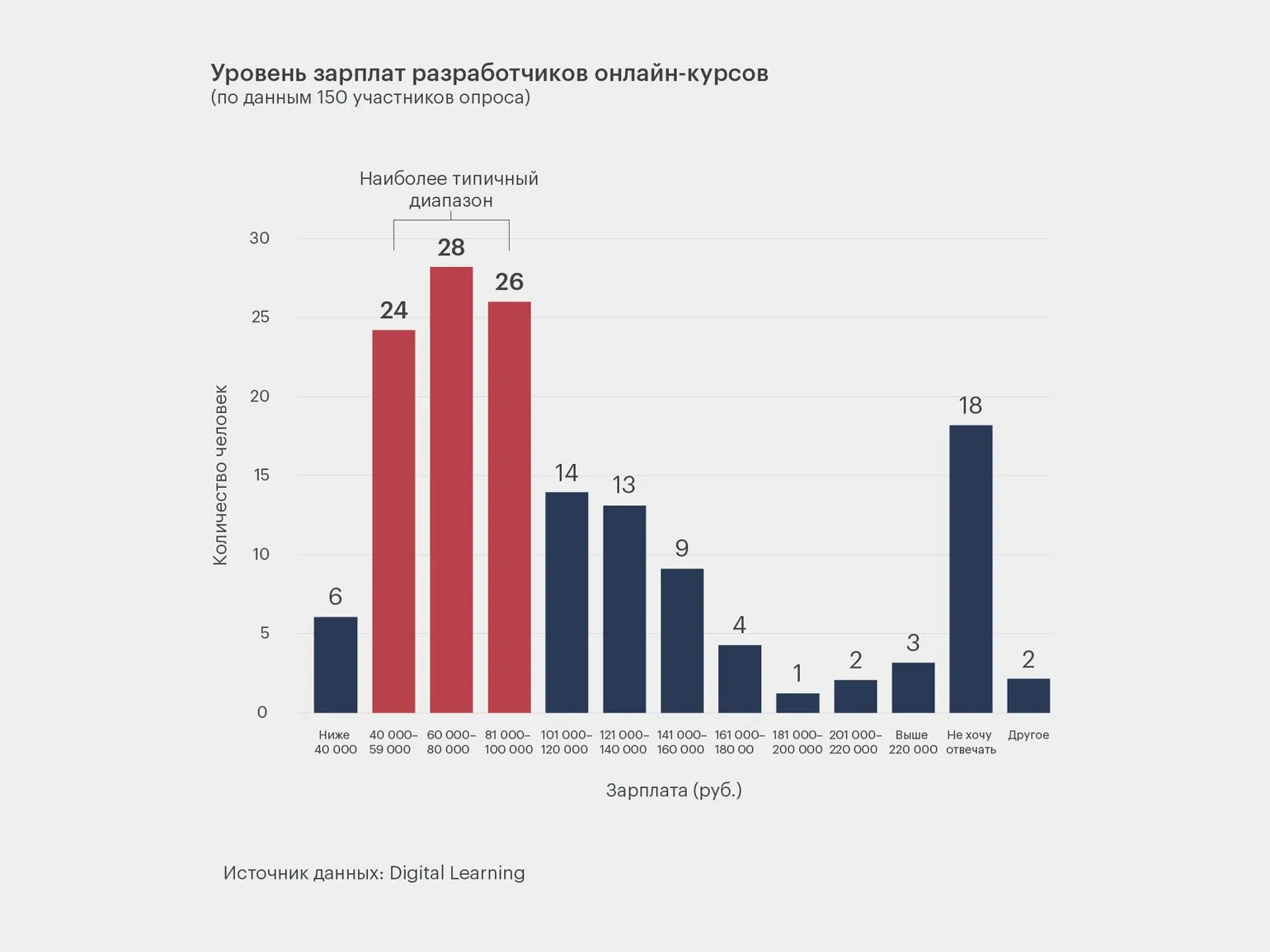
The most common income range among respondents was between 40,000 and 100,000 rubles. Of the 150 survey participants, 28 earned between 60,000 and 80,000 rubles, 26 earned between 81,000 and 100,000 rubles, and 24 earned between 40,000 and 60,000 rubles. The number of those earning over 100,000 rubles was significantly lower. Furthermore, 18 respondents, or 12% of the total, chose not to disclose their income.
The most common salary range for developers in the online learning field is between 40,000 and 100,000 rubles. This salary level depends on various factors, such as experience, qualifications, and the specialist's skills. Developers creating online learning platforms and content can count on a stable income, given the growing demand for digital education.
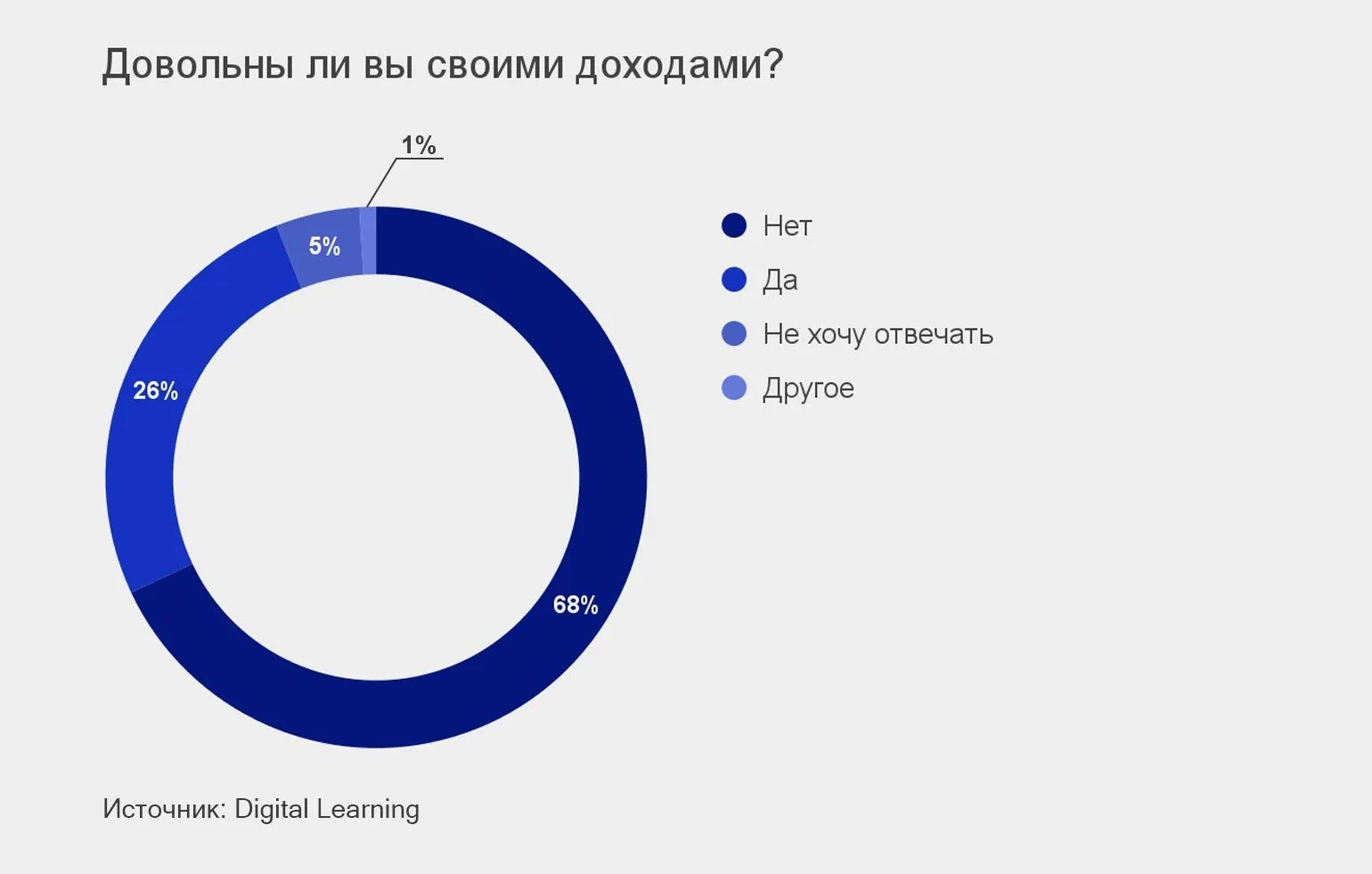
Developers don't seem entirely satisfied with their income levels. According to the survey, 68% of respondents consider their professional income unsatisfactory. At the same time, they are generally satisfied with their work: 79% of them answered positively to the question about happiness in the workplace, and 86% expressed a desire to continue their career in this field. This indicates that despite financial difficulties, developers value their profession and strive to develop it.
According to the survey results, 44% of participants have already experienced professional burnout, 23% are on the verge of this state, and 5% are currently experiencing it. This indicates that the salary level may not correspond to the actual workload and stress faced by employees. It is necessary to pay attention to the importance of adequate compensation and support to prevent burnout and improve overall productivity in the workplace.
Read also:
- Trends and challenges of corporate training: opinions of T&D specialists
- 6 questions that corporate training specialists are puzzled over
- 7 roles in corporate training: who are T&D, L&D and others
- 10 myths about the profession of an online course methodologist