
Contents:
Who participated in the study
iSpring conducted a survey among 218 Russian companies representing 17 different industries. Companies from such sectors as retail, information technology, manufacturing, construction, and consumer goods topped the survey. These results underscore the importance of these industries for the country's economy and their impact on the market.
More than one-third of respondents are representatives of medium-sized businesses, employing 50 to 500 people. About the same number of study participants represent "very large" companies with 3,000 or more employees. Small businesses and large businesses are less represented in the study, accounting for 10.6% and 19.7%, respectively.
The majority of respondents work for companies with a long history in the market. Specifically, 66% of respondents represent organizations that have been in existence for 10 to 30 years, and 17.9% represent companies with more than 30 years of experience. This emphasizes stability and continuity in business, which can be an important factor for potential clients and partners.
How and what is taught online in Russian companies
There is an opinion that in the next 3-5 years, traditional training will be almost completely replaced by an electronic format. However, current research shows that the situation is actually different. Today, many educational institutions continue to use blended learning methods, combining electronic and traditional approaches. This allows not only to improve the assimilation of material but also to maintain interactivity and personal interaction. Current data confirms that, despite the growing popularity of online courses and distance programs, traditional education still plays an important role in the learning process.
According to the survey, 90.8% of companies using iSpring solutions have a specialist responsible for the development of online training. However, 57.3% of respondents indicated that this specialist also performs other duties. This shows that creating online training is only one of the tasks of a T&D specialist. It is important to note that training is not limited to the digital format, and traditional teaching methods are still in demand.
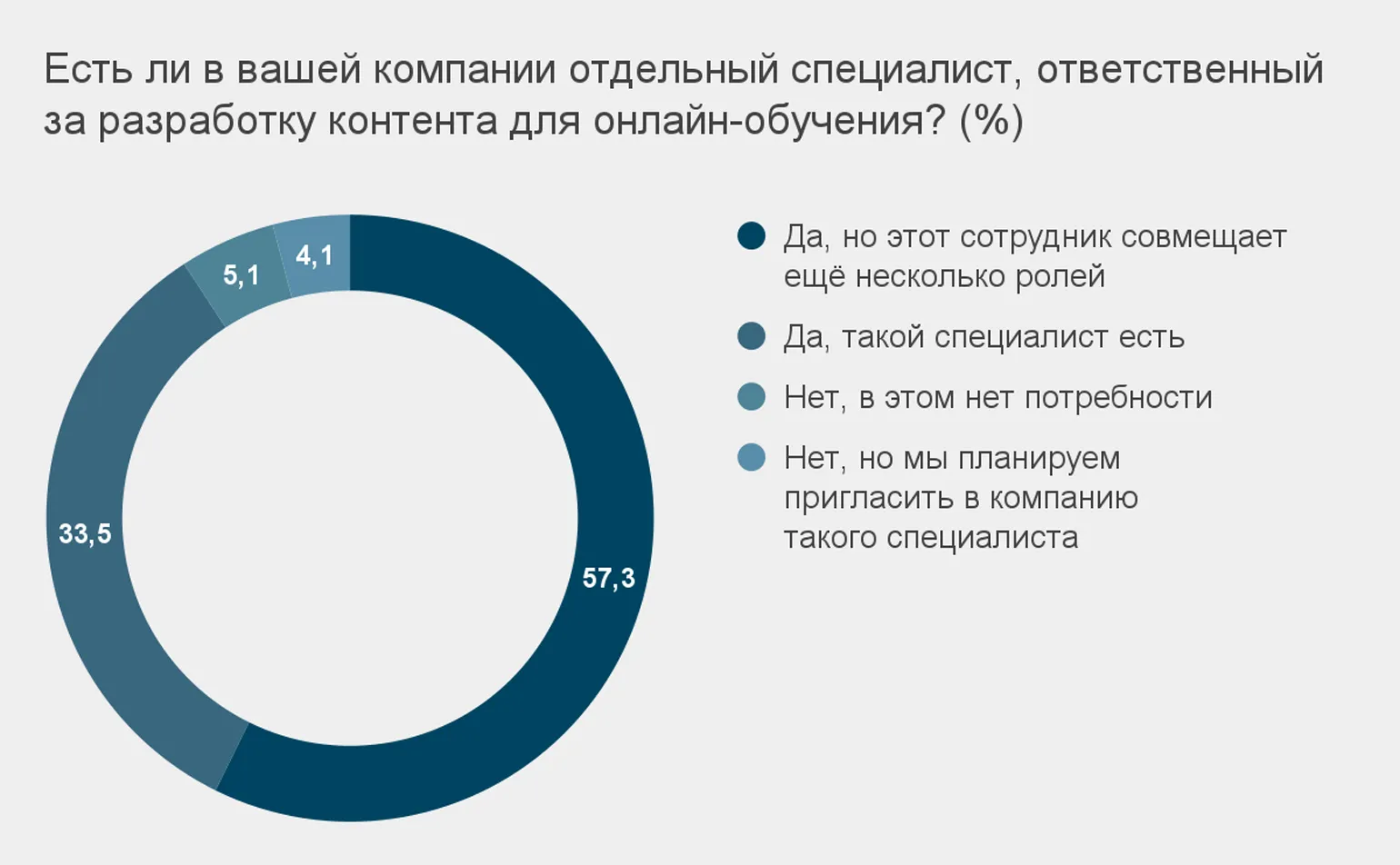
The results of a 2022 Equio survey of the Digital Learning community confirm this trend. 77% of survey participants noted that training specialists in their organizations perform multifunctional roles, and distance learning is only one of the tasks they address. This highlights the need for an integrated approach to employee training and development in today's environment.

Study additional materials:
Online course developers: income and work features
Developers Online course developers play a vital role in the education sector. Their work involves creating, planning, and delivering curriculum that is accessible to users online. Earnings for these specialists can vary depending on experience, course complexity, and the platform on which it is hosted. The average income for online course developers ranges from 50,000 to 150,000 rubles per month. Experienced professionals with specialized knowledge and skills can earn significantly more. Key factors affecting income include course quality, level of competition, and marketing strategies. The work of an online course developer requires a combination of technical and pedagogical skills. A specialist must be able to develop educational materials, use modern technologies and platforms to create courses, and effectively promote their products. Significant attention is paid to analyzing student feedback, which allows for continuous improvement of the content and structure of the course. With the growing popularity of online education, the profession of online course developer is becoming increasingly in demand. Specialists in this field have the opportunity to work both freelance and as part of teams at educational institutions or companies. This opens up a wide range of career opportunities and prospects for professional growth.
According to the report, most Russian companies prefer to develop training programs in-house. 84% of respondents confirmed this approach, and 69% of them did not seek assistance from outside contractors. The authors of the report emphasize that this trend demonstrates a high level of internal expertise and the independence of organizations in the area of employee training and development.
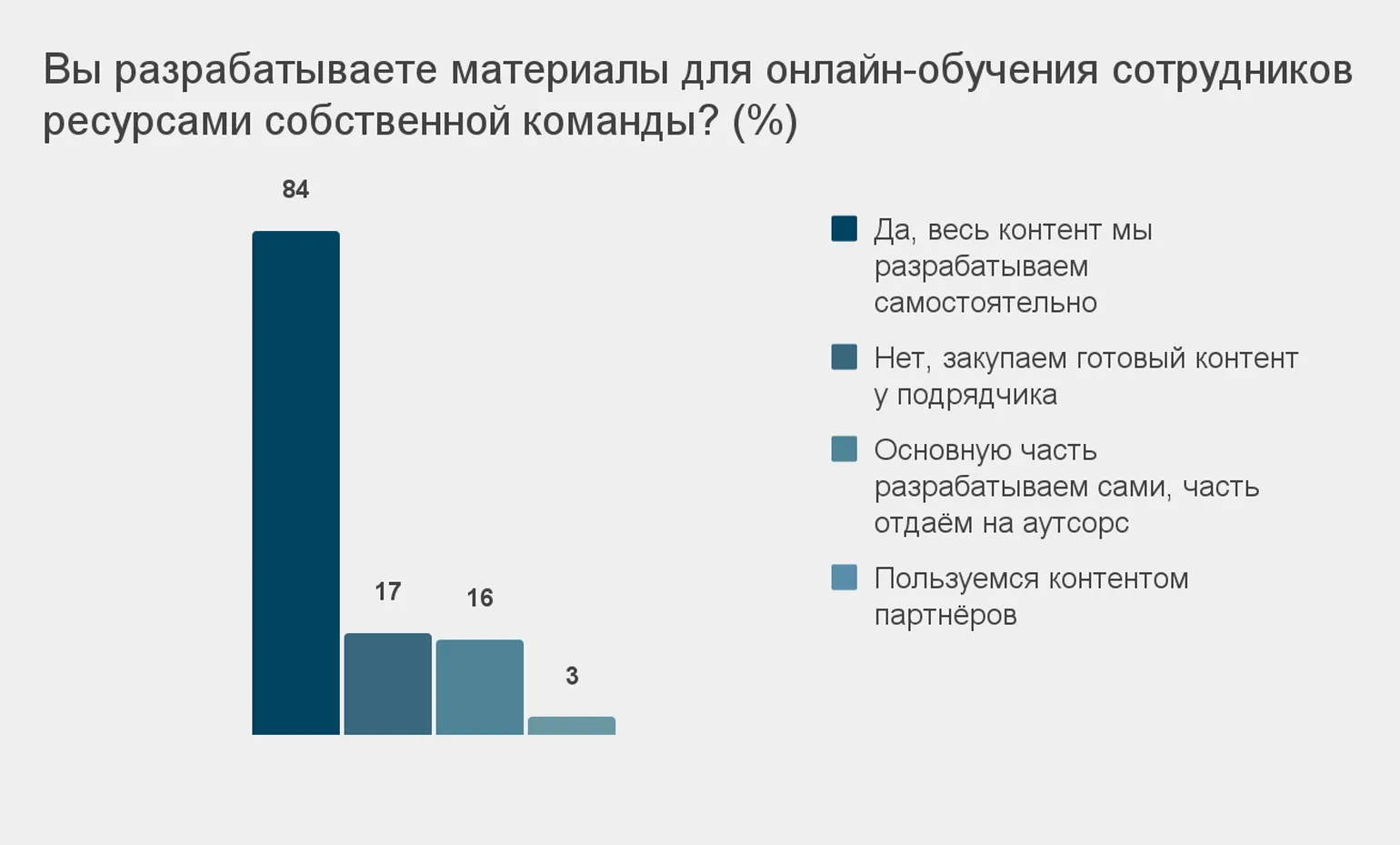
Comparison of current data with previous reports shows that the share The number of companies creating educational courses in-house remains stable. A survey conducted in the fall of 2022 among training developers found that 69% of respondents develop courses entirely with an in-house team of specialists. By comparison, in 2021, 64% of Russian companies surveyed by Netology also reported developing their own educational programs. These figures demonstrate a continued trend toward creating courses in-house, underscoring the importance of investing in internal resources and developing employee skills. According to iSpring research, 17% of respondents who used third-party content more often turned to contractors for its purchase. 16% of survey participants preferred to outsource part of the production process, while only 3% used content from their partners. These findings highlight the importance of selecting appropriate content sources and strategies for acquiring it for effective business operations.
Global trends in employee training, according to the World Economic Forum's "Future of Jobs" report, show that between 2023 and 2027, companies plan to split their employee training efforts equally between internal and external resources. This demonstrates a growing awareness of the need to develop professional skills and adapt to rapidly changing labor market conditions.

Reading is one of the most important skills that develops critical thinking and enriches our vocabulary. It opens up access to new knowledge and ideas, allowing us to expand our horizons. Literature, scientific articles, and specialized publications help not only develop personal development but also enhance professional skills. Regular reading promotes concentration and attentiveness, which is especially important in today's information society. Don't miss the opportunity to enrich your inner world and improve your quality of life through reading.
The corporate training market resembles the AvtoVAZ market: it is experiencing a shortage of external content. This is due to the fact that many companies prefer to develop their own training materials rather than use ready-made solutions from third-party providers. This phenomenon is driven by several factors. First, organizations strive to create unique programs that align with their specific goals and corporate culture. Second, internal courses are often more tailored to business requirements, which allows for better training and professional development of employees.
However, the lack of diverse external content limits opportunities for innovation and exchange of experience. Importantly, the integration of external resources can significantly enrich the educational process, providing new perspectives and approaches. Corporate learning platforms should consider collaborating with external experts and educational institutions to create more diverse and effective content. This will not only improve the quality of training but also enhance companies' competitiveness in the job market.
Research by iSpring confirmed that slide-based courses remain the primary online learning format for corporate learning professionals. According to the survey, 86% of participants chose this format from a variety of proposed options.
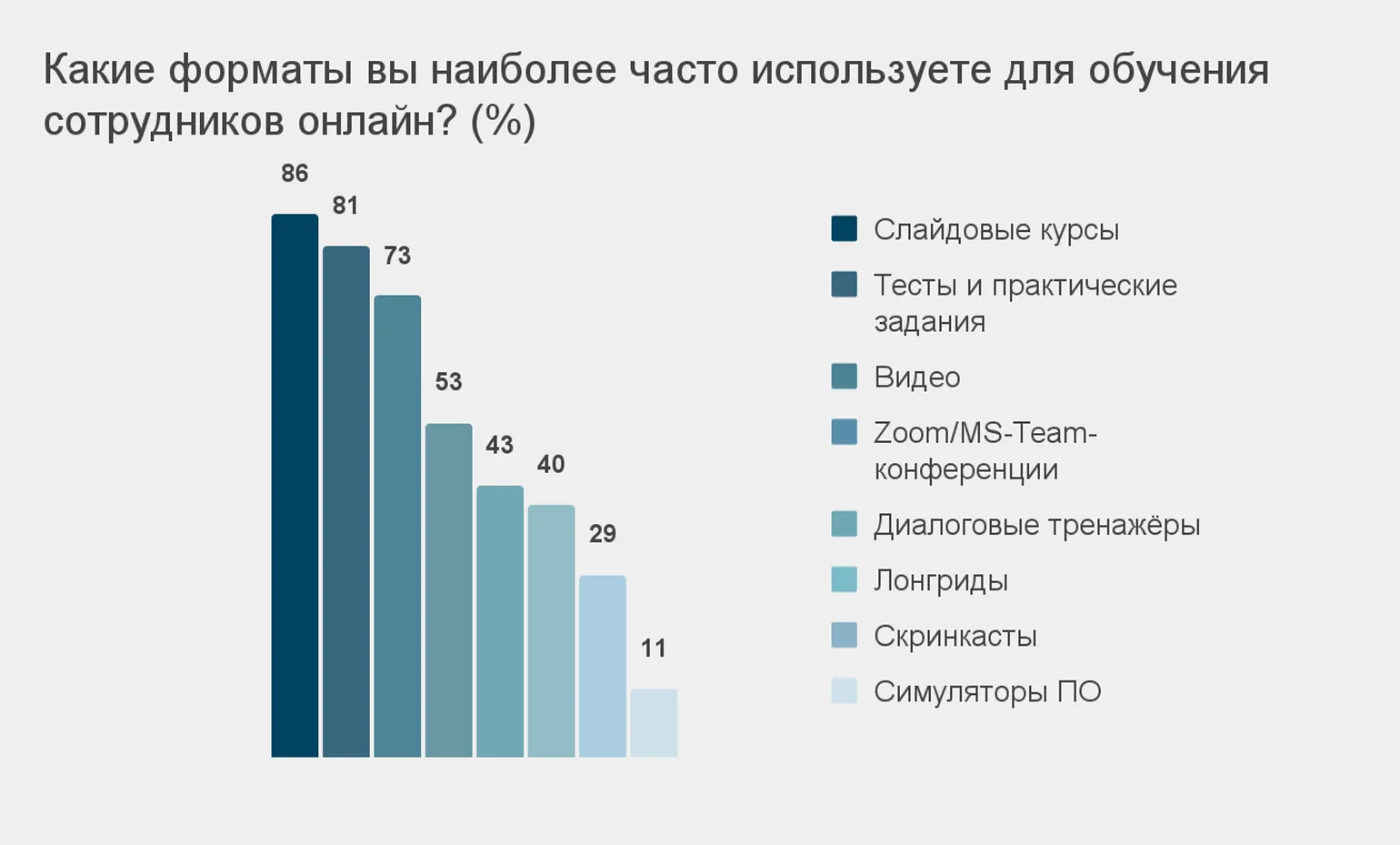
Popular training formats include tests and practical assignments, as well as videos. Webinars rank fourth in this ranking, although their use is less widespread. Conversational training, longreads, screencasts, and simulations round out the list. The low popularity of the latter formats is explained by the high costs of their production.
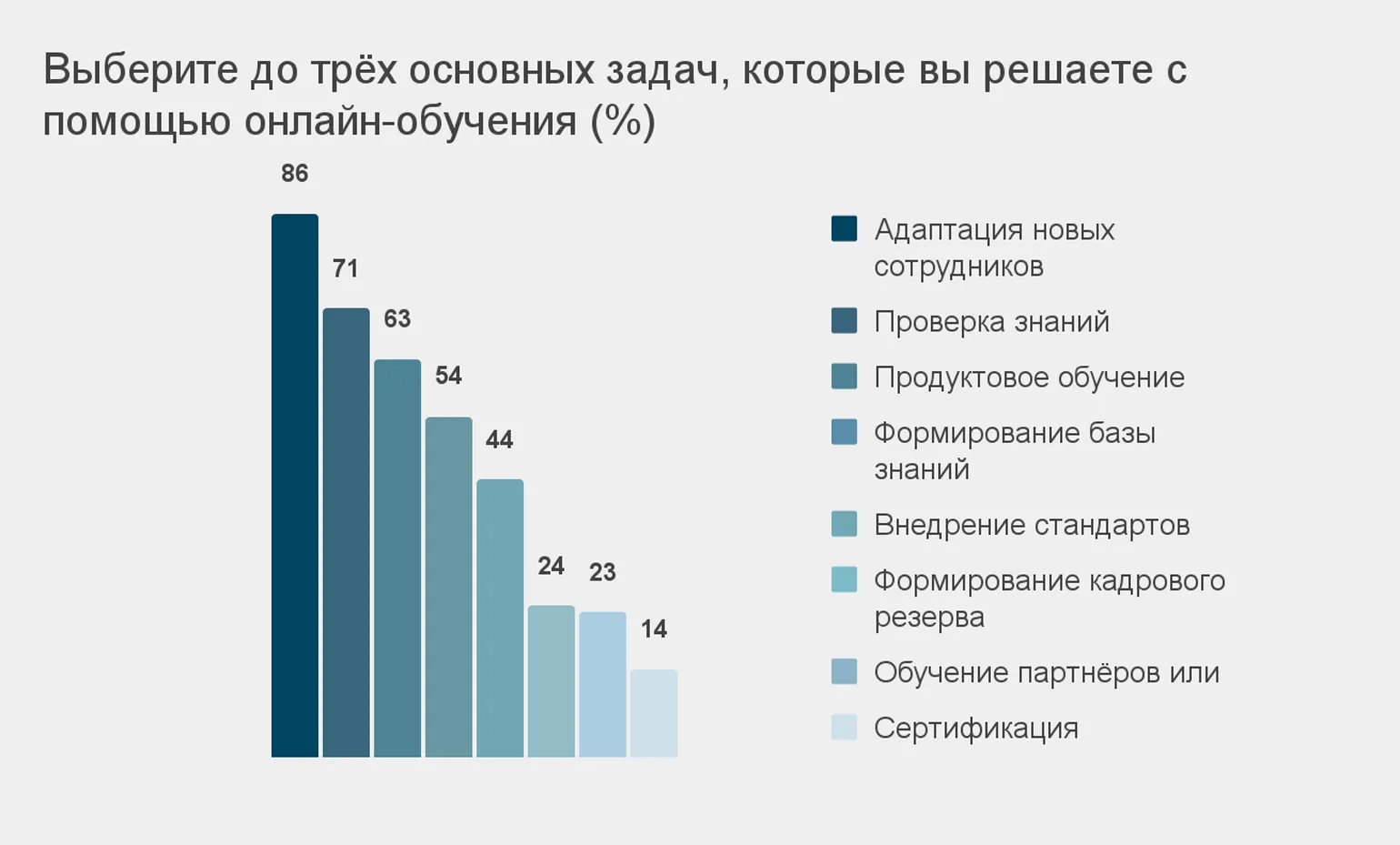
iSpring conducted a study to identify the main purposes of using online training in organizations. They examined how businesses use digital learning platforms to develop employee skills, improve productivity, and optimize learning processes. The results showed that online training is becoming an important tool for developing skills and enhancing company competitiveness.
New employee onboarding tops the list, chosen by 83% of respondents. This underscores the importance of onboarding as a key stage in the integration of new employees. In 2022, one of the main business objectives of Russian companies was to improve onboarding using online platforms, confirming the current trend towards optimizing onboarding processes. Effective onboarding increases employee productivity and reduces turnover, making it critical to business success. Online platforms are actively used to test knowledge, train employees on company products, build a knowledge base, and implement standards. These tools help effectively organize training and improve employee skills. Using online resources allows you to create accessible and structured information, which promotes better assimilation of the material and increases the overall productivity of the team.
Corporate training developers often create slide-based courses, but employees prefer video materials. Video is a more engaging format for absorbing information, while slides are a close second. This highlights the importance of using a variety of training formats to increase engagement and effectiveness of corporate training.
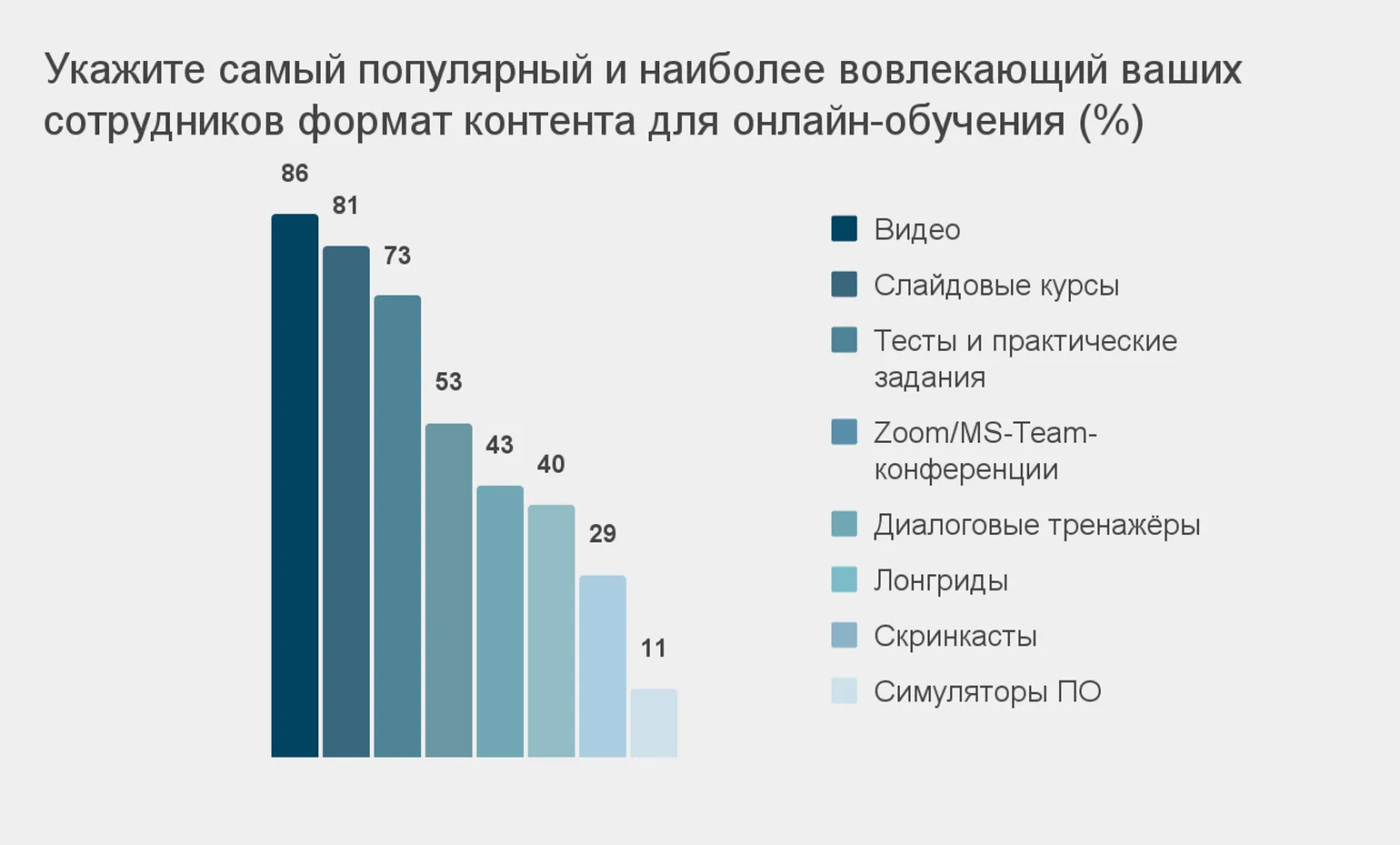
Longread courses, simulators and Screencasts rank low in ratings. However, it's important to note that if a company limits employees' choice of learning formats and offers primarily slide-based courses, alternative learning methods cannot be expected to rank highly. Diversity of training formats plays a key role in increasing employee interest and engagement.

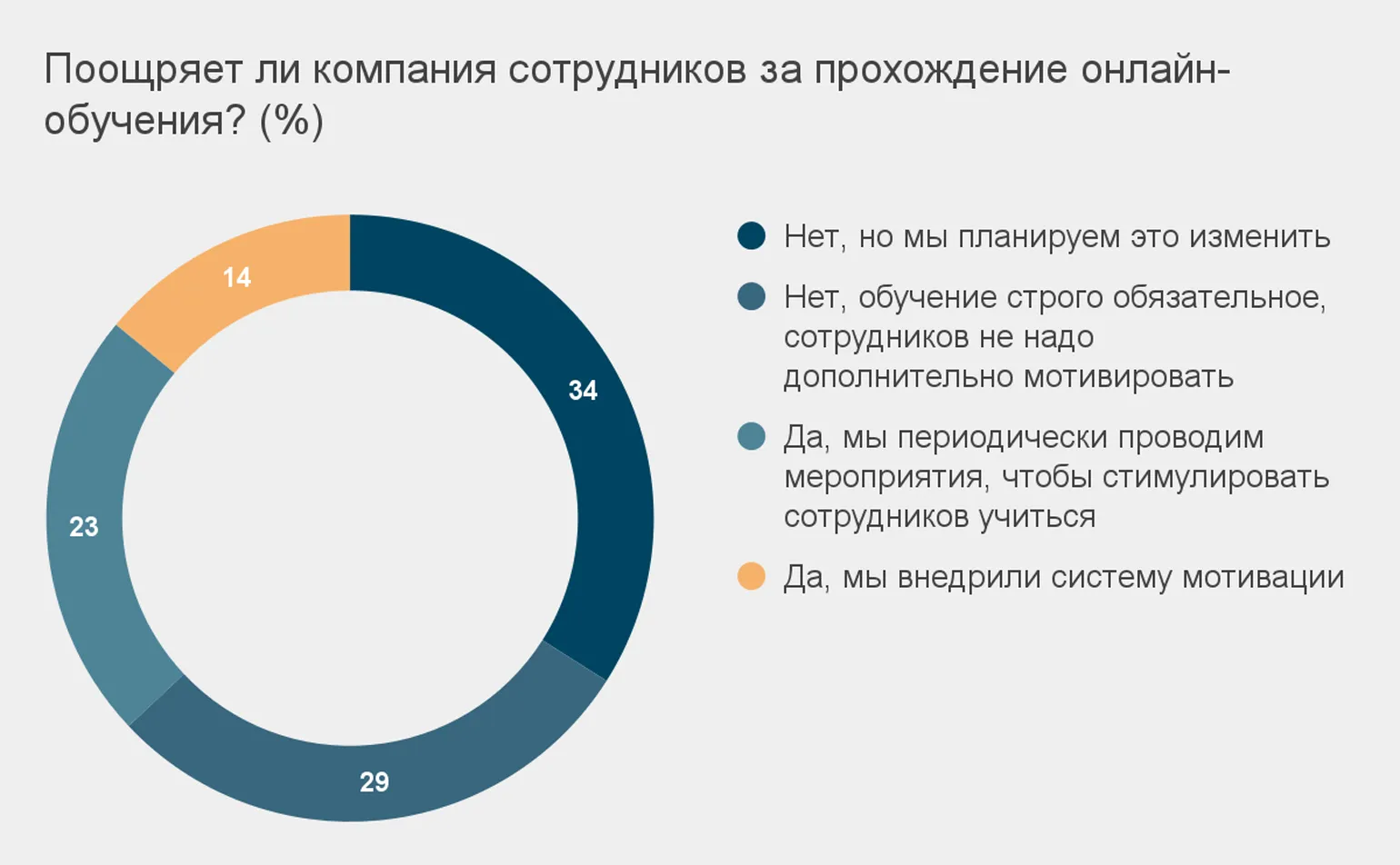
Reading is an important aspect of our lives that contributes to the development of thinking and imagination. Books and articles enrich our experiences and broaden our horizons. By immersing ourselves in text, we discover new worlds and ideas, making reading not only useful but also engaging. Regardless of genre, every text has the potential to inspire and teach us something new. Read regularly to develop your skills and enrich your inner world. Corporate training has become a key element in employee development and motivation. Here are seven key insights about what employees really want from training programs. First, employees seek relevant, practical knowledge. They strive for training that aligns with current requirements and industry trends. Second, a personalized approach is essential. Every employee has unique needs and goals, so training should be tailored to them. Third, accessibility to information and resources is critical. Employees want to be able to learn at a time and in a format that suits them. The fourth insight is the need for feedback. Employees value the opportunity to discuss their successes and receive constructive advice. The fifth point is the desire to work as a team. Joint training and sharing experiences contribute to the development and strengthening of team spirit. The sixth insight emphasizes the importance of support from management. Employees want to see that their learning efforts are appreciated. And finally, the seventh aspect is the opportunity for career advancement. Training should be linked to career prospects, which motivates employees to invest time in their development. These insights help organizations create more effective and engaging corporate training programs. Numerous conferences of corporate training experts discuss the pressing issue of employee motivation for training. A study conducted by iSpring showed that only 14% of companies have a clearly defined system for rewarding staff for training. Twenty-three percent of organizations conduct individual events to increase motivation, but these are not regular and systematic. About a third of companies are just beginning to think about motivation, while others simply rely on mandatory training, believing that if employees cannot avoid it, additional motivation is not necessary. This highlights the need to develop effective strategies to increase employee interest in training and professional development.
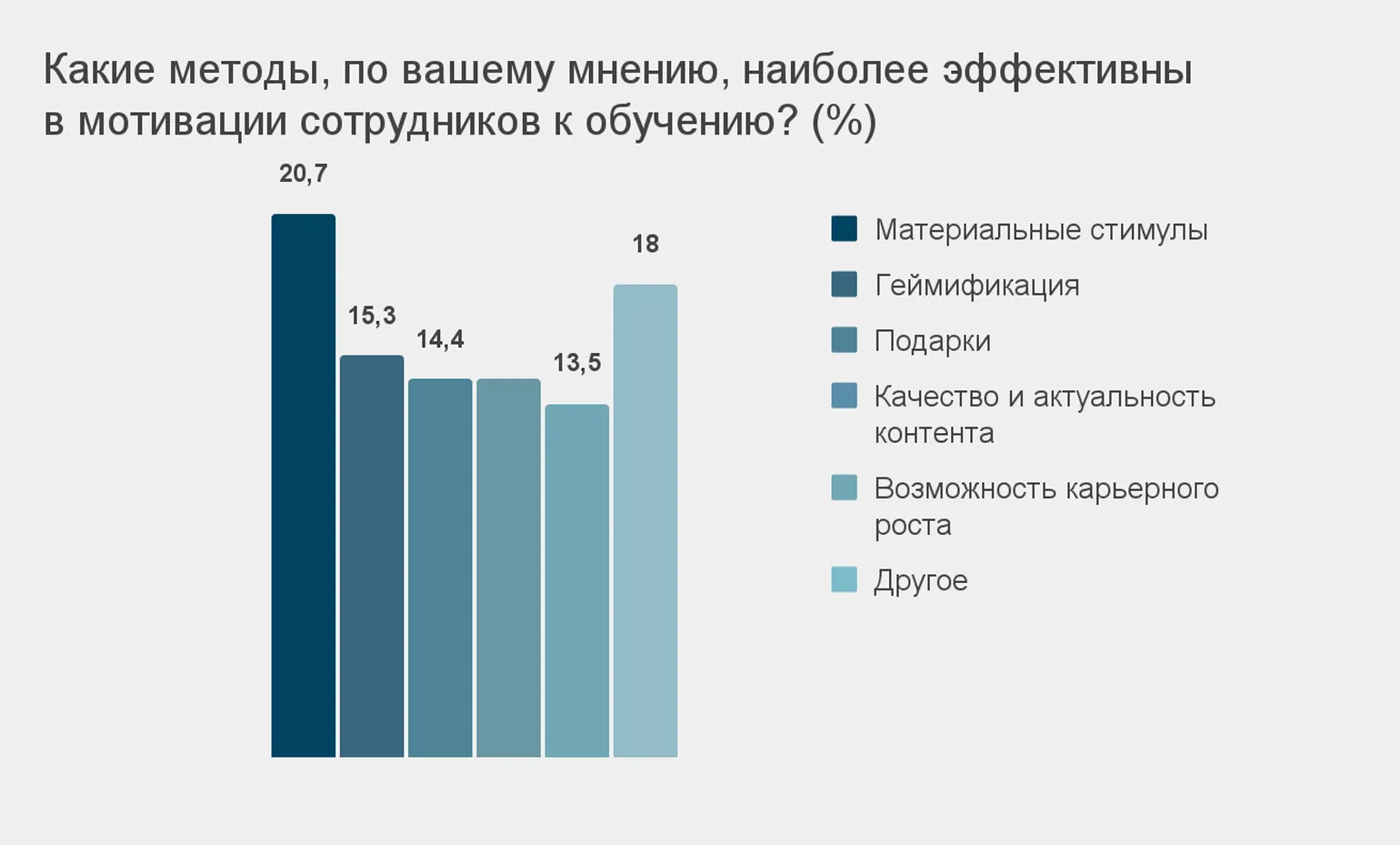
Some respondents noted that they use approaches aimed at raising awareness of the importance of training among employees as motivation methods. They strive to convey to employees the need for continuous development and demonstrate the results of those who have already completed training. However, such responses accounted for only 6-8% of respondents who selected the "Other" option, which is 18% of the total number of respondents.
Interestingly, few survey participants chose mentoring and coaching as motivational tools. At the same time, 78% of respondents noted that peer-to-peer training is actively used in their organizations, especially during the onboarding process for new employees. It has been noted that in larger and older companies, this form of training is used significantly more often, which underscores its importance for the effective integration of new team members. Peer-to-peer training contributes not only to the development of professional skills but also to strengthening team spirit, which in turn increases the overall productivity of the company.

Read also:
Employee onboarding: the role of mentoring in the adaptation process
Onboarding is an important stage in the integration of new employees into the company. Effective onboarding not only facilitates rapid onboarding but also reduces turnover. In this context, mentoring is a key element in helping new employees adapt and successfully integrate into the work environment.
Mentors are experienced employees willing to share their knowledge and skills. They help new employees quickly understand the corporate culture, internal processes, and expected results. Mentor support allows new employees to ask questions and receive feedback, which contributes to a deeper understanding of the company's goals and objectives.
Furthermore, mentoring fosters trust within the team. New employees feel supported, which increases their motivation and job satisfaction. It is also important to note that mentors can identify and develop the strengths of their mentees, which subsequently benefits both the employee and the company as a whole.
Incorporating a mentoring program into the onboarding process can significantly improve the onboarding experience for new employees. This not only speeds up the onboarding process but also helps create a cohesive and productive team. Mentoring is an investment in a company's future that pays off in high productivity and employee loyalty.
How much will businesses spend on training in 2023?
According to the report, 37% of companies spent less than 500,000 rubles on employee training in 2022. At the same time, 28% of organizations allocated an amount in the range of 500 thousand to 1.5 million rubles for these purposes.
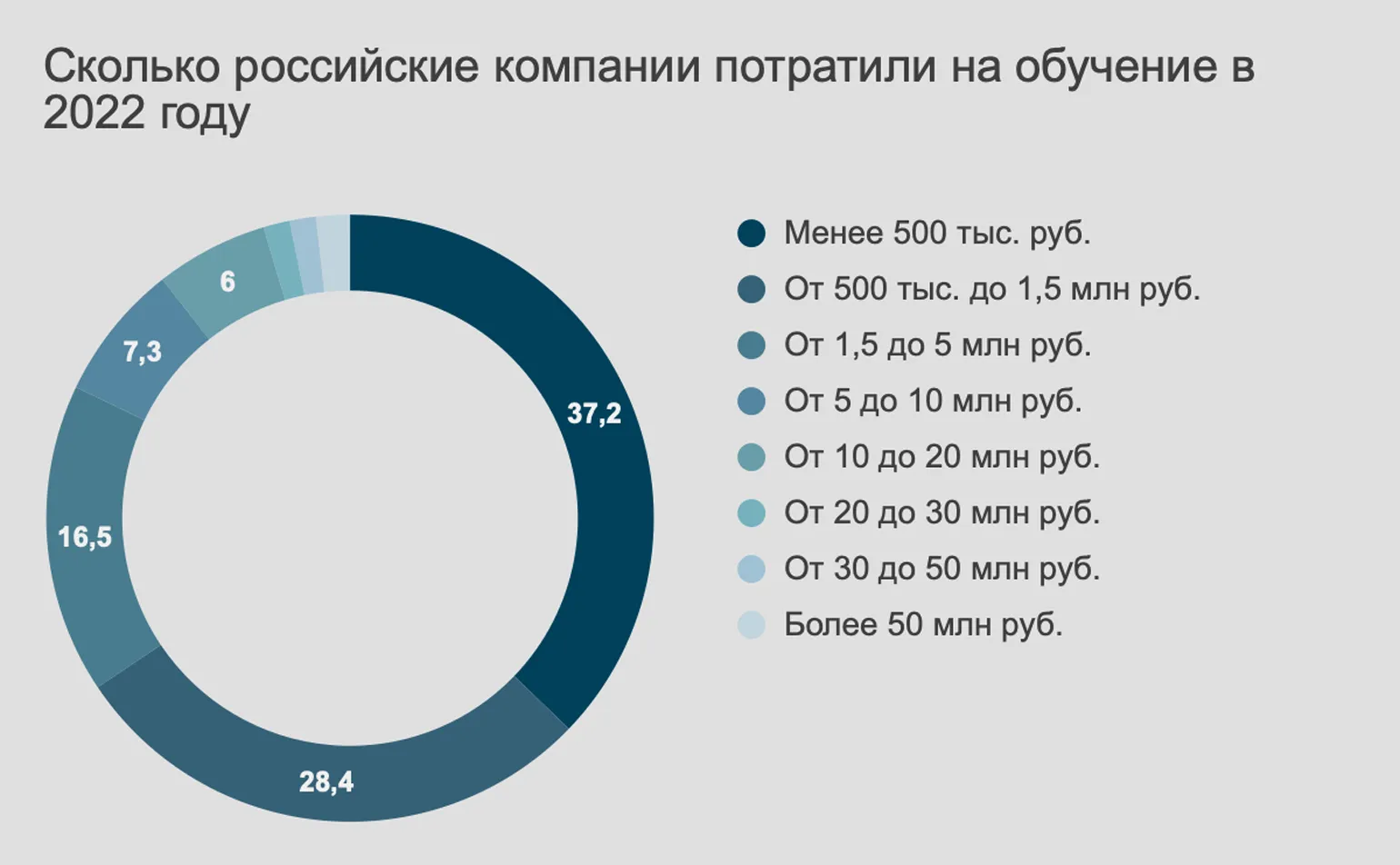
A company's expenses are directly dependent on its headcount. According to research by iSpring experts, increasing headcount can significantly impact overall costs. This is due to the need to provide jobs, wages, benefits, and other related expenses. Optimizing headcount and managing costs are key factors for improving business efficiency and achieving financial stability. Companies that carefully analyze their expenses can significantly improve their economic situation and ensure sustainable growth.
- Among small organizations with up to 50 employees, 96% spent less than 500 thousand on training.
- Among companies with 50 to 150 employees, 38% invested up to 1.5 million rubles in training.
- Among large companies (with up to 1,500 employees), 40% spent from 500 thousand to 1.5 million on training. Another 37% allocated more than 1.5 million for these needs - 9% of which spent from 10 to 20 million.
- In particularly large organizations, where the number of employees exceeds 1,500 people, they generally preferred to spend no more than 5 million.
In 2023, many companies decided to keep the training budget within the previous limits. According to research, 65% of organizations do not plan to increase their spending on employee training this year. This suggests that employers are looking to optimize costs while maintaining the level of staff training and development.
How Training Effectiveness is Measured
In the iSpring study, respondents were asked to identify the levels of the Kirkpatrick and Phillips model that they consider when evaluating training effectiveness. The results showed that as the level of the model increases, the attention paid to each of them decreases. The least interest was observed for business metrics, which indicates that they are less frequently used in evaluating training effectiveness.
ROI, or return on investment in training, was mentioned least frequently among all categories of companies when evaluating the effectiveness of training programs, the authors of the report note. This indicates insufficient attention to analyzing the financial results of investments in employee training, which may negatively impact decisions about the further development of educational initiatives. Effective training ROI assessment is essential for determining the true value and impact of training programs on company productivity and growth.
In Russian companies, training effectiveness assessment is most often conducted at three main levels. The first level includes an analysis of employee reactions to training, the second assesses knowledge and skill acquisition, and the third assesses the application of acquired knowledge in practical work. This approach allows for a comprehensive assessment of the results of training programs and their impact on employee productivity.
Learning and development departments in companies often ignore the importance of business metrics, a topic that has become a subject of discussion among both Russian and international experts. This problem stems from the fact that the performance metrics used by L&D and T&D specialists do not take into account the real needs of business clients. They value evidence of training's impact on key business metrics, not simply employee feedback on the courses. The need to focus on results that truly matter to business is becoming increasingly important in today's environment.
Read also:
- Corporate Training - 2023: A Review of Trends from International Reports
- 9 Best Digital Solutions for Corporate Training According to EdTech Awards
- Josh Bersin Talks About the Next Generation of Corporate Training Platforms