Contents:
Learn: The Profession of a Methodologist from Scratch to PRO
Learn MoreWhat is the Yu-Kai Octalization Model
Yu-Kai Chou, one of the leading experts in the field of gamification, while studying the reasons for people's passion for games, identified eight key motivation factors and developed the Octalization model. This octagonal scheme serves as a tool for analyzing and creating effective gamification systems. Each side of this model represents a specific incentive that can motivate a person to actively participate in various actions.
- Meaningfulness;
- Achievement;
- Creativity;
- Possession;
- Social influence;
- Scarcity;
- Unpredictability;
- Loss aversion.
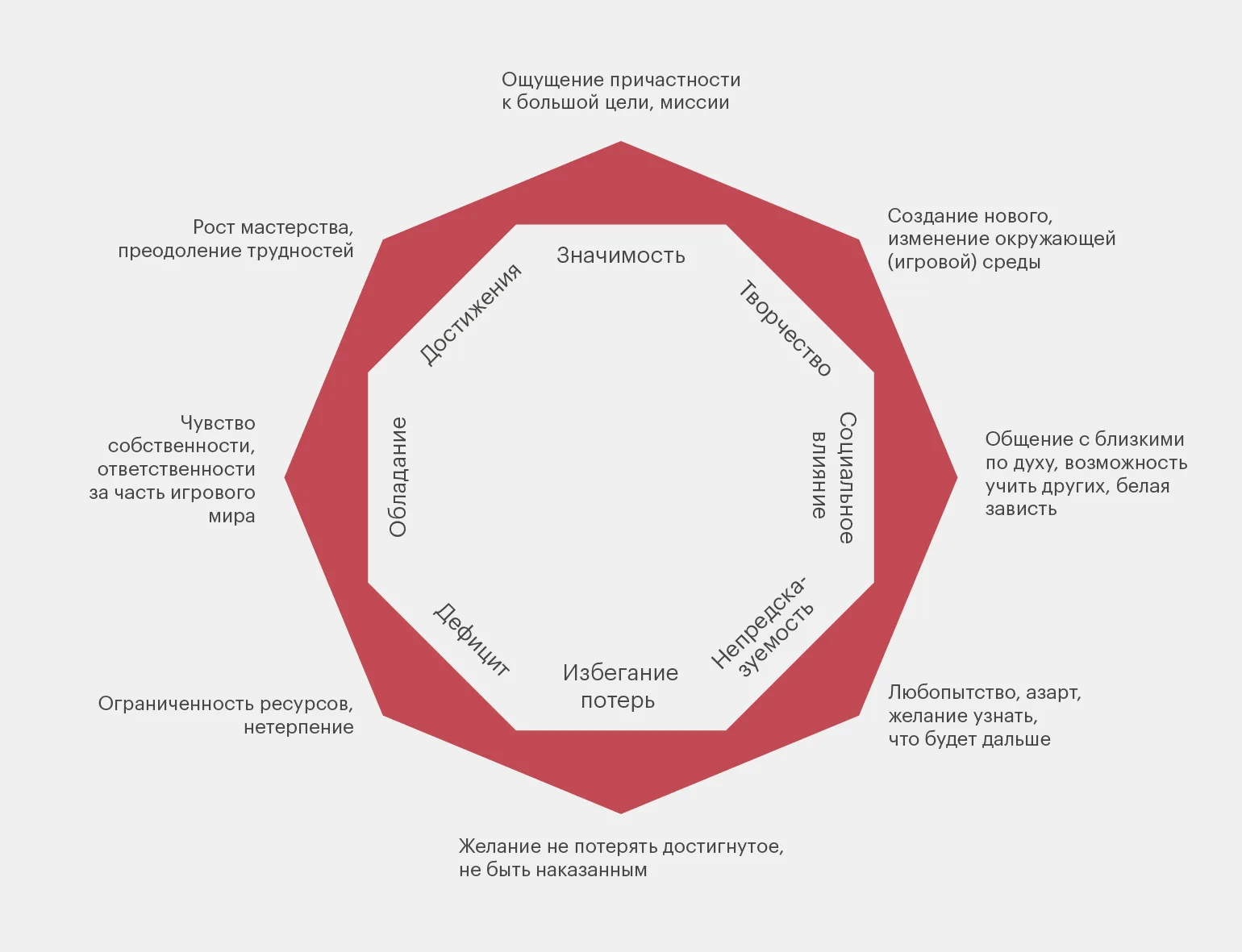
The author of the octalization model distinguishes two types of motivation: external and internal. Extrinsic motivation is associated with the desire to achieve a specific outcome from one's activity, which is reflected by the group of stimuli located on the left side of the octalizer, such as "achievement," "possession," and "deficit." Intrinsic motivation, on the other hand, involves enjoying the process itself, regardless of the end result. This group includes the stimuli located on the right side: "creativity," "social influence," and "unpredictability." Understanding these incentives helps us gain a deeper understanding of how various factors influence people's motivation and behavior in different areas of life.

Reworked text:
Be sure to read the additional materials.
Intrinsic and Extrinsic Motivation of Students: The Connection and Impact on the Educational Process
Intrinsic and extrinsic motivation play a key role in student learning and development. Intrinsic motivation is associated with personal interests, hobbies, and the desire for self-improvement. Students driven by intrinsic motivations seek knowledge for the pleasure and satisfaction of the learning process. Extrinsic motivation, in turn, depends on external factors such as grades, rewards, and recognition from teachers and peers.
The connection between intrinsic and extrinsic motivation is an important aspect that influences student success. When external incentives complement intrinsic motivations, students can achieve high results. For example, receiving a good grade can strengthen interest in a subject and stimulate further study. However, if extrinsic motivation becomes the only source of motivation, this can lead to a decrease in interest and unstable results.
Understanding the relationship between intrinsic and extrinsic motivation allows educators to develop more effective educational strategies. Creating conditions for developing intrinsic motivation, such as interesting assignments and the opportunity to choose topics to study, can significantly increase student engagement. It is also important to recognize that each student is unique, and motivation can vary depending on individual needs and circumstances. Ultimately, the balance between intrinsic and extrinsic motivation is the key to successful learning and the development of independent, active, and knowledge-driven students. Yu-Kai Chou identifies two types of incentives: "white" and "black." Elements of "white" motivation promote long-term satisfaction, self-actualization, and a sense of control over one's life. These include achievement, significance, and creativity, which occupy the upper positions in the octalization model. In contrast, "black" incentives are associated with dependency and loss of control over behavior. These include elements such as scarcity, unpredictability, and loss aversion, which are located at the bottom of the model. Understanding these incentives will help you better manage motivation and achieve desired results in your personal and professional life.
"Black" motivation promotes immediate action, as seen in promotions with "today only" discounts, gambling, and social media notifications. However, in the long term, such methods can lead to fatigue and burnout, as Yu-Kai Chou notes. Systems based solely on "black" motivation fail to retain users long-term. At the same time, "white" incentives do not always provide immediate results, making them less effective in the short term. Therefore, to achieve quick results, it is important to use elements of "black" motivation, but with caution to avoid negative consequences.
For a deeper understanding of the application of octalization in various contexts, as well as the ethical and balanced use of incentives, we recommend reading the book "Gamify It" by the author of the model, available in Russian. This book offers valuable insights and practical advice for implementing gamification in life and work.
Player Types and Their Application in Gamification
Yu-Kai Chou's Octalization is an approach to creating human-centered systems that emphasize the motivations and needs of users. This method assumes that a key aspect of interaction with the system is understanding the individual incentives that influence each person. Understanding that different users may be motivated by different factors allows for the development of more effective and engaging solutions. This approach contributes to an improved user experience and increased engagement, which makes systems more successful and in demand.
There are many classifications of player types based on their motivations and strategies in game situations. One of the most well-known is Richard Bartle's model, which includes four main types: Explorers, Communicators, Killers, and Careerists, along with their subtypes. However, I prefer Andrzej Marczewski's hexad, which identifies six types of player behavior. This model allows for a deeper understanding of what attracts players to games and how they interact with the game world.
- The "Free Spirit" values autonomy, the ability to independently choose how to solve problems, explore the game world and discover new things.
- The "Player" is focused on achieving the ultimate goal for the sake of receiving a reward.
- The "Socializer" prefers interaction with other people, is motivated by teamwork and a sense of belonging.
- The "Achiever" strives to increase their status and achieve mastery by upgrading their skills.
- The "Rebel" loves dynamics and change, they are inclined to look for weak points in the system in order to "break" the game or, conversely, improve it with innovations.
- It is important for the "Philanthropist" to feel the value and meaning of their activities, to help others, and to make the world a better place.

Regardless of the player classification system you choose, it is important to understand that there is no universal method for engaging every person in an activity. This truth is often ignored. For example, many gamification systems focus on motivating users through rewards. However, statistics show that only 8% of people, according to Marchevsky's typology, are primarily reward-oriented. For 16%, reward is only one of many factors contributing to motivation. Therefore, popular game mechanics may not work for most users. Developers often forget about other motivational methods that might appeal to audiences who aren't reward-driven.
It's important to understand that in practice, players rarely fit a single type. Typically, a single person exhibits several game types, each manifesting to varying degrees. Player behavior can even change during the course of a game. Nevertheless, classifying player types provides developers of educational and gamification systems with a useful framework for analyzing their audience. This allows you to use effective engaging factors that will help increase user interest and participation in the process.
Read also:
Games in education: structure and importance
Games in education are an innovative approach to learning that uses Game mechanics to increase student engagement and motivation. The main goal of such games is to create an interactive environment where students can learn through hands-on experience and active participation. This not only facilitates the assimilation of educational material but also develops critical thinking, teamwork skills, and creativity. Educational games typically have clearly defined goals, tasks, and a feedback system. Students are given the opportunity to make decisions that influence the course of the game, which promotes responsibility and independence. Importantly, such games can be adapted for different age groups and subjects, making them a versatile tool in the educational process. Using games in the educational process also helps create a positive atmosphere where mistakes are seen as part of learning. This helps reduce stress and fear of failure, which is especially important for building confidence in children and adolescents. Thus, games in education not only make learning more fun but also help develop important skills that will be useful in the future. The integration of game elements into the educational process is becoming increasingly relevant, as evidenced by the growing interest in educational technologies.
How to Use Different Motivating Factors in Learning
From the above, it follows that an effective and balanced system engages a diverse audience, allowing everyone to find something valuable in it. Yu-Kai Chou's Octalization Methodology provides tools for evaluating educational programs in terms of motivation. It can be used to identify which motivating factors are present and which are missing, as well as to identify possible imbalances. Missing elements can then be integrated, increasing the overall appeal and effectiveness of the system.
The traditional classroom-based teaching system emphasizes achieving high grades and preventing failures, such as low scores on tests and exams. This pursuit of grade success often overshadows the importance of deep knowledge and enjoyment of the learning process. As a result, we risk forgetting the creative and social aspects of education, which play a significant role in shaping the student's full personality. It is necessary to rethink the approach to learning to focus not only on results but also on developing interest in knowledge and interaction among students. Using the Yu-Kai Chow methodology, we will consider ways to add missing motivational factors to the learning process. This model helps identify key elements that can increase student engagement and interest. It is important to create conditions conducive to the development of intrinsic motivation, while also considering extrinsic incentives. Applying these approaches makes learning more effective and engaging, which ultimately leads to better results. Meaning in games implies a sense of belonging to a larger goal or mission, imbuing the player's actions with deep meaning. This motive is most often manifested in stories where the goal is to save the world, and the successful completion of this task directly depends on the player's participation. This approach creates an engaging experience, allowing the player to understand their role in the global context and strengthening the emotional connection with the gameplay.

Introducing a sense of meaning into the educational process can be achieved through a variety of methods. One effective way is to integrate real-world examples and practical tasks to help students understand the importance of the material being studied. Project-based learning, where students work on real-world projects, can also be used, which fosters a better understanding of the topic and its connection to real life. It is important to create an environment in which students can ask questions and discuss their ideas, which encourages critical thinking and deepens their understanding of the subject matter. Furthermore, the use of technology and interactive teaching methods can make the process more engaging and meaningful for students, which in turn will increase their motivation and desire to learn.
- Goal Setting. You can begin the lesson by explaining to students the purpose of what they will be learning today and demonstrating the value of this knowledge.
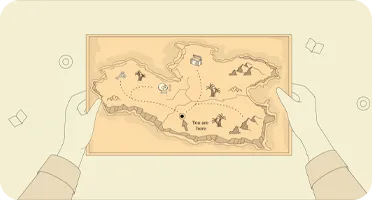
- Connecting the topic to a real-world task. The practical significance of learning is especially important for adult learners; it is one of the key principles of andragogy. Mentoring. Helping others develop is a good goal for people who value being part of a mission. This approach also incorporates the incentive of social influence. Character Assistance. A virtual character with a story related to the learning topic can be added to the program. Whether the character succeeds or fails will depend on the decisions students make for them through voting. This could be a complex, branching scenario or a simpler version. For example, younger children can be shown a character in a picture and given specific tasks: “Help Masha get ready for school by solving the problems.”
Read also:
A branched quest is A teaching method that incorporates interactive elements and allows learners to make decisions that influence the development of a scenario. This approach makes the learning process more engaging and engaging, as participants can not only acquire knowledge but also apply it in practice, which promotes better assimilation of the material.
The use of branching quests in the educational process allows for the creation of unique scenarios where each participant can choose their own path depending on their interests and level of preparation. This fosters critical thinking, develops problem-solving skills, and promotes a deeper understanding of the topic.
The advantages of branching quests include their adaptability to different groups of learners, as well as the ability to incorporate game elements, making learning more dynamic and effective. The use of such methods helps revitalize traditional educational approaches and make them more relevant in the modern world.
Achievement motivation emphasizes overcoming challenges, personal progress, and developing mastery. This element can be effectively integrated into the educational process. To achieve this, it is important to create an environment that fosters determination and self-confidence. Setting clear and achievable goals, providing regular feedback, and rewarding students will help them recognize their progress. Gamification elements should also be introduced to make learning more engaging and motivating. It is important to maintain interest in the learning process so that students strive for new heights and continually develop in their field.
- Assignments of varying difficulty levels. Students can feel more successful by solving not only basic problems but also so-called starred problems.
- Criteria-based assessment. This system implies that student results are correlated with clearly defined, transparent criteria. Thanks to this, students can see their progress: "At the beginning of the term, I knew how to do this, and now I've learned this too."
- Achievement system. A popular gamification tool that is easy to implement. For example, a student receives a virtual badge for three homework assignments completed on time, for five error-free answers in class, and so on.
- Rankings. A leaderboard, in which participants rank based on set criteria, is also a very common method of engagement. Ratings can be individual or group, taking into account the joint efforts of teams. In the second case, in addition to the motivation for achievement, there will also be an incentive for social influence.
- Reflection allows students to evaluate their personal progress by reflecting on their results and achievements.
Creativity in gamification is not only the process of creating something new, but also the freedom of choice that allows for success in different ways. One striking example of creative play used by educators worldwide is Minecraft, where participants can build anything from three-dimensional cubes. It is important to consider how creative elements can be integrated into the traditional classroom, which can enhance student engagement and learning. Using game-based learning methods in education helps develop creativity, critical thinking, and teamwork, which are key to developing modern skills.
- Choice of learning methods. Students who value autonomy and creative expression can benefit from being given a choice within a certain framework. For example, during class, you could read a book on the topic, watch a documentary, or lead a discussion.
- Free-form presentation. The teacher sets the criteria by which the assignment will be assessed, and its format is left to the discretion of the students—whether it be a recorded video, drawn infographics, or a staged skit.
- Creative team names and workspace design. This opportunity can be implemented, for example, as part of group work on educational projects. In my experience working with the eduScrum system, students display amazing creativity when coming up with names for their teams and designing project boards.

Read also:
Learning motivation: scientific theories and their explanation
Academic motivation plays a key role in the learning process and the achievement of academic success. Scientific research in this area allows for a deeper understanding of the mechanisms that influence student motivation. There are several theories explaining how exactly academic motivation is formed.
One of the most well-known theories is self-determination theory, developed by Edward Deci and Richard Ryan. It argues that three basic needs are important for high levels of motivation: autonomy, competence, and relatedness. When students feel they can make decisions independently, are confident in their abilities, and have supportive social connections, their motivation to learn increases significantly.
Another approach to understanding academic motivation is offered by expectancy-value theory. According to this theory, motivation depends on students' expectations regarding the success of learning tasks and the value they attach to these tasks. If students believe that success in learning will lead to meaningful outcomes, they will be more motivated to study.
Also worth noting is Albert Bandura's social learning theory. It emphasizes the importance of observation and imitation in the learning process. Students, seeing the success of their peers, may experience increased motivation to achieve similar results.
Thus, academic motivation is a complex and multifaceted process that depends on various factors. Understanding scientific theories related to motivation can help teachers and students create more effective strategies for increasing interest in learning and achieving goals.
Motivating people through a sense of ownership and responsibility plays an important role in their behavior. This category of incentives includes phenomena such as collecting and caring for virtual pets, a clear example of which is the once popular Tamagotchi toy. Possession motivation is also activated through personalization, when the system adapts to the user's preferences and interests. Having control over one's own activities enhances this motivation, allowing people to feel more engaged and responsible for their actions.
To successfully design a curriculum that takes this factor into account, it is advisable to include the following elements:
- Independent determination of work rules. For example, when working in groups on an educational project, the team itself agrees and decides how to organize the process.
- The ability to influence the program. If students can vote to choose an additional topic for study or questions they want to delve into, this will allow them to feel like active participants in the learning process.
- Following a lesson (or part of it) by a student. This is not an answer to a teacher's question at the board, but a pre-prepared explanation of the topic to classmates or fellow students.
- Challenging cup. For fulfilling certain conditions, a student or team receives a reward, a symbol of achievement. This reward may be transferred to another student or team at a certain time if they have fulfilled the required conditions, but the previous "winner" has not.
Social influence is significant in interactions with like-minded individuals, in teaching others, and in comparing oneself to others. It also manifests itself in the desire to conform to established social norms. These aspects play an important role in the formation of personal identity and social skills, contributing to the development of both the individual and society as a whole.

In the traditional classroom system, social influence is limited, as students primarily interact only with the teacher, neglecting informal interactions with each other. To improve social interactions in the educational process, several approaches should be implemented. First, it is worth organizing group activities where students can exchange opinions and work on joint projects. Second, it is important to create an atmosphere conducive to open discussions, allowing students to express their thoughts and ideas. Third, the use of technology, such as online collaborative learning platforms, can expand the circle of communication and strengthen social connections between students. Thus, activating social influence in the educational process will not only enrich the educational experience but also help develop students' collaboration and communication skills.
- Teamwork. It's not necessary to make the entire learning process team-based; this practice can be implemented partially. For example, after explaining a new topic, invite students to gather in groups of four and discuss any questions they still have, and then share them with the whole class.
- Buddy. The buddy practice involves students pairing up and working together during learning—helping and prompting each other, checking their partner's assignments, and exchanging feedback.
- Peer-to-peer learning is popular in the corporate segment, but it can also be implemented in other types of adult and children's education. This mutual learning is based on the "peer teaches peer" principle—for example, students who understand the lesson topic faster than others explain it to their peers.
- Shared Goal. In addition to individual student goals, a shared class or study group goal can be incorporated into learning—for example, achieving a certain total score or solving a certain number of problems.
- Interest groups. If possible, it makes sense to organize forums or chat rooms for students based on their interests so they can communicate on specific topics—for example, a "Physics Enthusiasts Group" for those who follow scientific discoveries in this field and enjoy solving complex physics problems.
- Likes system. This refers to the practice of social rewards that improve interactions between people. For example: “Thank you to Petya for helping me understand a new topic,” “Thank you to Lena for sharing the materials for the labor lesson.”

Pay attention to interesting materials that can help you Interactive learning is an educational method that emphasizes active student participation. This approach allows students not only to acquire knowledge but also to apply it in practice, significantly increasing the effectiveness of information acquisition. Key features of interactive learning include the use of technology, such as computer programs, online courses, and simulations, which promote student engagement in the learning process. Group work is also important, developing communication and collaboration skills. Interactive methods stimulate critical thinking, promote better retention of material, and make learning more engaging. Thus, interactive learning is a modern approach that combines traditional teaching methods and innovative technologies to create a more effective educational environment. Motivation stems from the desire to achieve goals that seem unattainable or difficult to achieve. It also reflects the desire to obtain something valuable in the shortest possible time. This approach to motivation can be a driving force for achieving success and overcoming obstacles, making it an important aspect of personal growth and development.
The concept of scarcity can be integrated into learning by setting specific limits. This will create a more effective learning environment where students will strive to achieve success by overcoming the barriers placed before them. Introducing such limits promotes the development of critical thinking, creativity, and problem-solving skills. Using scarcity in learning can increase student motivation and engagement, as well as improve learning.
- Response timer. The need to quickly and clearly formulate thoughts stimulates our brain activity.
- Limited number of special tasks. For example, in addition to the standard tasks, students have five special problems with extra points. However, they are only available to the five students who solve all the main problems faster than the others.
- Limited-time bonus. This method operates according to the familiar advertising principle. For example, if a student submits completed assignments within two weeks, they will receive additional advice.
This incentive expresses curiosity and the desire to know what will happen in the future, and also causes excitement due to the uncertainty of the outcome of the situation, which depends on luck.

To take this factor into account in the learning process, it is recommended to use a variety of approaches and methods. It is important to adapt educational materials and teaching methods to the needs and characteristics of students. This may include the use of interactive technologies, a variety of content formats, and individualized tasks, which contributes to a deeper assimilation of the material. It is also worth paying attention to feedback and assessment of student progress, which will help adjust the learning process and improve its effectiveness.
- Surprise at the end. This is an unknown reward that participants receive after fulfilling certain conditions. It can be anything - both tangible and intangible.
- "Wheel of Fortune". Using a random selection tool, you can, for example, determine who will answer in the lesson. In my experience, children find this very amusing, since it's not the teacher who chooses from a list, but "fate."
- Secret Task. An element of unpredictability can also be added to assignments: "When you solve the three main problems, another, secret one awaits you." A ticket during an exam is also a kind of secret task. Moreover, in this situation, unpredictability is especially pronounced as a "black" incentive and causes stress.
- Surprise Pause. This is a short warm-up in the middle of the lesson, which is different each time, so students don't know in advance what awaits them—perhaps a short music video or a picture with an exercise.
This incentive is based on the fear of losing what has been achieved, facing defeat, or being punished. Yu-Kai Chou emphasizes that the element of loss aversion is most effective when the participant is aware of the actions they need to take to avoid a negative outcome. Otherwise, a feeling of hopelessness arises, and the person may think, "I can't influence this anyway," which leads to the absence of the desired result. It is important to understand that a sense of control over the situation plays a key role in motivation and goal achievement. Negative evaluations are a typical example of using incentives to correct behavior. Such measures also include deducting points, losing status, and restricting access to certain opportunities in the event of undesirable behavior. For example, a university professor conducts personal consultations with students, but for those who miss assignment deadlines twice in a row, access to this option is blocked for a month. This helps encourage students to be more responsible in their studies and complete assignments on time. Learn more about education by subscribing to our Telegram channel. We share relevant information, useful tips, and interesting news in the field of education. Join our community and stay up to date with the latest trends and opportunities.
Also learn:
- How to create a gamification system: cases, tips, risk warnings
- How to add interactivity to a course using characters
- How game practices work in education: an interview with a game teacher
- 6 ways to make a course engaging
The Profession of Methodologist from Scratch to PRO
You will improve your skills in developing curricula for online and offline courses. You will master modern pedagogical practices, structure your experience and become a more sought-after specialist.
Find out more