
Contents:

Andrey Gorr is a name that has become known for his contributions to various fields, including art, science, and business. He has established himself as a talented professional and an active participant in public life. Andrey Gorr's works are distinguished by creativity and an innovative approach, which makes him a prominent figure in his field. His achievements inspire many, and he continues to remain relevant in the modern world. Andrey Gorr actively shares his experience and knowledge, which contributes to the development of new ideas and projects.
Co-founder and Managing Partner of BTG Consult, with extensive experience in consulting and strategic management. I actively work on business development and process optimization to achieve maximum efficiency. My goal is to provide clients with high-quality services that facilitate their growth and the successful implementation of their projects.
An expert in management and HR with over ten years of experience in large corporations such as Samsung Electronics and the Adidas Group. A lecturer at the Russian Academic University of National Economy and Public Administration (RANEPA), he has deep knowledge and practical skills in creating effective management systems.
Have conducted over 2,000 training sessions and trained over 20,000 employees. I am a member of the Advisory Board Leadership at Tech Academy. I currently lead projects in the field of artificial intelligence, including senseai.pro and empy.ai. My experience and knowledge in AI technologies help companies implement innovative solutions and improve operational efficiency.
This article is based on Andrey Gorr's presentation at the international HR forum "Personnel Expo," organized by the HR club "Kak Delat." The official partner of the event was the Lerna platform, specializing in corporate employee training.
Corporate business training is focused on a specific goal: developing previously lacking skills and competencies in employees. The primary goal of training is not to motivate or inspire employees, but to develop the necessary knowledge and abilities. Responsibility for employee behavior and motivation lies with the employees themselves and their managers. Training specialists focus on developing capabilities, including knowledge, skills, and attitudes that will help employees succeed in their work.
To achieve training effectiveness, it is important to integrate it into the overall business management system. A company needs a clear development strategy within which HR work and training will be an integral part. This will ensure synergy between employee training and the organization's overall goals, which in turn will increase the company's productivity and competitiveness.
Let's consider how to effectively organize management training. An example is the management school implemented at one of the large metallurgical companies, which has been successfully operating for several years. This organization recognizes that the appointment of a line employee to a management position creates a "gap" in competencies. New managers often lack an understanding of how to correctly set tasks for subordinates, manage team motivation, and organize regular operational management. To eliminate these gaps, newcomers undergo training in the management school, which has become an integral part of the work process. This allows not only to develop the necessary management skills but also to improve the effectiveness of the entire team.
What is employee performance management based on?
Effective employee performance management is a key aspect of a successful business. It's important to understand what tools and methods can support this process, as well as how to integrate training into the management system. Furthermore, the importance of line managers cannot be underestimated, as they play a crucial role in motivating and developing the team. Their ability to maintain communication between management and employees and ensure the ongoing exchange of knowledge and experience contributes to improved overall performance. Implementing systematic training and development, supported by the active participation of line managers, helps create a more productive and engaged team.
Standardization is essential for a successful business. This includes clearly defined job responsibilities, workflows, and procedures for each role. Standardization helps training specialists better understand the company's internal mechanisms, identify areas requiring additional training, and determine the specific skills employees need to be taught. This approach contributes to increased team efficiency and an improved overall service quality.
The ideal situation is when training is integrated into the workflow as a key element and becomes part of a systemic solution. Under these conditions, the business has no questions about the feasibility of investing in training and its impact on efficiency. Whenever a skill gap is identified in a workflow, the managers responsible for these processes request training. As a result, internal service, management, programming, and other educational initiatives are formed. To achieve this, it is important that you, as an L&D partner, actively participate in discussions about workflows and have a clear understanding of them. This will allow you to offer solutions that truly meet business needs and contribute to its development.
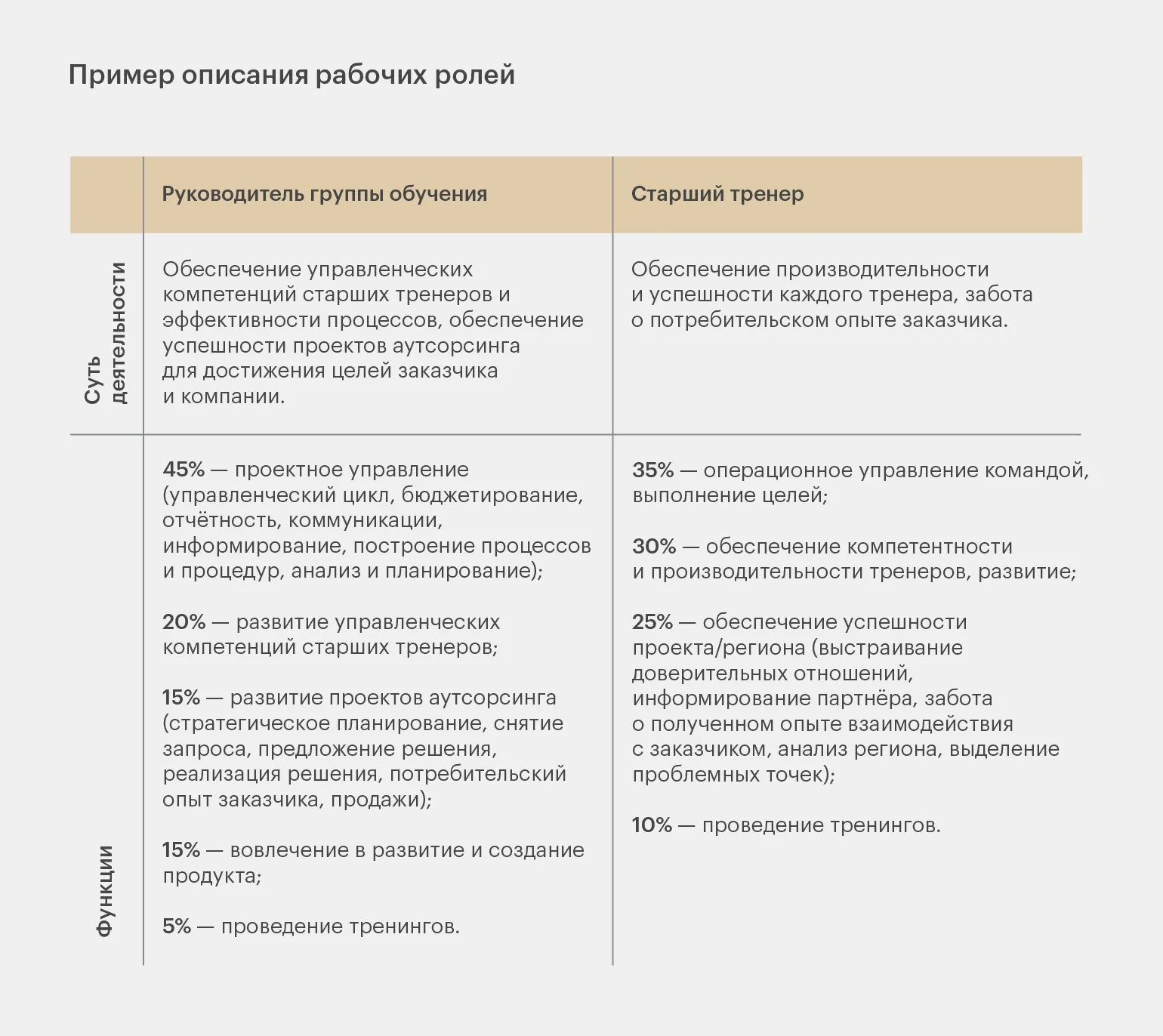
One of the key aspects of standardizing work processes is high-quality job descriptions. Often, these descriptions are lengthy documents written in legalese, making it difficult for employees to understand their responsibilities. It is important for job descriptions to contain specific key functions, limited to seven main points, as well as the percentage of time spent on each of these functions. Ideally, key performance indicators for each role should also be specified. Having such a document helps employees clearly understand what is expected of them, what skills and knowledge are required, and how much time they should devote to each task. This not only improves productivity but also promotes more transparent interaction within the team.
Business needs Set clear goals and evaluate results over specific periods. This process may have different names in different companies, such as performance management or performance management. However, the essence remains the same: it is based on quantitative and qualitative performance indicators (KPIs). It is also important to integrate individual employee development programs (IPD) into the business metrics system, which will improve overall performance and achieve set goals.
L&D (training and development) work in a company is linked to the achievement of business goals. Define your annual goals and match them with the skills that need to be developed to achieve them. For example, it is important for a marketer to learn lead generation methods, and for a project manager to master new technologies. This will help managers better understand the importance of L&D and the justification for allocating a budget for employee training. Creating such a connection between business goals and training contributes to increased company efficiency and the development of qualified specialists.
Operational management is a key aspect of effective business functioning. Key elements of this process include clearly defining tasks for employees, setting deadlines for their completion, and holding regular meetings to monitor progress. Providing feedback on their performance allows employees to understand what they are doing well and make necessary adjustments. This approach helps increase productivity and improve the quality of teamwork.
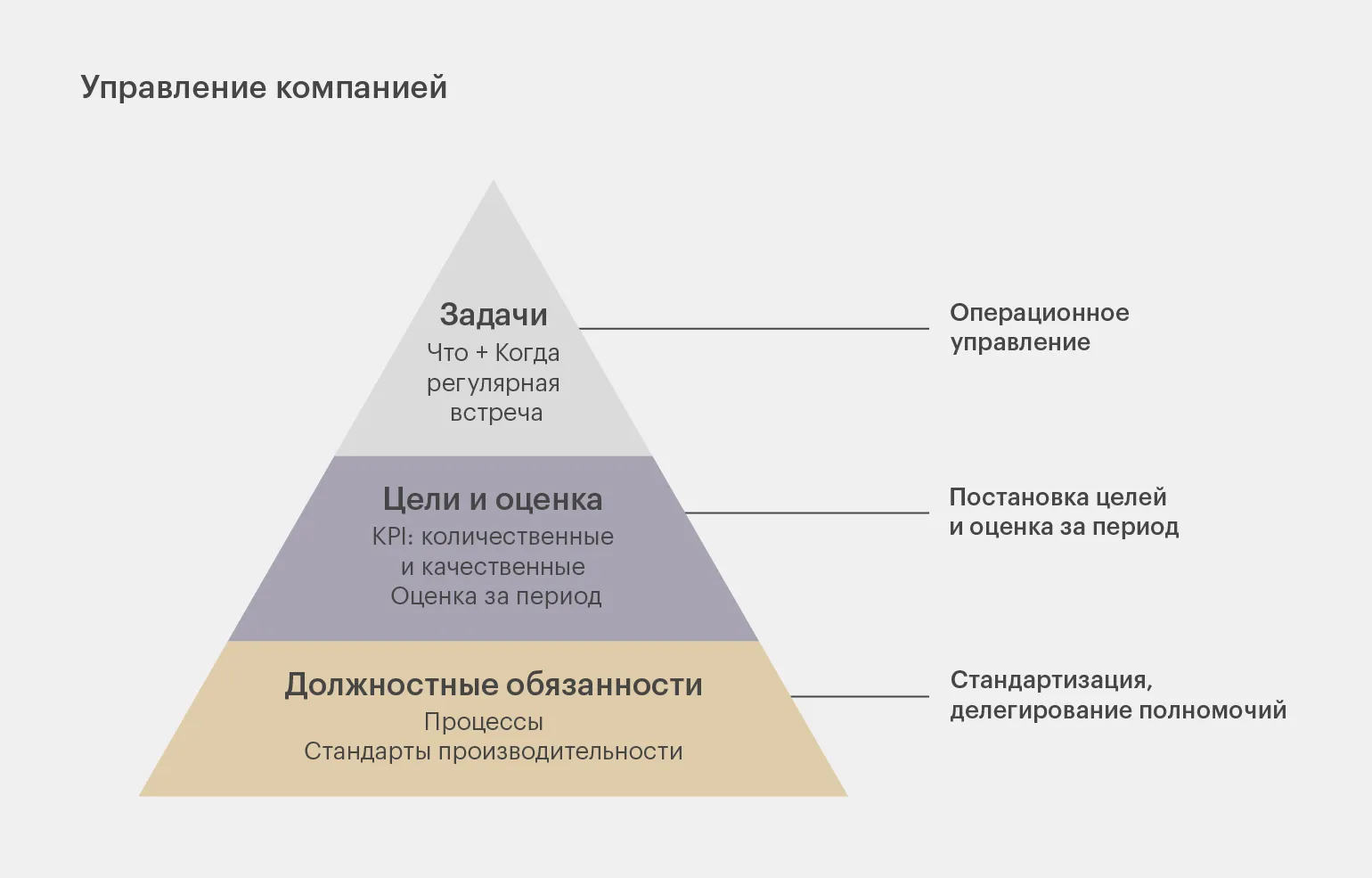
Training specialists need to engage in dialogue with business customers, relying on key concepts and English: terms. This allows them to demonstrate that they are not simply offering training, but are acting as true partners. It is important to distinguish between the roles of HR business partner and L&D business partner, as both positions imply equal cooperation. Establishing such a partnership promotes more effective interaction and the achievement of common goals in the field of personnel training and development.
How does it work? Let's imagine that a retail manager comes to me with a problem: "Our employees are not selling. Let's train them in sales skills." I ask the question: "Why do you think training will lead to increased sales? Let's analyze why they are not selling at the moment: where are the standards and instructions? Which specific stages of the sales process are they not performing properly?"
If the manager does not have the information, it is necessary to initiate a search and optimization of the process. If the manager is aware of the problem, or I have the relevant experience, this allows me to clearly define the areas for training. If there is no standard for sales specialists, the first step is to develop and document it. After this, gaps in employees' knowledge and skills should be identified to determine what exactly the team needs to be trained.
Creating standards begins with selecting the most successful sales manager. We carefully analyze their working methods and describe the process they follow. Then we conduct a skills assessment of the remaining employees to determine their current skills and what needs improvement. Based on this data, an appropriate training program is developed. This approach eliminates random actions and avoids ineffective training, which leads to increased overall team performance.
How to Link Training to Business KPIs
An employee's competence is formed from several key components. Although we cannot change a person's personal qualities, we can provide them with the necessary knowledge and skills. The manager plays an important role in this process, influencing the behavior and motivation of employees. Setting clear goals and supporting their achievement through effective operations management contribute to the development of competence and increased team productivity.
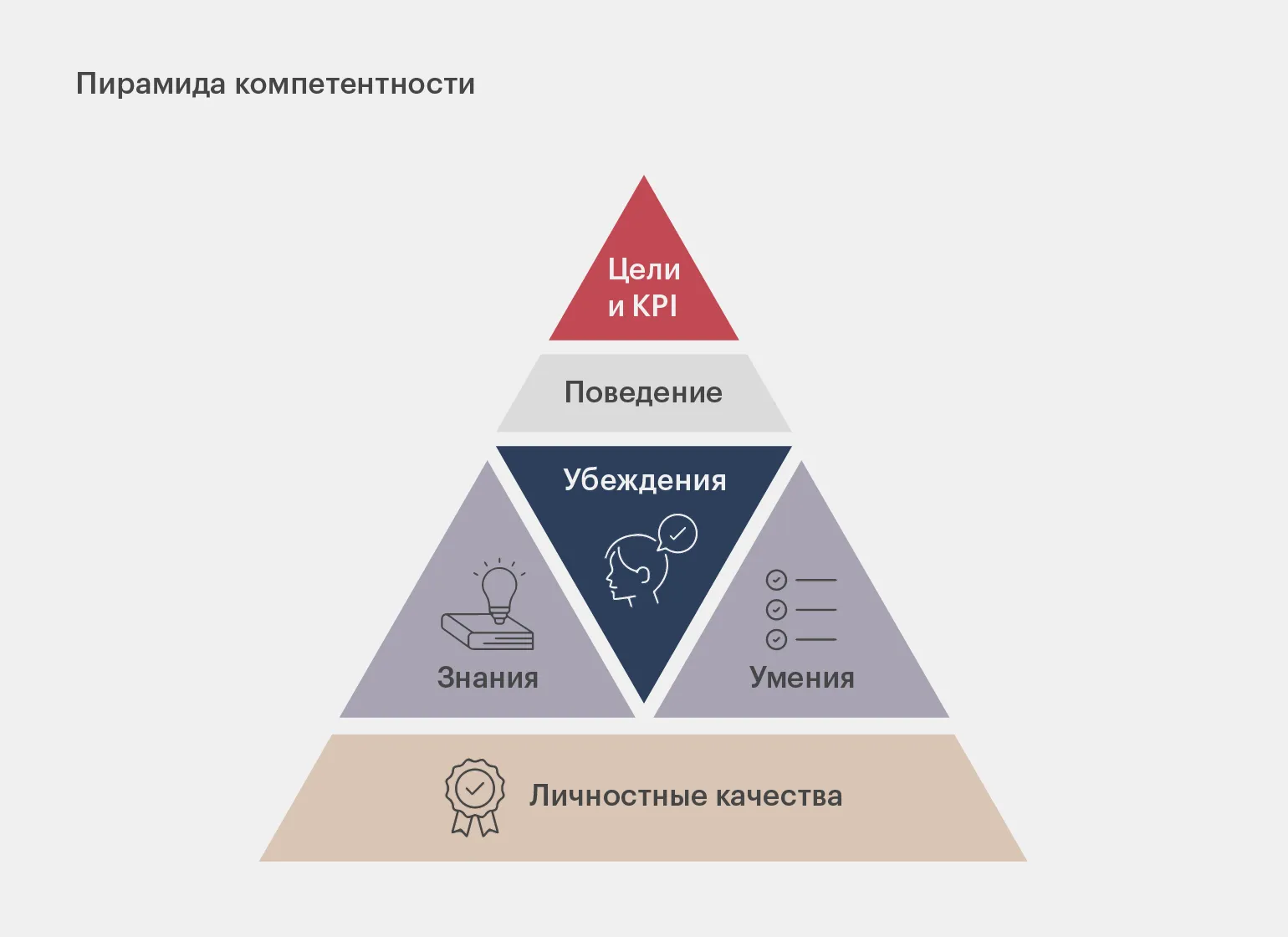
A professional manager, noticing a decline in business performance, begins to analyze the behavior of their employees. For example, if key performance indicators (KPIs) are related to cross-selling, and the manager records low values, this signals the need for change. It is important to motivate employees to offer customers additional products along with the main product. Optimizing cross-selling approaches can significantly increase overall sales and improve the company's financial results.
If employees do not know how to properly communicate with customers or are insufficiently knowledgeable about an additional product, training is necessary. If the cause of low sales lies in limiting beliefs, these beliefs should be identified and strategies for overcoming them developed. Proper training and addressing mental barriers will help increase sales effectiveness and improve customer interactions.
If the problem lies in personal qualities, this is not the appropriate level for training. For example, if a salesperson lacks empathy and dislikes interacting with people, no matter how many sales skills they learn, they likely won't succeed. Empathy and a love for people are fundamental to a successful sales career. Without these qualities, even the best techniques and strategies won't produce the desired results.
There are many ways to align business goals with training and individual employee development plans. Defining key business goals allows you to create targeted training programs that will help employees develop the necessary skills and competencies. For example, if one of the company's goals is to increase sales, training might focus on developing sales and negotiation skills. Individual development plans can include specific courses and training sessions that align with these goals, as well as opportunities for mentoring from more experienced colleagues. This will not only enhance employee skills but also accelerate the achievement of overall business results. It is also important to regularly review and update training programs based on changing business strategies and market needs. This approach will ensure synergy between staff development and the achievement of business goals.
- To increase revenue to new levels, new leads are needed—which means training in new marketing tools.
- To increase margins, costs must be reduced, which requires optimizing work processes. So, it's time to launch an Agile school.
Training should be integrated into the overall business system and evaluated based on annual results, similar to business goals. Only under these conditions will individual employee development plans function effectively, and managers will focus on the necessary actions to achieve goals. This approach not only promotes employee skills growth but also improves overall business performance.
Attempts to create an ideal picture of interaction between HR and line managers often encounter problems due to the latter's insufficient qualifications. Therefore, developing the skills and competencies of managers is the foundation for the successful work of the entire team. Effective people management requires not only professional knowledge but also the ability to conduct dialogue, motivate employees, and resolve conflicts. Investing in the training and development of line managers will help create a harmonious corporate culture and improve the overall productivity of the organization.
How to integrate training into operational management
The key task of a line manager is to ensure the success of their subordinates and help them achieve their goals. This involves not only setting goals but also constantly monitoring their implementation. Providing feedback is an important aspect: achievements should be celebrated and errors corrected. In Russia, unfortunately, there is a lack of positive feedback. If a subordinate completes a task correctly, this often goes unnoticed, whereas errors are followed by criticism, sometimes even personal attacks. An effective line manager should strive to create a constructive atmosphere where praise and constructive criticism go hand in hand.
Training is an integral part of effective management, and it is important for managers to recognize that every assigned task includes an element of employee training. To achieve this goal, it is necessary to organize regular meetings with subordinates, both group and individual. These meetings serve as a kind of training, allowing employees to better understand how to perform their duties and develop professional skills. In this way, managers not only set goals but also contribute to the growth of their employees' competencies, which ultimately leads to increased overall team productivity. Changing people's behavior cannot be achieved through a single training session; it requires regular and systematic influence on the same area while maintaining a unified direction. Do managers know how to effectively implement this approach? In most cases, no. This is why many management schools include modules dedicated to employee development in their programs. Regular training and support from management contribute to the formation of sustainable skills and habits, which ultimately affects the team's effectiveness and the achievement of business goals. When HR management is integrated into the overall company strategy, and top management is actively involved in this process, recognizing its importance, highly effective training is achieved. Clearly structured processes and defined roles help identify areas where training needs to be implemented, significantly increasing its effectiveness.
Read also:
- How to speak the same language as your training customer
- 5 tips for planning corporate training for the year
- The unpleasant truth: businesses don't see value in the L&D function
- How to evaluate training effectiveness without numbers: 7 alternative metrics