
Contents:

Learn: The Profession of Methodologist from Scratch to PRO
Learn moreWhat is Microlearning
Microlearning is an effective learning method that teaches knowledge in small chunks with regular repetition. This approach helps learners better retain information and apply it in practice. Examples of microlearning include short educational videos on the TED-Ed platform and the language learning app Duolingo, where each exercise takes no more than five minutes. In contrast, traditional methods such as lengthy workshops or reading large manuals all at once may be less effective at retaining information. Microlearning is ideal for today's fast-paced lifestyle, allowing you to learn anytime, anywhere.
Microlearning, although popular in recent years, is not a new concept. The idea of breaking large amounts of information into small chunks was recognized 65 years ago. In 1956, George Miller, one of the founders of cognitive psychology, described a key principle in his paper "The Magical Number Seven, Plus or Minus Two": a person can retain an average of seven pieces of information in memory at a time, with a possible deviation of two elements. This concept became the basis for the development of modern teaching methods that emphasize brevity and accessibility of information, which makes the process of knowledge acquisition more effective. Microlearning improves the memorization and assimilation of information, which is especially important in the context of rapid changes in knowledge and skills in various fields.
Why is microlearning useful?
The development of microlearning is based on the theory of the forgetting curve, proposed by the German scientist Hermann Ebbinghaus. During many years of experiments with his own memory, including memorizing meaningless sets of sounds, Ebbinghaus came to important conclusions in the 1880s. He found that students forget more than 50% of new information just 20 minutes after a lesson. After nine hours, no more than 40% of the learned material is retained, and after a month, this figure drops to 24% if the information is not reviewed. These results were plotted on a graph known as the "forgetting curve." In 1991, scientists from Germany confirmed Ebbinghaus's experiments, and in 2015, researchers from the Netherlands successfully replicated the forgetting curve. These discoveries highlight the importance of regular repetition of material for effective learning and have become the basis for the development of microlearning as a method for improving information retention.
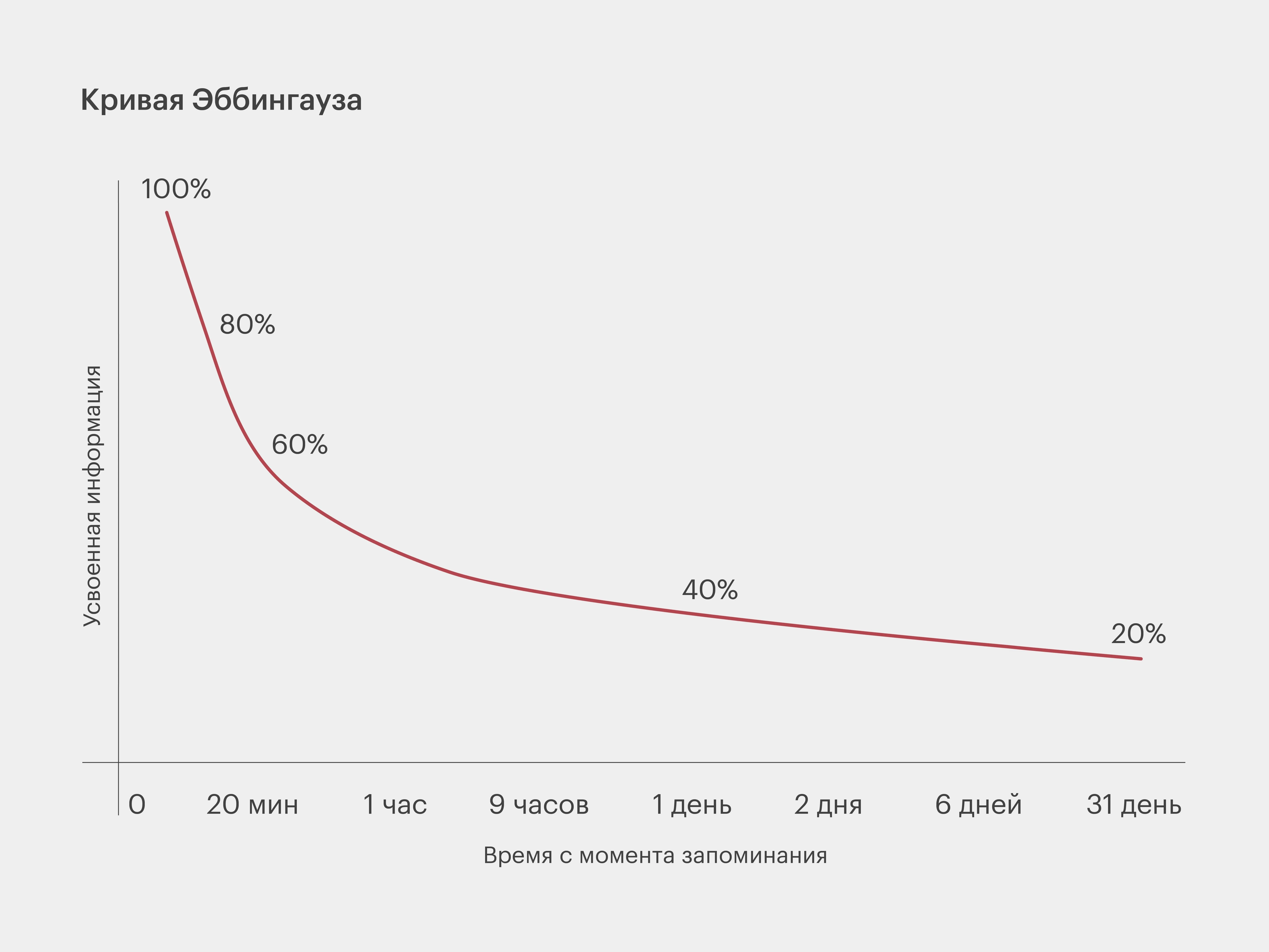
To overcome the problem of forgetting, it is recommended to use the spaced repetition method. This approach is the basis of microlearning and promotes more effective assimilation of material. Regularly reviewing information at regular intervals helps reinforce knowledge and improve memory. Microlearning, in turn, allows for a more structured and productive learning process.
Learn 10 key principles of effective teaching and learning, developed by brain researcher John Medina. These principles will help improve the learning process, making it more productive and engaging for students. Applying these methods can significantly improve retention and student engagement.
Mobile apps and online courses make it much easier to review previously learned material through effective learning methods. They allow students to study at their own pace and review previously learned topics. This approach strengthens neural connections in the brain, allowing new information to transfer from short-term to long-term memory. Regular repetition and accessibility of materials play a key role in knowledge retention and improving learning effectiveness.
Micro-learning has significant benefits, supported by modern research. Research conducted by researchers at the Technical University of Dresden showed that participants who were asked one question after each chapter of a text responded 28% faster compared to those who answered eight questions after reading eight chapters. These findings highlight the effectiveness of micro-modality in the educational process, promoting faster information absorption and improving overall learning productivity.
A training approach focused on brevity has a positive impact on employee motivation. The American technology company Software Advice surveyed 385 of its employees to determine how likely they were to participate in corporate training if the sessions were short. Fifty-eight percent of respondents noted that this form of training would increase their engagement. Thirty-one percent of survey participants said the training format would not affect their attitude toward it. Only 11% of respondents expressed the opinion that the micro-format might put them off. This finding highlights the importance of tailoring learning programs to employee needs to improve engagement and learning effectiveness.
What Microlearning Is and Can Be
The ELM Learning website offers evidence-based approaches to microlearning, providing effective methods and ideas for its organization. Here you will find a variety of strategies to help optimize the learning process and make it more effective.
Educational videos created using the microlearning principle are short and accessible materials. They allow you to effectively convey information and are easy to share with other users. According to a study by Kaltura, published in the report "The State of Video Content in Education 2019", 82% of 1,400 teachers and students surveyed say that video contributes to improved learning outcomes. In addition, 91% of survey participants noted that video content significantly increases student and school satisfaction with the learning process. Using educational videos is an effective way to improve the quality of education and student engagement.
According to App Annie's annual "State of Mobile" report, users worldwide downloaded mobile apps approximately 218 billion times in 2020, a record. This high popularity of mobile apps makes them an ideal platform for microlearning. Today's market offers a variety of solutions for teaching various skills, including coding, guitar, and other subjects. Mobile technology allows learning to take place anytime and anywhere, significantly increasing the availability of educational resources.
A 2020 study of 365 students found that gamification improved learning outcomes by 35%. Using business games, quests, and puzzles can significantly improve the effectiveness of microlearning. Gamification as a teaching method makes the process more engaging and interactive, which promotes better learning and increases student motivation. The introduction of game elements into the educational process opens up new opportunities for achieving high results.

This format presents information in the most visual form. Students do not need to analyze large volumes of text to assimilate new knowledge - just look at a graph or table. Using visual data promotes better understanding and retention of material, which makes learning more effective.
Social media has over 3.6 billion users worldwide. This creates a unique opportunity to integrate microlearning applications into popular platforms. If potential learners already use these resources daily, introducing educational solutions into their familiar environment can significantly improve learning effectiveness. Microlearning on social media allows for easy and accessible knowledge transfer, making the learning process more engaging and convenient for users.
What Microlearning Should Not Be
When attempting to implement microlearning, many encounter common mistakes, leading to disappointment in the effectiveness of this format. It is important to understand that microlearning requires the right approach and strategy to achieve the desired results. Without considering the characteristics of the target audience and a clear content structure, microlearning may not meet expectations. To avoid these problems, it's important to carefully plan learning content and formats based on learner needs. Innovative learning strategist Sumedh Kasare offers valuable tips on avoiding common pitfalls when organizing microlearning. Effective microlearning requires careful consideration and a clear structure to maximize its potential. Kasare emphasizes the importance of setting clear learning objectives and tailoring content to the needs of the target audience. He also recommends using a variety of formats, such as videos, infographics, and text, to maintain learner interest and engagement. Paying attention to these aspects can significantly improve the effectiveness of microlearning and ensure better retention. Breaking down large learning materials into smaller chunks, such as breaking a long lecture into ten-minute segments, is not microlearning in itself. It's important that each chunk contains one clear idea. Focus on the specific outcomes students should achieve when learning each micro-chapter of information. This will increase the effectiveness of learning and improve material retention. Microlearning should be structured, focused, and focused on the practical application of knowledge.
Give your students the opportunity to learn new material in a variety of ways. Use text resources in addition to videos, and offer a variety of activities. For example, send students emails with short practical tips, share weekly educational videos, and conduct quizzes every two weeks with the opportunity to win prizes. This approach will not only add variety to learning but will also increase student engagement, which will contribute to more effective learning.
Not all educational tasks can be effectively solved using microlearning. In some cases, microlearning should be considered as a supplement to traditional classes, textbooks, and longer online courses. Microlearning can be useful for quickly absorbing information, but its optimal use requires combining it with other teaching methods for maximum impact.
Unlike traditional lengthy courses and textbooks, creating microlearning materials takes significantly less time. This allows students to receive new microassignments more regularly, immediately after they are prepared. This approach promotes more effective learning and allows for prompt feedback to further improve the learning materials. Frequently updating microassignments helps maintain student interest and engagement, which in turn promotes better information retention.
Learning has a significant impact on your students. It helps them improve their knowledge, increase productivity, and develop new, healthy habits. Evaluating the effectiveness of microlessons is key to their continuous improvement. It is important to analyze the results and make changes to the teaching methods in order to maximize the potential of students and achieve better results.

Why microlearning is criticized
Microlearning, despite its While effective application is not a universal solution for all educational processes, e-learning specialist Nikos Andriotis identifies several key drawbacks of microformats in the educational field. These drawbacks can limit the potential of microlearning and impact its effectiveness in various contexts.
A mobile app with microlessons is great for learning the basics of conversational German, but it will not be an effective tool for deep mastery of German literature.
Microlessons are ideal for conveying simple information, but they are not always effective at explaining complex concepts. Successfully explaining such topics requires breaking them down into simpler elements, which can require significant effort. Furthermore, there is a risk, as noted by the authors of the Matrix blog, dedicated to modern educational technologies: focusing too deeply on individual aspects can lead to a loss of overall understanding of the topic. This highlights the importance of balancing detail with a holistic approach in learning.
Bottom Line
Microlearning isn't a one-size-fits-all solution for all educational goals, but it can significantly contribute to student motivation and engagement, as well as improve information retention. This approach is especially relevant when the target audience is time-pressed and training becomes essential. This is why microformats are increasingly being incorporated into corporate training. For in-depth mastery of complex subjects, it is recommended to combine microlearning with traditional delivery methods for best results.
Rework the text, maintaining the main topic and adding SEO optimization. Avoid unnecessary symbols and emoticons, and do not use numbers or bullets. The text should be clear and understandable.
Read also:
- Andragogy: Why Adults Should Be Taught Differently Than Children
- How to Create a Quality Online Course: 6 Conditions
- Droodles: What They Are and How They Help in Learning
- Checklist: 5 Ways to Increase Inclusion in an Online Course
Methodologist Profession from Beginner to Advanced
You will develop skills in developing curricula for online and offline courses. Master modern teaching practices, structure your experience, and become a more sought-after specialist.
Find out more