
Table of Contents:
How Playlists Help in Learning
Playlists are thematic collections that help organize a variety of content, including videos, articles, books, podcast episodes, courses, and programs. These collections can be created for different categories of employees, such as managers or newcomers, or around different events or topics. Playlists can be published simultaneously or over a long period of time. This format offers flexibility in content management, allowing it to be tailored to the specific needs and preferences of users. Freedom of choice isn't the only advantage of playlists in employee training. The primary benefit is the ability to customize training programs. Shannon Herrera illustrates this with the example of a new manager who has just started at the company. The new employee might be offered a standard path with mandatory courses, which are undoubtedly useful. However, if they already have knowledge in a particular area, such courses may be ineffective and time-consuming. A playlist provides the necessary flexibility: employees can select the topics they truly need. So, instead of taking five courses, they can limit themselves to three, saving them time and the company's resources. This approach applies to all employees: playlists expand choice and avoid overwhelming them with unnecessary information. As a result, this fosters a positive corporate learning culture where everyone can gain relevant and useful knowledge.
Yulia Rinevich emphasizes the important advantage of playlists as a personalization tool. Playlists allow users to create unique music collections that reflect their individual preferences and mood. This approach not only improves the user experience but also promotes deeper engagement with the content, making playlists an important element in the digital music industry.
A learning format that takes into account individual preferences is an effective approach that allows everyone to choose the optimal learning method. At our company, for example, we have a corporate library, "LitRes," where employees can order both e-books and audiobooks. This allows everyone to choose the format that is most convenient for them: some prefer reading, others listening, and some use both options for deeper assimilation of the material. A similar situation is observed with educational playlists: everyone can choose the format that is convenient for them for learning and reinforcement of knowledge. A variety of training formats helps increase employee engagement and improve the quality of information acquisition.
Playlists are a useful tool for both employees and the training department. Shannon Herrera emphasizes that they also play an important role in marketing activities for L&D and T&D. Publishing new collections of recommendations provides an opportunity to engage employees and demonstrate new avenues for professional growth and development. This helps increase interest in training and improve the overall efficiency of the department.

Collections are an effective way to organize content and analyze proposals Third-party providers that may be of interest to employees. Yulia Rinevich also emphasizes the importance of playlists as a relevant content element. These playlists can not only remain popular but also serve as a supplement to new courses and programs, increasing their value and relevance in training. The training format has both advantages and disadvantages that affect both employees and educational program developers. One of the main disadvantages for employees is that the wide variety of content requires significant time to familiarize themselves with and master the necessary materials. Creating high-quality playlists also requires a significant investment of time. Yulia Rinevich notes that with numerous resources on various topics, it is often necessary to supplement the list with in-house developments, such as articles or mini-courses. This is because interesting third-party content often repeats the same ideas, and important details may be missed by its authors, which makes the supplement especially relevant.

Read also:
Recently, there has been a trend to create many new courses, but it is important to focus Support and development of existing programs. These courses have potential for improvement and can be adapted to meet modern needs and requirements. Instead of constantly launching new educational products, it's necessary to ensure high-quality support for current courses, which will increase their effectiveness and relevance. Supporting existing programs will not only deepen students' knowledge but also improve their experience, ensuring they meet modern standards and expectations.
How to Develop Your Own Educational Playlist
Playlist development follows standard steps similar to the design process for other educational products. Shannon Herrera offers a number of recommendations for effective playlist creation. These tips help structure the material, make it more accessible and interesting for students, and ensure better information absorption. It is important to consider the target audience and their needs, select appropriate resources and teaching methods, and regularly update the content to keep it current and relevant. This approach contributes to the creation of a high-quality educational product that will facilitate successful learning and student development.
- Decide on the purpose and topic. They should be clear and simple; putting literally your entire corporate library into a playlist is not necessary - this will only confuse students. To determine the goal, it is enough to answer a simple question: what is the key idea the employee should take away?
- Decide on the target audience. Who are you compiling recommendations for—for all employees of the company or a specific department, for newcomers or experienced specialists?
- Set specific learning objectives. These goals should be defined not only for yourself, but also for those for whom the playlist is intended: the skills they need to master, the knowledge they need to acquire.
- Think through the structure. There are no strict rules, but the main thing is to avoid a hodgepodge—for example, "PowerPoint for Beginners" shouldn't immediately follow "PowerPoint for Experts." You can sort content according to different principles—for example, from simple to complex or by video length (of course, all within the same topic). Remember that visual organization is just as important as semantic organization.
- Mix different types of content. In training, playlists are varied—you can include articles, videos, quizzes, and tests in a single collection. This way, you can not only diversify but also, to some extent, personalize employee training.
How is this format implemented in practice? Yulia Rinevich shares the experience of the Skillbox Academy: each month, the training department selects one relevant topic, often related to soft skills such as time management or effective communication. Content for employees is provided weekly through a separate channel, offering a variety of formats. For example, during the first week, Academy participants might be offered articles, books, and videos from a carefully selected selection. These materials are organized so that employees can master a new activity or study a new resource daily, while avoiding information overload. The selections of materials are supplemented by master classes, webinars, as well as course recommendations and useful literature. The result is an extensive playlist on the chosen topic, which facilitates deeper and more structured employee training.
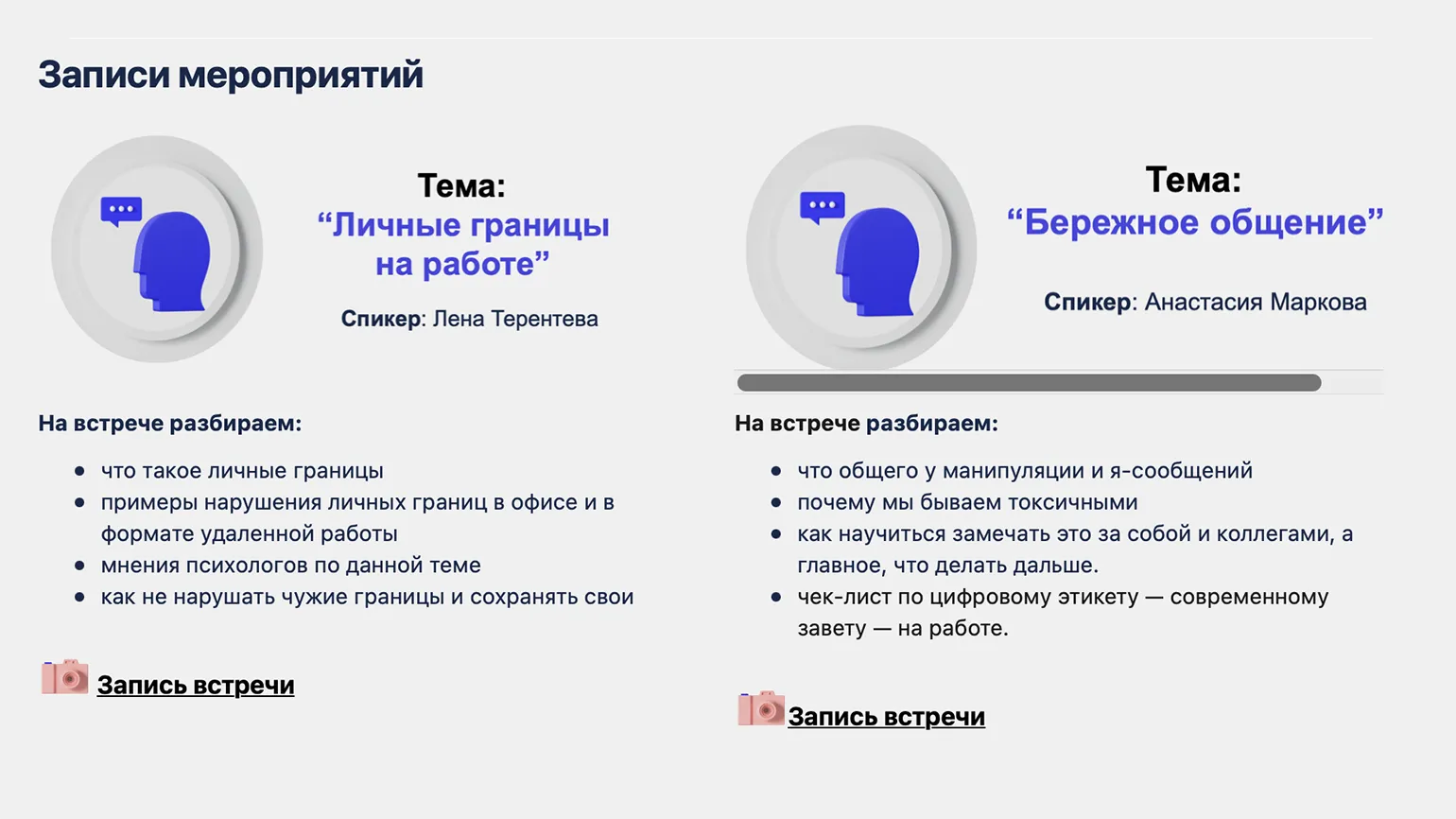
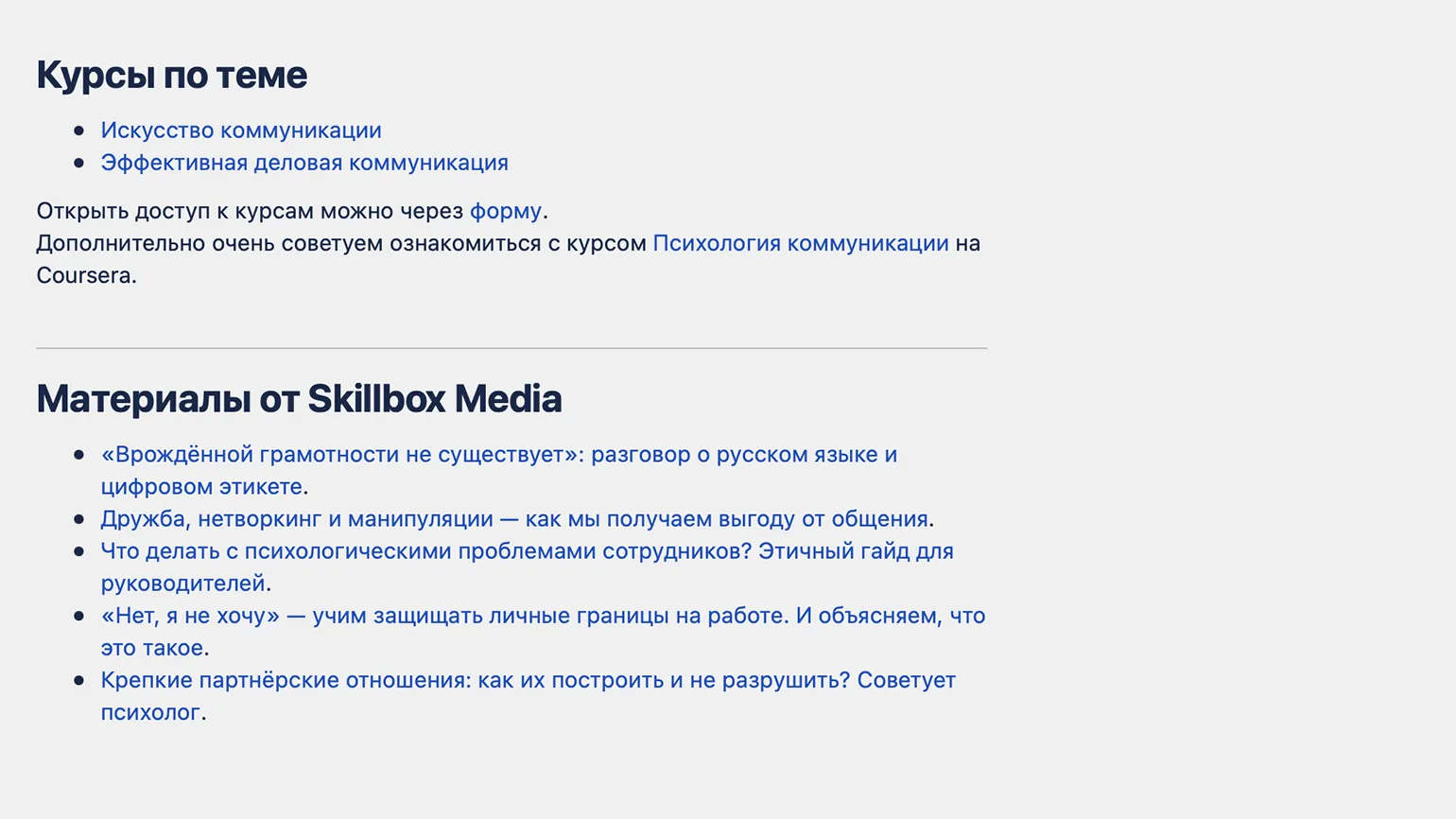
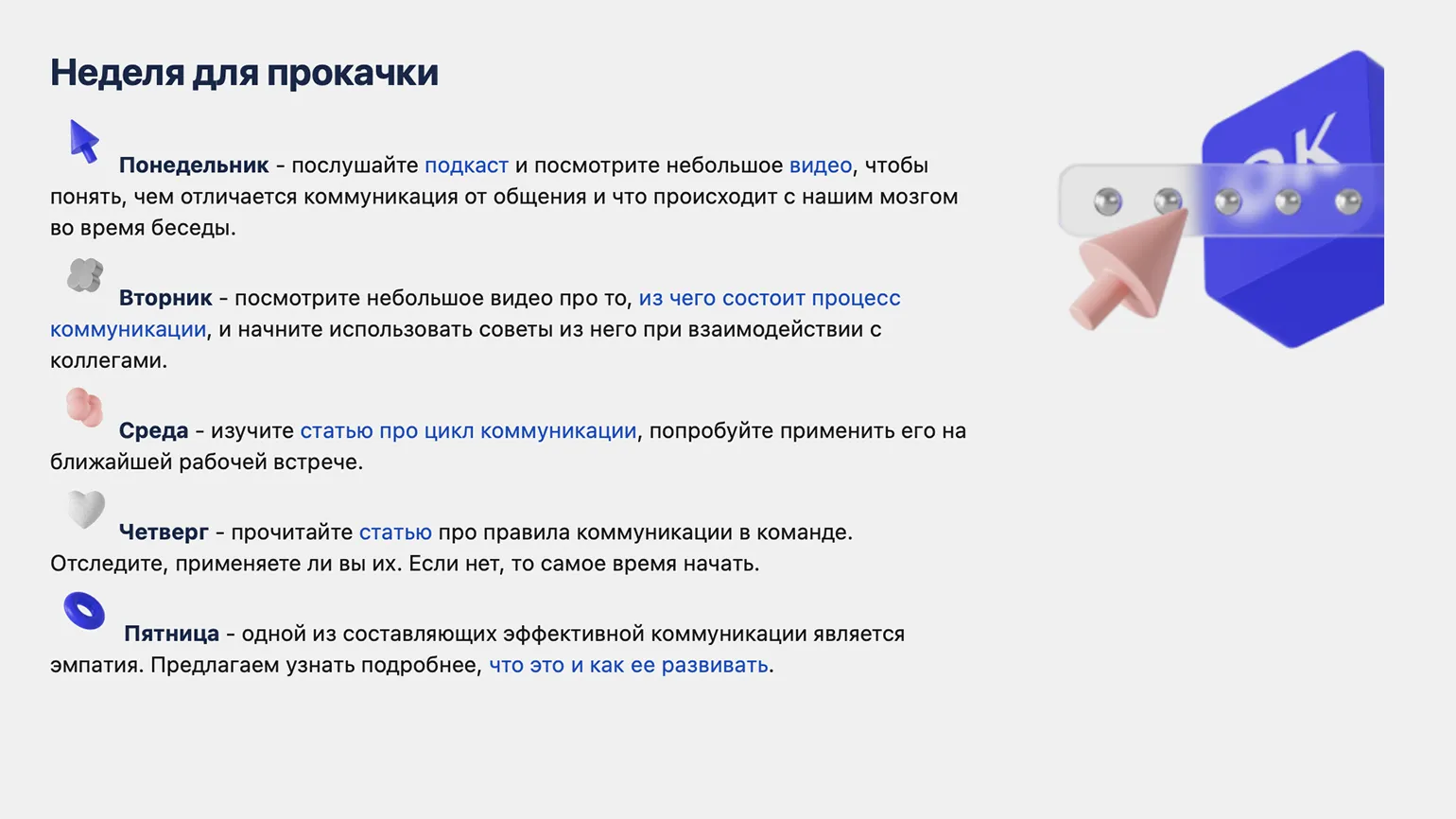
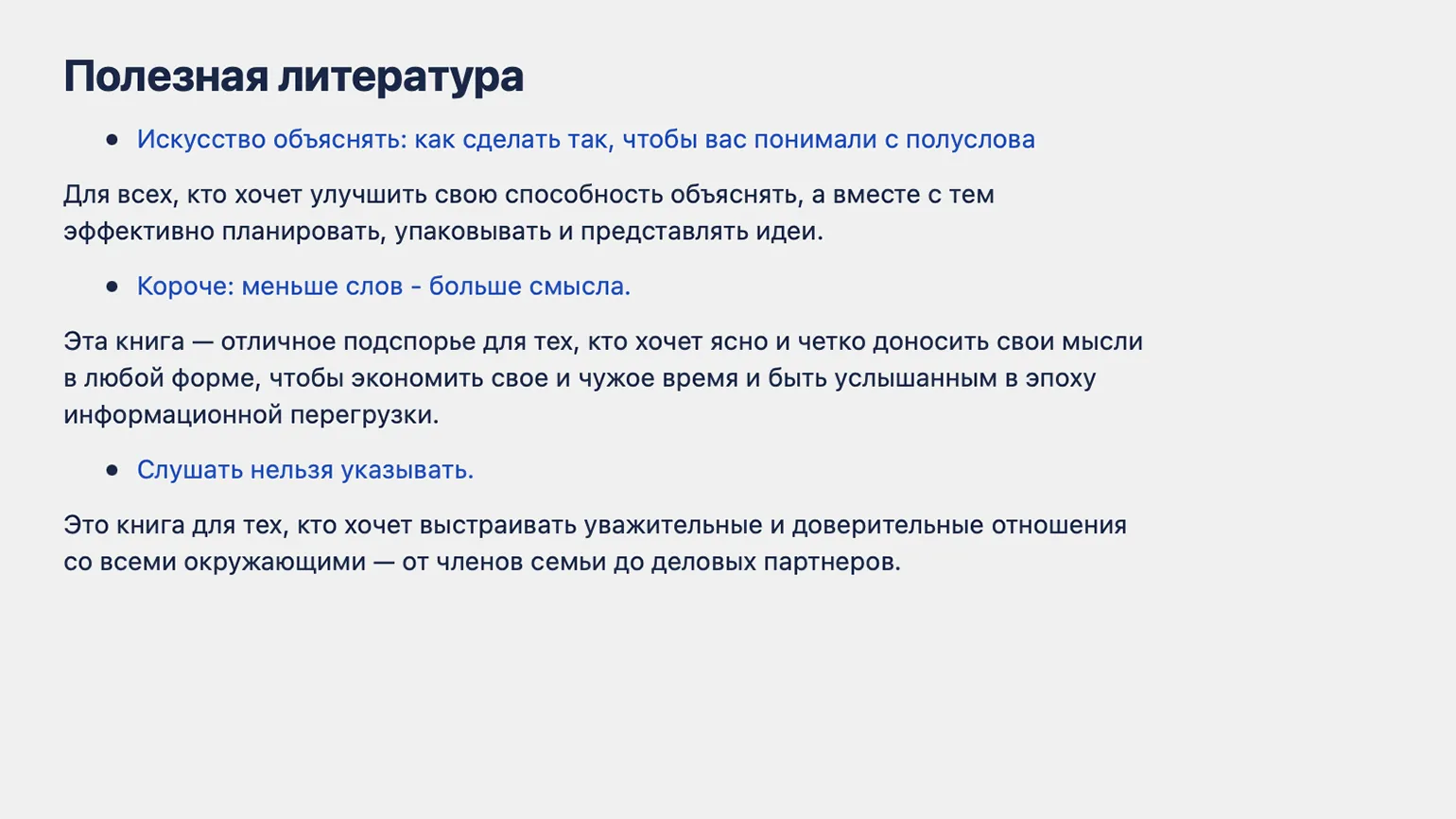
Collections of information are also available for managers, but given their high workload, materials are provided once every two weeks.
Yulia Rinevich shares useful insights and recommendations for those seeking to adopt valuable experience. She offers practical advice to help you develop your skills and achieve your goals. These recommendations are based on personal experience and can have a significant impact on your professional growth. If you want to improve your skills and adapt to new conditions, Yulia's advice will be a great help.
- Prepare a content plan. Ideally, make it long-term, for several months, but still leave yourself some wiggle room. If something happens in the company (or even in the world), you should be able to reorganize and focus on what's important to your employees.
- Use more video and audio than text. Books require more time and concentration, and, sadly, not everyone enjoys reading—so it's better to focus on more popular formats (although this doesn't mean you shouldn't offer books, it's just that basing your entire selection on them may not be the best idea).
- Summarize what you've learned in cheat sheets and cards. A beautifully presented and concise summary will help quickly refresh your memory of everything you've learned or simplify the process of implementing it into work processes.
- Add more interactivity and opportunities for feedback. Did employees even open your playlist, read the books, or watch the audio? Often, people don't provide feedback in the moment, but in the hallways and during chance encounters, they happily share their impressions. This is great, but it's better to create more opportunities for employees to share feedback with training organizers, says Yulia. And not only to understand their own effectiveness, but also to initiate a productive dialogue with coworkers.