
Contents:
L&D specialists often face requests from businesses when customers report problems with their employees performing tasks, asking to organize training. It is important to understand that in such cases, training may not be the most effective solution. First of all, it is necessary to analyze the causes of the problems and determine what impact on employee behavior will be most appropriate. Learning and development professionals must not only understand the need for such analysis but also be able to apply scientific methods to it in order to make informed decisions and propose effective solutions, rather than acting in a haphazard manner.
There are many models in social psychology, and one of the most significant is the COM-B model. This acronym stands for Capability, Opportunity, Motivation - Behavior. This model serves as a framework for analyzing behavior, allowing one to assess people's abilities, opportunities, and motivation. Understanding these factors helps identify the causes of specific behavior and develop effective strategies for changing it. The COM-B model is widely used in various fields, including healthcare, education, and social initiatives, where it is important to change people's behavior to achieve desired results.
The Behavior Change Wheel (BCW) framework is an important component of the system that combines the COM-B model and a classification of various behavioral interventions. This enables the selection of the most effective intervention to achieve desired behavioral changes. The BCW provides a structured approach to understanding and changing behavior, making it a useful tool for researchers and practitioners in psychology, health, and social work. Using this framework, strategies aimed at positive behavioral change can be effectively developed, taking into account the unique needs of each target audience. The authors of the COM-B model and the Behavior Change Wheel claim to have developed this approach based on well-known behavior change frameworks. They integrated key elements of these models to create a holistic and systematic methodology that facilitates effective behavior change. This combination of different approaches allows for a deeper understanding of the mechanisms that influence behavioral change and provides tools for its successful implementation. The COM-B model is a useful tool in the field of training and development (L&D), since learning is a behavioral process. If employees do not put their acquired knowledge into practice or refuse to participate in the courses and trainings you carefully develop, it is worth investigating the reasons for this phenomenon. The COM-B framework can help you identify barriers to effective training and develop strategies to overcome them. This will improve employee engagement and training outcomes.
In this article, we will look at the COM-B model, which is the basis for the behavior change wheel. We will discuss the key aspects of the COM-B model and its importance in the context of behavior change. We will also focus on how this model can be applied in practice to achieve desired results.
Who invented the COM-B model and what is it?
The COM-B model and the behavior change wheel concept were proposed in 2011 by an international team of psychologists, including Susan Michie and Robert West from University College London, and Maartje Marieke van Straelen from the Amsterdam University Medical Center. These scientists conducted research aimed at identifying effective approaches to behavior change in the field of public health, including smoking cessation and physical activity programs. The model has been developed to be easy to use in everyday practice, while being based on scientific psychological theoretical foundations, making it useful for professionals in the fields of health and social work.



In less than three years since the article was published, it has been viewed more than 43,000 times and cited more than 140 times in various sources. This has led to numerous requests for workshops and training sessions on the application of this model in various fields, including not only healthcare, but also education, politics, social work, and business.
In 2014, Susan Michie and Robert West, together with Lou Atkins, refined their theory and published the book "The Behavior Change Wheel: A Guide to Designing Interventions". This work represents an important contribution to the field of behavior change and the design of effective interventions. However, the book has not yet been published in Russian. This creates a gap in the accessibility of knowledge about behavior change methods for a Russian-speaking audience.
Designing behavior change according to COM-B theory involves three key stages. In the first stage, the COM-B model is applied, which allows for a deeper understanding of behavior. This involves analyzing the reasons why people act in certain ways, identifying the barriers that prevent them from doing so, and determining the changes needed to overcome these barriers. This approach helps develop effective strategies for changing behavior and achieving desired results.
The first stage includes four key steps.
- Identify the behavioral problem.
- Select the target behavior—that is, the desired behavior toward which people need to be led.
- Specify the target behavior (clarify it in detail and context).
- Determine what exactly needs to change.
This study analyzes the behavior of individuals, groups, organizations, and entire communities. Behavioral research reveals patterns and trends that can be useful for understanding social interactions and processes.
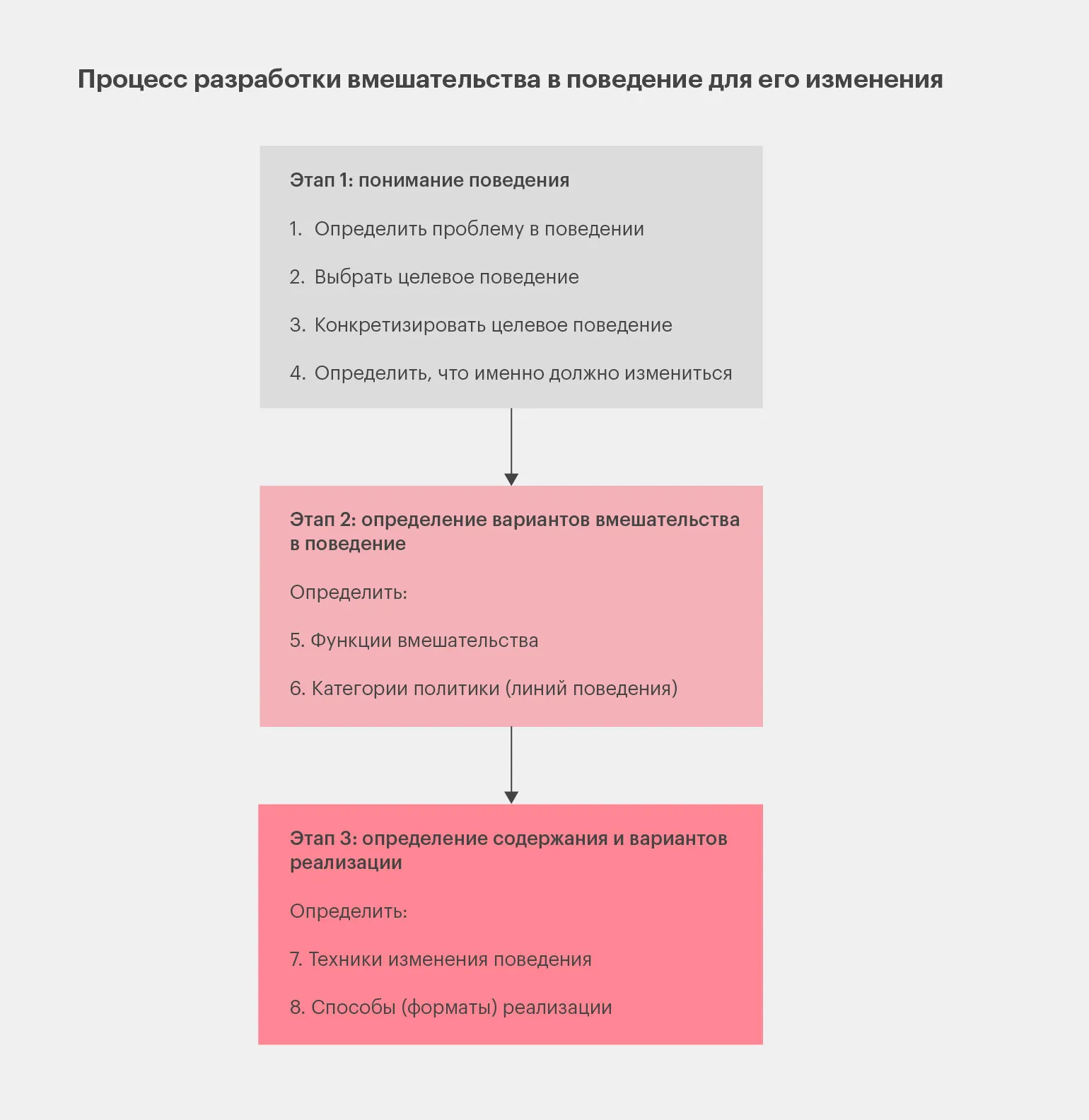
The second stage of behavior change design involves identifying intervention options. The choice of approach depends on the identified barriers to the target behavior or the factors that contribute to undesirable actions. Interventions can range from persuading people to use coercive measures. Education and training are also effective intervention methods. In some situations, simply changing the environment can significantly influence the formation of undesirable behavior.
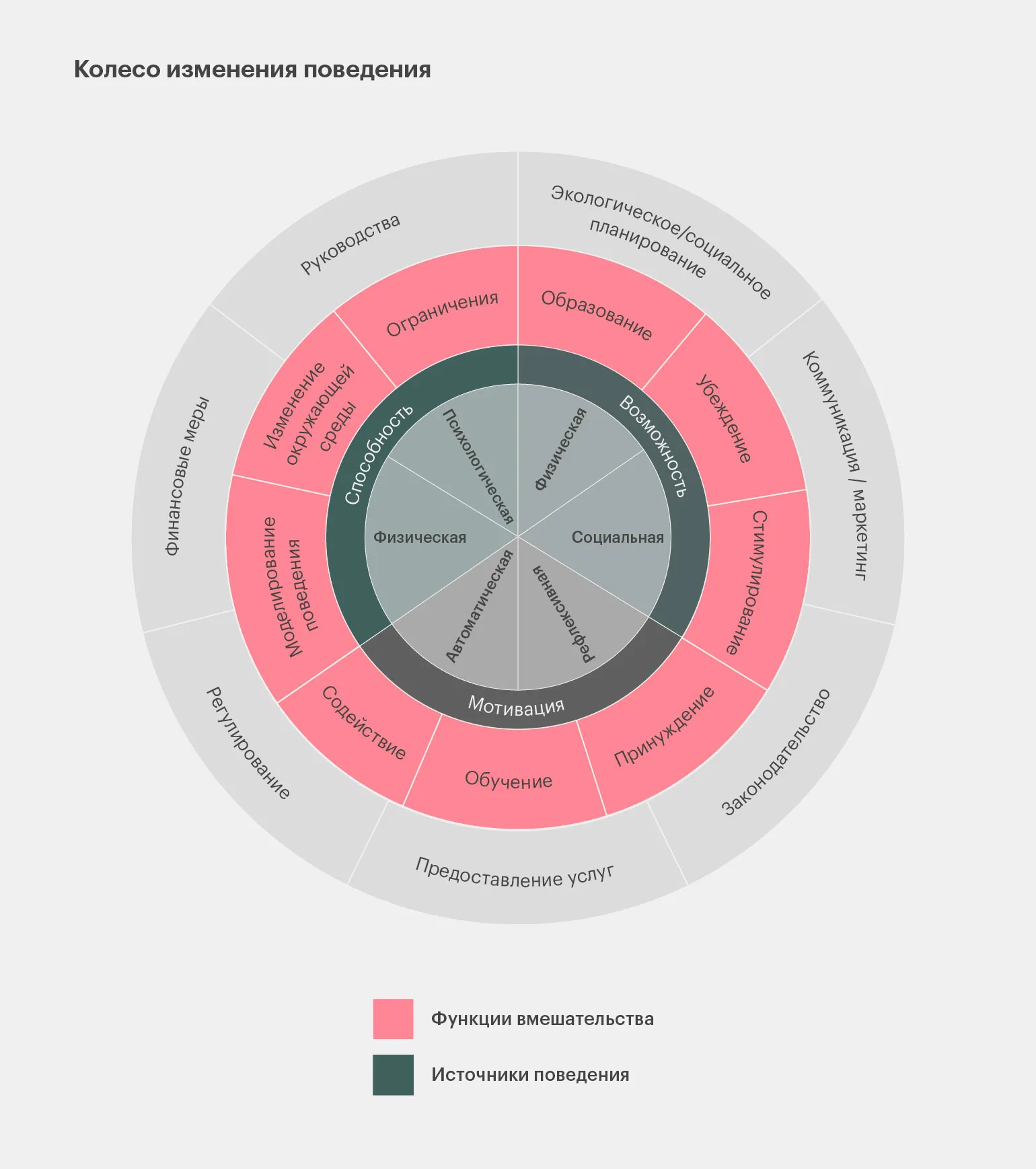
The third stage involves determining the content and methods of delivery of the selected interventions. Various types of interventions are schematically presented in a taxonomy known as the behavior change wheel. This article will focus on the first stage—behavior analysis, which applies the COM-B model. The subsequent stages of developing effective interventions depend on this analysis.
British expert in the field of occupational psychology and educational technologies, Will Procter, argues that the COM-B model offers a systems approach to problem solving. It helps answer the key question, "What needs to change?", avoiding automatic solutions such as organizing training. Instead, the model allows you to structure information and assess the situation more thoroughly, which contributes to more effective changes in the organization. Using the COM-B model can lead to more informed and targeted actions, which increases the likelihood of success in implementing change.
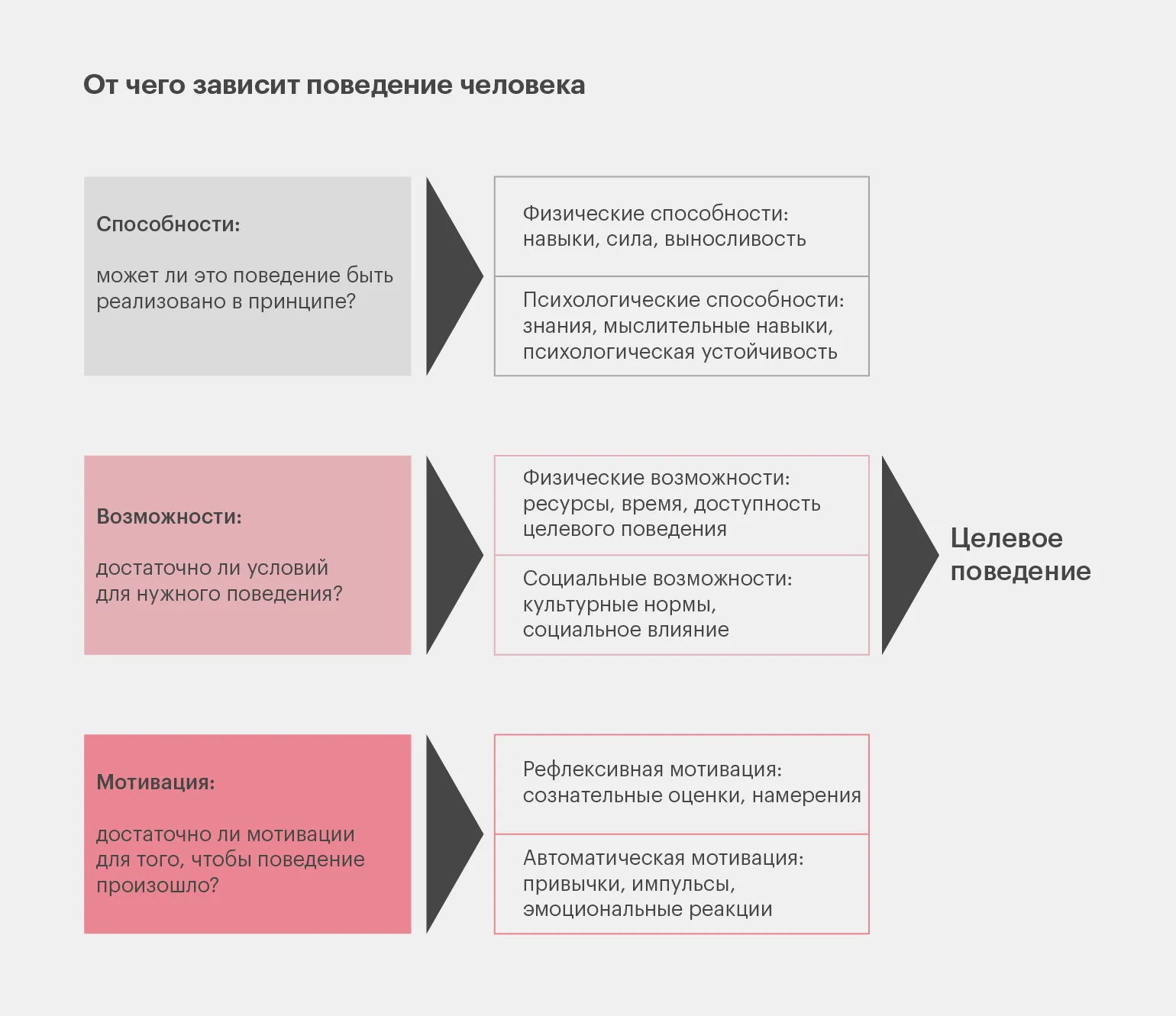
Behavior analysis is based on the concept that any human behavior is shaped by the interaction of three key factors: individual characteristics, social influences, and the context of the situation. These elements are interconnected and influence each other, which allows for a deeper understanding of the causes and dynamics of behavior. Studying these factors helps to identify patterns, predict reactions, and develop effective behavior change strategies. Understanding these aspects is important for psychologists, sociologists, and management specialists, as it facilitates a more accurate analysis and interpretation of human actions.
- Capability — a person's physical and psychological ability to behave in a certain way. This includes knowledge, skills, and mental abilities.
- Opportunity — external factors that facilitate or hinder the desired behavior. These may include physical environmental conditions or social influence.
- Motivation — internal processes that guide behavior. The authors of the model divide motivation into reflexive (conscious processes, such as planning and decision-making) and automatic (subconscious processes, including emotions and impulses).
To effectively influence behavior, it is necessary to analyze three key factors to identify the underlying problem. It is important to determine whether the problem is due to a lack of ability or opportunity in people, or to low motivation. Depending on the analysis results, an appropriate intervention method should be selected to help eliminate the identified barriers and improve behavior.
How to Use the COM-B Model for Behavior Analysis
In their book, the authors demonstrate how to conduct behavior analysis using the COM-B model using several hypothetical examples. One such example concerns a situation in a hospital where there is an increase in bacterial infections among patients. It is important to identify what actions or inactions of medical staff may be associated with this problem. Assessing the behavior of employees will help determine how they should behave to prevent the occurrence of such infections. This process will be the target behavior that needs to be changed to improve the situation.
To effectively analyze the situation in the hospital and the behavior of staff, it is necessary to conduct a comprehensive study. It is important to study the relevant job descriptions and local documents, survey participants in the process using questionnaires and in-depth interviews. It is also worth using the field observation method to carefully evaluate their work. Additionally, it is useful to collect expert opinions. If the results of the analysis obtained by various methods confirm the overall picture of behavior and the factors influencing it, this significantly increases the credibility of the conclusions made. This comprehensive approach provides a deep understanding of the hospital environment and helps improve the quality of patient care.
During the study, it is important to systematically document all the information collected. The authors of the COM-B model in their book offer worksheet templates that can be used as a basis and adapted to specific needs. At the initial stage, it is recommended to record simple observations, which will create a structured view of the collected data and facilitate further analysis. This approach provides a deeper understanding of the object of study and allows you to identify key aspects requiring attention.
- what behavior is related to the problem;
- where it occurs;
- what people or groups of people behave this way;
- who else is involved in this behavior.
You will likely encounter an extensive list of actions and omissions that may be related to the problem at hand. In a hospital context, this may include ineffective use of personal protective equipment by healthcare staff, which requires regular changes and cleaning of protective clothing. The use of non-sterile medical devices should also be addressed, highlighting the need to use only sterile instruments. Frequent and regular disinfection of surfaces in rooms is essential, as is monitoring of hand hygiene among medical personnel. Issues such as inconsistent use of ultraviolet lamps and inadequate isolation of sick patients, as well as numerous other issues that can impact the quality of medical care and patient safety, must be addressed. It's important to understand that human behavior doesn't exist in isolation—it depends on the actions of those around them. Therefore, attention should be paid to interconnected behaviors. For example, if nurses are observed not practicing hand hygiene, the reason may not be their ignorance of the importance of this process, as medical workers are aware of it. Doctors may also neglect hand disinfection, which sets a negative example (social influence). Furthermore, the situation may be influenced by technical staff who are not ensuring adequate quantities of antiseptic in dispensers or are not purchasing enough. In this case, hygiene compliance by medical personnel is a result of environmental conditions controlled by technical and housekeeping departments. Analyzing these relationships will help identify key issues and improve hygiene practices in healthcare facilities.

To optimize a long list of behaviors, you need to shorten it, leaving only those types that are most likely : to influence problem solving. The following questions can help with this process:
- How much will changing this behavior affect the desired outcome (problem solving)?
- How likely is it that this behavior can be changed? When assessing this likelihood, consider the ability, opportunity, and motivation of the people exhibiting this behavior to change.
- How likely is it that this behavior will positively or negatively influence other related behaviors?
- How easy will it be to evaluate this behavior to see if it has changed?
The authors of the COM-B model suggest evaluating behavior using four categories: “Not promising,” “Little promising but worth considering,” “Promising,” and “Very promising.” This analysis helps determine priority actions and target behaviors to strive for. Based on these assessments, we can better understand which changes will be most effective and feasible to achieve the desired results.
The analysis revealed that the most effective behavior for reducing illness is regular hand sanitization by healthcare personnel. Failure to do so appears to be one of the main reasons for the increase in illness. Improving compliance with this hygiene aspect can significantly impact patient health and reduce the risk of infection in healthcare facilities.
To gain a deeper understanding of target behavior, it is important to ask a series of clarifying questions. These questions will help identify the motivations and preferences of your audience, which in turn will allow you to create more effective engagement strategies. Consider aspects such as the wants, needs, and expectations of your customers. By analyzing these factors, you will be able to more accurately determine what actions they are willing to take and how best to meet their needs. Using this approach will allow you to optimize your content and improve its relevance to your target audience.
- Who should perform this behavior?
- What exactly should these people do differently to achieve the target behavior?
- When should they do it?
- Where should they do it?
- How often should they do it?
- Who should they do it with?
We record the responses, resulting in a worksheet that includes all the necessary data for further analysis and processing.
To analyze target behavior, it is necessary to consider people's abilities, opportunities, and motivation. This allows us to identify existing shortcomings and the main barriers that prevent goal achievement, and therefore indicates factors that require attention. This approach requires research, during which data is collected and compiled on worksheets. The use of this method contributes to a deeper understanding of the needs and problems of the target audience, which in turn helps in the development of effective influence strategies.
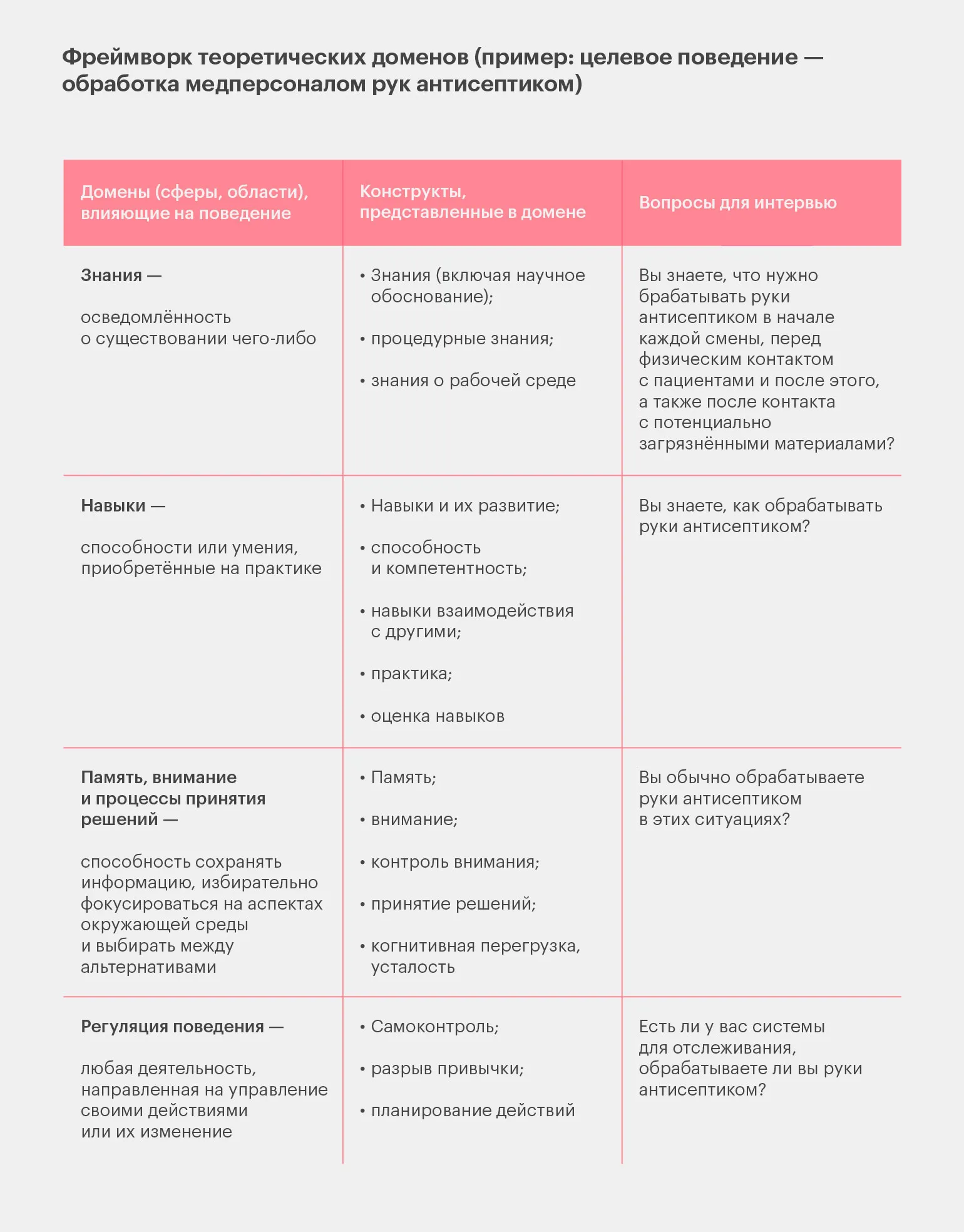
In complex situations, for a more detailed analysis, it is recommended to use the Theoretical Domains Framework (TDF). This tool allows for a systematization and deepening of the understanding of the factors influencing behavior and practice in various areas. Using the TDF helps identify key elements that can facilitate or hinder change, providing a more targeted approach to the development of strategies and interventions.
This framework brings together key concepts and areas of influence used in various theories of behavior change. It allows for a more precise determination of which aspects need to be influenced in a specific situation where change is required. The framework identifies 14 behavior-related domains: knowledge, skills, memory processes, attention and decision-making, behavior regulation, social and professional roles, identity, beliefs in personal abilities, optimism, perception of consequences, intentions, goals, reinforcement, emotions, context and environmental resources, and social influence. This approach helps us better understand the mechanisms of behavior change and develop more effective strategies for achieving sustainable results.
The framework provides a set of questions for interviewing people whose behavior needs to be changed. Each question focuses on a specific area of behavioral influence, allowing for a more in-depth analysis. In the table below, we demonstrate this using hand sanitization as an example. This table is a simplified adaptation and does not completely repeat the original, presented in the book by the authors of the COM-B model.
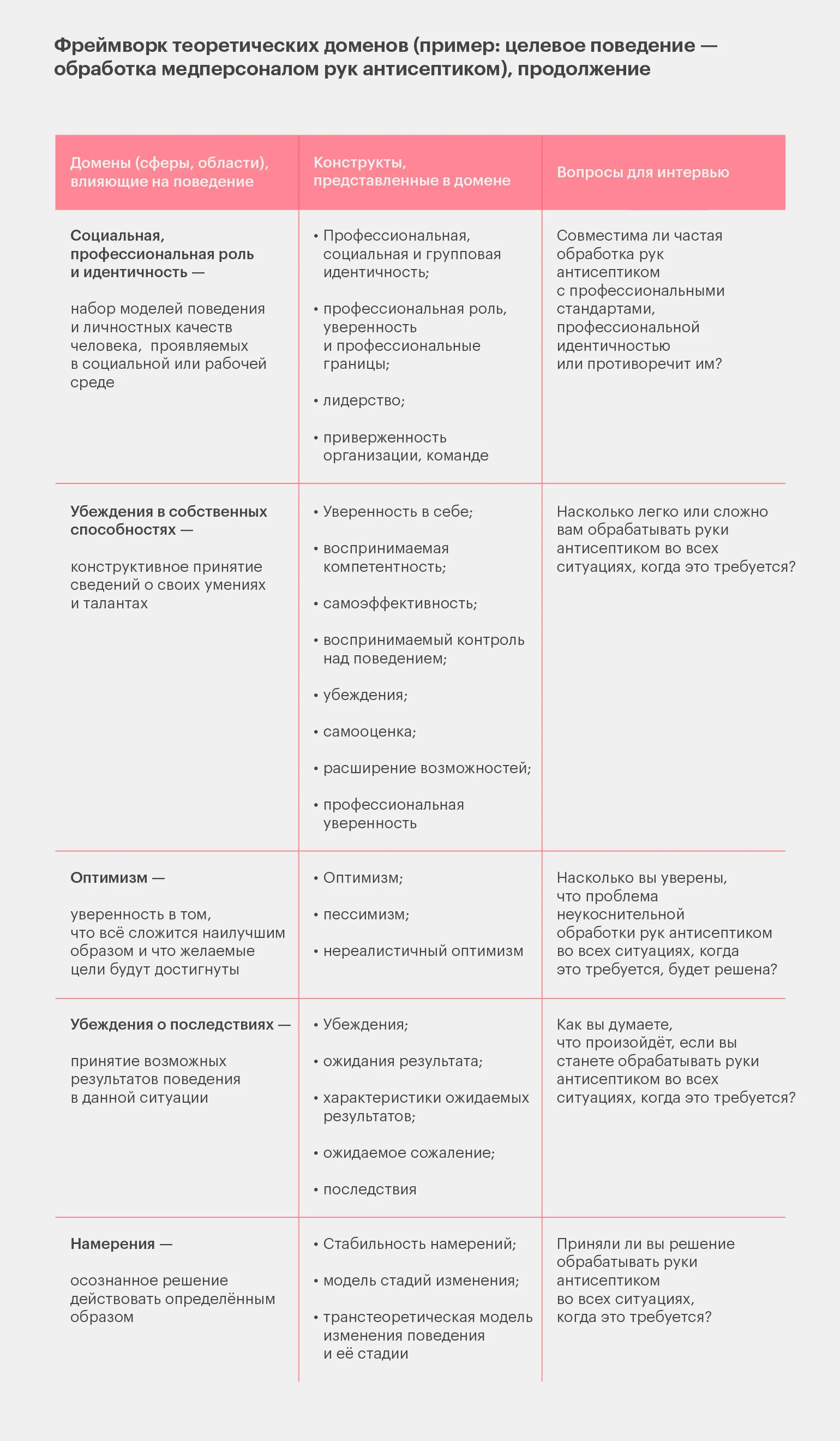
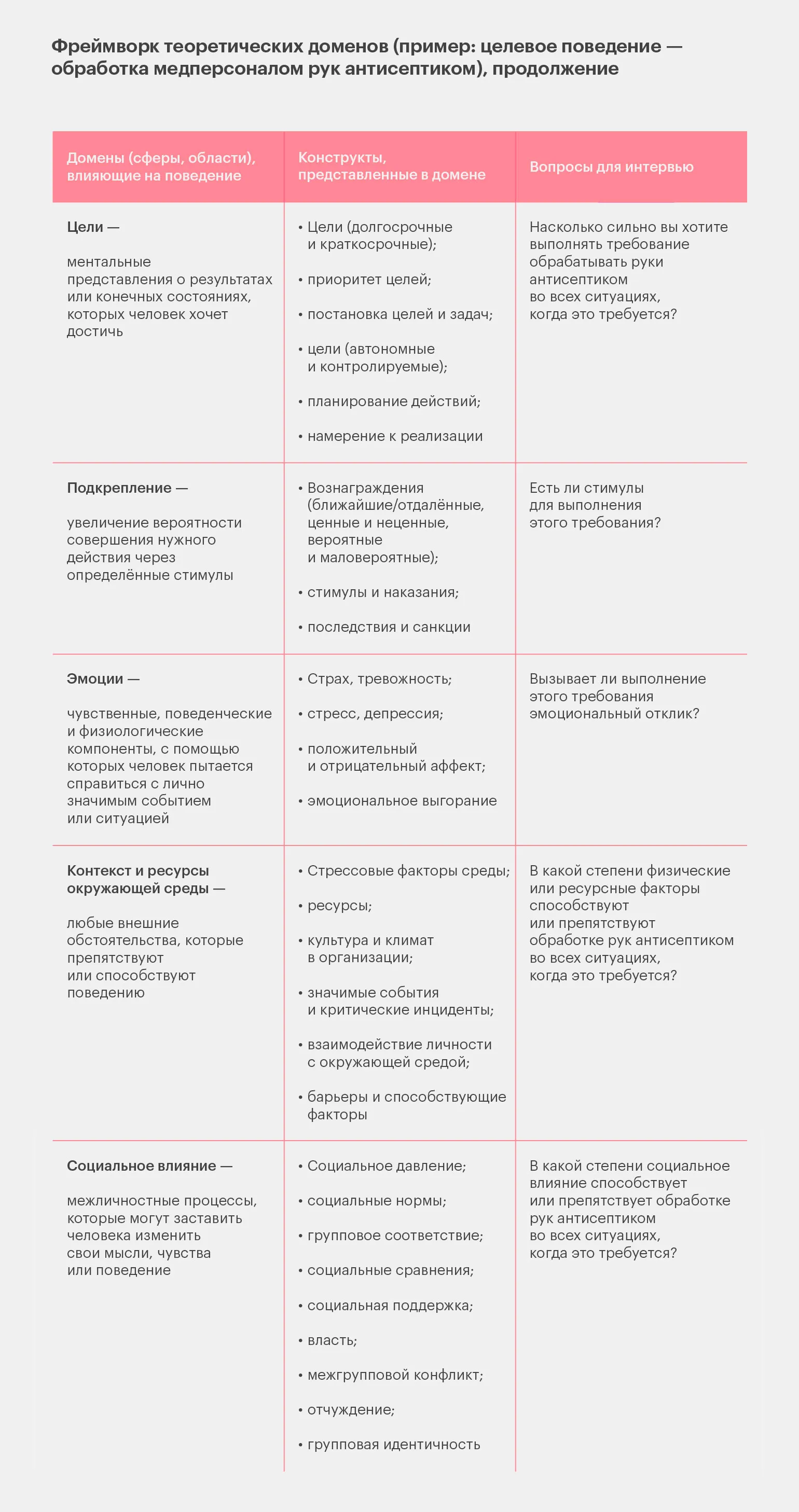
Describing the COM-B model may seem complicated due to the abundance of scientific terms. However, its main goal is quite simple: to explain how the interaction of three elements - ability, opportunity, and motivation - affects human behavior. This model helps you understand the factors that drive behavior change and how they can be used to achieve desired results. By understanding the fundamentals of the COM-B model, you will be better able to understand the mechanisms underlying your actions and decisions.
- Using detailed research, identify the main barrier to target behavior;
- Categorize this barrier, that is, understand whether it relates to opportunities, abilities, or motivation;
- Depending on this, consider how this barrier can be eliminated.
British expert in the field of occupational psychology and educational technology, Will Procter, identifies a number of barriers that people face and offers effective ways to overcome them. He emphasizes the importance of understanding the psychology of employees to create optimal working conditions and successful learning. Procter offers strategies aimed at eliminating these barriers, which contributes to increased productivity and improved quality of the work process. Understanding and applying his recommendations can significantly improve teamwork and enhance training effectiveness.
Wil Procter analyzes which measures can be effective in overcoming various barriers related to deficiencies in abilities, opportunities, or motivation. These measures are aimed at identifying and eliminating limitations that hinder personal and professional development. Understanding the specifics of each barrier allows for the development of a personalized approach that promotes skill improvement, increased resource availability, and increased motivation to take action.
- Education increases knowledge and understanding.
- Training develops needed skills.
- Persuasion is used to evoke positive or negative emotions or incentives.
- Incentives create the expectation of reward for correct behavior.
- Coercion creates in people the expectation of punishment for undesirable behavior.
- Constraint is the introduction of rules that reduce the very opportunity to engage in undesirable behavior.
- Environmental modification involves changing the physical or social context so that it removes barriers to the target behavior.
- Modeling is when people are given an example to follow.
- Empowerment is increasing the means to the desired behavior and reducing the barriers to it (in addition to education, training, and environmental modification).
How the COM-B Model is Used in Training and Development of Employees: A PwC Case Study
Consulting firm PricewaterhouseCoopers (PwC) has been using the COM-B model to develop and implement e-learning programs since 2018. This model helps ensure compliance with regulatory requirements, including data protection regulations. Using the COM-B model allows PwC to effectively train employees, improving their competencies and awareness of important aspects of compliance with regulations and standards.
The company explains in detail how the COM-B model functions in this context. This model focuses on three key elements: capabilities, opportunities, and motivations, which interact to shape behavior. Understanding these aspects allows for a deeper understanding of the mechanisms influencing decision-making and behavioral changes. By applying the COM-B model, the organization seeks to improve the effectiveness of its strategies while increasing client awareness and engagement. Thus, the use of this model becomes an important tool for achieving set goals and optimizing business processes.
- Capability: Employees must be provided with the necessary knowledge and skills related to working with data. This requires training.
- Opportunity: Employees must be provided with access to training materials at a time and in a convenient format so that they can complete training without interrupting their work. Individuals or groups of employees may need additional resources to support their behavior in effective data management practices, for example, technical support.
- Motivation: To increase employee interest in applying data protection regulations, it is necessary to help them understand why data protection is so important for the entire company. Real-life cases and rewards for those who strictly adhere to regulations help with this.
What is the COM-B model criticized for?
The COM-B model, despite its popularity in behavior management in various fields, has certain shortcomings. This is pointed out by both theorists and practitioners, including the authors of the model themselves. These limitations can affect its application and effectiveness in real situations. It is important to take these criticisms into account when using the model to analyze and change behavior.
The authors of the COM-B model emphasize that this model has not been sufficiently empirically tested in various cultural and professional contexts. Therefore, it should not be viewed as a universal solution with guaranteed effectiveness for all situations. This is not a tool that always works without exception, but a method that can demonstrate good results in some cases and fall short in others.

An international group of researchers from Canada, the UK, and Australia, including the authors of the COM-B model, warns that this model is only suitable for the initial stage of analysis. Often, for a deeper understanding, it is necessary to use additional tools, such as the Theoretical Domains Framework (TDF). Other researchers from Australia and Vietnam also note that the COM-B model is not always effective in complex situations, as it focuses primarily on individual abilities, opportunities, and motivations. This limitation lies in the insufficient consideration of complex social mechanisms, such as group norms, organizational culture, and political aspects, which also influence human behavior. Although the factor of social influence on motivation is present within the COM-B framework, its analysis may not be deep enough. To more fully consider the various factors influencing behavior in complex contexts, scientists have proposed a new model - SeCOM-B (Socio-Ecological COM-B). This model integrates approaches from the COM-B and the social-environmental model (SEM), allowing for a more effective analysis and understanding of behavioral change in various social and environmental contexts.
Jane Ogden, a professor of psychology from the UK, expressed the opinion in her 2016 article that the COM-B model and the behavior change wheel oversimplify the understanding of human behavior. In her opinion, this behavior is significantly more complex and depends not only on abilities, opportunities, and motivation. She also noted that predicting human reactions using standardized approaches is extremely difficult. As an alternative, Jane Ogden proposed her taxonomy of behavior change, which takes into account a wider range of factors influencing human actions.
The COM-B model, despite criticism for its simplicity, requires in-depth research to analyze behavior. The authors of the model emphasize that collecting the necessary information requires resources. Using focus groups, interviews, and observations is a process that requires time and money. This is why many companies cannot afford to use the COM-B model to identify the root causes of employee behavioral issues and develop effective solutions. It's easier to ask the learning and development department (L&D) to organize training, for example, on proper hand sanitizer use, and to do it as quickly as possible. However, this approach may not solve the underlying problem, but only temporarily alleviate the situation.
Reading is an important part of our lives, as it helps develop thinking, broaden horizons, and gain new knowledge. Regularly reading books, articles, and other materials helps improve vocabulary and enhance educational attainment. Scientific research shows that reading has a positive impact on cognitive abilities and overall mental health. It's important to choose a variety of genres and topics to gain a diverse experience and new perspectives. Develop a daily reading habit, and you will notice how it enriches your life.
- What questions are important to ask the training customer to help them understand the problem?
- The Morrison, Ross, and Kemp Model for Training Design: What is it?
- A framework for developing training on team skills for employees.
- How to organize behavioral training on politeness and evaluate its results.