
Contents:
- Everyone has their own learning styles that affect their results
- What they learn through practice is remembered better than theory
- In corporate training, practice also works better than theory
- Teachers are no longer needed since we have the Internet
- Knowledge is short-lived
- Learning is more useful through personal discoveries than through others' explanations
- Problem solving is the most effective way of learning
- Boys outperform girls in mathematics
- Learning requires Consider the concept of multiple intelligences.
- School kills creativity.
- Words aren't that important for conveying meaning.

Learn: The Profession of a Methodologist from Scratch to PRO
Find out moreIn education, sometimes what is considered generally accepted truth turns out to be nothing more than a myth. Research is often misinterpreted, resulting in many not turning to primary sources. Sometimes, attractive theories fail to find practical application, yet we want to believe in their effectiveness. The problem is compounded when these distorted ideas become the basis for making serious decisions about how and what to teach. It's important to approach educational methods critically and test their validity in practice.
In 2015, researchers Pedro de Bruycker, Paul Kirschner, and Kasper Hulshoff from Belgium and the Netherlands published the book "Urban Myths about Learning and Education," debunking the most common myths in education. The authors analyzed and refuted a number of concepts and theories lacking scientific support. Their work emphasizes the importance of critical thinking and the need to rely on proven data in educational practice. The book has become an important source of information for educators and researchers seeking to dispel misconceptions and improve the quality of education.
Everyone has their own learning styles that affect their results
Every person has unique characteristics that influence their learning style. This statement has become generally accepted. Learners are often classified into different groups, including the most well-known categories: auditory, visual, and kinesthetic. In 2004, a team of British researchers led by Professor Frank Coffield identified as many as 71 learning styles. Understanding these styles can significantly improve the effectiveness of the educational process and help teachers adapt their methods to the needs of students.
Serious scientific research confirms that classifying students does not bring significant benefits. This discovery was made long ago, and already in 1982 a meta-analysis was found that giving students the opportunity to choose their preferred learning method does not affect their results. Thus, it is important to seek more effective teaching methods that truly promote the development of skills and knowledge, rather than relying on outdated approaches to classification.
Of course, I will help you revise the text. Please provide the original text to be changed.
Providing children with sweets and lemonade based on their preferences is an unhealthy dietary practice. Likewise, choosing educational methods that please children but do not promote their development is an ineffective approach to learning. Pedro De Bruyckere and colleagues emphasize the importance of developing habits and practices that promote health and effective learning. It is important to realize that proper nutrition and teaching methods should be aimed at developing skills and forming healthy habits in children.
The problem with learning styles is that they are often self-defined, as the authors of the book point out. In studies, learning styles are often identified based on the preferences stated by the participants themselves. However, learning cannot be reduced to a single "style" or preference, as the learning process involves much more than simply memorizing information about the subject being studied. Effective learning requires a holistic approach that considers a variety of methods and strategies that can be applied depending on the specific situation and the individual characteristics of the learners.
The issue is not what we perceive through sight or sound, but what meaning we derive from this experience. It is the understanding of meaning that is the primary focus in educational institutions. The authors of the book emphasize the importance of teaching not only facts, but also the ability to interpret and make sense of information.
Concepts that classify people as thinkers, doers, dreamers, or problem solvers are gaining popularity for two main reasons, according to Pedro De Bruyckere and his co-authors. First, such classifications help people better understand their individuality and role in society. They provide an opportunity to recognize their strengths and preferences, which promotes personal growth and development. Secondly, such concepts facilitate interactions between people, allowing them to quickly find common ground and collaborate effectively. This is especially relevant in the context of modern team and cross-functional projects, where it is important to consider the diversity of approaches and thinking styles. Thus, the popularity of these concepts is explained by their practical value for understanding ourselves and interacting with others.
- We like to identify ourselves with clearly defined groups – after all, it’s “a quick, albeit often unreliable, way to understand each other”;
- It’s comforting to think that you’re not succeeding in school simply because your teacher has chosen an inappropriate learning style.
Scientific research shows that there is a lack of evidence to support the idea of categorizing students according to different learning styles. The authors of the book emphasize that such approaches are not supported by facts and do not contribute to improving student achievement. Thus, it is important to rethink teaching methods and focus on more effective strategies based on proven evidence.

Reading is an important part of our education and personal growth. It helps develop thinking, expand vocabulary, and deepen knowledge in various fields. Books, articles, and other materials promote critical thinking and creativity. Reading also improves concentration and memory.
Modern technology provides access to a variety of information sources, making reading more accessible. Online resources, e-books, and audiobooks allow everyone to find materials on topics of interest. Reading not only enriches knowledge but also develops emotional intelligence, allowing you to better understand the feelings and experiences of others.
Regular reading of books and articles helps not only in professional activities but also in everyday life. It helps improve communication skills and increase self-confidence. Therefore, it is important to set aside time for reading and choose high-quality sources that will help deepen your understanding of the world and yourself.
Kolb's Learning Styles: Types and Their Application
Kolb's learning styles model is an important tool for optimizing the educational process. This model identifies four main types of learning: active, reflective, theoretical, and practical. Each of these learning styles reflects unique approaches to perceiving and assimilating information. Active learning focuses on hands-on interaction with material, allowing students to develop a deeper understanding of topics through discussions and group assignments. Reflective learning emphasizes self-reflection and analysis of experiences, which promotes deeper understanding of information and the development of critical thinking. The theoretical learning style focuses on exploring concepts and models, which helps build a knowledge base. Practical learning involves directly applying theoretical knowledge to real-world situations, which helps reinforce acquired skills. Using Kolb's learning styles helps tailor educational methods to individual student needs, which in turn improves the effectiveness of the learning process. By incorporating these learning styles, teachers can create more varied and engaging lessons that promote better learning.
Thus, understanding and applying Kolb's learning styles is an important step in creating an effective learning environment.
What is learned by doing is remembered better than by theory
The Dale pyramid is a well-known concept in educational theory that illustrates how different teaching methods affect the retention of information. According to this model, a person remembers 90% of information when teaching others, 75% when actively practicing themselves, and only 10% when passively reading. This framework emphasizes the importance of active participation and interaction in the learning process, making it useful for both teachers and students. The use of active learning methods can significantly improve the effectiveness of knowledge and skill acquisition.
American psychologist Edgar Dale is often associated with the concept of the memory pyramid, but in fact, he was not involved in its creation. The data presented in the pyramid are suspiciously rounded, which calls into question their reliability and applicability to scientific research. It is important to note that there is no information about the experiments on which this model was based. Francis Dwyer, professor of education at Pennsylvania State University, emphasizes that without knowledge of the measurement methods, the age groups of students, and the content of the proposed tasks, it is impossible to correctly interpret this theory.
We propose renaming this pyramid the Loch Ness Monster of educational theory. It appears in various contexts, but always raises questions about its appropriateness. However, it should be noted that appropriateness does not exist, since this pyramid, like the legend of Nessie, is a myth. The authors of "Urban Legends" emphasize that such concepts have no basis in reality and are merely misleading.

Reworked text:
Learning new topics and gaining information are important aspects in the modern world. Understanding current issues and trends allows you to make more informed decisions. We invite you to explore our collection of articles that will help you deepen your knowledge and broaden your horizons. These materials will help you stay current and develop in your chosen field. Don't miss the opportunity to learn something new and useful.
The Dale Pyramid posits that hands-on learning is more effective than theoretical approaches. Research shows that people retain information better when they are actively involved in the learning process. Hands-on activities, such as labs, internships, and simulations, promote a deep understanding of the material and its application to real-world situations. Thus, the combination of theory and practice creates optimal conditions for knowledge acquisition. Hands-on learning not only helps you retain information but also develops critical thinking and problem-solving skills. It's important to remember that each person is unique, and learning approaches may vary. However, Dale's Pyramid emphasizes the importance of practical experience in the learning process.
In corporate training, practice also works better than theory
The 70:20:10 model is a well-known theory that emphasizes the importance of practical experience in learning. According to this model, 70% of effective learning is achieved through performing real-world work tasks, which allows for deeper assimilation of material and development of skills. 20% of learning occurs as a result of interaction with colleagues and sharing experiences, which contributes to a better understanding and application of knowledge. Finally, only 10% of information is assimilated through traditional training programs. This model demonstrates that to achieve maximum effectiveness in learning, it is important to emphasize practical experience and interaction.
Research conducted by the authors of the book "Urban Legends of Learning and Education" found that most references to the "70:20:10 Model" primarily refer to the work "Career Architect" by Robert Eichinger and Michael Lombardo. However, Eichinger and Lombardo themselves emphasize that this model is designed exclusively for developing leadership qualities in top managers, and not for the formation of any skills. This important clarification allows for a more accurate interpretation of the "70:20:10" concept and its application in the context of professional training and development.
The formulation of the "70:20:10 rule" states that the development of a manager or leader depends largely on practical experience and working on real-world problems. About 70% of development occurs through the practical application of knowledge and problem solving. Approximately 20% of success comes from feedback from peers and mentors, while only 10% comes from courses and reading. This principle emphasizes the importance of practical learning and interaction in the process of professional development.
The authors of the "Urban Legends" study argue that the scientific literature lacks compelling evidence to support the effectiveness of the 70:20:10 learning model. According to them, most cases only suggest that this principle can be successful in practice. This necessitates a more thorough analysis and justification of the training models used in educational institutions and corporate training.

Read also:
The "70:20:10" model is a concept that divides the learning and development process into Three key components: 70% of knowledge and skills are acquired through practical experience, 20% through interaction with colleagues and mentors, and 10% through formal training. This model has proven itself as an effective tool in corporate training and talent management. However, its scientific validity and universal applicability raise questions. It is important to note that this model is not an absolute truth, but rather a guideline for organizations seeking to optimize the professional growth of their employees. Analyzing successful examples of its implementation, it can be argued that the correct combination of all three components contributes to a deeper assimilation of material and the development of necessary competencies. Thus, the "70:20:10" model remains relevant for modern organizations striving for effective training and development of their employees.
Teachers are no longer needed since we have the Internet
Why memorize and learn anything when a repository of all human knowledge is available? At first glance, this seems pointless. For the new generation, teachers have become mere facilitators, mentors, and assistants in independent learning. Students, whether adults or children, are supposedly capable of independently navigating vast amounts of information. However, the authors of "Urban Legends" are confident that this is not the case. It is important to understand that despite the availability of information, critical thinking skills and analytical ability remain indispensable. Learning and memorizing information play a key role in developing the deep knowledge and skills necessary for successful functioning in the modern world. In today's educational process, much of the information students receive in schools and universities is available online. However, alongside reliable data, there is a wealth of unreliable information from questionable sources. Are young representatives of the digital generation able to effectively distinguish reliable information online from false? Unfortunately, many of them lack the necessary critical thinking skills, making them vulnerable to misinformation they encounter on social media. It is important to develop young people's ability to analyze information sources and verify facts to avoid the spread of lies and manipulation.
Research cited by the book's authors has demonstrated that both children and adults experience difficulties formulating effective search queries. They are not always able to correctly combine keywords, select relevant websites, and evaluate the reliability of information sources. This underscores the importance of teaching information literacy skills, which enables internet users to more effectively find and use reliable information.
According to data from the HSE Statistical Digest "Education Indicators," approximately one-third of Russian university students do not know how to effectively use online encyclopedias such as Wikipedia. This underscores the need to improve digital literacy among young people and develop programs aimed at teaching skills in searching and analyzing information online. Improving skills in working with resources such as Wikipedia can significantly improve the quality of education and prepare students for modern demands.
Since the publication of the book "Urban Legends of Teaching and Education," the world has faced new challenges related to the dissemination of false information, especially with the advent of ChatGPT. Access to necessary knowledge has become seemingly easier, which has again raised the question of the role of teachers in modern education. However, the answer remains the same: new technologies can confuse and misinform users even more than traditional search engines. Given this, it is important to approach information critically and maintain the relevance of the pedagogical process in learning.
Knowledge is ephemeral
Former Google CEO Eric Schmidt noted that from the beginning of civilization until 2003, humanity created only five exabytes of information. Today, this volume of information is generated every two days. Robert Moore of RJMetrics clarified that in 2002, 23 exabytes of information were recorded and reproduced, while we now produce a similar volume of data every seven days. This highlights how quickly information becomes outdated in the modern world. With the volume of data growing at a rapid rate, the importance of effectively managing and analyzing information is becoming more significant.

The Pythagorean theorem, the number of continents on Earth, and the formula for the acceleration of gravity—all these facts remain relevant. The authors of "Urban Legends" emphasize that such knowledge, which forms the basis of traditional education, does not lose its significance. Without it, it is impossible to adequately perceive and analyze modern data. These fundamental concepts serve as the basis for further training and development in various fields of science.
The authors of the scientific work cited by the researchers argue that learning is inherently restructuring in nature. It requires basic knowledge that serves as the basis for understanding new information. This basic knowledge and the structure into which it is integrated in long-term memory determine how new information will be perceived.
Despite the fact that in the modern world information is available with one click, this does not mean that everyone without prior knowledge will be able to understand it. A certain knowledge base is necessary for the correct perception and interpretation of data.
Learning is more useful through personal discoveries than through others' explanations
The concept of "discovery learning" was proposed by American psychologist and educator Jerome Bruner, co-author of scaffolding theory. It is based on the idea that the learning process should be organized in such a way that students can independently explore and discover new material. This approach promotes better memorization of theoretical concepts and rules, and also increases students' intrinsic motivation. In addition, discovery learning helps develop problem-solving skills for the future. Importantly, this method not only deepens understanding but also develops critical thinking and the ability to apply knowledge in practice.
The authors of the book analyzed several studies and concluded that discovery learning can have a positive impact on the learning process, but this method also has its drawbacks. For example, Bruner's study can be challenging for those who lack basic knowledge of the topic, as well as the necessary skills for conducting scientific research and experiments. These limitations highlight the importance of preparing students before using discovery learning methods.
Independent exploration requires significant effort from working memory. In the process of searching for meaningful connections between the elements of the object or phenomenon being studied, the brain becomes overloaded, which leaves no resources for the learning itself, as the authors of "Urban Legends" note. This emphasizes the importance of effective teaching methods that help optimize cognitive resources and improve information acquisition.
Problems with research can arise in people of all ages. Children, for example, cannot become independent researchers, since they perceive the world differently than adults and scientists. Their interpretation and understanding of reality differ, making it difficult to perform the abstract cognitive transformations necessary for effective knowledge construction, as occurs in scientific endeavors. The authors of Urban Legends emphasize the importance of these differences in perception and research approach.
Adult learners will also lack the complex cognitive constructs formed in the long-term memory of experienced scientific researchers. This lack of experience makes it difficult to identify patterns in observed data that may remain unnoticed by novices. Understanding such nuances is key to successful scientific inquiry and data analysis.
Years after the emergence of the theory of "discovery learning," Jerome Bruner modified his approach, proposing the method of "guided discovery." He noted that the student "researcher" should be accompanied by a more experienced mentor who can guide their search and support them throughout the learning process. This method emphasizes the importance of interaction between the teacher and the learner, which promotes a deeper understanding of the material and the development of critical thinking in students.
There are many proponents of the discovery learning method, as well as researchers who refute this concept. Both opinions are valid. Learning based solely on discovery is often ineffective. However, when this method is applied with the right guidance and support, it can produce good results. Providing such support is especially important for younger students, as at this stage of their development it is crucial for successful assimilation of knowledge, De Bruyckere emphasizes.
Problem solving is the most effective way of learning
The authors of the book question the popular approach of problem-based learning, pointing out its shortcomings. They note that this method does not take into account the limitations of human working memory. This results in problem-based learning not being consistent with the principles of cognitive load theory, which can negatively impact the effectiveness of knowledge acquisition. It is important to consider these aspects when choosing teaching methods to ensure a deeper understanding of the material and increase student engagement.
Novices do not have the same cognitive schemas as experienced experts. This means that novices perceive problems from a layman's perspective and can only solve them by comparing the current state with the desired outcome. Their approach is a "blind search for steps" that will help reduce the gap between the current situation and the desired outcome. Understanding this process is important for effective learning and skill development, allowing novices to gradually master more complex problem-solving techniques.
This process requires significant working memory, as the problem solver must retain and process the current problem state, the desired outcome, and the connections between them in their memory for an extended period. In addition, it is necessary to consider steps to reduce the difference between the current state and the target outcome, as well as smaller goals that may arise along the way. These aspects highlight the importance of effective working memory management during problem solving.
A problem-oriented approach hinders the formation of the cognitive schemas necessary for effective recognition of problem-solving algorithms. Research shows that learning to solve problems and solving problems themselves are two distinct and incompatible processes. This underscores the importance of developing methods that will help integrate theory and practice, which in turn will improve problem-solving skills.
One of the most effective approaches is solving problems without a predetermined goal, known as "goal-free problems." When a learner lacks an end goal, they focus on the current state of the problem and each new step that can bring them closer to the solution. This avoids unnecessary distractions, which promotes the formation of cognitive schemas. This method helps students develop a deeper understanding of the problem-solving process and develop analytical thinking, which is an important aspect of the educational process.
Problem-based learning is not an optimal method for acquiring new knowledge. This approach is effective only for applying and refining existing skills, as well as for making connections between different concepts that students already know. Research shows that this teaching method is best suited for deepening understanding of previously learned material, rather than for mastering new topics.
Boys Outperform Girls in Mathematics
Some studies confirm that boys perform better in mathematics than girls. In particular, the 2009 PISA report notes that in 35 out of 65 countries, boys score higher in mathematics. However, there are also numerous studies that indicate the superiority of girls in this area. Let's look at the results of one of the largest studies that analyzes student achievement in mathematics and reveals interesting trends in the success of both boys and girls.

In 2014, Daniel and Susan Voyer presented a meta-analysis on the influence of gender on academic achievement. This study analyzed data collected from 1914 to 2011 from more than 30 countries. In total, almost 540,000 boys and more than 595,000 girls participated in the analysis. The study provides valuable insights into the differences in academic achievement between the genders and can be useful for educators and educational researchers.
Recent studies have shown that girls generally perform better than boys, including in subjects such as mathematics. For almost a century, girls' academic performance has consistently exceeded that of boys, indicating significant advances in education.
The analysis shows that in a number of studies, boys often demonstrate higher grades than girls. At the same time, in some cases, girls show better results. However, the overall differences between the genders are so small that they should not be considered significant. A student's gender is not a reliable predictor of math performance.
Girls face the consequences of gender stereotypes not only in math but also in STEM (science, technology, engineering, and mathematics) fields in general. These preconceptions and myths lead them to doubt their own abilities and contribute to impostor syndrome. Support and positive examples of successful women in STEM can help change perceptions and build girls' confidence.

Despite the growing popularity of engineering and IT professions, many girls face significant barriers that prevent them from making a choice in in favor of these fields. One of the main reasons is the stereotype that women have no place in technical fields. Frequently heard phrases like, "You're going to have a baby," reinforce the preconceived notion that a woman's primary role is in the family, not in a career.
Furthermore, a lack of role models and support from others also deters girls from choosing careers in engineering and IT. Many young women do not see examples of successful women in these fields, which creates the impression that such careers are inaccessible.
A crisis of self-confidence and a lack of information about the opportunities that open up in technical professions also play a significant role. Many girls lack confidence in their abilities and fear competition, which often leads to them not applying to these specialties.
To change this situation, it is necessary to create a supportive environment for girls interested in engineering and IT. Communicating career opportunities, providing mentoring support, and developing programs aimed at attracting women to technical professions can help overcome these barriers.
Reducing stereotypes and creating equal opportunities for all will help increase the number of girls choosing engineering and IT specialties and, ultimately, diversify these fields.
The concept of multiple intelligences must be taken into account in education
The theory of multiple intelligences was developed by American psychologist Howard Gardner and represents the concept that intelligence is not a single entity, but includes eight different types. Gardner defined intelligence as the "biopsychological potential for information processing" that is activated in a particular cultural environment to solve problems or create valuable products. The types of intelligence include musical, visual-spatial, and verbal intelligence. Gardner emphasized that over time, new types of intelligence can develop in humans, while others can disappear. This theory opens new horizons for understanding human potential and individuality, emphasizing that each person possesses a unique set of intellectual abilities.
Why does this idea appeal to so many people? Partly because even if someone fails a traditional IQ test, they may still be intelligent in another, more specific area. This opens up new horizons for understanding intelligence and demonstrates that there are many forms of mental ability that cannot always be assessed by standard tests. Thus, the idea of multiple intelligence is becoming increasingly popular and relevant in modern society.
Scientists acknowledge the importance of the theory of multiple intelligences, which emphasizes the differences between people. However, they have expressed doubts about its foundations, pointing to their instability. In particular, experts believe that it is difficult to develop effective teaching styles based on this theory. Even Gardner himself has expressed dissatisfaction with attempts to adapt his theory to curriculum development. He emphasizes that the theory of multiple intelligences should not be confused with learning styles, which is supported by his statement quoted by the authors of the book.
The authors of "Urban Legends" question the validity of Gardner's intelligence, wondering whether his concept actually corresponds to reality. As an argument, they cite the opinion of cognitive psychologist Daniel Willingham from the University of Virginia. He argues that what Gardner calls intelligences would be more correctly described by the term "talents." Willingham also speculates that if Gardner had used the more familiar word "talents," his theory might not have gained such widespread popularity.
There is a lack of research that would support the concept of multiple intelligences. Furthermore, the various types of intelligences proposed by Gardner have significant overlap, which makes it difficult to classify them as independent categories.
The authors conclude that the theory of multiple intelligences primarily serves as a tool for enhancing self-esteem. This concept allows people to recognize their unique abilities and talents, which contributes to the development of self-confidence and improved personal effectiveness. The theory of multiple intelligences helps people understand that intelligence is not limited to traditional academic achievements but encompasses a variety of mental abilities. As a result, it can be useful not only in the educational environment but also in personal life, fostering deeper self-understanding and self-expression. Multiple intelligences are often perceived as a philosophical concept rather than a scientifically sound theory. While we cannot call it a myth, there is a risk that it will become one if it is accepted without due critical evaluation. The authors emphasize the importance of a conscious approach to this theory to avoid distortion and misunderstanding. Multiple intelligences can be a useful tool for analyzing different aspects of human cognition and abilities, but it should be viewed with caution.
School Kills Creativity
The claim that schooling stifles creativity was made widely known by British scientist and educator Ken Robinson. He relied on numerous studies showing that preschool-aged children have significantly more developed abilities for divergent thinking compared to those who have already begun schooling. Robinson argues that everyone is a natural "genius," but ineffective teaching methods can stifle their creative potential. This opinion sparks discussions about how to change educational systems to support creativity and innovative thinking in children, which is important for their future success in the modern world.
The authors of "Urban Legends" refute the idea that adults stifle children's creativity. To support their argument, they cite the book "Creativity Explained" by psychologist Keith Sawyer, who conducted an in-depth analysis of scientific research in the field of creative thinking. Sawyer concluded that the idea that adults destroy creativity in children is nothing new—it's been around for at least two centuries and likely untrue.
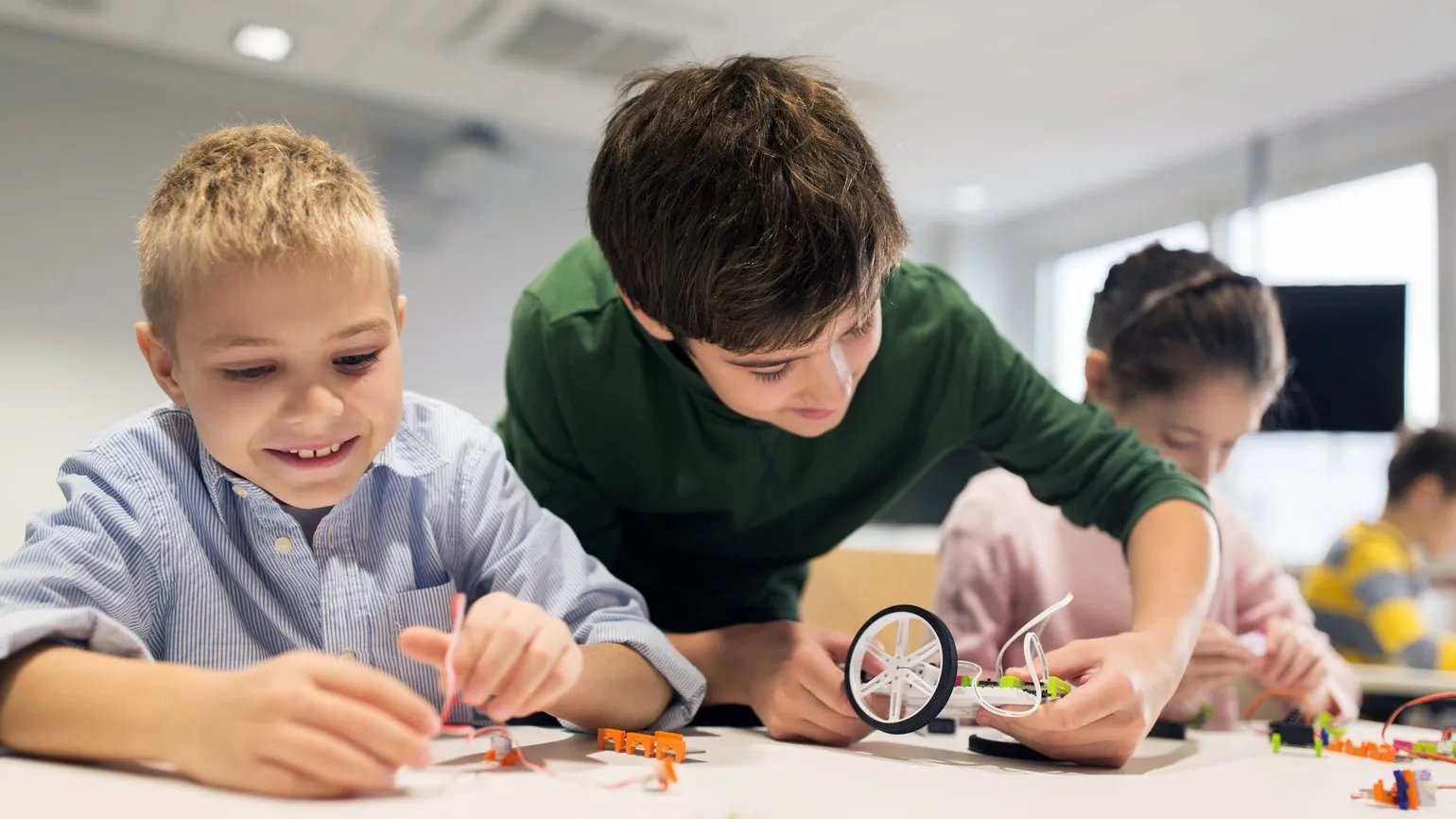
In her study, Sawyer demonstrates that five-year-olds are more active in improvised play than three-year-olds. This indicates that creativity is developed through development, rather than being an innate quality. Thus, the assertion that everyone is a genius from birth is unfounded. Numerous other studies, including the work of Pedro de Bruyckere and his colleagues, confirm that with age, people become not less, but rather more creative. This process should not be perceived as a "decline" in creativity, but as a natural change that occurs during maturation.
The authors of the book argue that schools can improve their approach to developing creativity in students. In support of their point of view, they refer to the opinion of Keith Sawyer.
Schools play a key role in developing creativity in students. Creativity requires deep knowledge in various fields, and formal education effectively provides students with the necessary knowledge. Research shows that the absence of schools does not lead to increased creativity. However, to foster creativity, educational institutions can utilize modern research and methodologies aimed at developing this important skill. It is important for schools to adapt their programs to emphasize creative thinking and innovative approaches, which in turn will help students realize their potential.
Schools may not fully develop creativity, but they certainly do not suppress it. De Bruyckere and his colleagues support this view, emphasizing that educational institutions can create an environment conducive to creative thinking. It's important to recognize that creativity is a skill that can be developed, and schools can play a significant role in this process by providing students with opportunities for self-expression and innovative learning.
Words Aren't Really Important in Conveying Meanings
The myth that words only convey 7% of meaning originated from the research of American psychologist Albert Mehrabian. His work indicated that 38% of information is conveyed through vocal intonation and 55% through body language. However, it's important to note that Mehrabian studied the perception of emotions, not the transmission of any information in general, as the authors of Urban Legends emphasize. This misconception is often used in communication research, but it doesn't paint the full picture of information transmission. A proper understanding of these data helps avoid distortions and misinterpretations in the fields of psychology and interpersonal communication.
Meyerabian, dissatisfied with the way his findings were interpreted, emphasized the importance of context. He cautioned that the proportions concerning nonverbal and verbal communication are only relevant in cases where the communicator expresses their feelings or attitudes towards a particular topic. This clarification is important for the proper understanding of his research and its application to the field of interpersonal communication.
In one interview, the scientist was asked if he believed that 93% of communication occurs nonverbally. His answer was negative. He noted that every time his results are misquoted, it upsets him. The scientist emphasized that it is obvious to anyone with common sense that such a figure cannot be true.
Meyerabian's research does not fully reflect how we express and recognize emotions in everyday life. In one of his experiments, participants were presented with nine words: three with positive connotations ("dear," "thank you," "sweetheart"), three with negative connotations ("rude," "stop it," "terrible"), and three neutral ("okay," "maybe," "really"). These words were spoken using three different intonations—positive, negative, and neutral. In another experiment, the words were read aloud alongside images of people with positive, negative, or neutral facial expressions. Participants had to determine the emotional connotation of the words: positive, negative, or neutral. Such studies highlight the importance of intonation and nonverbal cues in perceiving emotions, which can help better understand communication in various social contexts. Facial expression plays a significant role in perceiving the meaning of information, influencing 55% of comprehension. The speaker's voice adds another 38%, while the words themselves account for only 7% of the meaning. These findings were presented by the authors of "Urban Legends" and are based on research by Meyerabian, who demonstrated that, under certain conditions, intonation and facial expressions can significantly obscure the meaning of spoken words. These experiments were conducted in an artificial setting, highlighting the importance of nonverbal communication in our perception of information. Learn more about education and current news in our Telegram channel. Subscribe to stay up-to-date with important updates and useful content!
Also read:
- "The brain only works at 10% capacity" and seven more anti-scientific neuromyths
- "More than 90% of teachers have no idea about a child's cognitive activity"
- Skeuomorphism in online education: how it can change learning for the worse
- "Neuroeducation is not a panacea; don't expect anything supernatural"
The Profession of Methodologist from Scratch to PRO
You will improve your skills in developing curricula for online and offline courses. Master modern teaching practices, structure your experience, and become a more sought-after specialist.
Find out more