Contents:

Learn: The Profession of Methodologist from Scratch to PRO
Learn more
Methodologist and team leader of the Business School methodological team at the Skillbox online university. In my role, I develop and coordinate educational programs, ensuring high-quality content and compliance with current market requirements. My work includes the creation of innovative teaching methods, analysis of student needs, and the introduction of modern technologies into the educational process. In this way, I contribute to the formation of an effective environment for the learning and development of professional skills of students.
What is a branching quest?
A branching quest is a text narrative with a non-linear plot and multiple possible endings. The participant in this quest is able to influence the development of the plot by making decisions for their character. Such quests offer players a unique experience, allowing them to explore different scenarios and outcomes depending on the choices made. This makes each playthrough unique and exciting, which helps increase engagement and interest in the story.
Interactive storytelling is not new. In the 1960s and 1970s, interactive books for children and adults began to be published in various countries. In the USA, for example, the "Choose Your Own Adventure" series was created, in which the reader made decisions influencing the development of the plot. Depending on the choice, the reader would navigate through different pages, experiencing exciting adventures alongside the character. These books featured multiple endings—happy, sad, and even dead ends—encouraging readers to replay the story, discovering new aspects. Similar books are also published in Russia, allowing readers to take on the roles of famous detectives or explorers, making the reading experience even more engaging and interactive. Modern interactive novels, which have replaced traditional books, are a significant genre in the world of computer games. I recommend checking out the Russian anime novel "Everlasting Summer." In this game, the protagonist, trapped in a Soviet pioneer camp in the early 1980s, must make important decisions that influence the plot. The player's goal is to help the character escape the time loop and return to normal life. Interestingly, the game offers 13 different endings, adding depth and replayability. Explore the world of "Everlasting Summer" and immerse yourself in a unique atmosphere full of nostalgia and mystery.
Here are several exciting games that will immerse you in a world of complex quests and intricate plots. These games offer engaging tasks that require critical thinking and attention to detail. Each one is unique and sure to capture your attention thanks to diverse scenarios and interesting characters. Immersing yourself in these branching quests will be a true challenge for lovers of puzzles and adventures. Discover new horizons in a world of interactive games where every decision matters.
- "Symbiont-2";
- "Pandemic-2." Survival quest";
- The Stanley Parable.

Quests are actively used in educational processes. They help students develop critical thinking, teamwork, and creativity skills. Interactive tasks and game elements make learning more engaging and motivate students to participate. By using quests in the educational environment, teachers can effectively convey educational material and improve knowledge acquisition.
Methodologist and team leader of the Business School methods team at Skillbox online university. I support the development and implementation of educational programs aimed at developing business competencies. My goal is to create high-quality content that meets modern market requirements and helps students achieve their professional goals. I coordinate the team, train and support teachers, and analyze the effectiveness of educational processes.
Why use quests in education?
In this area, they successfully solve several key problems.
Quests effectively reinforce behavioral patterns in a safe environment. If you need to develop a specific behavioral pattern in a student or develop specific skills, for example, in sales or conflict resolution training, a quest is an excellent tool. During the quest, participants make decisions that help them apply theoretical knowledge in practice. Moreover, the lack of fear of mistakes promotes deeper assimilation of the material and the development of self-confidence.
Of course, I will help you with text editing. Please provide the text you wish to change.
One of the most famous examples of interactive storytelling is the branching quest "Bad Colleague," developed by American specialist Anna Sabramowitz. The game is presented in comic book format with video inserts and aims to help the protagonist deal with an annoying colleague and, ideally, change their relationship. This game teaches players how to effectively resolve conflict and uncomfortable situations in the workplace, developing communication skills and emotional intelligence. Quests effectively immerse students in context, allowing them to learn about the unique aspects of a specific company's operations or be transported to a completely different world, such as the African desert or a significant historical moment. A variety of storylines, unlocked by the player's choices, helps to deepen their understanding of the unique features of the created universe. Each new plot line provides a unique opportunity to view the quest world from a new perspective, enriching the educational process and making it more interactive.
Combining tasks is an effective approach to training. For example, if the goal is to develop international negotiation skills, a quest can simultaneously serve as a business communication simulator and an in-depth immersion in the context of a specific country. This allows participants not only to master the rules of interaction but also to become familiar with cultural peculiarities, which play a key role in successful negotiations. This approach promotes a deeper understanding of international communication standards and cultural differences, which in turn improves the results of the negotiation process.
The quest "Meeting Haji Kamal" is an interesting example of the use of intercultural skills and negotiation techniques in training American military personnel. Participants assume the role of an advisor to a US Army lieutenant who seeks to make a positive impression on the Pashtun leader Haji Kamal. To achieve a successful outcome, they must apply the knowledge of intercultural communication and negotiations acquired in theoretical classes. This case demonstrates the importance of understanding cultural differences and effective communication in international relations.
The educational quest provides prompt feedback. The outcome the student reaches at the end of the quest serves as their evaluation and can be either positive or negative. After completing the story, the student receives an analysis of each of their choices. If unsuccessful, they are given the opportunity to re-examine the theoretical material, delve deeper into a specific topic, or re-play the quest. This approach promotes deeper learning and increases motivation for learning.
Why storytelling is important in an educational quest
A quest is a form of digital storytelling that effectively introduces a constructivist approach to online education. This tool allows students not only to acquire but also to reinforce knowledge by solving real-world problems. Quests promote critical thinking, encourage teamwork, and increase student motivation. Using quests in the educational process helps create an interactive environment where students can apply theoretical knowledge in practice, making learning more engaging and effective. Simplifying the perception and memorization of complex material is becoming an important task in education. From childhood, we perceive information through stories—whether fairy tales, myths, or family legends. At the beginning of the 20th century, researchers even argued that this is how our knowledge is formed. Material presented as a coherent narrative is significantly easier to remember than abstract theories. Stories create logical connections between different concepts, which facilitates their comprehension. Scientists support this idea, emphasizing that each part of the story leads to the next, just as the first notes of a familiar melody evoke memories of the entire composition. Using a narrative approach in teaching promotes deeper assimilation of information and its long-term retention. Constructivism in learning is an effective pedagogical approach that emphasizes the active participation of students in the learning process. This method promotes the development of critical thinking and student independence. Unlike traditional methods, constructivism encourages learners to construct their own knowledge based on personal experience and interaction with the environment. As a result, students become more motivated and engaged in the learning process, which positively impacts their success. The application of constructivist approaches in education helps improve the quality of learning and prepare students to solve real-life problems. The introduction of active learning into a course promotes deeper student engagement. Quest-based learning will appeal even to those who typically prefer passive learning. Active learning helps develop critical thinking skills, which includes in-depth analysis of the material being studied, creating new experiences based on it, and effectively applying theoretical knowledge in practice. This approach increases student motivation and improves their academic performance, developing active participants in the educational process. Student motivation in online education plays a key role in the successful completion of curricula. Intrinsic motivation is often insufficient, and this is where quests come in. Quests can serve as an effective external stimulus, allowing students to immerse themselves in simulated real-world conditions and complete practical tasks. This not only helps them understand the complexity of applying theoretical knowledge but also allows them to self-assess their skills, identifying gaps in their understanding of the material. This approach eliminates the illusion of complete mastery of the topic, as errors that arise during the quest tasks motivate students to continue learning. Using quests in education increases engagement and improves learning outcomes, making them a valuable tool in online education.
Storytelling in Education: A Current Trend or Real Benefits?
How to Create an Educational Branching Quest
Define the educational goals and objectives of the quest, and choose a platform for its development. The educational goals should be clear and measurable so that participants can achieve them during the game. Quest objectives should promote critical thinking, teamwork, and creativity. Make sure the platform you choose supports all the necessary features to implement your ideas, such as interactive elements, the ability to track participant progress, and integration with other educational resources. The choice of platform is essential for the successful implementation of a quest, so it's worth considering options such as specialized educational game creation services or e-learning platforms. There are several free solutions that don't require designers or programmers. These options make it easy to create high-quality content and format it without additional costs. You can use online platforms and tools that offer ready-made templates and user-friendly editors. This will significantly simplify the process of creating web content while maintaining its appeal and functionality. These solutions are great for both personal and business projects, allowing you to focus on developing your idea without unnecessary time and money. Branch Track is a proven app, but only offers one free trial. Allows you to create a visual dialogue scheme, choose a background, and choose a character image.
Identify the key theories, frameworks, and concepts that will form the basis of your educational program. The choice of these elements depends largely on your creativity and innovative approach. Use current methodologies and scientific approaches to create an effective educational space that promotes deep knowledge acquisition. Your ideas and vision play a vital role in the formation of unique educational content.
Seattle geography teacher David Hunter adapted a standard curriculum to create a zombie apocalypse scenario. This approach combines two seemingly disparate contexts. Within the scenario, students must use their geography knowledge to prepare for survival and rebuilding the world in the aftermath. This teaching method not only makes the process more engaging but also promotes deep learning, developing critical thinking and teamwork skills.
It's important to keep in mind that any entertainment element and experience must be grounded in the students' existing theoretical knowledge. Only then will the quest become a truly useful and effective learning tool.
Analyze your target audience, as they determine the context, plot, and characters of the quest. The narrative should take into account the interests and preferences of players to create an engaging and memorable experience. It's important to understand which themes and genres are most appealing to your audience, as well as which interaction elements will be most engaging. Focus on player motivation so your characters and storylines evoke an emotional response. This will create a deeper connection between players and the game world, which in turn will increase engagement and satisfaction with the quest.
- age of the students;
- their interests;
- the opportunity to identify with the main character of the quest.
Young children will be interested in quests based on their favorite fairy tales or cartoons. Schoolchildren may be fascinated by the topic of space exploration, which will allow them to immerse themselves in the world of astronomy and science fiction. Adults will be more interested in participating in activities that provide real-life experiences, such as job hunting or travel planning. Such activities promote skill development and broaden horizons, making them relevant for all age groups.
Defining an idea is an important step in the creative process. Start by developing the main story, which will form the basis of your work. Consider the setting and time period in which the game will take place. Also, consider character development: their personalities, motivations, and interactions with one another. These elements will help you create a compelling and memorable story that will engage readers.
At this stage of quest development, it's crucial to collaborate with an expert—the author of the course or module on which the game is based. This expert will help shape the quest's basic structure, ensuring its educational value and relevance to the content. Collaborating on the quest's context and key decision points will significantly enhance the quality and engagement of the game. This approach not only improves the development process but also creates a deeper and more meaningful learning experience for participants.
The story should be related to the course topic. There are two main approaches to presenting it. The first option involves using practical examples that illustrate the theoretical concepts of the course. This helps students better understand the material and see its application in real life. The second option is to analyze historical events or cases that demonstrate the development of a specific topic. This approach deepens understanding and broadens students' horizons, and also promotes critical thinking. It is important that the history is relevant and interesting to the audience, which will make the learning process more engaging and effective.
- Maintain the main context. Let's say you are creating a course on leadership skills for a corporate team and do not want additional complexity—then, in a branching quest, immerse the participant in ordinary office work with all its peculiarities.
- Create a new context. In this case, behavioral patterns are used in a different environment—for example, instead of an office, the student virtually finds himself on a desert island where a plane crashed, and he must apply leadership skills to help survivors. This option will be both more difficult and more effective than the first, because the new context will allow for a fresh look at the theory.
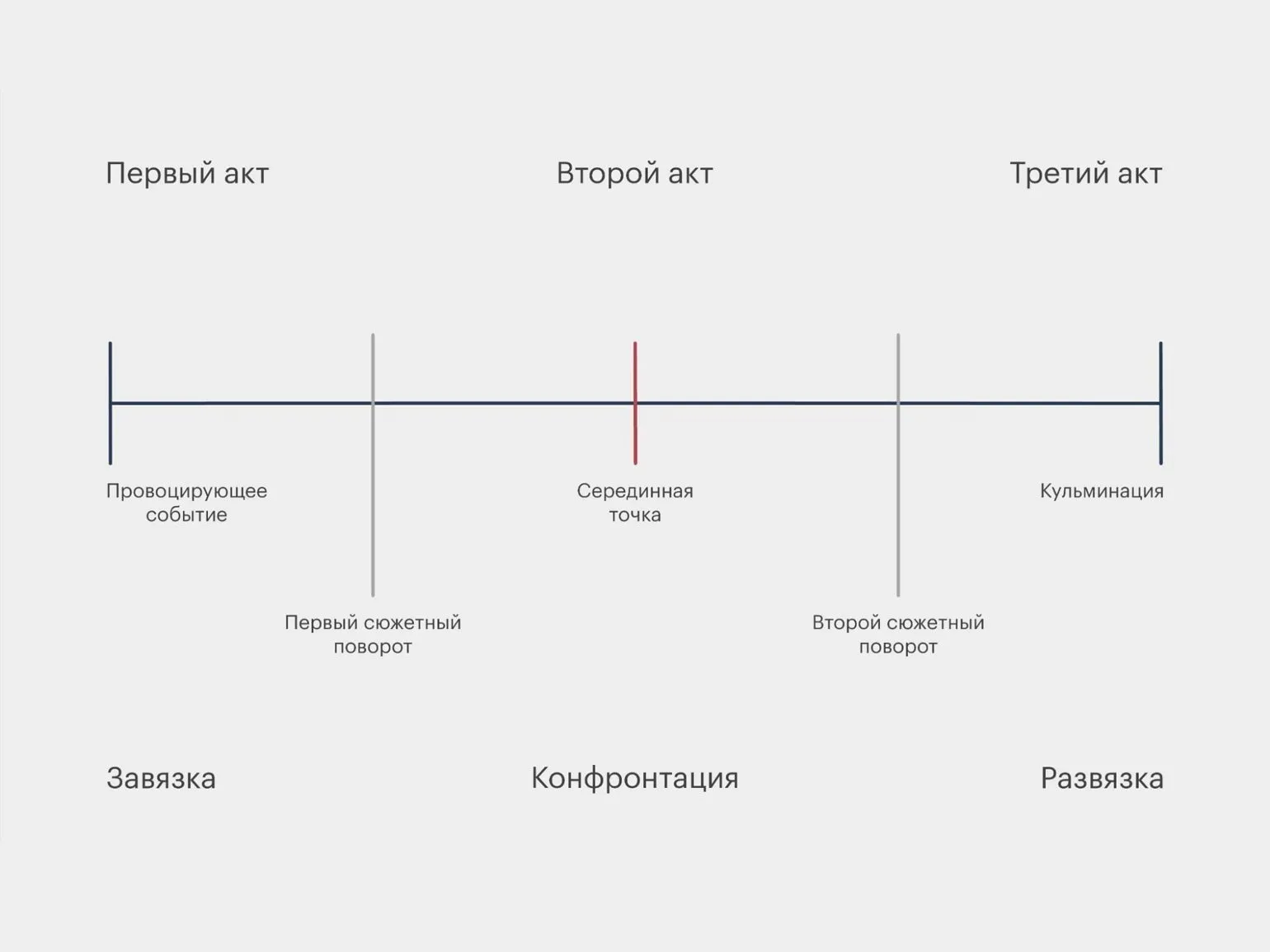
The target audience plays a key role in choosing or creating the image of the protagonist. Students should identify with the character, finding parallels and associations with their own experiences. Only then will they be able to understand the story more deeply and empathize with the events unfolding on screen or in the pages of a book. An emotional connection with the protagonist facilitates a more complete understanding of the plot and its meanings. Develop a plot with key events and a main quest line. This line will form the basis of the entire structure, so it's best to start with it. To simplify the creation of the main story, use Syd Field's paradigm, a three-act narrative structure. This approach will allow you to effectively structure the plot, highlighting key moments and developing characters, which in turn will improve the perception of the story and increase interest in your quest.
Develop the plot by adding alternative branches and think through various endings. Once the main quest line is complete, identify places where you can introduce "forks"—key choice points for the participant. These choices should lead to different outcomes, which will ensure high replayability of the quest and make it more exciting and interactive.
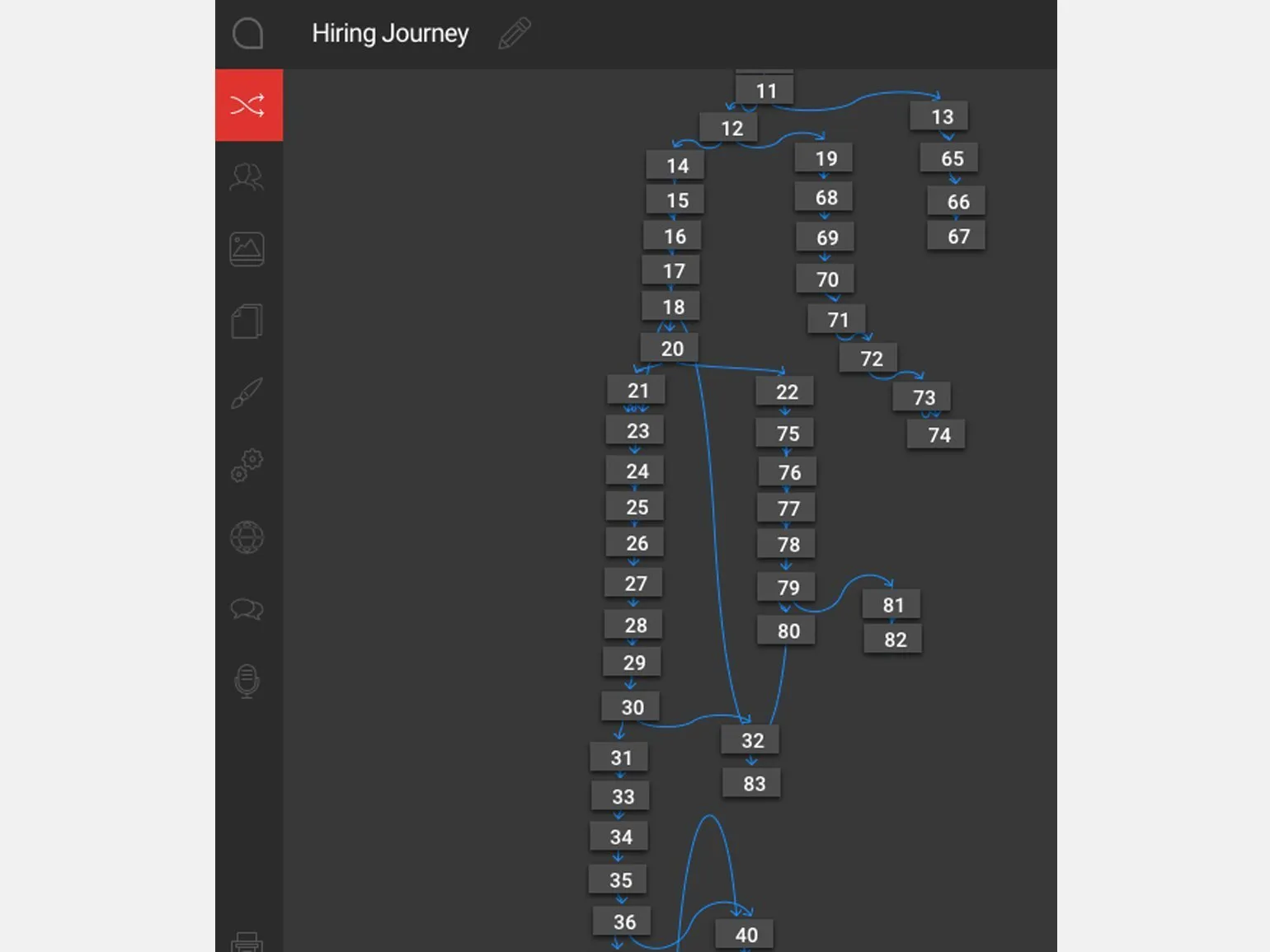
Developing quest branches is a key step in creating an engaging gaming experience. To make a quest interesting and interactive, it's essential to think through a variety of scenarios and choices for players. Start by defining the main storyline and key characters. Then, create logical branches that will influence the development of the plot and the final outcome. It's important to consider character motivations and their interactions with players so that each choice has meaning and consequences.
When developing quest branches, it's also important to consider the balance between the complexity of the tasks and the accessibility of information for players. Clearly written clues and logical connections will help avoid confusion. It's also recommended to test each quest branch with a small group of players to gather feedback and make any necessary adjustments. This way, you can create a multi-layered and engaging quest that will keep players engaged throughout the game.
- Branches should be seamlessly integrated into the story, with each new plot line feeling like a natural progression.
- The main path shouldn't be a means to fill in the gaps between choice moments; a compelling narrative is at the core of everything. If you don't take this into account, the story will turn out lifeless—it won't have any lightness or organic flow.
- The choice we offer the student should be tied to the theory they've learned.
- If you need to reinforce any behavioral patterns, include specific evaluation criteria in the quest: a positive ending will equal an excellent result, while, for example, "dead ends" or a negative ending will result in a bad grade.
- There's usually only one "happy ending," but there can be many dead ends and bad options. You can also include solutions that give the student the opportunity to go back and reconsider their choice.
- If you're making your first quest, don't overload the story with unnecessary branches—use a maximum of 4–6 branches to avoid confusion.
- Think about the length of the game—it largely depends on your desires and the complexity of the choices. Striking a balance here is challenging, so it's best to use an approximate time frame: 20-30 minutes is sufficient for a quest in an educational course.
Technical development and transfer of the prepared scenario to the selected platform will complete the quest creation process. Now your quest is ready to launch.
How to Use a Quest: A Practical Example
I'd like to share information about a branching quest I developed for the Skillbox "Career Reboot" course. This course allows students to analyze and rethink their career path, which helps them find the right development vector, get a promotion, or discover new professional horizons. As part of the course, students undergo a career audit, develop strategies for breaking a professional dead end, and seek new employment opportunities. The course combines theoretical knowledge with serious reflection, but our students noted the need for practical exercises to confidently apply their new knowledge.
The Hiring Journey quest was developed for the job search and interview preparation module, as this is where job seekers face the greatest challenges. Students are asked to help a character named Ilya, who works in the banking sector and has reached a career plateau while trying to find his dream job. This situation parallels the uncertainty the students themselves face, allowing them to better engage with the process and empathize with the character. Students are tasked with advising Ilya during the job search phase, selecting the most promising offers, and applying their knowledge of the DISC business typology to help him make a positive impression on a potential employer. This approach not only develops job search skills but also promotes a deep understanding of the interview process, which is a key aspect of successful employment.
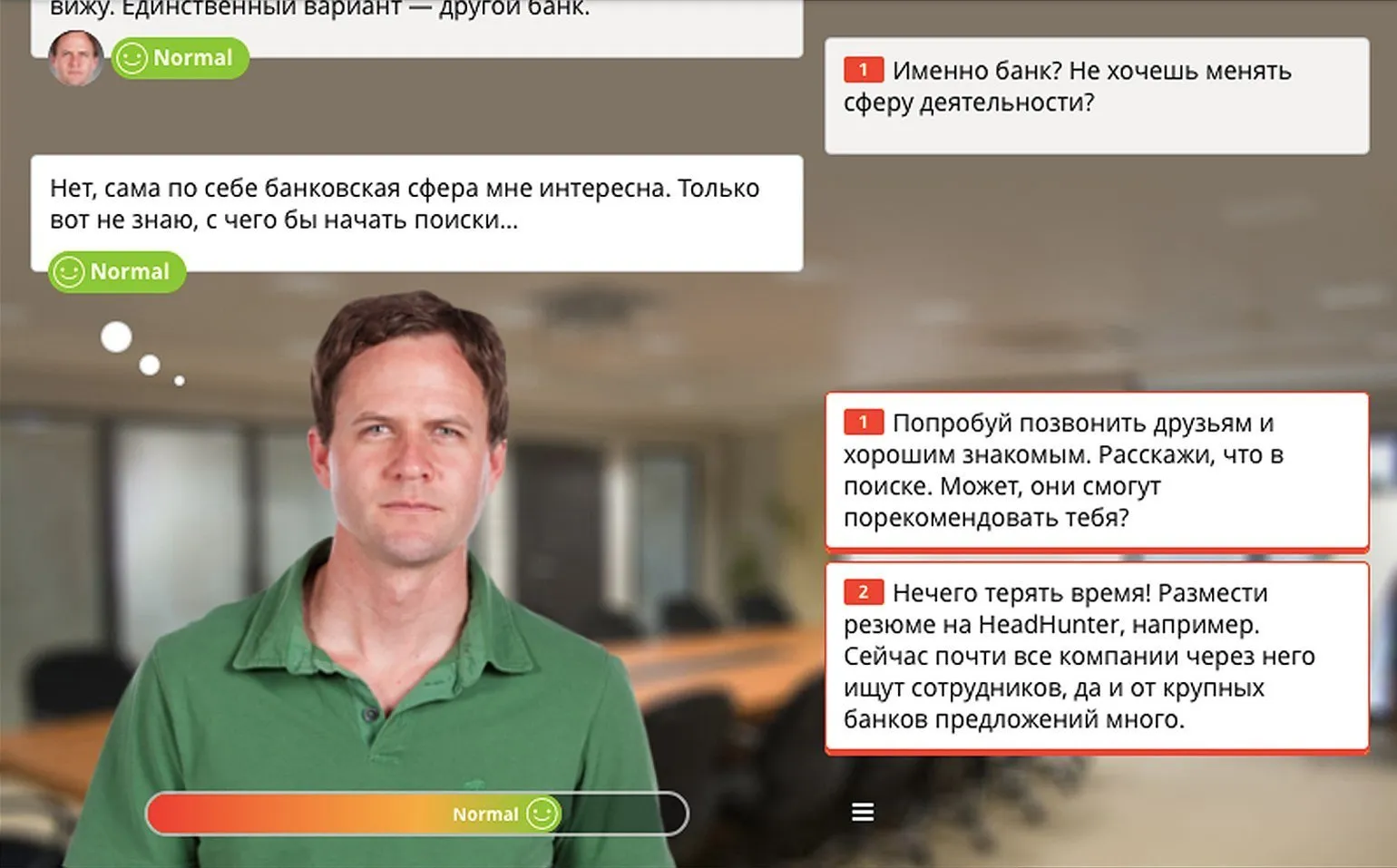


During the quest, participants used the knowledge they had gained and mastered the ability to select the appropriate tools for various situations. Completing the story could lead to a job offer for Ilya or a rejection from the employer. If rejected, the student was asked to return to the theoretical module to review the material covered. At the end of the quest, every decision made during the tasks was analyzed in detail, which contributed to a deepening understanding and skill improvement. Creating a quest is a complex and lengthy process, but it nevertheless yields significant results. Students participating in the course enjoyed completing the tasks and left positive feedback about their experience. They noted that it was interesting not only to test their abilities but also to evaluate the application of their acquired knowledge in practice. Many of them found that implementing theory into a real-world problem is not as simple as initially thought. However, the quest's plot inspired both those who received a job offer on their first try and those who found themselves in a difficult situation. When students encountered difficult moments, their passion and desire for success immediately kicked in, pushing them to find the right solution and deeply master the theoretical foundations that were causing difficulties.
Read also:
- 6 ways to make a course engaging
- Constructivism in learning: what is good about this pedagogical approach
- Storytelling in life, marketing, and advertising: how to apply it
- Storytelling in education: a trendy thing or a truly useful thing?
The Profession of Methodologist from Scratch to PRO
You will improve your skills in developing curricula for online and offline courses. Master modern teaching practices, structure your experience, and become a more sought-after specialist.
Find out more