Contents:

Learn: The Profession of Content Manager in SMM
Learn moreWho helped us understand the topic:

A mathematician and specialist in game-based learning for children, an ICF coach and PSM I (Professional Scrum Master I), I am the official representative of eduScrum in Russia. I conduct trainings and have developed an online course on eduScrum, which helps develop teamwork and critical thinking skills in children through game methods. My goal is to make learning engaging and effective, using modern approaches and methodologies.
The eduScrum methodology effectively solves several key problems. It promotes teamwork, increases student engagement, and improves learning outcomes. Its flexible approach allows eduScrum to adapt to various educational contexts, allowing educators to integrate Scrum elements into the learning process. This ensures a more structured learning experience and fosters critical thinking in students. Furthermore, the methodology helps students develop self-organization and responsibility skills, which are important aspects of their preparation for future professional work. Implementing eduScrum in educational institutions helps create an active and motivating learning environment.
- Develops teamwork skills. Teamwork is a global trend that students will encounter in their professional work, wherever they work. It requires specific soft skills. Both employers and universities are currently very concerned about their development. The authors and trainers of eduScrum believe that it is easier to develop teamwork skills at an early age than to struggle to relearn and rebuild years later.
- Motivates learning. The eduScrum methodology changes the "education for education's sake" approach: students don't simply memorize theory; they understand its necessity, can apply it in different situations, and approach knowledge acquisition consciously.
- Develops soft skills. Teachers who use eduScrum in practice note that the approach helps develop or strengthen leadership qualities, and for some children, it simply helps them express themselves, as even the quietest students become noticeable in small groups. But leadership is not the only factor. For example, planning and following rules develop independence and motivation, teach critical thinking, evaluate their actions and their effectiveness, and create a work project based on established criteria. eduScrum also facilitates communication: students understand what it means to hear and listen to others and learn to negotiate with each other.
As a result of this educational structure, students develop an individualized demand for learning and a conscious approach to the process of acquiring knowledge. This contributes to a deeper understanding of the educational material and increases motivation for learning. This approach allows students not only to absorb information but also to apply it, ultimately leading to more effective learning and personal growth.
This is the methodology of Willy Wijnands, a teacher from the Netherlands with 45 years of experience teaching natural sciences, including physics, chemistry, and biology. Willy sought to change the traditional education system and create an environment in which students would become active participants in the learning process, rather than simply listeners and consumers of information. To achieve this goal, he actively experimented with various educational methods, which allowed him to develop a unique approach to teaching that promotes engagement and develops critical thinking in students. Wijnands' methodology is aimed at developing students' skills in independent work, collaboration, and creative thinking, making it relevant in the modern educational context.
The idea for eduScrum came to Wijnands in 2011, when a friend shared information about Jeff Sutherland's training and the implementation of the Scrum methodology at his company. This system allowed him to combine various ideas and approaches, creating a holistic educational process.
Willie began implementing the eduScrum methodology with one class and then gradually expanded it to others. He involved students in the development of certain elements, allowing him to take into account the peculiarities of teenage thinking and the school mentality. The experiment sparked interest among colleagues, and Wijnands began teaching them the method, which facilitated the scaling of his experience. Thus emerged an international community of educators using eduScrum, active in various countries. The Russian branch of this community is one of the most active and dynamically developing. The eduScrum method has proven effective in the educational process, improving interaction between students and teachers, which helps achieve high learning outcomes.

Teachers using the eduScrum method share impressive results. They note improved student engagement in the learning process, the development of teamwork and self-organization skills. Thanks to the use of eduScrum, students become more responsible for their own learning, which contributes to improved learning. The method also helps develop critical thinking and creativity, which are important aspects of modern education. Teachers see how students become more active participants in their learning process, which positively impacts their motivation and academic performance.
- With eduScrum, the standard curriculum is shortened by several weeks. In Willy Wijnands's experience, the annual curriculum takes three academic terms. The fourth term in his classes is usually devoted to free projects: teenagers themselves choose topics related to the subject being studied and discover how stars explode or what chemistry occurs when a person falls in love.
- Grades are slightly higher than with the traditional approach, or the same. However, it's important to remember that eduScrum's creator didn't set out to improve academic performance. After all, the most important thing isn't grades, but interest in the subject, the ability to apply knowledge, and personal growth. If these conditions are met, you can get more A's. Children remember material better. For example, at Saratov School No. 95, eduScrum was used to prepare tenth-graders for the Unified State Exam: students completed team projects on lesson topics. The students shared with their teacher that they had forgotten almost all the texts they studied in the traditional ninth-grade curriculum, but project work using eduScrum corrected this—they remembered as much of the curriculum as possible. Students become active and engaged. This is facilitated by teamwork, a comfortable classroom environment, and freedom of choice. This conclusion is confirmed by researchers.
- Learning independence and planning skills are actively developed.
The eduScrum methodology is based on the principles of empirical management, which states that knowledge is formed through experience and decision-making based on available information. This system relies on three key principles, united by teachers' trust in students. As a result, the methodology creates conditions for students' active participation in the educational process, promotes the development of their critical thinking and self-management skills. EduScrum also emphasizes collaboration and teamwork, which makes learning more effective and adapted to the needs of each student. The use of this methodology in the educational process contributes not only to the assimilation of knowledge but also to the formation of sustainable skills necessary for modern life.
Transparency is a key aspect in various areas, from business to personal relationships. In today's world, where information is just a click away, openness and honesty are becoming important values. Transparency builds trust between companies and clients and promotes a better understanding of processes and decisions. Brands that adhere to the principles of transparency attract more customers, as people value sincerity and a willingness to share information. Ultimately, transparency not only improves reputation but also contributes to long-term success in a competitive environment.
All participants in the educational process clearly understand its goals, stages, objectives, as well as the rules of interaction, expected results, and assessment criteria. Particular attention should be paid to the last point, as the understanding of the term "research" can vary. For one person, it may mean reading a book, while for another, memorizing three paragraphs and writing down five definitions. This difference in approach emphasizes the importance of a common understanding of educational goals and assessment methods, which in turn contributes to more effective learning and high results.
Inspection, also known as research, is a process aimed at the systematic verification and analysis of objects, processes, or systems. This is an important stage, allowing for the identification of deficiencies, assessment of quality, and compliance with established standards. Inspection can be conducted in various sectors, including construction, manufacturing, ecology, and healthcare. A quality inspection requires the use of various methods and tools to obtain objective data. The primary goal of inspection is to ensure compliance with requirements and improve process efficiency. Regular inspections help minimize risks and improve overall performance. The inspection process allows for monitoring the current status of a project, as well as the progress of students in its implementation. This enables the timely identification and correction of potential problems. Inspection is carried out during the course of work, and not as a final check. Adaptation is the process by which an organism or system adjusts to changes in the environment or internal conditions. In biology, adaptation allows species to survive and develop in different conditions, ensuring their continuation. In a business context, adaptation is associated with changing strategies and approaches to successfully operate in the marketplace. Importantly, adaptation requires flexibility and a willingness to change, which allows both living organisms and companies to effectively respond to challenges and seize new opportunities. Adaptation promotes competitiveness and sustainable development in a constantly changing world.
Regular reviews help optimize the learning process. Learners have the opportunity to continuously monitor their progress and determine whether changes are required to achieve their goals. This approach promotes more effective learning and helps identify and resolve problems in a timely manner.
Willi Wijnands defines five eduScrum core values, which are analogous to the Scrum values. These values serve as the foundation for effective learning and development in the educational process, promoting an environment in which learners can actively participate and achieve their goals. Applying these values in educational practice not only improves interaction between learners but also enhances the quality of the educational process as a whole.
Psychological safety is an important aspect both in personal life and in the work environment. It involves creating an atmosphere in which people feel comfortable, can openly express their thoughts and ideas, without fear of negative reactions from others. In an environment of psychological safety, employees are more inclined to collaborate, innovate, and take calculated risks. This, in turn, contributes to increased overall productivity and team effectiveness.
Creating a psychologically safe environment begins with open communication and trusting relationships. Managers should encourage feedback, actively listen to their subordinates, and eliminate the fear of mistakes. It is also important to recognize the achievements and efforts of each team member.
Psychological safety not only improves morale but also promotes creativity, which is especially relevant in a rapidly changing market. Therefore, organizations should focus on creating and maintaining a psychologically safe environment to achieve sustainable success.
Students should have the opportunity to work freely, express their thoughts, and take responsibility. If you create an atmosphere where mistakes are not accepted and are punished, initiative will stagnate. In a climate of fear, people focus on protecting themselves rather than learning. Therefore, it is important for teachers to show trust in students by demonstrating a willingness to experiment and admit to mistakes. The learning process should be based on clear rules and interaction, which promotes deeper assimilation of the material and the development of critical thinking. Joy is one of the most vivid and positive feelings a person experiences. It can arise as a result of various events and situations, whether it is success at work, pleasant meetings with loved ones, or simple moments of happiness. Joy fills life with meaning and contributes to an improved emotional state. Scientific research shows that joy affects health by strengthening the immune system and reducing stress levels. People who experience joy are more prone to positive thinking and are open to new opportunities. To bring more joy into your life, it is important to focus on positive moments, develop gratitude, and find time for your favorite activities.
Creating a joyful environment also plays an important role. This could involve interacting with positive people, pursuing a hobby, or even simply taking a walk in the fresh air. All of this contributes to a sense of happiness and satisfaction. Ultimately, joy is not only an emotional state but also an active process that requires attention and care for oneself and others.
Willi Wijnands emphasizes the importance of enjoying the learning process, especially when working with children. Traditionally, the educational system is dominated by an approach that perceives learning as a chore rather than a source of joy. However, joy should not be seen as the opposite of work, but as a means of creating a comfortable atmosphere and increasing student motivation. For example, using soft music in lessons or sharing a snack with sweets can be effective ways to support students without distracting from their learning goals, making the learning process more enjoyable and engaging. It's important to remember that positive emotions in an educational environment can significantly enhance comprehension and promote better knowledge acquisition. Understanding is a key aspect of human interaction and learning. It encompasses the ability to perceive, comprehend, and interpret information. The importance of understanding is evident in various areas of life, whether it's personal relationships, professional activities, or educational processes. Deep understanding allows not only for effective communication but also for informed decision-making. Developing comprehension skills improves critical thinking and analytical skills. In today's world, where the volume of information is constantly growing, the ability to understand and filter data is especially relevant. Therefore, an emphasis on comprehension is crucial for successful adaptation and progress in a variety of fields. It is important for students to understand why they are studying a particular subject or topic, as well as how the knowledge they gain can be useful in their future. If a teacher doesn't understand the significance of the material being studied, it will be difficult for them to convey this information to their students. Understanding the practical value of theory promotes deeper learning and increases motivation for learning.
Freedom is one of the fundamental values of human existence. It implies the ability to choose and act without external coercion. Freedom encompasses various aspects of life: personal, social, economic, and political. The importance of freedom cannot be underestimated, as it influences the development of the individual and society as a whole.
With freedom, people can set their own goals, make decisions, and be responsible for them. This creates space for self-expression and creativity, allowing each individual to develop and achieve their ambitions.
Furthermore, freedom is closely related to human rights. Protecting and supporting freedom are key tasks for any democratic society. Freedom of speech, freedom of assembly, and the right to privacy are just some of the aspects that form the basis of civil liberties.
Thus, freedom not only enriches the life of each person but also contributes to the progress of the entire society. Without freedom, it is impossible to imagine the full development of both individuals and communities as a whole.
Under conditions of freedom, while adhering to certain boundaries, students have the opportunity to independently choose the methods for achieving their academic results. This approach promotes increased motivation and active engagement in the educational process.
Belonging is an important psychological state that implies a sense of belonging to something greater than the individual. It encompasses the ideas of interconnectedness, mutual understanding, and shared participation in the life of a society or group. Belonging helps people feel part of a common goal, which contributes to the strengthening of social ties and an increase in trust. This state is especially relevant in the modern world, where individualism often prevails over collectivism. Developing a sense of belonging can contribute to a more harmonious and supportive environment, both in personal and professional life.
The student is aware of how their actions and choices influence the learning process and its outcomes. This is a key difference from the traditional approach, where the student acts as a passive listener. Active participation allows students not only to absorb the material more deeply, but also to develop critical thinking skills and independence.
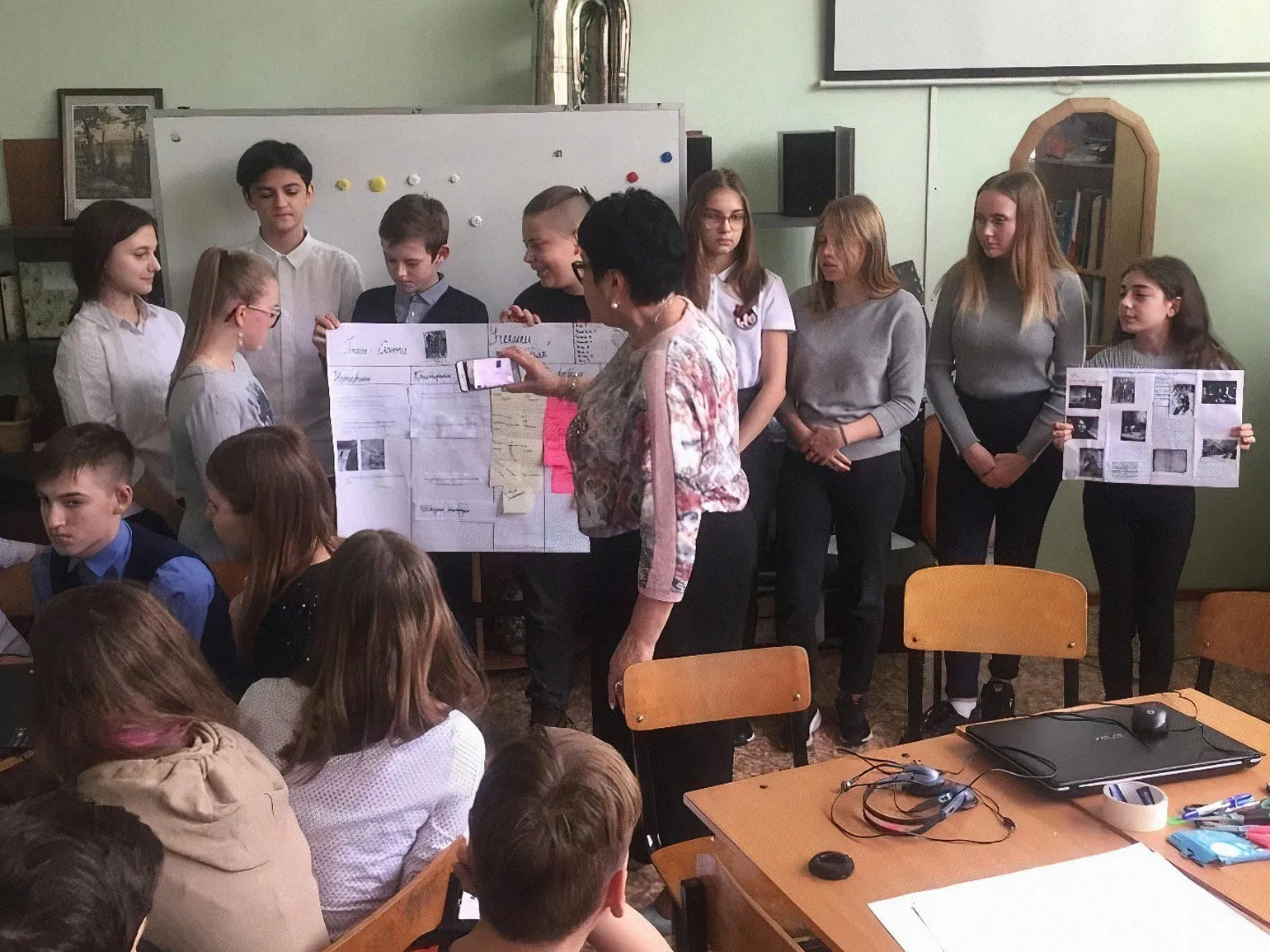
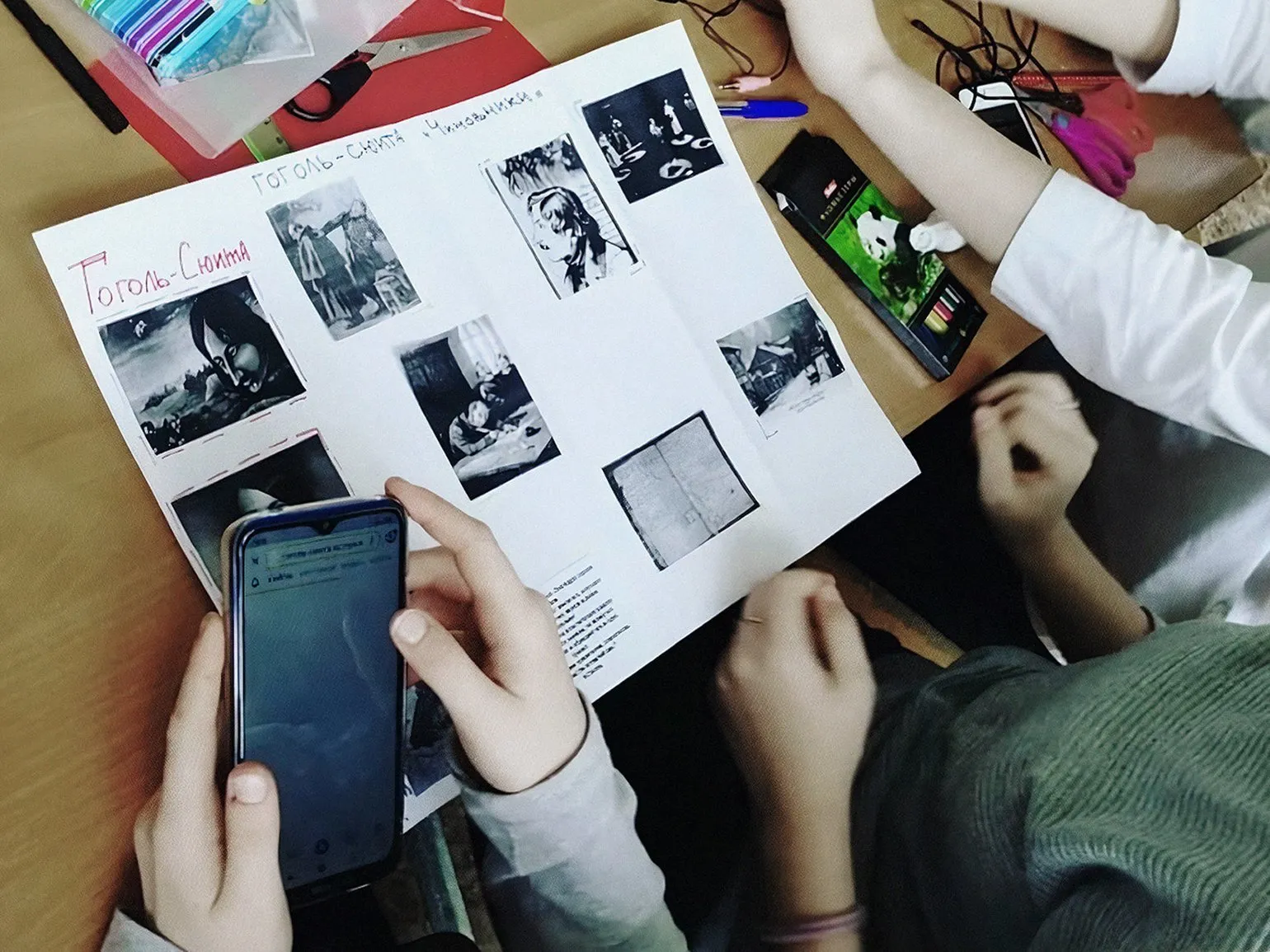
The eduScrum methodology has three main stages. Each of these stages plays a key role in organizing the learning process and contributes to more effective learning. The first stage involves forming teams and defining the roles of participants, which promotes collaboration and interaction among students. The second stage focuses on planning and executing tasks, which allows students to apply their acquired knowledge in practice and develop critical thinking. The third stage includes reflection and analysis of results, which helps participants comprehend their experience and identify areas for improvement. These three stages in eduScrum provide a structured approach to learning and help increase student motivation.
- planning - preparation for teamwork, during which goals, objectives, assessment criteria, and rules of interaction are determined;
- learning process - students prepare their own project on the studied discipline and apply the acquired theory in practice;
- reflection and adaptation - summing up intermediate or final results, analyzing their own and teamwork, and improving the process.
The process can be described in stages. First, it is necessary to determine the starting point and the goal. Next, you should analyze the current situation to identify key issues and problems. Following this, you should develop a strategy that includes specific actions and resources. Next, you need to implement the plan, monitoring progress at each stage. Finally, you should evaluate the results to determine whether the goals have been achieved and make adjustments if necessary. This structured approach will allow you to more effectively manage tasks and achieve the desired results. Developing a project is an important stage in the educational process. This process includes conceptualization, planning, implementation, and evaluation of results. Projects help students apply theoretical knowledge in practice, develop teamwork and critical thinking skills. It is important to choose a topic that is relevant, interesting, and useful for students. Discussing the project idea in a group allows you to develop unique approaches and solutions. The development stages include research, data collection, information analysis, and preparation of a final report. A project not only deepens understanding of the subject but also helps develop time management and presentation skills. It is also important to consider feedback from instructors and peers to improve the quality of the work and make any necessary adjustments. By approaching the development of a learning project responsibly, students can significantly increase their chances of success in their studies and future careers.
The teacher or team of teachers develops a learning project that includes numerous learning stories. This approach creates an engaging learning environment that promotes deeper learning. Learning stories can be used to illustrate various concepts, making the learning process more visual and interesting for students.
Team building is a key process for successfully achieving goals in any organization. Effective teams bring together people with diverse skills and experiences, enabling them to utilize their full potential. When forming a team, it is important to consider not only the professional qualities of the participants but also their personal characteristics, such as communication skills and the ability to collaborate.
For successful team building, it is necessary to clearly define goals and objectives, and assign roles in accordance with the strengths of each member. Creating an atmosphere of trust and mutual understanding promotes more effective interaction and increases productivity.
An important aspect of team building is regularly evaluating their performance and making necessary adjustments. This not only helps maintain a high level of motivation but also promptly respond to emerging issues. As a result, a well-formed team becomes the foundation for achieving the company's strategic goals and ensuring its competitiveness in the market.
Before starting work on projects, the teacher appoints team captains. These are usually the most responsible students, ready to take on the responsibility of organizing the work of a small team. The captain's first task is to form a diverse group of 4-6 people. They select team members based on their individual strengths. Each participant is assigned specific responsibilities within the project: some are engaged in drawing, others in writing, and others in preparing a presentation. The teacher determines the overall learning objectives, which contributes to the effective implementation of the project and the development of teamwork skills.
Forming teams in eduScrum is a key aspect determining the effectiveness of the work. Properly organizing groups helps increase the motivation and engagement of participants. Educators with coaching experience or training experience can easily organize students into productive teams. For those new to the team approach, here's a helpful tip to help streamline the process.
The team captain oversees task completion, ensures deadlines are met, and prevents conflicts between team members, ensuring their work is in sync. As part of their role, they also manage the eduScrum board, which serves as a tool for visualizing progress and organizing the team's work. The function and importance of the eduScrum board will be discussed in more detail in the next section.
Teams begin working on the project assignment and begin preparing it. During this process, it's important to consider all aspects of the assignment to ensure successful completion. Effective preparation includes requirements analysis, task allocation, and work strategy development. This allows teams to focus on the key elements of the project and ensure its delivery on time. Proper organization of work at the initial stage significantly increases the chances of successful project completion.
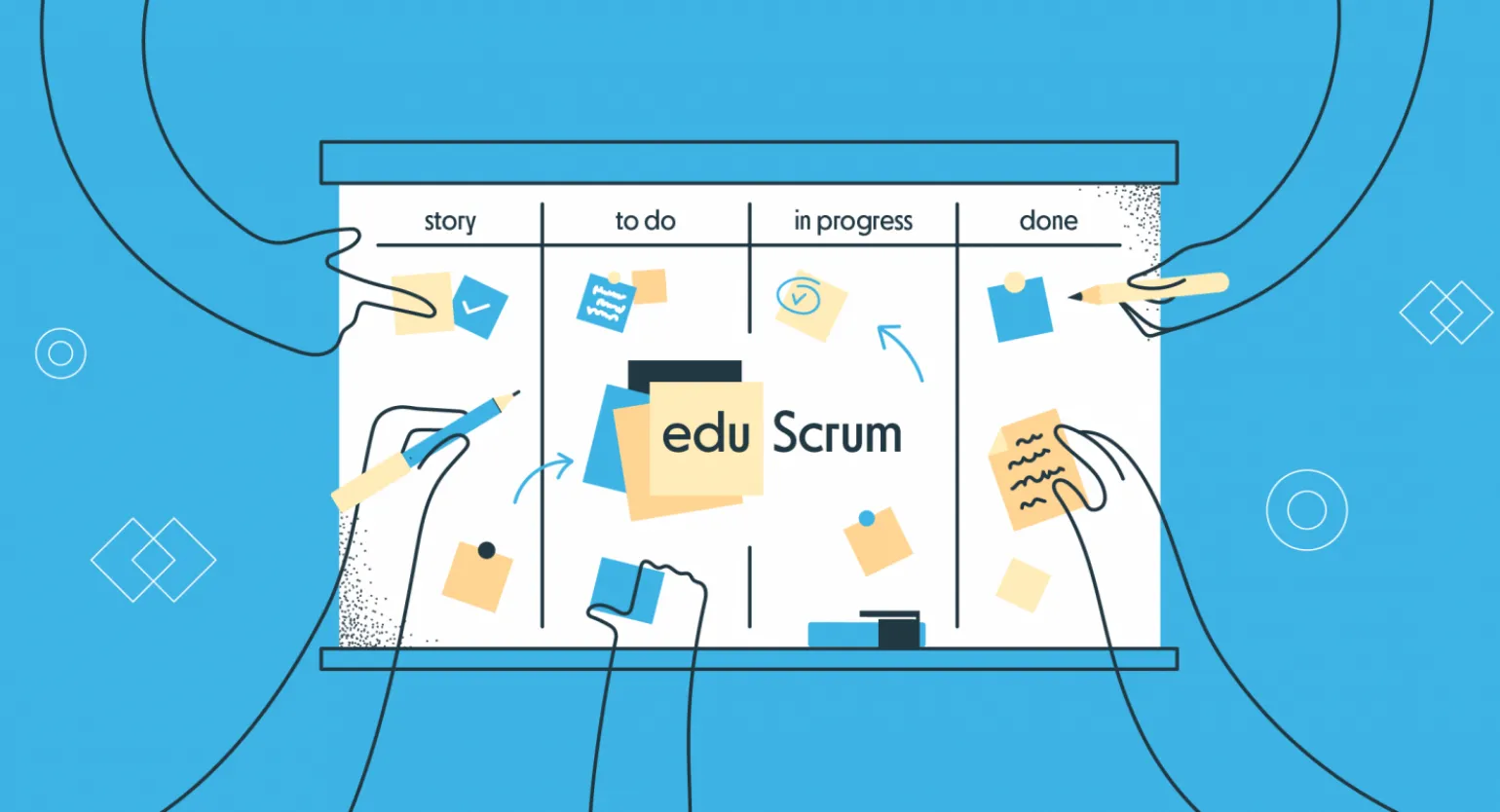
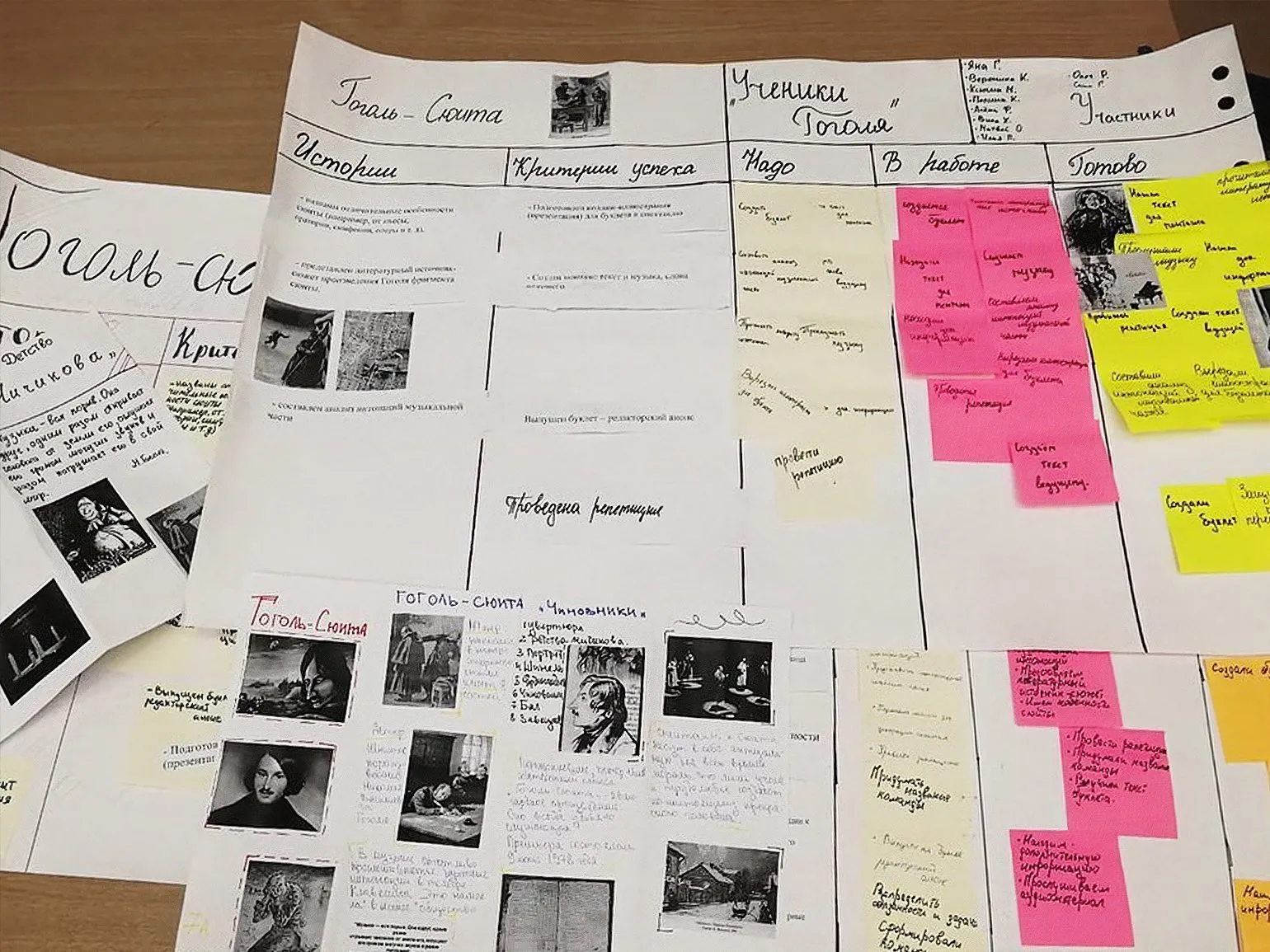
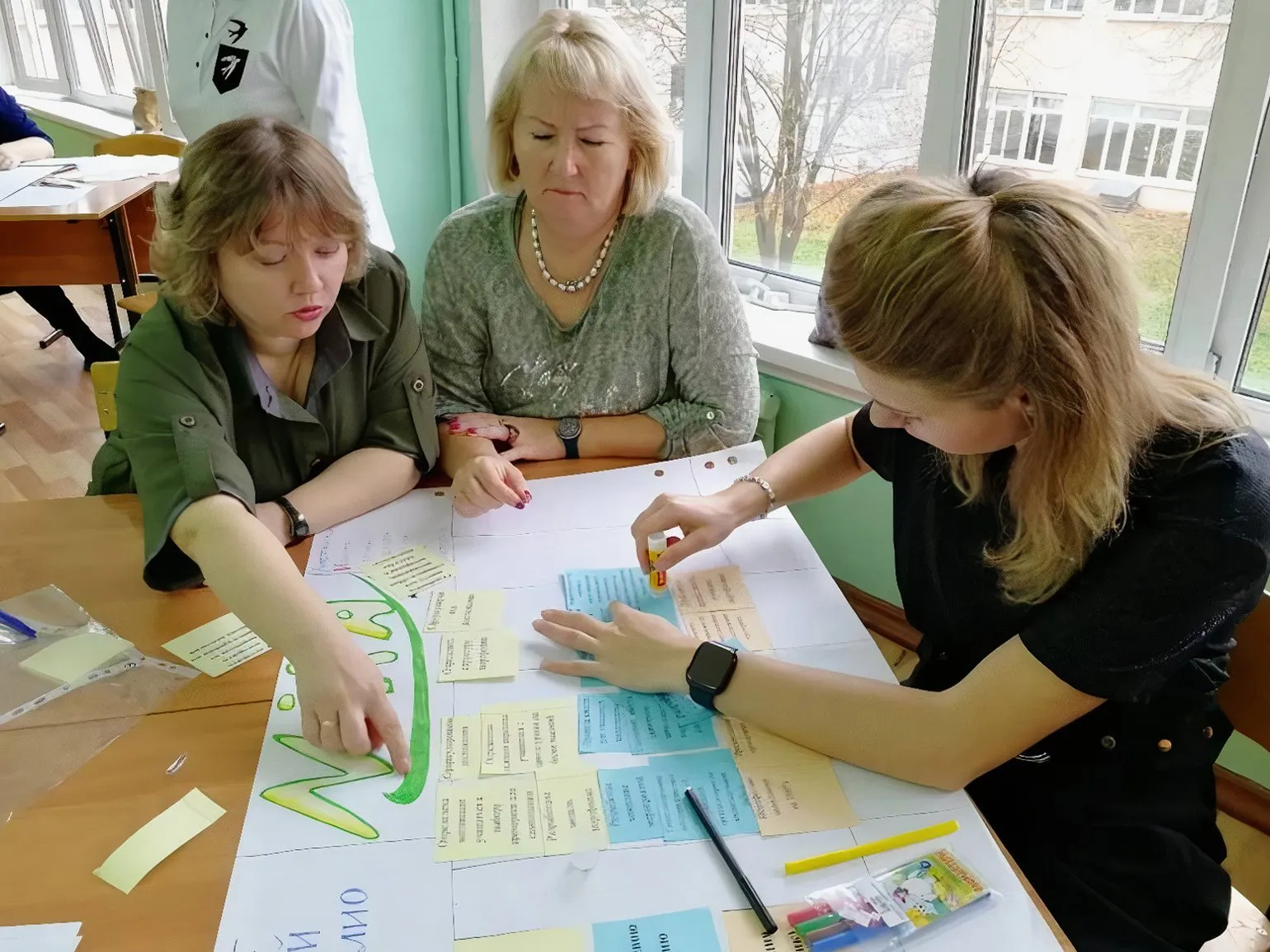
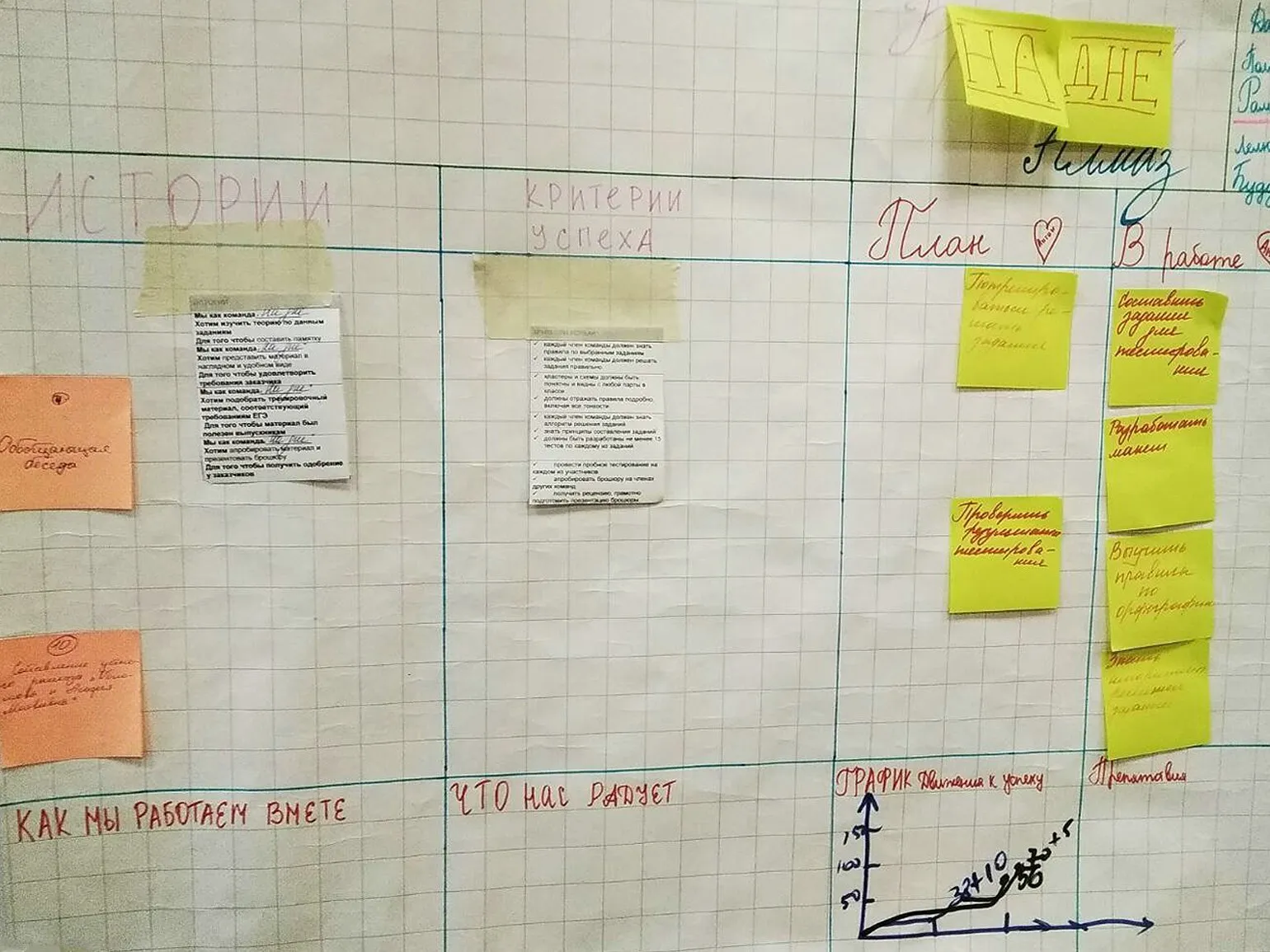
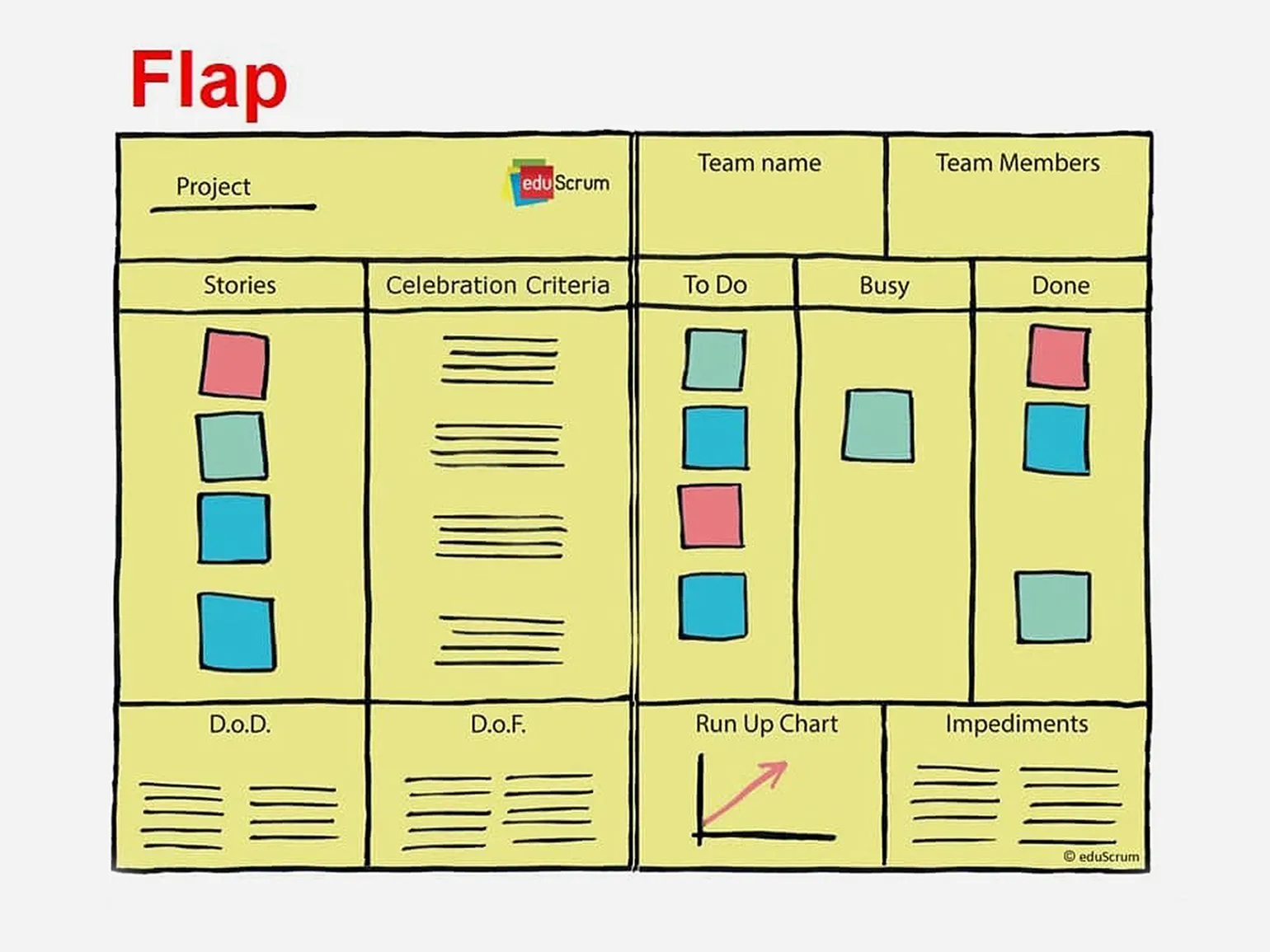
Students develop a work plan, define tasks, establish teamwork rules and review criteria. At this stage, an eduScrum board is created, which represents the team's action plan with listed tasks and a timeline for achieving goals. It is usually drawn on a large sheet of paper. Using sticky notes that can be moved around the board, participants track progress towards the intended goal. The board should be located in a convenient location, and its contents should accurately reflect the current work process.
Initially, the plan may look like a desired goal, but as the work progresses, it is subject to change and becomes an accurate reflection of the path the students take during project preparation. This process of adjustment allows for the incorporation of new ideas and solutions, which ultimately contributes to a deeper understanding of the topic and improved work quality.
The beginning of work involves the use of short cycles. This approach helps improve the efficiency of processes, ensuring rapid adaptation to changes and improved results. Short cycles promote regular evaluation and adjustment of actions, which makes work processes more flexible and productive. Using this method, teams can respond more quickly to project requirements and optimize task execution.
Task planning is carried out for the short term. After completing a certain amount of work, an interim review is conducted. The results of this analysis allow for adjustments, an assessment of the feasibility of the steps taken, and a check on the compliance of the completed tasks with the established goals. The number of such cycles varies depending on the duration of the project, but with each new stage, the results become increasingly clear.
Knowledge assessments and project reviews are important stages in the learning and performance assessment process. These activities not only assess the assimilation of the material but also identify weaknesses requiring additional attention. When conducting knowledge assessments, it is important to use a variety of methods: tests, surveys, practical assignments, and group discussions. This will help to create a complete picture of the understanding of the topic.
The project review also plays a key role in the process. It allows participants to present their ideas, receive feedback, and make any necessary adjustments. Such events promote critical thinking, presentation skills, and teamwork. It's also important to remember that both the knowledge assessment and project review should be structured and goal-oriented, which will increase their effectiveness and usefulness for all participants.
The teacher conducts individual assessments for students, evaluating their progress. Afterward, teams present their projects, demonstrating the skills and knowledge they have acquired.
A retrospective is an important process of analyzing and reflecting on previous events, which allows them to identify successful practices and areas for improvement. In the context of business and projects, retrospectives help teams evaluate their work, identify key achievements and mistakes, and develop strategies for future projects. Regular retrospectives contribute to increased efficiency, stronger team spirit, and a culture of continuous improvement. It is important that retrospectives are conducted in an open and honest atmosphere, allowing each team member to express their thoughts and suggestions. This will not only improve the quality of the team's work but also strengthen mutual understanding and trust among its members. Retrospectives are an integral part of successful project management and can significantly increase the chances of achieving goals.
This stage focuses on reflection and personal growth. Each student evaluates their qualities and skills, and the team and teacher support them in answering questions such as, "What new things have I learned about myself?" and "What aspects would I like to develop in the future?" The work of each mini-team is also discussed: how comfortable they were interacting, whether their communication was effective, and whether any communication difficulties arose. This approach promotes deep self-awareness and improved teamwork.
Repetition and improvement are key aspects of the learning and skill development process. Regular repetition of information promotes better memorization and assimilation of the material. This not only helps reinforce existing knowledge but also identifies gaps that need to be addressed.
Improvement occurs through practice and application of knowledge in real-world situations. The more often you encounter the material and apply it, the more confident you will feel. Use various review methods, such as testing, discussions with colleagues, or taking personal notes. Continuously improving skills helps achieve goals and increases the overall effectiveness of learning.
Also remember that analyzing your own mistakes and successes is an important part of the improvement process. This allows you to adjust your approaches and adapt your learning strategies to achieve the best results.
The eduScrum methodology is based on the principle of continuous improvement. After analyzing the initial experience, you should make small adjustments to the process. While the desire to improve many aspects is natural, it is impossible to tackle everything simultaneously. Experts advise approaching improvement in stages, which allows you to focus on key elements and achieve significant results.
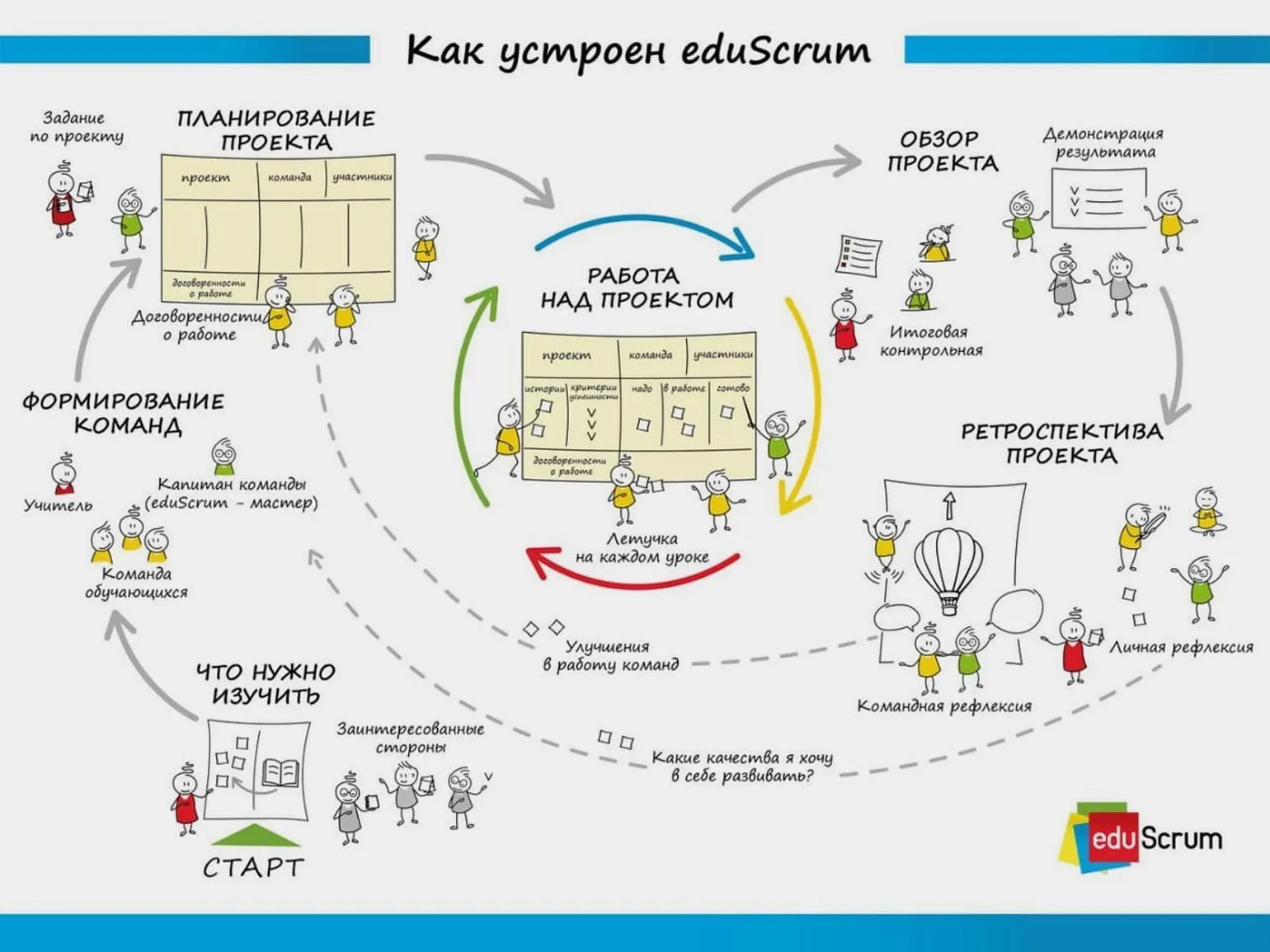
The teacher acts as an expert and a coach. The teacher's primary role is to develop the curriculum and create engaging projects that will inspire students and meet educational goals. Initially, the teacher must also perform many management functions, including motivating students, organizing teamwork, and resolving conflict situations. Gradually, the teacher transfers responsibility to groups, while remaining at the center of the educational process. They set learning boundaries and monitor the achievement of results. The teacher also provides assistance to students upon request, since while one group is mastering the material independently and does not require support, another group may require a more detailed discussion of the topic. This approach allows for effective organization of instruction and adapts it to the needs of each group, which promotes deeper learning. The basic principle is that students should unite based on their useful qualities and skills, rather than on friendships. To achieve this, you can ask students to fill out questionnaires on separate sheets of paper. In the questionnaire, they should list their skills and abilities, and then highlight the five or six strongest ones. This approach not only facilitates the formation of effective groups but also helps each student recognize their strengths, which is essential for their further development and successful teamwork.
The sheets of paper are folded so that the names are hidden. The teacher reviews them and selects team captains. When selecting, the teacher may consider leadership qualities, as well as the importance of skills such as listening and communication, depending on the project's goals.
After selecting the captains, they form teams anonymously, based solely on the key skills necessary for effective work. During a session led by Tatyana Aksenova, a Russian licensed eduScrum trainer and associate professor at KalmSU, one of the captains voiced an important principle: "I choose team members with qualities I don't have but would like to develop." This approach helps create balanced and productive teams where each member complements one another, which in turn improves the overall effectiveness of the group.
When forming teams, it is important to avoid common mistakes that can negatively impact their effectiveness. The first mistake is insufficient assessment of the skills and qualifications of team members, which can lead to an imbalance in the distribution of responsibilities. The second mistake is the lack of clear goals and objectives, which makes it difficult to understand the role of each member and affects overall productivity. The third mistake is ignoring the personal characteristics of team members, which can lead to conflicts and decreased motivation. The fourth mistake is insufficient communication, which can cause misunderstandings and hinder collaboration. Finally, the fifth mistake is a lack of feedback, which hinders the development and improvement of team dynamics. Avoiding these mistakes can significantly improve team effectiveness and cohesion.
Assembling teams based on friendships can be an effective approach for creating a cohesive group. Friendships between members promote better interaction and increase trust. When people work in teams based on friendships, it can lead to more creative ideas and improved productivity. It's important for team members to share their skills and experiences, which also promotes friendships. However, it's important to keep in mind that friendships don't always guarantee success, so it's important to additionally focus on the professional qualities and goals of each member. Creating teams based on friendships can provide an excellent foundation for effective collaboration and achieving shared results.
We most often interact with people who share similar views and interests. This can lead to the formation of a one-sided team, making it difficult to develop skills for communicating effectively with diverse personalities. It's important to learn how to interact with different types of people to create a more balanced and productive team. Developing these skills not only improves communication but also increases the overall effectiveness of the group.
Forming teams based on a directive approach requires a clear distribution of roles and responsibilities. Directive management allows for an effective workflow, where each team member knows their tasks and is responsible for their implementation. This approach promotes rapid goal achievement, especially under time and resource constraints. However, it is important to consider that directive leadership can limit the creativity and initiative of team members. For optimal results, a balance should be found between directive management and the involvement of team members in the decision-making process.
If the teacher independently forms teams, students may experience resistance and passivity, as they will assume that the decision maker is responsible for the results. In this situation, it is advisable to relieve oneself of responsibility for creating groups to avoid standard excuses such as, "We can't do it because you divided us up this way" or "We don't work together because we were assigned this way." This will allow students to take an active role in the process and increase their engagement in learning activities.
Forcing teamwork on people who persistently refuse to collaborate can become a serious problem in an organization. It is important to understand the reasons for this behavior and apply methods that will help overcome resistance. Effective teamwork contributes to increased productivity and a better workplace atmosphere. Instead of coercion, it's worth considering approaches that motivate employees to participate in team projects. Developing an engagement strategy and creating an environment for comfortable collaboration can help solve this problem. Open communication, support, and constructive feedback play a key role in fostering team spirit.
There may be students in the class who prefer not to participate in group activities. In such cases, they are given the opportunity to pursue personal projects. Willie Wijnands emphasizes that after completing two or three individual projects, such children typically experience a change in their attitude toward learning—social motivation kicks in, as they begin to realize that all the exciting events take place without their participation. Thus, personal projects can be an effective way to engage students in the educational process and foster their interest in learning.
Sometimes, a team may need to exclude a member who is inactive and failing to demonstrate results. In such situations, the teacher leads a discussion with the class to determine who is willing to accept the excluded member. It's important to recognize their positive qualities and discuss how they can improve their behavior. This process not only fosters team spirit but also helps each participant recognize the importance of responsibility and a commitment to success. Difficulties may arise, but not everyone does. It's important for teachers to possess the skills they seek to develop in their students. The eduScrum methodology is ideal for agile teachers willing to work with five to six teams. Rather than providing ready-made solutions, such teachers guide students' thinking, facilitate communication, consider others' arguments and points of view, and encourage creativity. This approach allows not only to develop critical thinking in students, but also to form in them the skills of teamwork and independent search for solutions.
It will be difficult for those who put their expert position first and are not ready to give up the role of “I am the boss here”. The fear of making mistakes in front of students and admitting vulnerability can be a serious obstacle. To overcome such fears, Willy Wijnands uses the Fuckup Nights format. He shares his professional failures with students, invites them to talk about their own mistakes, and emphasizes that mistakes are a normal part of learning and growth. This helps create an atmosphere in which mistakes are perceived as opportunities for development, not as a source of shame. Here are some more potential challenges: Transforming a curriculum into a project-based format requires a significant amount of effort. This process involves rethinking the traditional approach to teaching and integrating practical tasks that promote deeper assimilation of the material. Project-based learning allows students to apply theoretical knowledge in practice, while developing critical thinking and teamwork skills. To successfully implement a project-based format, it is necessary to carefully plan and organize the learning process, as well as take into account the needs and interests of students. In teaching practice, teachers sometimes need support in preparing lessons. In Russia, there have been examples of several teachers working together on a single course using the eduScrum system. They reviewed textbooks, adapted materials, and selected the most engaging stories for their students. This collaborative approach promotes higher-quality delivery of information and improves student engagement.
Many people experience feelings of loss of control during various life situations. This feeling can be associated with uncertainty and changes in life. It is important to understand that such emotions are normal and can be overcome. Recognizing your feelings and finding ways to manage them will help restore a sense of stability. Mindfulness practices, meditation, and communication with loved ones can be effective tools for regaining control and self-confidence.
Noise often occurs in lessons, as teamwork requires active communication. In schools implementing the eduScrum methodology, some teachers notice a lack of their usual discipline in the classroom. It is important to get used to this new learning format, reminding yourself and others that such noise is part of the work process. It's important to understand that student interaction fosters collaboration and critical thinking skills. Recognizing that students may possess knowledge that exceeds teachers' can be challenging. However, this situation opens new opportunities for learning and growth for both students and teachers. It's important to recognize that the educational process is a two-way street. Teachers can benefit from their students' experiences and knowledge, which contributes to a more effective learning environment. Accepting this fact can be the first step toward improving the educational process and fostering collaboration within the classroom.
Biology teacher Svetlana Komarova from Moscow School No. 1570 organized a Minecraft project with two teams of students. They created a unique world where they explored genetics, mutations, and variability in detail. Although the teacher had a strong background in biology, she lacked knowledge of the game itself. Therefore, Svetlana decided to trust her students, who demonstrated excellent skills and creativity. As a result, the students created impressive projects that not only deepened their understanding of biological topics but also fostered teamwork and creativity.
Mastering teamwork skills is essential. Effective teamwork plays a key role in achieving shared goals and increasing productivity. It is important to learn how to delegate tasks, set clear deadlines, and maintain open communication between team members. This will not only improve work processes but also create a trusting atmosphere conducive to creativity and innovation. By mastering the principles of teamwork, you can significantly improve your team's effectiveness and achieve better results.
Teamwork thinking is not developed in universities, including pedagogical institutions. Therefore, teachers must master teamwork skills themselves in order to instill them in their students. This approach will help develop students' ability to collaborate and interact effectively, which is an important aspect of modern education. Teachers must be prepared for continuous self-improvement to successfully integrate teamwork principles into the educational process.
Concerns about passive knowledge acquisition are indeed well-founded. The traditional educational system, from an early age, instills the habit of accepting information as it is. When knowledge is acquired for a long time without the need for active research, a person may not develop the desire to independently explore and master new topics. This can lead to a decrease in critical thinking and the ability to learn independently. It's important to develop active learning methods that promote deeper understanding and comprehension.
In eduScram, it's impossible to simply sit in the back of the classroom. The work dynamics are organized in such a way that every team member must contribute to the project. Unpreparedness or a lack of activity can lead to conflicts with other group members. This creates a need for active participation and collaboration to achieve a common goal.
A team-based approach to learning is not always suitable for all students, and this is completely normal. Not everyone is ready to master communication skills, role assignment, and responsibility. For example, Willy Wijnands has had cases where students transferred to regular classes, preferring the traditional learning format, which was more familiar and comfortable for them. This emphasizes the importance of an individual approach in the educational process, where each student has the right to choose a method that suits their learning style and personal preferences.
To successfully adapt students to the new educational system, it is recommended to begin with a pilot implementation for a short period of two to three weeks. If forming skill-based teams is still challenging, you can use random selection of participants, for example, by drawing pieces of paper with numbers, or create groups based on existing connections. At the end of a project, teams are usually "mixed," which fosters interest in working together: students begin to recognize which classmates they would like to see in their group for a particular subject. This approach not only helps develop collaboration skills but also promotes a deeper integration of knowledge and skills.
During midterm reviews, the teacher systematically assesses students' understanding of the theoretical material and the effectiveness of their project preparation. The forms of assessment can vary: these can include independent work, oral surveys, or random questions for teams. All students are informed in advance of the assessment date and evaluation criteria. This approach allows the teacher to maintain control over the learning process and confidently assess students' level of material acquisition.
A Scrum board helps track students' progress and visualize team progress. It shows how each team is meeting the established task schedule. In case of significant deviations from the plan, the teacher can conduct additional sessions with this team to help correct the situation and ensure the achievement of educational goals. Using a Scrum board contributes to more effective management of the educational process and increases student motivation.
The eduScrum methodology includes three main types of assessment. These types of assessment allow for effective tracking of student progress and provide feedback to both students and teachers. The first type of assessment is self-assessment, where students evaluate their own achievements and skills, which promotes self-reflection and responsibility for learning. The second type is peer assessment, which allows students to exchange opinions and evaluate each other's work, thereby developing critical thinking and collaboration skills. The third type of assessment is teacher assessment, which provides structured feedback from the teacher and helps identify areas for improvement. All three types of assessment in the eduScrum methodology contribute to the creation of a transparent and effective educational environment where every student can achieve maximum results.
- Individual assessment – for each student's independent work (eduScrum does not exclude classic tests, quizzes, and oral surveys);
- Project assessment – for the entire project. This assessment is the same for the entire team;
- Group assessment. Vili Veinads suggests assessing the team's work of each member and distributing a few additional points among themselves. These do not affect the final grade; rather, they are bonuses that motivate the team to further analyze their work. This type of assessment is not used in all schools that use eduScrum.
In eduScrum, standard homework assignments are replaced with educational tasks. Teams independently organize the process of preparing for classes by working on their projects. They meet regularly, make plans for the near future, and develop strategies for effectively consolidating the material and applying it to the project. If they are able to complete this work in class, homework is not required. This approach promotes a deeper understanding of the educational material and develops collaboration and self-organization skills in students.
The eduScrum and Problem-based Learning approaches have much in common, but they are not identical. Both methods actively promote the development of the 4Cs—critical thinking, creativity, communication, and coordination. However, eduScrum offers a number of unique advantages that make it an effective tool in the educational process. This approach focuses on actively engaging students in learning, which promotes a deeper understanding of the material and fosters teamwork. Using eduScrum can significantly increase student motivation and improve their learning outcomes, making this method popular in modern educational institutions.
- A pre-defined structure—with a set of events, roles, and rules—means that the transition from the traditional system to the new one will be significantly easier for both teachers and students. Furthermore, processes are transparent to everyone thanks to the eduScrum board.
- Attention is paid to the development of the personal skills and qualities of each participant. Moreover, not only through teamwork, but also through reflection, filling out questionnaires, and even rubrics (in those schools that use criteria-based assessment).
Projects within the eduScrum training framework can be complex and challenging. Last year, students from Chile, under the guidance of eduScrum trainers and curators from various countries, actively worked on projects aimed at achieving sustainable development goals. These initiatives contributed to the development of critical thinking and collaboration skills in students, which is an important aspect of modern education.
The eduScrum system is successfully applied in the field of adult education. It is used in the internal training of a large hosting provider, Reg.ru, as well as in case championships organized for students. The implementation of eduScrum allows you to improve the learning process, making it more interactive and effective.
One of the main advantages of this method is the ease of familiarization with Agile practices used by progressive companies around the world. eduScrum principles are easy to learn and can be integrated into work processes. The emphasis on self-study and shared responsibility encourages learners to actively participate in the learning process and understand their goals and objectives. This is an important aspect that is often lacking in many adults. Developing these skills can significantly improve work efficiency and facilitate professional growth. There are several eduScrum trainers in Russia, as well as three internship sites: School No. 95 in Saratov, School No. 95 in Nizhny Tagil, and Gymnasium No. 21 in Elektrostal, Moscow Region. These sites were created in 2019 at the initiative of eduScrum officials, who invited active practitioners to conduct internships for their colleagues. During the pandemic, internships were not held, but there is a possibility they will resume next year. In Saratov, the development of an eduScrum platform at a school is supported by local businesses, including Dmitry Kondratskov, Chairman of the Board of Agroros Bank. EduScrum continues to gain popularity, offering innovative teaching methods that help develop teamwork skills and critical thinking in students. Approximately 850–900 people have completed eduScrum training sessions in Russia. Approximately 60% of these participants are school teachers, 30% are university professors, and 10% are corporate training specialists. These data highlight the growing interest in the eduScrum methodology in the educational environment, demonstrating its effectiveness and relevance for various categories of educators. Participants in eduScrum training sessions often begin applying this methodology in their own courses, and some continue to use it on a regular basis. eduScrum is successfully integrated into the state educational standard, as the teacher helps students set goals in lessons, monitors their understanding and assimilation of the theory, and monitors their independent work. This system promotes responsibility and independence in students, which makes learning more effective and engaging.
Of course, I am ready to help you with text editing. Please provide the text you would like me to revise.
Official training is available at the only certified center in Russia, but you can also study the material independently. For this purpose, you can use the guide developed by Russian eduScrum trainers. In the beginning, we recommend strictly following this guide, and as you master the system, you can adapt it to your needs. This will allow you to gain a deeper understanding of the methodology and effectively apply it in your practice.
If you are looking for additional materials on this topic, we recommend checking out other articles and resources. This will help you gain a deeper understanding of the issue and expand your knowledge. We provide a variety of useful links and recommendations for your convenience.
- How Phenomenon-Based Learning Teaches You to Solve Real-World Problems
- How to Teach Students and Young Employees Team Skills
- Startup as a Diploma: What It Is and Where It's Used
- Upside Down: What Is Flipped Learning?
Official training is available at the only certified center in Russia. However, you can also study the material independently using a guide developed by eduScrum trainers. At the initial stage, we recommend strictly adhering to the recommendations, and as you master the system, you can adapt elements to your needs. This will ensure the effective implementation of the methodology and allow you to maximize the use of its capabilities.
Profession Content Manager in SMM
You will learn how to create texts and visuals for social networks. You'll understand how to use content to promote your business and convert subscribers into customers. Master a creative digital profession from scratch and find a new job with Skillbox.
Find out more