
Contents:
In this article, you will get acquainted with the main aspects of the topic, as well as receive useful information and advice. We will examine key points in detail and provide practical recommendations to help you better understand the issue at hand. Read on to deepen your knowledge and find answers to important questions.
- Why did the "great layoff" begin?
- What trends have increased the importance of employee retraining globally, and what are the specifics of the situation in Russia?
- What competencies are most often lacking among employees?
- What other benefits does retraining bring to companies, besides filling employee skill gaps?
- What do Russian companies teach, and what don't they teach, despite the skills shortage?
- And what training formats experts consider promising.
As part of the EduTech seminar series, SberUniversity presented an analytical report entitled "Retraining as a Response to the Challenges of the New World of Work." The document highlights the importance of personnel retraining in a rapidly changing labor market and identifies key trends influencing professional development. The report focuses on the need to adapt educational programs to the new requirements and challenges faced by professionals in various industries.
The report is based on research conducted with the support of the Institute of Education of the Higher School of Economics. The bulk of the data was collected during an online survey held in September. The survey involved 211 respondents from 26 different fields of activity, including HR directors and training and development specialists. The authors of the report also interviewed experts in the field of corporate education from leading Russian companies, such as X5 Group and Rosatom. The work used open government statistics, as well as information from analytical publications and academic publications.
This report provides valuable information on employee skills gaps and existing retraining programs, which can be useful for organizations seeking to improve the skills of their employees and adapt to the modern demands of the labor market.
Retraining has become even more important than before. For both companies and employees, the growing interest in retraining globally is driven by a number of short-term trends, according to the report's authors. The pandemic has accelerated digitalization and automation across various industries. Many workers have faced remote work, lost workdays, or been laid off. As a result, some professions have undergone significant changes, and working conditions in many industries have been transformed. This has created a need for new skills and knowledge, which in turn is increasing the demand for retraining programs. More and more people around the world are considering changing their career paths, seeking to improve their qualifications (upskill) for higher positions or master a new profession (reskill). Both of these paths are often perceived by employees as requiring them to leave their current job without a clear plan of action. In a rapidly changing labor market, such steps are becoming an important strategy for achieving professional growth and adapting to new demands. Changing your career path opens up opportunities for development in promising areas and allows you to remain competitive in a highly competitive environment.

According to data, 76% of employees in Moscow and St. Petersburg are actively seeking or planning to change jobs in the near future. This phenomenon has already been dubbed "the great dismissal" by employers. Igor Baranov, Vice Rector for Education and Research at SberUniversity, shared this information at a seminar. The growing number of workers seeking to change jobs indicates significant changes in the labor market, requiring employers to rethink their approaches to hiring and retaining employees.
If it's important for an employer to retain the experience and skills of employees, retraining (reskilling) provides an opportunity to find new uses for them. This not only helps retain valuable talent but also facilitates the company's development in a rapidly changing market. Investing in employee retraining helps adapt their skills to new requirements, ultimately leading to increased efficiency and competitiveness.
The COVID-19 pandemic has had a significant impact on the labor market, but there are also long-term trends shaping its future. Regardless of the current coronavirus situation, a number of changes in employment began before the pandemic and will continue to evolve. These trends include increased remote work, the adoption of digital technologies, changes in skills and training requirements, and an emphasis on flexibility and work-life balance. It is important to consider these factors when forecasting the future labor market and adapting to new conditions.
- the fourth industrial revolution - or simply digitalization;
- a decrease in the share of routine work;
- an aging population and other demographic changes;
- the spread of a culture of lifelong learning;
- a trend towards retaining specialists with a wide range of skills.
Long-term trends lead to significant changes in the sphere of professions. Some traditional professions disappear, others undergo transformation, and completely new specialties emerge. These changes are driven by technological advances, changing labor market needs, and social dynamics. Adaptation to new conditions is becoming a necessity for professionals, which opens up opportunities for training and retraining. It is important to monitor current trends and develop skills that meet the demands of the modern world.
A study citing a World Bank report predicts that 85 million jobs will be lost globally by 2025, while 97 million new ones will be created. The greatest demand will be for specialists in data analysis, artificial intelligence, content creation, and cloud computing. In the face of rapid changes in the labor market, retraining is becoming an essential condition for successful professional growth and adaptation to new requirements.
Martin Mörle, Deputy Director of Corporate Services and Director of CLIP Accreditation at the European Foundation for Management Development (EFMD), argues that the person of the future will need to master 7 to 8 professions throughout their life. This opinion emphasizes the importance of adaptability and continuous learning in a rapidly changing labor market. In today's world, where technology is developing at an incredible pace, multidisciplinary skills are becoming key to career success. Therefore, it is important to think about the future today and begin developing the necessary competencies.
Retraining is relevant not only for those changing specialties but also for specialists whose professions are gradually evolving. In many industries, workers are expected to undergo retraining every 3-5 years, and in some cases even more frequently. In cybersecurity, in particular, significant retraining is required at least every two years. This underscores the importance of continually updating knowledge and skills for a successful career in a rapidly changing environment.
Retraining should also include short-term courses aimed at mastering specific skills, including those not tied to a specific profession. SberUniversity Vice Rector Igor Baranov emphasized this position at the report presentation, noting the importance of programs that help develop universal competencies. In today's world, constantly updating your knowledge and skills is becoming essential for a successful career, making such courses especially relevant. Retraining isn't just about mastering professional skills, it's also about developing fundamental competencies that will stay with you even if you decide to change careers. These skills, known as foundational skills, have long-term value. While technical skills quickly become obsolete, being updated every 2-5 years, foundational skills contribute to the development of your human capital throughout your life. Retraining programs can be considered a form of reskilling. While they may not focus on a specific profession, they significantly change your skill set and make you more competitive in the job market.
Martin Möhrle believes that developing key skills should be a key goal of the education system. This will prepare students for modern challenges and ensure their competitiveness in the labor market. A focus on skills such as critical thinking, creativity, and communication fosters well-rounded individuals capable of adapting to rapidly changing conditions. Therefore, integrating these aspects into educational programs will guarantee a successful future for students.
Not all global trends in training and workforce development are equally evident in Russia. According to Rosstat, only 22.9% of the working population undergoes training annually, which is two to three times lower than the figures for countries such as France, Germany, and Sweden. Furthermore, Russia has a significant skills gap—a gap between the skills in demand in the labor market and those possessed by workers. According to some estimates, up to half of the country's working population faces this problem. This highlights the need to improve qualifications and adapt educational programs to the requirements of the modern labor market.

Reworked text:
Be sure to read the additional materials:
Why do we find ourselves in the qualification
A skills gap is a situation where our skills and knowledge do not match the requirements of the labor market or professional activity. Many of us face this problem, and the reasons lie in various aspects.
Firstly, changes in technology and work methods require constant knowledge updating. If we do not follow new trends and do not develop our skills, we risk becoming irrelevant. Secondly, a lack of practical experience can lead to the fact that even ideally prepared specialists in theory cannot successfully cope with tasks in practice.
Furthermore, sometimes we are not aware of our weaknesses and do not work to improve them. This may be due to a lack of feedback from colleagues or management. It is important to regularly receive assessment of your skills and strive for self-improvement.
Finally, fear of failure and aversion to change can hold us back, preventing us from leaving our comfort zone. To avoid falling into a skills pit, it is necessary to actively develop your skills, be open to learning, and adapt to new conditions.
Everyone Needs More Skills Than Before
Flexible and cross-skill competencies are playing an increasingly important role in today's world of work, as skill requirements across various professions are becoming increasingly complex. There is a growing need to combine narrow subject knowledge with social, cognitive, and technological skills. This is relevant for marketers, developers, and teachers alike. In a rapidly changing environment, professionals must be able to adapt and develop their skills to remain competitive and effective in their work.
Social and digital skills are in short supply in Russian companies, as confirmed by the report's findings. These skills are becoming increasingly in demand in today's labor market, and their shortage can negatively impact organizational development. Training and developing these skills can increase employee competitiveness and improve overall company performance.
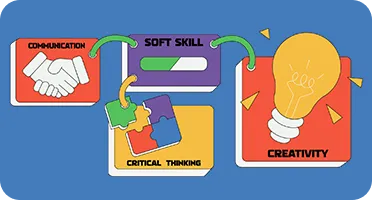
The modern labor market demands a variety of skills from specialists, and some are particularly acute. Hard skills, such as programming, data science, and knowledge of new technologies, are most in demand. Soft skills, including communication, time management, and critical thinking, are also important. In a rapidly changing technology environment, adaptability and a willingness to learn are becoming essential qualities for career success. Professionals who possess a combination of these skills have a clear advantage in the labor market. Given these factors, companies strive to develop their employees to meet modern requirements.
54% of respondents identified a lack of innovative thinking as a key skill gap in their organization. This demonstrates the need to develop creativity and flexible thinking among employees to increase competitiveness in the market. Innovative thinking facilitates the generation of new ideas, process improvement, and adaptation to change, which is essential for the successful functioning of a business in a rapidly changing environment. Developing programs to train and foster creativity can significantly improve the situation and close existing skills gaps.
A lack of creative (43.1%) and strategic thinking (40.8%) in the professional environment is often highlighted. This demonstrates the need to develop these skills to improve competitiveness and work efficiency. Creative thinking allows you to find unconventional solutions, while strategic thinking helps you formulate long-term plans and achieve your goals. Focusing on these aspects can significantly improve the performance of both individual employees and the entire team.
Significant gaps are observed in the digital technology sector, particularly in the area of data analysis and management, where 53% of specialists lack skills. 45.5% also note a lack of advanced digital and programming skills. These data highlight the importance of upskilling and training in the digital sector to improve the overall level of competencies.
A lack of leadership skills is observed among 46% of employees, and 39.3% experience a shortage of change management skills. These indicators highlight the importance of developing these competencies to improve team performance and adapt to changing conditions. Improving leadership skills and the ability to manage change are becoming key factors for a successful career and competitiveness in the labor market.

According to respondents, the need for retraining applies to various categories of employees. Production personnel, marketing, PR, and corporate communications staff, as well as analysts and R&D specialists, were frequently mentioned in the survey. Retraining these groups is an important step to improve performance and adapt to market changes.
Please note the following materials:
Higher education is increasingly focusing on developing 21st century skills. This is due to changes in the labor market and the needs of modern society. Key skills actively developed in educational institutions include critical thinking, creativity, digital literacy, and collaboration.
Modern universities are implementing innovative teaching methods, including project-based learning, interdisciplinary courses, and practical exercises that allow students to develop the competencies necessary for a successful career. Furthermore, an emphasis on the practical application of knowledge helps prepare graduates for the real-world challenges they will face in their professional lives.
Thus, universities today are actively working to prepare students for the demands of the modern world, providing them with the necessary skills for successful careers in a rapidly changing economy.
The report emphasizes that external recruitment cannot solve the problems of labor shortages and a shortage of specific skills. The labor market is experiencing a shortage of specialists possessing the full range of competencies required by employers. As a result, companies are forced to invest time and resources in training or retraining new employees.
Employee retraining is becoming increasingly important in today's environment. According to experts, retraining employees not only improves their skills but also helps them adapt to rapidly changing market demands. This improves productivity and enhances a company's competitiveness. Furthermore, ongoing employee training promotes professional growth and increases job satisfaction, which in turn reduces turnover. Thus, investing in employee retraining is a strategically important step for successful business development.
- helps maintain staff loyalty (76% of participants noted this option in the survey);
- maintains employee satisfaction (70% of responses);
- reduces staff turnover (39%);
- increases internal mobility (38%).
In the practice of both Russian and international companies, according to Igor Baranov, retraining employees within their professional field is much more common than switching to completely different specialties. Examples of such initiatives include leadership training to prepare for management positions and courses to expand digital competencies, which are becoming relevant in the context of changes in professions. Importantly, adaptation and development of skills within one area increase the competitiveness of employees and contribute to the effective implementation of corporate tasks.

Read also:
Corporate training is undergoing significant changes in the modern world. With the development of technology and the rapid pace of change in the business environment, companies are adapting their approaches to employee training. The focus is on creating flexible and personalized programs that align with business needs and employee interests.
Online courses and interactive platforms are becoming increasingly popular, allowing for training to be delivered in a format convenient for employees. The use of virtual reality and simulations opens up new opportunities for hands-on learning, significantly increasing employee engagement and effectiveness.
Furthermore, the emphasis is shifting to developing soft skills such as communication, creativity, and critical thinking. This is due to the need to adapt to rapidly changing market conditions and leadership demands.
Corporate training is also becoming more results-oriented, with an emphasis on measuring performance and applying acquired knowledge in real-world situations. Thus, companies strive to create a continuous learning process that promotes the growth and development of both employees and the business as a whole.
What and how employees are trained in Russia: expectations and reality
According to a Deloitte study, more than 50% of managers in Russia believe that responsibility for developing new skills should lie with the employees themselves. In this regard, employers are faced with an important task: they need to hire employees who show an interest in training and development. This will create a more productive work environment and increase the organization's competitiveness in the market.
Respondents in the survey and interviews conducted as part of the SberUniversity and HSE study do not support this point of view. Many companies are actively retraining their employees, recognizing the importance of constantly updating skills and knowledge in a rapidly changing labor market. This demonstrates employers' growing responsibility for developing their talent pool and their desire to enhance competitiveness.
Survey participants note a trend toward increasingly complex skill profiles, leading to employee training in more than just narrow professional skills and competencies. 41.2% of respondents report using such programs. Furthermore, there is an emphasis on developing cross-professional skills, such as teamwork, leadership, strategic thinking, and change management. About a third of survey respondents confirm the implementation of such programs.
Currently, specialized professional programs occupy a leading position, while companies' resources for employee training are limited. In the organizations whose data were presented in the report, the availability of courses in scarce cross-professional competencies is significantly lower than training in hard skills. This gap was noted at the report's presentation by one of the authors, Ilya Korshunov, Deputy Director of the HSE Institute of Education. The worsening situation in the professional training sector requires attention and a strategic approach to effectively develop employees.
Russian businesses primarily focus on solving current challenges. When a new employee arrives, they are trained, introduced to the work, and achieve specific results. Only then do companies begin to consider developing the skills that will be in demand in the future. This approach allows us to effectively cope with current challenges, but it is also important to consider long-term prospects in order to keep up with global trends in the labor market.
According to the survey results, most companies lack programs aimed at developing key competencies that are in high demand today.
- data analysis and management;
- innovative, creative thinking;
- entrepreneurial thinking;
- innovative product development;
- lean manufacturing;
- well-being (well-being, work-life balance).
According to the SberUniversity report, one of the key problems of Russian organizations is the insufficient use of modern retraining formats. The authors of the report note that Russian companies have not yet developed effective approaches to retraining programs, indicating a lack of experience in implementing such initiatives. This creates obstacles to staff adaptation to rapidly changing market conditions and current demands.
The most common training methods in the corporate environment include professional conferences and seminars, chosen by 65% of survey participants. The second most popular method is individual transfer of experience within the company, indicated by 63% of respondents. Significant attention is also paid to corporate university programs, used by 48% of companies, and the services of external providers, chosen by 56% of participants. These training methods contribute to the development of employees' professional skills and the enhancement of their competencies.
Retraining formats have their drawbacks. Although specific data is lacking, previous research suggests that employees would prefer other training programs. They would prefer a more flexible schedule, including online formats, as well as programs offering training at prestigious external educational institutions instead of internal corporate universities. Furthermore, the emphasis should be on developing cross-skills that are in demand across various industries, not just hard skills. This underscores the need to adapt educational programs to the demands of the modern labor market.
The report emphasizes that successful retraining programs can only be implemented in organizations with a favorable learning climate. Martin Möhrle emphasized the importance of not only a technological infrastructure for retraining but also the need to foster a culture of continuous learning. The training process should receive the same attention and funding as other key aspects of the company's operations, and not be left in the background.

Reworked text:
Study additional materials:
The competition is an effective format for corporate training, Because it promotes the active engagement of employees in the process of acquiring new knowledge and skills. Participation in competitions creates a competitive atmosphere that encourages employees to improve themselves and enhance their professional competencies. Competitions can be tailored to the specific goals of the company, helping to achieve the desired learning outcomes.
Furthermore, this format fosters team spirit and collaboration among colleagues, which in turn strengthens corporate culture. Participants can share experiences, learn from each other, and find new approaches to problem solving. It is important to note that competitions, as a rule, have a game element, which makes training more engaging and memorable.
Thus, a competition as a format for corporate training not only increases the level of employee knowledge, but also helps create a favorable working atmosphere, which ultimately leads to improved company performance as a whole.
What will be relevant in the retraining market
The authors of the report highlight several promising models of employee retraining. These models are aimed at effectively updating the knowledge and skills of employees in a rapidly changing labor market. The main focus is on adapting training programs to the needs of employers and developing competencies in demand in various industries. An important aspect is the use of modern technologies and innovative teaching methods, which improves the quality of the educational process and ensures a higher degree of employee engagement. In addition, such models contribute to the formation of a culture of continuous learning, which in turn increases the competitiveness of both employees and the organization itself.
- Short-term intensive courses in high-tech, in-demand professions for anyone interested. This will help fill such vacancies faster. Sberbank and X5 Group, for example, offer similar schools.
- Retraining programs for new business processes and new career paths for employees in common professions. The report cites cases from the Bank of Russia, Sberbank, and Russian Railways. For example, Russian Railways trains current electric train drivers to operate automated trains.
- Programs for developing digital, social, and cognitive skills for managers—for example, the talent pool programs at Lanit and NLMK.
- Programs for developing specialists' entrepreneurial competencies. Sberbank and Rostec offer such programs.
- Retraining in collaboration with universities and other external partners, which provides a fundamental foundation for transitioning to a new field or profession. The report presents cases of Sber and Rosatom.
- Programs with state support for updating skills in priority areas of economic development.

Refresher training at universities deserves special attention. The format of professional development at specialized universities has existed for a long time, and at first glance it may seem like there is nothing new here. However, the authors of the study note that modern refresher programs are increasingly being developed with the specific needs of companies in mind. This allows clients to control the quality of training and ensure that educational programs meet current labor market requirements. Thus, refresher training at universities becomes more targeted and effective, which plays a significant role in increasing the competitiveness of specialists.
In some cases, cooperation is carried out using a franchise model, where the corporation develops educational materials and trains faculty selected by the university. In this process, the university is responsible for administration and providing the necessary infrastructure. Such programs can be significant in scale and cover a variety of fields. An example of such cooperation is the initiative of Rosatom and the St. Petersburg Polytechnic University.

Study additional materials:
The government and business are actively working to address the problem of personnel shortage for the digital economy. With rapidly advancing technology and growing demand for IT specialists, it is essential to create the conditions for training qualified personnel. Government initiatives include programs for employee training and retraining, as well as support for educational institutions offering courses in digital technologies. Business, in turn, also plays a key role. Companies are investing in employee training, creating internships and practical training for students, and actively collaborating with educational institutions to develop relevant curricula. Joint efforts between government and business can lead to a significant improvement in the digital labor market, which in turn will contribute to the development of innovative technologies and enhance the country's competitiveness on the international stage. According to a survey conducted by SberUniversity, approximately 30% of external retraining and professional development programs are offered at universities. This demonstrates the significant role of universities in the educational process and their contribution to training specialists who meet modern labor market requirements. Importantly, such programs help employees develop their skills and improve their competitiveness in the professional field.
At the report presentation, Ilya Korshunov noted that 48% of people choose courses from independent providers of continuing professional education. This underscores the importance of the trend, which allows employers to expand training opportunities for their employees. Collaborating with popular providers will allow companies to offer the most relevant and in-demand programs, which in turn will help improve the qualifications and competitiveness of employees in the labor market. Effective use of this trend can lead to higher levels of employee satisfaction and their professional development.
According to Korshunov, the prospect of changing the format of educational cooperation will not lead to companies completely abandoning their interactions with universities. Universities and colleges will maintain their market positions, as cooperation with them provides access to various government initiatives. This allows companies to effectively use resources and opportunities for professional retraining of their employees.

Read also:
The issue of competition between universities and companies in the EdTech field of additional education is becoming increasingly relevant. In recent years, online courses and educational platforms offering flexible and accessible learning programs have become increasingly popular. This allows many people to gain new knowledge and skills without having to attend traditional educational institutions. Universities, with their history and prestige, continue to attract students, but they face challenges from EdTech companies offering innovative approaches to learning. EdTech platforms can offer adaptive and personalized programs that meet the demands of the modern labor market. This creates competition for students seeking more effective and convenient options for professional development. However, universities are not standing on the sidelines and are beginning to integrate technology into their educational processes, offering online courses and blended learning formats. This allows them to remain competitive and attract new audiences. Thus, universities and EdTech not only compete but can also collaborate, creating a synergistic effect in the field of continuing education. Ultimately, the issue of competition between universities and EdTech in continuing education is multifaceted. Both segments have their advantages and disadvantages, and in the future, we can expect their mutual influence and collaboration to improve the quality of the educational process. State-supported retraining programs, such as the federal projects "Personnel for the Digital Economy" and "Employment Promotion," are becoming increasingly significant in the educational services market. According to a 2020 report, regions with low levels of economic development and labor productivity have a high share of retraining programs in the overall adult education structure. This means that retraining programs are actively implemented not only in regions where businesses have the resources to train employees and a strong culture of continuous learning, but also in those where government authorities are seeking to "reboot" entire sectors of the economy, using state support mechanisms to improve the skills and adapt the workforce. Thus, retraining programs play a key role in improving the economic situation and increasing the competitiveness of regions.
Reworked text:
We recommend that you familiarize yourself with additional materials on the topic.
- Experts named 50 promising new professions
- 6 technologies for corporate training
- How to motivate adults to study
- A zoo of corporate EdTech solutions
HR Training and Development Manager
You will learn how to build corporate employee training programs and evaluate their effectiveness. You will be able to begin a career in the HR department and implement a working personnel development system within the company.
Find out more