
Contents:
New competencies for managers
The discussion participants noted the growing demand for a new type of manager. In today's market conditions, leaders are needed who are able to adapt to change and effectively manage teams. The new leadership style requires managers not only to possess professional skills but also to innovate and motivate employees. Successful leaders must be prepared for new challenges and demonstrate flexibility in decision-making.
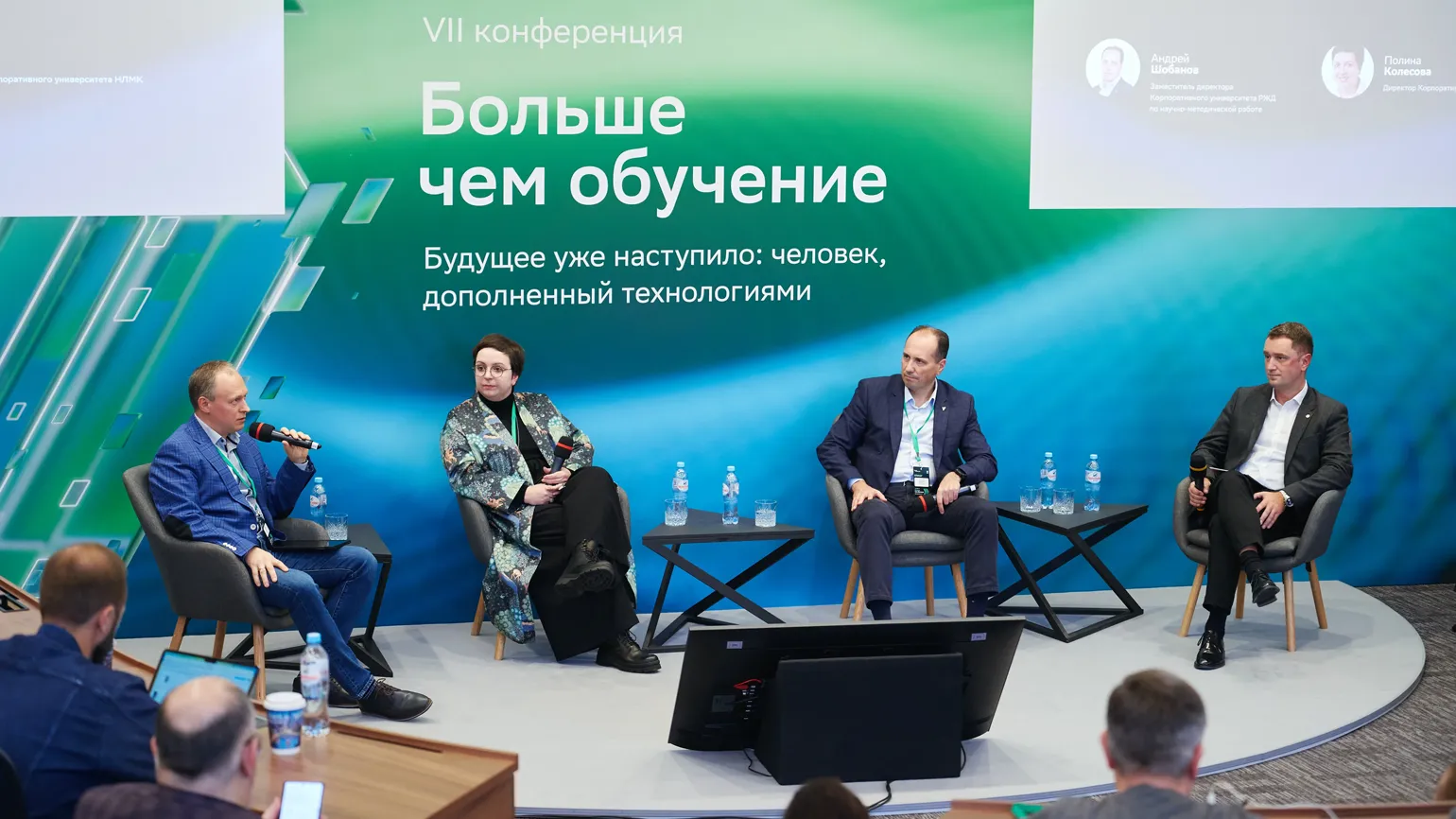
Andrey Shobanov, Deputy Director for Scientific and Methodological Work at the Russian Railways Corporate University, noted a shift in approaches to leadership development. Previously, the emphasis was on developing leaders who could lead teams to address important strategic objectives with maximum engagement. However, in today's environment, requirements have changed. Organizations now require analytical leaders and expert leaders who act as strategists. These specialists must develop plans and create an information environment that facilitates understanding of key objectives and methods for achieving them. This approach allows for more effective management of modern challenges and the achievement of goals.
Andrey Afonin, Director of the Bank of Russia University, also supports this view. During a discussion of the bank's experience, he identified three important competencies for leaders in the coming years. These include human-centeredness and digital literacy, but the key aspect is vision. This means the ability not only to foresee the future but also to propose original solutions and strategies to address a company's complex challenges and further develop it. In a rapidly changing world, such qualities are becoming essential for successful leadership and achieving competitive advantages.
Andrey recognizes that a good visionary is rare, but believes that every company should have several such specialists. Is it possible to develop visionary qualities in a leader? The expert noted that he and his colleagues concluded that certain components of vision can indeed be developed. Although specific aspects were not specified, this process can significantly improve a company's strategic thinking and innovative development.

Learning new topics and gaining information are important aspects of personal and professional growth. Read articles, blogs, and books to expand your knowledge and skills. Continuous self-education helps you stay up to date with the latest trends and improves your competencies. Regularly update your sources of information and stay up-to-date with new publications to stay informed about important developments in your field of interest. Reading not only enriches your vocabulary but also develops critical thinking, which contributes to a deeper understanding of the world around you.
Six Key Trends in Personnel Training for 2023-2024
In 2023-2024, personnel training will undergo significant changes based on new technologies and approaches. One of the key trends is the use of hybrid learning, which combines online courses with traditional methods. This allows for the flexibility and accessibility of educational materials.
Virtual reality and augmented reality are also increasingly used in training. These technologies create immersive environments for employees, which promotes deeper understanding and retention of information.
Personalized learning is another important area. By focusing on the individual needs of each employee, companies can more effectively develop the skills and competencies of their workforce.
Artificial intelligence and machine learning are becoming increasingly integrated into educational platforms, allowing content to be automatically tailored to users' knowledge levels and preferences.
Social learning continues to gain popularity as employees increasingly turn to colleagues for help and advice. This fosters stronger teamwork and fosters shared experiences among team members.
Finally, an emphasis on employee mental health and well-being is becoming an integral part of educational programs. Companies increasingly understand that employee health directly impacts their productivity and engagement.
These trends are shaping the future of workforce training, making it more adaptive, technologically advanced, and human-centered.
Focus on Training Workers in "Soft Skills"
Andrey Shobanov noted that when discussing "soft skills" and cross-functional competencies, we often focus on managers and executives, forgetting about workers who work directly on the shop floor or on the tracks. These employees also have a need to develop these skills. Corporate training specialists have long ignored this topic, believing that the lower an employee is on the hierarchical ladder, the less they need soft skills. However, it is important to understand that the development of communication, teamwork and other cross-professional competencies is necessary for all levels of employees, as this contributes to increased efficiency and improved work processes.
The situation is changing: modern competency models for production employees, such as those at Russian Railways, emphasize communication, analytical, and systems thinking skills. Therefore, experts emphasize the need to develop strategies for effectively developing these and other soft skills in employees. Developing such skills will be key to increasing productivity and competitiveness in the industry.
Modern working conditions are fundamentally changing approaches to professional activity. The transition to digital technologies affects not only office spaces but also the workplace itself. In some cases, digitalization is even faster on-site than in offices. In this regard, in the next 3-5 years we can expect a significant emphasis on adaptation to new working conditions and the use of modern equipment.
The corporate university faces a challenge not only in soft skills training, but also in the scale of this training. Andrey Shobanov emphasizes that Russian Railways has 70,000 managers and 630,000 employees, which requires a special approach to training. Formal courses cannot fully meet the organization's needs, so it is necessary to develop effective mechanisms for engaging employees in the learning process. "This is a task we will address in the coming years," the speaker noted. It is important to create a system that allows each employee to develop the necessary skills and improve their qualifications, which, in turn, will contribute to the overall development of the company and increase its competitiveness.
Development of "motivation of meaning"
Polina Kolesova, Director of NLMK Corporate University, noted an important trend in corporate culture - an emphasis on employee motivation. Currently, there is a shift from need-based motivation to meaning-oriented motivation. This means a shift in focus from the development of specific skills to the comprehensive development of individuals. Kolesova emphasized that training is an essential part of this process: it involves not only the acquisition of knowledge and skills but also personal development, encompassing both professional and human aspects. Therefore, corporate universities must adapt to new realities and focus on the comprehensive development of their employees. According to the expert, the work of a corporate university consists of integrating culture, education, and knowledge management. At NLMK, special attention is paid to the cultural aspect, which is a key element in employee development and improving their professional effectiveness. This approach helps create a harmonious environment for learning and growth, which in turn contributes to strengthening the corporate culture and increasing employee engagement. Motivation can be fostered through meaningful employee experiences through the implementation of a variety of initiatives. Polina Kolesova spoke about the creation of a corporate theater, which has become an important tool for fostering vibrant emotions and new experiences among employees. This initiative, she says, fosters creative and innovative thinking, as well as the ability to think outside the box. Corporate theater answers the questions "What if?" and "How could we do it differently?", thereby encouraging employees to think outside the box.
Read also:
- Employers shared their plans and budgets for training in 2024
- Why companies invite astronauts and art historians as lecturers
- A culture of learning in a company: what it is, why it is needed, and how to build it
- Numbers: what will happen to jobs and employee training by 2027