Contents:
- "The Great Masturbator"
- "The Persistence of Memory"
- "Soft Construction with Boiled Beans" ("Premonition of Civil War")
- "The Dream"
- "Swans Reflected in Elephants"
- "The Metamorphosis of Narcissus"
- "The Burning Giraffe"
- "The Face of War"
- "A Dream Caused by a Bee's Flight Around a Pomegranate A Second Before Awakening"
- The Temptation of St. Anthony"
- Elephants"
- Leda Atomica
- The Christ of St. John of the Cross"
- Galatea of the Spheres"
- Tuna Fishing

Try 4 Top design professions. Free ➞ In 5 days, you'll learn about illustration, UX/UI, web, and graphic design. Add 4 cool cases to your portfolio and decide which direction to take next.
Learn more"The Great Masturbator"
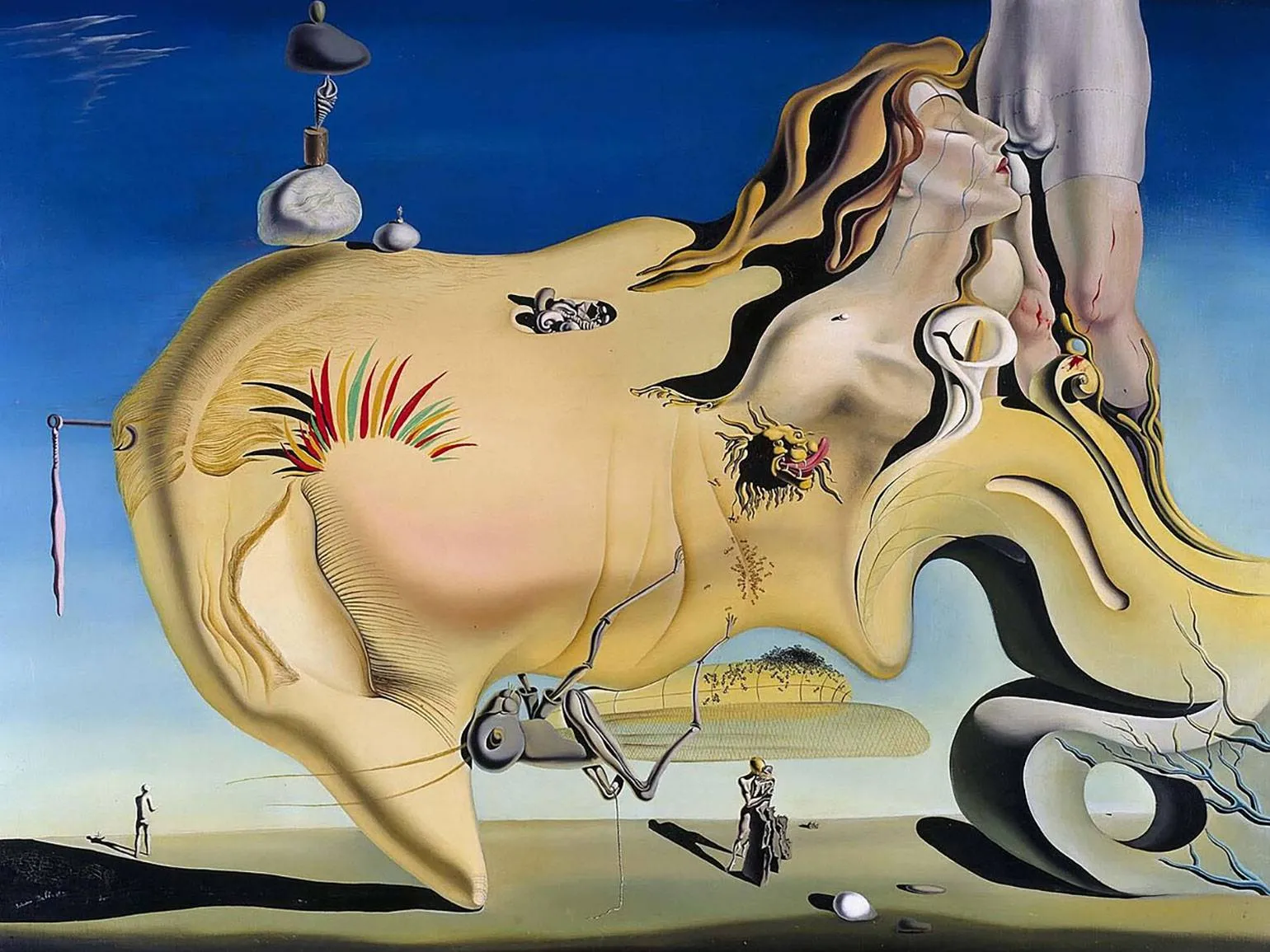
The painting was created during the period when Salvador Dalí joined the surrealist movement, and in the same year he met his muse Gala. Some believe that this work represents an erotic transformation that occurred within the artist after meeting Gala, who had a significant influence on his work. Another approach to interpreting the painting is that it reflects Dalí's complex and contradictory attitudes towards the topic of sex. As a child, the artist came across a book containing images of genitals affected by venereal diseases, which left a deep impression on him and may have influenced his perception of intimate themes in art.
Dalí became acquainted with Sigmund Freud's The Interpretation of Dreams while studying in Madrid in the early 1920s. This book had a significant impact on him and became one of the most important discoveries of his life. He felt a strong need for introspection, which encompassed not only his dreams but also all the events that happened to him. Freud opened new horizons for understanding the human psyche, which became an important stage in the artist's creative and personal development.
In Sigmund Freud's studies, Salvador Dalí discovered the key to accessing the deepest fears and desires of man. This discovery prompted him to begin studying the poetics of surrealism in 1926. As a result, Dalí developed a unique visual language that continues to distinguish his works in the art world and leaves an indelible mark on the history of Surrealism.
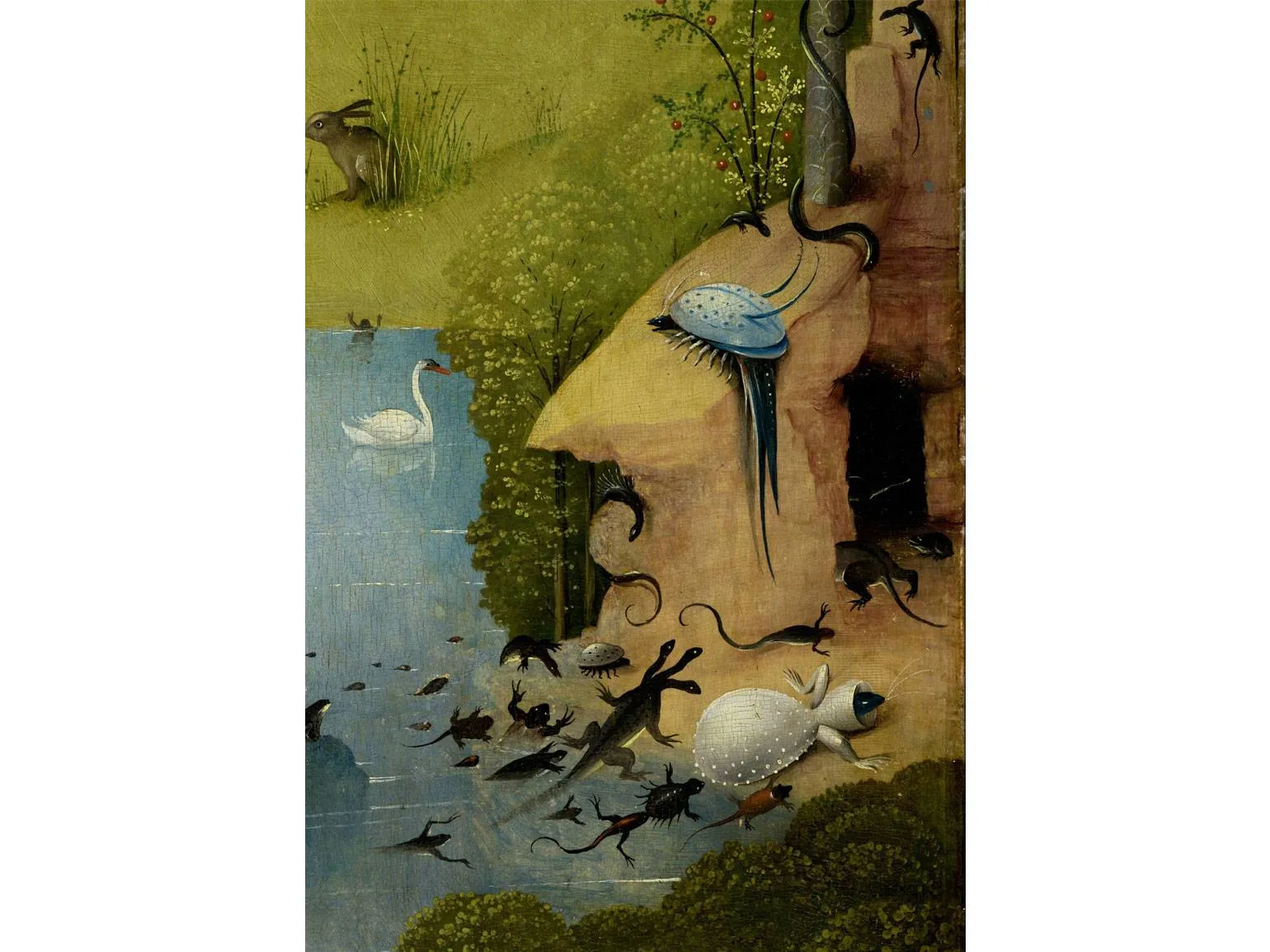
The distorted head, located in the center of the canvas, is reminiscent of an element in Hieronymus Bosch's painting "The Garden of Earthly Delights." This association emphasizes the uniqueness and symbolism of the depicted image, which evokes deep reflections on human nature and its vices.
This image probably reflects An erotic fantasy by Salvador Dalí, in which a naked female figure reaches for a man's genitals. However, the painting is dominated by anxiety rather than eroticism or hints of pleasure. For example, the grasshopper attached to the head symbolizes fear, as Dalí himself had a phobia of these insects. The ants in the painting represent decay, and the bleeding cuts and fishhooks emphasize the presence of danger. Thus, the work evokes complex emotional reactions, combining elements of fear and eroticism.
"The Great Masturbator" is a work of art that represents deep introspection and provocation. The painting opens a gateway to the artist's subconscious, allowing him to express his fears, fantasies, and desires through symbolism. Salvador Dalí kept this work until his death, after which he donated it to the Spanish state. This creation has become an important part of cultural heritage and continues to attract the attention of viewers exploring its multilayered meaning and influence on 20th-century art.
«The Persistence of Memory»
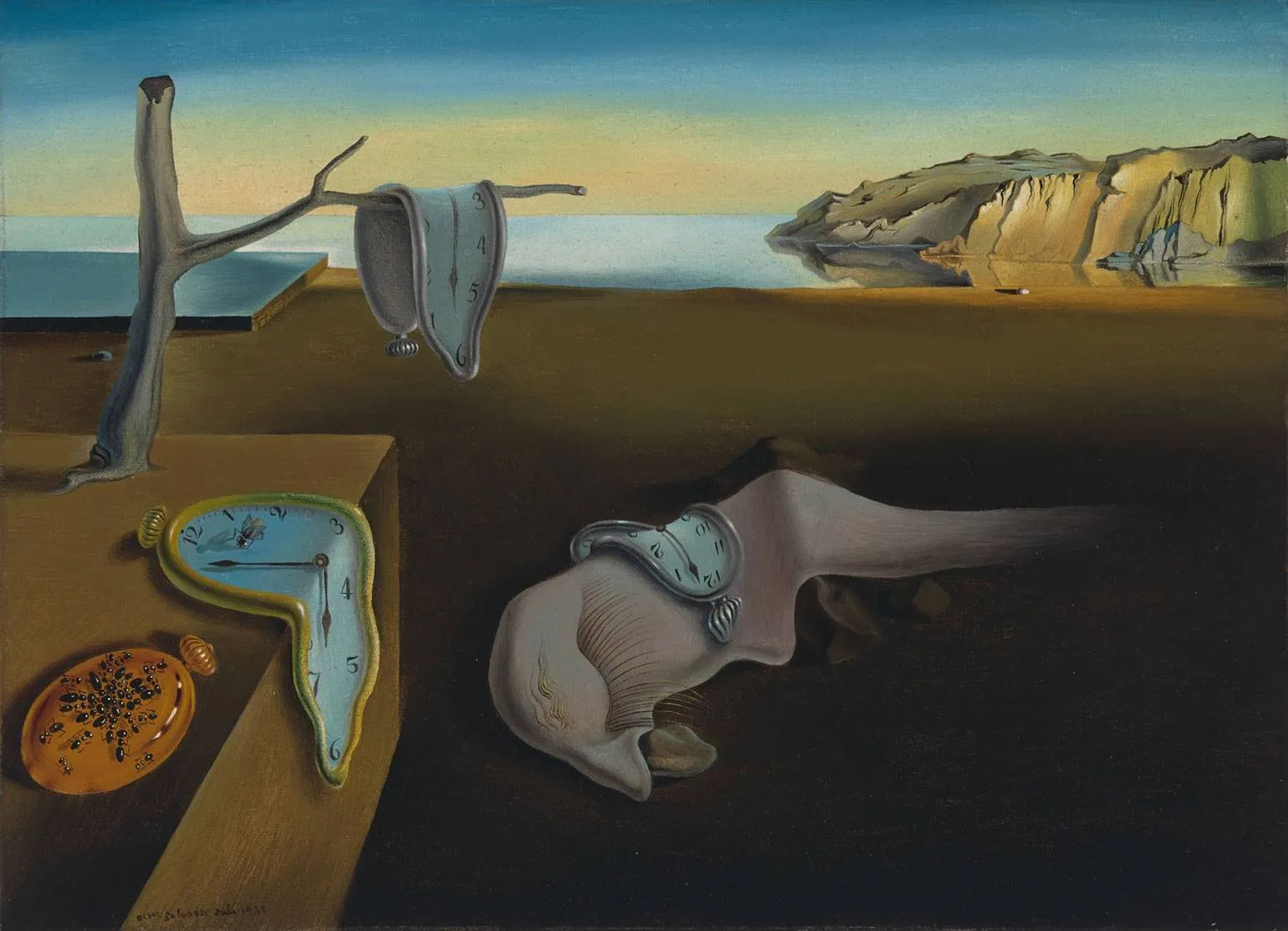
Salvador Dalí's painting "The Persistence of Memory" is one of the most famous in the art world and a key work of Surrealism. The iconic images of a melting pocket watch are a visual exploration of the nonlinearity and irreversibility of time. Dalí himself admitted that the inspiration for this painting came to him after a dinner in which he ate Camembert cheese. The painting took only about two hours to complete, during which the artist experienced severe headaches. This work continues to generate interest and discussion, highlighting Dalí's unique approach to time and the perception of reality.
A year before creating this painting, Salvador Dalí developed a unique "paranoid-critical method" inspired by the principles of psychoanalysis. This method involves the use of psychoanalytic techniques to activate the creative process. Dalí sought to achieve a state approaching delirium or hallucination, believing it would allow him to access subconscious images and ideas. This approach facilitated a deeper understanding of his inner world and opened new horizons in his artistic work.
The painting has been the subject of numerous analyses and has become the basis for various theories regarding its meaning. Research into this artwork continues to generate interest among scholars and art lovers seeking to understand its deep meaning and cultural significance.
According to one interpretation, the painting represents the relativity of time and space, while another version focuses on the nature of memory, decay, and the passage of time. Regardless of the approach, the multiple readings make this work not only appealing but also significant for Surrealism. "The Persistence of Memory" has become one of the most iconic and recognizable works of modern art, frequently referenced in popular culture. Thanks to its fame, this work has helped establish Salvador Dalí as one of the most influential artists of the 20th century. His work continues to inspire and engage viewers, scholars, and art lovers, underscoring the importance of surrealism in the context of contemporary artistic discourse.
"Soft Construction with Boiled Beans" ("Premonition of Civil War")
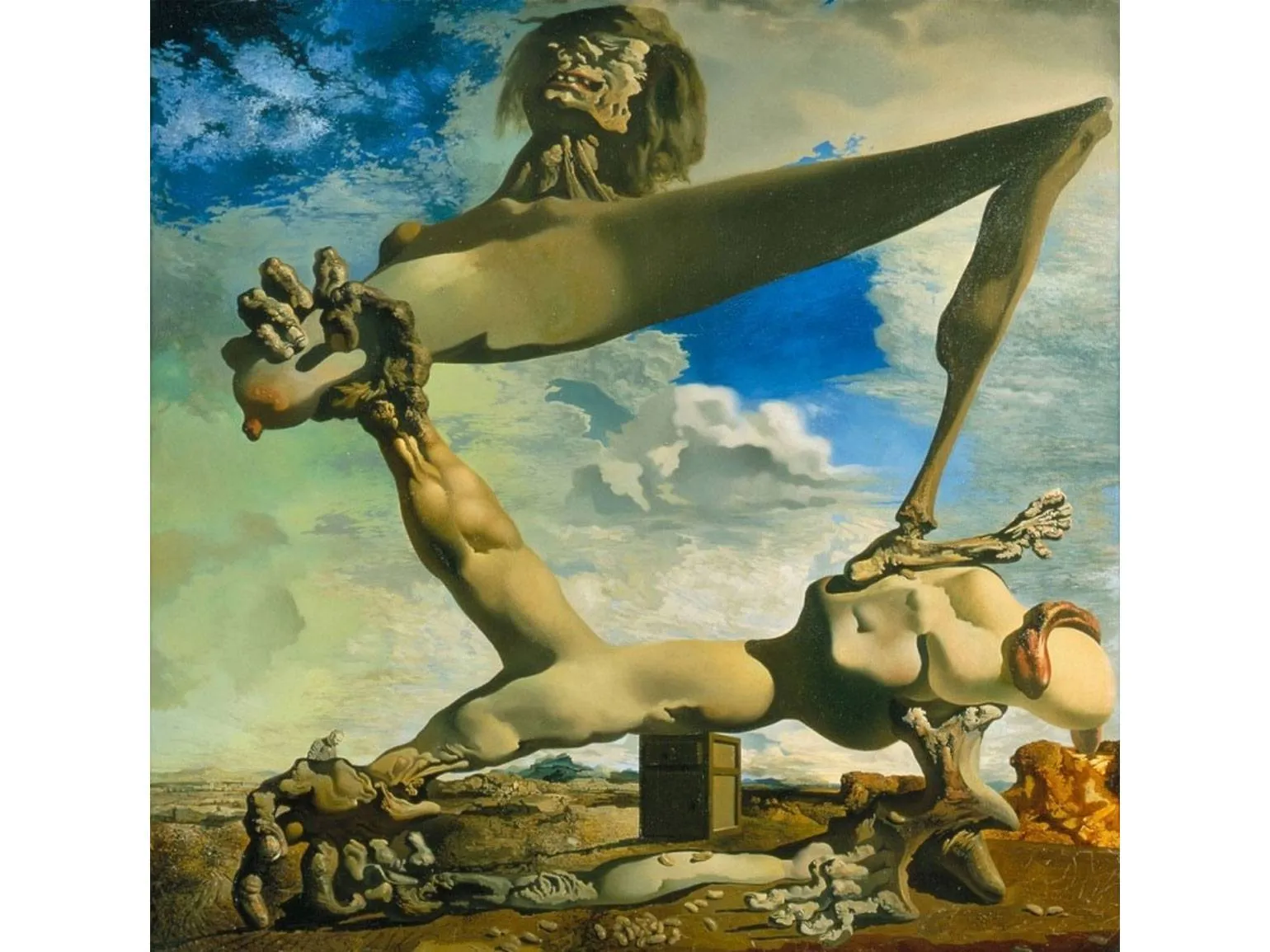
The painting is a reaction to the Spanish Civil War, which began in 1936, and deeply affected the artist Salvador Dalí. The grotesque, distorted figure on unsteady legs symbolizes the horror and brutality of the conflict and also serves as a critique of the violence and suffering of the Spanish people. Dismembered limbs can be seen in the canvas, which emphasizes the tragedy of the situation. The unique combination of surreal imagery with detailed images of the figure's skin, muscles, and bones enhances the overall feeling of anxiety and unease in the painting. This work of art not only reflects historical reality but also immerses the viewer in a world of emotions and experiences associated with war.
Salvador Dalí's painting, like many of his works, opens up a wide range of interpretations. The title of the painting, "Soft Construction with Boiled Beans," alludes to the everyday concerns of ordinary people for whom providing for family food is an essential part of life. At the same time, the eerie figure of war, consuming itself, depicted in the painting, highlights the absurdity of violence. This work provokes reflection on the contrast between everyday life and the devastating consequences of conflict, making it relevant and significant in the modern world.
Salvador Dalí claimed to have created his painting, "Soft Construction with Boiled Beans," six months before the outbreak of the conflict, citing the "prophetic power of his subconscious." However, a more realistic version holds that the painting was painted during the war. This work is considered one of Dalí's greatest masterpieces, symbolizing his unique style and profound ideas that continue to inspire and captivate viewers around the world.
"Dream"
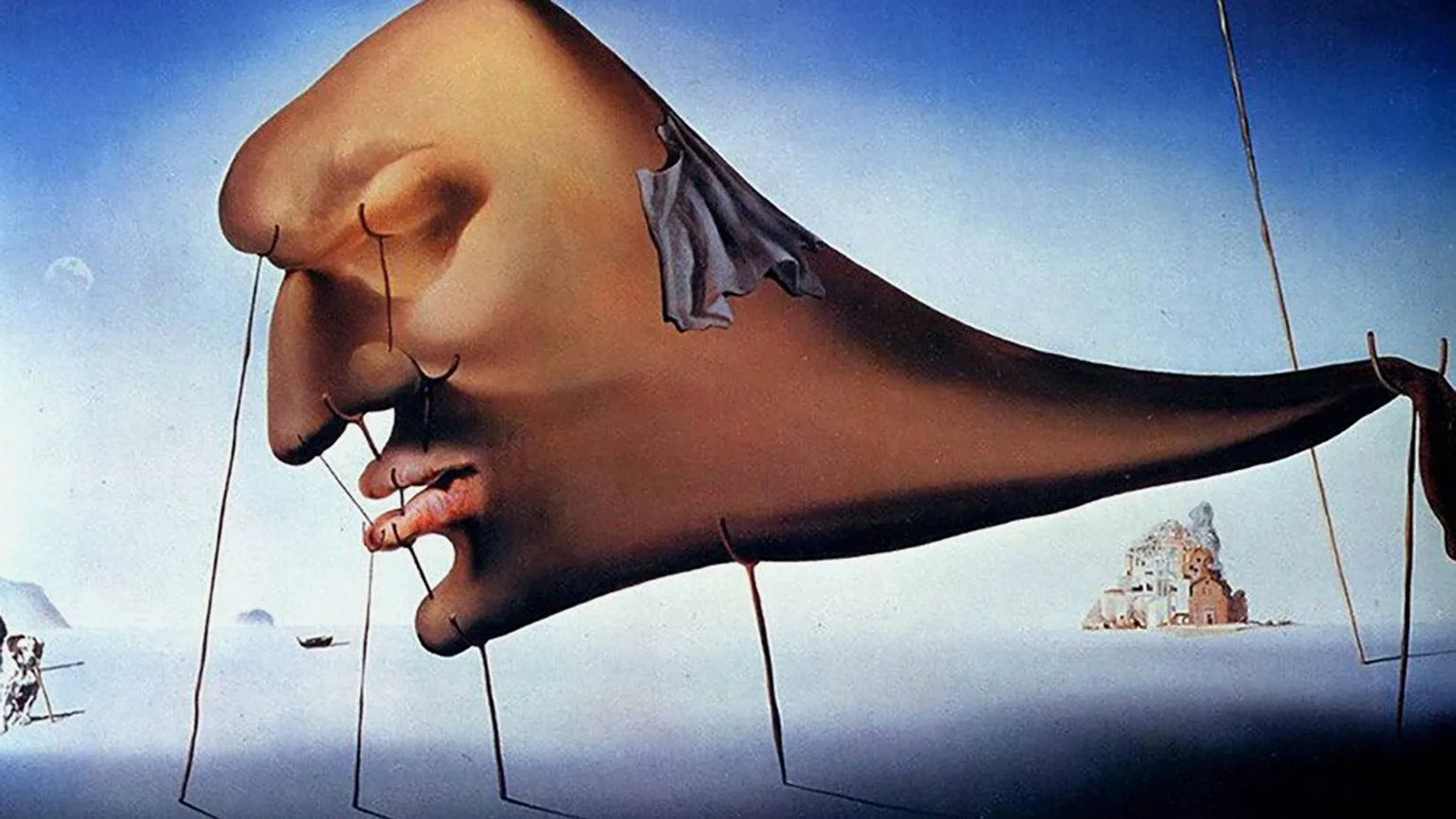
The painting "Dream" is a profound exploration of the unconscious. A distorted, dream-like figure hovering in the air and leaning on thin crutches, symbolizes the fragility and vulnerability of the psyche. This work of art invites the viewer to reflect on internal conflicts and emotional states, reflecting the complexity of human perception. The visual elements of the painting create an atmosphere of dream and anxiety, emphasizing the importance of understanding mental processes and their impact on our lives.
"A pupated monster, whose forms and mental anguish are supported by eleven main supports..." It is enough for just one lip to find a secure support in the corner of the pillow or a little finger to cling to a fold in the sheet, and sleep takes hold of us with incredible force. “Then a terrifying forehead hangs heavily over us, resting on the soft column of the nose,” this is how Salvador Dali himself described this painting. His work immerses the viewer in a world of surreal images, where reality intertwines with fantasy, creating unique experiences and provoking deep reflection.
"Swans Reflected in Elephants"
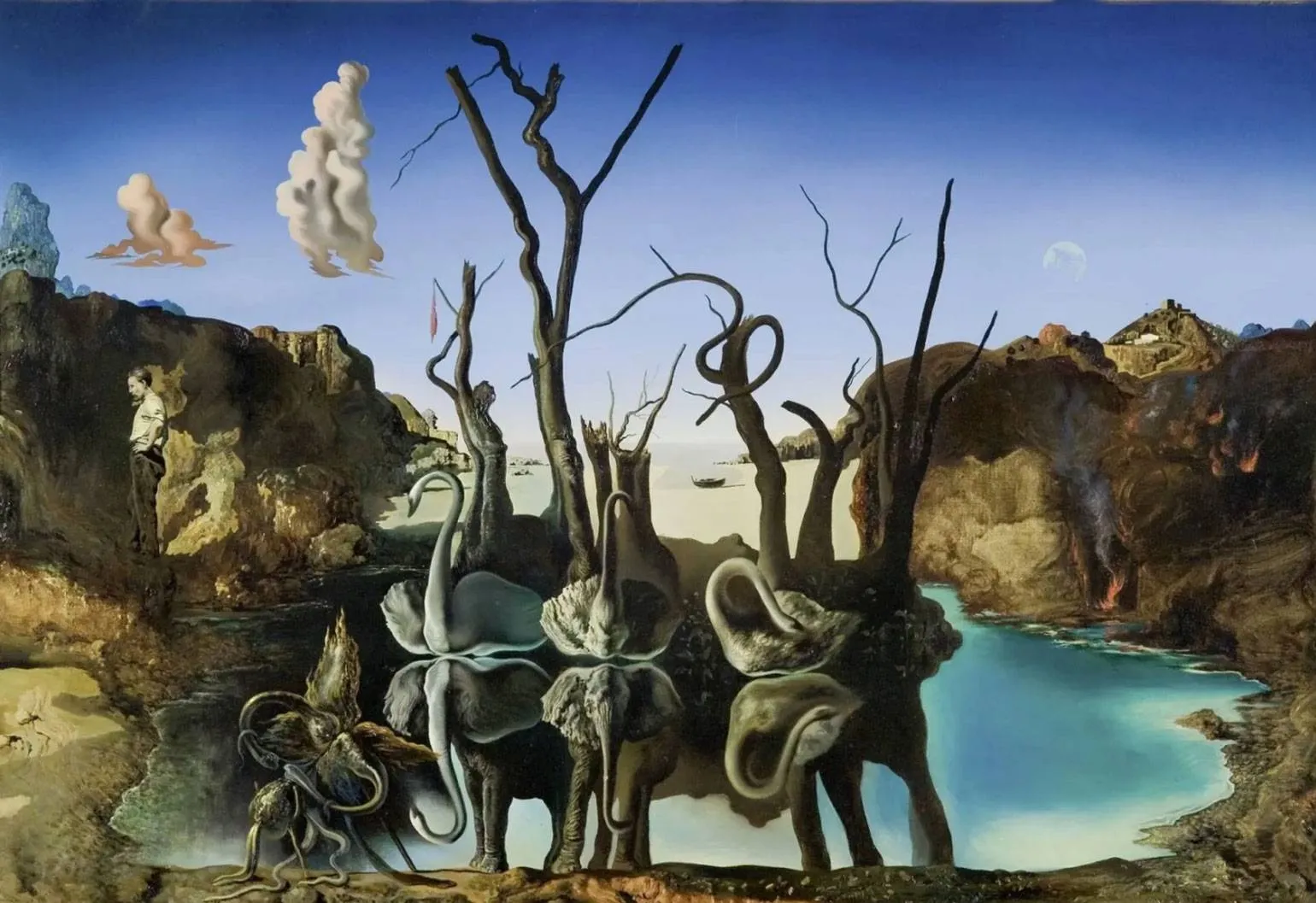
This painting was created using Salvador Dalí's paranoid-critical method. It depicts three swans reflected in a lake. An interesting effect is achieved due to the fact that the swans' necks visually turn into elephants' trunks, and the trees located nearby look like the legs of these animals. This unique technique allows us to deeper understand the world of surrealism and the peculiarities of the perception of reality through the prism of Dalí's work.
This painting is an iconic work of surrealism and has inspired many imitations and interpretations. Its unique style and deep symbolism made it an important milestone in the history of art, which confirms its influence on many artists and creators.
The work presents double images that can be interpreted from different points of view. On the one hand, this may be a reflection of the differences between reality and our perception of this reality. On the other hand, such images highlight the contrast between the conscious and the unconscious, which is one of the key themes of the artist’s work. Dalí actively explored these boundaries, which makes his works multi-layered and profound.
"The Metamorphosis of Narcissus"
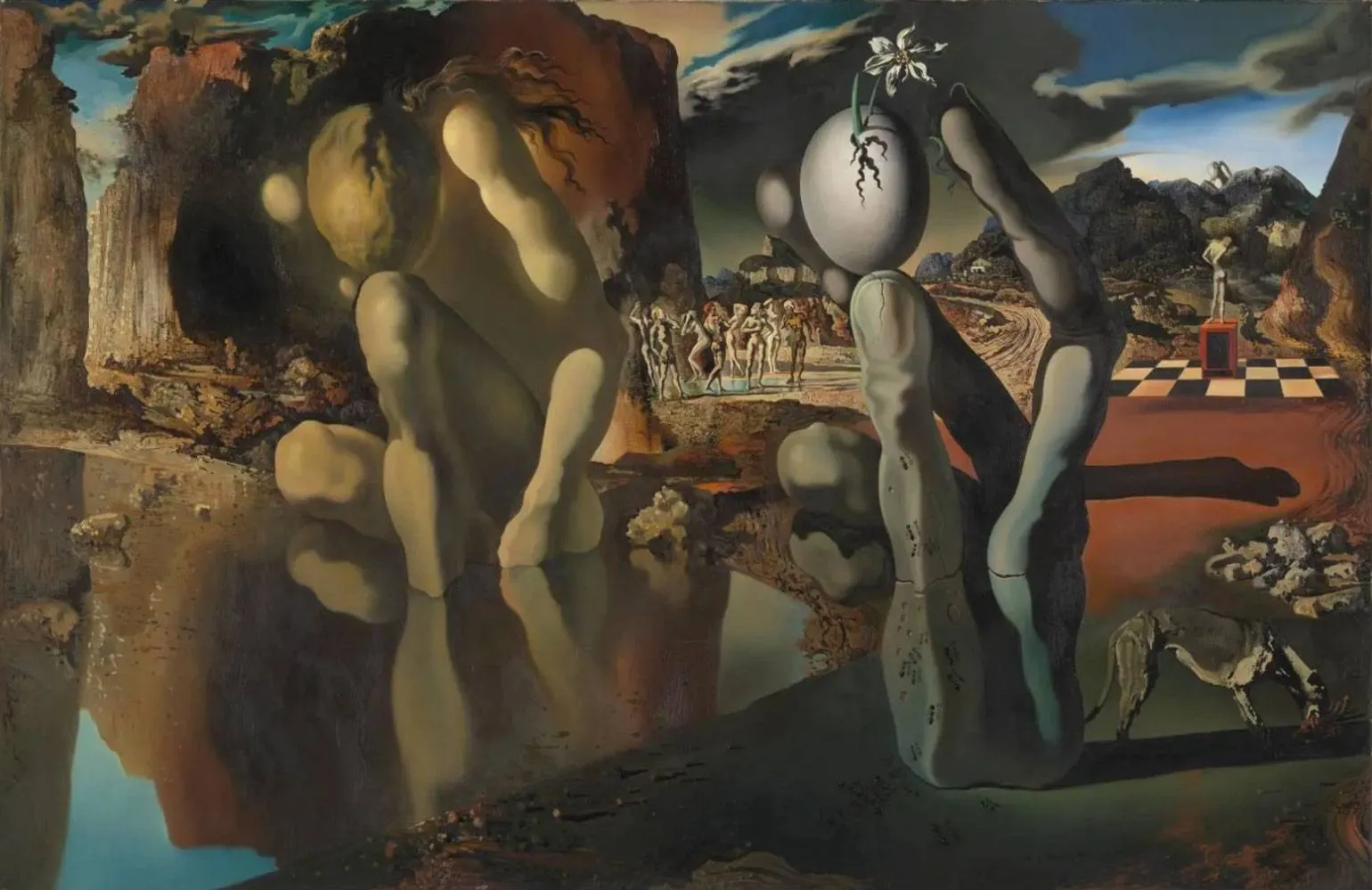
Inspired by the Greek myth of Narcissus, this painting depicts a beautiful youth who falls in love with his own reflection. Narcissus has become a symbol of narcissism and vanity, and Salvador Dalí's interpretation of this myth gives the work considerable depth. The artist masterfully creates a scene in which Narcissus is presented not only as a human figure, but also as a hand holding an egg from which a narcissus flower grows. This metamorphosis, reflecting the mutability of human nature and its desire for self-awareness, is the central theme of the painting. Dalí links the personal and universal aspects of human existence, making his work relevant in the context of cultural and historical tradition.
Some critics believe that the work reflects themes of transformation, identity, and the human self. The viewer has the opportunity to choose any interpretation, and, as in a dream, any of them may be true. This painting by Salvador Dalí was presented at a meeting with Sigmund Freud in 1938. The connection between the work and Freud's psychoanalysis highlights the profound connection between art and the human inner world, opening new horizons for understanding identity and self-awareness.
"Burning Giraffe"
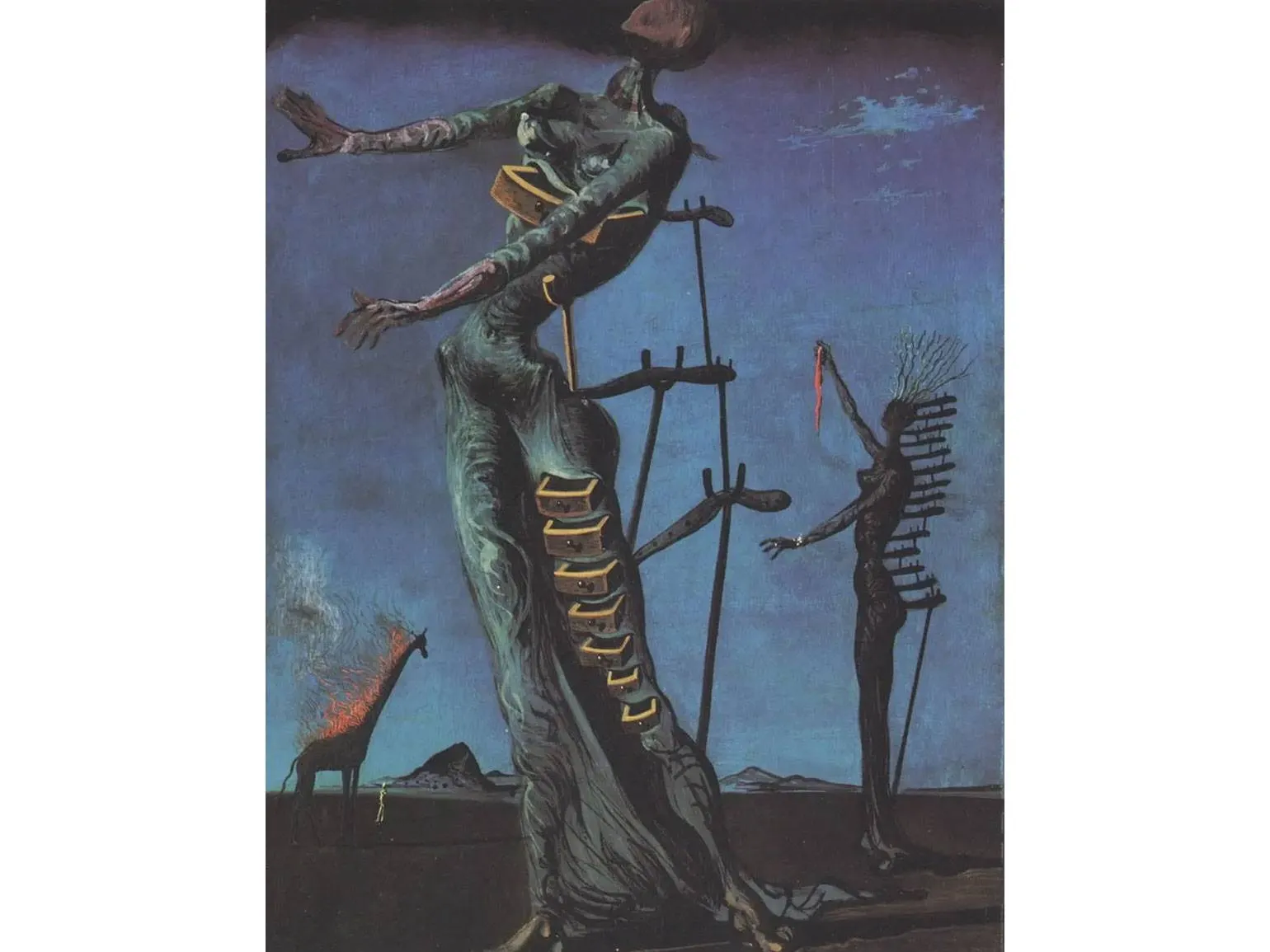
Critics have often viewed this painting as a symbol of destruction and decay. It may represent the horrors and violence of the Spanish Civil War, as well as the wider political unrest in Europe at the time. This work is a powerful visual commentary on conflict and suffering, highlighting the deep social and political issues of its time.
The elongated female figures with drawers in their torsos symbolize the manifestation of subconscious desires and fears. This approach to art reflects Salvador Dalí's affinity with Freud's psychoanalysis. Freud argued that psychoanalysis could become a tool that could help humanity overcome internal conflicts and find harmony. These images create a deeply resonant effect, opening new horizons for understanding human psychology and its influence on creativity.
He argued that the only difference between immortal Greece and the modern world was Sigmund Freud. Freud discovered that the human body, which in ancient times was perceived as Neoplatonic, now represents a complex structure with internal secrets. These secrets can only be revealed through psychoanalysis, which allows for a deeper understanding of human nature and its hidden aspects.
"The Face of War"
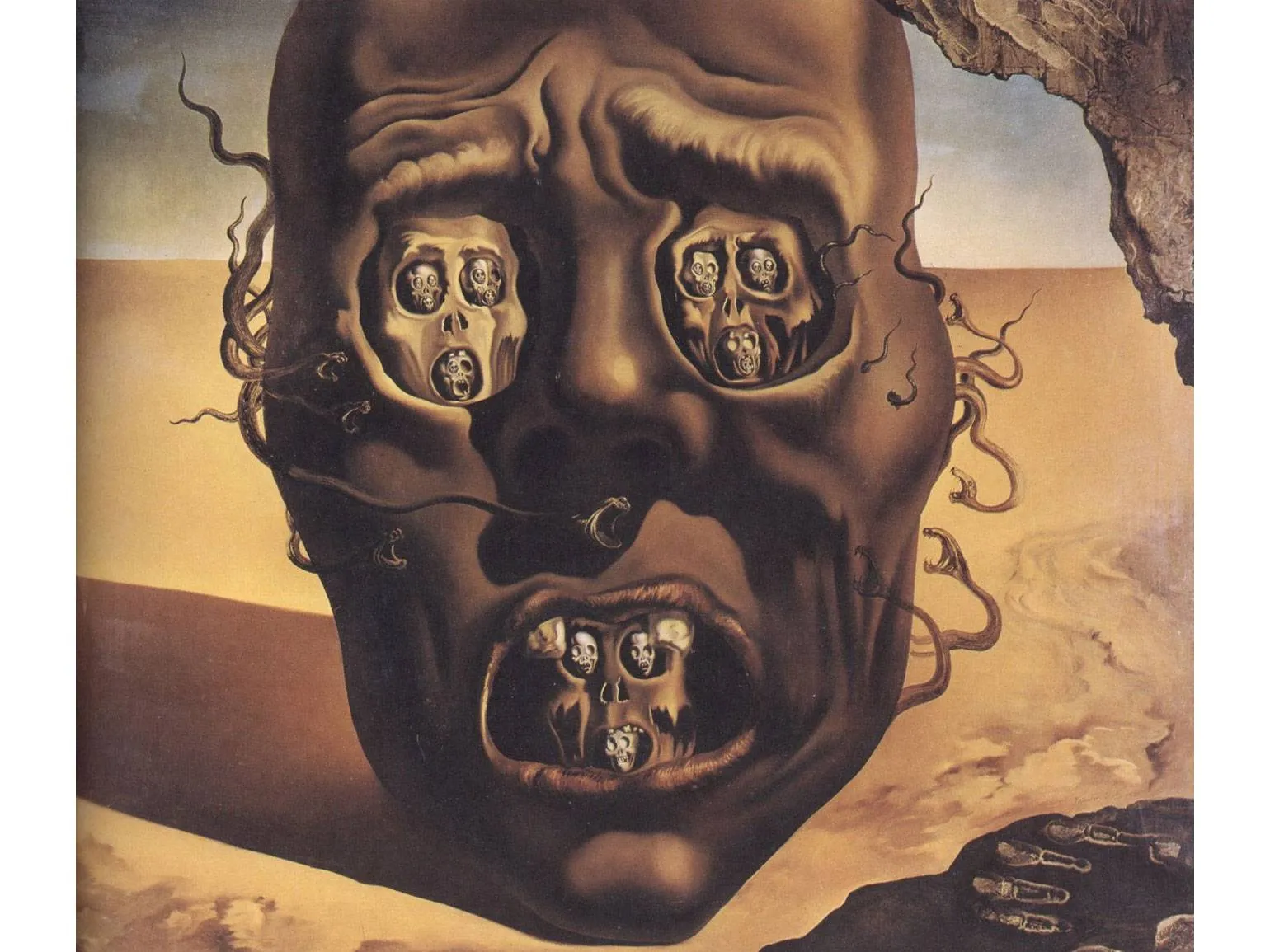
The painting "The Face of War" dramatically illustrates the profound despair and destruction caused by conflicts. Against the backdrop of a barren landscape, a decaying face is depicted, the mouth and eye sockets of which are filled with numerous small faces. In this way, the artist Salvador Dalí conveys the cyclical nature of violence and suffering, focusing on the endlessness of conflicts and their devastating consequences. This work evokes strong emotions and makes the viewer reflect on the consequences of war and human suffering.
In the lower right corner of the painting is the artist's handprint, which symbolizes his personal relationship with the events of that time. This emphasizes how deeply the dramatic events affected Salvador Dalí and his work. The handprint serves not only as a sign of authorship, but also as an emotional link between the artist and the viewer, allowing for a deeper understanding of the influence of the surrounding reality on his art.
"A Dream Caused by a Bee's Flight Around a Pomegranate a Second Before Awakening"
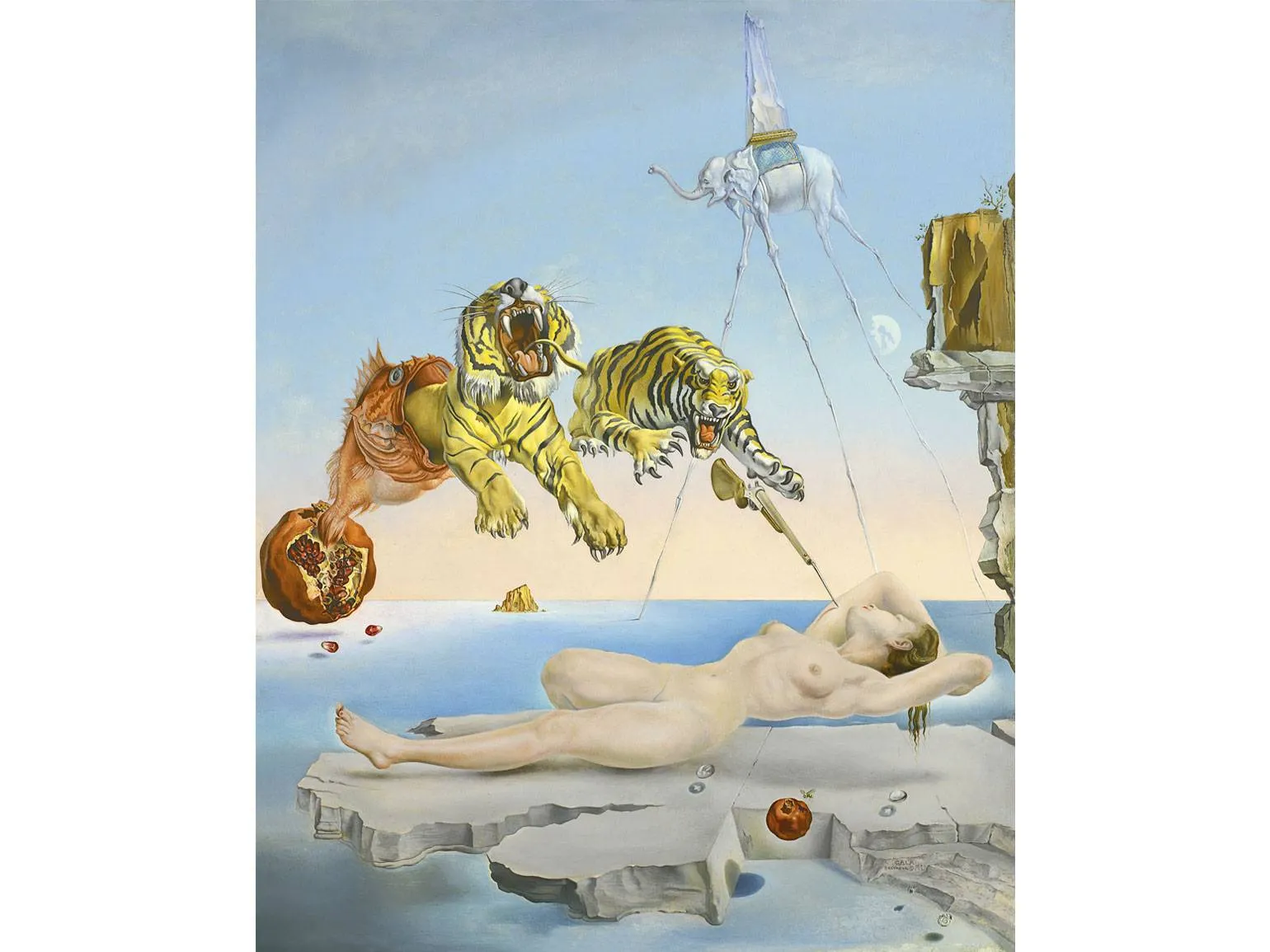
This masterpiece is a prime example of the concept that Salvador Dalí called "hand-painted dream photography." The work clearly demonstrates the artist's interest in Freudian interpretations of dreams. The painting illustrates the ability of the unconscious mind to connect seemingly disparate symbols and experiences, creating a unique visual language that allows for a deeper understanding of the human inner world.
According to Salvador Dalí, his painting is a depiction of a dream that his wife Gala had, and was caused by the buzzing of a bee. This work of art contains many symbols that open up wide possibilities for interpretation. For example, the pomegranate symbolizes fertility, while the fish and tiger represent aggression and desire. These images create multilayered meaning, allowing viewers to delve into the psychological and emotional aspects of the painting.
Salvador Dalí claimed that his painting was created to visualize Freud's concept of sleep for the first time. In this work, he depicts a typical dream, which develops as a long narrative emerging from a random event capable of awakening the sleeper. The painting demonstrates a profound connection between the unconscious and the conscious, revealing psychological aspects of human experience.
The Temptation of St. Anthony
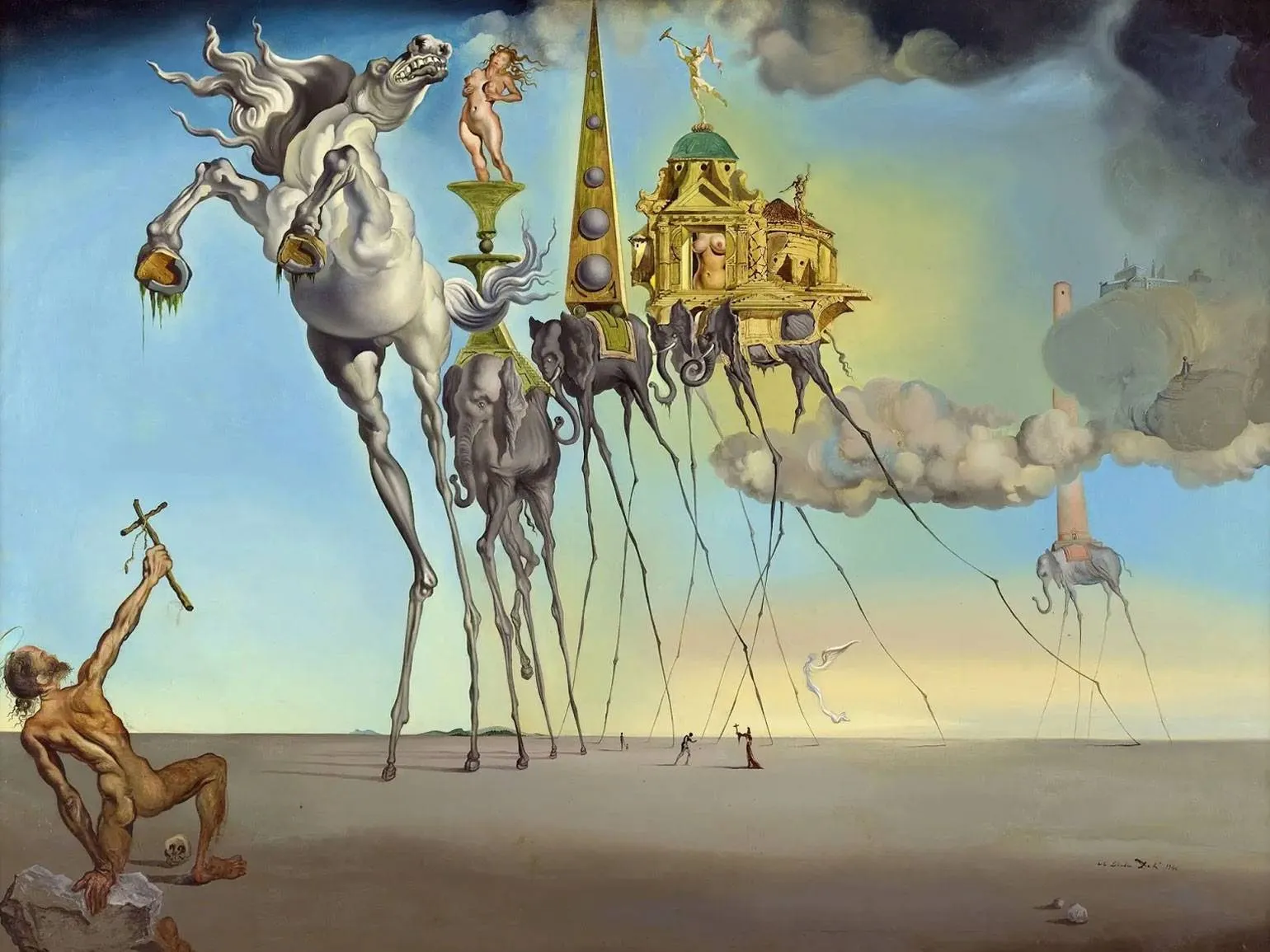
Dalí created this painting specifically for a competition organized by the American film director Albert Lewin. This was the only competition in which the artist participated, but, unfortunately, he did not win. The canvas for the film was chosen from another surrealist, Max Ernst. This incident highlights the uniqueness of Dalí's creative path and his place in art history.
The painting depicts Saint Anthony kneeling in prayer in the desert, where he protects himself from lurking temptations with the help of a cross. The temptations in this work of art are symbolized by a horse and elephants with unusually long legs, which emphasizes their threatening presence. This work illustrates the saint's struggle with temptations and demonstrates the power of faith in overcoming difficulties.
Some critics argue that the horse symbolizes the temptation of triumph, while the woman on the back of the first elephant represents physical temptation, and the other elephants represent the temptation of greed. In this context, there are many interpretations, each of which opens up new facets of understanding these symbols.
«Elephants»
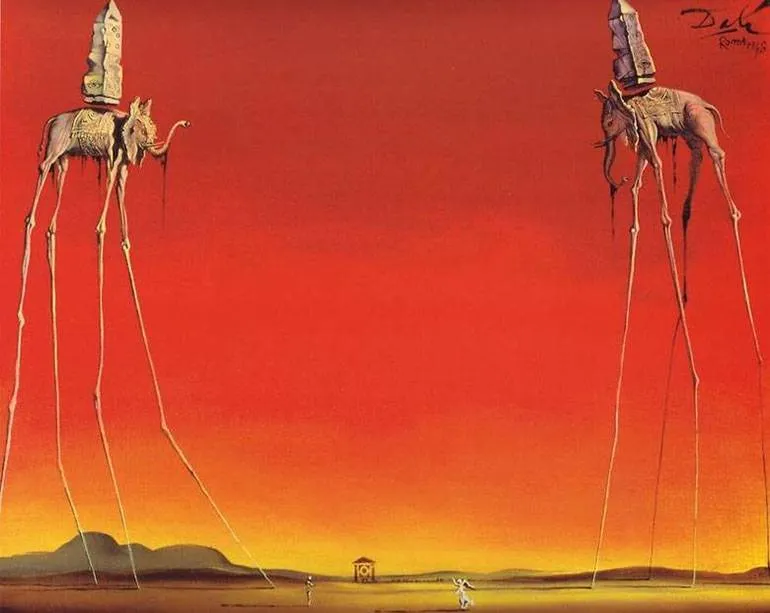
The elephant, along with soft clocks and an oversized head, is a key theme in the work of Salvador Dalí. These giant, spider-legged creatures first appeared in his painting "Dream Caused by the Flight of a Bee Around a Pomegranate a Second Before Awakening" in 1944, and were later depicted in "The Temptation of Saint Anthony" in 1946. Dalí used elephant imagery to convey his philosophical ideas and emotions, creating a unique atmosphere in his works.
Dalí repeatedly mentioned that he was inspired to create the image of elephants by Gian Lorenzo Bernini’s sculpture in Rome. In this sculpture, an elephant is depicted with an ancient stele on its back, which became an important source of ideas for the artist.
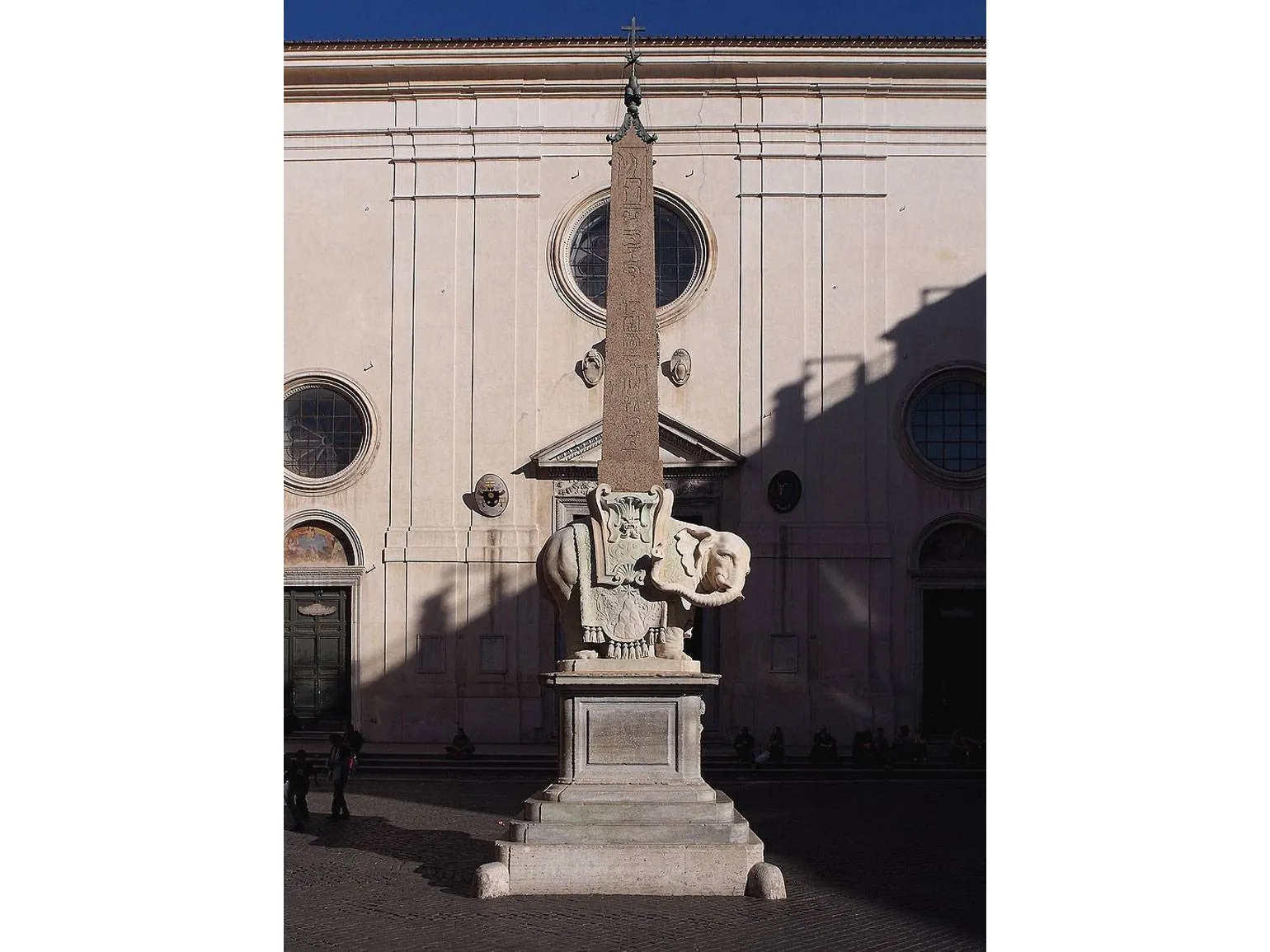
In world culture, animals often personify strength and power. However, the slender legs depicted by Dalí make it clear that this power can be easily destroyed. The artist himself called these limbs "the multi-jointed, almost invisible legs of passion," emphasizing the fragility and vulnerability hidden behind the outward strength. This contrast between strength and weakness creates a profound symbolism that continues to inspire and provoke reflection on the nature of power and passion.
Leda Atomica
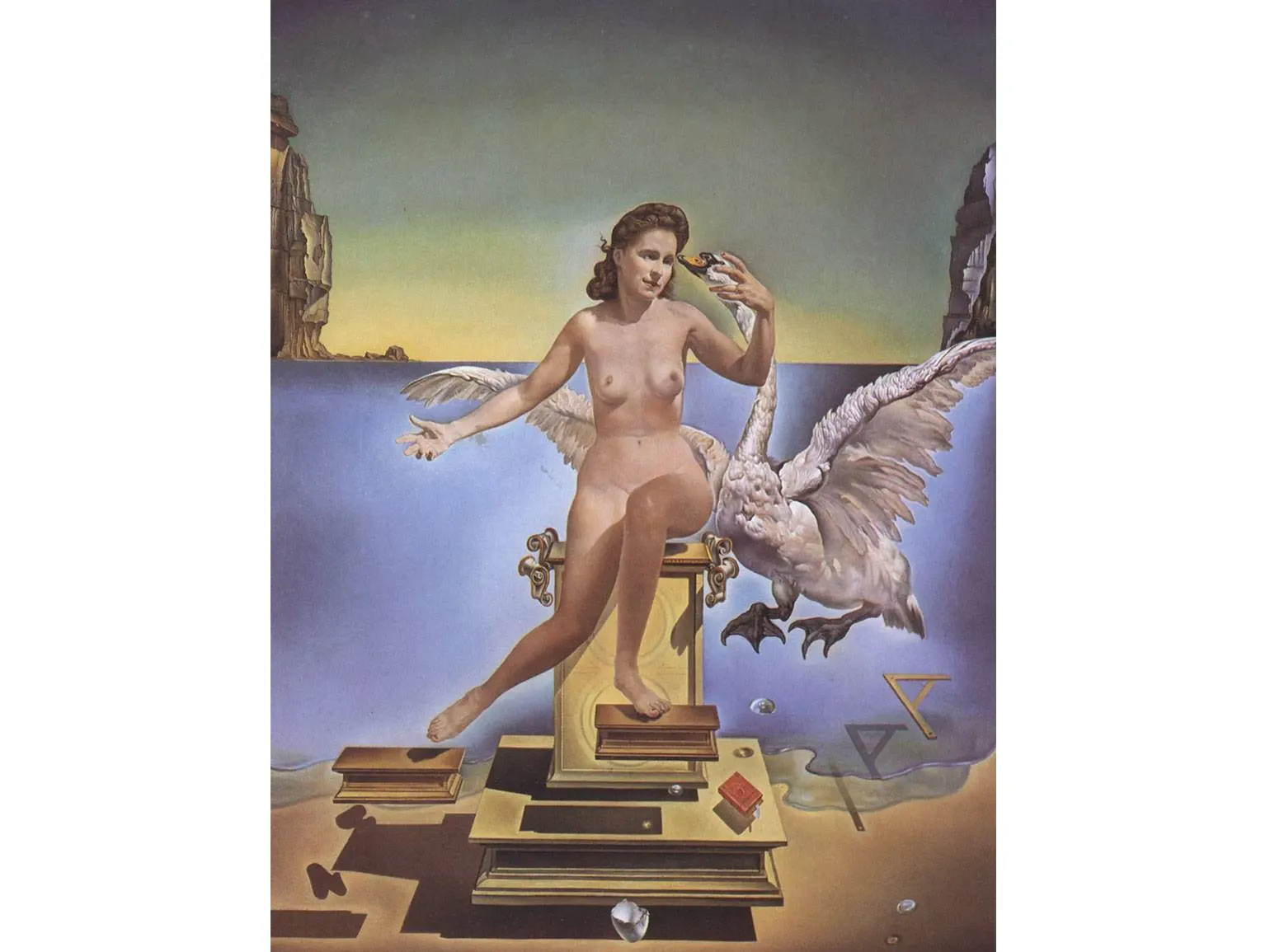
Salvador Dalí developed a deep interest in atomic physics after the nuclear explosions in Hiroshima and Nagasaki in 1945. This interest became the basis for a special phase of his work, which the artist called "nuclear mysticism." In his work "Leda Atomic," Dalí uses elements arranged in such a way that they appear to float in mid-air. This visual solution illustrates the principle of atomic physics: particles never touch, and yet they form a coherent structure. Through his works, Dalí explores the interaction between science and art, inviting viewers to reflect on the nature of reality and its atomic structure.
Dalí drew a parallel between atomic particles and his own nature. The artist, known for his reluctance to physically contact people, with the exception of his wife Gala, saw himself in a world of atoms, where elements constantly repel each other. This analogy highlights his inner state and unique individuality, reflecting how social interaction can be complex and even painful. Dali, like atoms, exists in a world where interactions are limited, creating space for creativity and self-expression.
"Christ of St. John of the Cross"
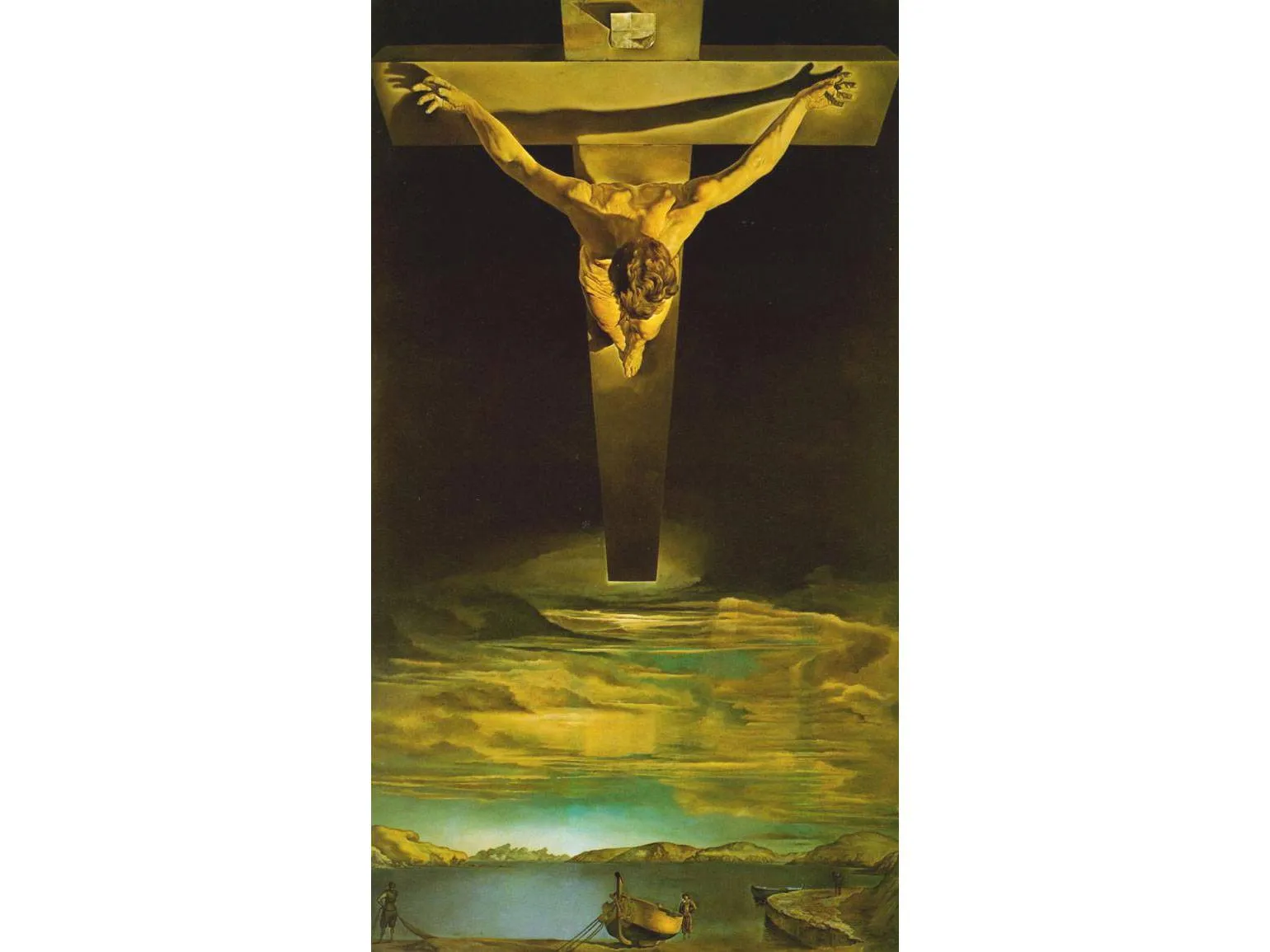
The painting, known as "Christ of St. John of the Cross," is inspired by the composition of a drawing by the 16th-century Spanish monk John of the Cross. In this work, the arms of Christ and the cross form a triangle, which symbolizes the Holy Trinity. The head of Christ, located in the center of the canvas, is interpreted as a circle, symbolizing unity. This work attracts attention for its deep symbolism and artistic expression, which makes it significant in the context of religious art.
The painting is considered one of the most famous icons of the 20th century. Although it does not conform to the traditional canons of surrealism, it was inspired by a dream in which she depicted the "nucleus of an atom." According to Dalí, this core acquired a metaphysical meaning, and the image of Jesus became the central element of the universe.
To create the painting, Dalí used Hollywood stuntman and athlete Russell Saunders as a model. The artist suspended him from a frame in his studio to capture how the human body appears from this angle. This decision allowed Dali to achieve a unique perspective and detail in the image, which became an important element of his artistic style.
Galatea of the Spheres
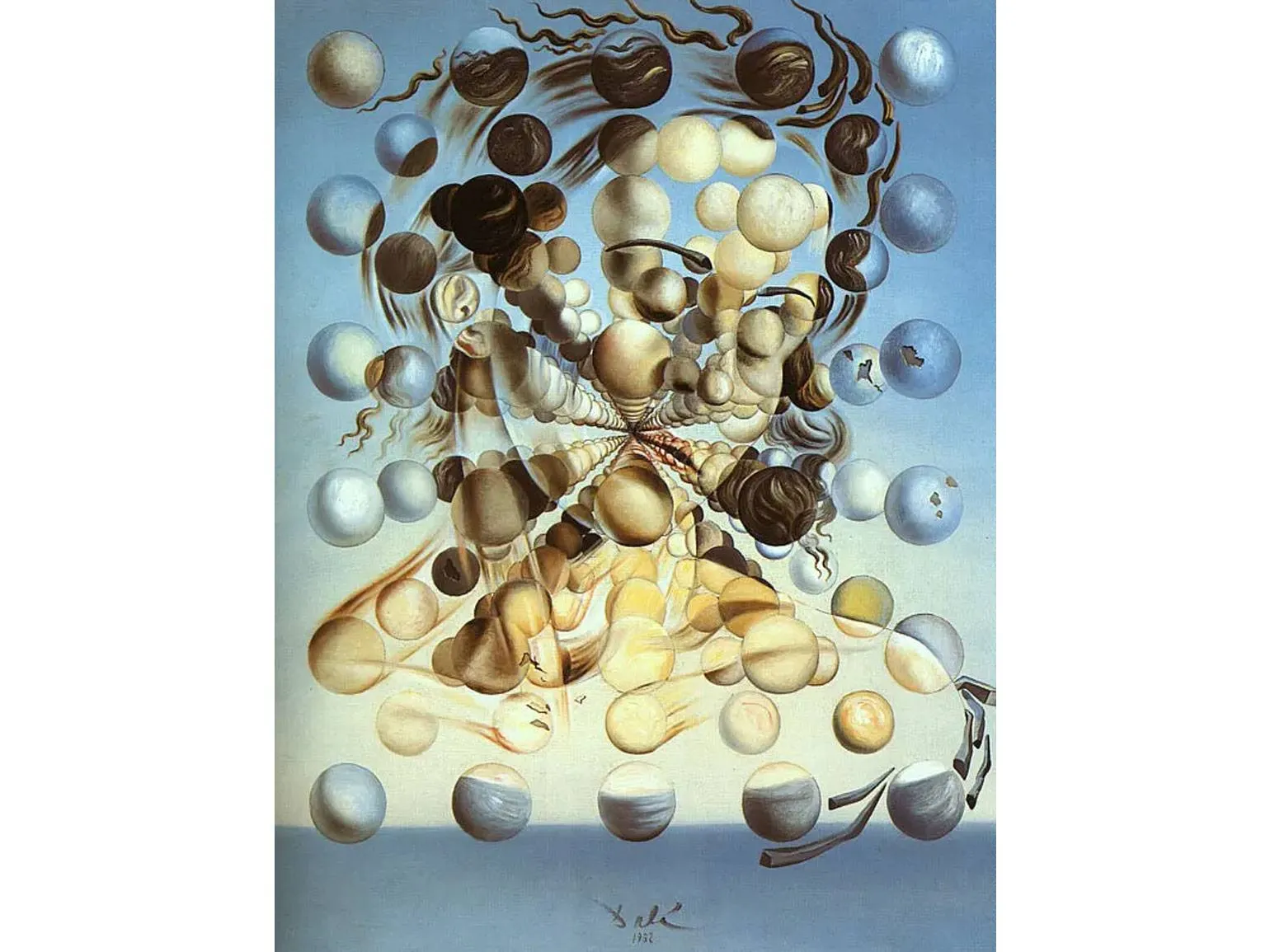
The painting demonstrates Salvador Dalí's interest in atomic physics. It depicts Gala as a complex arrangement of spheres forming a three-dimensional image. This technique, called "atomic pointillism," requires the viewer to stand at a certain distance to properly perceive the painting, complicating the ideas of the Impressionists. Thus, Dalí not only explores new artistic methods, but also connects art with scientific concepts.
"Tuna Fishing"
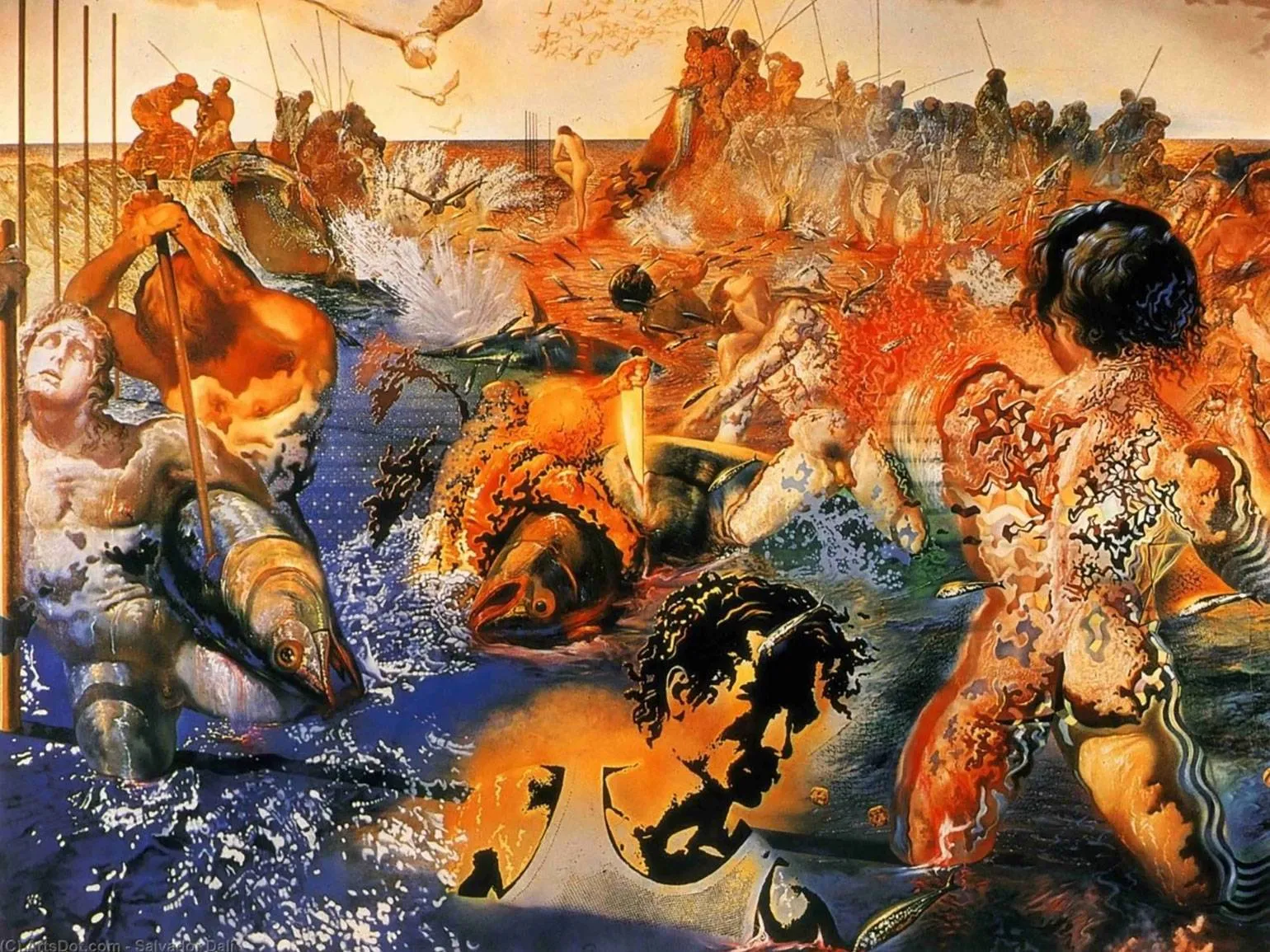
Created by Salvador Dalí at the end of his artistic career, this painting is considered his last great masterpiece. It harmoniously intertwines elements of surrealism with such styles as action painting, pop art, pointillism, geometric abstraction, and psychedelic art. What makes this work unique is that, despite Dalí's characteristic surrealist features, it is filled with dynamism and action. The painting features ancient Greek sculptures, as well as references to contemporary cinema, which underscores his desire to embrace all aspects of artistic development. This work reflects not only Dalí's individual style but also his desire to explore the boundaries of artistic expression.
The painting is dedicated to Jean-Louis-Ernest Meissonier, a prominent 19th-century French artist renowned for his masterful battle scenes. Salvador Dalí, the artist who created this work, considered it his most ambitious work. This painting reflects Meissonier's influence on the artistic perception of battles, as well as Dalí's deep respect for the skill of his predecessor.
Profession Graphic Designer PRO
You will learn how to create corporate identity elements and graphics for business. Create a portfolio that reflects your style and demonstrates your design skills. You can start a career in a studio or as a freelancer.
Find out more