
Contents:
How digital art is used in the modern world
When watching a movie, we often don’t even realize that many objects in the frame are not real. And this is the result of the creativity of 3D artists.
Today, 3D graphics are used not only in films - they are literally everywhere. It is the basis of any computer game and the increasingly popular metaverses. Modern cartoons, from Toy Story to Shrek, music videos, advertisements, furniture catalogs, and online product presentations are all created by 3D artists.
As for movies, the line between live-action and computer animation has long since blurred. While in the 1982 film Tron, all the drawn objects looked virtual, in 1997's Titanic, viewers could no longer distinguish between the drawn water and the real thing. By 2008, everything had come to the point that in "Avatar" the terrain, characters, flora and fauna of the planet Pandora were created by 3D artists, and computer graphics covered more than 90% of the running time.

Learn how to create visual design for a location and set up scenes in Unreal Engine in the "3D Environment Artist from Zero to PRO" course.
Learn moreAs for other areas where 3D modeling specialists play an important role, they include:
- Architecture, building visualization, interior design. 3D models are also needed for aerodynamic testing at the design stage.
- Furniture production. Renderings (edit: image based on a computer model of an object) for advertising brochures, headset design, or modeling of individual parts for manufacturing on automated CNC machines.
- Mechanical engineering, aircraft manufacturing.Any design and production begins with three-dimensional models.
- Rapid prototyping technologies.With 3D printing and CNC milling, you can now create an unusual souvenir, advertising sign, home decor, or component in a matter of hours.
- Medicine. This is the visualization of various systems and organs in the training of medical students, the creation of anatomical prostheses, artificial joints and even the printing of organs on bioprinters.
What does a 3D artist do?
A 3D artist (edit:in the English-speaking segment, the name CGI - "computer-generated imagery" is common, sometimes the term 3D artist is used) - a specialist in computer graphics who develops digital three-dimensional models of objects, phenomena or materials. They create virtual product mockups for advertising, draw building models, bring characters to life in films, add explosions, and propel spaceships. In games, the specialist renders the entire world—from small puddles and fallen leaves to intricate labyrinths and characters.
The work of a 3D artist cannot be clearly classified as creative or technical. It all depends on the specialization, project, and industry. While some precisely model parts or engage in mechanical work, filling the environment with ready-made 3D objects, others completely surrender to the flights of fantasy, creating fictional characters.
As computer 3D graphics developed, it split into several directions:
- 3D modeler, sometimes also called a 3D designer. Creates polygonal models based on existing sketches, drawings, or real-world objects. These can be any objects: buildings, plants, boxes, furniture, living creatures, finished products, or individual parts.
- 3D modeler-texturer. Selects textures and colors existing 3D models to make the materials on the screen look like they do in real life. For example, adding a brick texture to the wall of a building or applying a fabric texture to a character's clothing.
- VFX.An artist specializes in modeling phenomena. For example, explosions, lightning strikes, liquid simulation, rain or snow.
- Lighting.A specialist in this field’s task is to set up virtual light sources. With the help of lighting, he or she highlights accents, sets the desired atmosphere or achieves realism when adding computer graphics to night shooting in film production.
- Animation (3D animation).A specialist in this field brings characters and scenes to life in cinematography. He models the movement of characters, vehicles, and various objects, and configures the movement of virtual cameras. This specialization is in demand in game development, film production, and advertising.
- 3D printing and manufacturing.This is a separate area where the modeler must take into account the operating features of the equipment and adhere to production standards.
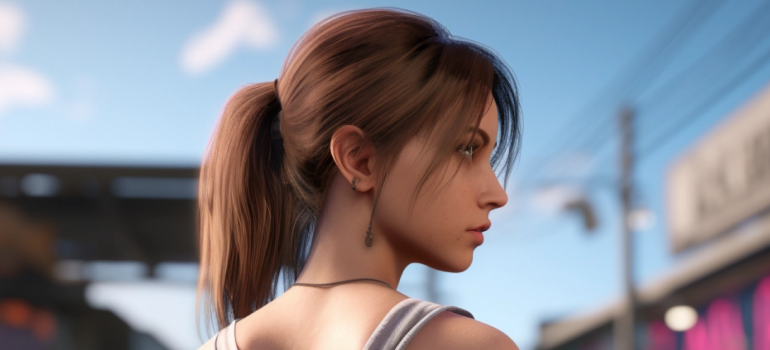
Among 3D artists, there are also universalists, the so-called 3D Generalists. Generalists have mastered several directions and can create a turnkey project. Among such specialists, there are those who can single-handedly draw detailed characters, assemble the environment, work on the animation of objects and lighting, add VFX and render the video.
Generalists also include separate specializations, where to achieve a result you need to master several areas at once:
- Concept Artist (3D Concept Artist).His task is to quickly create prototypes and implement concepts to test ideas. He is not required to have extreme detail and perfectly tuned effects.
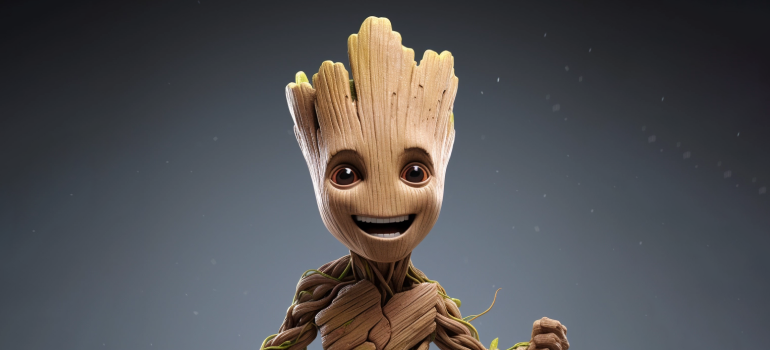
- A 3D Character Artist specializes in creating people and creatures: animals, monsters, and fantasy characters for games. He or she develops a polygonal character model, paints it, and adjusts the lighting.
- Environment Artist This is usually a dedicated specialist at major video game and film studios. He or she texturizes the environment, assembles locations from pre-made models, adjusts lighting, adds particle simulation (rain, wind, snow), etc.
- Advertising and press designer. Creates photorealistic visualizations for magazines, works on print and video advertising.
What tools does a 3D artist use in their work?
The set of professional skills largely depends on the place of employment. Some studios require applicants to be able to draw and understand the stages of product development. But in most cases, mastering specialized software for 3D modeling is enough. Let's consider the main tools that a 3D artist uses in his work.
- 3ds MAX, Maya.Two universal and popular 3D graphics editors from AUTODESK. The applications are similar in capabilities, but differ in interface. 3ds MAX is used by architects, interior and landscape designers, video production companies, and game studios. Maya is preferred by game developers due to its convenient tools for particle simulation and working with the environment.
- Blender.A powerful and free 3D graphics editor. Contains many additional features and tools. It is used by freelancers, large game developers, film studios, furniture and interior designers.
- Cinema 4D. The application was initially developed for working with 3D graphics in the film industry. But it is actively used by game developers. The application has many tools for VFX (simulation of explosions, liquids, particles) and animation.
- ZBrush. A 3D editor that emphasizes simulating the process of "sculpting" three-dimensional objects - sculpting. Convenient software for modeling characters and environments when you need to create complex shapes and achieve a natural look.
- Houdini. A 3D graphics editor with an emphasis on animation and modeling of particles, liquids, hair, working with light, sound, and more. In demand in game development, film production, and advertising.
- Unreal Engine. Game engine and 3D editor for creating game universes and characters.
- Autodesk Revit Architecture.Software for working with textures.
- Adobe Photoshop.Used when working with sketches, textures, etc.
- Autodesk Revit Architecture. An application used by architects, engineers, and builders.
- After Effect, Nuke, Fusion. Post-production software that allows you to add 3D graphics and special effects to filmed videos. Areas of use: advertising, film.
- Autodesk AutoCAD, Kompas-3D. They are used for modeling parts in mechanical engineering, furniture production, and medicine. However, these areas have additional requirements for applicants. For example, having an engineering education or, at a minimum, knowledge of the basics of design, strength of materials, mechanics, etc.
Growth Prospects. How Much Do 3D Artists Earn?
3D artists are a sought-after and well-paid profession. You can improve in one direction. For example, 3D animation. And earn at the level of a department head and even more, without having administrative duties and additional responsibilities.
Or you can gradually study all the stages of 3D modeling, master several tools and become a 3D generalist with the prospect of implementing turnkey projects on a freelance basis, growing to an artistic director or opening your own 3D design studio.
On the labor market and freelance exchanges, many companies are primarily looking for an artist—a specialist who can come up with a concept, create a sketch, and assemble it all into a finished model with animation and lighting.
A 3D artist's career development is largely dependent on their place of employment. You can start by creating 3D copies of products for marketplaces and online stores, progressing through modeling objects for advertising, and eventually progressing to working with major film studios or game developers. And what's important is that you don't need any additional skills; developing in your chosen field is sufficient.
As for salaries, the portal belarus.gorodrabot.bypublished vacancies with salaries from 1,300 to 2,800 Belarusian rubles. Senior-level specialists can expect an income of 4,500 Belarusian rubles.
As an alternative, you can consider the possibility of remote work. According to the portal glassdoor.com, the average annual salary of a 3D artist in the US is $89,335. Salaries range from $52,000 to $159,000. Income depends not only on experience but also on the industry. Concept artists earn the most – about $90,000 per year. The least amount is ordinary modelers - up to 65 thousand.
How to become a 3D artist
Academic education will be a good start for a 3D artist. If you plan to connect your life with advertising, the film industry or GameDev, then you should pay attention to such specialties as "design", "graphic design" or "video design". The training programs include such disciplines as art history, the basics of modeling and rendering in 3D packages.
If you plan to develop as an industrial 3D designer, then an engineering education in the following areas will be relevant: "architecture", "design engineer", "mechanical engineering technologist", etc. Here they usually study specialized CAD software (edit:computer-aided design systems), the basics of developing technical documentation and design, strength of materials and mechanics.
At the same time, academic education is not required today. Many employers look at the portfolio and depth of skills. But in any case, the intricacies of the profession and basic tools will have to be studied separately.
It is more rational to master the profession of 3D artist through distance learning courses, and here we can note several directions:
- Industrial 3D Design: Here they study design, CAD for architects and engineers, the specifics of preparing 3D models for production;
- 3D Design in Advertising and Printing: They study the preparation of photorealistic visualizations and the creation of finished concepts, the basics of marketing as it relates to design;
- 3D artist for film and gaming:The focus here is not only on modeling, but also on animation, special effects, and lighting.
Courses allow you to master the profession in 6-9 months. When choosing a course, the Skillbox.by editorial team recommends paying attention first and foremost to the relevance of the curricula and the ability to build a portfolio.
Useful resources from the editors of Skillbox.by
In order for you to get to know the profession better, the editors of Skillbox.by have collected useful resources.
Internet resources:
- Igromania Kino — A YouTube channel dedicated to cinema, the author pays a lot of attention to computer graphics and special effects;
- 3dEx — This YouTube channel has many videos dedicated to modeling in Maya and ZBrush;
- J Hill is a 3D artist's YouTube channel that covers VFX, character design, and rendering.
- motionographer.com - the site is dedicated to motion design and 3D graphics in cinema;
- Creative Bloq | Art and Design Inspiration - blog for designers and modellers;
- Pix Cores - Art, 3D and AI - This blog is for graphic design information;
- Behance is a network for designers and photographers, where you can look at other people's work and post a portfolio.
Movies to develop your viewing experience:
- "Planet of the Apes", "Jurassic Park", "The Lord of the Rings" — to appreciate the character development;
- Gravity, Alien — to draw attention to the work with objects;
- Titanic — in this film, the artists worked on the water, we mentioned this above;
- Tron: Legacy, Blade Runner 2049 — in addition to the painted world, the CGI artists of these films rejuvenated the heroes to maintain a logical connection with the heroes of the first part of the films.
- Guardians of the Galaxy, Avatar — films that are more than 90% animated.
You'll master 3D modeling and the tools necessary for working with 3D graphics. Learn to create realistic textures in Substance Painter and retouch images in Photoshop. Learn how to model in Autodesk Maya, Blender, ZBrush, Houdini, and render in Marmoset Toolbag. You'll also gain an understanding of the specifics of 3D graphics for games and film. Complete eight projects.
Take access