
Contents:
- How do cryptocurrency investments work and what are the nuances of investing in Belarus
- What types of cryptocurrencies are there and what are their features
- What are the ways to invest in cryptocurrency
- Which strategy should a beginner choose?
- Which cryptocurrencies are best to invest in?
- How much money do you need to start and how much can you earn?
- What are the risks of investing in cryptocurrency?
- Where to start investing in cryptocurrency
Cryptocurrency investing is a popular topic: many people become interested in it when they hear, for example, about the rise of Bitcoin or the rise of some new token. The returns can indeed be significant—30–100% per annum. But to achieve such returns, you first need to understand a lot.
In this article, we'll tell you everything you need to know about investing in cryptocurrency. This article will be useful for beginners and those who would like to include tokens in their portfolio. This material does not constitute investment advice and is provided for educational purposes only.

Practical Course: "Investing in Cryptocurrency"
Learn MoreHow Cryptocurrency Investments Work and What Are the Nuances of Investing in Belarus
Investing in cryptocurrency works the same way as investing in other assets, such as stocks, precious metals, and real estate. You buy an asset cheaper and sell it for more, or you buy an asset and receive income from it, like renting out your property.
A good example of a cryptocurrency that you can make money on is Bitcoin. It has demonstrated impressive growth: in 2010, one Bitcoin was worth a few cents, while in 2025, it was worth tens of thousands of dollars.
There is another similar way to earn money on cryptocurrency – trading. Trading is a type of trading in which transactions are made frequently and closed quickly. A trader can buy cryptocurrency and sell it a few minutes or hours later, when its value has increased slightly. Investments, on the other hand, are long-term: investors hold assets for several months or years.
Technically, Belarusians can earn money on cryptocurrency in the same way as residents of other countries. However, there are differences in the regulatory environment.
A key difference for Belarus: legal status
Decree No. 8 "On the Development of the Digital Economy" created a unique legal regime. Cryptocurrencies are not legal tender in Belarus (with the exception of transactions within the High-Tech Park - HTP). However:
- Individuals can legally own, buy, sell, exchange, gift and bequeath cryptocurrencies.
- Mining, creating and exchanging cryptocurrencies is legalized for residents of the HTP.
- Income of individuals from transactions with cryptocurrencies is subject to income tax and must be declared.
Banks
Although cryptocurrency transactions are legal, Belarusian banks may view transfers to or from crypto exchanges with suspicion. Accounts may be blocked to clarify the origin of funds. It is recommended to use P2P platforms or work through verified non-resident banks/e-wallets if this is necessary for depositing/withdrawing fiat (BYN, USD, EUR).
Exchanges
Access to international exchanges (Bybit, OKX, KuCoin) is usually open. HTP residents can use specialized platforms (for example, Currency.com, initially launched in the HTP).
What types of cryptocurrencies are there and what are their features?
There are many types of cryptocurrencies and ways to make money on them.
Payment cryptocurrencies
You can invest in them or pay for goods or services with them (but not in the Republic of Belarus). The most famous payment cryptocurrency is Bitcoin (BTC). It acts as digital gold, its emission is limited to 21 million coins.
The advantages of payment cryptocurrencies are high liquidity, and Bitcoin also has recognition in the international market. The disadvantages are relatively slow transactions, high fees and volatility. But for an investor, payment cryptocurrencies are a good tool for long-term capital preservation; the foundation of a crypto portfolio.
Altcoins
Generally, all cryptocurrencies and tokens except Bitcoin are called altcoins. All the types described below are technically considered altcoins. But to divide cryptocurrencies into types based on their features, we will classify as altcoins only coins of blockchain platforms that have specific functionality, such as smart contracts. Examples are Ethereum (ETH), Cardano (ADA), Solana (SOL).
The advantages of altcoins are that they have growth potential and can be used for more than just investments. The disadvantages are technical risks and lower liquidity. For investors, altcoins are a good way to diversify a portfolio and generate income, but working with such coins requires an understanding of technology and market trends.
Stablecoins
These are cryptocurrencies tied to physical assets, almost equal to their value. Examples include Tether (USDT), USD Coin (USDC), and Binance USD (BUSD): all of them are pegged to the US dollar.
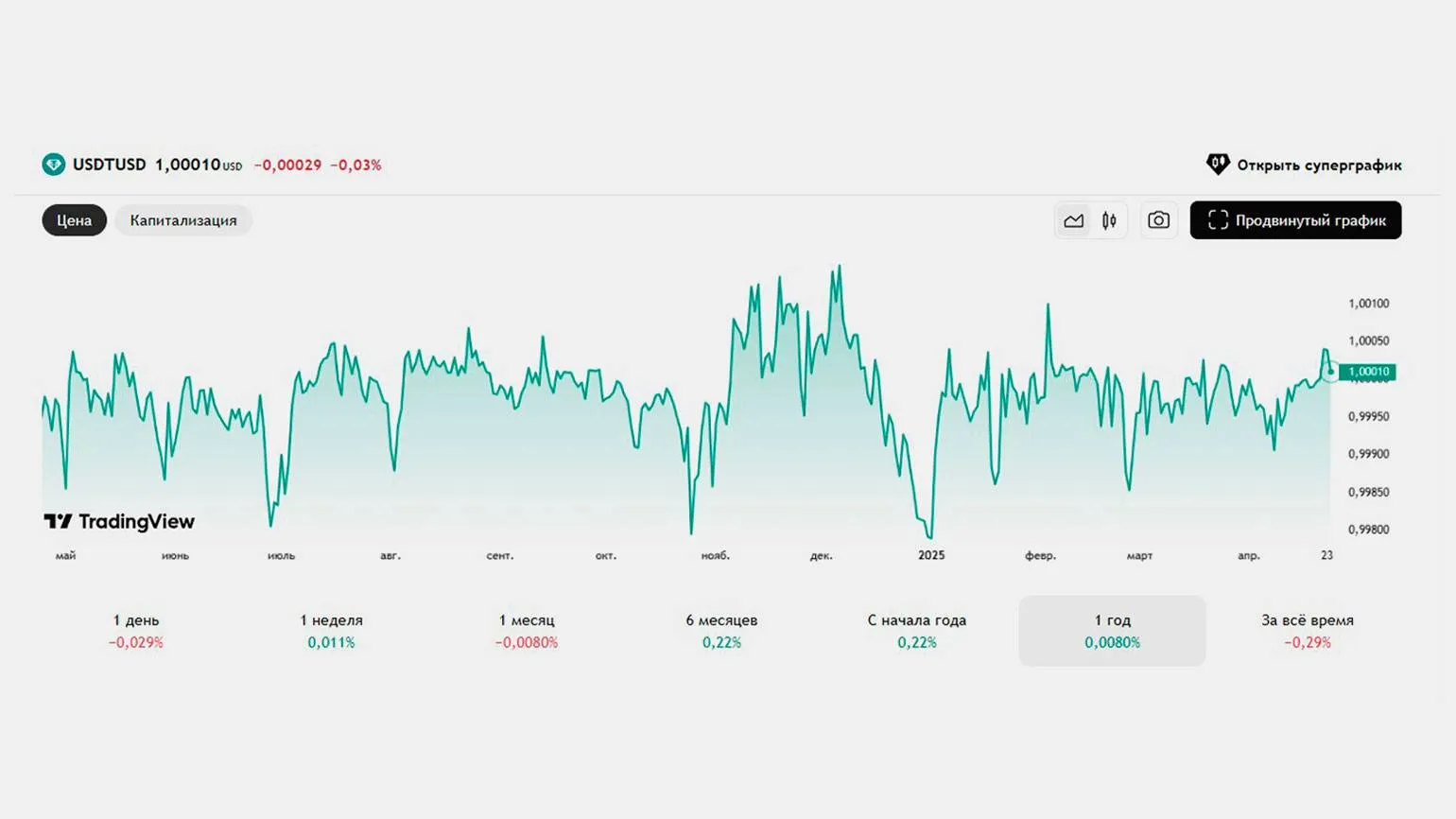
The advantage of stablecoins is that they are the least risky instrument among all cryptocurrencies. Their volatility is minimal, and they are also convenient to use for settlements. The disadvantages are that they are centralized and depend on the issuer and its reserves.Stablecoins are a key instrument for Belarusians. They allow them to maintain their value in dollars during periods of crypto market volatility and fluctuations in the BYN exchange rate. The main way to "park" funds and enter/exit positions.
Tokens
These are coins of digital platforms or ecosystems that are used for settlements in these ecosystems. They are created on the basis of existing blockchains, most often on Ethereum. Examples of tokens are BNB (Binance token), Uniswap (UNI), Chainlink (LINK).
The advantages of tokens are that they provide access to ecosystem benefits, and they also have the potential for growth - if the underlying platform is successful. Disadvantages depend on a single project and technical vulnerabilities. Investors can include tokens in their portfolio, but this requires an in-depth analysis of the projects issuing them. Belarusian investors may pay attention to projects related to the High-Tech Park or those with partnerships in Belarus, but a global approach is more important.
Anonymous Cryptocurrencies
These are cryptocurrencies focused on transaction privacy — they use special encryption technologies. Examples are Monero (XMR), Zcash (ZEC).
The advantages of anonymous cryptocurrencies are a high level of privacy and technological innovation. Disadvantages include negative attitudes from regulators, the risk of their delisting from major exchanges, and scalability issues. Anonymous cryptocurrencies can be useful in investor portfolios due to the stable demand for them.
Memcoins
These are coins created based on a joke or meme. They often have an active community of enthusiasts. Examples: Dogecoin (DOGE), Shiba Inu (SHIB).
The advantage of memecoins is the potential for explosive growth through viral spread. The disadvantages are the lack of fundamental value and dependence on social media and celebrities. For an investor, memecoins are a tool for speculation rather than long-term investments.
DeFi tokens
Cryptocurrencies associated with decentralized financial protocols for lending, exchange, and other transactions. Examples: Aave, Compound, Maker.
Their advantage is that you can earn passive income by participating in the protocols. The disadvantages include the complexity of understanding, regulatory uncertainty, and technical risks of smart contracts. DeFi tokens require technical literacy.
What are the ways to invest in cryptocurrency?
You can make money on cryptocurrency investments in different ways: storing cryptocurrency for a long time, trading, investing in ICOs, IDOs, IEOs, investing in funds and ETFs, and engaging in DeFi investing.
- Long-term storage (hold) is the simplest and often the most effective strategy. This is the purchase of cryptocurrency with the intention of holding it for 3-5 years or more. This approach requires patience and psychological resilience to market fluctuations. It works best with proven, liquid coins like Bitcoin and Ethereum. The main risk is a prolonged market decline, but historically long-term holders have made significant profits.
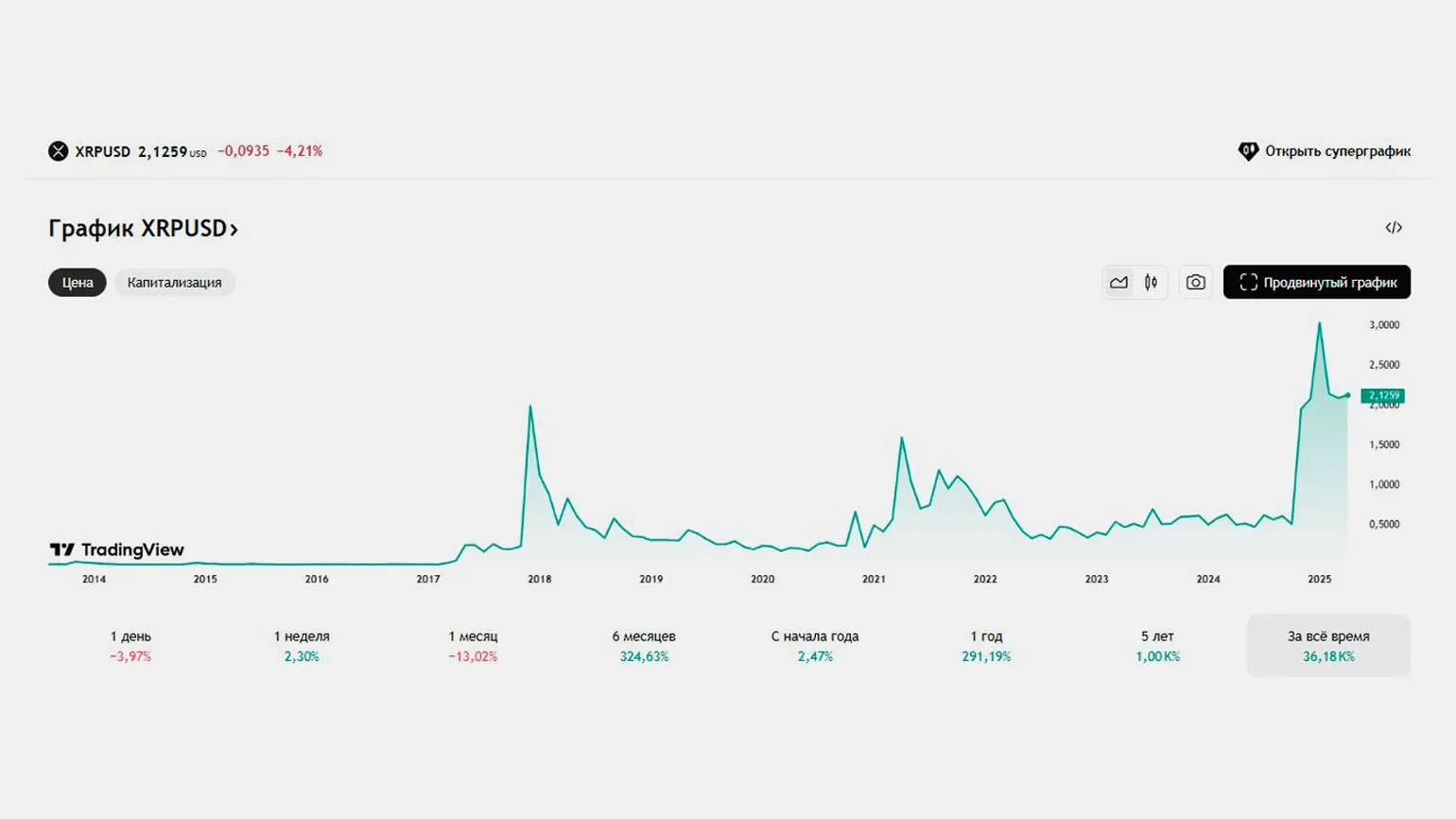
- Trading involves frequently making short trades. It requires a deep knowledge of technical analysis, constant market monitoring, and stress tolerance. The potential profitability of trading is greater than that of long-term holding, but the risks are also much higher. The risk of bank transfer blocks complicates active trading with frequent fiat withdrawals.
- Investing in ICOs, IDOs, and IEOs is investing in new cryptocurrencies during the initial coin offering (ICO) stage. Potentially extremely high returns are combined with extreme risks—most projects fail to live up to expectations. Therefore, this method requires a thorough analysis of the team, technology, and project prospects. Investing in ICOs, IDOs, and IEOs is suitable for experienced investors prepared to accept the potential for loss.
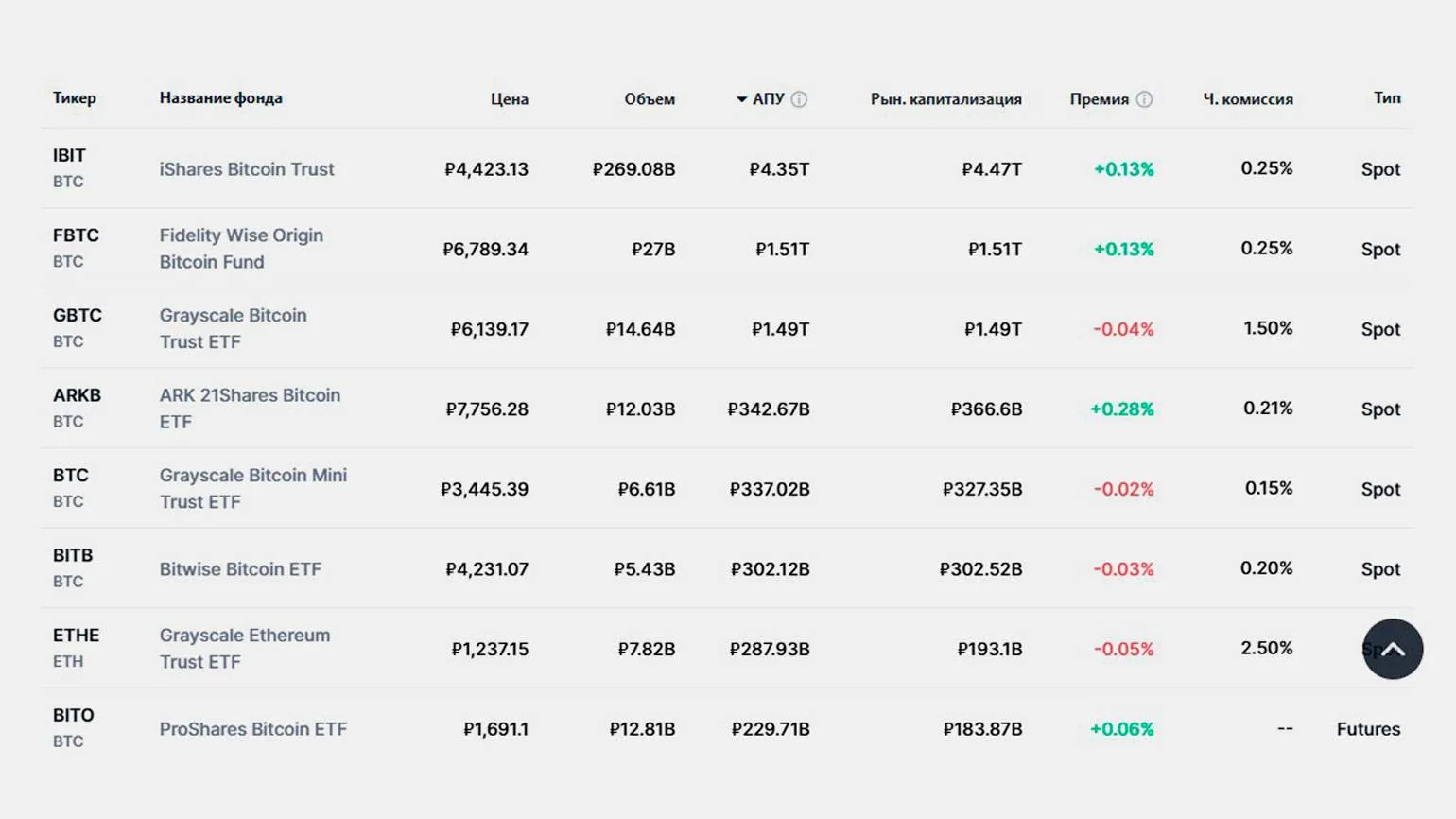
- Investing in funds and ETFs involves purchasing units of funds that professionally manage a cryptoasset portfolio. This method reduces risks through portfolio diversification and professional management. It is suitable for investors who don't want to delve into the technical aspects themselves. You can also buy fund shares on a regular exchange.
- DeFi investing is the investment of cryptocurrency in decentralized protocols. For example, you can pool tokens with other users' tokens for a fee or lend them to someone. This method offers high potential returns, but it requires an understanding of how the DeFi ecosystem works.
Furthermore, you can earn money from cryptocurrency in other ways, not just through investments. So, there is also:
- staking - you block cryptocurrency in the blockchain network to keep it running, and receive a reward for this - usually additional coins. The profitability of this method is 5-15% per annum;
- mining - you mine cryptocurrency using specialized equipment.Legal for HTP residents. For individuals - high costs of equipment and electricity, questionable payback, noise and heat. Not the best start for a beginner.;
- Lending - you lend cryptocurrency through special platforms and get it back with interest.Use only large, proven platforms (Aave, Compound) or lending functions on large exchanges (Bybit, OKX).
Staking and lending allow you to earn passive income. And the income that can be obtained with the other methods listed cannot be called passive - the investor will need to spend time, for example, on studying projects and the prospects of cryptocurrency.
Which strategy should a beginner choose?
An investment strategy is an action plan according to which an investor buys and sells assets. We will tell you about three strategies that are suitable for beginners: long-term storage of popular cryptocurrencies, an averaging strategy, and staking stablecoins.
Long-term storage of popular cryptocurrencies
The optimal choice for a beginner. According to this strategy, you need to buy cryptocurrency and hold it, without trying to guess market movements. This approach eliminates the need to constantly monitor charts and reduces stress.
Dollar Cost Averaging (DCA) Strategy
Dollar Cost Averaging (DCA) strategy involves regularly purchasing coins regardless of their price. For example, you could buy $100 worth of Bitcoin every month—either manually or through DCA bots, which are available on many exchanges. This approach reduces the impact of volatility and the psychological burden on the investor.
Stablecoin Staking
This is the optimal solution for those looking to earn passive income from crypto investments with minimal risk. Staking low-volatility coins—such as USDT or USDC—through reputable platforms yields around 5–10% per annum. This is more than some bank deposits.
Strongly not recommended for beginners in Belarus
- Active trading without experience.
- Investing in dubious ICOs/memcoins.
- Using leverage - high risk of losing the entire deposit.
- Investing your last or borrowed funds.
- Trust in guarantees of "risk-free"excess profitability— only scammers offer it, because investing in any asset is always associated with risk.
Which cryptocurrencies are best to invest in?
For those just starting out in crypto investing, we recommend focusing on large, proven projects with a transparent ecosystem and sufficient liquidity. Ideal for beginners:
- Bitcoin (BTC). Bitcoin remains the gold standard and the foundation of any crypto portfolio. Limited emission (21 million coins), a huge network of miners and more than 15 years of history make BTC the optimal choice for beginners. Bitcoin demonstrates the greatest resilience during periods of market crises and has great liquidity, which makes it easy to enter and exit a position.
- Ethereum (ETH). It is the second cryptocurrency by market capitalization and the leading platform for smart contracts. Ethereum has created an entire ecosystem of decentralized applications and continues to actively develop. After switching to proof-of-stake in 2022, ETH offered staking, making it even more attractive to long-term investors.
- Stablecoins (USDT, USDC)For beginners, stablecoins are an ideal tool for entering the market and preserving part of capital during periods of high volatility. They maintain a stable value and can be used to quickly respond to new market opportunities.
- Binance Coin (BNB)The token of the largest crypto exchange Binance is widely used within the ecosystem - it provides discounts on fees, the right to participate in IEOs, and other opportunities. The token buyback and burn program is in effect — the supply is decreasing, but the demand remains the same, so the token value is growing.
- Solana (SOL)This is a high-performance blockchain with low fees, which, after overcoming technical issues in 2022-2023, has demonstrated steady growth and attracted many developers and users. The Solana ecosystem is actively developing, which makes investing in it promising.
- Cardano (ADA)This is a blockchain platform developed using a scientific approach and rigorous testing of all innovations. It has an active community and a clear development roadmap. This is a good option for portfolio diversification.
Recommended allocation for a beginner (crypto part of the portfolio):
- 40–50% — Bitcoin (BTC),
- 20–30% — Ethereum (ETH),
- 20–30% — Stablecoins (USDT/USDC) — especially important in conditions BYN,
- 0–10% — 1–2 reliable altcoins (e.g., SOL, ADA, BNB).
How much money do you need to start and how much can you earn?
You can start investing in cryptocurrency with minimal amounts — many exchanges allow you to make transactions for amounts of $10–20. $50–100 will be enough to get started. But it's better to start with a capital of $200–500—this will allow you to balance your portfolio (spread your capital across several assets) and reduce the impact of fees on your returns.
If you don't have this kind of capital, follow the DCA strategy. Invest small amounts, but regularly. This reduces the risk of unsuccessfully entering the market at its peak, forms a healthy habit of investing regularly, allows you to learn the market gradually, without the stress of large losses, and makes volatility easier to tolerate.
Important principle: never invest more in cryptocurrency than you are prepared to lose. The optimal share of crypto assets in the overall investment portfolio is no more than 5-10% for conservative investors and up to 20-30% for those prepared to take high risks.
With long-term investing in major cryptocurrencies, you can expect an average annual return of 30-100%. But it is important to understand that deep corrections also occur in the market, when the price drops by 70-90% from its peak values.
Why can the return be so high? Because cryptocurrencies are growing rapidly. Bitcoin has returned over 110% in 2024, and Ethereum over 90%. The average return on popular altcoins during periods of market growth is 100-300%, and new promising projects can show growth of 10-50 times per year, but the risk of capital loss is high.
What are the risks of investing in cryptocurrency?
Investing in cryptocurrency has many specific risks, and we have already discussed some of them in this article. Now we will tell you in more detail about all the significant risks and how to reduce them.
Extreme volatility.The value of cryptocurrencies is constantly and greatly fluctuating - a drop of 20-30% in a day is considered common, and corrections of 50-80% from the historical maximum happen regularly.
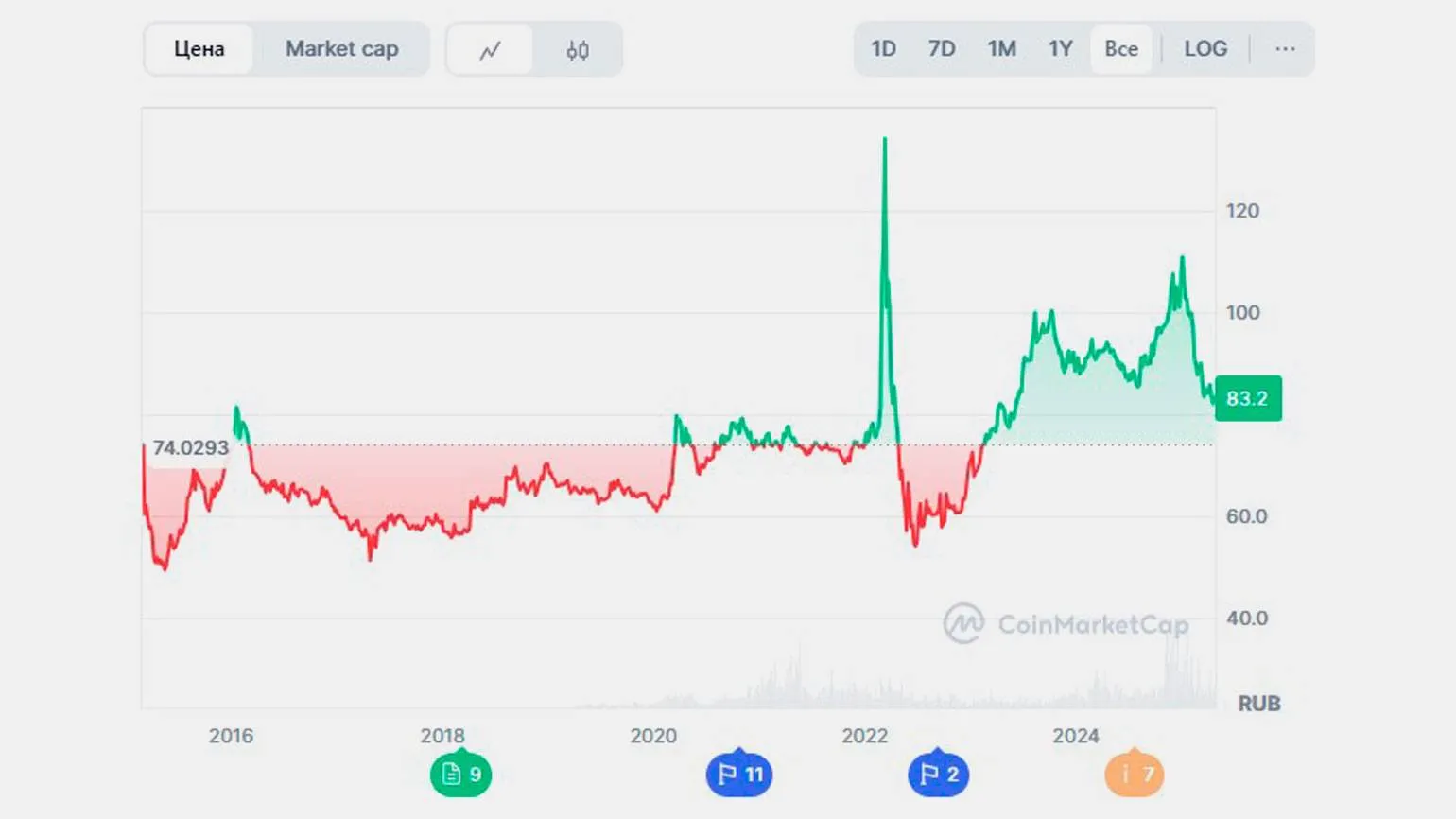
To reduce the impact of volatility, you need to be psychologically prepared for it and not panic during corrections. You should also set clear goals and stick to them, use DCA, and invest only funds that are not critical to your well-being.
Asset Security Is Yours. In the crypto world, you are entirely responsible for the security of your funds. And they can be lost due to a hack of the crypto exchange, a phishing attack, or because you lost your private key (password) or seed phrase.
To protect your money, it is important to store large sums on hardware wallets, enable two-factor authentication on all platforms, and distribute assets among several trusted platforms. Also, do not store passwords, private keys, and seed phrases in cloud storage, verify addresses before sending money, and be wary of suspicious links and offers.
Low liquidityof some cryptocurrencies. Cryptocurrencies with low capitalization suffer from low liquidity. Therefore, they are vulnerable to manipulation - someone can trigger the rise or fall of the cryptocurrency through their transactions.
Therefore, it is worth giving preference to tokens with a high trading volume, avoiding tokens with a high concentration of assets held by insiders or "whales" - large players - and using little-known exchanges with caution.
Fraud.There are many scammers in the cryptocurrency world. There are many fake projects, financial pyramids, rug pulls - situations when the project team abandons it, selling all the tokens to investors.
To avoid falling for scammers, it is important not to trust guarantees of high returns, carefully check the team's reputation and study the project itself before investing in it. Don't fall for FOMO (fear of missing out) when launching new tokens. And always use the principle "if it sounds too good to be true, it probably isn't."
Technical risks.Smart contracts and cryptocurrency protocols can contain vulnerabilities that lead to hacks and loss of funds. The history of DeFi is replete with examples of technical bugs being exploited for millions of dollars.
To protect your money, avoid investing large sums in new, untested, and experimental DeFi projects; give preference to projects that have passed a security audit. And also monitor the news about hacks and vulnerabilities.
Regulatory risks.Cryptocurrencies still have no definitive legal status. Any changes in regulation can seriously impact the entire market and individual projects. Decree No. 8 is in effect in the Republic of Belarus, but it is regularly amended.
For example, starting in 2025, you will be required to maintain regular tax records and independently calculate and pay taxes on income from the sale of cryptocurrency. This means maintaining records of all transactions (purchases, sales, exchanges) indicating dates, amounts, and exchange rates.
It is impossible to completely eliminate the risks of investing in cryptocurrency—it is a fundamentally high-risk asset class. That's why it's important to follow the rule "invest only what you can afford to lose" and diversify your overall investment portfolio, including your cryptocurrency portfolio.
Where to start investing in cryptocurrency
1. Learn the basics: blockchain, bitcoin, wallet types, security. Resources: Binance Academy, CoinMarketCap Education, Crypto.com University (in Russian).
2. Understand the Belarusian context: reread the section on the nuances in Belarus above. Follow the news (National Bank of the Republic of Belarus, HTP, portal pravo.bypravo.by).
3. Choose a reliable exchange: for Belarusians, the most convenient and popular are:
- Bybit: user-friendly interface, P2P with BYN, good support.
- OKX: wide selection of assets, P2P, advanced tools.
- KuCoin: huge number of altcoins, P2P.
- For HTP residents: Currency.com, other specialized platforms.
Important: Complete verification (KYC) on the selected exchange.
4. Set up security: enable two-factor authentication (2FA) everywhere (preferably via Google Authenticator/Authy, not SMS). Set up a whitelist of withdrawal addresses.
5. Choose a storage wallet:
- For trading and small amounts: custodial wallets on the selected exchange (Bybit, OKX, etc.).
- For long-term storage (HODL) of larger amounts: non-custodial wallets:
1. Hardware: Ledger Nano S/X, Trezor (maximum security).
2. Software: Trust Wallet, Exodus, MetaMask (for ETH and tokens).

6. Top up your exchange account:
- Method 1 (main): P2P platform on the exchange (Bybit P2P, OKX P2P). Buy USDT (or other crypto) for BYN directly from other users. Choose verified sellers with a high reputation. The safest and most common method in the Republic of Belarus.
- Method 2 (risky): bank transfer in $/€ to the exchange (if the exchange accepts from the Republic of Belarus). High risk of being blocked by the bank! Not recommended.
- Method 3: through crypto exchangers (money changers). Risk of fraud, high fees. Use only trusted aggregators (for example, Myfin.by — exchanger section) and services with a good reputation. Carefully check reviews.
7. Buy cryptocurrency: buy selected assets (BTC, ETH, USDT, etc.) on the exchange using the replenished USDT or other crypto.
8. Withdraw funds to a secure wallet (for HODL): if you plan to store BTC/ETH long-term, withdraw them from the exchange accounts to your personal hardware or software wallet. Carefully check the withdrawal address.
9. Start with a simple strategy: DCA in BTC/ETH or stake some USDT on an exchange.
10. Keep track of your transactions: record dates, purchase/sale amounts, rates, and fees. This is critical for possible future tax reporting and performance analysis.
11. Keep learning: the market changes rapidly. Stay up-to-date with news, analytics (carefully!), and technological and regulatory developments.
