

4 Top Design Professions: A Free 5-Day Course
Learn MoreDesign thinking is the basis for developing intuitive and useful products and services. To achieve this, it is important to deeply study the needs of the target audience. This method not only helps to identify user requests but also promotes creative solutions to their problems. Design thinking is becoming a powerful tool that allows companies to create user-centered solutions, thereby increasing customer satisfaction and loyalty. By using this approach, organizations can effectively adapt to changing market demands and ensure competitive advantage.
In this article, we will discuss the key aspects of the topic. We will analyze the main factors influencing the situation and offer recommendations for the optimal solution. We will open new perspectives and deepen our understanding of the issue to ensure a more complete understanding of the material. Pay attention to important details that will help you better navigate this topic and make informed decisions.
- The definition of design thinking,
- Meaning and target audience,
- The main stages of the process.
We will provide you with book recommendations that will allow you to deepen your knowledge in this area. These books will help you better understand key concepts and develop the skills needed for successful practice.
What is Design Thinking?
Design thinking is a methodology aimed at effective problem solving through a deep understanding of user needs and their problems. At the center of this methodology is the creation of innovative solutions, which can be described as a design or construction process. Design thinking helps teams focus on users, identifying their real needs and creating products that genuinely solve their problems. This approach fosters creativity and the implementation of new ideas, making it an indispensable tool in modern design and business.
Design thinking focuses on the needs of the end user, rather than the demands of organizations or executives. This focus makes this approach especially relevant for innovative companies striving to create products and services that genuinely solve real user problems. Understanding customer needs allows us to develop more effective solutions, which in turn contributes to the successful implementation of projects and increased competitiveness in the market.
The concept of design thinking was first introduced by Herbert Simon in his book "The Science of Artificial Intelligence" in 1969. This idea was later expanded by scientists at Stanford University, who created the Stanford d.school. This institution has become a center for researchers and practitioners, where the methods and principles of design thinking are actively promoted. This approach focuses on understanding user needs and finding innovative solutions, which makes it an important tool in various fields, such as business, education, and social projects.
Many companies, including Google, have integrated design thinking principles into their corporate culture. In these organizations, research and development teams actively use this approach to generate and test innovative ideas. Design thinking allows them to better understand user needs and develop solutions that effectively solve real-world problems. This approach contributes to the creation of higher-quality products and services and increases the company's competitiveness in the market.
Design thinking is based on three key principles. These principles help create innovative solutions and effectively solve problems. The first principle is user-centered design, which requires a deep understanding of the target audience's needs and desires. The second principle is collaboration, where teams pool their efforts and ideas to achieve the best possible result. The third principle is an iterative process, which involves constantly testing and refining ideas based on feedback. These principles form the foundation for the successful application of design thinking in a variety of fields, from product development to service improvement.
- Empathy: the ability to understand and feel what another person is experiencing.
- Breadth of thought: the ability to consider a problem from multiple perspectives, encompassing all its aspects.
- Experimentation: the willingness to trial, error, and further development.
Why Design Thinking?
Design thinking is an innovative methodology aimed at meeting user needs, which enables the development of truly human-centered products and services. This approach helps to break down familiar stereotypes and stimulates the search for unconventional solutions to complex problems. By using design thinking principles, companies can gain a deeper understanding of their customers and create more effective and engaging solutions, ultimately improving user experience and increasing competitiveness in the marketplace.
Design thinking, while widely used in UX/UI design for website and mobile app interfaces, has a much broader range of applications. This method can be effectively implemented in a wide variety of areas where specific user problems need to be addressed. For example, it can be applied in the design of modern business centers, parking optimization, improving couriers' working conditions, and organizing logistics processes, especially in the context of closed borders. Using design thinking allows you not only to identify user needs but also to find innovative solutions, making it a valuable tool for any project.
In 2023, 78% of companies using design thinking reported an increase in customer satisfaction, demonstrating the high effectiveness of this approach. Design thinking helps organizations better understand their customers' needs and create solutions that truly meet their expectations. This human-centered methodology makes it particularly relevant in a competitive business environment. Applying design thinking not only improves customer experience but also fosters innovation and business growth. Design thinking brings significant benefits not only to users but also to companies. This approach allows organizations to more deeply understand their customers' needs, leading to the creation of more effective products and services. By applying design thinking, companies can improve their processes, enhance customer interactions, and accelerate innovation. As a result, organizations become more competitive in the marketplace, increase customer loyalty, and optimize their resources. Ultimately, design thinking helps create a more sustainable and successful business.
- It fosters loyal customers by ensuring they receive a product that meets their interests and needs.
- It fosters a culture of innovation within the company by fostering creative thinking within teams.
- It accelerates the time-to-market for new products and helps avoid unnecessary expenses through thorough research and the ability to experiment to find optimal solutions.
If you're interested in becoming a UX/UI designer and want to know how to start a career in this field, you'll find all the answers you need in our article. We'll discuss key aspects of the profession in detail, skill requirements, and helpful tips for beginners.
Stages of Design Thinking
The design thinking process consists of six main stages, which can be grouped into two main phases: divergent and convergent. The divergent phase involves generating ideas and searching for different solutions, while the convergent phase focuses on analyzing and selecting the most suitable options. Each of these phases plays a vital role in creating effective and innovative solutions that meet user needs. Understanding the structure of the design thinking process helps professionals better understand how to develop ideas and find optimal ways to implement them.
- The divergent phase, during which information is collected and various solution options are generated.
- The convergent phase, during which the most appropriate solution from a variety of ideas is analyzed and selected.
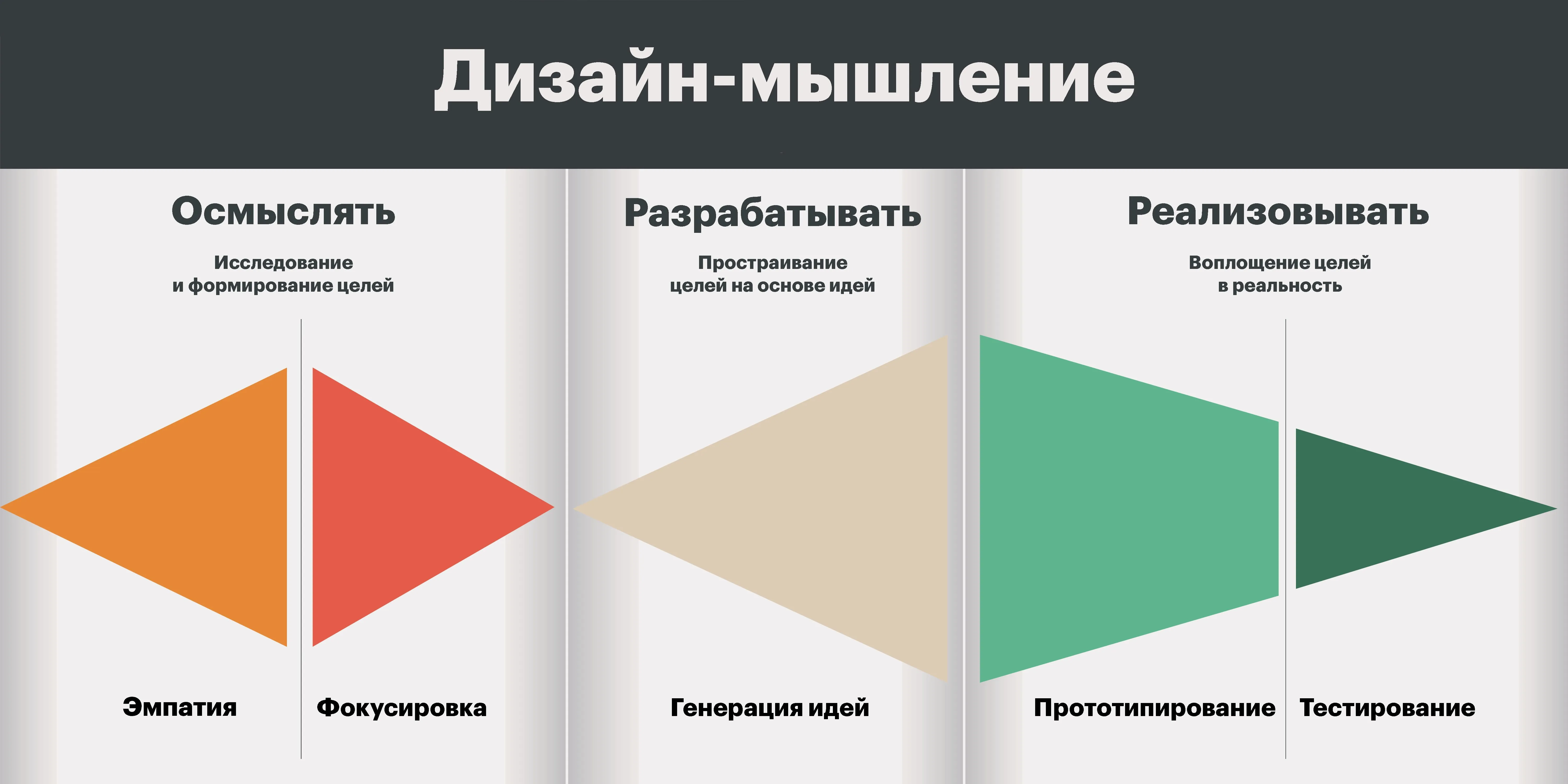
At this stage, the team analyzes the user experience, their needs, and motivations in order to deeply understand the context in which users act. The main task is to collect data to "enter the consumer's position" and identify their problems. This will allow you to create more effective solutions that meet the expectations and requirements of the target audience.
To achieve a deep understanding, methods such as in-depth interviews and user behavior observation are used. Open data from social networks, media, and statistical reports are also important sources of information. These methods help collect qualitative and quantitative data, which contributes to a more complete analysis of consumer preferences and trends.
During the empathy stage, the team analyzes the collected data and identifies the user's key problem. This process is crucial for formulating a clear question that will serve as the basis for further work. Correctly identifying the problem allows for a deeper understanding of user needs and the development of effective solutions.
Key observations are visualized using sticky notes placed on the walls, making the process more visual and interactive. This approach facilitates better information comprehension and allows teams to easily track important points and ideas. Visual organization of data helps improve communication and increase work efficiency.

The idea generation stage focuses on finding a variety of solutions to a specific problem. During this period, all creative ideas and unconventional approaches are accepted, which helps to discover new possibilities and solutions. It is important to create an atmosphere conducive to the free exchange of opinions and inspiration in order to maximize the team's potential and generate original ideas.
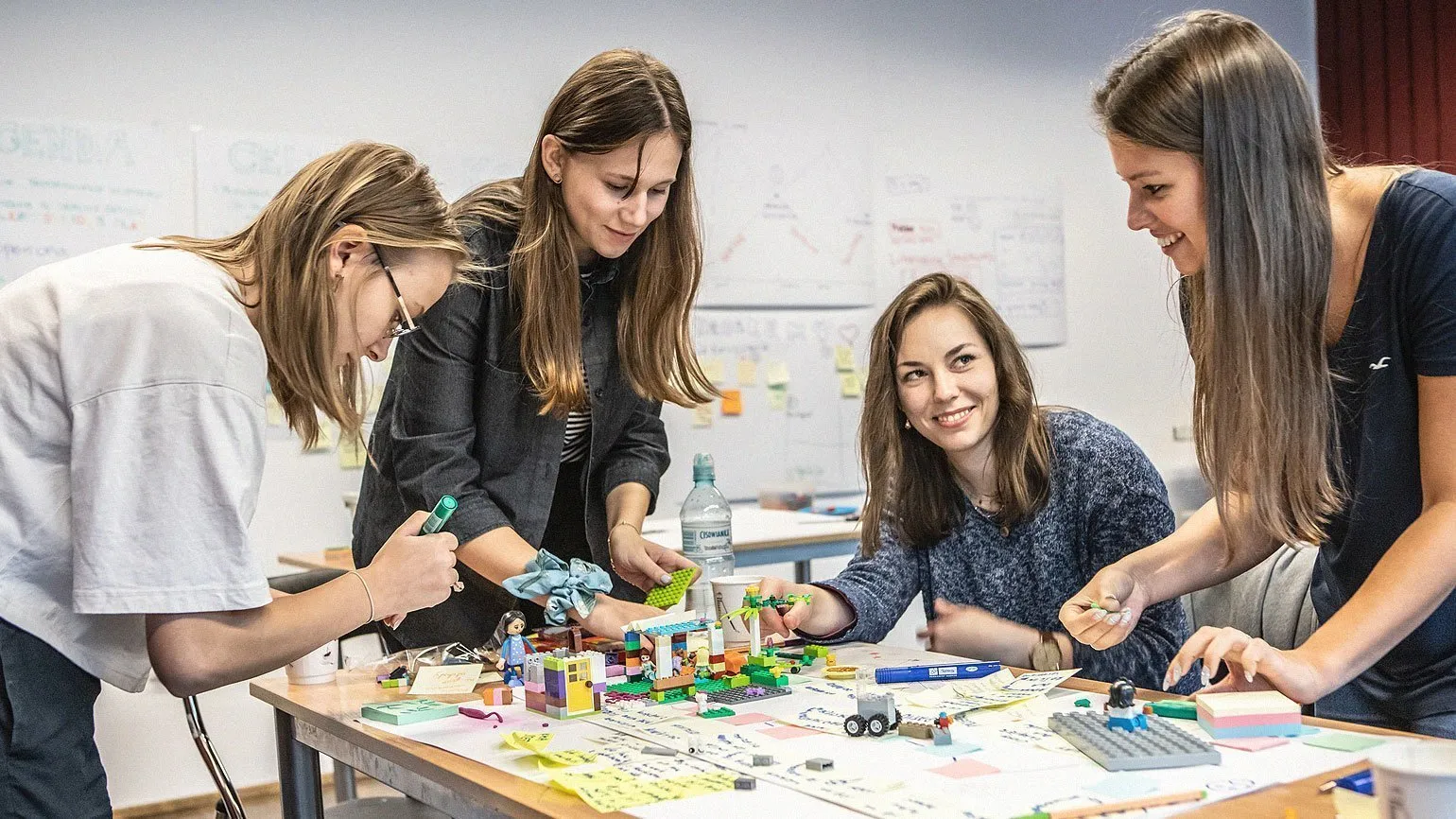
Teamwork is a process of collective creativity, similar to brainstorming, in which specialists from different fields come together to generate a variety of ideas and concepts. At this stage, it is important to avoid criticism of proposals in order to create a favorable atmosphere for the free exchange of thoughts and inspiration. Effective teamwork promotes innovation and allows for the discovery of original solutions, which is especially important in today's rapidly changing market and technology environment.
After generating ideas, the team selects one for further development. A key step is to hold a vote or combine several ideas into a single concept. This allows the team to focus on the most promising options and effectively allocate resources for their implementation.
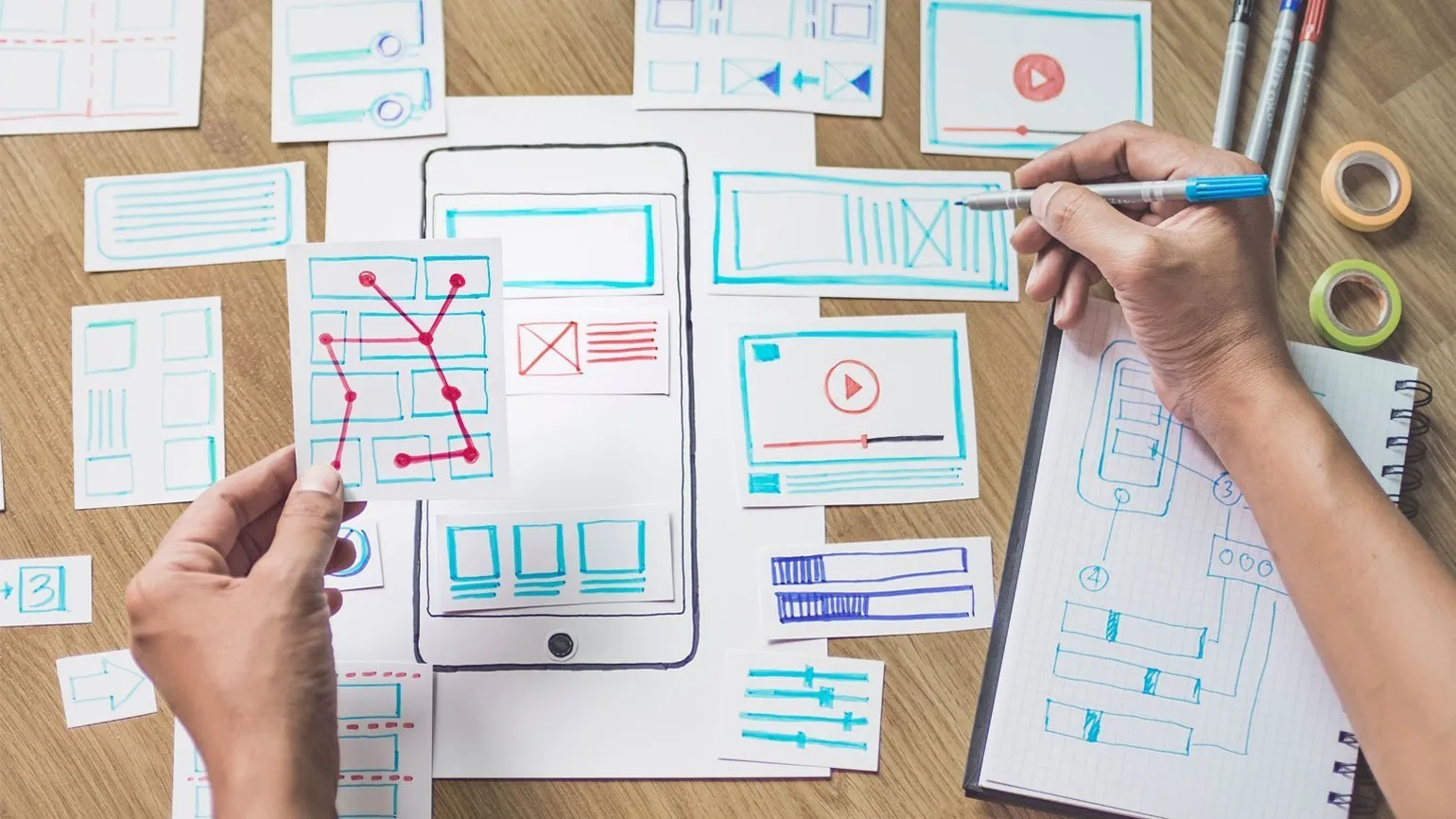
During the prototyping stage, the team begins testing their hypotheses. Prototypes are created using available materials and simple tools, allowing for a quick assessment of the concept's viability. This process helps identify shortcomings and improve the product early in development. Prototyping is an essential step in creating effective solutions, as it allows the team to visualize ideas and adapt them based on feedback.
Prototypes should be cost-effective and easily modifiable so the team can quickly adapt to testing results. This will speed up the development process and improve the quality of the final product. Responding quickly to user feedback is key to improving functionality and usability.
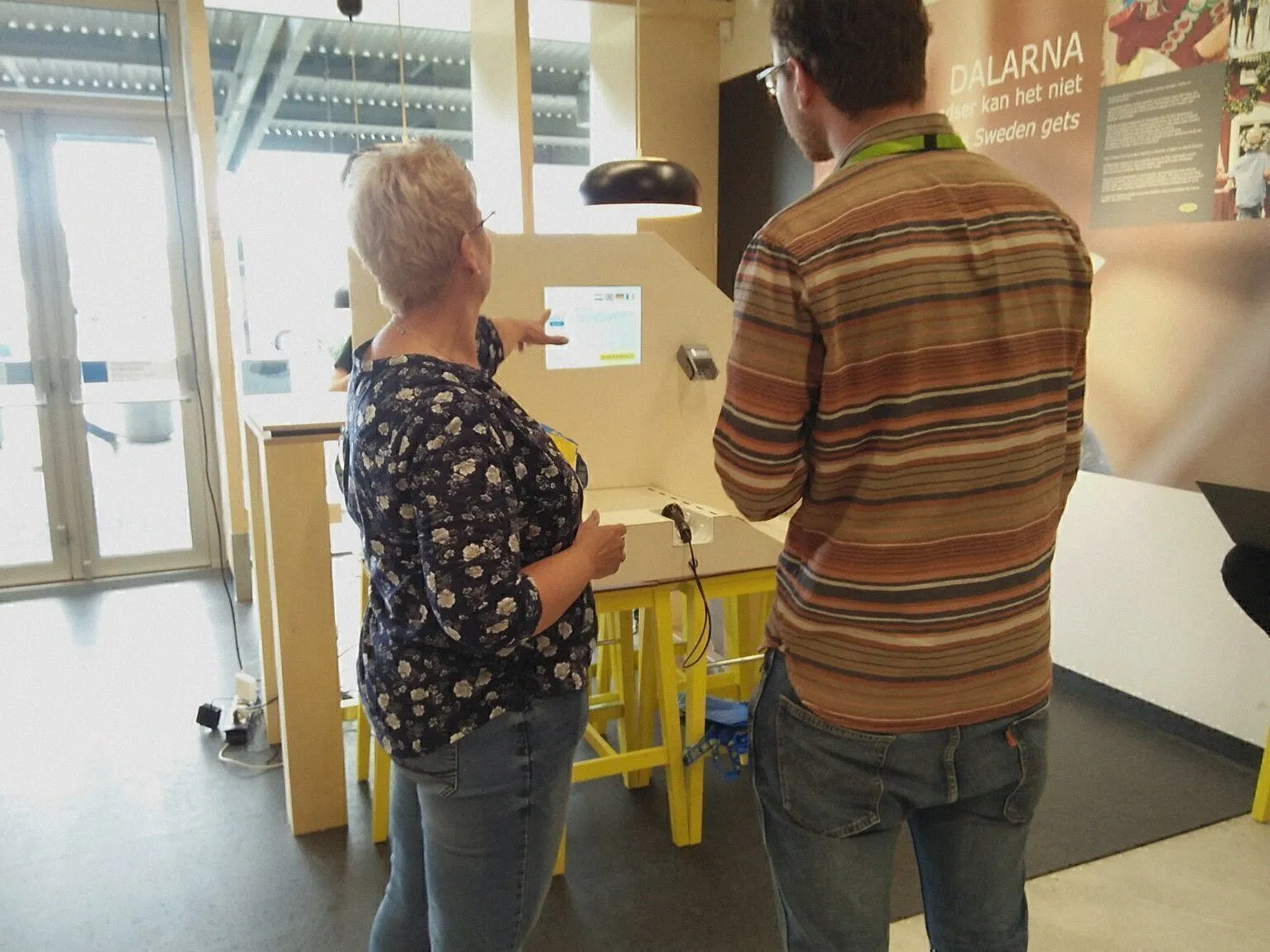
At the final stage, the team receives feedback from users on the prototype. It's crucial to evaluate how effectively the developed solution meets the real needs of the target audience. Analyzing this feedback helps identify the product's strengths and weaknesses, which facilitates its further improvement and optimization.
The user tests the prototype, while the team closely monitors their interactions with the product. They record comments and feedback, analyzing what works properly and what needs improvement. This allows us to identify shortcomings and improve user experience.
Graphic Designer PRO: 5 Steps to a Successful Career
Want to become a graphic designer? Learn 5 steps to creating a unique portfolio and professional success!
Learn more