Contents:

Try 4 top professions in design. Free ➞ In 5 days, you will get acquainted with illustration, UX/UI, web and graphic design. Add 4 cool cases to your portfolio and decide which direction to develop in.
Learn moreOn the outskirts of Kyiv, on the edge of endless fields
Kazimir Severinovich Malevich, an outstanding artist and the founder of Suprematism, was born on February 11 (23), 1878, in the outskirts of Kyiv to a family of Russifying Poles. His father, Severin Antonovich Malevich, worked as a manager at a sugar refinery, and his mother, Ludwiga Alexandrovna Malevich, ran the household and took care of the children. Kazimir was the first child in the family, but Ludwiga soon gave birth to 13 more children, five of whom died before reaching adulthood. As a result, the future artist grew up in a large family, among four brothers and four sisters, which undoubtedly influenced his personality and work. The influence of family traditions and environment shaped his unique perspective on art, which later became the foundation of his innovative approach to painting.
The Malevich family did not live long in Kyiv due to Severin's profession, which required frequent trips to beet plantations located far from the cities. To minimize separations, they began living in villages, constantly moving from one location to another. This lifestyle allowed them to remain together despite work commitments and actively explore new places.
In his memoirs, Kazimir Malevich vividly described the colors of his childhood, and decades later, he continued to vividly imagine the landscapes of Ukrainian villages. His first encounter with paint occurred when he was 11 years old—he noticed a painter working and decided to join him. After attempting to paint trees on the roof of a house, he didn't achieve the desired result, but this didn't stop him. Inspired by this experience, Malevich began actively seeking out any opportunities for painting, which marked the beginning of his creative journey. At 15, his mother gave him a paint set during a trip to Kyiv to visit relatives, marking the beginning of his artistic journey. He began creating his first drawings, but this passion was not supported by his father, who dreamed of his son becoming a professional sugar maker, continuing the family tradition. As a compromise, Kazimir earned a high school diploma in agronomy, but this did not distract him from his true calling. His passion for art continued to develop, and he persistently pursued his dreams, despite the expectations of others.
Broken Rails of Kursk
In 1896, when Kazimir Malevich turned 18, his family finally moved to Kursk. He began to follow the traditional path for people of his social status: he married and got a job as a minor official. At 21, his first wife was Kazimira Ivanovna Zgleits, and his first job was at the Administration of the Kursk-Moscow Railway. He led an ordinary life, but instead of visiting taverns, he preferred to spend time with friends outdoors, enjoying painting and nature. This passion would become an important part of his future as an artist and innovator in the art world.
In 1904, Kazimir decided to change his life. He's 26 years old, has a job, a family, and children, but dreams of a new life in Moscow. He's saving up to provide for his family and start a new life. Kazimir embarks on a journey on the Kursk-Moscow Railway not as an employee, but as an inspired passenger, full of hopes and aspirations. This step becomes for him a symbol of liberation and the desire for change.
Moscow on the third try
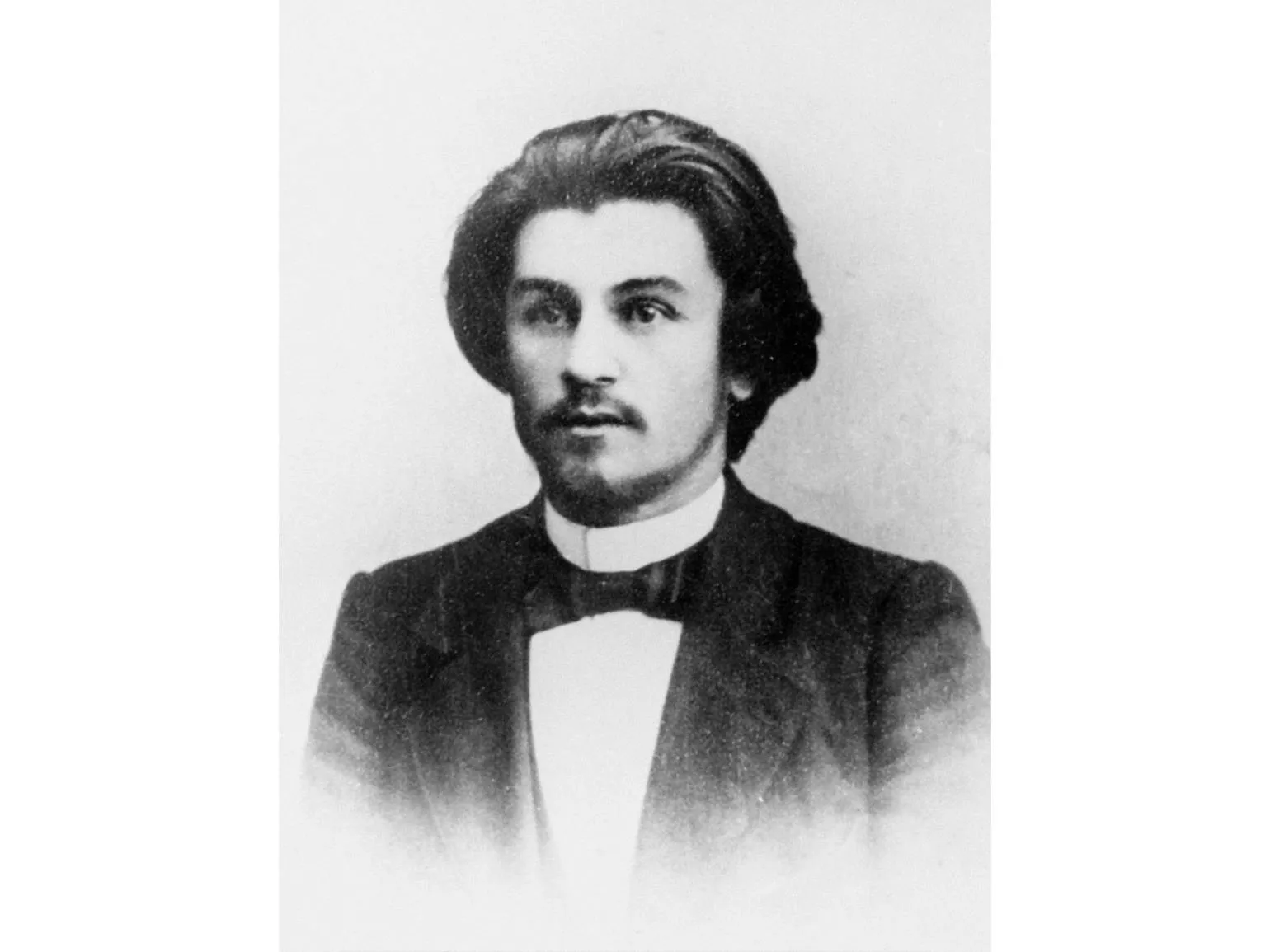
Malevich arrives in Moscow with With the intention of enrolling in the Moscow School of Painting, Sculpture, and Architecture. However, his name is missing from the list of applicants, and the artist's autobiography contains virtually no mention of that period. Researchers suggest that this failure was so painful for him that he preferred to forget 1904, as if it had never existed. This moment in Malevich's life underscores his desire for self-expression and internal struggle, which would later have a significant impact on his work.
Kazimir Malevich returned to Kursk in 1905 with the intention of re-enrolling in the art school. He successfully obtained a certain number of credits, although this was still not enough for admission. During this time, he began attending the studio of Fyodor Ivanovich Rerberg, a talented painting teacher, which significantly enriched his artistic skills. During Rerberg's courses, Malevich met Ivan Vasilyevich Klyunkov, who would later become known by his pseudonym Klyun. Their strong friendship became an important source of inspiration and creative energy, significantly influencing Malevich's subsequent career and his development as an artist.
In 1906, Kazimir Malevich moved permanently to Moscow, taking his entire family with him. They rented a room from Klyunkov, but the Maleviches' financial situation proved extremely difficult—they were almost never able to pay the rent. Klyunkov partially helped them with this by providing them with financial support. Poverty would haunt the artist throughout his life, with the exception of a few years of relative prosperity in the mid-1920s. Unlike such famous representatives of the Russian avant-garde as Kandinsky and Chagall, who were able to avoid financial difficulties in exile, Malevich endured all the hardships of life until the end of his days, remaining true to his calling and status as a romantic genius.
His third attempt to enter the school ended in failure, and Malevich decided to give up trying to enroll in an educational institution. He began to develop as an independent artist, emphasizing his status as a self-taught artist. During this period, he became acquainted with the works of the Fauvists and studied the work of such masters as Gauguin, Van Gogh, and Cézanne. This acquaintance had a significant influence on his artistic style and approach to art.
The first significant breakthrough in art occurred in 1907 with the creation of a portrait of Klyunkov entitled "Sketch for a Fresco Painting." In this work, Malevich applied elements of the plasticity and figurativeness of the Fauvists, as well as the color schemes of the Symbolists and the technique of reverse perspective. This combination of styles anticipates further experiments in painting and lays the foundation for new artistic directions.
Russian avant-garde artists, like the French modernists, again turned their attention to primitive art, which led them to rethink the space of Russian icons. Malevich not only interested them from a stylistic standpoint but also introduced the characteristic "incorrectness" of perspective into his work. His paintings create the impression that the characters depicted on the canvas are not looking at the viewer, but rather are addressing him from their own world. This unique perception of space and interaction with the viewer emphasizes the depth and novelty of avant-garde art.
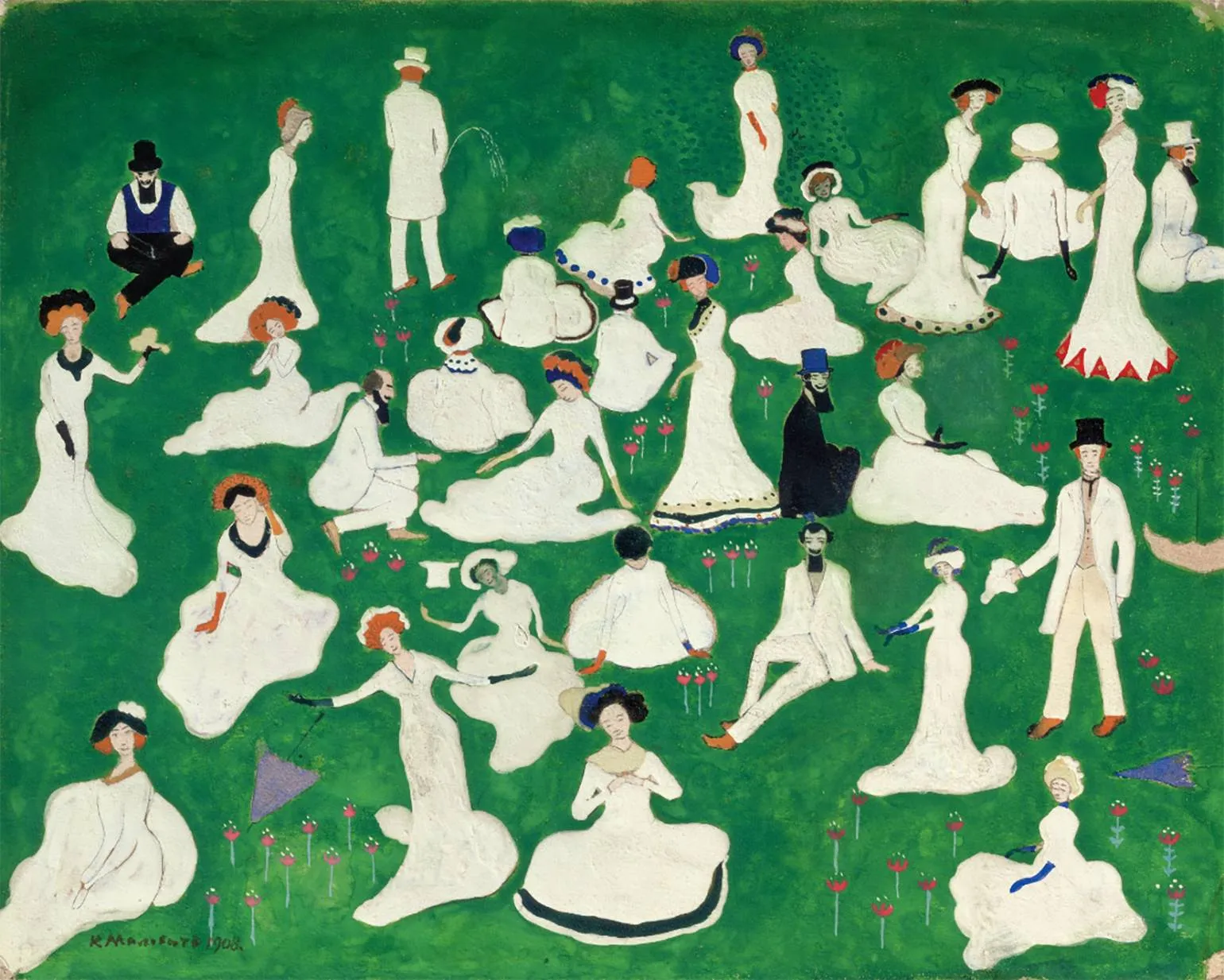
At the same time, Malevich creates two-dimensional paintings with erotic content and tragic Black and white symbolist scenes. His works are distinguished by their frivolity and deep emotional intensity, making them unique in the context of contemporary art. These works reflect complex experiences and contradictory feelings, exploring the boundaries between aesthetics and meaning.
The search for a new style influenced the artist's personal life. Life in Moscow took a toll on his marriage, and Malevich separated from Kazimira. In 1909, he married a second time, to the children's writer Sofia Rafailovich. This new stage in his life also reflects changes in his artistic approach and creative activity.
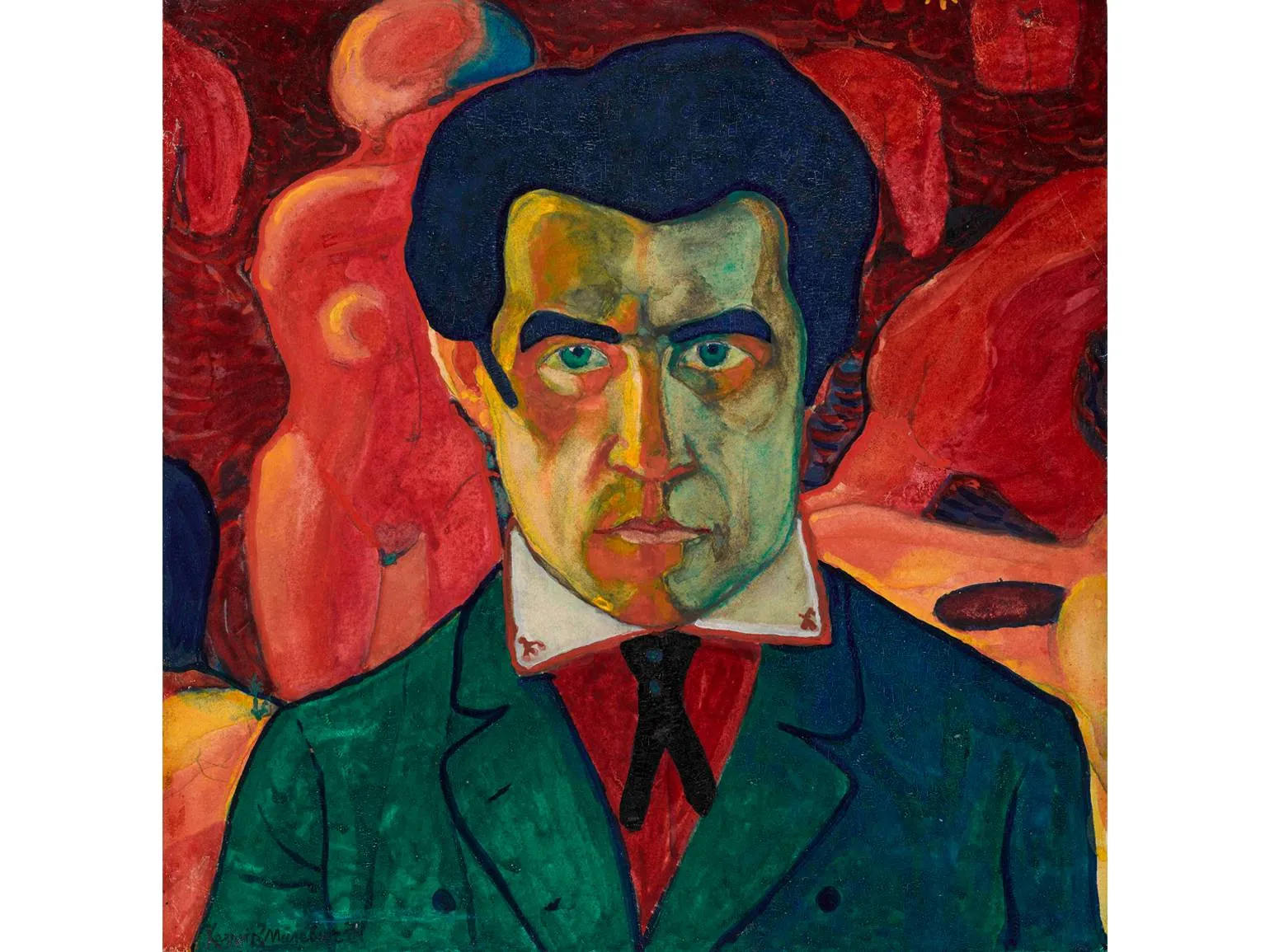
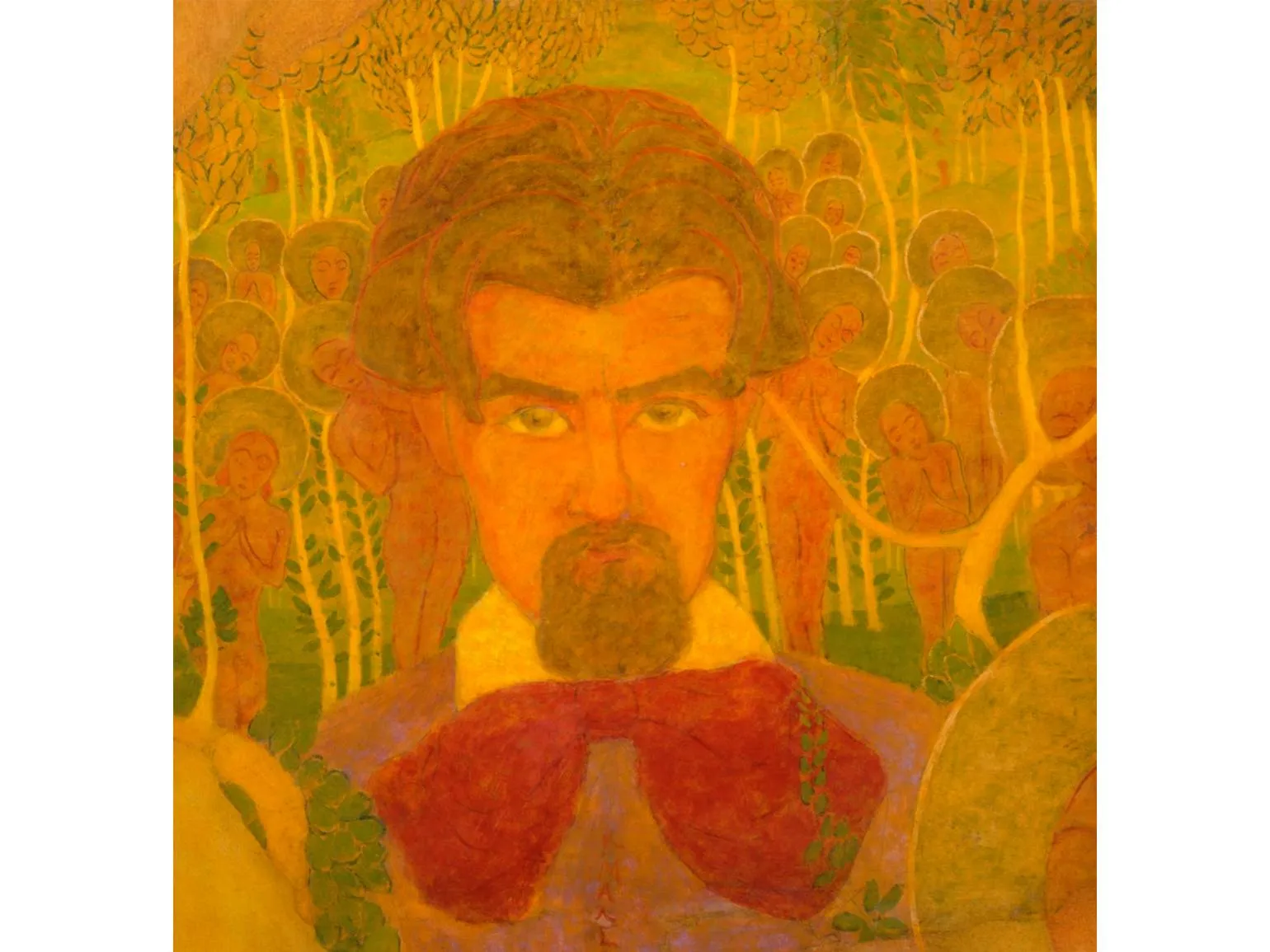
In December 1910 and January 1911, the artist participated in the first The Jack of Diamonds exhibition was held at the invitation of Mikhail Larionov. During this period, Malevich's Fauvism reached its apogee, as can be seen, for example, in his gouache work "Self-Portrait." This period marked the opening of new horizons for original artistic experimentation, becoming an important milestone in the development of avant-garde art.
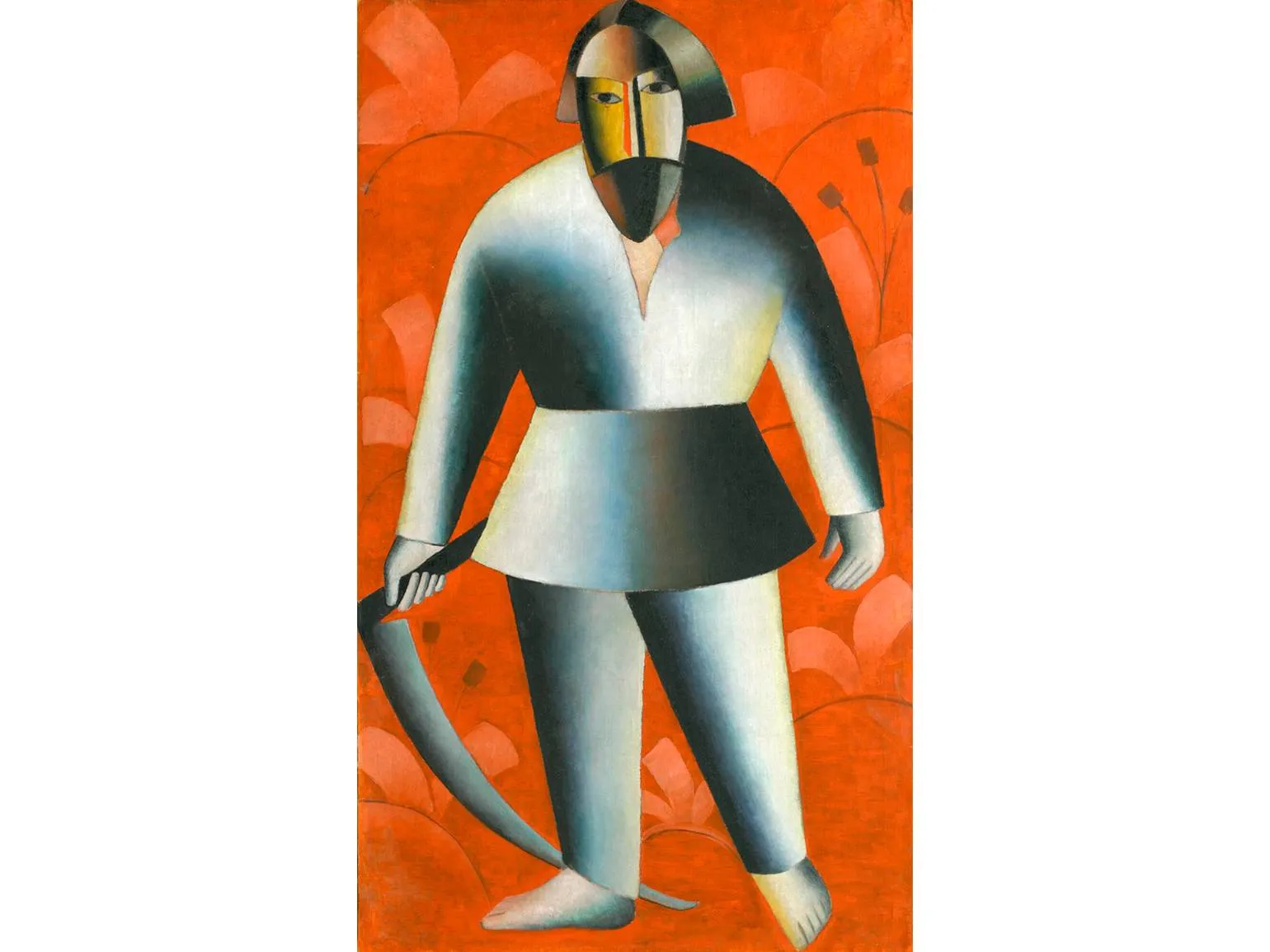
In 1911, Kazimir Malevich began work on his "Peasant Series," which showcased a bold approach to the plasticity of figures, the gradient color of clothing, and vibrant backgrounds. A striking example of this series is the painting "The Mower." In it, one can already see Malevich's unique style, although the artist was still searching for new forms and ideas that would later radically change art.
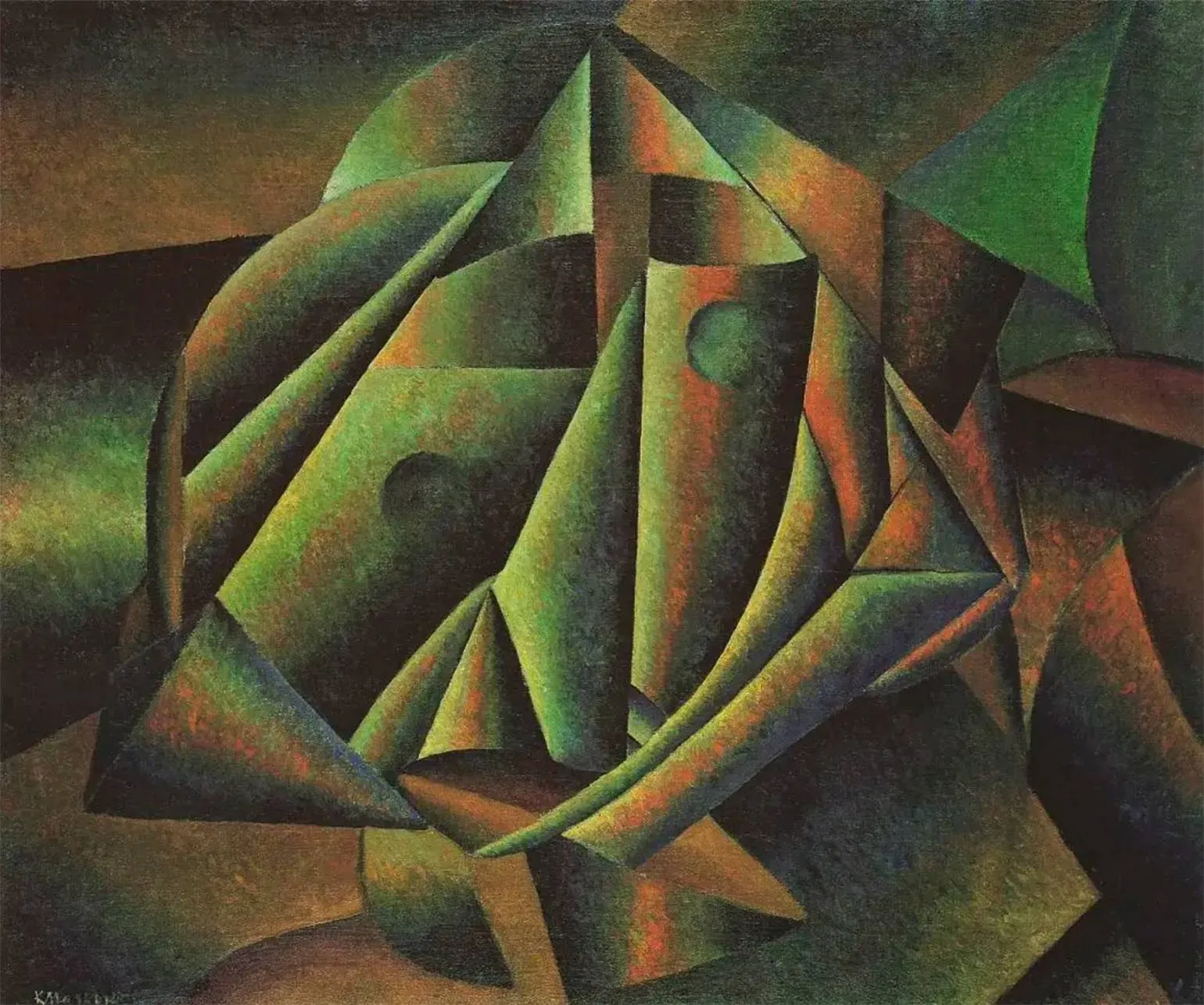
In Search of New Artistic Expression Malevich experimented with Cubism in the manner of Picasso. In his painting "Head of a Peasant Girl," he demonstrated his masterful mastery of this style. However, the artist does not limit himself to Cubism, continuing to develop his ideas and seek new forms of expression.
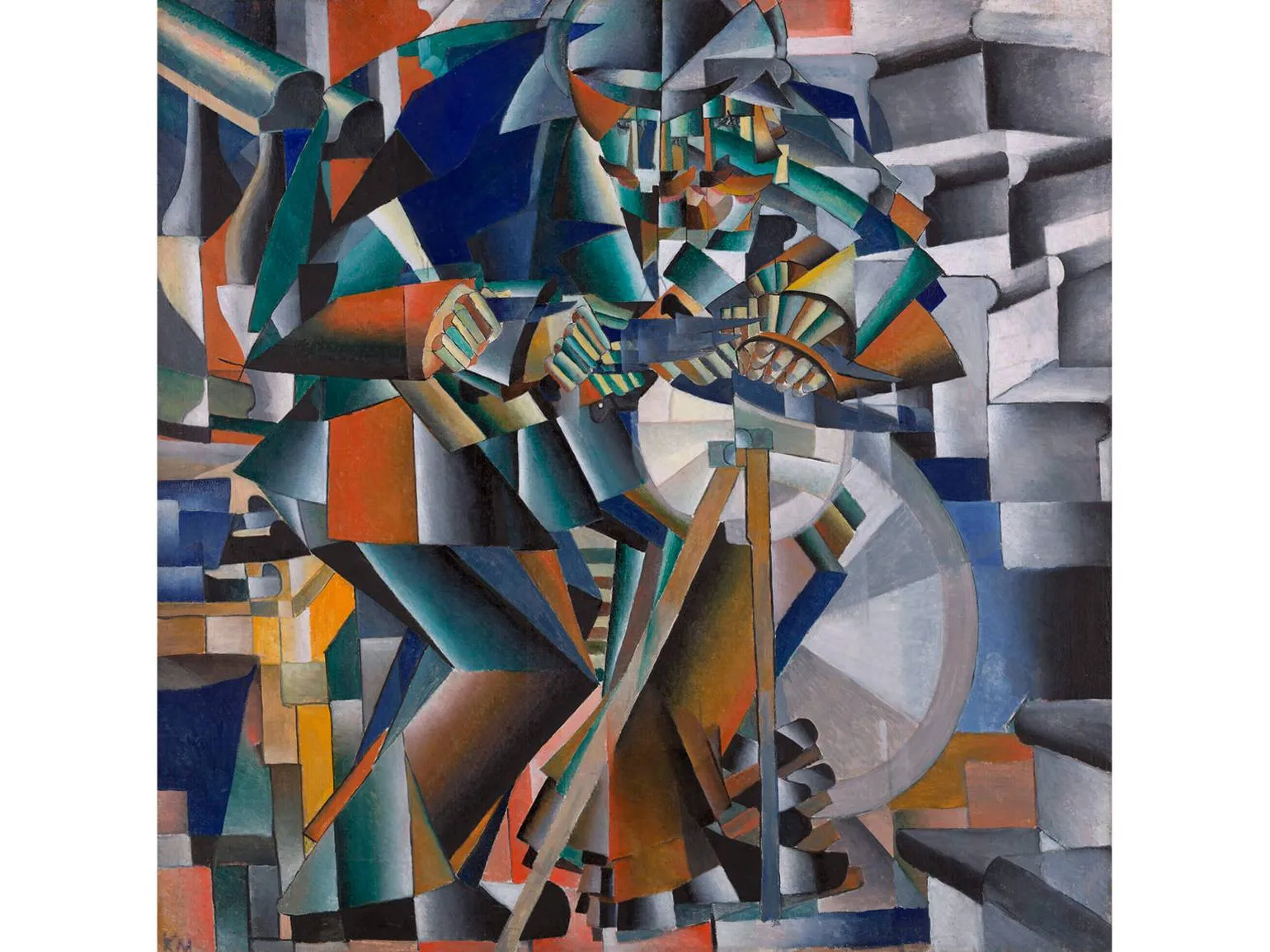
The artist, following the poetic experiments of the Cubo-Futurists, combines French Cubism and Italian Futurism combined to create the iconic Cubo-Futurist painting "The Grinder." In this work, Malevich successfully fragments the figure of a worker, marking one of the first steps toward his further development of Suprematism. However, before this, he needed to achieve an important victory—a victory over the sun. This idea of overcoming sunlight and traditional forms became the basis of his creative path and philosophy in art.
Fluctuations between Moscow and Petrograd
In 1913, at the age of 35, Kazimir Malevich became acquainted with the progressive cultural scene of Petrograd. He moved to the city and became a member of the "Union of Youth" and "Gilea"—new associations that included key figures of the Russian avant-garde, such as Alexei Morgunov, Vladimir Tatlin, David Burliuk, and Vladimir Mayakovsky. This acquaintance became an important stage in his artistic career and in the development of the avant-garde movement in Russia.
Malevich actively collaborated with the composer Mikhail Matyushin and the poets Velimir Khlebnikov and Alexei Kruchenykh. They gathered in the Finnish village of Uusikirkko to organize the First Congress of Bayachi of the Future. Unfortunately, Khlebnikov was unable to join them, as he absentmindedly lost his wallet. This event became an important step towards the emergence of the Budetlyane, a new artistic movement.
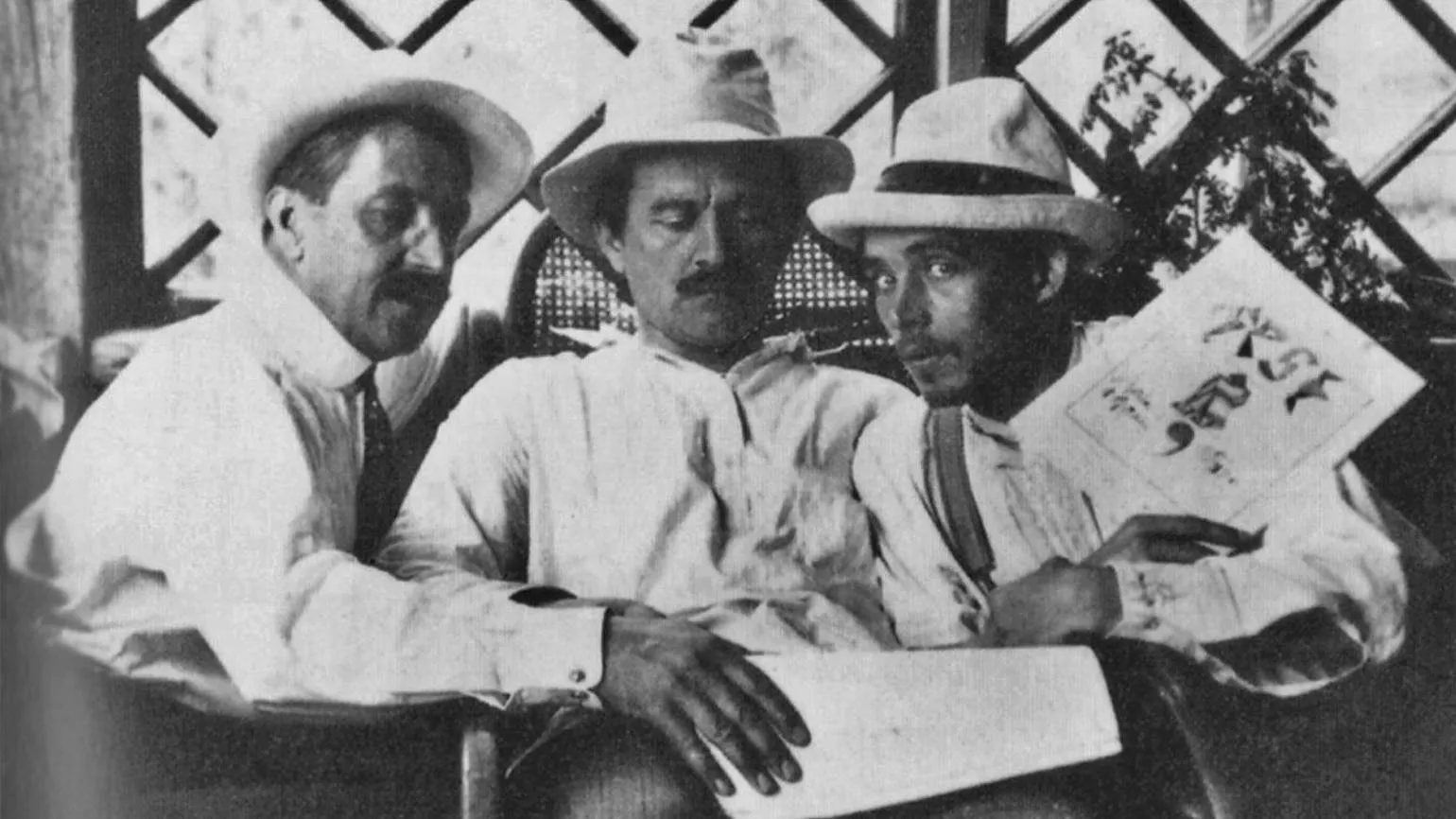
Over the course of a week, the artist, composer and poet have been developing a manifesto and They form creative plans for the coming year, which are later published under the title "In 7 Days." Inspired by his experience, Malevich returns to Moscow. At that time, he lived with his family in Kuntsevo, near Nemchinovka, where he rented an inexpensive dacha house. A trip to Petrograd and Finland became possible thanks to the financial support of Matyushin. This period became an important milestone in Malevich's creative biography, contributing to his further development and experimentation in art. As a result of financial difficulties, Malevich was left without the means to purchase new canvases. He dismantled three wooden shelves and began creating works on them that would later define the visual style of the avant-garde and the artist's creative direction. Among these works, the paintings "Toilet Box," "Station Without Stopping," and "Cow and Violin" stand out. These works became iconic in his career and had a significant influence on the development of modern art.
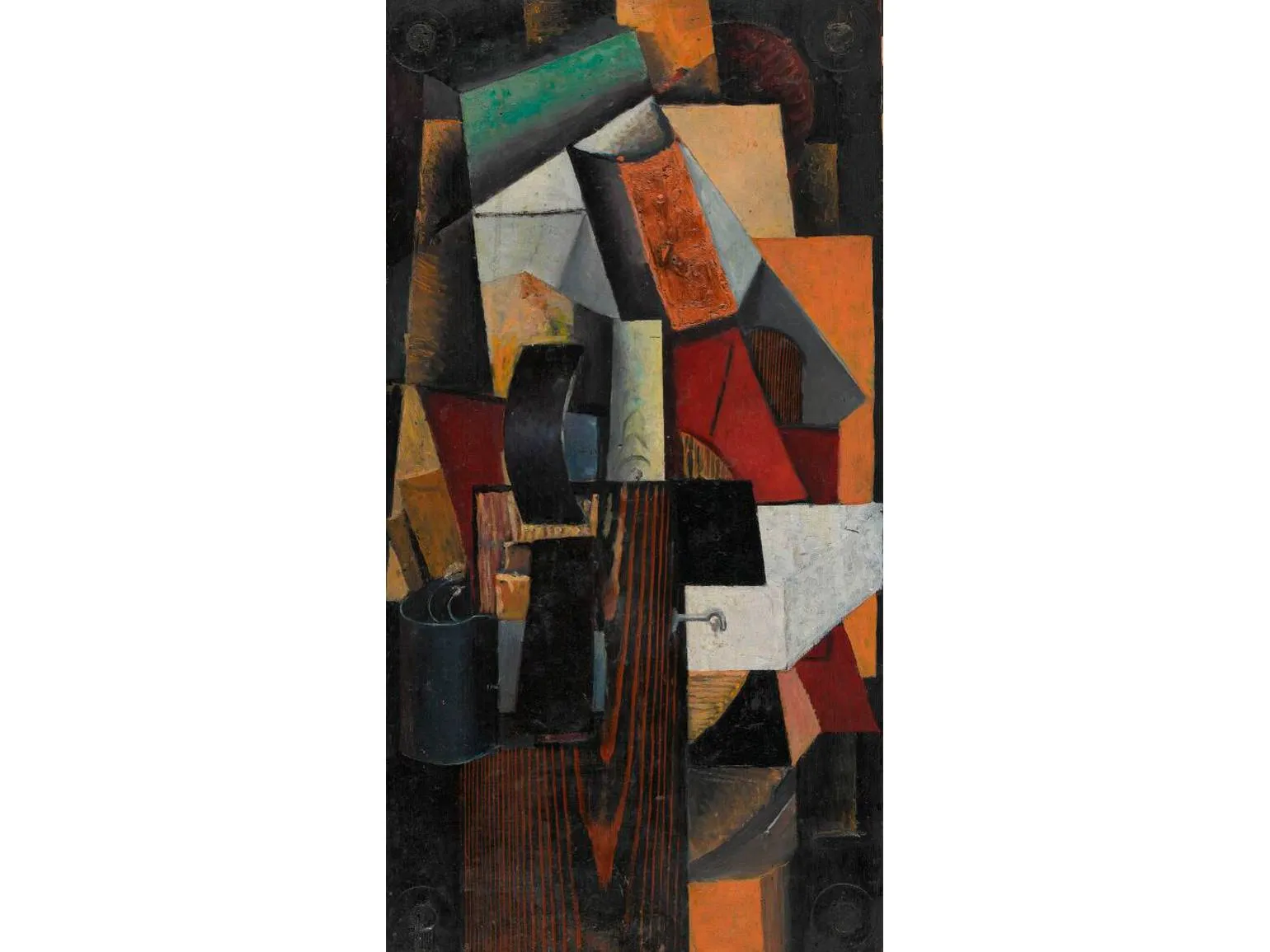
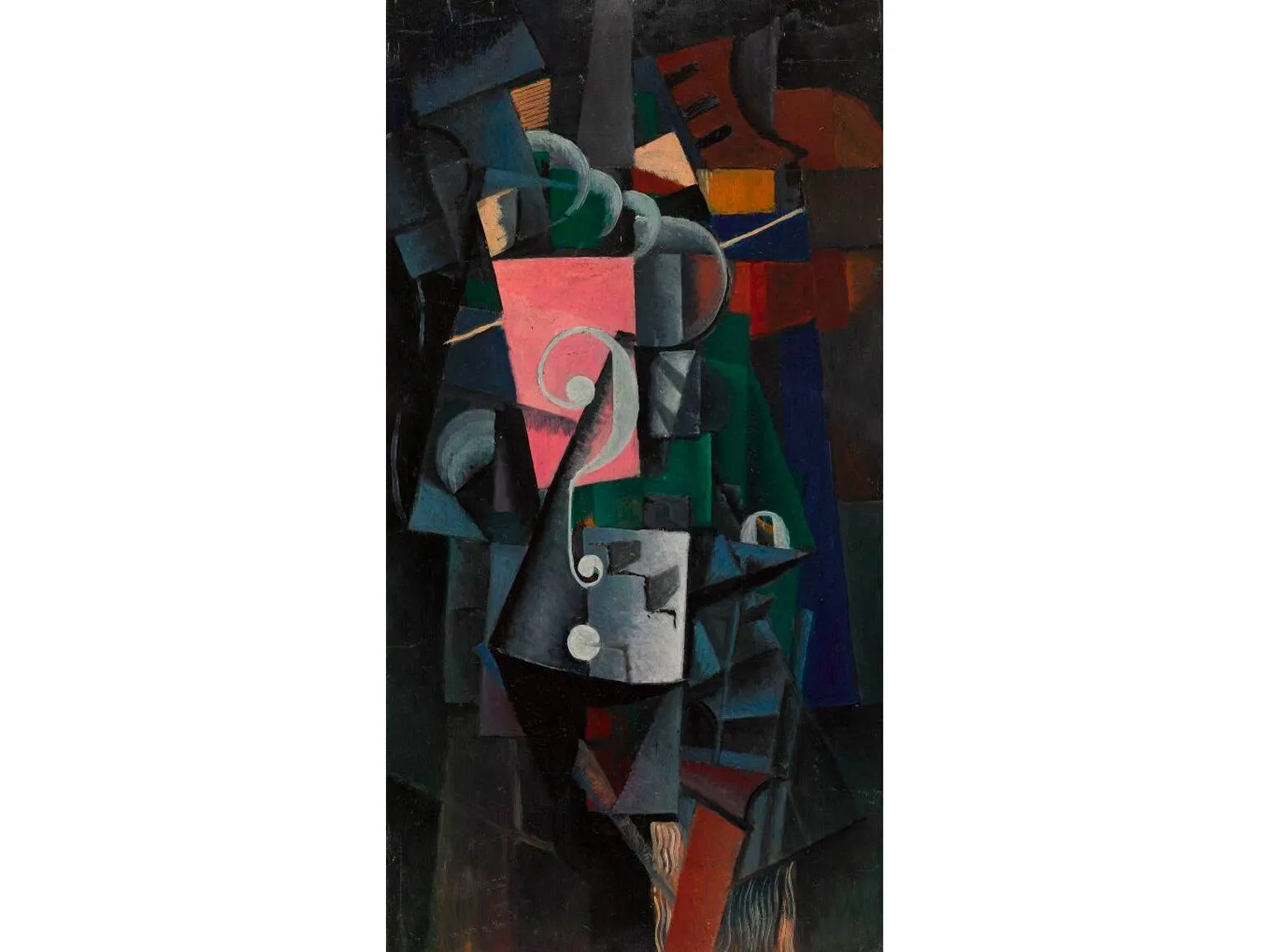
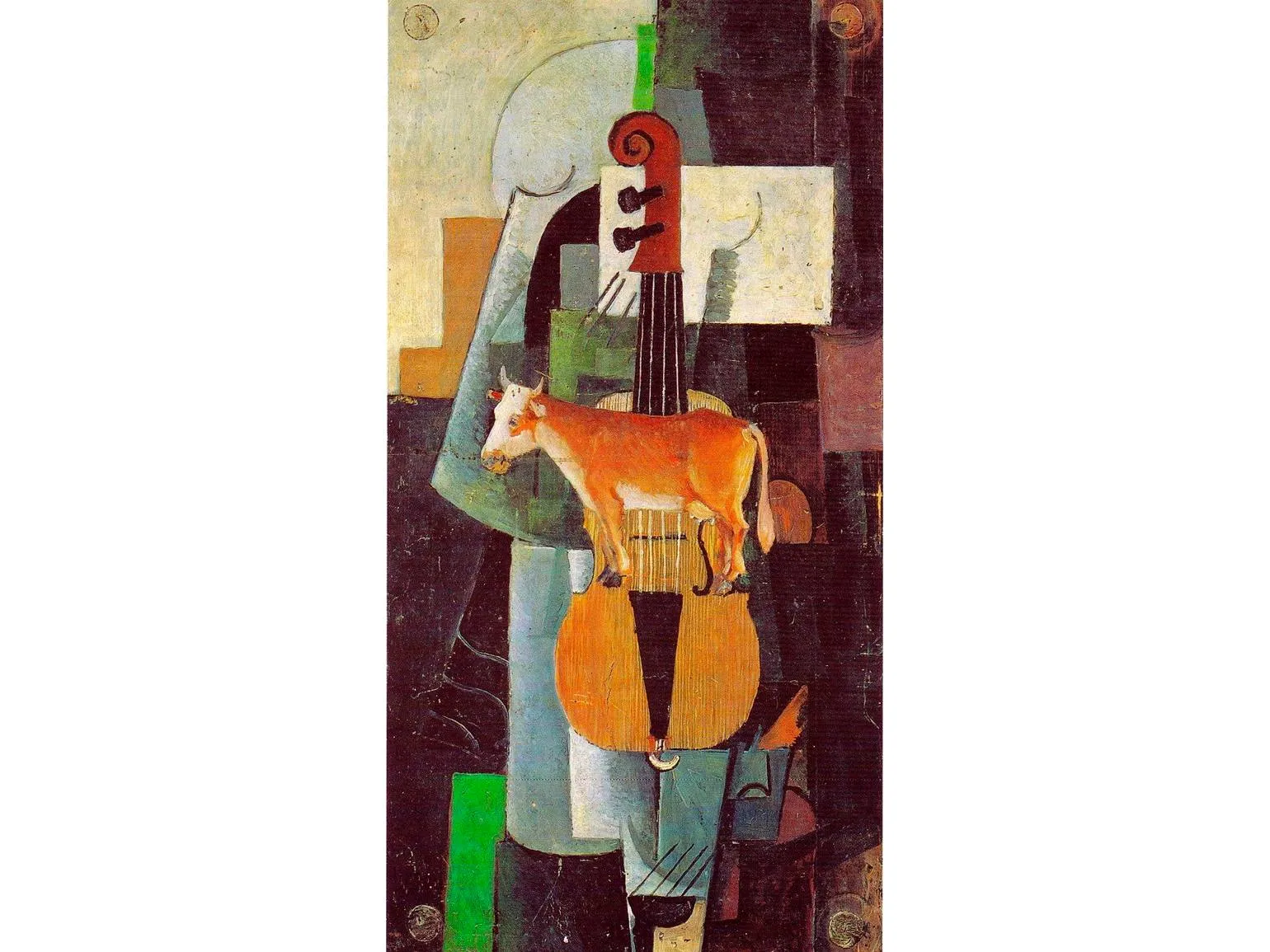
The wooden base of everyday objects inspired Malevich to continue his experiments in Cubo-Futurism, allowing him to blend real-life subjects with semi-abstract compositions. The artist rejects the traditional division of art into "high" and "low," combining symbols in his works, such as the violin, symbolizing genius, and the cow, associated with village life. This contrasting combination emphasizes his desire for a new artistic reality, where each element carries its own unique meaning.
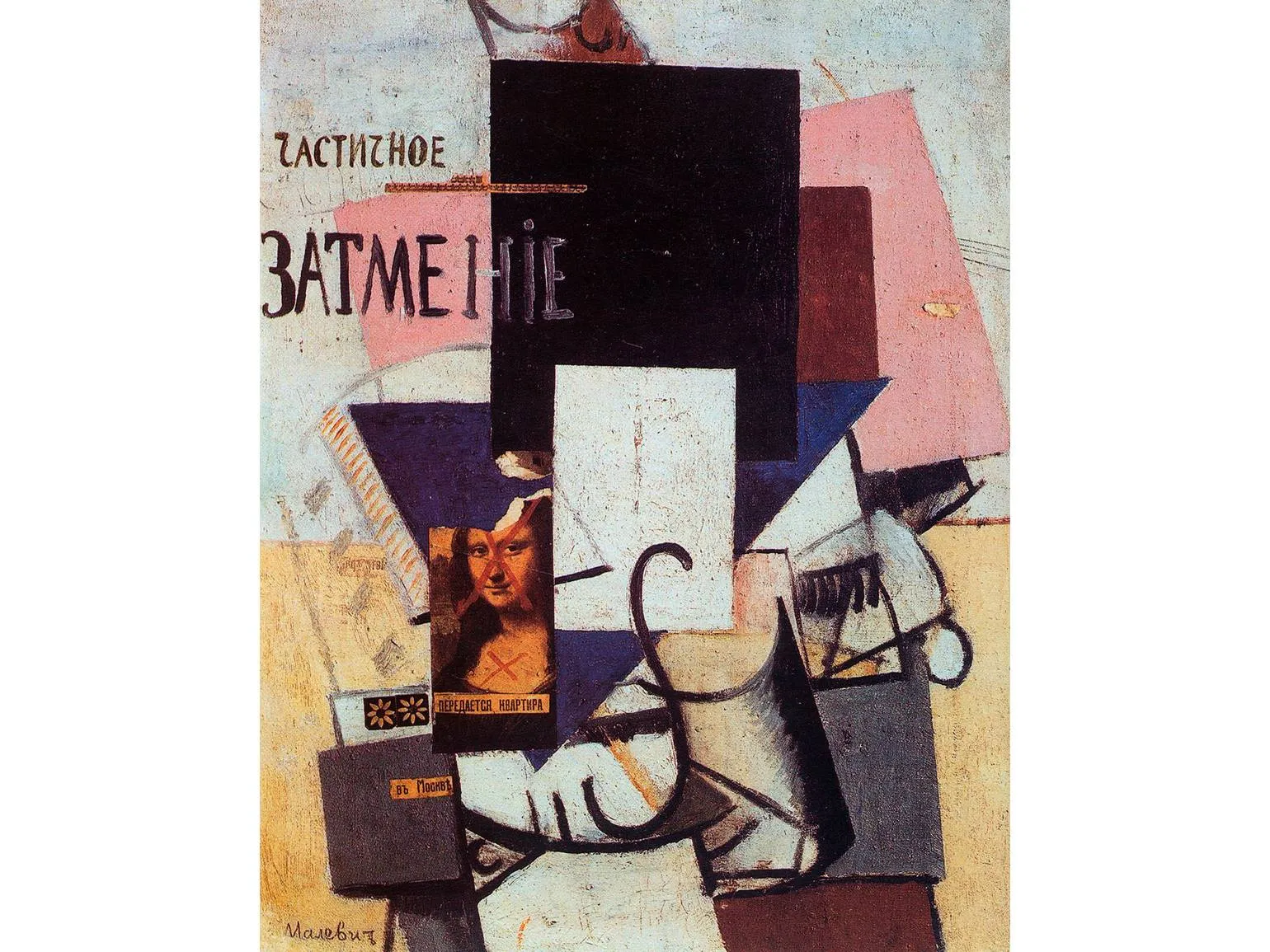
In his work "Composition with Mona Lisa," Malevich comes as close as possible to Dadaism. Using collage techniques, a Cubist structure, and fragments of text, he compresses the image of classical art. Malevich not only twice crossed out traditional notions of artistic heritage, but also, according to contemporaries, depicted the Mona Lisa with a cigarette butt in her mouth. This radical approach underscores his desire to destroy the canons of art and rethink the role of classical works in a contemporary context.
The entry into the absurd became the key moment for the beginning of the creation of the futuristic opera Victory Over the Sun. The opera premiered on December 3 and 5, 1913. Matyushin wrote the music, and Kruchenykh wrote the script and libretto. Khlebnikov wrote the prologue, and Malevich designed the costumes and sets. This work became an important step in the development of avant-garde art and had a significant influence on subsequent trends in music and theater.
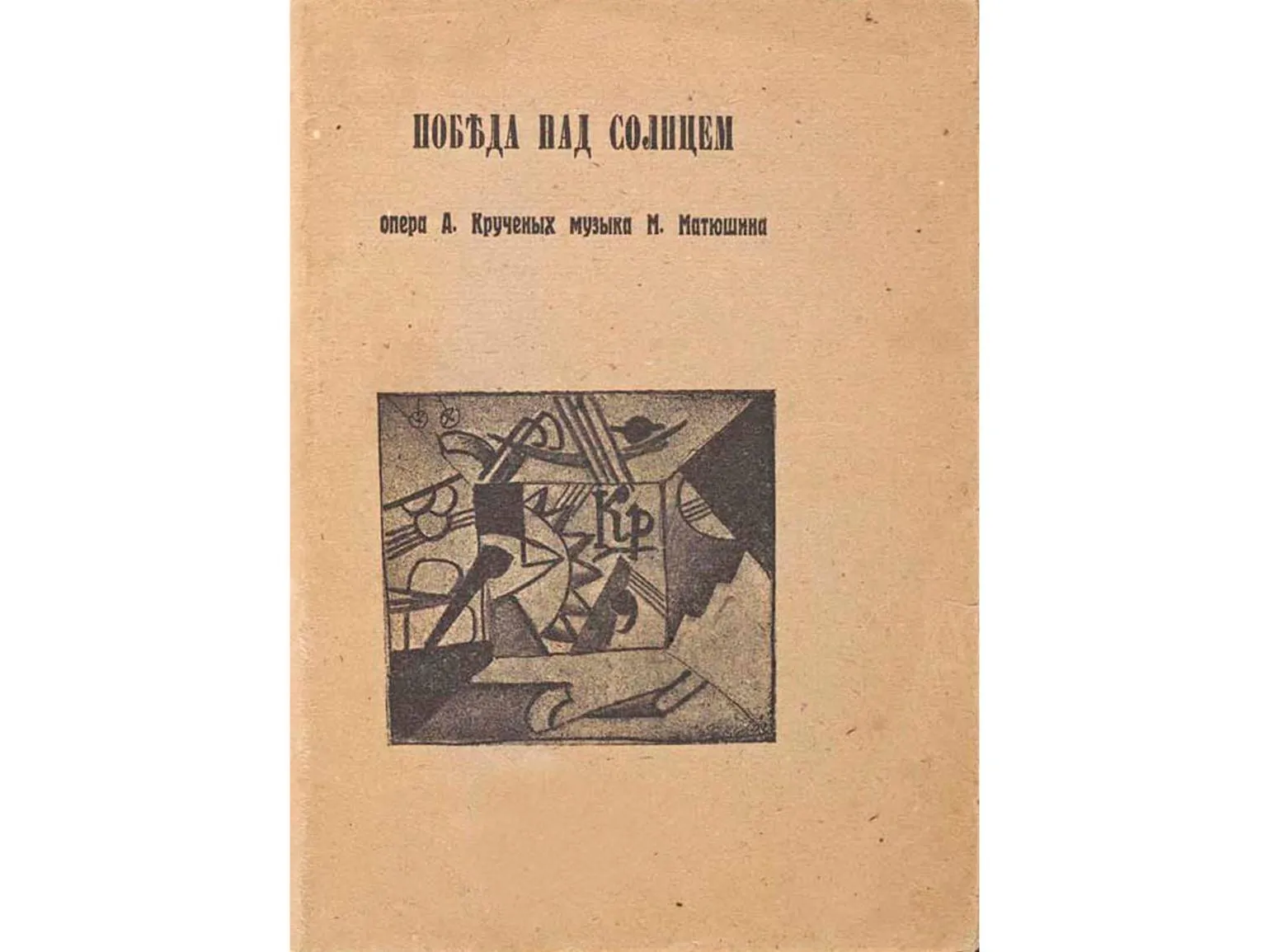
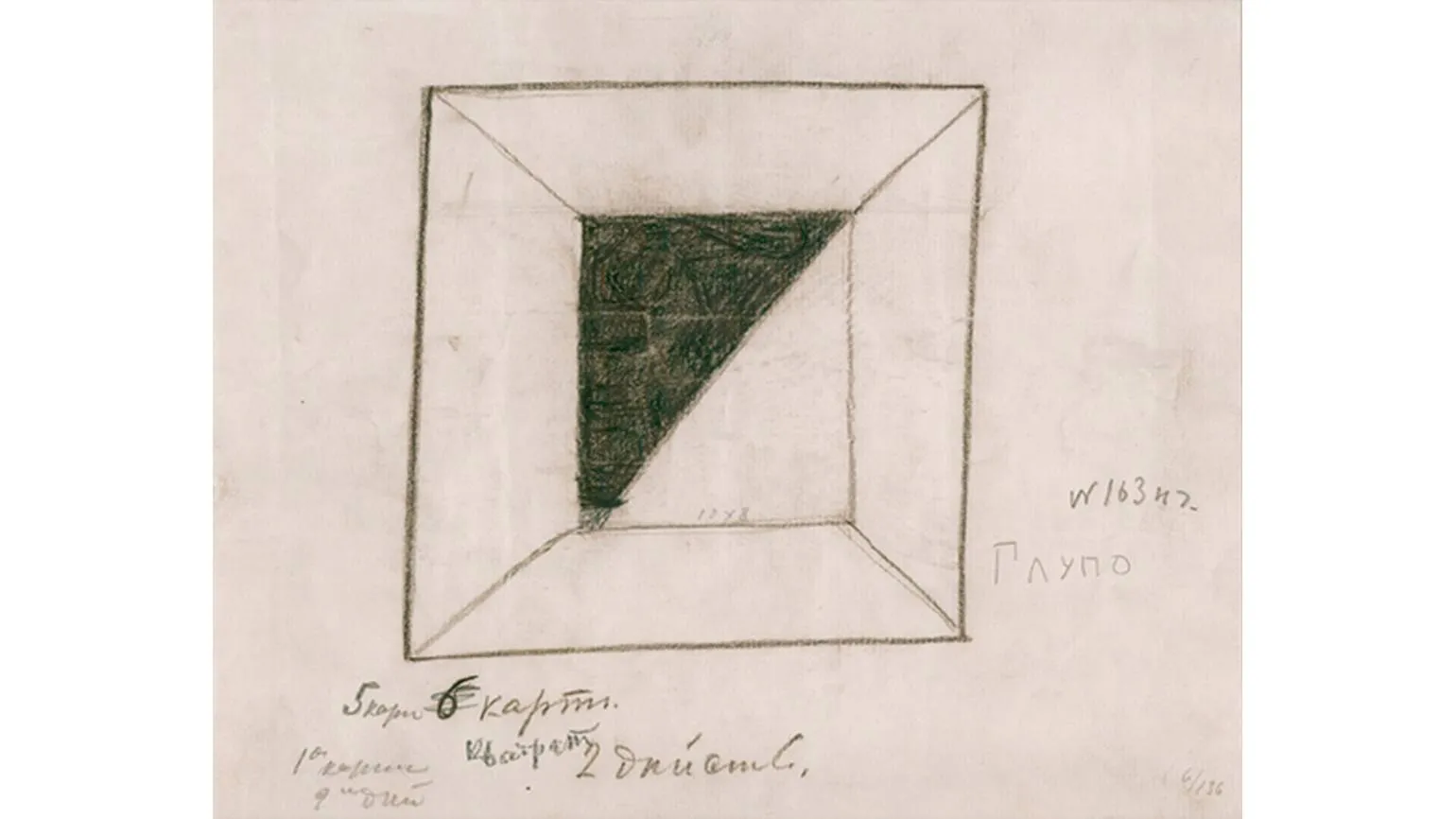
The opera caused The opera caused a significant scandal and left the audience perplexed. In the second half of the performance, the audience began shouting insults and ridicule, which only heightened the absurdity of the scene. It was in this opera that Malevich first discovered images of black, faceless geometric figures and realized he had reached a significant milestone in art. This work became a landmark moment, anticipating a revolution in artistic perception and opening new horizons for abstract art.
Drawing plays a key role in painting. What was previously created intuitively now yields amazing results and new opportunities for artists. This demonstrates the importance of drawing as a basis for further creative development and improvement of artistic skill.
December 17, 1915 Kazimir Malevich participates in the landmark exhibition "0.10," presenting 39 Suprematist paintings, including the famous "Black Square." This work of art is placed in a corner, emphasizing its significance and innovative approach to painting. The exhibition "0.10" becomes a milestone in art history, contributing to the spread of Suprematism and influencing the subsequent development of the avant-garde movement.
For the first time, the artist encountered difficulties with his colleagues' perception of his work. His new artistic direction proved so radical that the exhibition organizers forbade him from using the term "Suprematism" in explanatory materials. In response, in the final hours before the exhibition's opening, Malevich created posters himself, proclaiming the emergence of a new art form. This event highlights the significance of his contribution to the artistic process and demonstrates his commitment to innovation in art.
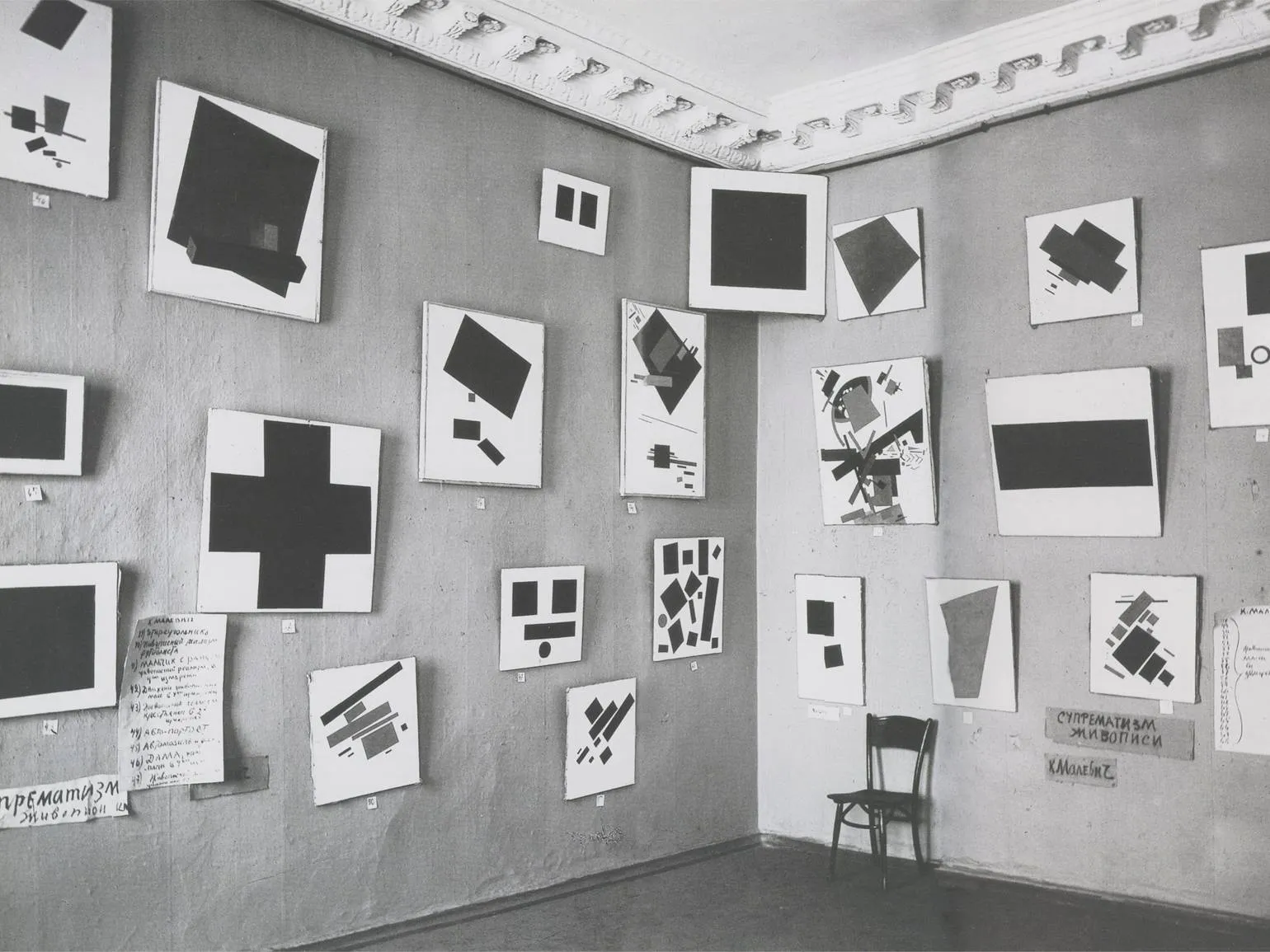
From this moment on, the "Black Square" becomes a work of art, in In which each viewer finds something unique. Malevich himself called this painting "zero form," emphasizing its refusal to imitate nature. The black in this context symbolizes the complete absence of color, while the white frame around it represents the presence of all possible shades. This work became a landmark in the art world, opening up new horizons for interpretation and self-expression. "Black Square" continues to inspire and provoke discussions about the nature of art and its role in human life.
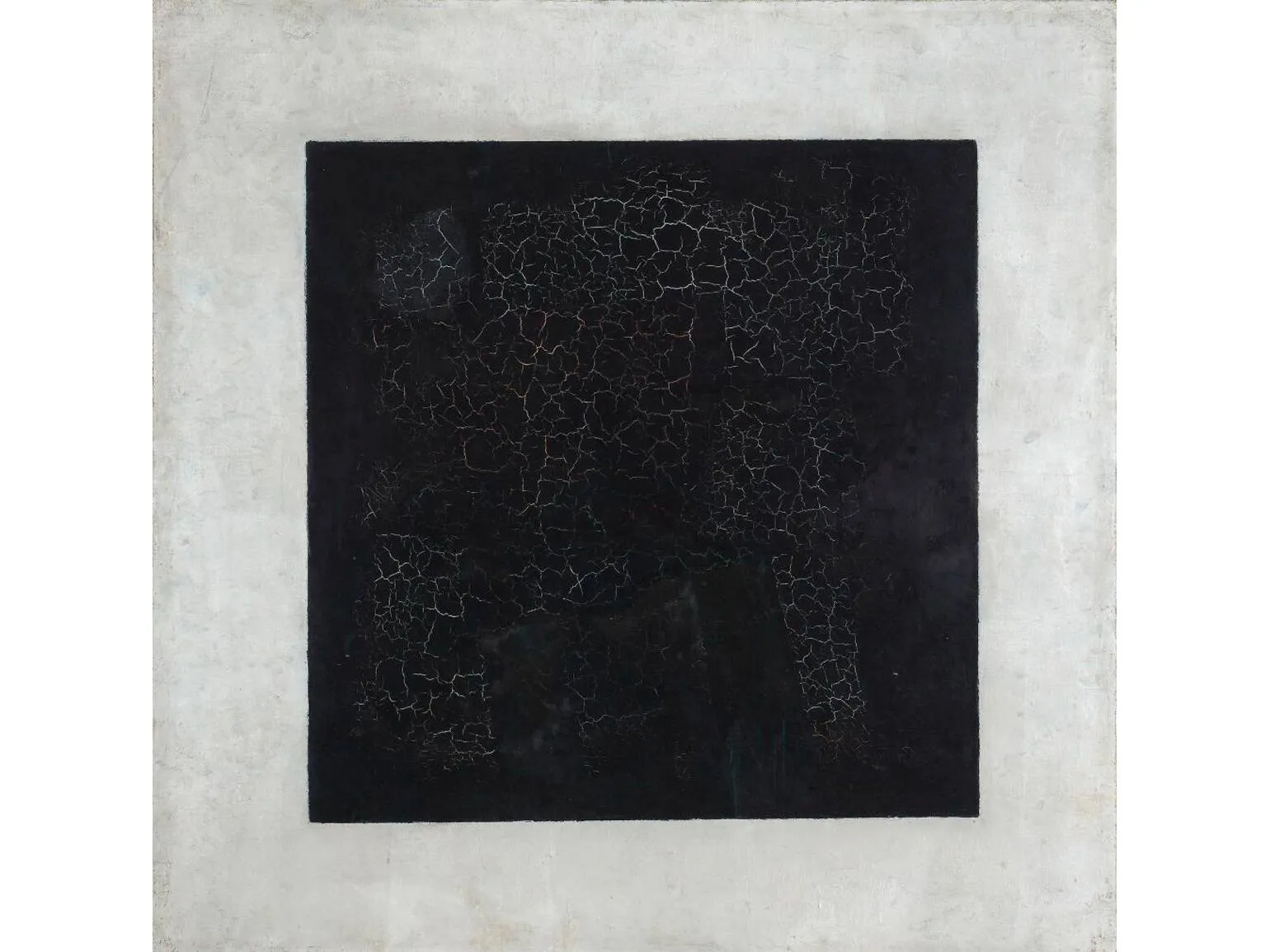
At the exhibition, Malevich demonstrated colored geometric figures of various shapes. His famous "Black Square" was part of a logical process aimed at eliminating all excess and gradually moving from pure color to form. This reflects the core principles of Suprematism, where form and color interact to create a new artistic language. Malevich sought to demonstrate how minimalism could express profound ideas, which makes his works relevant today.
Malevich would continue to develop this idea in "shadow drawings," as Khlebnikov aptly described them. In these works, the artist focused exclusively on the interplay of light and shadow. In 1918, Suprematism would reach its culmination when Malevich completely abandoned color and presented "White Square" ("White on White"). This work symbolizes emptiness, which each viewer fills with their own meaning, emphasizing the individual perception of art.
In 1920, Kazimir Malevich asserted: "There can be no talk of painting in Suprematism; painting has long been outlived, and the artist himself is a prejudice of the past." This statement reflects his radical approach to art, where traditional forms of painting lose their relevance. Malevich emphasized that Suprematism, as a new movement, liberates art from limitations and prejudices, opening the way to new forms of expression and perception. Suprematism emphasizes the purity of geometric forms and colors, creating unique compositions that allow the viewer to perceive the world around them in a new way. Malevich believed that art should reflect the spirit of the times and be independent of outdated traditions.
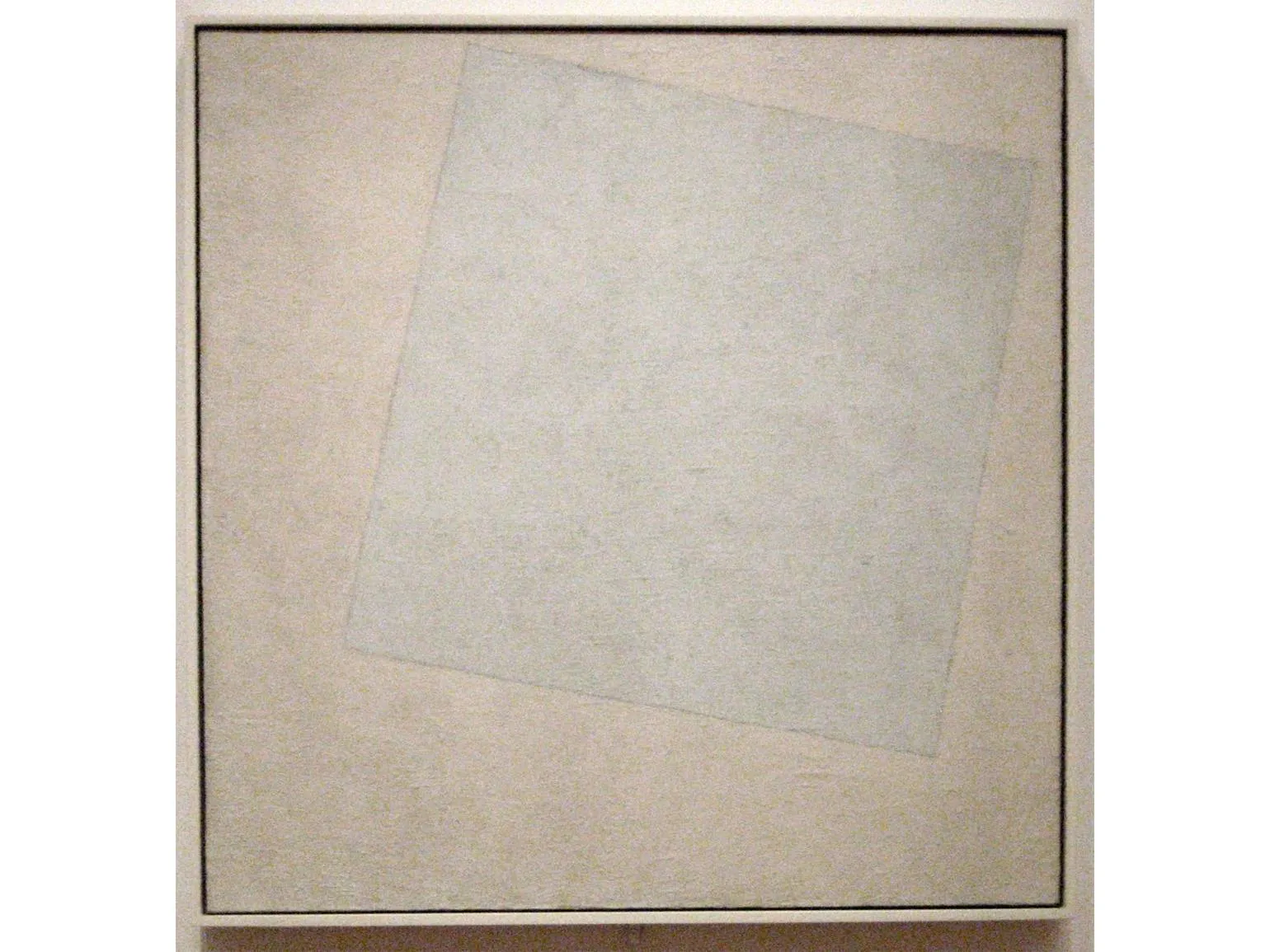
After reaching the highest point, there always follows a decline, which paradoxically coincided with the events of the October Revolution. This historical moment marked the beginning of a new stage in the socio-economic development of the country, which influenced many aspects of public life. The recession that followed the revolution reflected changes in the political system and economy, and also led to substantially new conditions for citizens.
Two Years of Vitebsk in a New Era
Malevich enthusiastically embraced the revolutionary changes, which was reflected in his teaching activities. His artistic style fully corresponded to the profound transformations taking place in society. These changes inspire him to create new ideas and approaches in art, which makes his work significant in the context of historical events.
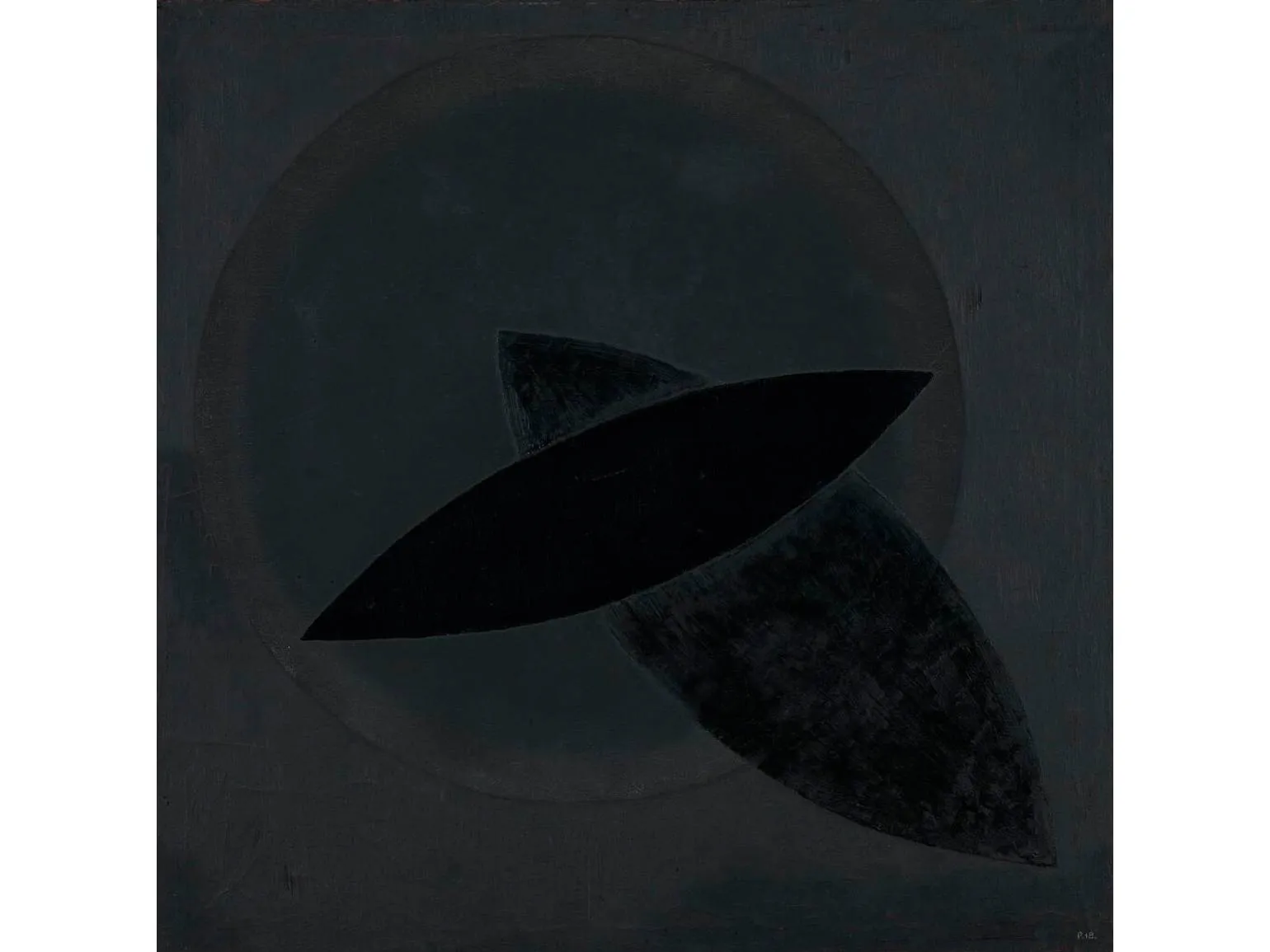
Nevertheless, the struggle was just beginning. Malevich faced attempts by opponents to knock him off his pedestal. In 1919, Alexander Rodchenko openly opposed him with the work "Black on Black", which was a sarcastic joke about Suprematism. This conflict between the artists highlights the tensions within the artistic community of the time and demonstrates the diversity of opinions on Suprematism, as well as its influence on the development of avant-garde art in Russia. The rivalry between them not only calls Malevich's ideas into question but also opens new horizons for the discussion of concepts and approaches in contemporary art. For representatives of the new constructivism, the artistic language of Kazimir Malevich is beginning to lose its relevance. Only four years have passed since the "0.10" exhibition, but time moves inexorably forward, setting a new rhythm for changing artistic trends. This shows that artistic perception and style require constant updating to meet modern demands and interests of viewers.
Malevich finds his A vocation for teaching, thanks to the influence of Marc Chagall and El Lissitzky, emerged. Kazimir's unbearable poverty prompts his friends to rescue him and his family from their unheated Moscow home and send them to Vitebsk. There, they help him secure a teaching position. Financial difficulties are so severe that Malevich cannot wait for the opening of his first solo exhibition, "Kazimir Malevich: The Path from Impressionism to Suprematism." This exhibition should have been a significant milestone in his career and recognition, but circumstances push him to a new stage in his life and work. In this new role, Malevich proves himself not only an outstanding teacher, training young artists using his unique method "from Cubism to Suprematism," but also a successful organizer. His passion for administrative work allows him to fully assume this role, relieving Chagall of responsibilities he could not tolerate. Thus, Malevich harmoniously combines teaching and organization, which contributes to the development of the artistic process and inspires a new generation of artists.
The leading Suprematist inspires the young artistic community "Unovis". His fascination with their creative work is so great that he decides to name his first daughter from his second marriage Una.
Until 1922, Kazimir Malevich became a mentor to many young artists. Although his own painting slowed down somewhat during this period, his theoretical research led to the creation of a significant work, "Suprematism. The World as Non-Objectivity." This work was first published in 1962 in Germany. Malevich had a huge influence on modern art, and his ideas on Suprematism continue to inspire artists and researchers around the world.
In 1923, Malevich returned to Petrograd, anticipating the trials and changes to come. This period becomes a landmark in his creative career, when the artist encounters new challenges and opportunities in the context of a changing cultural environment. His return to Petrograd symbolizes not only Malevich's personal experiences, but also the general social and artistic transformations taking place in Russia at that time.
Berlin Flash
In Petrograd, Malevich takes the post of director of Ginkhuk (Institute of Artistic Culture), which allows him to achieve relative financial stability for the first time in a long time in the conditions of the new state. This appointment opens up new opportunities for creative expression and the implementation of artistic projects, contributing to the development of avant-garde art in Russia.
The artist actively exploits these new opportunities and begins to create three-dimensional models, such as "planites" and "architectons" in the Suprematist style. In 1924, his work received significant recognition at the XVI Venice Biennale, which confirmed the high level of his artistic skill and innovative approach to art.
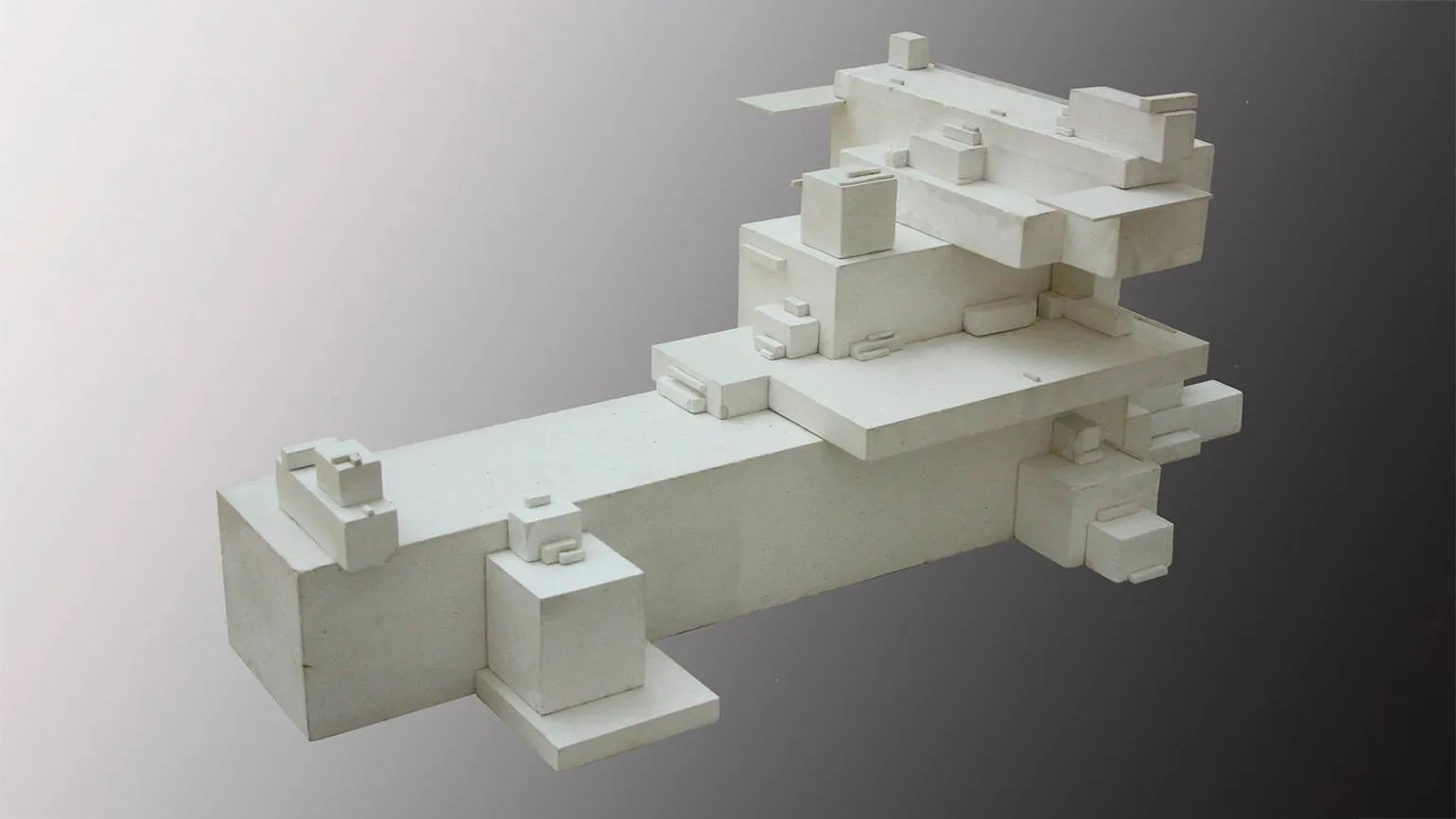
Malevich's rise was interrupted by two significant Events: in 1925, his second wife died, and in 1926, critic G. Seryi published an article, "Monastery on State Supply," which sharply criticized the mystical aspect of the work of Ginkhuk students. The institute would soon be closed. Malevich suffered the loss of his wife and his dismissal during a tour of Europe, and in 1927, he was granted permission to leave the country. This period became a turning point in his life and work.
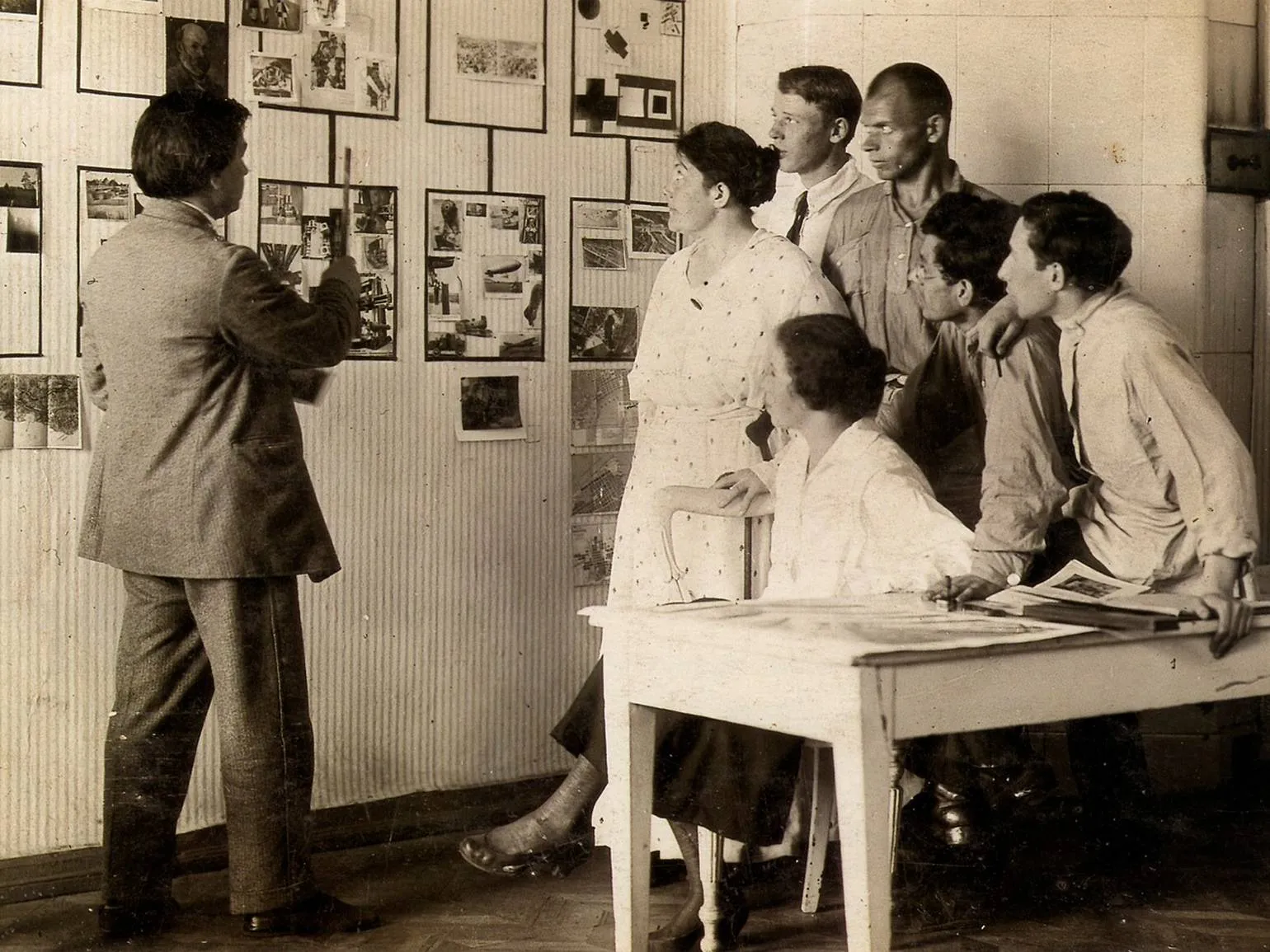
In early March, Kazimir Malevich arrives in Warsaw, where local artists warmly welcome him, despite the wary attitude of the Polish government towards Soviet citizens. The authorities are putting the artist under surveillance, which highlights the complex political situation. Malevich, writing home, notes that he was greeted with such attention that he had never experienced before, unaware of how he was expected in Germany.
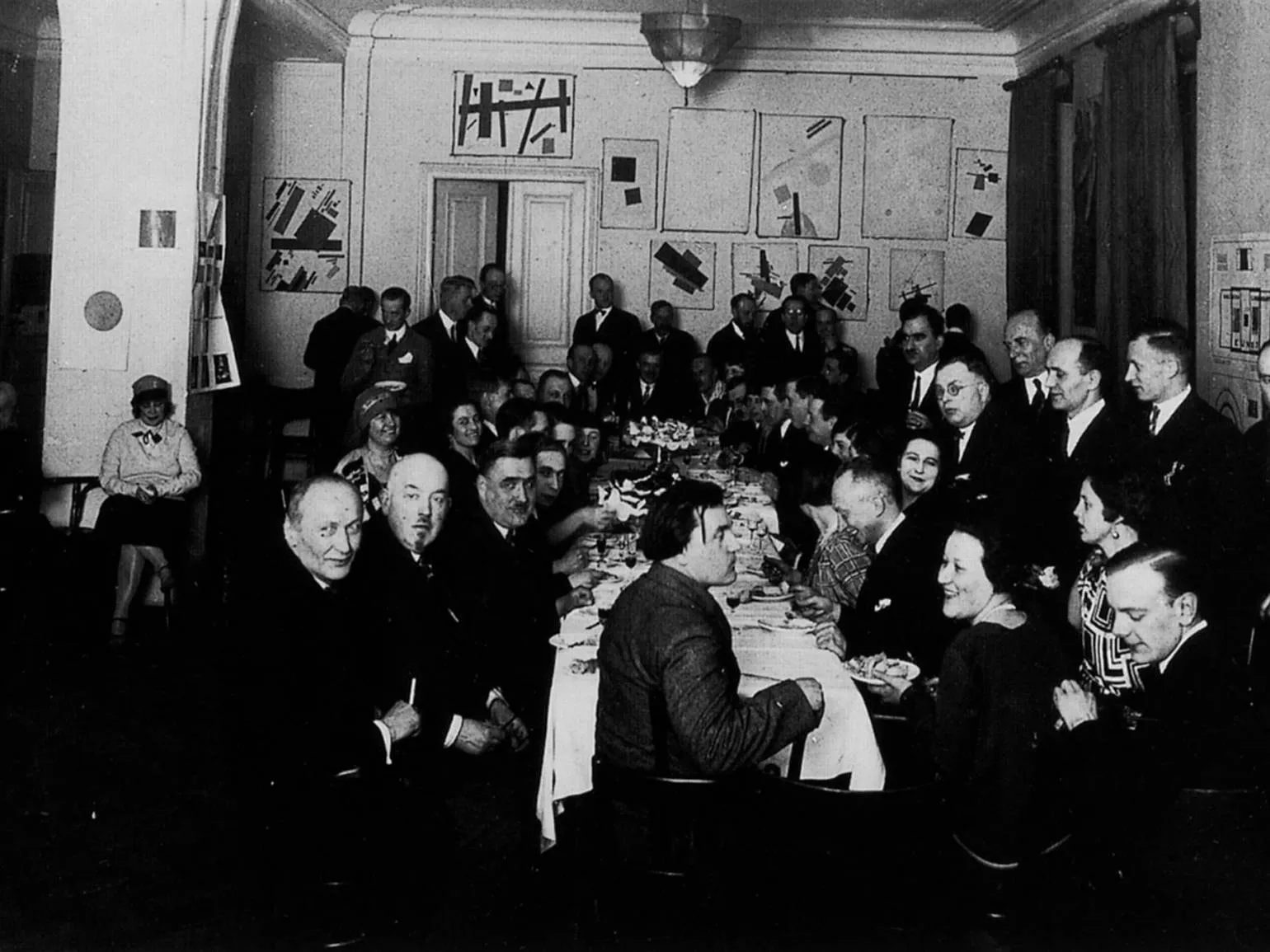
March 29 Kazimir Malevich arrives in Berlin, a significant event for German artists and the press. The works he brought with him immediately become part of a solo exhibition, and progressive artists flock to see him. On April 7, Malevich visits the renowned Bauhaus, where he is warmly welcomed by Walter Gropius and László Moholy-Nagy. He enjoys the well-deserved attention until the end of May, but soon receives an urgent letter from the USSR demanding his return to his homeland. This visit left a significant mark on art history and influenced the further development of avant-garde movements in Europe. The artist is forced to abandon his plans to visit Paris, the center of cultural life in the first half of the 20th century. He hurries to return to his homeland, leaving all his paintings and manuscripts in the care of friends. Thoughts of emigration do not cross his mind. Upon returning to the USSR, the artist was arrested, and only thanks to the tireless efforts of his friend Kirill Shutko was he released a few weeks later.
Moscow and Leningrad in a Long Retrospective
A new stage began in the personal and creative life of Kazimir Malevich. He entered into a third marriage with Natalia Andreyevna Manchenko, and at the same time, his art, having lost its relevance in the new conditions, gradually acquired a retrospective character.
Malevich held exhibitions, but his works were discussed in the media less and less. He used this circumstance, with a certain bitterness, to create his own myth.
The artist strives to emphasize in his biography the key idea reflected in the title of his first solo exhibition: "The Path from Impressionism to Suprematism." This concept illustrates his artistic development and the evolution of his style, moving from vibrant, emotional Impressionist works to more abstract and conceptual Suprematist forms. This transition demonstrates not only the artist's personal growth but also the broader cultural context within which changes in contemporary art are taking place.
Malevich immersed himself in the atmosphere of post-Suprematism and created numerous works in styles that predate his discovery of Suprematism. He also signed his works, attributing them to his early years—the early 1910s. For a long time, the mixed style of his early works raised questions among art historians, and only in the 1980s did they begin to doubt the authenticity of the author's dating.
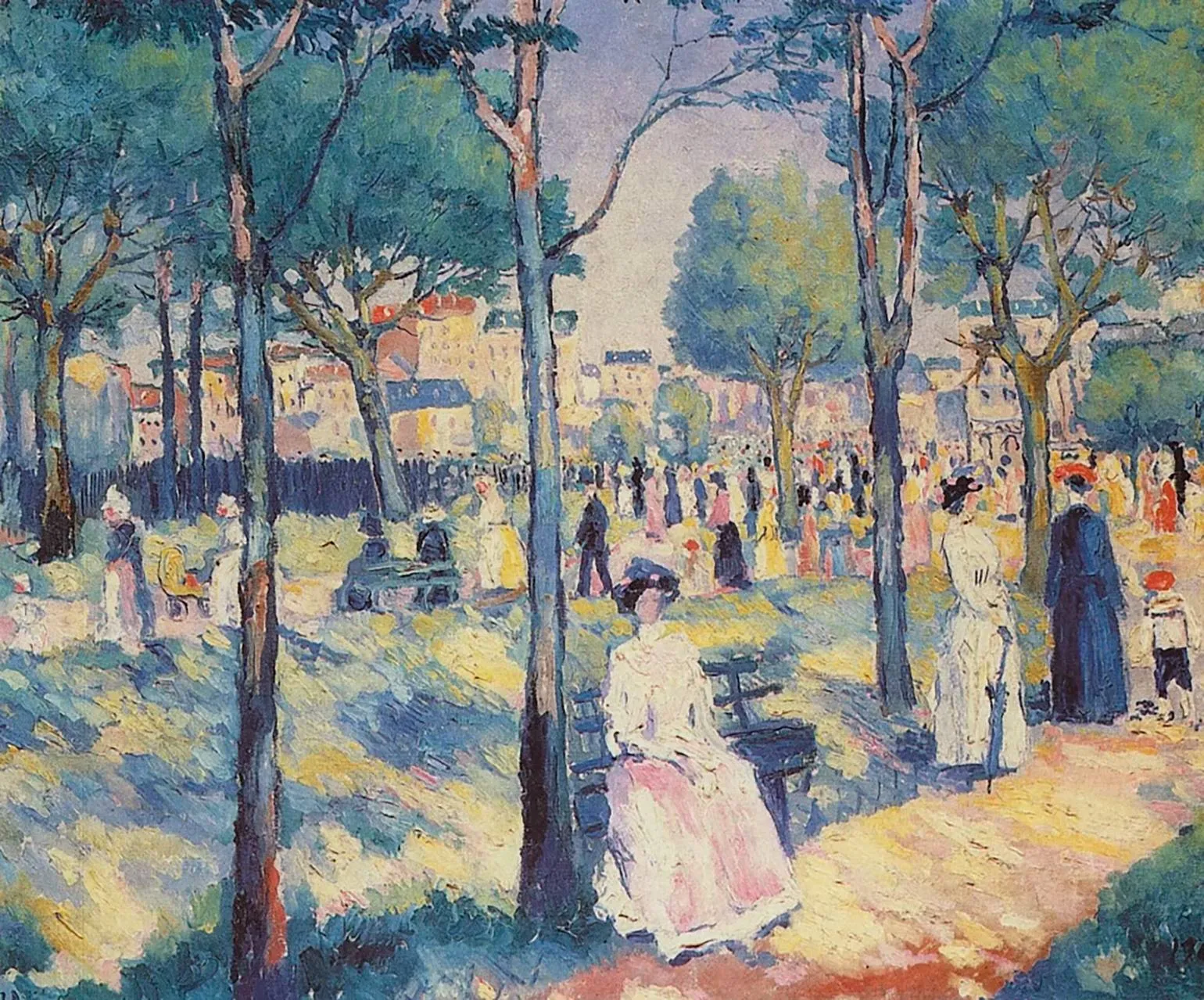
In Kazimir Malevich's work, Impressionist elements are present only in his early works. Later, he created complete boulevard scenes, seeking to fill the gaps left by Impressionism in his artistic development. The artist also returned to his "Peasant Series," adding new images, but in doing so, he depersonalized his characters. In the second series, the peasant figures are faceless, allowing them to move from Fauvism to Cubism and become a link between these two movements. Thus, Malevich's works represent an interesting transitional stage in the development of art, reflecting the influence of different styles and his own creative approach.
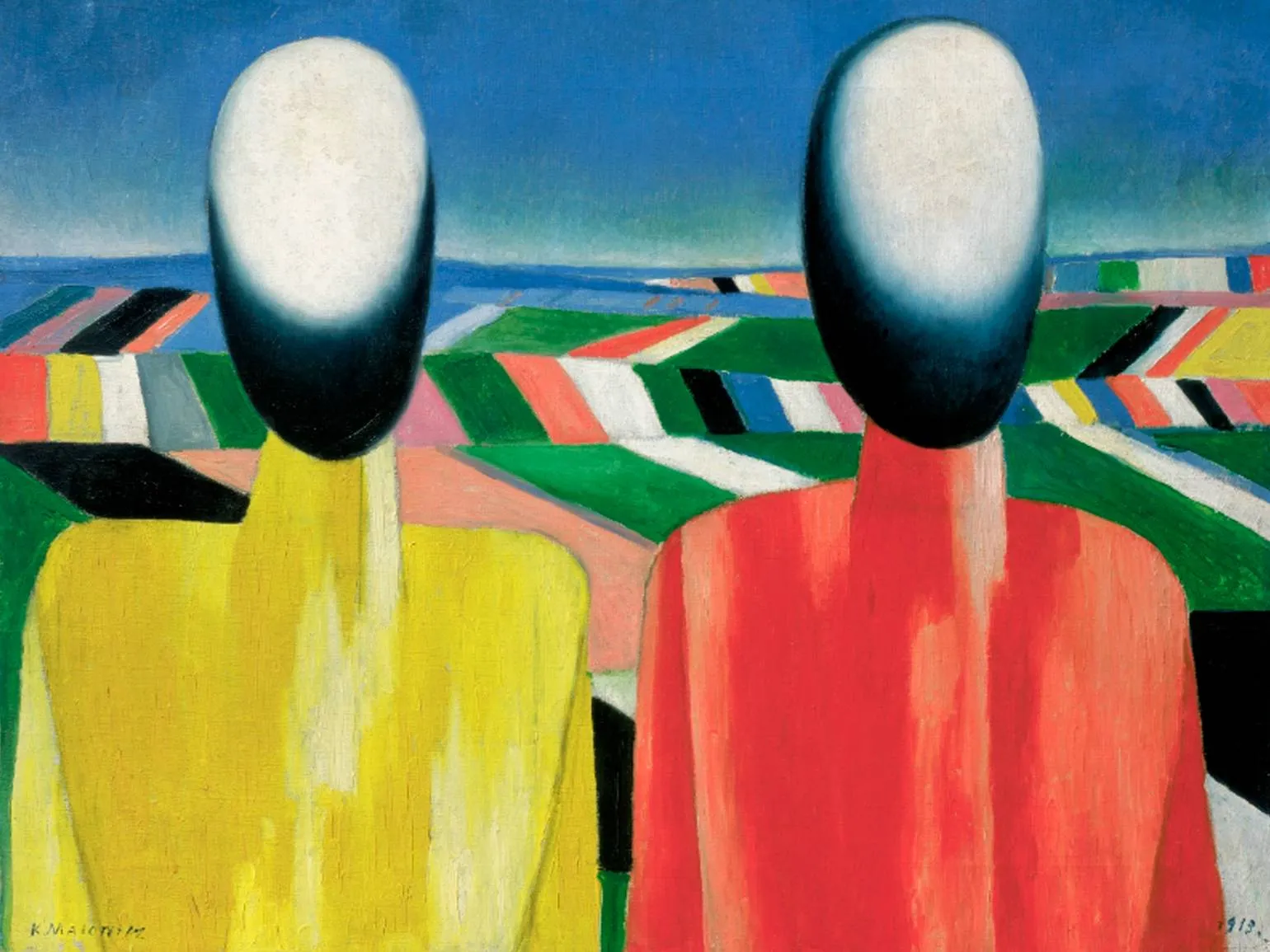
Artist He completed his mystification in the 1930s, after a second arrest and several months in prison, as well as a cancer diagnosis. His portraits of working women and self-portraits fill the space of realistic paintings that seem to predate his Fauvist experiments and pave the way for his "peasant series." These works not only reflect the author's personal experiences, but also serve as an important milestone in the development of his creativity.
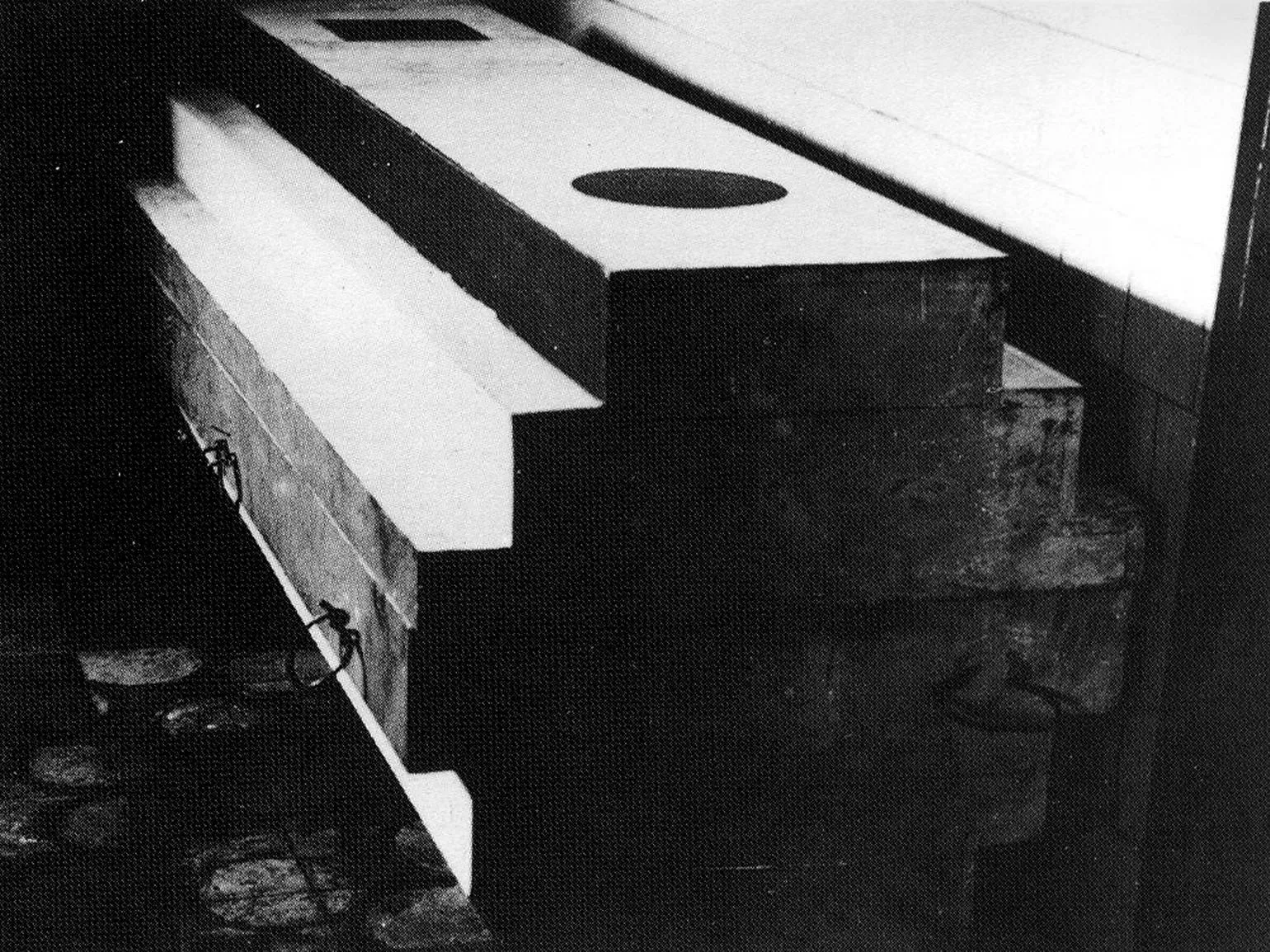
Kazimir Malevich died on May 15, 1935. His body was placed in a Suprematist coffin, and the funeral procession was led by a truck with the Black Square painted on the back. Malevich's grave was lost during World War II. In his homeland, his work was long undervalued compared to Europe, where his reputation remained high and undiminished. Malevich is considered one of the founders of abstract art, and his influence on modern art cannot be overstated.
Conclusion: Afterlife in Amsterdam
The world was fortunate that Kazimir Malevich took a significant portion of his manuscripts and many paintings with him when he left the USSR. After his death, some of the artist's works became valuable cultural assets in the Soviet Union—at one point, several were exchanged for two letters from Lenin. In Europe, the preservation of Malevich's legacy was taken over by professionals and devoted admirers, which contributed to his recognition and popularization. Malevich's legacy continues to influence contemporary art, and his works remain relevant in the cultural context.
Kazimir Malevich's paintings were hidden from the Nazis during the crackdown on "degenerate art." They then survived the fall of Berlin, when the building housing the works was bombed, but the paintings themselves remained undamaged. In the 1950s, the Stedelijk Museum in Amsterdam assembled a significant portion of the artist's archive, which had been evacuated from the country. This was made possible thanks to the dedication of museum director Willem Sandberg and art historian Troels Andersen, who played a key role in preserving and promoting Malevich's legacy.
In the mid-20th century, Kazimir Malevich became a world-renowned artist whose work was underappreciated in his lifetime. His works can now be seen in the permanent collections of leading Russian museums, confirming their artistic significance. Malevich is one of the key representatives of the Russian avant-garde, and his contribution to art is recognized internationally.
Learn more about design by subscribing to our Telegram channel. We regularly publish interesting materials that will help you stay up to date with the latest trends and news in the world of design. Join our community and expand your knowledge.
To improve your content's visibility in search engines and attract an audience, pay attention to keywords and their placement in the text. Consider what users are searching for and use these words in a natural context. Optimizing titles and metadata is also an important aspect of SEO. Ensure your text is structured and easy to read; this will increase its appeal to readers and search engines.
Read also:
- Too simple, yet incomprehensible: what is the secret of the genius of the "Black Square"?
- Mona Lisa: the history and secrets of the most famous painting in the world
- Munch's "The Scream": analysis of the painting
Quotes are provided from the book by A.S. Shatskikh "Kazimir Malevich", published in 1996 by Slovo Publishing House. This work examines the key moments of Kazimir Malevich's work, his influence on contemporary art and the concepts of Suprematism. The book covers not only biographical facts, but also the artist's philosophical ideas, which allows for a deeper understanding of his contribution to the development of avant-garde art. Analyzing the work of Malevich, the author emphasizes the uniqueness of his approach to forms and colors, which made him one of the most significant representatives of the 20th century.
Profession Graphic Designer PRO
You will learn how to create corporate identity elements and graphics for business. Create a portfolio that reflects your style and demonstrates your design skills. You can start a career in a studio or as a freelancer.
Find out more