Contents:

Try 4 top design professions. Free ➞ In 5 days, you will get acquainted with illustration, UX/UI, web and graphic design. Add four compelling case studies to your portfolio and decide on your next direction.
Learn moreThe exhibition "MELNIKOV/MELNIKOFF" has opened at the Shchusev Museum of Architecture. This is the first major retrospective of Konstantin Melnikov's work in a significant period. The exhibition was timed to coincide with the architect's 130th birthday, which had to be postponed for two years due to the pandemic. Melnikov is an outstanding figure in Russian architecture, and his work remains relevant and inspiring. Visitors will be able to see unique projects, drawings, and photographs that illustrate Melnikov's contribution to architectural heritage. The exhibition is an important event for connoisseurs of architecture and culture, emphasizing the significance of Konstantin Melnikov's works in the context of modernity.
Melnikov, who mainly worked Melnikov left a significant legacy in Moscow, which Muscovites can appreciate not only in his architectural projects but also in the urban environment. Some of his buildings are open to the public. For example, the Bakhmetyevsky Garage on Obraztsova Street, originally the first building of the Garage Museum, has now been transformed into the Jewish Museum and Tolerance Center. Another garage by the architect on Novorizhanskaya Street is now home to the Moscow Transport Museum. Melnikov's legacy continues to influence the cultural life of the capital, attracting the attention of both locals and tourists.
Culture centers designed by Melnikov continue to serve as public spaces. For example, the famous Melnikov House on Krivoarbatsky Lane offered tours until recently. Twelve buildings designed by this outstanding architect remain in Moscow. The exhibition provides an opportunity to get acquainted not only with the surviving buildings, but also with his unrealized and lost projects, which allows for a deeper understanding of Melnikov's legacy and his contribution to architecture.
Konstantin Melnikov, a prominent architect, enjoyed great popularity for only fifteen years. From the late 1930s, avant-garde forms gave way to more traditional styles, which he refused to collaborate with. Nevertheless, his retrospective, covering this relatively short period, features twelve halls and over two hundred exhibits. Among them are sketches, drawings, and detailed models that demonstrate his unique approach to architectural design and innovation in construction.
We visited the exhibition and are sharing our impressions in our report on the event. The exhibition presented a wide range of innovative solutions and products, providing an excellent opportunity for industry professionals to exchange experiences and establish new contacts. We will provide a detailed overview of the key exhibition stands, interesting exhibits, and new products that caught our attention. We will also highlight the important trends presented at the exhibition and discuss how they may influence the future development of the industry.
- search for new solutions in architecture;
- unexpected urban space projects;
- Lenin's "crystal" sarcophagus;
- the architect's latest project.
Big Projects of Bold Dreams
The first hall of the exhibition is called the "hall of dreams." This space presents unrealized architectural projects. Unfortunately, like many innovators in architecture, Melnikov is a prominent representative of the so-called paper architecture. Most of his ideas remained only in the form of sketches, drawings, and models, and were never realized in real life. This exhibition highlights the importance of conceptual thinking in architecture and shows how even the boldest ideas can remain unfinished.
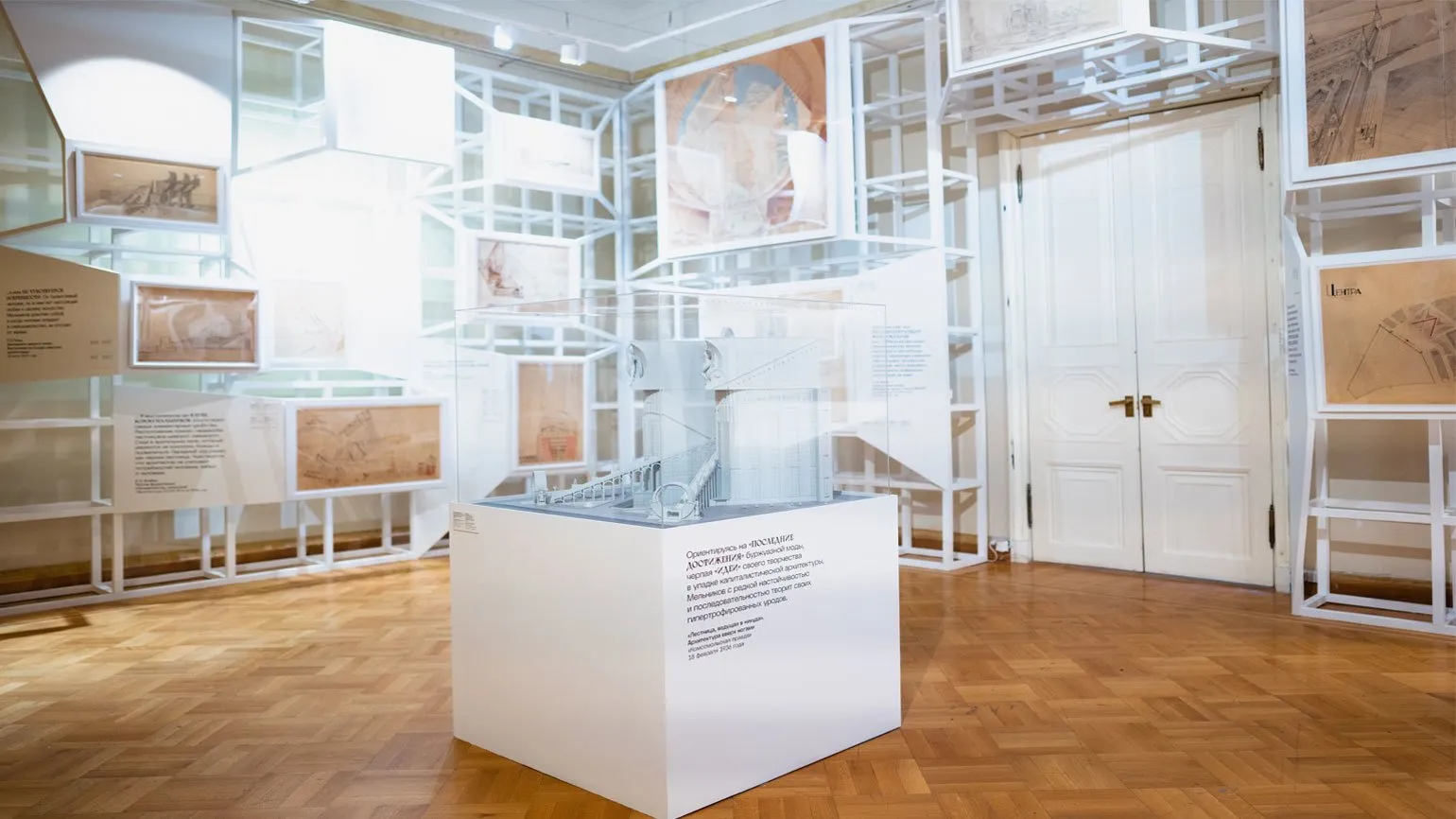
In the center of the hall is a detailed model of the People's Commissariat of Heavy Industry building. This building was planned for construction on Red Square, opposite the never-built Palace of Soviets, which was intended to become the city's dominant architectural feature according to the 1935 General Plan for the Reconstruction of Moscow. The model serves as an important historical evidence of ambitious construction plans in Moscow, reflecting the desire to develop heavy industry and modernize the capital during that period.
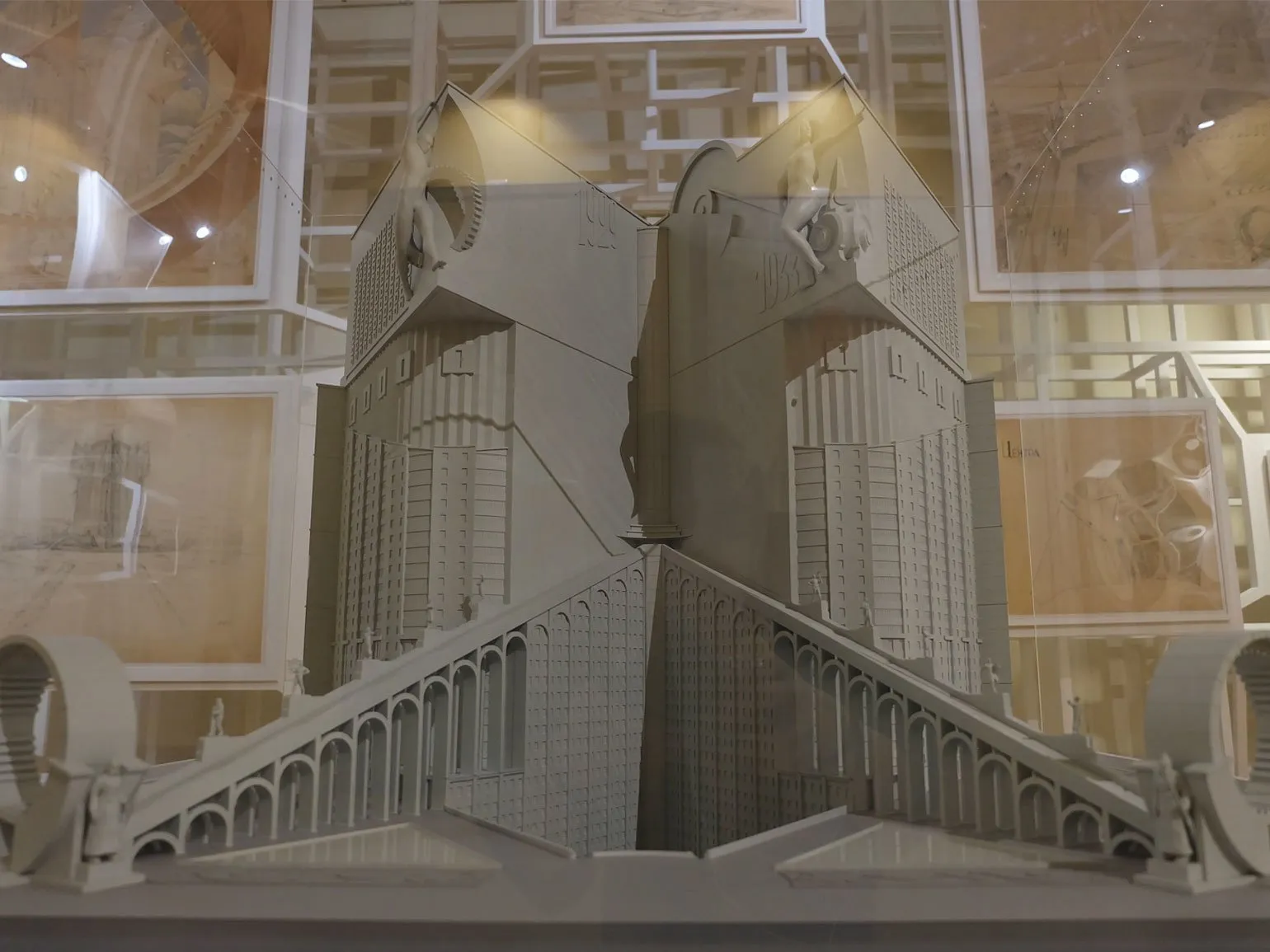
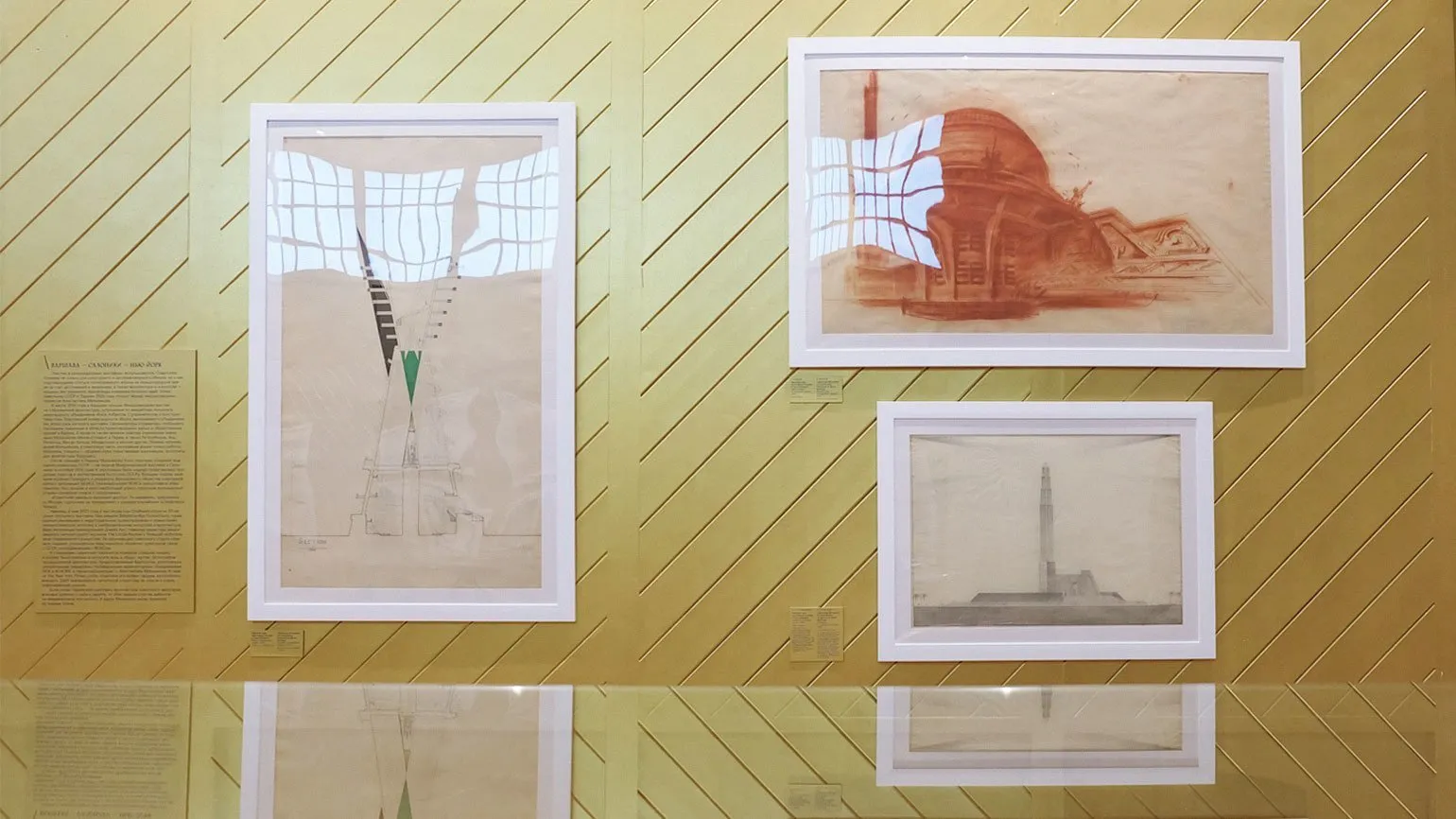
Melnikov's competition proposal highlights a forty-story building The "cloud-cutter" is impressive in its scope and height even by today's standards. This is especially remarkable for 1934, when buildings over ten stories tall were a rarity. It's important to note that the additional 16 floors of the People's Commissariat of Heavy Industry building are located below ground level. The architect placed the building's central entrance at a height of several dozen meters, reached by two long flights of stairs. Viewing the entrance from the ground level reveals a magnificent view, which is also featured in the exhibition as a sheet of the original design. This architectural solution makes the "cloud crossing" not only an outstanding example of Soviet architecture, but also a symbol of the ambitious ideas of that time.
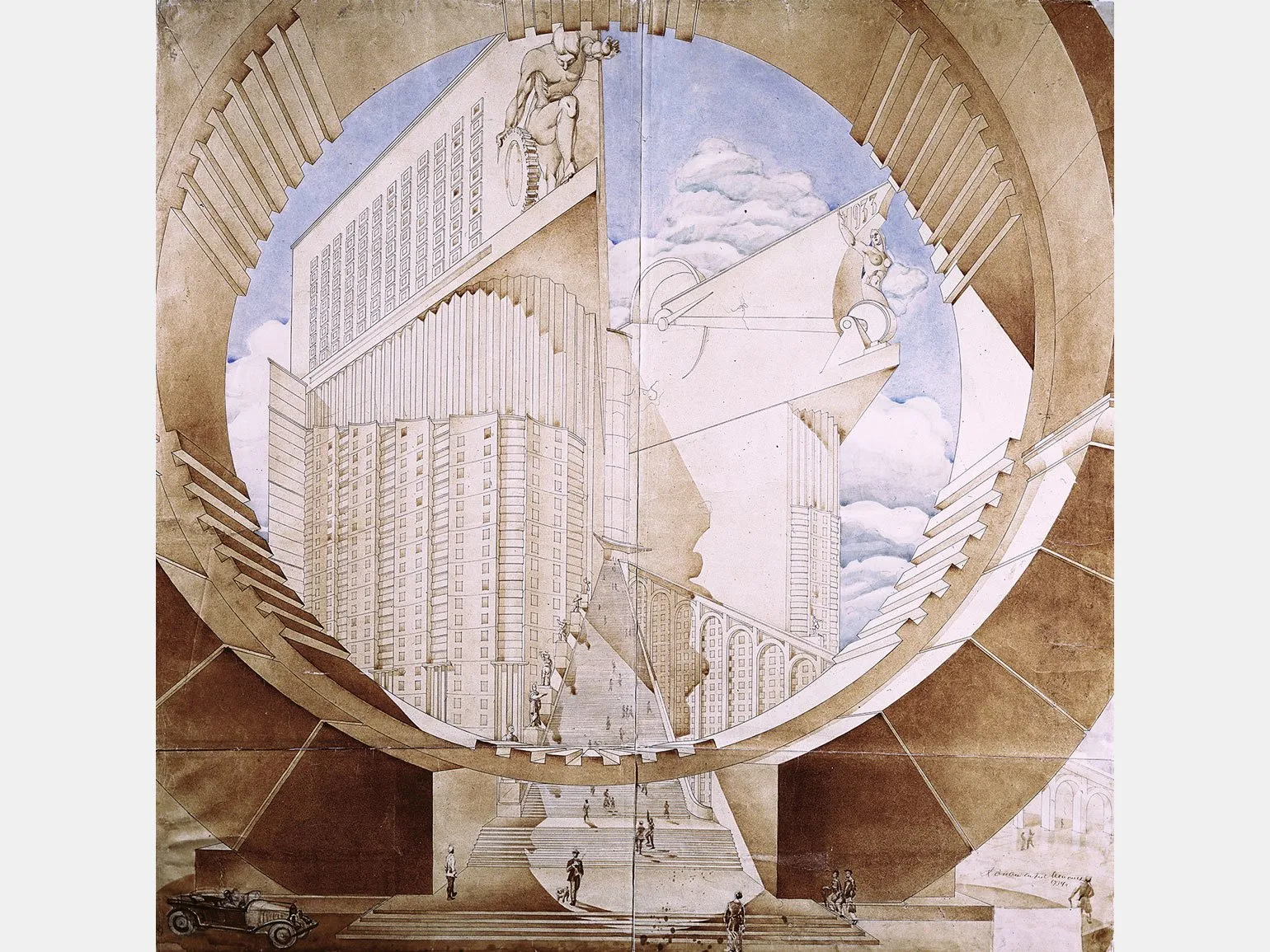
Despite the rationalistic approach that made Melnikov and his design inventions are renowned internationally, and the building reflects bold modernist ideas. This led the commission to dismiss the project, describing it as "utopian and formalistic." This assessment is largely accurate. The project is interesting as an architectural fantasy, but the underground floors and long open-air staircases call into question its functionality as "architecture for living." This hall immerses visitors in the era and thinking of Melnikov. The lightweight structures feature images of other significant monumental structures, as well as quotes from critical reviews that rejected Melnikov's innovative ideas.
Despite numerous critical reviews, Melnikov earned an important place in the history of Soviet architecture thanks to his innovative ideas. His approach to design and use of space became the basis for new architectural trends that had a significant impact on the development of architecture in the Soviet Union. Melnikov not only introduced innovative solutions but also created unique buildings that continue to attract the interest of architects and historians.
New Forms: Angles
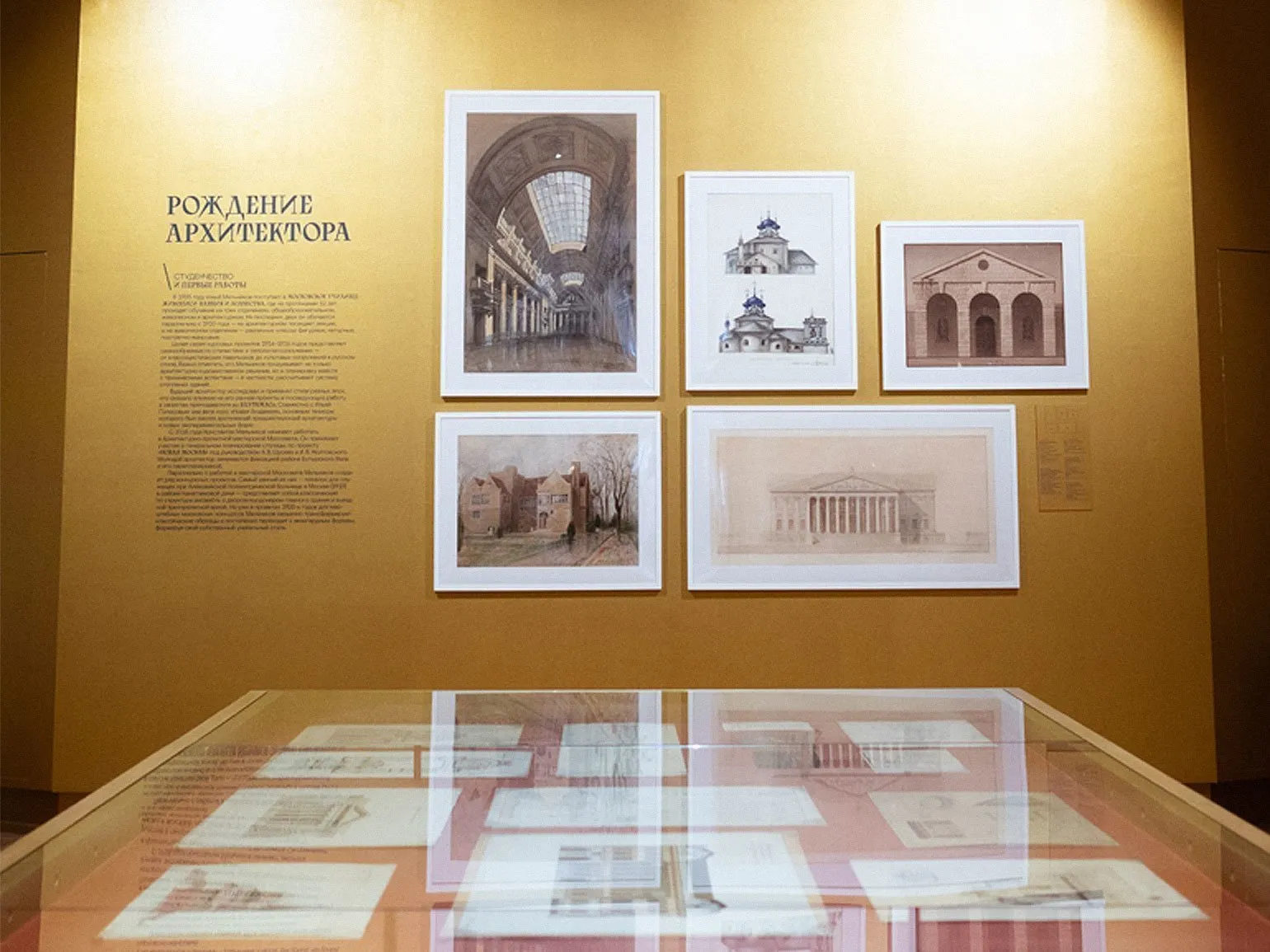
After a room with early academic projects, which include sketches of churches and buildings in the classical style, there is a space dedicated to the innovative projects he completed. Presented here are modern solutions in the field of construction of garages and reconstruction of the Sukharevsky market, which emphasizes the progressive approach to architecture and urban development.
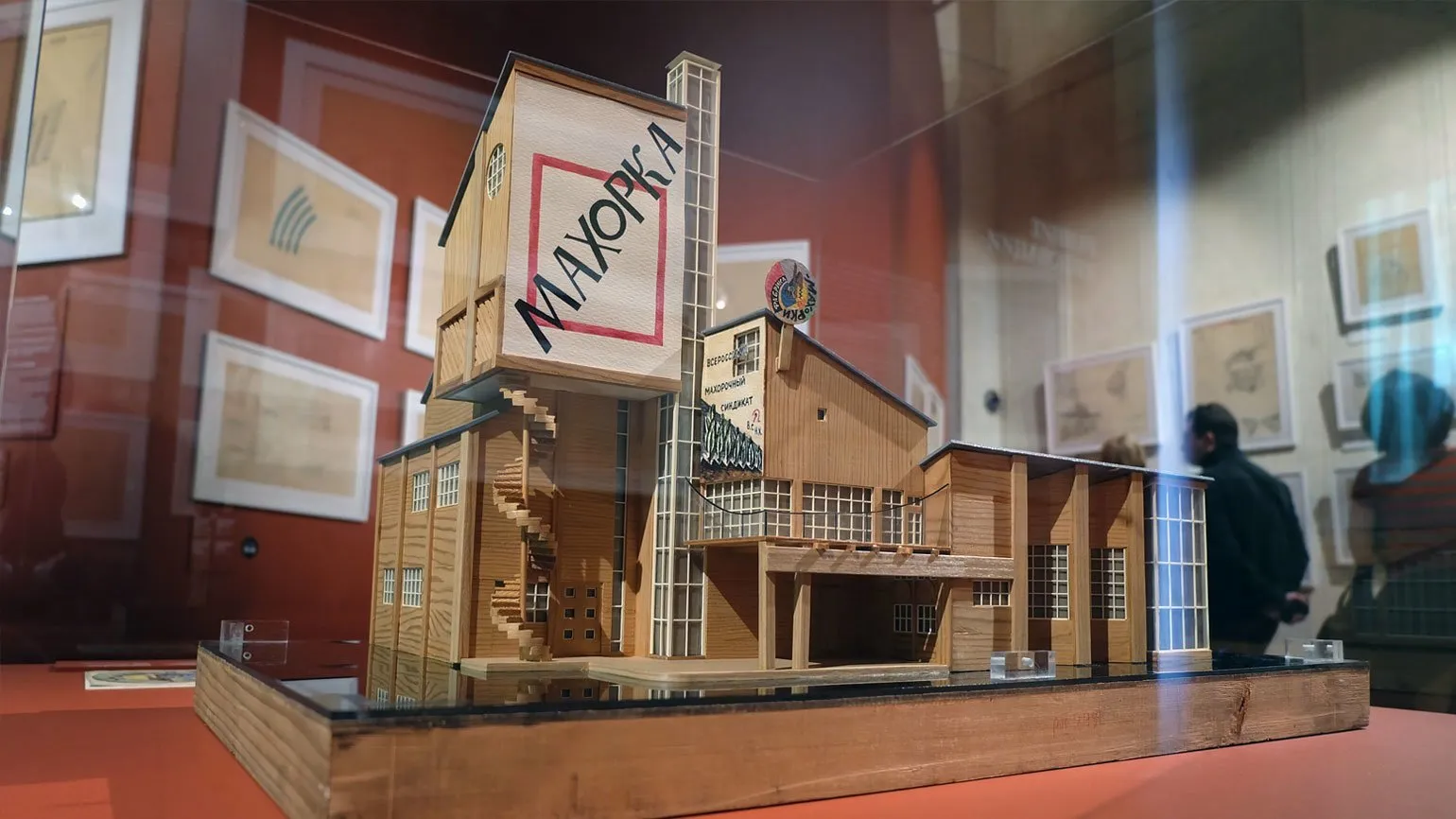
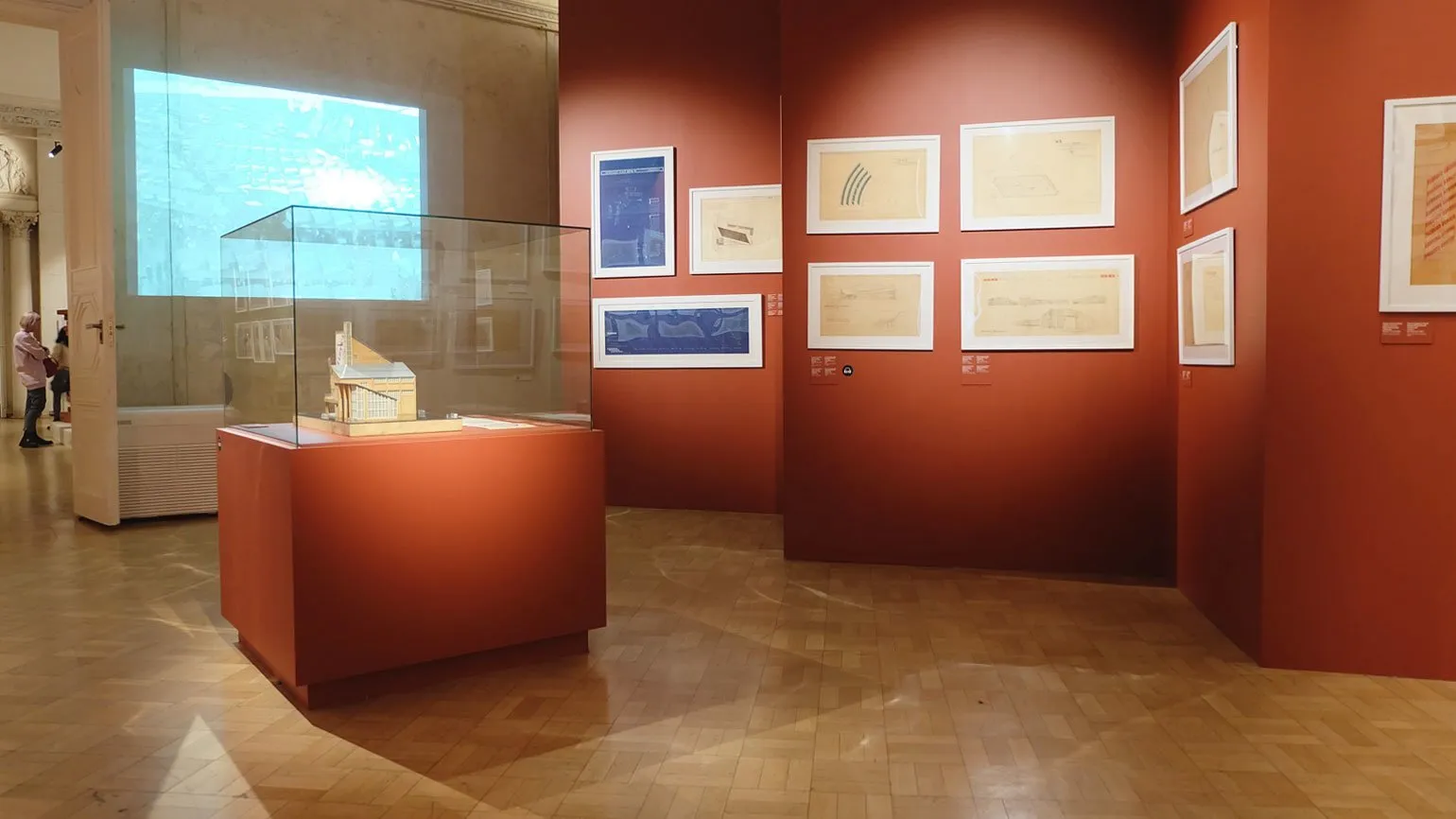
In the twenties, Moscow saw an active growth of the bus network. In 1924, the first batch of eight Leyland buses was purchased, and in 1925, 16 more were added. To service the growing number of buses, a new, spacious garage was required, marking a significant step in the development of public transportation in the capital. The development of the bus network during this period played a key role in improving accessibility and comfort for Moscow residents. The architect faced a unique engineering challenge: in order for buses to enter and exit the garage, drivers had to reverse, which created significant inconvenience and wasted considerable time. To optimize this process, Melnikov proposed an innovative solution, known as the Melnikov direct-flow system. This system allowed buses to enter the garage from one side and exit from the opposite side, made possible by the building's unusual parallelogram shape. This approach significantly simplifies maneuvering and saves drivers time.
At first, the new system met with considerable mistrust, so tests were conducted with ground markings before construction began. These tests, as Melnikov himself later noted, were passed with excellent results.
The Novo-Sukharevsky Market project, implemented by the architect Melnikov, is a unique building in which there are no Right angles. As part of this project, Melnikov conducted a detailed study to optimize human flow, analyzing the shortest routes from the entrance. This solution not only improves the functionality of the space but also creates a comfortable atmosphere for visitors, making the market more attractive to shoppers and traders. Melnikov's architectural approach emphasizes the importance of people's interaction with the environment, a key aspect of modern urban development. The kiosks in this concept are designed as offset modules positioned at an angle. When viewed from above, the line of the display cases resembles the serrated edge of a saw. This design solution creates unique niches for interaction between the seller and the buyer, improving the experience of communication and trade.
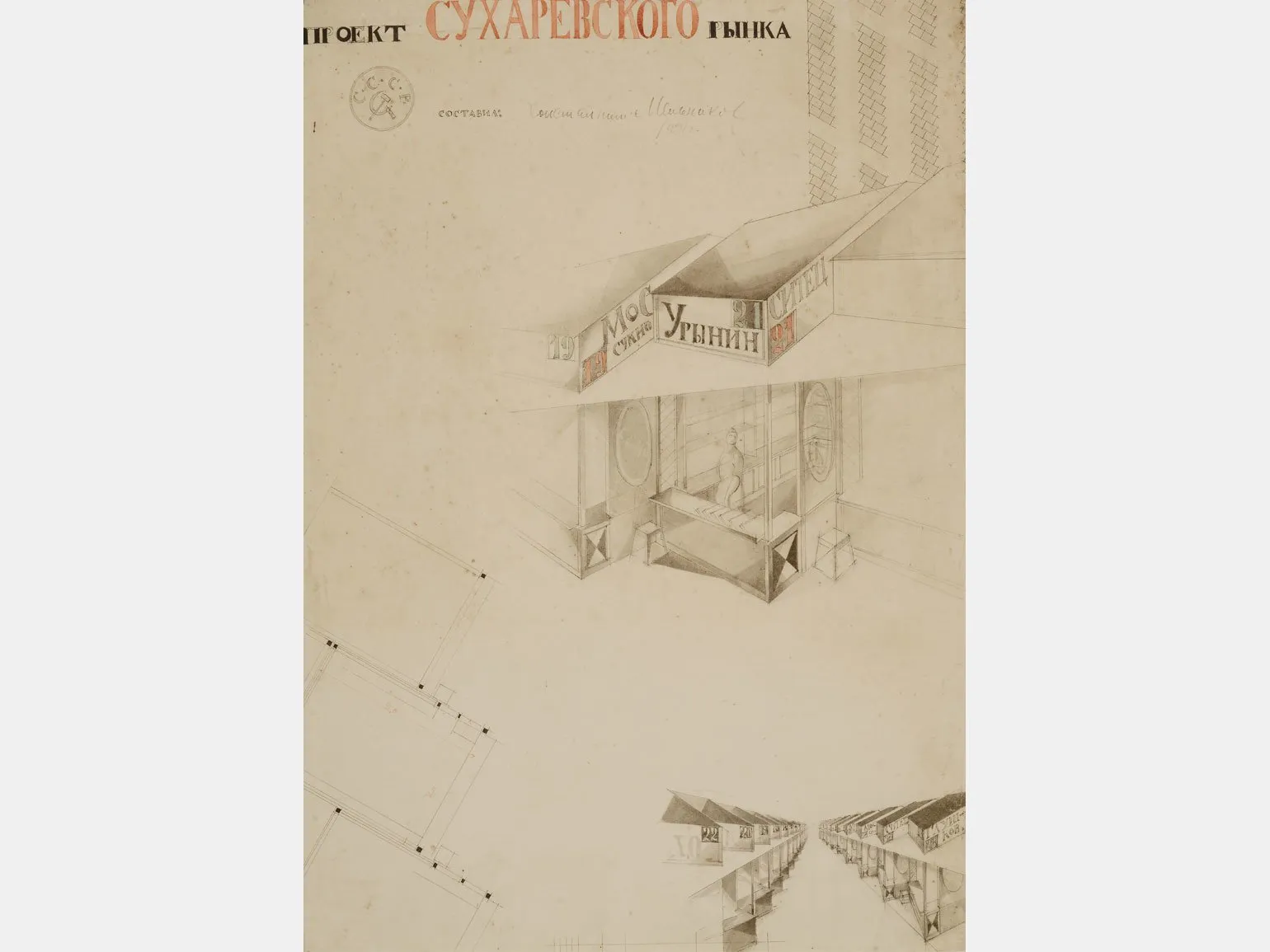
Unfortunately, the Novo-Sukharevsky Market It lasted only five years and was demolished in 1930. The site is now occupied by the wide Garden Ring road. However, if you're looking to find its remains, it's entirely possible. At 11 Bolshoy Sukharevsky Lane, you'll find the surviving office building of the Novo-Sukharevsky Market. Although hidden in the side streets and looking dilapidated, it's worth seeking out. This building vividly illustrates the influence of avant-garde architecture, which is still felt today. Upon viewing the exhibits, the design concept of the space becomes apparent. It was developed by the Planet9 bureau and clearly illustrates the architectural approach of Konstantin Melnikov, which is explored in detail in a special hall dedicated to this aspect. The exhibition design not only highlights the uniqueness of Melnikov's work but also creates an atmosphere conducive to a deep understanding of the works on display.
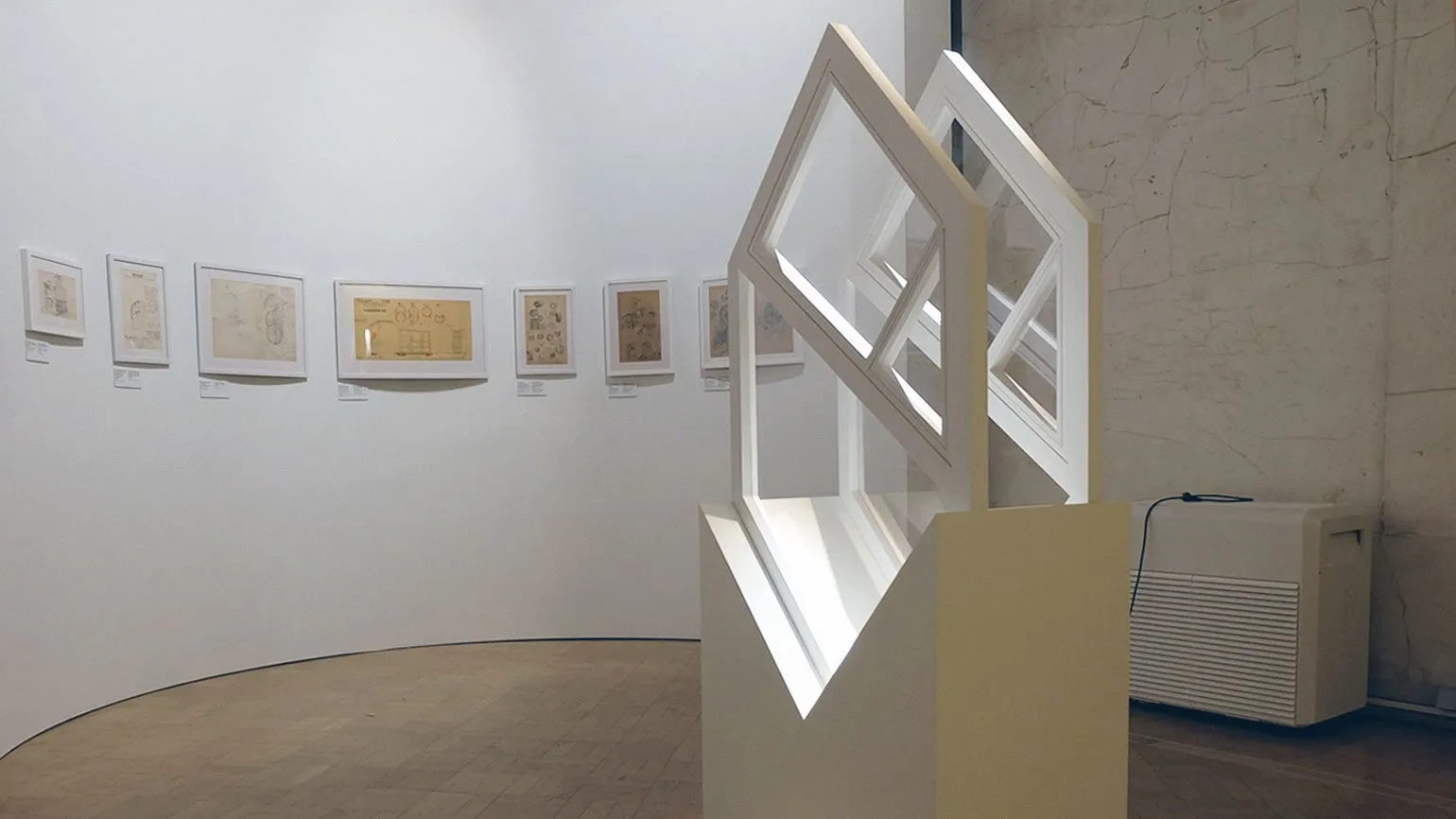
One of the walls displaying garage and market designs was constructed using the "jag" principle used to house vendor pavilions and organize bus traffic. The room dedicated to the cylinder shape in architecture features prominent rounded walls. In the penultimate room, featuring painted portraits of the architect's family, the walls reproduce the curves of the Melnikov House and the striking panoramic window on the second floor. This approach creates a unique atmosphere and emphasizes the connection between architecture and art, which makes the exhibition especially attractive to visitors.
New forms: Cylinders
Architecture often uses the cylindrical form as an alternative to the traditional rectangle. Examples of such solutions can be seen in the Burevestnik club building, the Zuev Club, and in modular communal housing projects. However, a striking example of cylindrical architecture is the architect's private house in the Arbat area, which is rightfully considered one of his finest creations. This house demonstrates how a cylinder can become the basis for creating a unique and memorable architectural image.
The Melnikov House is the central exhibit of the next hall. This space presents the history of this architectural monument, as well as its plans and drawings. In the center of the room are reconstructions of the masonry of a diamond-shaped window and an elegant window frame, which allows visitors to better understand the unique features of the house's architecture.
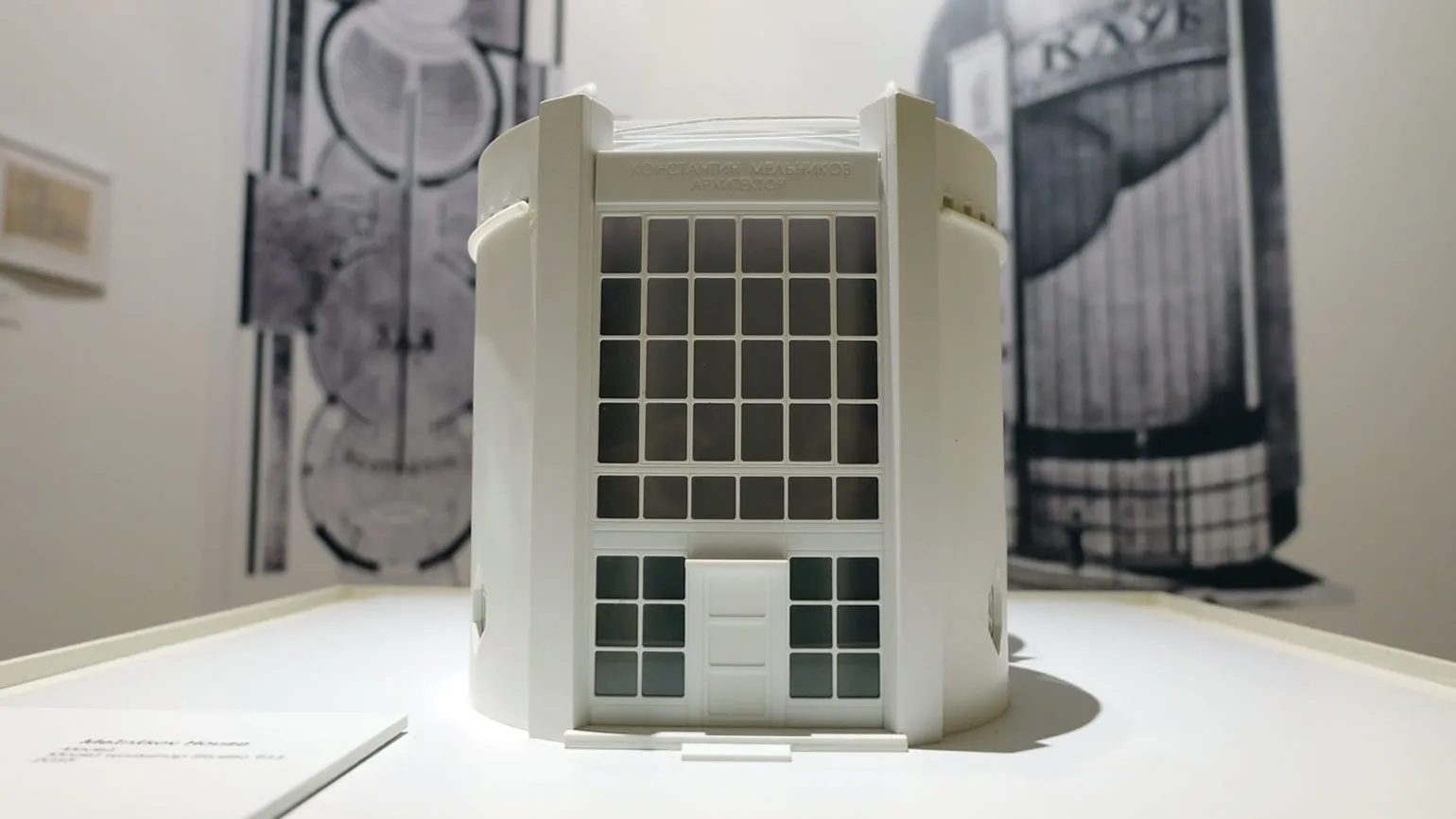
The architect received permission to build this house and the land plot as a reward for the project Lenin's sarcophagus. In his private building, he was able to realize architectural ideas that in other projects remained only on paper. Here, he acted as both client and critic. One of the plans is called "The Model House of Architect Melnikov"—that's how he viewed his creation. This house became the embodiment of his architectural fantasies and a unique concept that demonstrates his artistic approach and innovative vision.
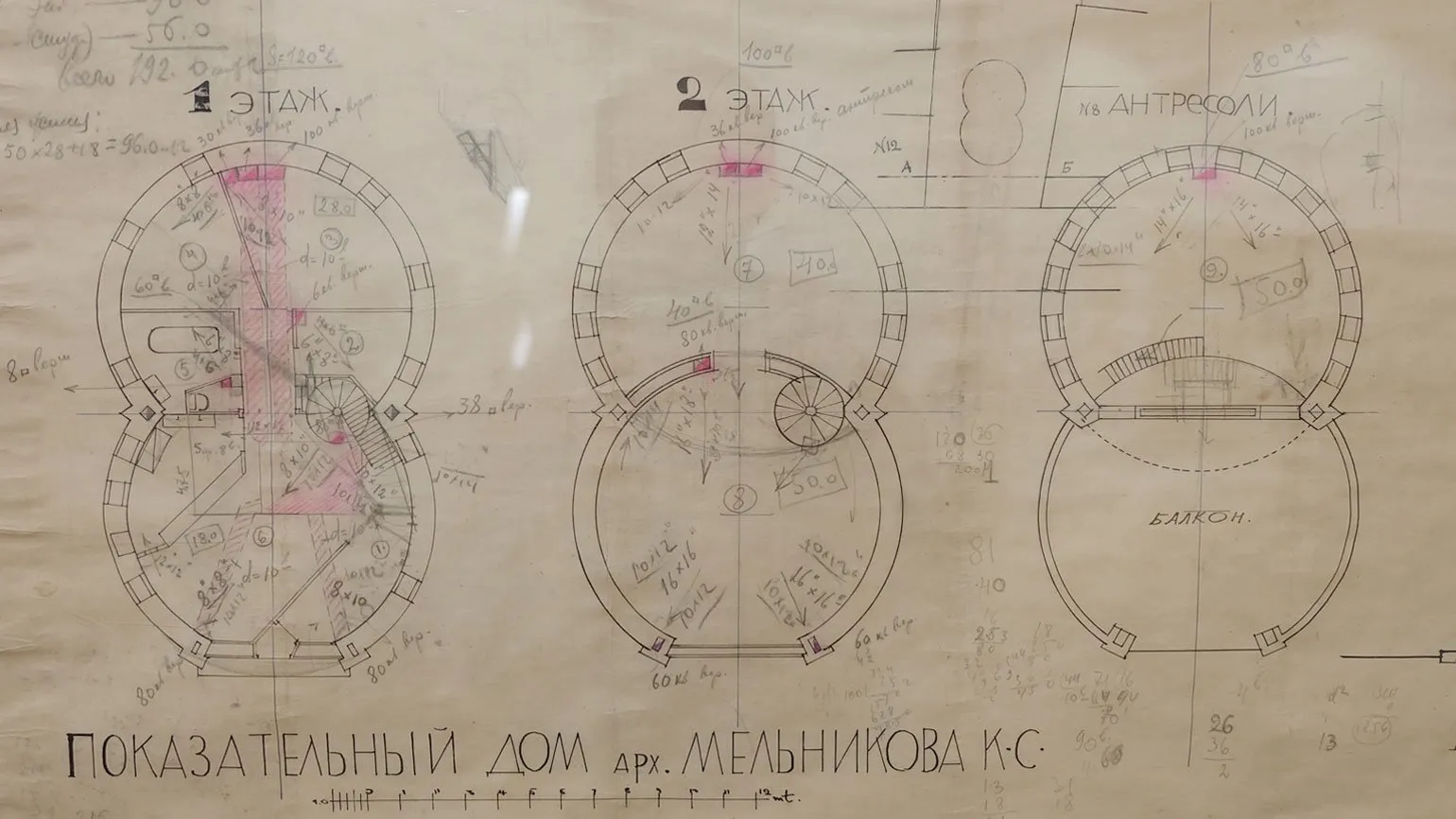
Today, the Melnikov House is part of the network of branches of the Shchusev Museum of Architecture. Until recently, tours were offered here, but as of October 1st, it has been closed for restoration, which will last until 2024.
Architect of Urban Space
Melnikov's urban projects remain in the shadow of his more famous architectural achievements, as most were never realized. One significant project is the reconstruction of Arbat Square, which was distinguished by its futuristic design. The sketch for the square even depicts an airship, highlighting the architect's innovative approach to urban planning. These ideas, although not implemented, testify to his desire to create new spaces for urban life.
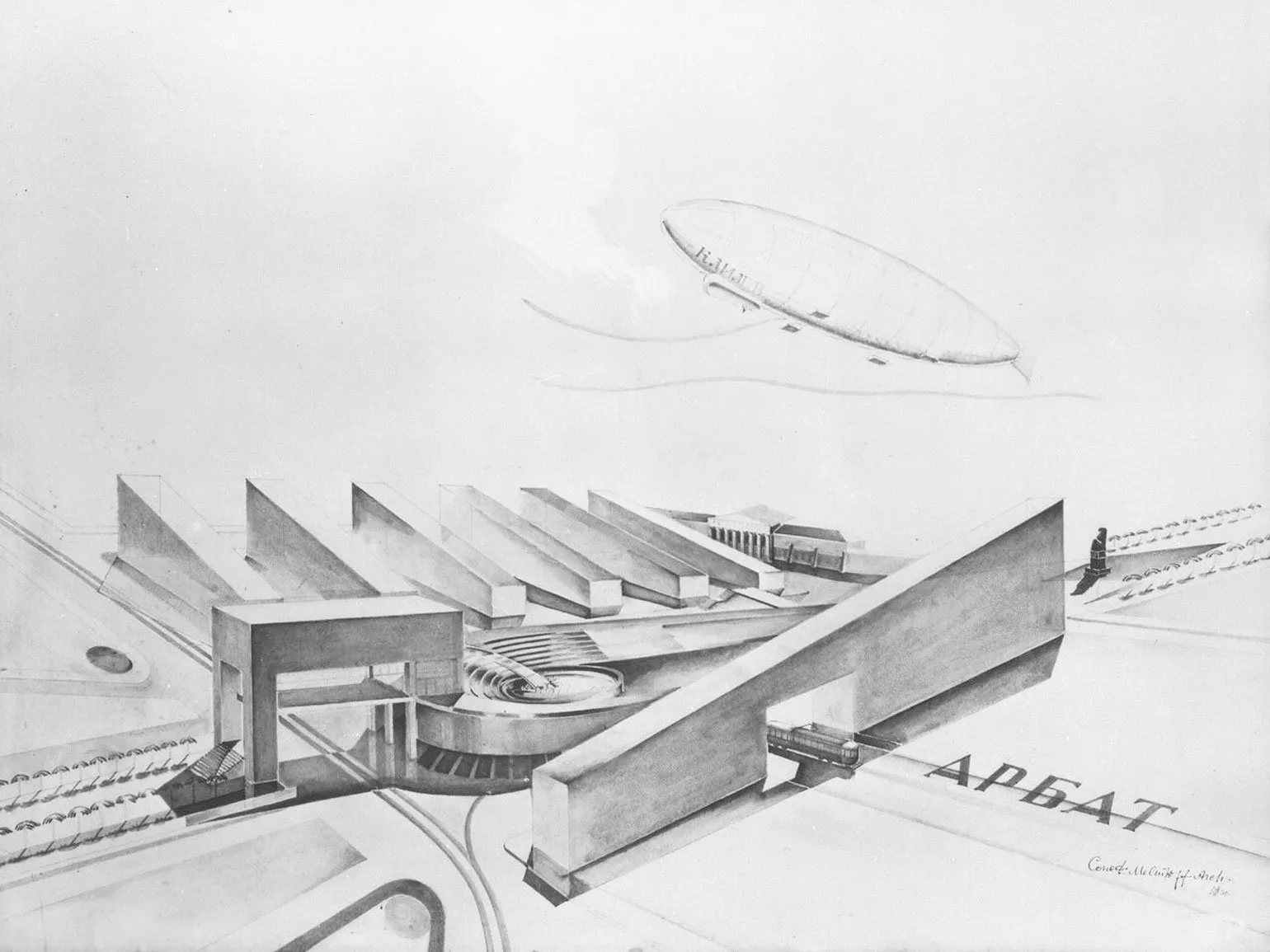
The futuristic design of the square was distinguished not only by its smooth and minimalist The forms, but also the original approach to spatial organization, were key. The concept was based on the idea of completely isolating pedestrian traffic from open spaces. People were expected to move through special tunnels connecting buildings and passages, creating a unique atmosphere. This approach not only improves safety but also promotes more efficient use of space, making the area a modern and attractive place to live and work.
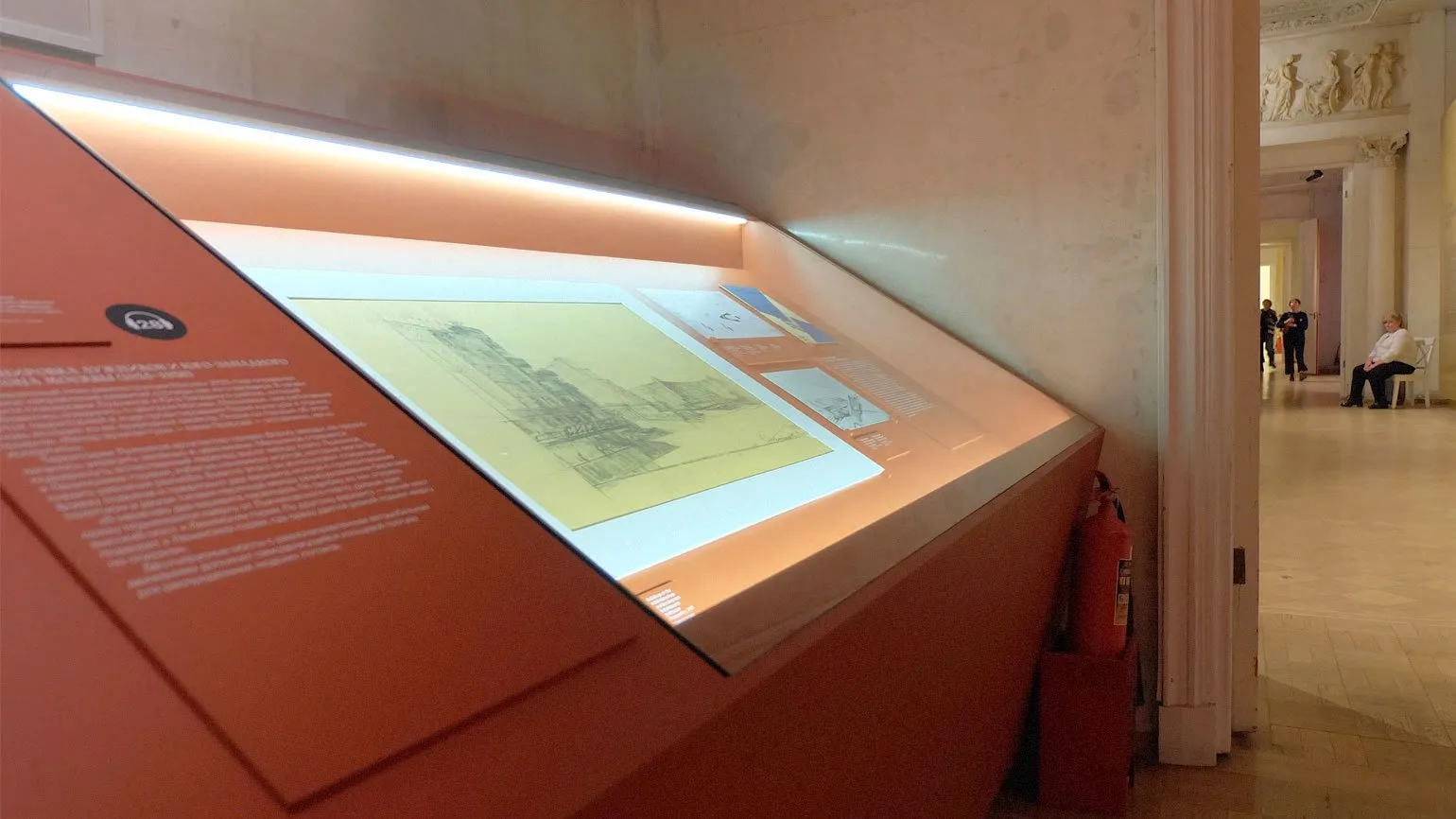
The integrated development of Goncharnaya and Kotelnicheskaya embankments is an important An urban project that will transform the appearance of these areas. The construction of the Moscow-Volga Canal in 1937 made the river navigable, opening up new opportunities for embankment development. After reconstruction, Goncharnaya and Kotelnicheskaya Embankments are expected to become examples of modern urban living standards. Goncharnaya Embankment remains a model of urban planning, where Stalinist architecture harmoniously blends with wide avenues and green promenades, as well as carefully designed courtyards. However, architect Melnikov's ideas, such as hanging gardens and overpasses, proved too innovative for their time and did not find support in the project's implementation. Nevertheless, this project continues to generate interest and discussion in the context of urban infrastructure development and the creation of a comfortable urban environment.
In his plan for Moscow's Southwest District, architect Melnikov proposes installing a large-scale spiral overpass that will seamlessly transition into a bridge across the Moskva River. Details of this architectural solution can be seen in the presented sketches.
Of course, I am ready to help you with text revision. Please provide the text itself that you want to change.
Zaha Hadid: avant-garde architecture and concrete spaceships
Zaha Hadid is an outstanding architect whose projects have changed the idea of modern construction. Her style, based on dynamic forms and bold lines, became a symbol of avant-garde architecture. Hadid created buildings reminiscent of spaceships, made of concrete and glass, bringing elements of futurism to the world of architecture.
Her works, such as the London Aquatics Centre and the Guangzhou Opera House, demonstrate a unique combination of functionality and aesthetics. Zaha Hadid used innovative technologies and materials, which allowed her to realize the most daring ideas. Each project of the architect is not just a building, but a work of art, capable of inspiring and surprising.
Hadid's work attracts interest not only among professionals but also among the general public, highlighting her influence on contemporary architecture. The architectural solutions proposed by Zaha Hadid continue to influence new architects and designers, shaping the future of the urban environment.
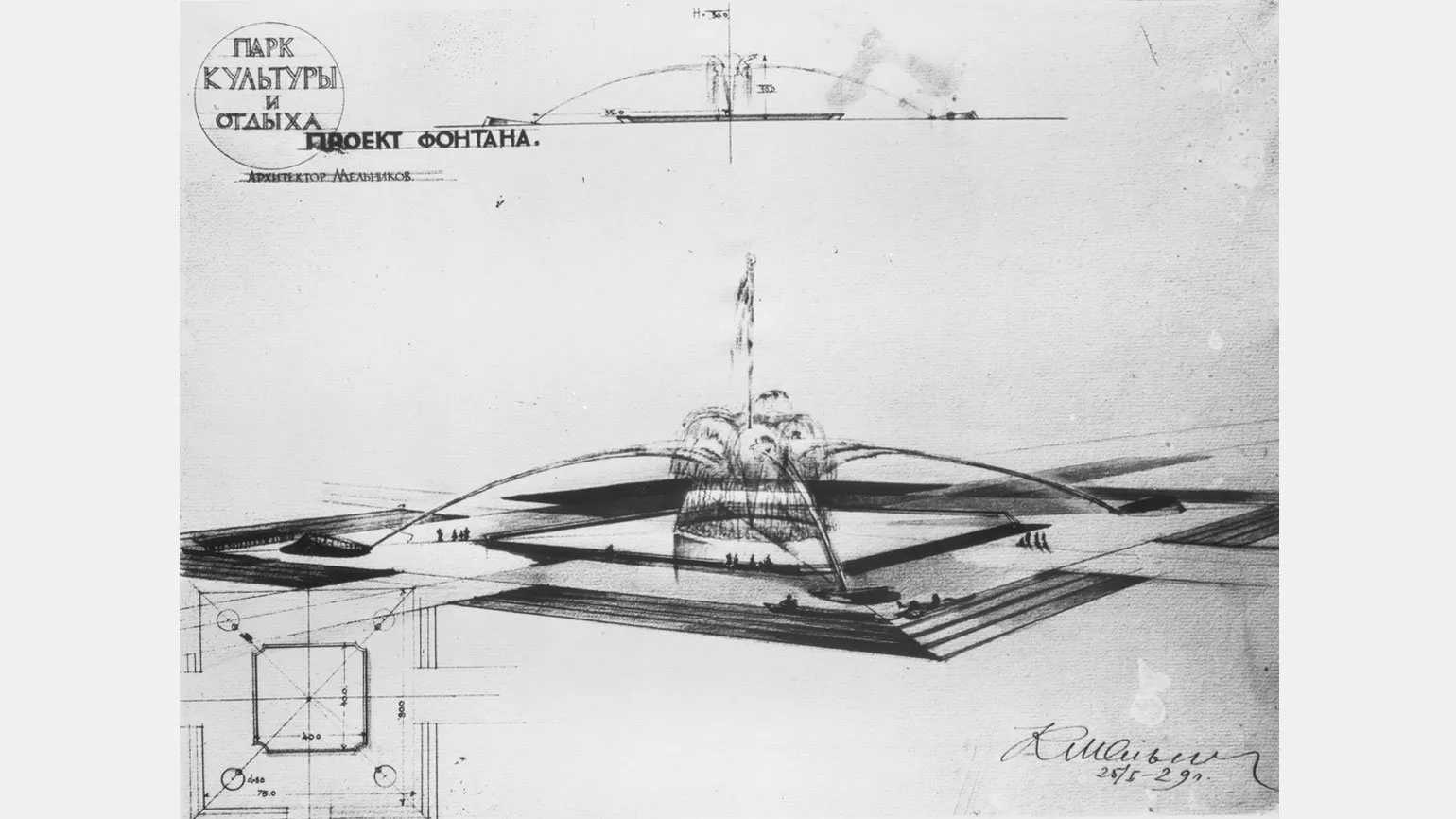
One of the surviving public spaces in Moscow is the Gorky Park Amphitheater. Konstantin Melnikov, the first chief architect of this famous park, developed ambitious plans to transform the area from the Garden Ring to Luzhniki. However, a few years later, he was replaced by architect Alexander Vlasov, who made modifications to the original design, specifically replacing Melnikov's central fountain with his own design. Konstantin Melnikov's avant-garde fountain design, in which jets of water rush toward the center from opposite corners of a huge pool, has survived only as sketches.
Colleagues and Competitors
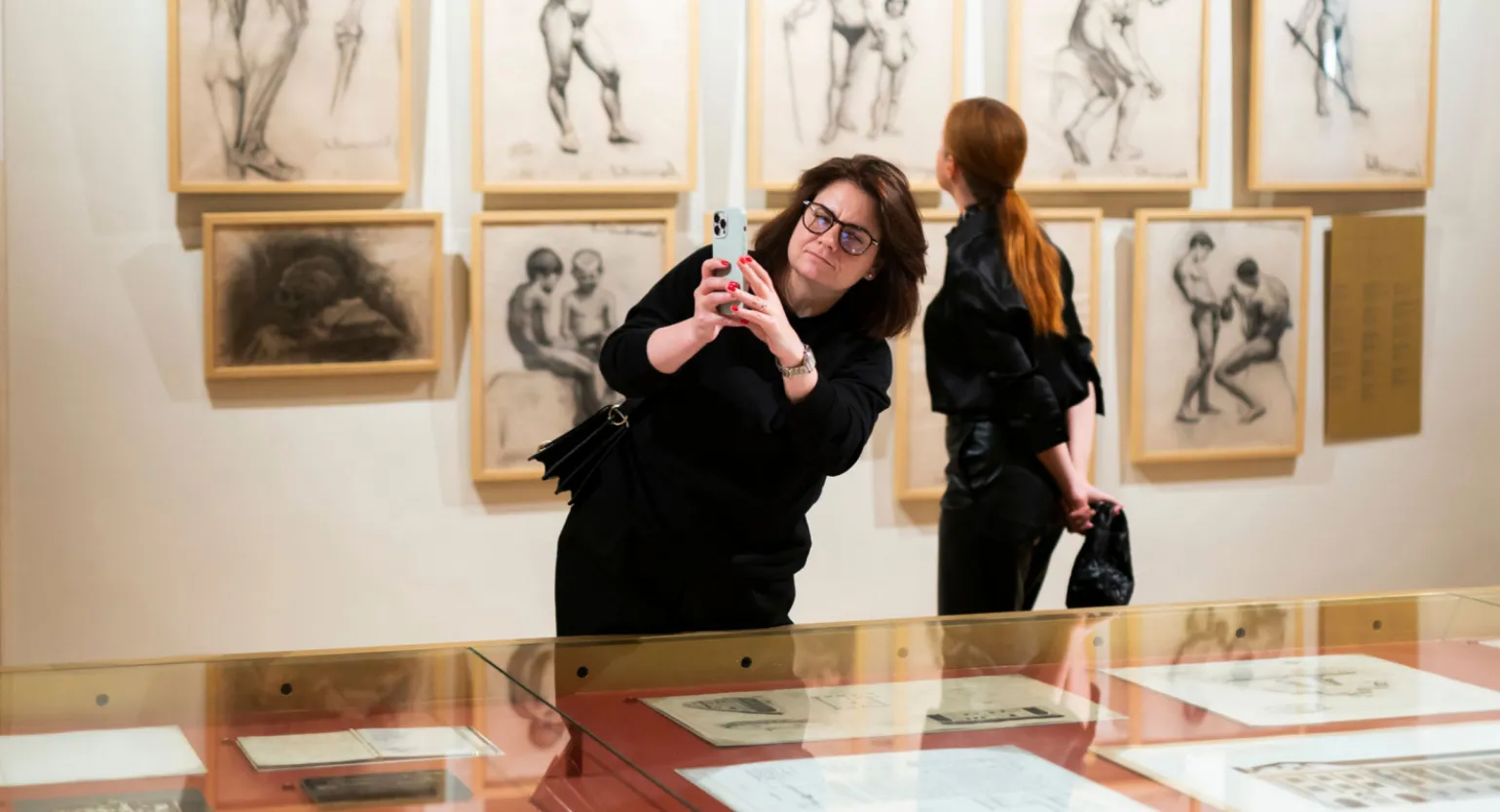
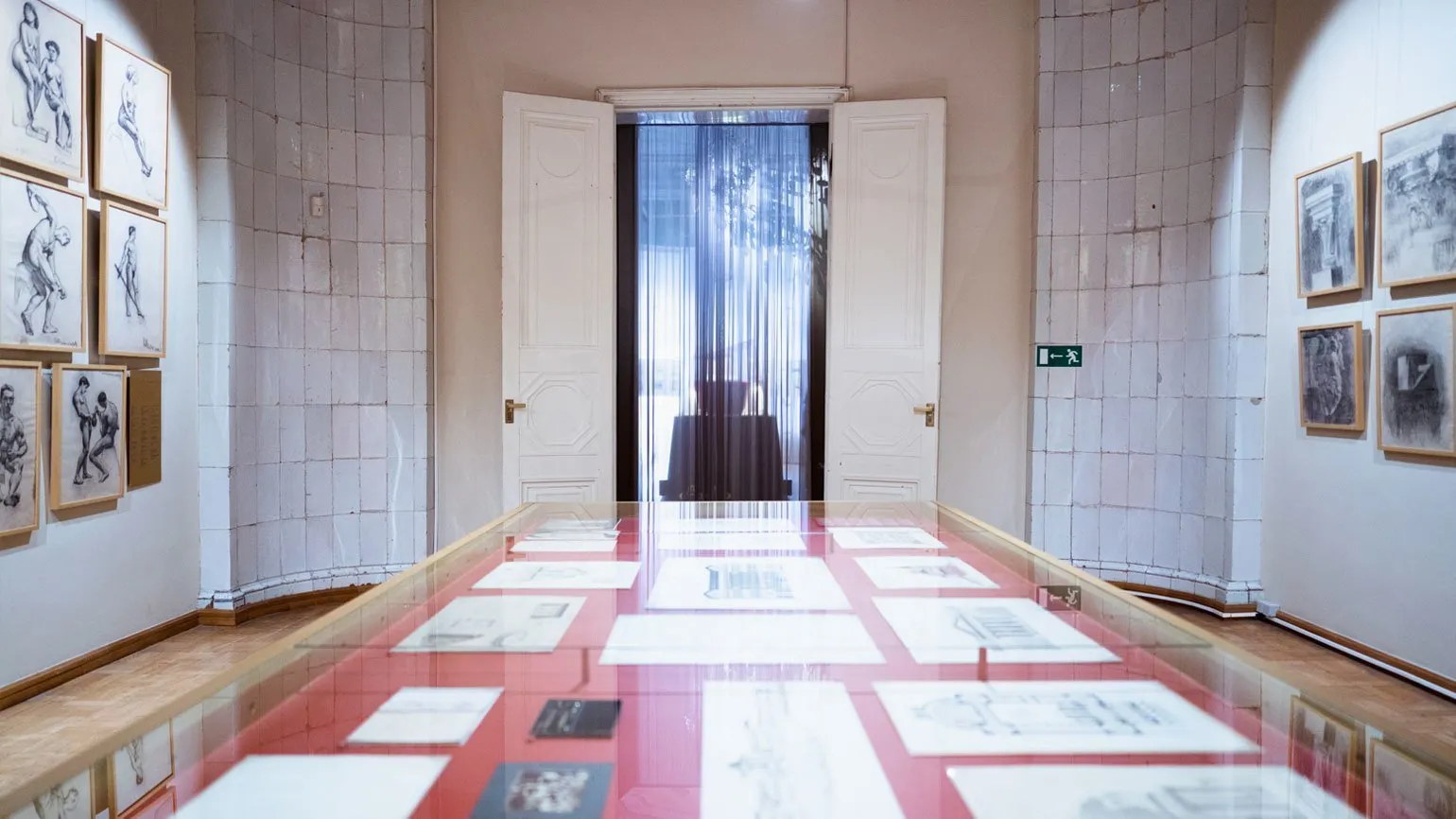
The exhibition spans the architect's entire creative career, presenting his projects not only as original drawings and sketches but also in the context of comparative analysis. For example, the unrealized monument to Christopher Columbus in Santo Domingo, a competition for which was held in 1929, is presented in sketches by architects such as Melnikov, Shchusev, and Oltarzhevsky. Students also have the opportunity to compare their work with the sketches of Zholtovsky and Shchusev of that time, which allows for a deeper understanding of the evolution of architectural thinking and style.
The hall with student work is located at the beginning of the exhibition and hides a little secret - behind the curtain there is an additional room, which is recommended to be visited at the very end. This space concludes with an exhibition and can provide a unique opportunity for a deeper understanding of the works presented.
Sleep, Death and Immortality
This hall displays artworks dedicated to the theme of death and life extension. Melnikov's interest in death began in his youth, when, at 15, he experienced the loss of his beloved older sister. Reflecting on the concept of immortality, in the late 1920s he developed the "Green City" project—an ideal resort village where Soviet citizens could restore their health using innovative methods such as "sound therapy." This approach to health reflected Melnikov's desire to combine art, architecture, and medical practices aimed at improving the quality of life and overcoming the boundaries of human existence.
Be sure to check out the additional materials:
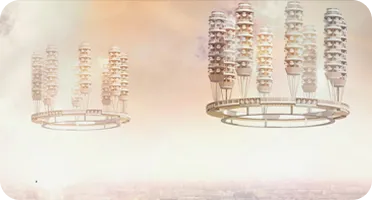
The design story behind Georgy Krutikov's "Flying City" is a fascinating example of an innovative approach to architecture and urban planning. Inspired by futurist ideas, this project explores the possibility of creating airborne spaces for living and working. Known for his unconventional thinking, Georgy Krutikov creates a unique vision of a city of the future where technology and nature coexist harmoniously. His design incorporates environmentally friendly materials and energy-efficient solutions, confirming the project's relevance in the context of modern sustainability challenges. The "Flying City" becomes not only an architectural concept but also a symbol of the desire for innovation and improving the quality of life in urban environments.
The architect also embodied the idea of restoration through sleep in the bedroom of his home, where the entire family slept in a single room, surrounded by a semicircular wall with diamond-shaped windows. This space was devoid of furniture, and the beds resembled pedestals. The "Golden Bedroom" can be seen in photographs and paintings, and drawings of the Green City are accompanied by a description of the project from the magazine "Construction of Moscow." This unique approach to interior design emphasizes harmony with nature and creates an atmosphere of comfort, making it relevant today. At the center of this room is the main exhibit—a large glass sarcophagus, installed over the red velvet coffin that was intended to house Vladimir Lenin, who died in 1924. The mausoleum was designed by architect Alexei Shchusev, and Konstantin Melnikov designed the glass sarcophagus, known as the "crystal" sarcophagus. This outstanding structure not only serves as a memorial, but is also a symbol of the Soviet era, attracting the attention of tourists and historians from all over the world.
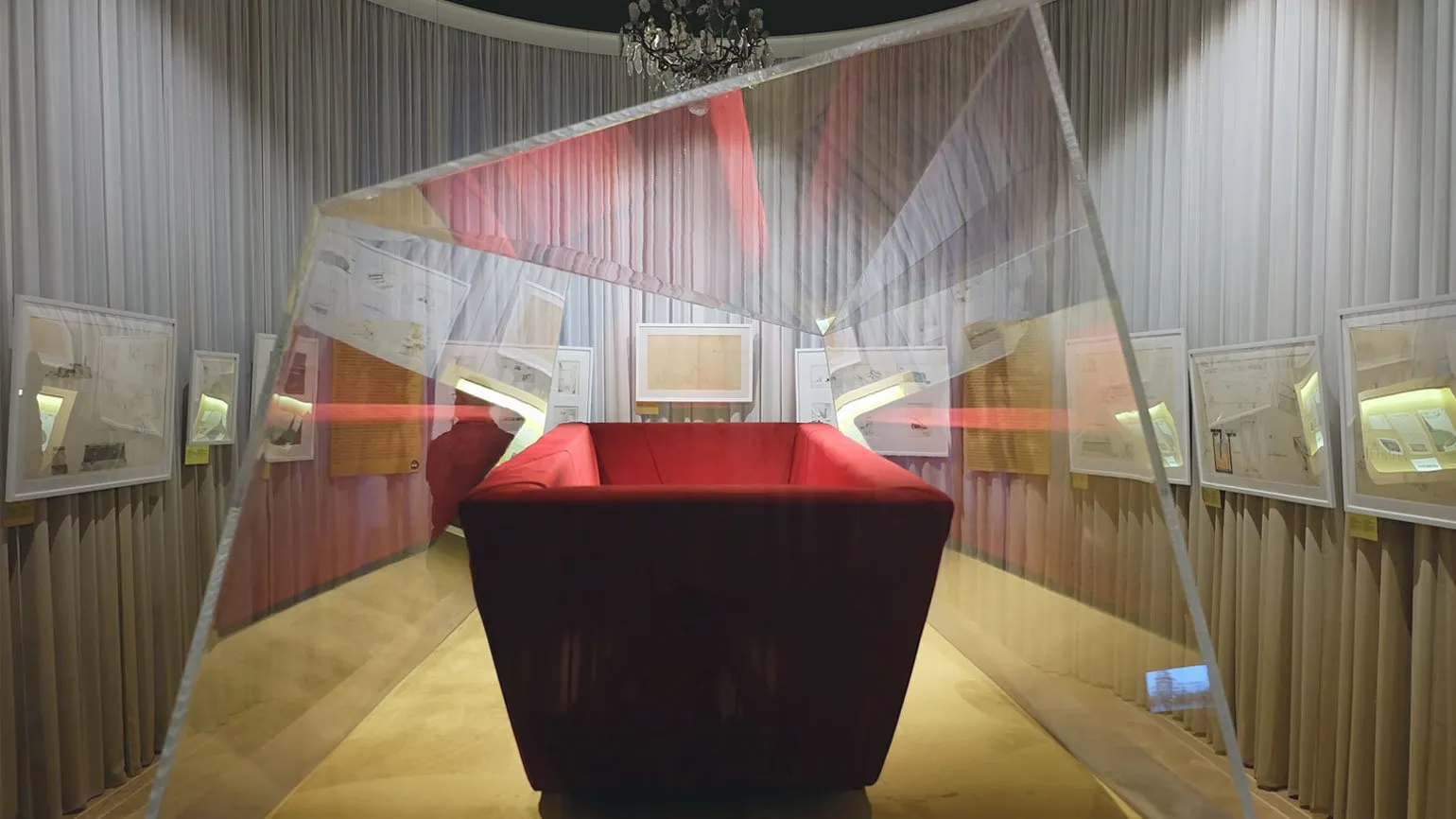
Melnikov was inspired The Sleeping Beauty fairy tale, in which the heroine awakens from a long sleep, echoed modernist hopes for a "cure for death." Consequently, the need arose to preserve the Leader's body until that moment, which, in turn, depended on the quality of the sarcophagus. The architect proposed a lid reminiscent of crystal, with an asymmetrical shape and sharp, protruding corners that refract light differently. The hall displays the stages of the project, from quick sketches to detailed drawings and isometric views. This process demonstrates the pursuit of perfection and originality in architecture, as well as the importance of preserving historical memory. The uniqueness of the reconstruction presented at the exhibition lies in the fact that this particular sarcophagus won the competition. However, it subsequently became clear that its form was impossible to realize using the technologies of the time. As a result, architect Melnikov proposed eight more versions of the glass dome, preserving the basic idea but more easily implemented. One of these versions was used in the Mausoleum until 1945.
The Decline of a Career
The Hall of Death, Sleep, and Immortality represents the final stage of the exhibition, the main part of which covers the period up to 1939. But what followed after this time? Unfortunately, the exhibition provides a clear answer: after 1939, the avant-garde effectively loses its significance. By the end of the 1930s, it was replaced by new artistic concepts and architectural styles. The great innovator finds himself sidelined, his work losing its former relevance. As a result, he begins to devote himself to painting, creating intimate portraits of his family, which can also be seen in the exhibition. After the war, he returned to teaching, continuing to influence a new generation of artists.
In 1962, at an advanced age, Konstantin Melnikov petitioned the Central Committee of the CPSU, expressing his desire to participate in the design of a pavilion for the International Exhibition in New York. At the time, the architect was 72 years old. He submitted a non-competition project entitled "Motifs of Celestial Mechanics," but his proposal was not accepted, and the Soviet Union ultimately withdrew from the exhibition.
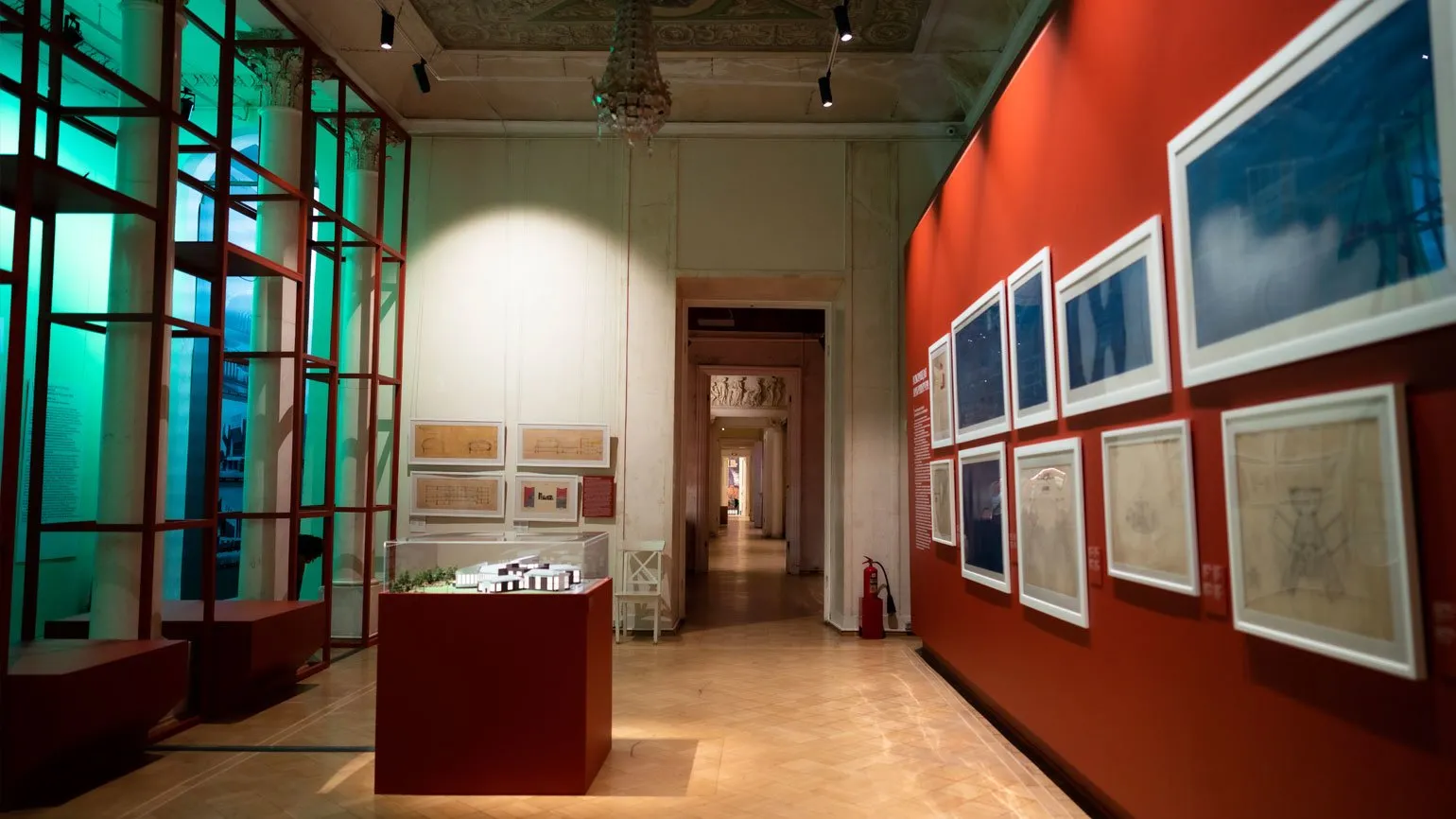
The retrospective traces the architect's journey from his first steps in the profession to his final projects of the 1960s and his final retirement from the world of large-scale architecture. His primary period of work spans just two decades, and the exhibition presents this period in its entirety. It consistently reveals not only the classic elements of the Soviet avant-garde but also the personality of an architect who was unafraid to go against the grain and create what no one had thought of before. The exhibition offers a unique opportunity to gain a deeper understanding of the evolution of architectural thought and the influence of this master on the development of architecture.
The exhibition will run until January 23, 2023, at the A.V. Shchusev Museum of Architecture, located at 5/25 Vozdvizhenka Street. Don't miss the opportunity to attend this landmark event in the world of architecture and art.
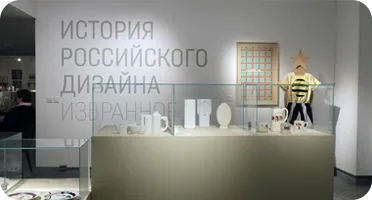
Explore new places for recreation and entertainment in your city. Find out about the best restaurants, cafes, and bars worth visiting. Pay attention to cultural events and exhibitions taking place in the coming weeks. Don't forget about natural parks and active recreation areas where you can enjoy fresh air and beautiful scenery. Consider visiting local attractions and historical sites to immerse yourself in the region's cultural heritage. Whatever your interests, there's always something new and exciting to enjoy.
The "History of Russian Design" exhibition is on display at the Tretyakov Gallery and will run until January 31, 2023. This unique event offers a unique insight into the development of Russian design, from its origins to contemporary trends. Visitors will be able to see the work of renowned designers as well as discover lesser-known works that have become iconic in Russian culture. The exhibition features a diverse range of exhibits, from graphic design to industrial design, fashion to interior design. Don't miss the opportunity to learn more about the influence of design on society and its role in shaping Russia's visual identity.
Read also:
- The Soviet response to Eiffel: Tatlin's Tower
- Reinforced concrete, Le Corbusier's church, and "glass walls": the history of French architects
- The history of design: 1920s–1930s, Bauhaus and VKhUTEMAS
- The history of one design: "Beat the whites with the red wedge"
- Sickle and pin: fonts of the USSR
Profession Graphic Designer PRO
You will learn how to create corporate identity elements and graphics for business. You will put together a portfolio that reflects your style and confirms your design skills. You can start a career in a studio or as a freelancer.
Find out more