
Content:

Try 4 top design professions. Free ➞ In 5 days, you will get acquainted with illustration, UX/UI, web, and graphic design. Add 4 cool cases to your portfolio and decide which direction to develop further.
Learn moreA generalist is a professional who differs from a narrow specialist in their versatility. A generalist possesses a broad range of skills and knowledge, enabling them to effectively solve a variety of problems. Unlike a specialist who focuses on one specific area, a generalist is able to adapt to various situations and find optimal solutions. This makes them a valuable asset in a rapidly changing world that requires interdisciplinary skills. Generalists can successfully work in a variety of fields, including project management, marketing, and strategic planning, making them highly sought after. A CG generalist is a specialist with a broad range of computer graphics skills. They must be able to retouch images in Photoshop, create 3D models, and develop realistic visualizations. Also essential are skills in product photography, developing creative concepts, and presenting ideas in sketches. Such a professional is capable of working in a variety of industries, including film, games, and advertising, making them highly sought after in today's digital content world. With versatile knowledge and skills, a CG generalist can adapt to various projects and client requirements, increasing their competitiveness in the labor market.
Creates advertising creatives
Advertising remains relevant and in demand, as new products appear on the market every day, demanding audience attention. With today's time-constrained consumers, the most effective way to make a name for yourself is by creating vibrant and engaging visual content. Advertising campaigns that focus on creating memorable images and creative solutions can effectively convey product information to the target audience, increasing their interest and engagement.
Even for the simplest advertising, Photoshop is essential. This process requires retouching product photos, adjusting brightness and contrast, color correction, removing minor defects, and changing the background. These actions help create engaging visual content that effectively attracts the target audience and drives sales. High-quality image processing in Photoshop allows a product to stand out from the competition, which is especially important in a saturated market.
Modern advertising often goes beyond traditional approaches. To attract customer attention to a brand, it is necessary to present familiar objects in an unusual light. Modern software can create realistic images of objects that do not exist in nature. For example, if you need a triangular tomato, high-quality photography and graphic skills are sufficient. Using creative solutions allows you to distinguish your brand from competitors and be remembered by your target audience.

Photoshop is an indispensable tool in the field of computer graphics and the advertising industry. Mastering all the features and capabilities of this program will help you effectively create and edit visual content. In our course, you'll gain a deep understanding of Photoshop and learn how to apply it to your projects.
Creating advertising creatives often requires complete collages or photomontages that combine multiple photographs. This task requires more careful work, but it can be easily accomplished using the program's tools. It's important to be able to select and move image fragments, apply masks, and perform color correction. These skills allow you to create engaging visual materials that effectively attract the attention of your target audience and contribute to successful brand promotion.
The technique of adding touches to photographs, known as matte painting, allows you to create stunning images without the need for hand-painted work. This method involves combining various elements from photographs and applying special effects. To achieve a compelling result, it's essential to adhere to the basic principles of composition. Furthermore, to ensure a realistic landscape, knowledge of the laws of perspective and light and shadow is essential. Mastering these basics will significantly improve the quality of the images you create and enhance their visual appeal.

In today's advertising space, not only 2D graphics are increasingly used, but also 3D. 3D images can not only attract attention with their uniqueness but also create realistic visualizations of objects that are impossible to depict with standard Photoshop retouching. Furthermore, motion design is a current trend, with 3D models ideal for animation, allowing for the creation of dynamic and memorable commercials. Using 3D graphics in advertising opens new horizons for creative concepts and improves audience engagement. To create an aesthetically pleasing 3D object, it is necessary to develop a mesh-based model with a given shape, followed by rendering, which includes adding material textures and adjusting lighting. 3D objects are often used in combination with 2D graphics, where the latter serve as a background, emphasizing the volume and detail of the 3D model. This approach allows for harmonious visual perception and improves overall image quality.
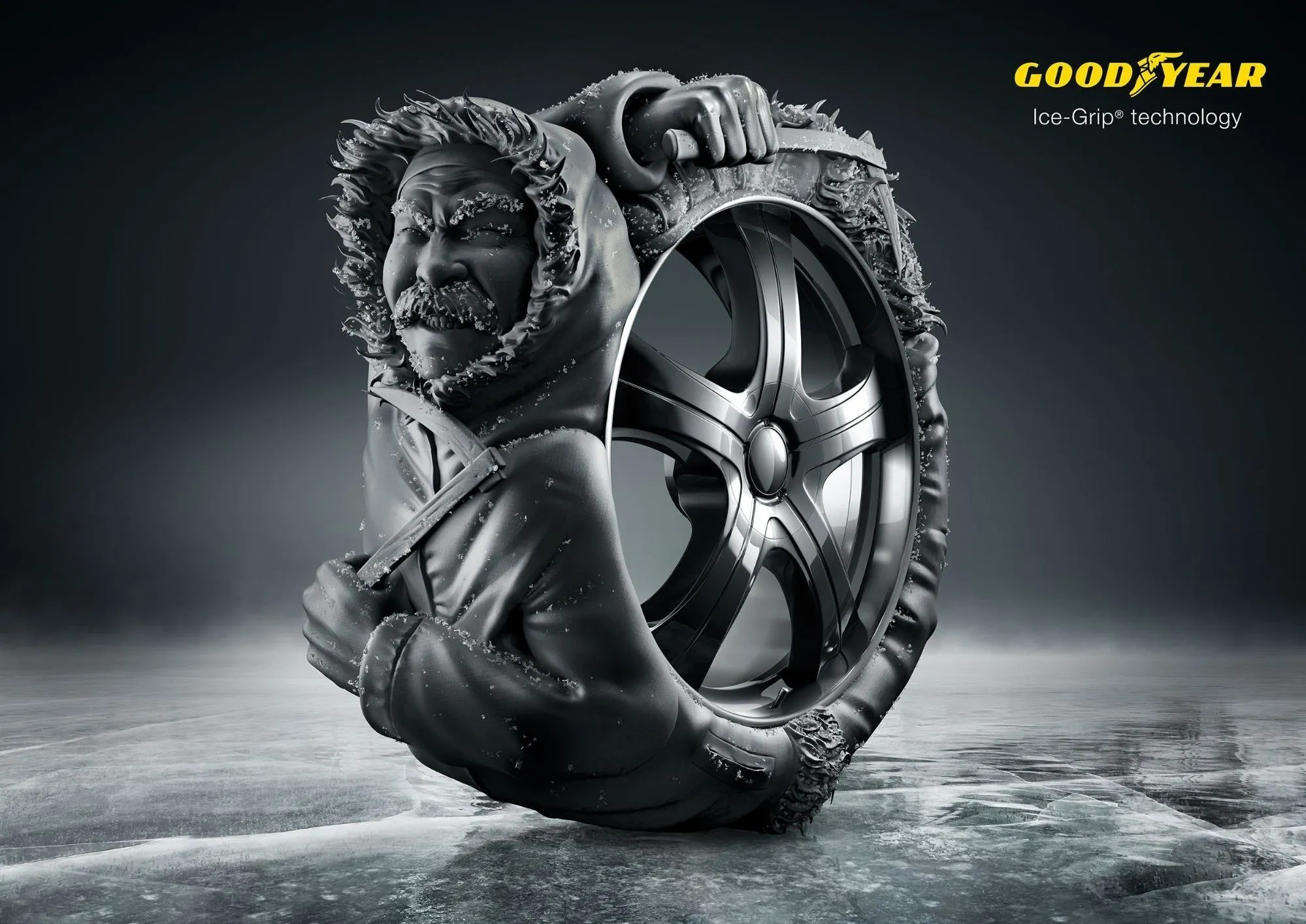
3ds Max is one of the most popular 3D modeling programs in Russia. However, there are many alternative software solutions that professionals can use depending on their specific needs. With the necessary modeling skills, switching between different programs is quick and allows for efficient adaptation to project requirements. This software diversity opens up new opportunities for designers and architects, allowing them to choose the tools most suited to their work.
Creating complex models for advertising is a labor-intensive process, making it uncommon. To optimize costs, many prefer to purchase editable models from stock platforms and make minor modifications. In this regard, visualization skills are key, especially in programs like V-Ray. High-quality textures and lighting are crucial for achieving high-quality results, as they lend realism and depth to models. Using modern visualization technologies can significantly improve the overall appearance of advertising materials.
A general CG artist in advertising can develop static images for banners and posters, as well as create graphics for animation, including backgrounds and 3D visualizations. This field offers ample opportunities for creative expression, and projects are typically short-term and can be completed by a small team. Working in this industry, a CG generalist can effectively use their skills to create visually appealing content that helps attract audience attention and increase interest in products and services.
Profession Graphic Designer PRO
You will learn how to create corporate identity elements and graphics for business. Create a portfolio that reflects your style and demonstrates your design skills. You can start a career in a studio or as a freelancer.
Find out more