
Contents:
- Exlibris by Vyacheslav Polonsky: The Art of Favorsky, 1922
- Set Designs for the Play "Twelfth Night": A Look at Favorsky's Work, 1933
- Illustrations for "The Tale of Igor's Campaign": The Work of Vladimir Favorsky
- History of the "Samarkand Series": Art in Wartime (1941–1943)
- Little Tragedies: Art and Design in the Work of Vladimir Favorsky (1961)

Commercial Illustrator: 7 Steps to a Successful Career
Find Out moreEx Libris by Vyacheslav Polonsky: Art of Favorsky, 1922
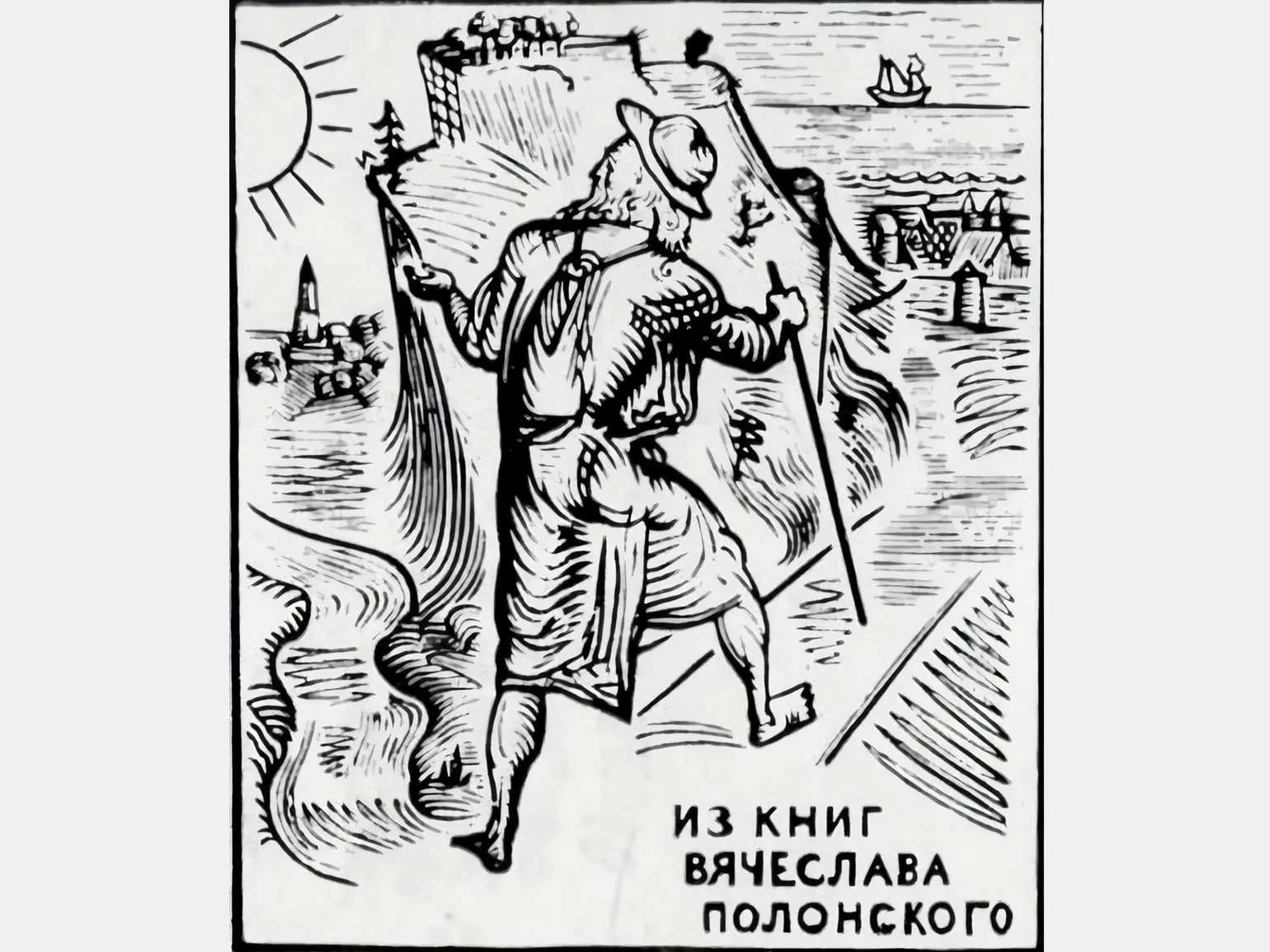
Vyacheslav Polonsky, a renowned literary critic, became one of the important objects of attention of the outstanding artist Favorsky. This talented master did not limit himself to book illustrations only, but also created an impressive series of ex libris, executed in the engraving technique. Favorsky’s works are distinguished by a unique style and depth, which makes them significant not only for the world of art, but also for literature. Ex libris created for Polonsky emphasize his contribution to cultural heritage and serve as a vivid example of the interaction between literature and visual art.
The ex libris dedicated to Polonsky is miniature in size, but rich in profound details. In the center of the composition is the figure of the Wandering Jew, symbolizing endless wandering and the search for refuge. According to legend, he will wander until the second coming of Christ. This character is depicted in dynamic movement, and around him, despite his tragic fate, a whole world filled with symbols and metaphors unfolds. The bookplate not only reflects Polonsky's personality but also raises important philosophical questions about purpose and the search for meaning in life.
The engraving is executed with black strokes on a white background, creating a striking contrast and emphasizing the expressiveness of the details. The free space in the work harmoniously blends with Favorsky's characteristic style, in which the background is often filled with dense strokes, creating a play of light and shadow. This technique allows for the emphasis to be placed on the main elements of the composition, while adding depth and volume. The use of black and white also highlights the artist's aesthetics and skill, making the engraving an expressive work of art.
The tetrahedral frame around the bookplate is an interesting artistic element. It's important to note that in works created after 1925, Favorsky abandoned the use of such frames. This decision illustrates his artistic development and pursuit of new forms of self-expression. The rejection of traditional frameworks highlights the changes in his creative approach and opens up new horizons in his art.
Set designs for the play "Twelfth Night": A Look at Favorsky's Work, 1933
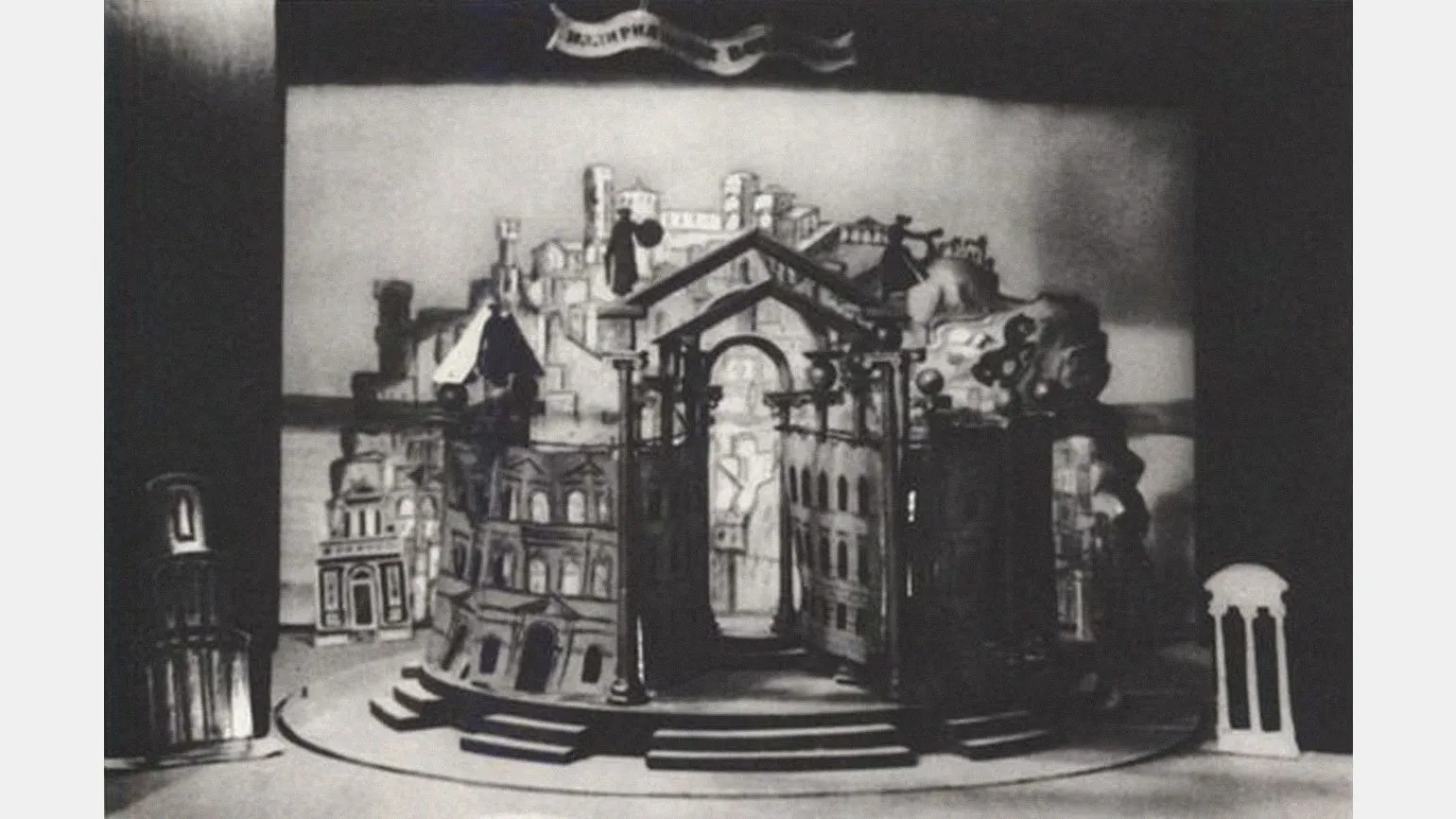
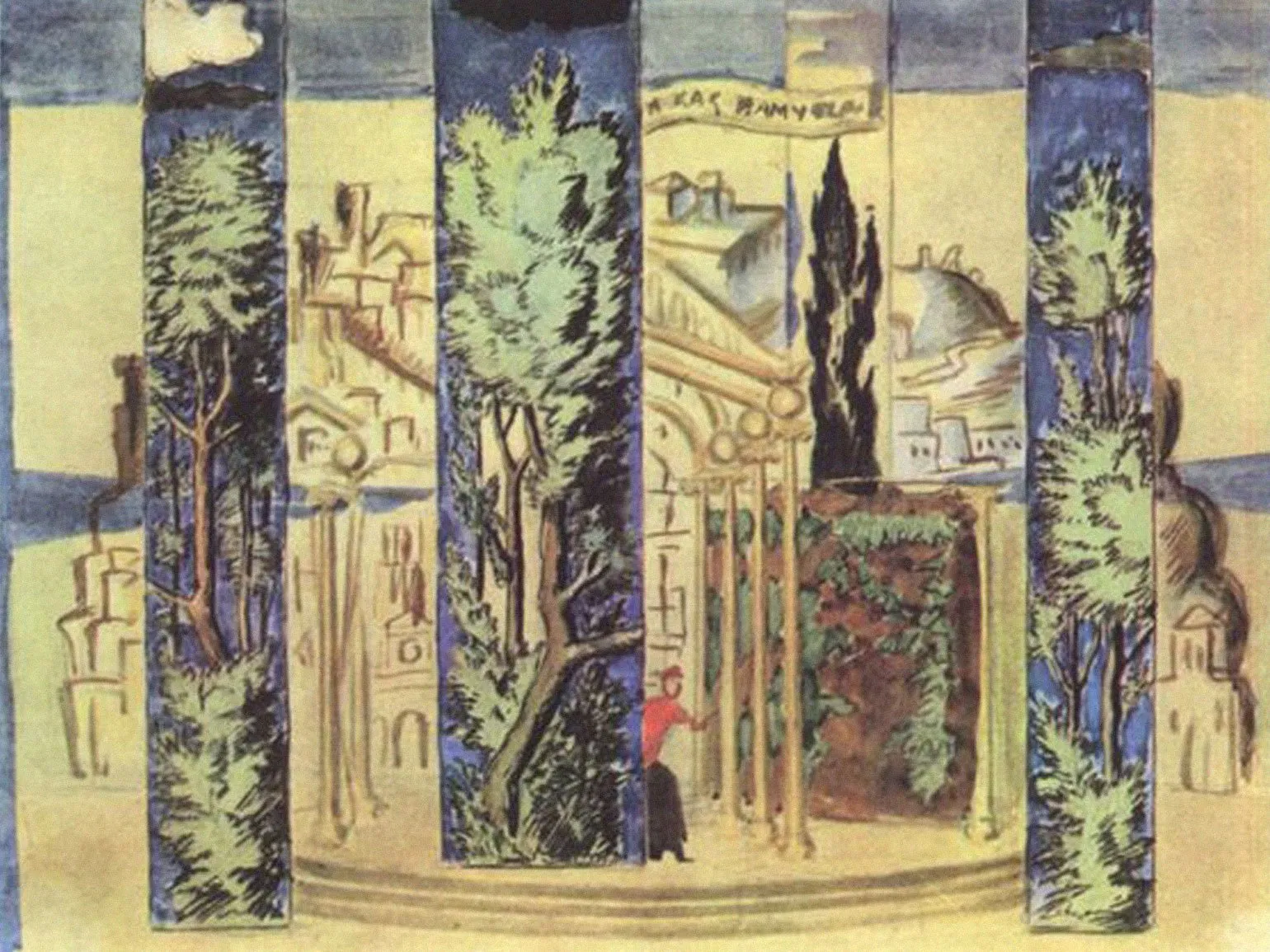
In 1933, the talented set designer V. A. Favorsky designed unique sets for the theatrical production of Twelfth Night, William Shakespeare's masterpiece, which was presented at the Moscow Art Theater. This work by Favorsky became a landmark event in the theatrical arts of its time, demonstrating high skill and creativity in stage design. The sets not only enhanced the atmosphere of the work but also offered a new perspective on the visual design of theatrical performances.
Favorsky created a multi-level set design with multiple locations, making the performance dynamic and spectacular. The main structure included lightweight columns and curtains mounted on a rotating circle. This innovative solution allowed for rapid set changes, instantly revealing new scenes—whether a street, a room, or a garden—without delay, significantly enhancing the audience experience. Thanks to this approach, the performance became more exciting and rich, attracting the attention of the audience from the very first minutes.
Illustrations for "The Tale of Igor's Campaign": the works of Vladimir Favorsky
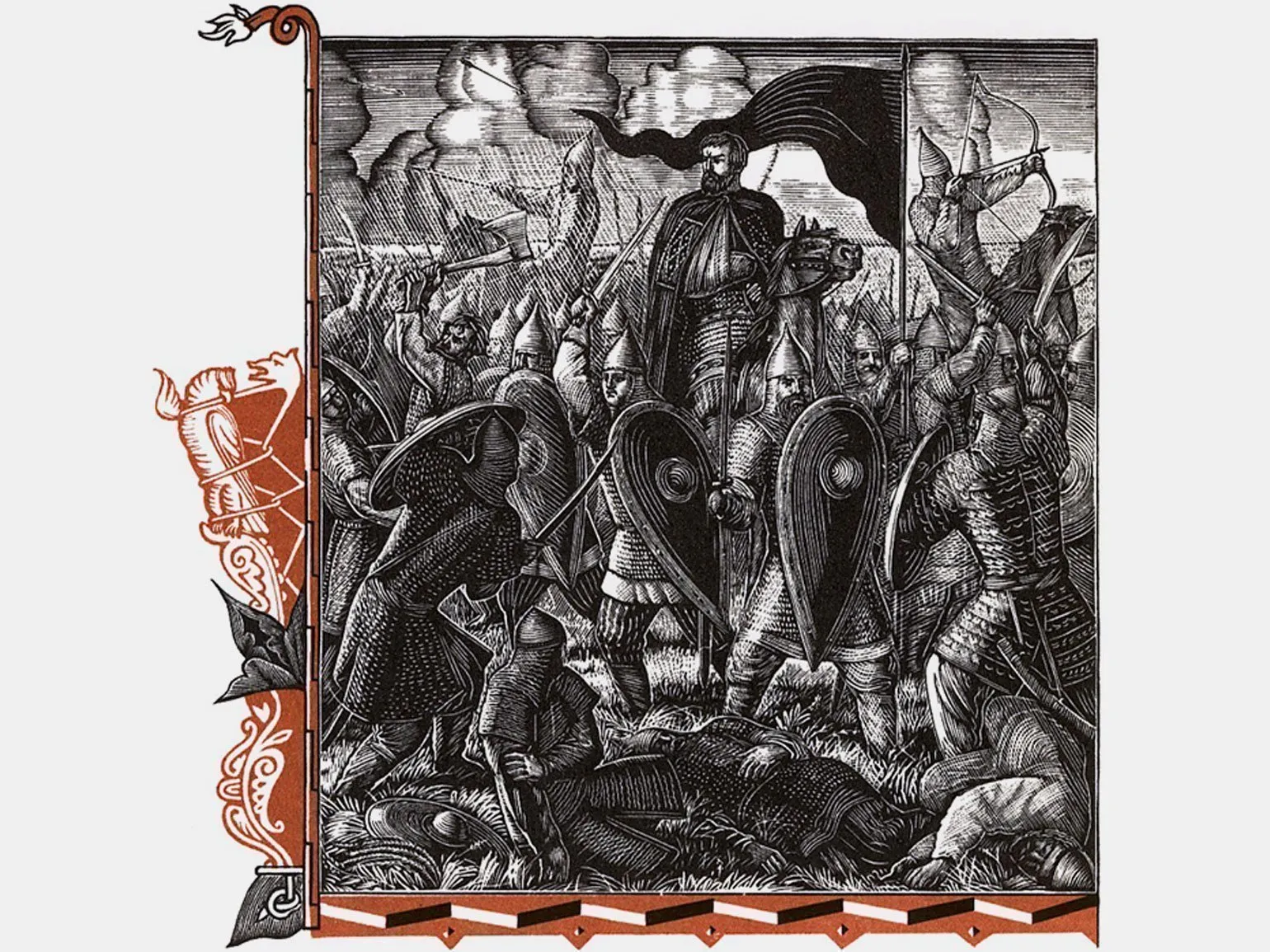
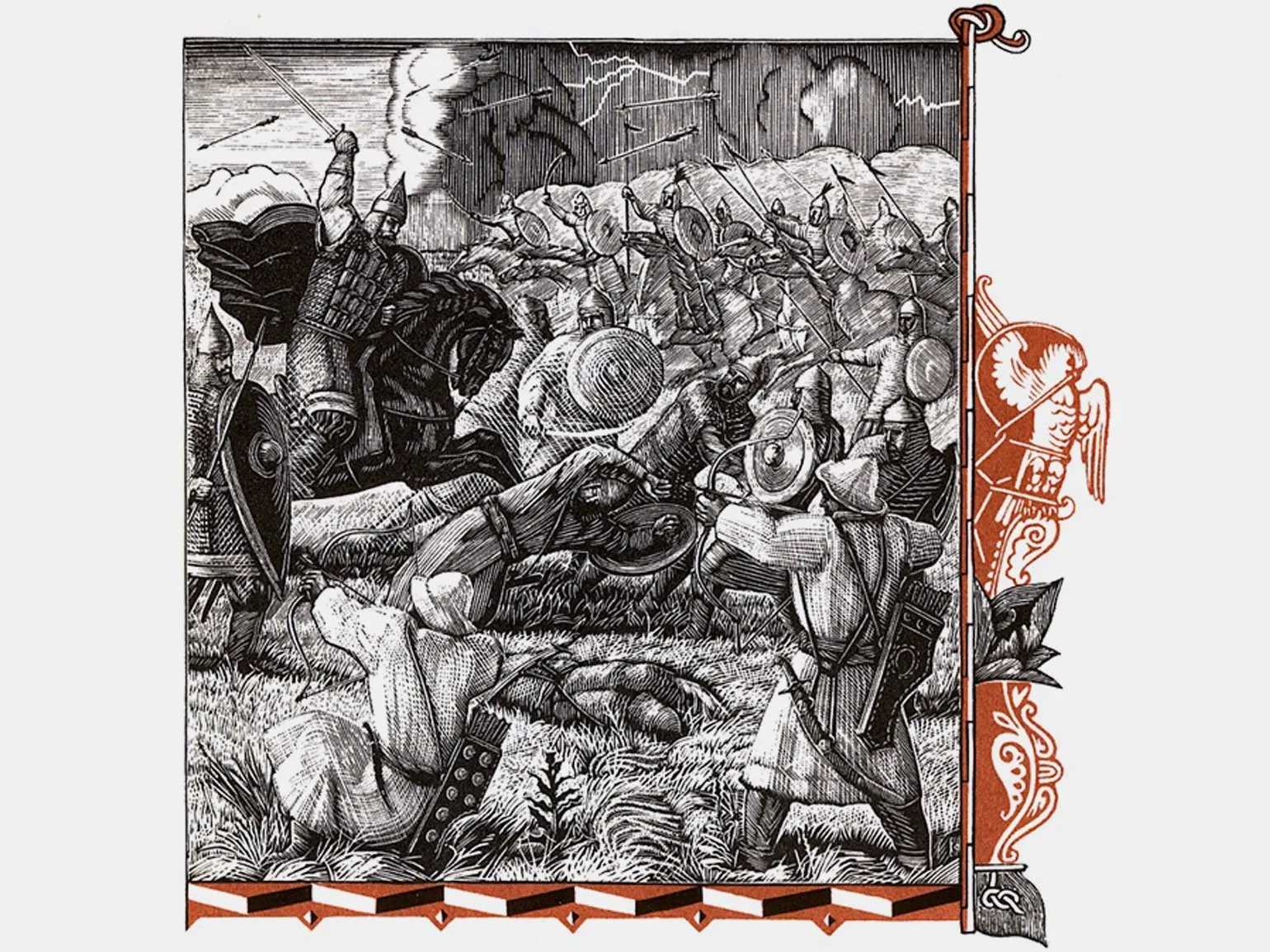
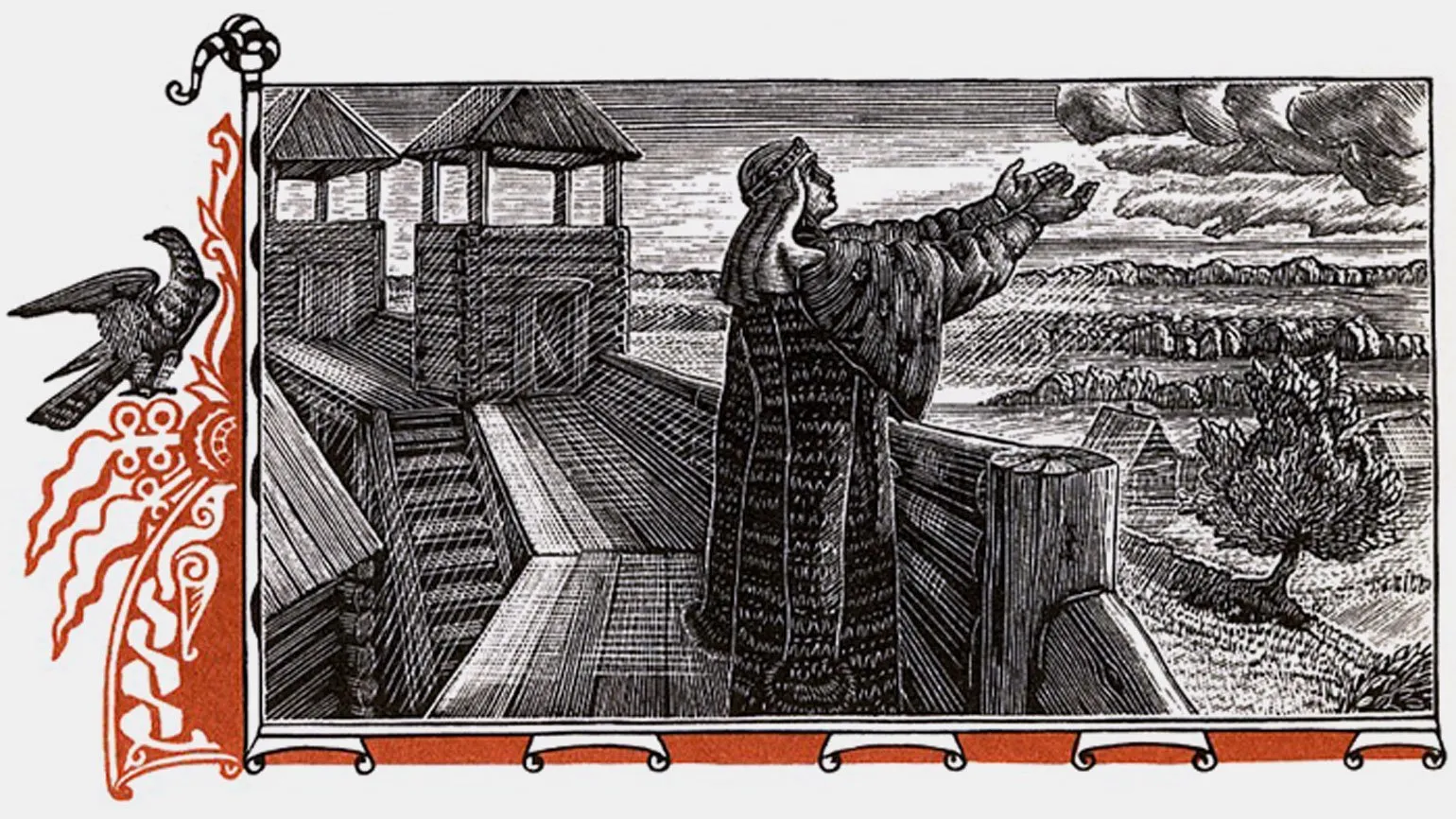
In 1938, artist Vladimir Favorsky began working on illustrations for the outstanding work of ancient Russian literature, "The Tale of Igor's Campaign." This project became an important milestone in his career and laid the foundation for future works. In 1952, Favorsky completed the graphic design for the reprint of this text, which confirmed its significance in the history of Russian culture and art. Favorsky's illustrations not only enriched the visual perception of the work, but also emphasized its historical and literary significance.
Favorsky used the traditional method of engraving, cutting images on wooden boards. This approach allows him to create expressive and detailed sketches filled with emotional movement. The artist masterfully depicts not only armor and weapons but also animals and plants, helping to convey the spirit of the times. Favorsky's engravings are distinguished by a high level of artistic execution and in-depth detail, making them unique works of art. Favorsky placed particular emphasis on spatial control in his illustrations. His works are often framed by patterned borders, which he boldly disrupts by placing key elements beyond the established boundaries. This technique creates a sense of dynamism and draws the viewer into the events described in the text. This not only highlights important moments but also makes the visuals more expressive and memorable. The use of space in Favorsky's illustrations serves as an effective means of conveying the emotions and atmosphere of the work, which makes his work unique and attractive to viewers.
The History of the "Samarkand Series": Art in Wartime (1941–1943)
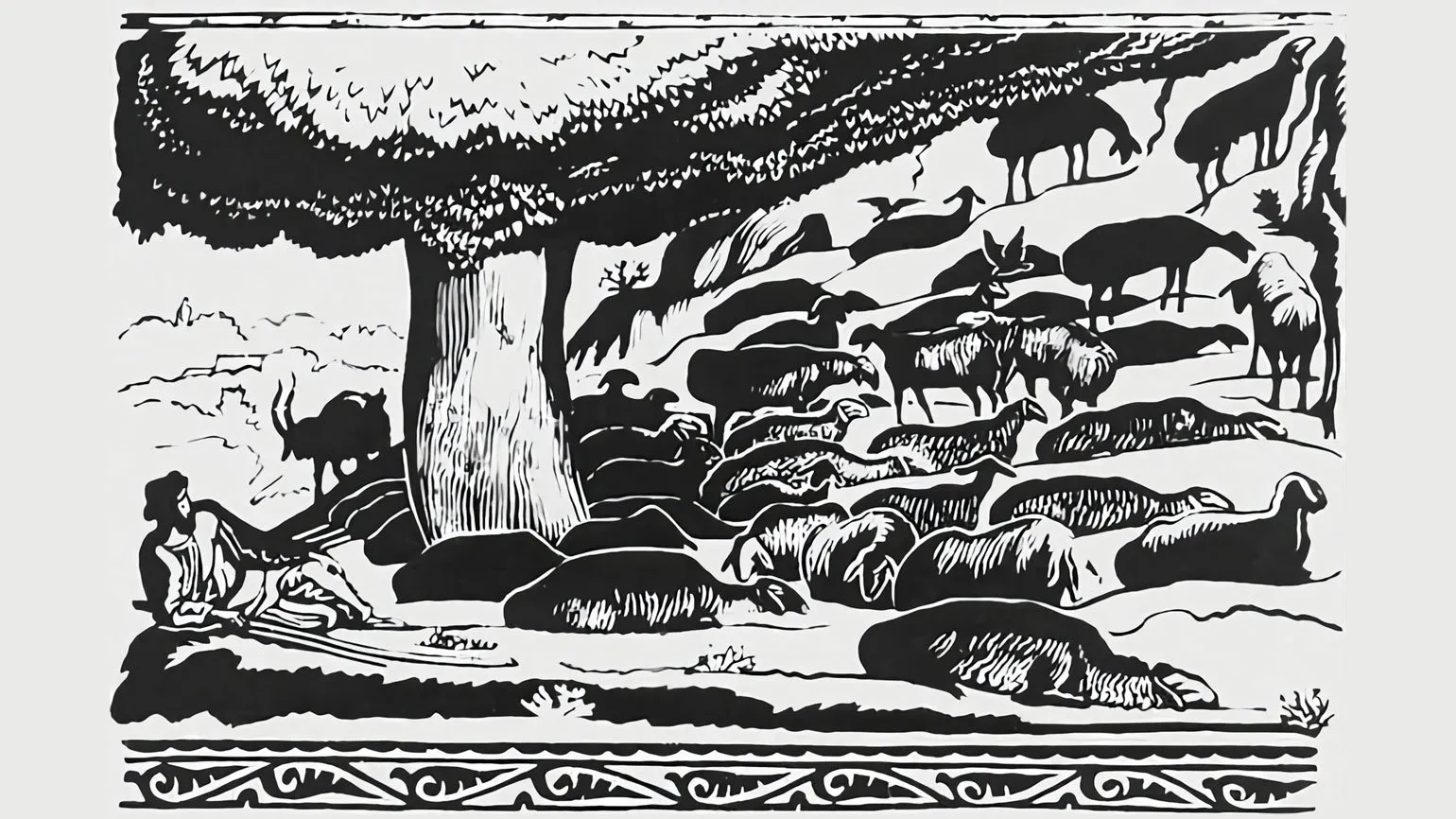
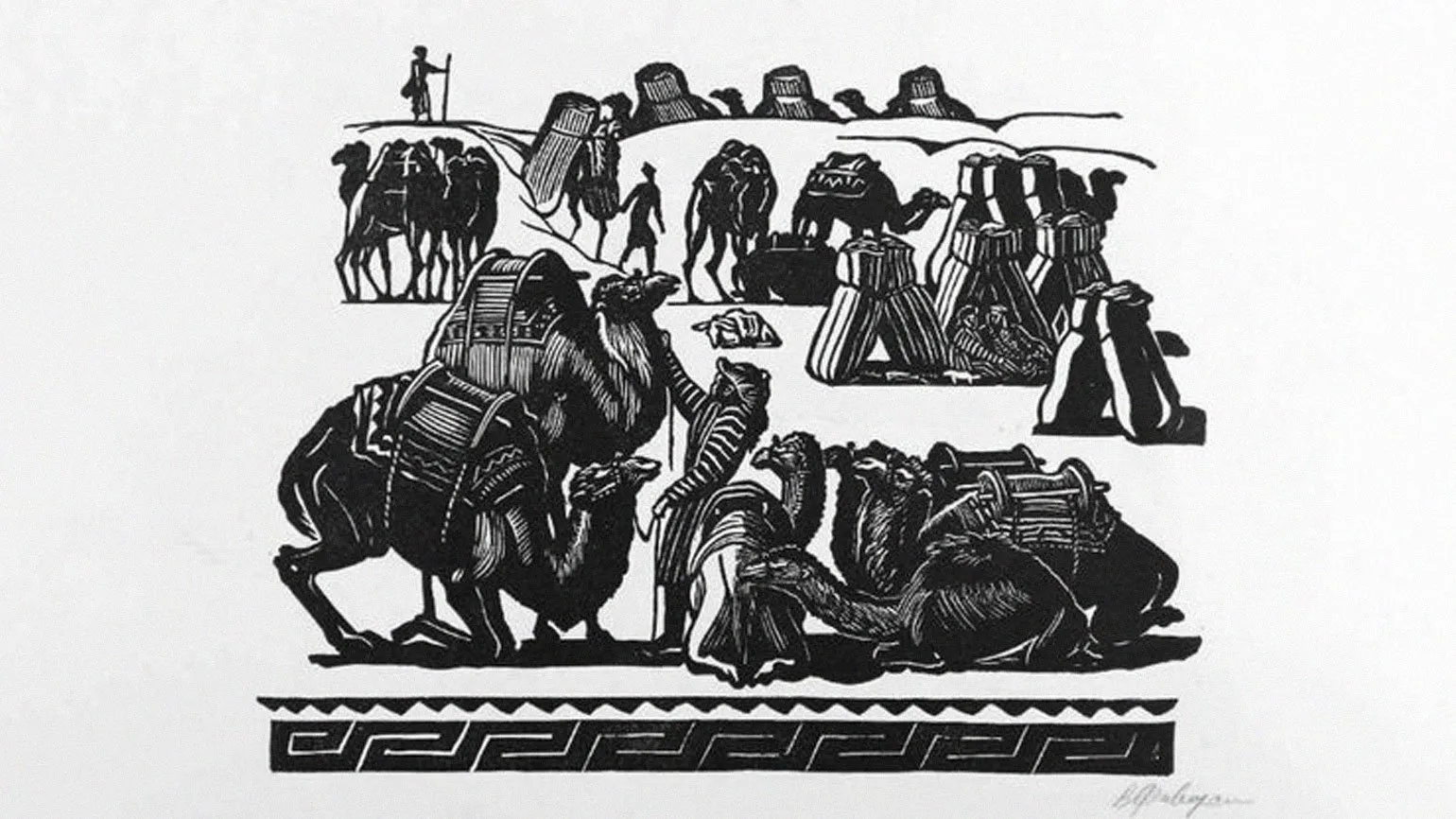
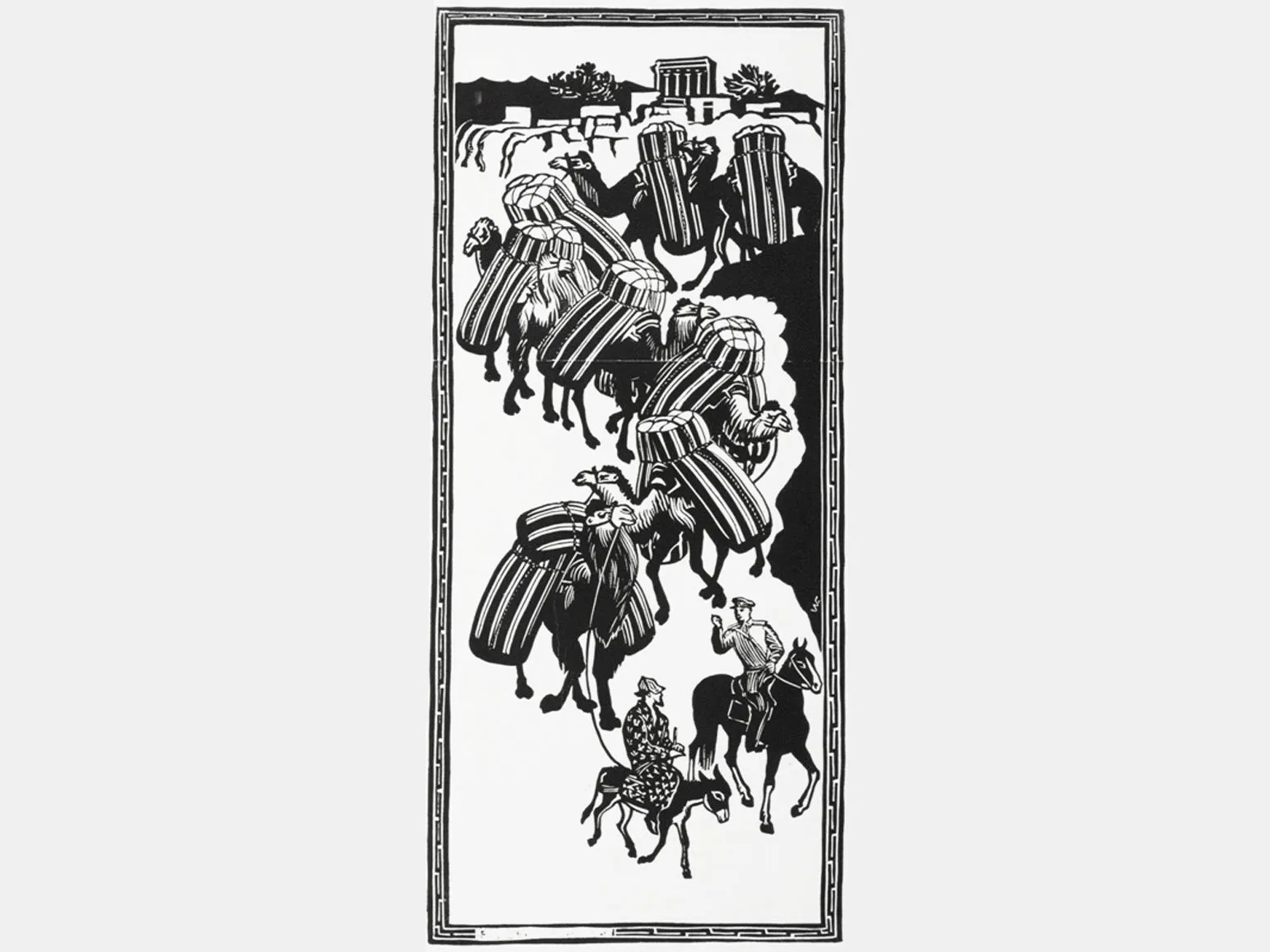
During World War II, the talented artist Favorsky moved to Samarkand with his family. Faced with a shortage of familiar materials, he adapted to the new conditions and began creating linocuts, which became a significant stage in his artistic evolution. This period not only enriched his creative experience but also opened up new horizons in art, allowing him to experiment with forms and textures. Favorsky's works from this time reflect a unique combination of traditional techniques and new ideas, which testifies to his ability to adapt and seek new avenues of expression.
This work resulted in the creation of a unique cycle known as the "Samarkand Series." Despite the challenging historical circumstances, these works exude optimism and reflect the rich cultural atmosphere of Uzbekistan. They serve not only as artistic objects but also as important testaments to the region's daily life. The "Samarkand Series" fully demonstrates Uzbekistan's cultural heritage and its influence on art, making it significant in the context of studying the country's history and culture.
In his illustrations, Favorsky used local traditional ornaments, lending his works a national flavor. The subjects of the paintings are simple and calm, reflecting city life, including trade and agriculture, which flourished in the warm climate of Central Asia. Notably, these works have virtually no shadows, and the figures stand out against a pure white background, creating an effect of lightness and transparency. This style allows the viewer to focus on the details and depth of the scenes depicted, which in turn emphasizes the uniqueness and beauty of the local culture.
Little Tragedies: Art and Design in the Work of Vladimir Favorsky (1961)
In 1961, Vladimir Favorsky’s work on Alexander Pushkin’s Little Tragedies was published, becoming his last significant book project. The artist began working on the illustrations back in 1949, creating not only the visual elements but also the typography for this edition. This book became an important contribution to Russian art and literature, demonstrating Favorsky's mastery of combining text and image.
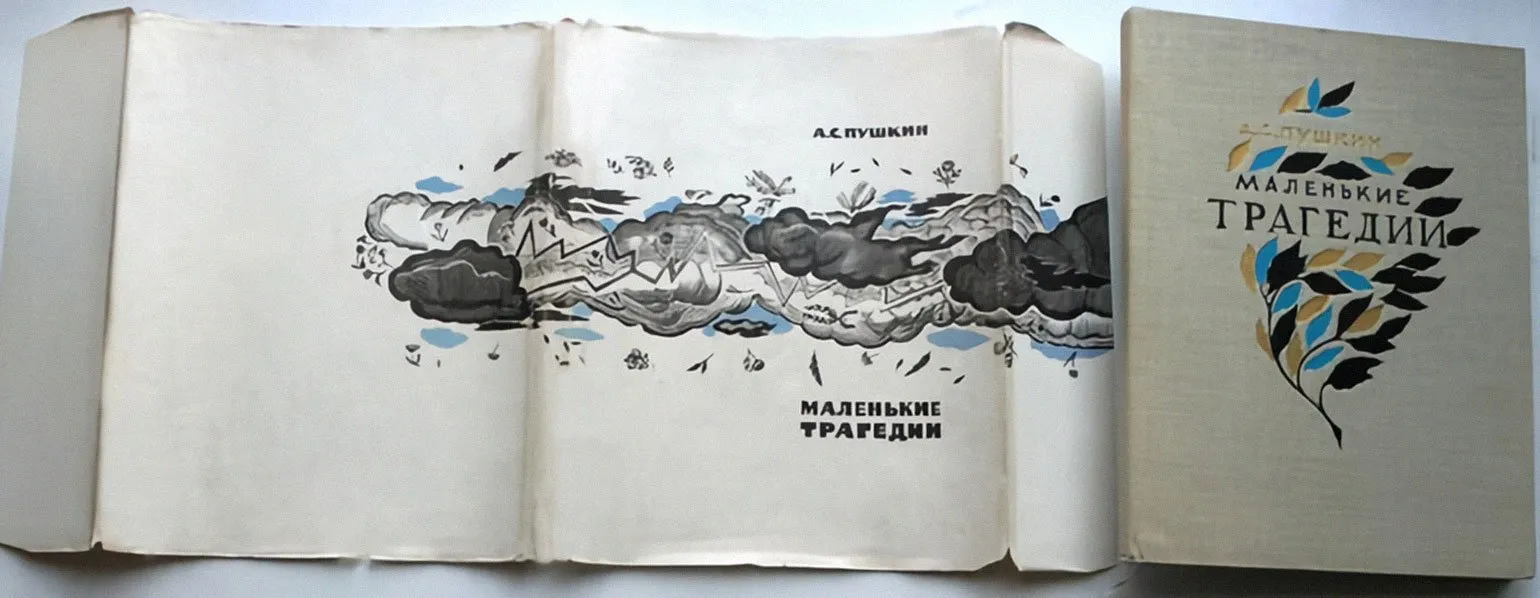
Favorsky proved himself a true master, creating not only the illustrations but also the layout, ornamentation, and typeface of the titles. His line-designed footers depict the characters' masks, lending the edition a unique character. On the dust jacket, the artist depicted a thunderstorm, and on the cover, a branch with vibrant leaves that seem to bend in the wind. These design elements make Favorsky's work not only aesthetically pleasing but also memorable, highlighting his mastery of original visual content.
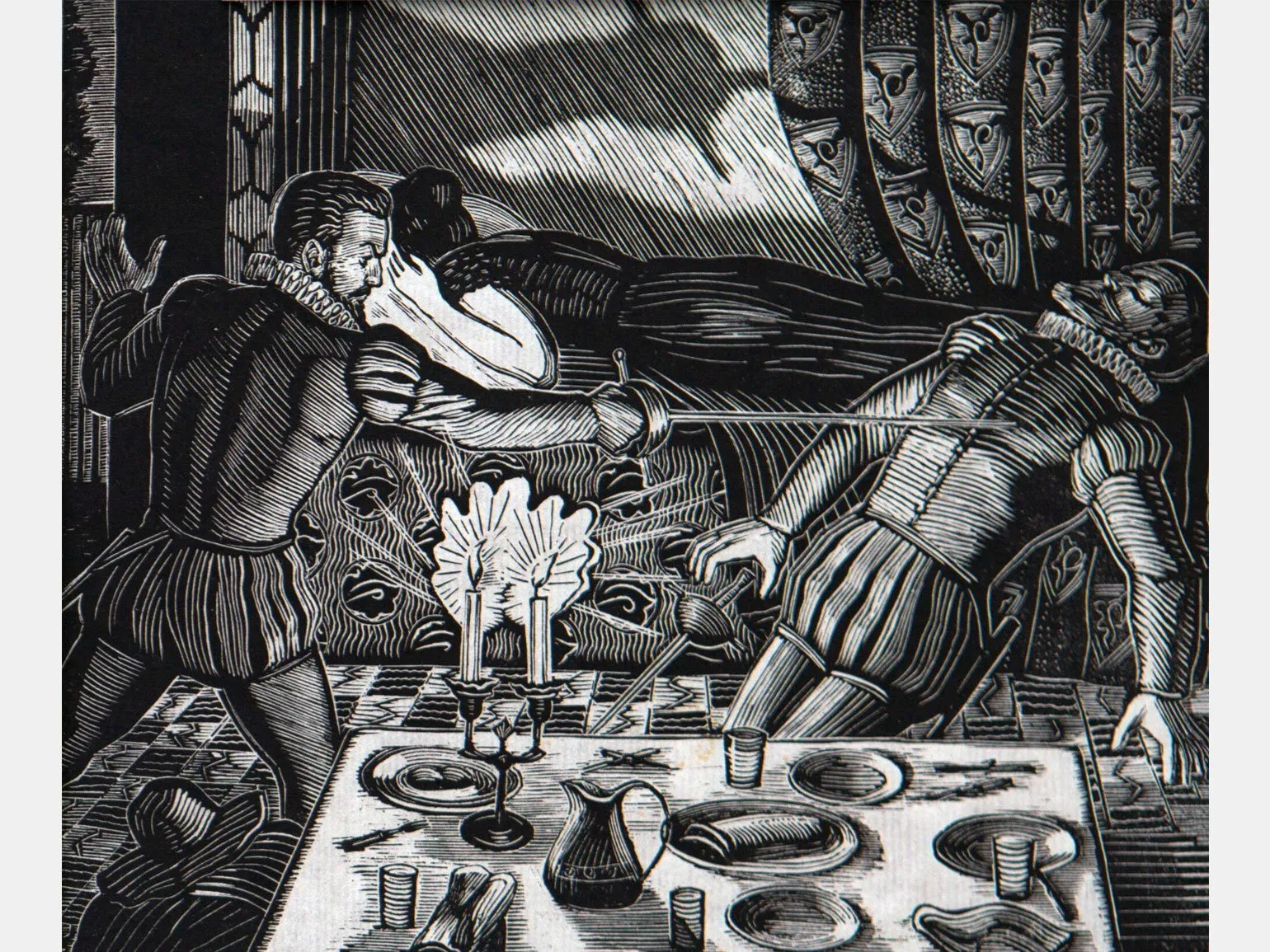
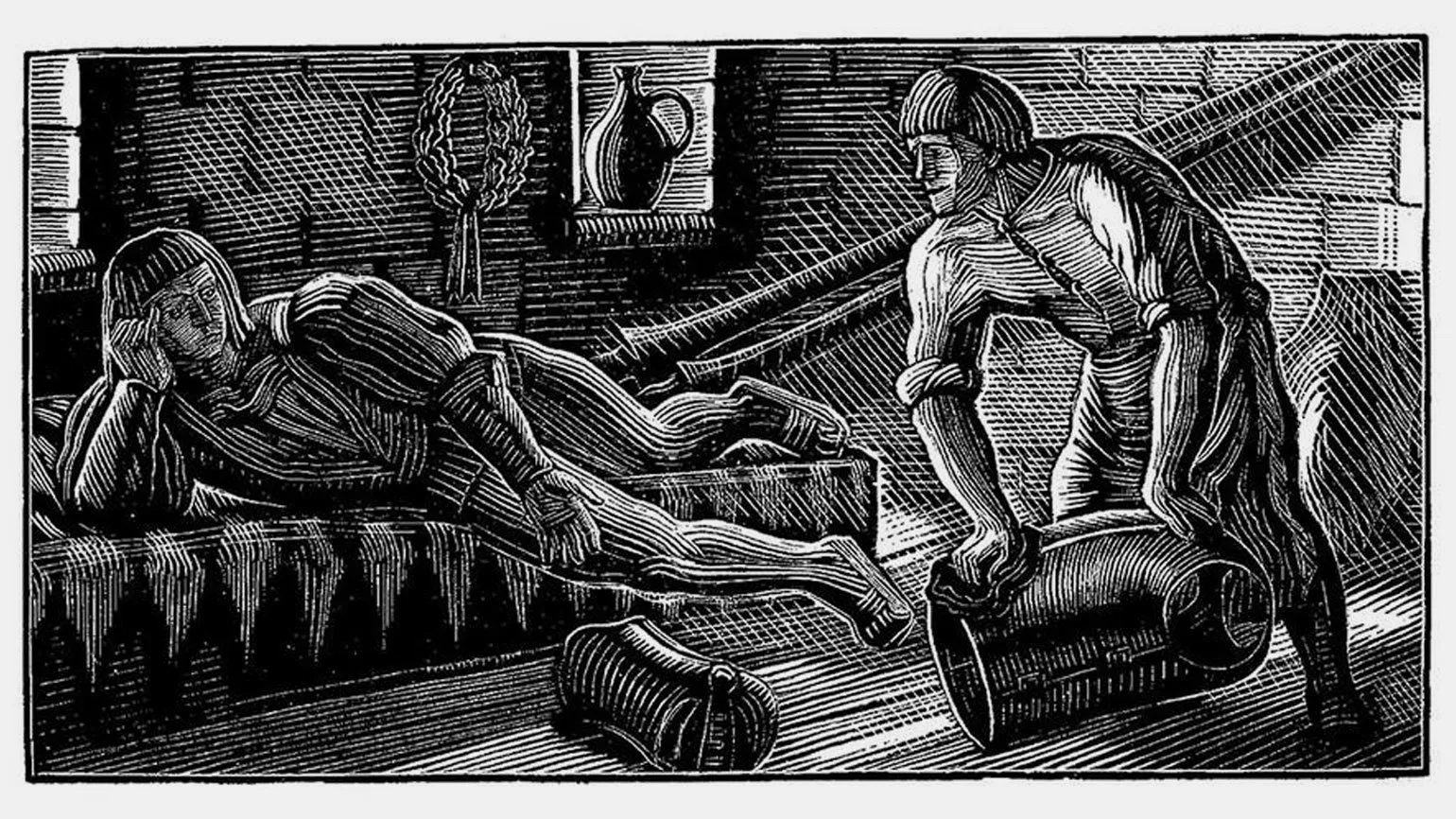
Favorsky's engravings not only illustrate the content of the plays but also create a unique emotional atmosphere for the reader. In "A Feast During the Plague," mirth is framed by an unsettling atmosphere, while in "The Stone Guest," one senses tension frozen in the shadow of a sword. Burning candles become an important element in many of the works, symbolizing the fragile light surrounded by darkness. These visual details enhance the perception of the texts and immerse the viewer in the world of the works, revealing their depth and multi-layeredness.
Learn more about design by subscribing to our Telegram channel. Receive relevant ideas and inspiration that will help you in your creative work. Don't miss the chance to keep up with the latest trends in the world of design.
Reading is an important aspect of personal development and knowledge enrichment. Regularly reading books, articles, and other materials helps improve thinking skills, broaden your horizons, and enhance your overall education. In the digital age, access to information has become easier, allowing everyone to choose appropriate reading sources. By devoting time to reading, you not only develop yourself but also gain a better understanding of the world around you.
Reading also helps improve concentration and memory, as it requires focus and analysis of what you read. Furthermore, it develops imagination and creativity, allowing you to immerse yourself in new worlds and perceive different perspectives. It's important to choose a variety of genres and topics to enrich your knowledge and interests.
To maximize the benefits of reading, it's helpful to set goals and regularly allocate time for this activity. Regardless of the format – be it books, e-publishings, or audiobooks – the main thing is that reading brings pleasure and promotes personal growth.
- El Lissitzky: inventor of a new visual language
- Monumentality and elegance: 5 projects by Vera Mukhina
- Report from the exhibition at the Zotov Center: 1922. Constructivism. Home
- The Story of One Design: Tatlin's Tower and Its Influence on Contemporary Art
Commercial Illustrator: 5 Steps to a Successful Career
Want to become a commercial illustrator? Learn 5 key steps to creating a successful portfolio and personal brand!
Learn more