Contents:
What is Sketching
Sketching is the creation of quick sketches and drawings that help visualize ideas or concepts. It is an integral part of the work of artists, designers, and other professionals who need to convey their thoughts and concepts visually.
This drawing technique has emerged and developed since ancient times, when artists used sketches to record ideas and explore forms and composition. Over time, sketching has become popular in various fields, including design, architecture, fashion, and industry.
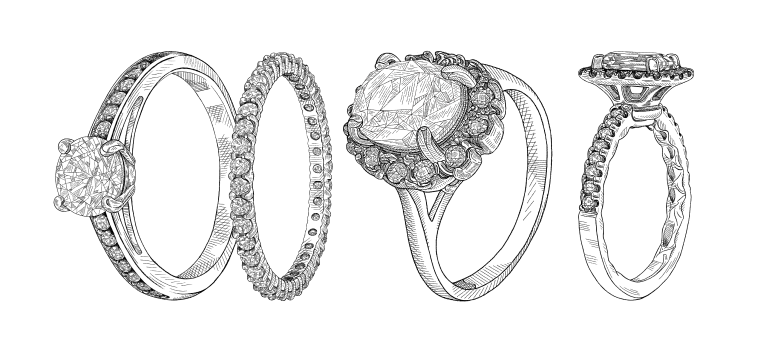
Unlike detailed and meticulous drawings, sketches have an unfinished and careless look. They capture initial ideas and emotions rather than being works of art. Sketching is characterized by its high speed, allowing the artist to quickly commit thoughts to paper.
Some artists believe that this drawing technique requires talent and professional skill. However, this skill is accessible to everyone. The main goal here is to convey an idea or concept, not to create a full-fledged work of art.

Learn how to quickly create sketches for yourself or clients on the Sketching on a Tablet course.
Learn more.Where sketching is used and how it is useful.
Sketching is a tool that helps visualize ideas, develop creative thinking, and improve communication. It can be used in a variety of fields—from design and education to business. Moreover, sketching can be useful not only professionally but also helps develop attention, memory, and concentration.
Let's take a closer look at some specific examples.
- Visualizing Ideas.Instead of relying solely on words or abstract thoughts, you depict ideas on paper or a screen, making them more concrete and understandable to others. This way, you explore different options, experiment with forms and composition, and develop your own concepts.
- Design.Designers use this technique to create concepts for products, interfaces, architectural solutions, and other projects. With their help, they can quickly visualize ideas, experiment with designs, make adjustments, and present concepts to clients or colleagues.
- Education.Sketches help students visualize and remember information, develop creative thinking, observational abilities, and analytical skills. Sketches can be used in educational materials, presentations, projects, and reports to present information more clearly and understandably.
- Business. Sketching helps visualize business ideas, create product or service concepts, design marketing materials, and improve communication within a team or with clients. Sketches help create website layouts, logos, advertising campaigns, and product prototypes.
- Benefits for cognitive functions of the brain.Russian andforeign Scientific research confirms that sketching has a positive effect on cognitive functions of the brain. It promotes the development of attention, memory, concentration, and creative thinking. Sketching stimulates brain activity, improves visual perception, and develops hand motor skills. It is useful for children, students, and professionals working in creative fields.
"I want to master sketching." We have collected life hacks for beginners.
For those who want to master the magic of sketching, the editors of Skillbox.by recommend starting with simple but exciting steps. First, let's look at the materials and tools that will be useful in the work.
- Paper for drawing or sketching.It is not necessary to immediately use special art paper, ordinary paper or drawing paper, which is much higher in quality and density, will do. If you are serious about it, you can use a sketchbook - a special notebook for sketches.
- Simple pencils. Here you need to pay attention to sets of pencils with different degrees of hardness. This will help to create different strokes and shadows.
- Eraser. It will help to correct mistakes and create highlights.
- Black gel pens, ink, mascara. Suitable for detailing and contouring.
- Markers, colored pencils, or watercolors.For more saturated and contrasting drawings.
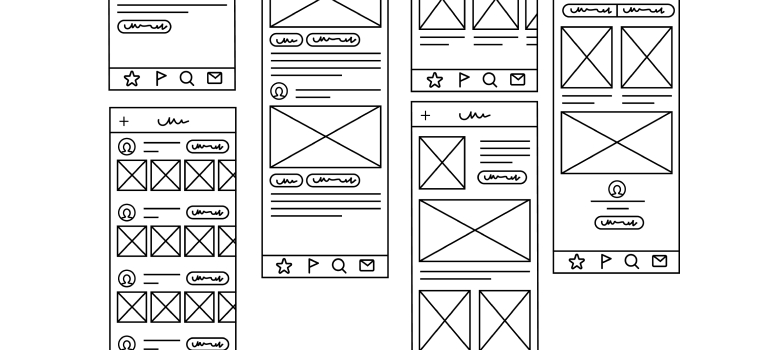
As for digital tools, the use of sketching software has opened up new possibilities and made the work more convenient. However, it's important to remember that traditional tools have their advantages and can be no less interesting and useful in the creative process. Therefore, we recommend choosing resources that suit your needs and creative style. To get started, we suggest familiarizing yourself with popular digital sketching apps:
- Autodesk SketchBook is a feature-rich and powerful digital drawing app.
- Procreate is a drawing app on iPad that offers a variety of creative tools and effects.
- Adobe Photoshop Sketch is an app from Adobe that lets you create sketches on any device.
- Concepts is a vector drawing app that lets you easily edit your work.
- Medibang Paint is a free digital illustration resource available on multiple platforms.
- Tayasui Sketches is a simple and intuitive digital drawing app for iOS devices.
❝
"Don't be afraid of mistakes and learn to enjoy the process."
After acquiring the necessary materials and exploring digital tools, we suggest familiarizing yourself with life hacks for beginners, which are also quite suitable for more experienced artists. These tips will help you unleash your creative potential and become a master of your craft.
- Start with simple objects and gradually move on to more complex compositions.You can start with lines, dashes, and geometric shapes.
- The more practice, the better. Find time for this hobby every day. Try to practice systematically, sketch everything you see around you: objects, people, nature.
- Experiment with styles.Try different styles: realism, impressionism, abstraction, etc. This will help you find a unique approach.
- Study and analyze the works of experienced artists.Observe their technique and style. For starters, you might want to check out the work of Jake Parker, an American artist, illustrator, and comic book author.
- Learn the Basics. Learn the principles of linear and aerial perspective, master shading techniques to create realistic and spatial sketches. If you work with colored materials, studying color theory will help you learn how to mix colors correctly and create harmonious palettes. If you draw people or animals, pay attention to anatomy and proportions to make your characters look more realistic. But the best way to learn the basics is to take a drawing course or attend an art school. You will gain the necessary skills under the guidance of experienced teachers.
- Connect with like-minded people. Join communities and forums of artists and sketching enthusiasts, discuss creative finds, share experiences and receive feedback.
- Don't be afraid to make mistakes. This is a process that takes time and perseverance. Mistakes are part of any process, and they help you learn and improve.
- Explore the world around you: nature, architecture, people, and objects. Practice your visual acuity.
- Remember that there are no hard and fast rules in sketching. Learn to enjoy the process and creativity.
How to Get Started with Sketching. Useful Resources
Sketching is a powerful tool for visualizing ideas and developing creative thinking. It is used in various areas of life and work. Sketching can be useful professionally and helps develop cognitive functions of the brain. And in order to get to know this useful creativity better, the editors of Skillbox.by have collected useful resources.
Literature:
- M. Babuk, J. Richards "Street Sketching".
- Felix Scheinberger "Sketches Without Borders. Bold sketches on the road, in the city, on the beach, and anywhere."
- Giovanni Civardi "Drawing. The Complete Guide."
Youtube:
- YouTube channel "Dari Art". Here you will find video tutorials on drawing objects and characters.
- YouTube channel "Azbuka Drawing". This channel teaches the basics and techniques of drawing.
Websites:
- BlogSketch Park — a resource with an extensive database of lessons, tutorials, and articles on sketching and drawing, including various styles and techniques.
- Purmix.ru — a collection of step-by-step instructions for creating sketches.
Master the course "Sketching for Interior Designers" with Skillbox
You will learn how to create interior visualizations using quick sketches. You will be able to quickly develop visual interior concepts and present them to clients.
Pick up access