
Contents:
- “Half the market doesn’t exist at all”: how automation is going in corporate training
- What systems are used and for what in Russian companies
- “Nobody asked”: how to choose platforms for corporate training
- What other tools does business use for training
- Who is trained online in Russian companies
- Does Russian business believe in ready-made solutions for corporate training?
- What role do T&D specialists play?
- How is the quality of corporate training assessed and what are the risks? unwillingness to do this
- How the pandemic and the events of 2022 have affected corporate training
“Half the market doesn’t even exist”: how automation is progressing in corporate training
Corporate training is relevant today and is in line with global trends, moving to a blended format. This approach turned out to be the most preferred, receiving the support of 92% of the surveyed company representatives. At the same time, online training occupies a leading position: on average, 63% of employees study remotely, while 37% prefer in-person training. The blended format effectively combines the advantages of both methods, optimizing the learning process and increasing employee engagement.
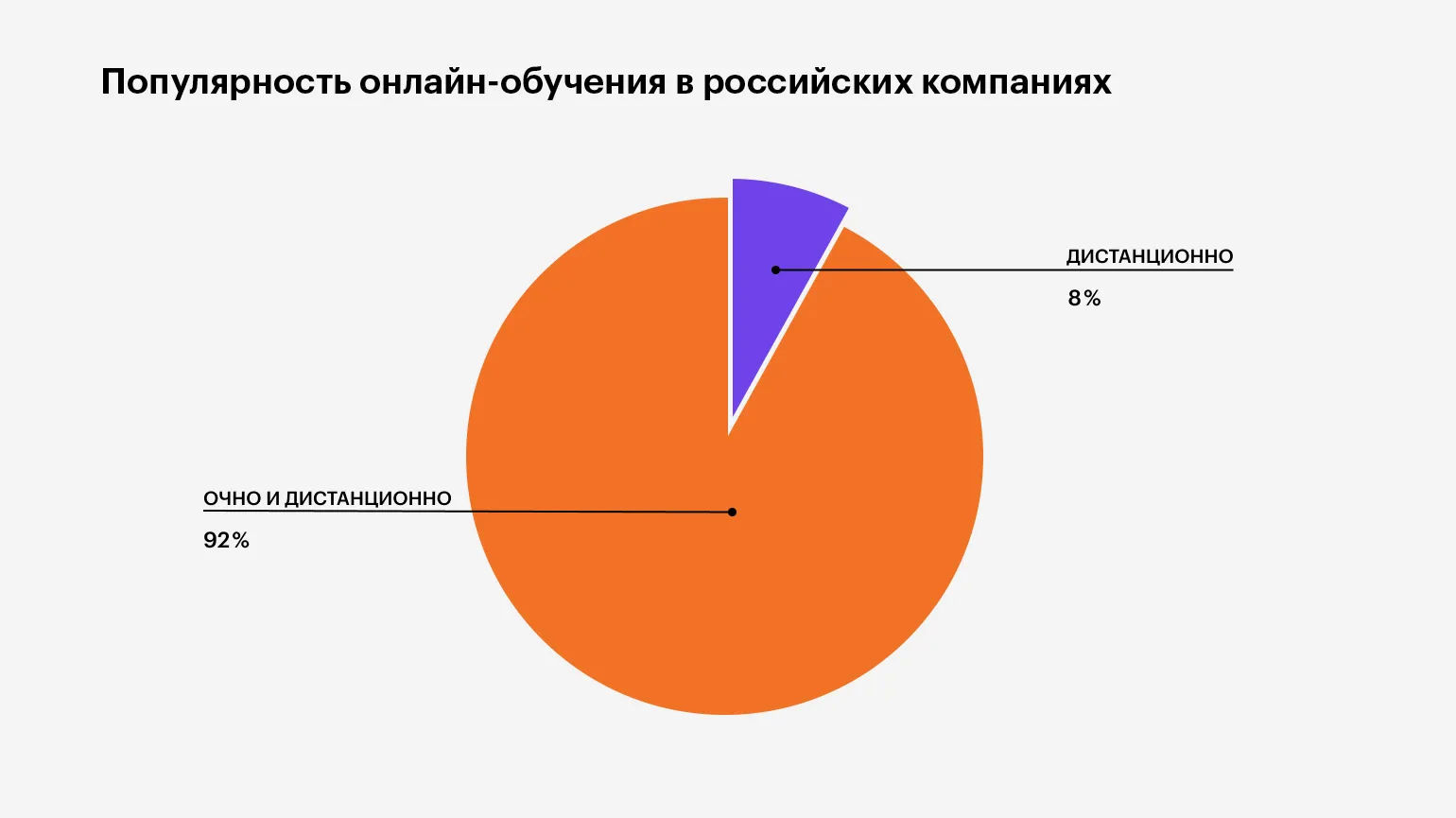
Current data highlights the urgent need for businesses to automate learning. Experts have long noted this trend, focusing not only on automation but also on finding new, expanded capabilities. Custom solutions, digital footprint creation, and adaptive learning tracks are becoming key aspects for improving the effectiveness of educational processes in companies. The implementation of these technologies allows us to optimize training, make it more personalized and relevant to the needs of employees and the business as a whole.

Reworked text:
Be sure to read the additional materials.
Read more:
Six Innovative Technologies Shaping Corporate Training
Corporate training is becoming an increasingly important element of successful business. With rapid changes in technology and market needs, companies must adapt and implement new approaches to employee training. Let's consider six of the most promising technologies that can significantly improve the corporate training process.
Virtual reality (VR) and augmented reality (AR) offer unique opportunities for creating interactive and immersive training programs. These technologies allow employees to practice skills in a safe environment, which is especially important for professions that require a high degree of interaction with equipment or people.
Artificial intelligence (AI) significantly improves training personalization. AI algorithms can analyze employee behavior and performance, offering personalized learning paths and resources, which increases training effectiveness and employee motivation.
Mobile learning is becoming the standard in the corporate sphere. Employees can access training materials anytime and anywhere, allowing them to learn at their own pace. This is especially important for teams working remotely. Cloud technologies provide convenient storage and access to training resources. Companies can share materials and track employee progress in real time, improving communication and collaboration. Gamification of training helps increase employee engagement. Using game elements such as points, levels, and rewards makes the learning process more engaging and motivating. Data analytics allows companies to more accurately evaluate the effectiveness of their training programs. Collecting and analyzing employee performance data helps identify weaknesses and optimize the training process. Integrating these technologies into corporate training not only improves its effectiveness but also fosters a culture of continuous learning within the company. The implementation of advanced technologies allows organizations to remain competitive and prepared for future challenges.
According to the results of an Equio study, the reality of automation in Russian corporate training differs significantly from commonly held beliefs. The data shows that the use of LMS (distance learning systems) is actively being adopted by corporations, confirming the growing influence of automation on corporate educational processes. This shows that the integration of new technologies into training is becoming an important step in improving the efficiency and quality of corporate training in Russia.
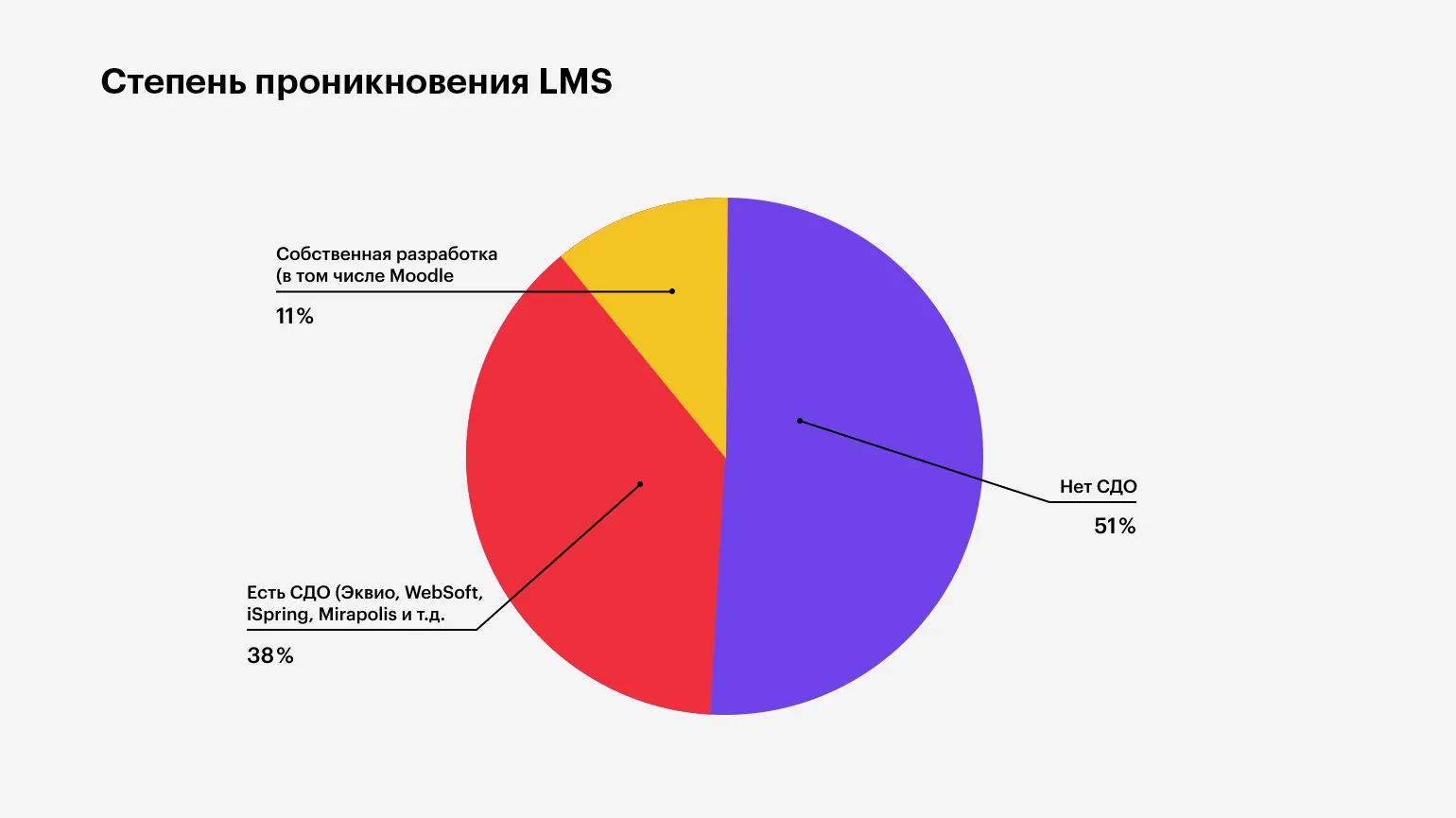
According to According to research, 51% of companies do not use these systems. Among these organizations:
- 79% are small and medium-sized businesses;
- 84% are located in the regions.
Alexey Vagin noted that "half the market is essentially absent." He suggested that small companies can effectively use alternatives to distance learning systems (DLS), which gives them advantages unavailable to larger organizations. This emphasizes the importance of flexibility and adaptability for small businesses in today's market.
Vagin noted that training automation primarily affects large companies and organizations located in major cities. Business specialization also influences the spread of corporate distance learning. This training format has gained the greatest popularity in such areas as retail, services, banking, and information technology. At the same time, in industries such as industry, manufacturing, agriculture, construction, and government agencies, distance learning is much less common.
Which systems are used and for what purposes in Russian companies
Among users of distance learning systems (LMS), 38% prefer solutions from well-known vendors such as Equio, iSpring, and Mirapolis. The remaining 11% develop their own learning platforms using various builders. The choice of a suitable system depends on the needs of the organization and the training goals, which emphasizes the importance of a high-quality approach to choosing a LMS to ensure an effective educational process.
Research has shown that distance learning systems (LMS) play an important role for companies. Among the main goals identified by respondents, training ranks first. This is due to the need to improve the qualifications of employees and acquire new skills. In second place is onboarding and adaptation of new employees, which was the main goal for almost a third of survey participants, while a slightly smaller number indicated it as a secondary task. These data highlight the importance of implementing effective distance learning systems in the corporate environment.
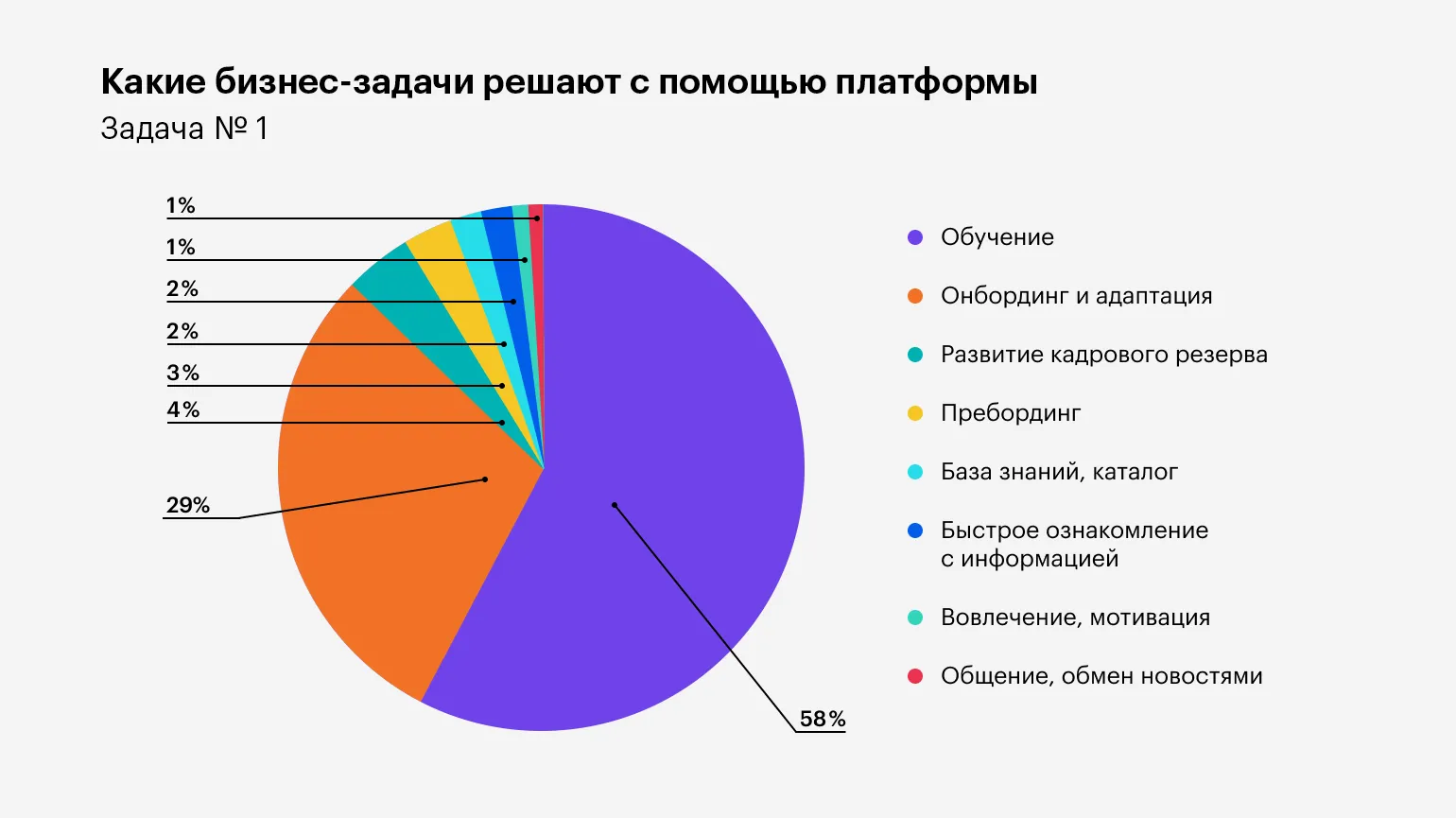
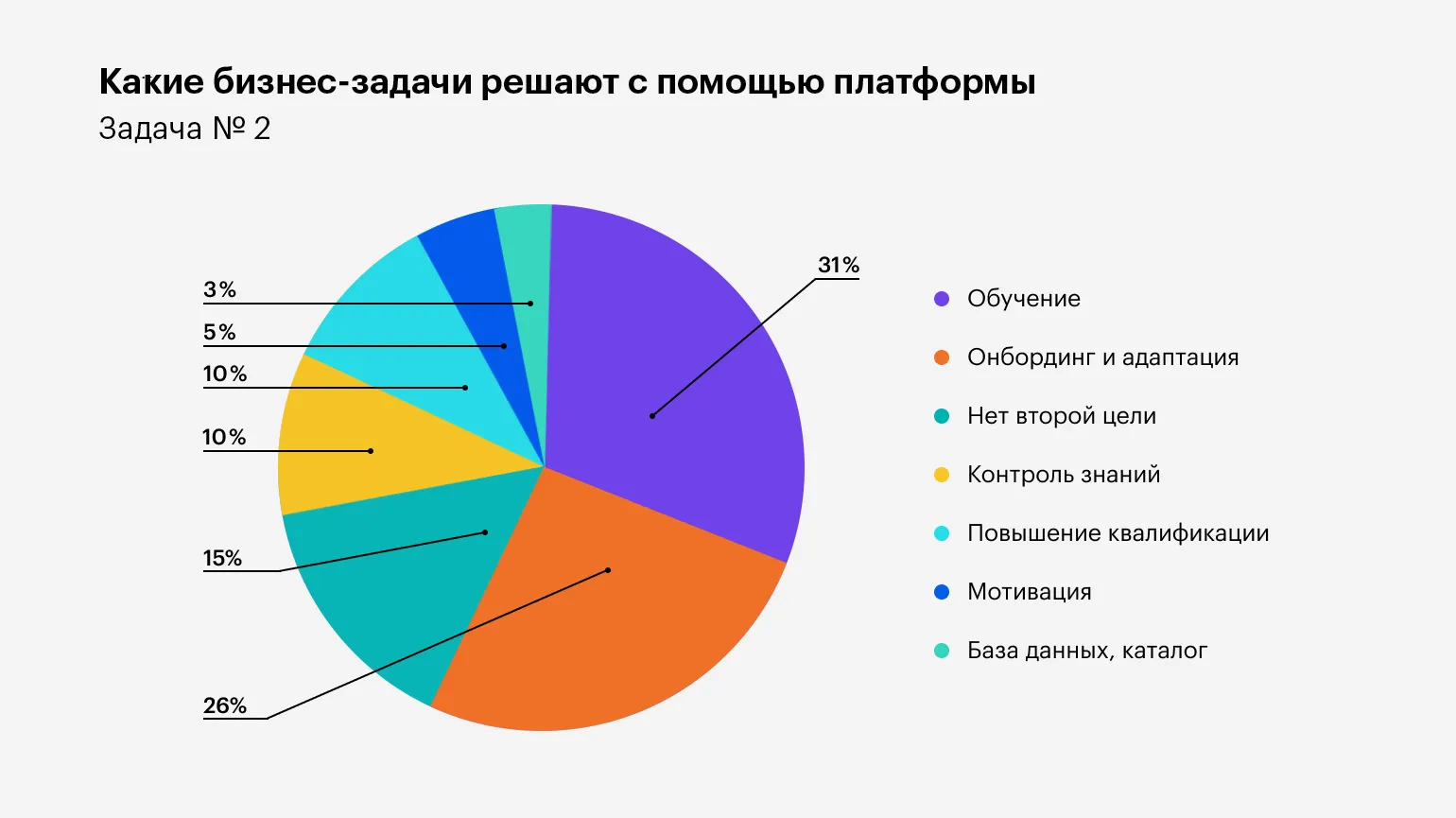
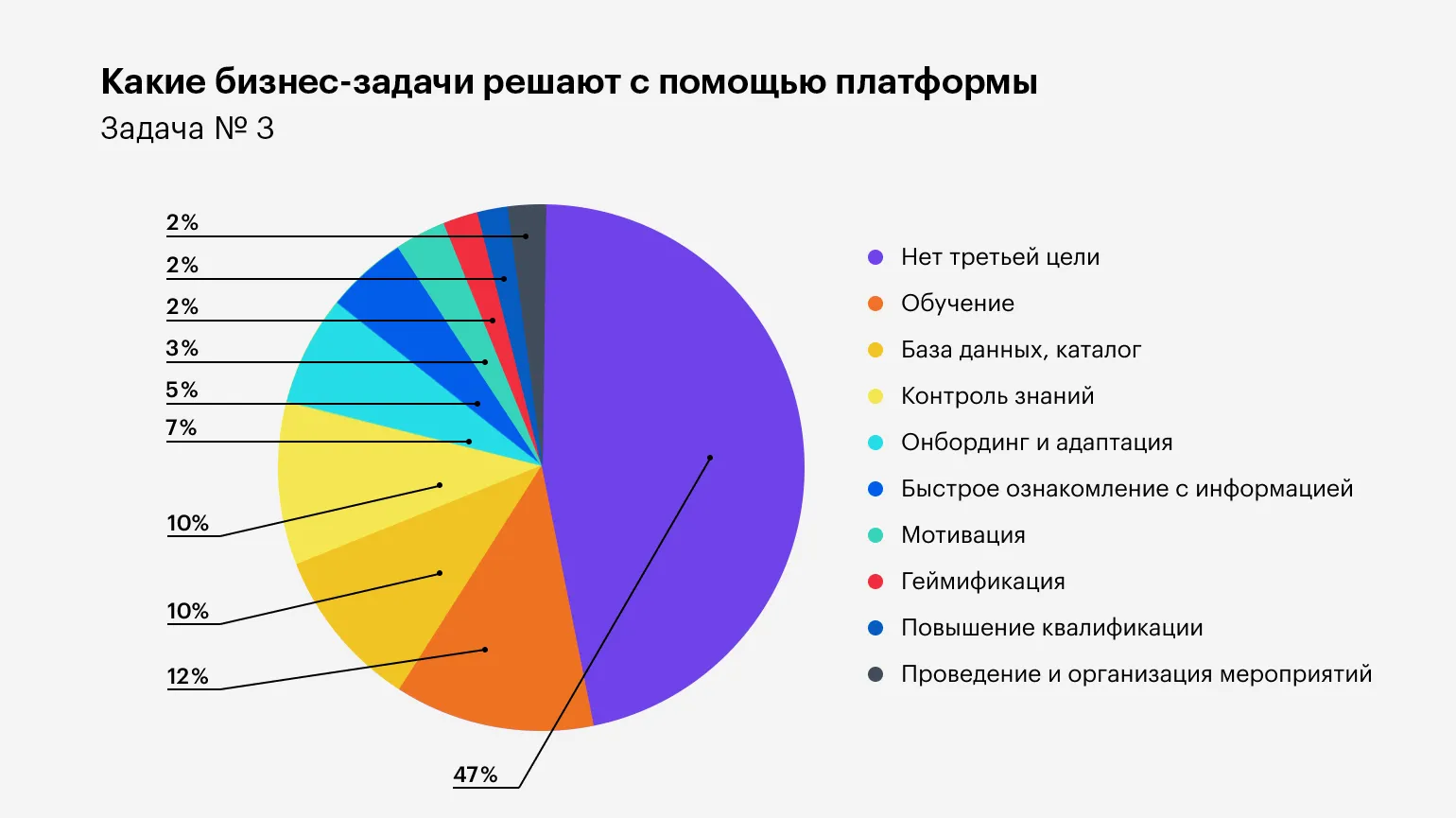
15% of companies do not have the second goal, and 47% do not have the third goal. Nevertheless, the responses highlight the use of knowledge bases and control over employee knowledge, which is practiced in a certain percentage of companies. At the same time, news portals, gamification, and engagement have had little impact on Russian corporate training. This suggests that many organizations are not focusing on modern learning methods, which can reduce the effectiveness of educational processes and employee development. It is important to consider implementing new approaches and technologies that can significantly improve the quality of corporate training and increase employee engagement. Today, even active users of distance learning systems (DLS) expect little more than standard functionality. This indicates that many additional features developed and proposed by developers remain unnoticed and unclaimed.

Read also:
Creating content for distance corporate training: an overview of possibilities
Distance corporate training is becoming increasingly relevant in modern conditions. Effective online training content should not only be informative but also engaging for employees. When developing such content, it's important to consider several key aspects.
First, it's important to identify the target audience. Understanding the needs and skill level of employees will help create materials that are truly useful. Second, it's important to use a variety of content formats, such as videos, text materials, interactive assignments, and quizzes. This will make training more engaging and promote better information absorption.
Third, it's important to use modern technology. Online training platforms offer a variety of tools for creating and distributing content. Choosing the right platform can significantly simplify the process and improve the quality of training.
It's also worth paying attention to regularly updating materials. The corporate environment is dynamically changing, and the information presented in courses must remain relevant. This requires constant monitoring of industry changes and adapting content to new requirements.
Finally, it's important to consider employee feedback. Analyzing feedback will help identify weaknesses in training and make necessary adjustments. Incorporating gamification and social engagement elements can also increase engagement in training.
Creating high-quality content for corporate distance learning is a complex process that requires attention to detail and continuous improvement. Success depends on the ability to adapt to changing conditions and learners' needs.
According to a study conducted by eLearning Center, entertainment elements in training are not as important to employees as it might seem at first glance. More than 70% of respondents would prefer a course with practical examples and tasks, in a concise format, to a course with an unusual plot and a bright design. This emphasizes the importance of a practical approach to training and confirms that the content and applicability of the material are of higher value to employees than entertainment aspects.
"Nobody Asked": How to Choose Corporate Training Platforms
According to the study, the majority of respondents are unaware of the reasons why their companies chose a particular distance learning system (DLS). The decisions on choosing a LMS were made a long time ago, and the participants do not have a clear idea of the criteria that influenced this choice.
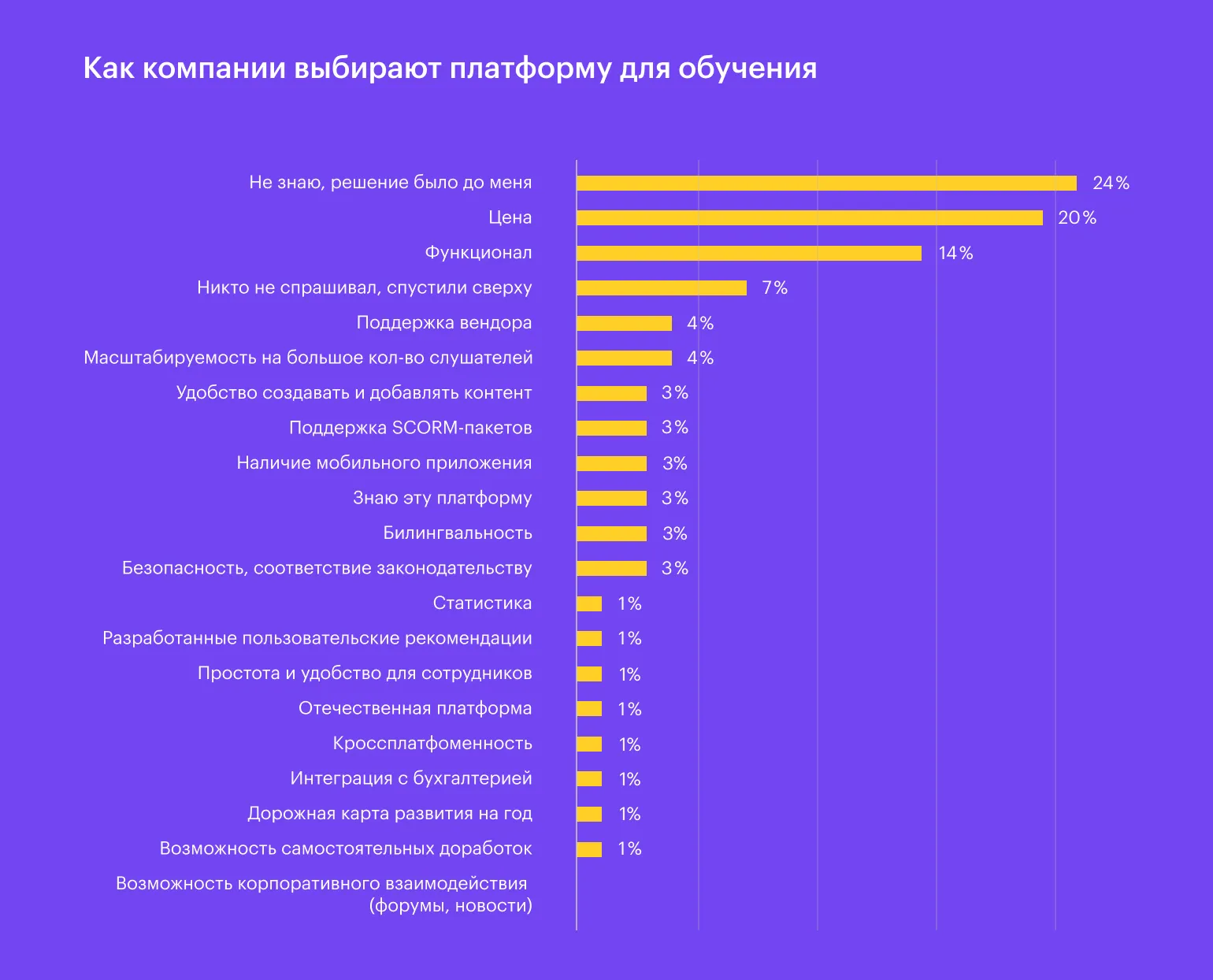
This category most often includes specialists working with WebSoft, SAP, and Moodle systems, as well as users of in-house developments, according to the study's findings.
Learning management platforms (LMS) are updated infrequently, and their choice is usually made for the long term. Pavel Bezyaev noted that there is a lot of talk in the market about companies actively seeking new LMSs or changing existing solutions. This is due to the fact that many organizations are facing various challenges that do not suit them. Choosing the right learning management platform is becoming increasingly important as companies strive to adapt to new requirements and improve the employee learning process.
Alexey Vagin confirmed that the frequency of corporate learning platform updates remains low. Many companies prefer to continue using existing systems, not wanting to invest in upgrades or complete replacements. This reflects a sustainable business approach to training and development costs. With limited budgets, organizations often choose to maintain existing solutions, even if they are already outdated.
When choosing a distance learning system (LMS), price remains a key factor. However, experts also identified a less common but interesting aspect: many users state that their opinions on the choice of LMS were not taken into account, and the decision was made from above. This underscores the importance of involving end users in the LMS selection and implementation process, which can improve learning effectiveness and user satisfaction.
The decision to purchase educational products is often made by people other than those who actually use them, noted Alexey Vagin. This trend is negative, as experts have repeatedly emphasized that user experience is no less important than the content itself. User-friendly and tailored resources facilitate more effective information acquisition and increase learning engagement. Therefore, it is important to consider the opinions of end users when selecting educational materials.
What other tools do businesses use for training?
Almost 95% of surveyed company representatives use various services in their work, not limited to distance learning systems (DLS). According to Pavel Bezyaev, this indicates a positive trend: corporate ecosystems are becoming more complex and are not focused on the capabilities of a single product. This variety of tools allows companies to adapt to changing conditions and market demands, which contributes to increased efficiency and competitiveness.

Reading is an important part of our lives. It develops intelligence, improves vocabulary and broadens horizons. Books, articles and blogs provide us with the opportunity to learn new things and immerse ourselves in various topics. Reading also helps develop critical thinking and form one's own opinion. In today's world, where information is available in any format, it's important to choose quality sources and devote time to reading. Immersing yourself in text not only enriches your knowledge but also promotes personal growth. Regular reading helps develop imagination and creativity and improves writing skills. Don't forget to set aside time for reading—it's an investment in your future. EdTech services for corporate training are becoming a veritable "zoo of solutions" due to the diversity of platforms and tools offered on the market. This diversity makes it difficult for organizations seeking to optimize their employee learning processes to choose the right solutions. Each platform offers unique features, but the lack of a unified system can lead to confusion and inefficiency. Companies face the need to integrate multiple tools, which increases costs and complicates educational process management. It's important to choose EdTech solutions that not only meet business needs but also create a unified educational space that promotes employee skill development.
Optimizing corporate training requires careful analysis and selection of appropriate EdTech services to avoid turning the learning process into a "zoo of solutions." Investing in comprehensive platforms that offer integration of various tools and functionality can significantly improve training effectiveness and reduce costs.
According to the study, 52% of companies use two additional services in addition to distance learning systems (LMS), and 12% of organizations use three or more applications. Yandex.Telemost was cited as the second most popular service by 17% of respondents. This indicates a growing interest in additional tools that help optimize the process of training and professional development of employees.
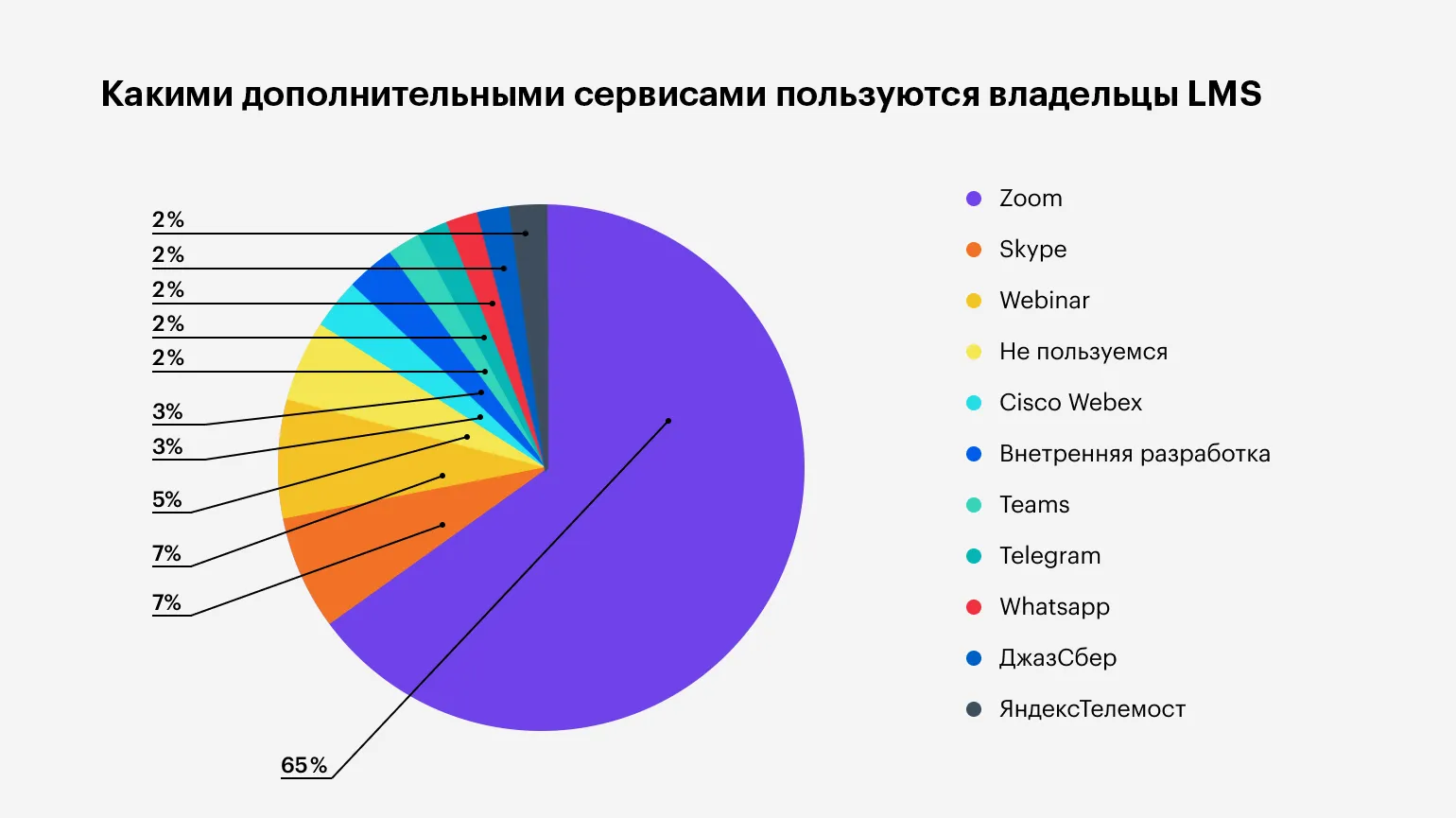
Zoom continues to be the leader among video conferencing platforms, remaining popular with 65% of companies despite emerging payment difficulties. This platform offers convenient tools for online meetings and collaboration, making it popular even during financial difficulties. Speakers note that this is an example of how a non-core product was able to capitalize on the crisis thanks to its popularity. Skype and Webinar, also well-known solutions for Russian users, took second and third place. These platforms have demonstrated the importance of awareness and trust in a product in an unstable environment.

Please note the following materials:
Zoom has become an integral part of our daily lives, especially in the context of remote work and online learning. However, many users are not aware of the useful features that can significantly improve the experience of using this platform. In this article, we'll cover seven features that will help you get the most out of Zoom.
First, the virtual background feature allows you to hide your surroundings by adding an image or video instead. This is especially useful for business meetings or webinars where a professional atmosphere is essential.
Second, the ability to record meetings allows you to capture important moments and share them with those who couldn't attend. Recordings can be useful for analysis and improving team performance.
The third useful feature is the ability to create polls during meetings. This allows you to engage participants and receive feedback in real time, making communication more interactive.
The fourth feature is the use of breakout rooms. They allow you to divide participants into small groups to discuss specific topics, which promotes deeper interaction and exchange of opinions.
The fifth useful feature is integration with other applications. Zoom supports a variety of third-party services, allowing you to integrate it into your workflows and increase productivity.
The sixth feature is the ability to manage participants. The host can mute microphones, control video, and share the screen, which helps maintain order during meetings.
Finally, the seventh feature is the use of hotkeys. They allow you to quickly perform actions, such as turning on and off video or a microphone, which saves time and makes using the platform more convenient.
Knowing these features will help you use Zoom more effectively and improve the quality of your meetings and interactions with colleagues and partners.
Who is trained online in Russian companies?
According to research, online training is mainly used for line staff, salespeople, interns, as well as freelance and regional employees. This is due to the fact that many of these workers are in the field and need training without interrupting their main activities. Furthermore, distance learning simplifies the employee training process by eliminating the complex logistics associated with traditional training methods.
Employees are trained to effectively use internal systems and equipment, as well as to develop a deep understanding of the company's products. An important aspect of training is familiarization with the organization's internal policies, which promotes more productive work and team integration.
Company executives strive for online training to improve business results, accelerate the recruitment process, and increase employee performance. This is confirmed by research data, which emphasizes the importance of high-quality training in modern business. Effective online training programs help not only develop employee skills but also achieve the organization's strategic goals.
Does Russian business believe in ready-made corporate training solutions?
The study once again confirmed a persistent trend: companies are increasingly opting for in-house training rather than outsourcing it. This approach allows organizations to more effectively tailor training programs to their needs, improving employee skills and overall productivity. Internal training also strengthens corporate culture and allows for better alignment with business specifics.
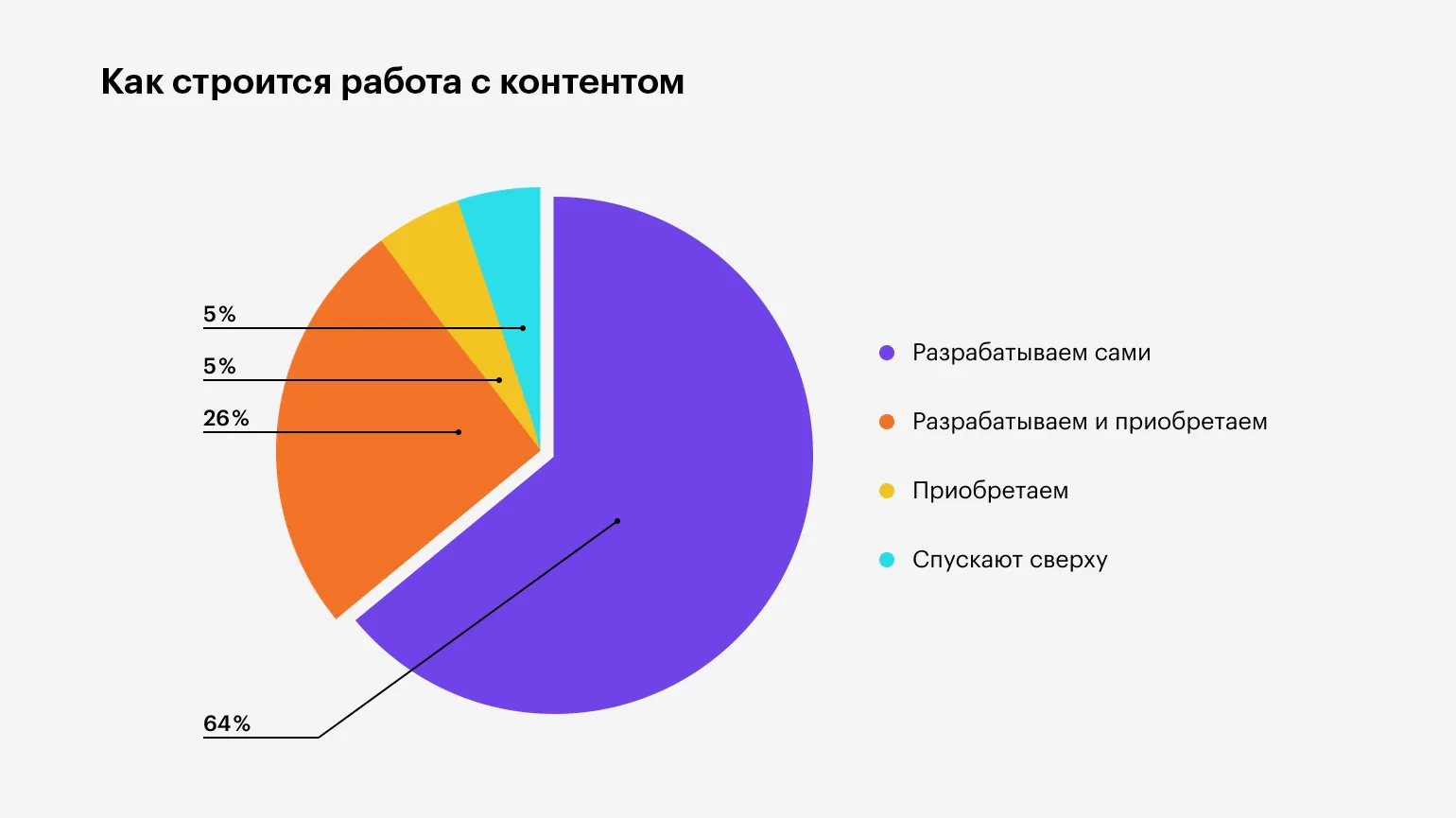
According to Equio, 90% of organizations create their own training content. Of these, 26% occasionally purchase ready-made courses, while only 5% of respondents exclusively use ready-made programs. This can be explained by two main reasons. First, many companies strive to tailor training to their specific needs and goals, making custom-developed content more effective. Second, creating their own training materials allows organizations to control the quality of information and update it in line with industry changes.
The creation of in-house training products is driven by a common and widely discussed reason. The business community distrusts one-size-fits-all solutions, fearing that off-the-shelf training courses won't address the unique needs and characteristics of a particular company. As a result, developing customized training programs is becoming increasingly important for achieving more effective results and improving employee skills.
Corporate universities are reluctant to establish partnerships with EdTech, which is a primary reason for their reluctance. They are also reluctant to acquire courses that are already popular among employees in person.
Many companies are turning to online schools to enhance their employees' skills. These platforms offer a variety of courses that help develop professional skills, improve productivity, and adapt to market changes. Popular online schools include Coursera, Udemy, Skillshare, and LinkedIn Learning. These resources provide access to high-quality educational materials developed by experts in various fields.
Companies choose online schools for their flexibility and the ability to study at a convenient time. This is especially important in a remote work environment. Online courses cover a wide range of topics, from project management and marketing to programming and finance.
Integrating online learning into corporate culture not only improves employee knowledge but also promotes motivation and engagement. Using such platforms helps companies remain competitive by ensuring the continuous development of their employees' skills.
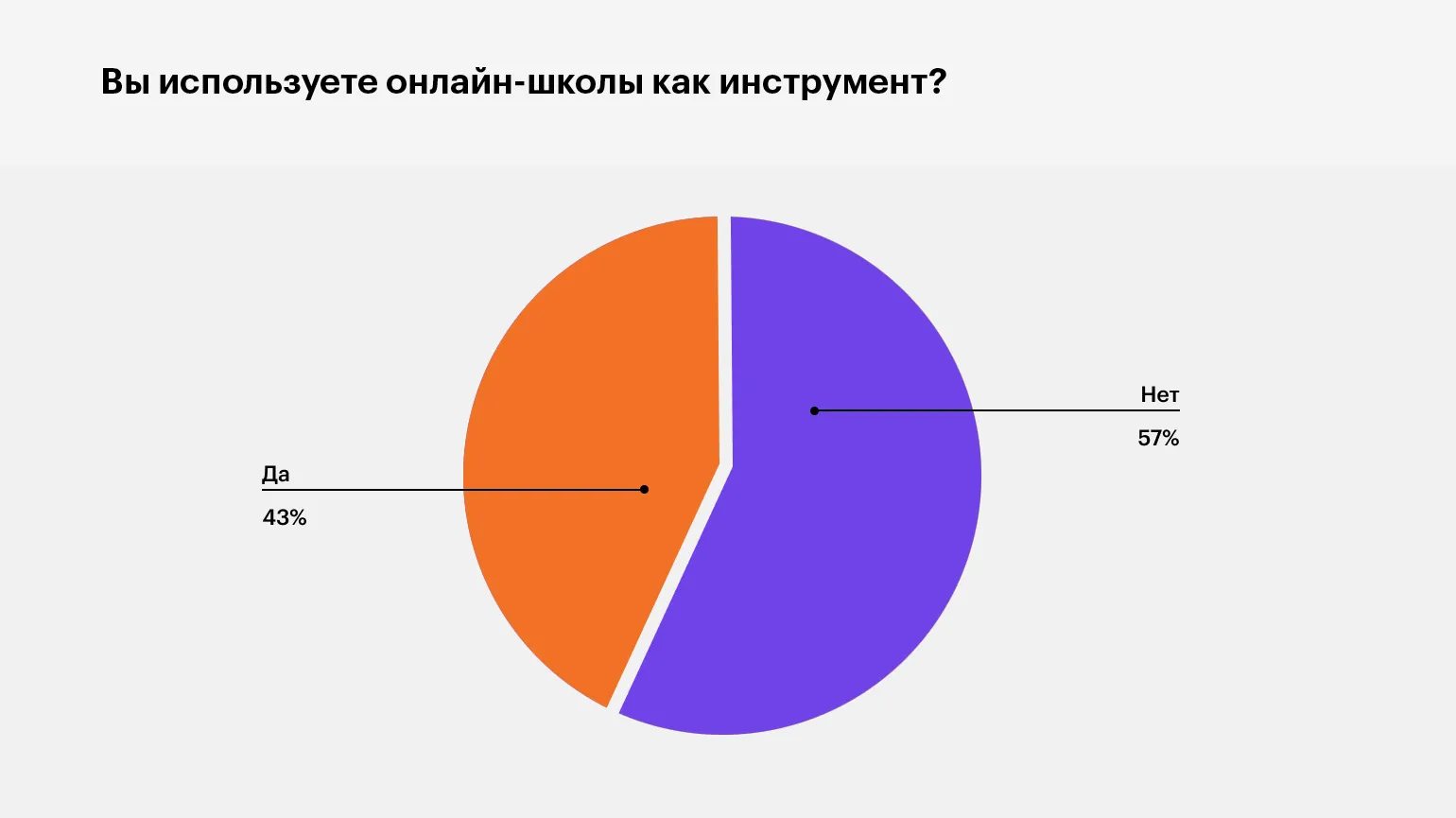
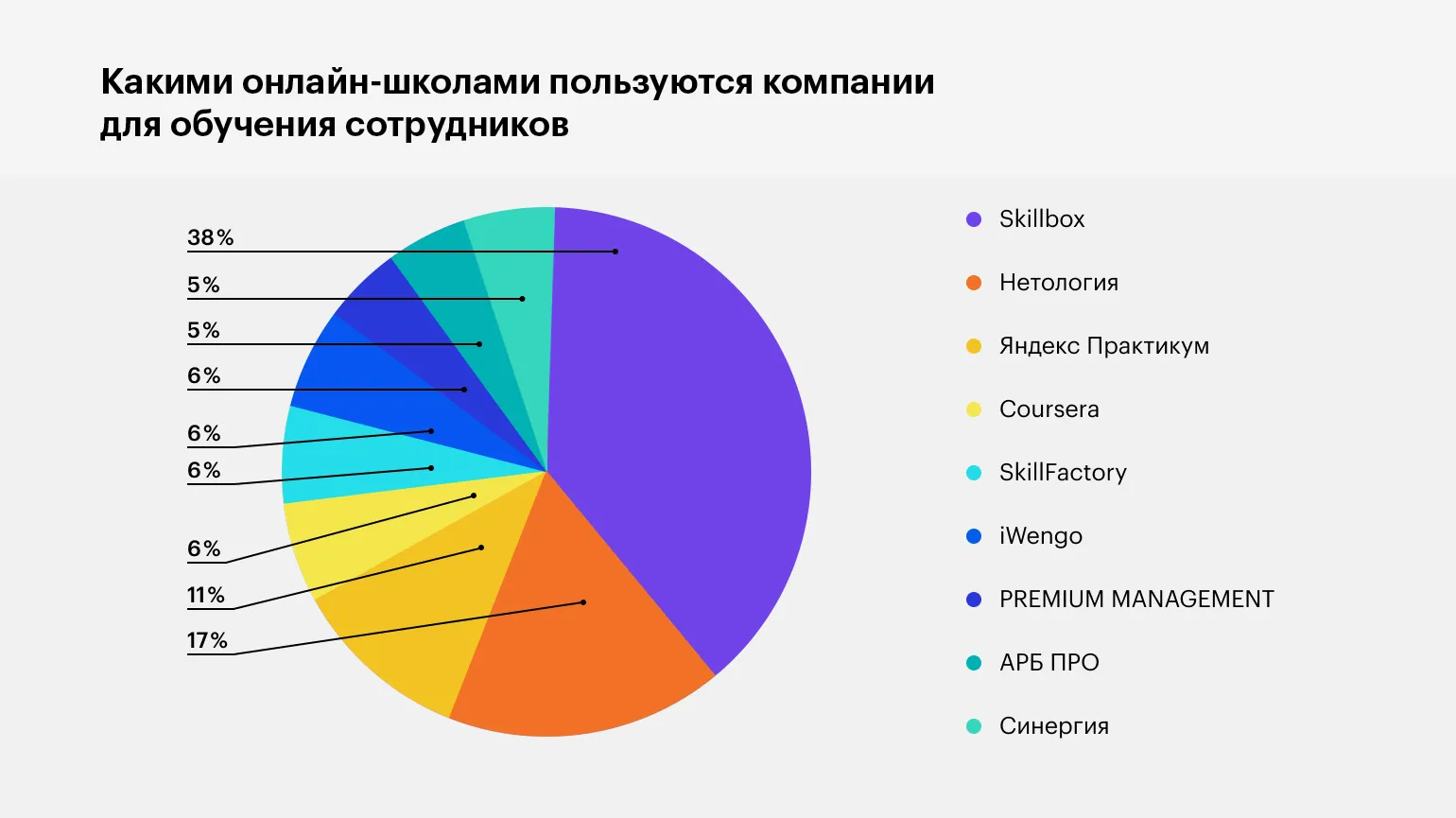
According to the study, 57% of respondents do not interact with online schools, while the rest do so only periodically, when necessary. At the same time, as the study's authors show, none of the companies employ a systematic approach to organizing the educational process. This highlights the need to improve interaction strategies and increase user engagement on educational platforms. Online schools offer a wealth of resources and knowledge, but there is a myth that each company possesses a unique methodology and in-depth knowledge. It is unclear what needs to happen for companies to realize this. However, it is worth noting that none of them have stated that they use EdTech resources. Pavel Bezyaev emphasizes this fact, confirming that the knowledge available in online education can be shared and useful for everyone. Among the online schools that periodically successfully sell courses to the corporate segment are Skillbox, Netologiya, and Yandex.Practicum. Coursera, which has left the Russian market, ranked fourth. These platforms offer a variety of courses tailored to business needs, making them attractive to corporate clients.
This platform has joined the list of popular libraries of ready-made content used for training in Russian companies. Other libraries mentioned include Alpina, MIF, and MyBook. In addition, 3% of respondents reported that their organizations have a paper library.
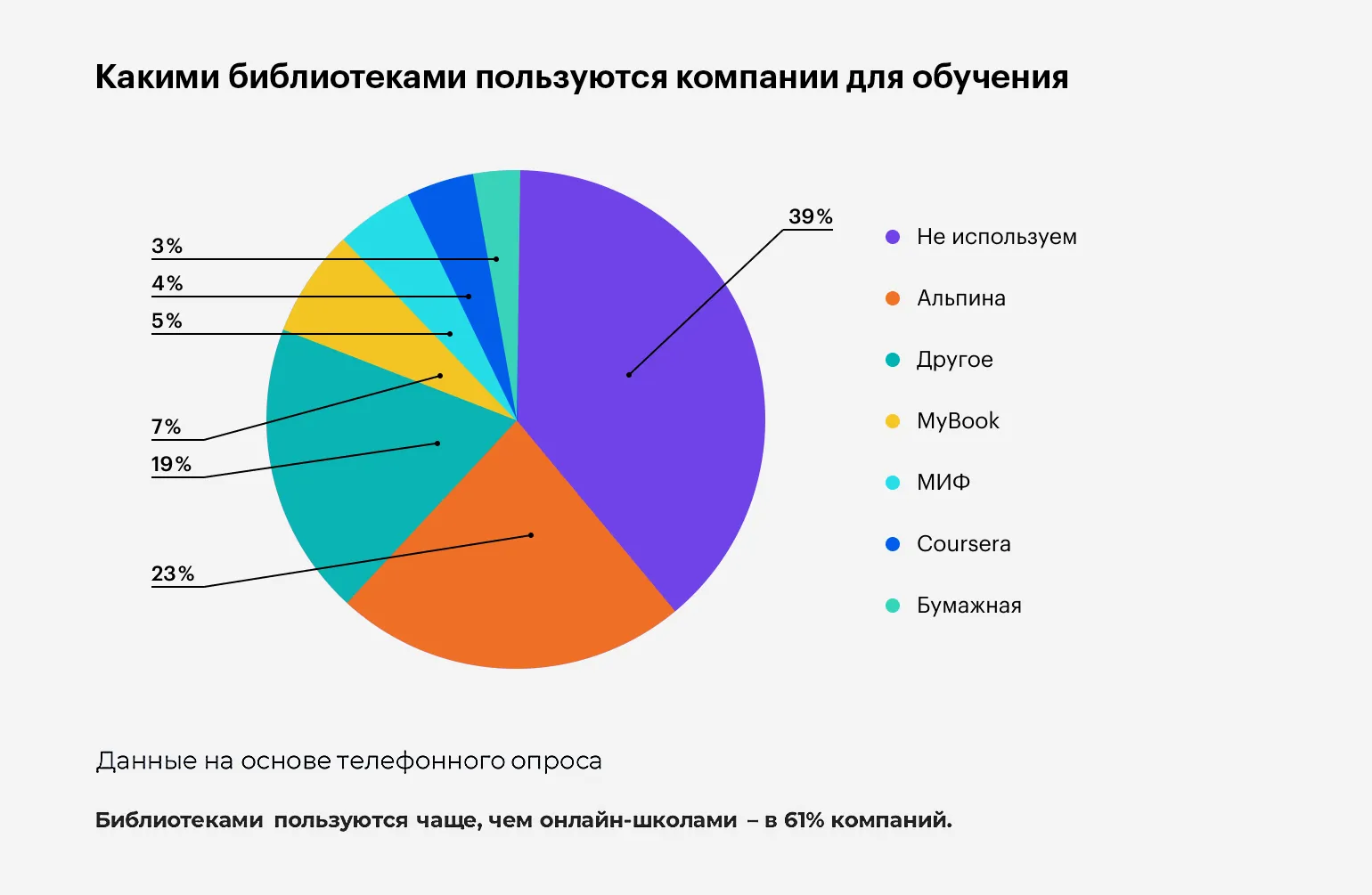
Pavel Bezyaev noted that different people can interpret this wording differently. This highlights how libraries of ready-made content are perceived in the field of training and development (T&D). Content libraries play a crucial role in creating effective training programs by providing ready-made materials and resources that can be adapted to specific needs. By analyzing different opinions, we can better understand the needs and preferences of users in this area.

Reading is an important part of our lives, and it opens up new horizons for us. Books, articles, and blogs provide an opportunity to expand your knowledge and develop critical thinking. Regular reading improves concentration and memory, and helps develop imagination. It's important to choose a variety of genres and topics to enrich your experience. Don't forget about recommendations and reviews, which can help you find interesting works. Read to develop and enjoy new discoveries.
Renting Courses for Corporate Training: Is It Worth the Investment?
Corporate training is becoming increasingly important for companies looking to upskill their employees and improve productivity. One solution that is gaining attention is renting courses for corporate training. But is it worth the effort?
Renting courses allows companies to access high-quality educational materials and programs without having to develop them. This can significantly save time and resources. However, before deciding on such rental, it is necessary to evaluate a number of factors.
First, it is important to consider the specifics of your company and the needs of your employees. The courses you rent should align with your goals and objectives. Second, it is necessary to evaluate the quality of the programs offered. Research reviews and ratings to ensure they are truly effective.
Also, pay attention to the flexibility of renting. Some companies offer the option of customizing courses, which can be a significant advantage.
In conclusion, renting courses for corporate training can be a profitable solution if you carefully select the programs and ensure they meet your business requirements. This will allow you to improve the skills of your employees and reach new heights in your company.
The second reason why in-house training is becoming increasingly popular is its cost. However, developing your own training materials does not always lead to savings. The costs of maintaining a training and development (T&D) department and creating courses can significantly exceed the costs of purchasing ready-made training programs or renting them. Therefore, organizations should carefully evaluate their resources and goals before deciding to launch in-house training.
The myth of the need to develop unique products adapted to specific companies is becoming increasingly widespread. In the context of the current trend towards reducing training costs, this issue is becoming especially relevant. Pavel Bezyaev emphasizes that such a need may be nothing more than an illusion, requiring a rethinking of approaches to employee training and development.
Experts note that this situation also has positive aspects. Course development and content creation have become widespread and in-demand. This opens up new opportunities for education and marketing specialists, allowing them to adapt to modern market demands.
What role do T&D specialists play?
Creating in-house courses is most often the responsibility of in-house training departments. According to statistics, only 26% of organizations outsource educational program development, while 64% prefer to develop courses and their content in-house. This indicates a growing trend towards internal training and adaptation of educational materials to the specific needs of the organization.
In According to surveys, 77% of representatives in most companies claim that learning and development (T&D) specialists act as "universal soldiers" and are jacks of all trades. This means that developing online learning is just one of many tasks they perform in their daily work. This approach can impact the quality of educational programs and their effectiveness in the context of continuous employee development.
The study's authors stated that the role of a learning specialist in modern companies is similar to that of a project manager. They accept assignments from an internal business client and manage a team consisting of methodologists, designers, editors, trainers, and IT specialists. This approach allows for the effective organization of the learning process and ensures high-quality training that meets business needs. The learning specialist becomes a key link linking various professional fields to achieve the company's overall goals.
Pavel Bezyaev points to the pandemic as the main reason for changes in the educational sector. Previously, only a few instructors were involved in distance learning, but the forced transition to online learning has virtually erased the boundaries between traditional and distance learning. "Instructors who previously worked exclusively in the classroom now consider themselves generalists. Perhaps those who initially specialized in distance learning have also adapted to the new conditions," he noted. This change underscores the importance of flexibility and a willingness to innovate in the educational process.
In Russian companies, on average, there is one training specialist for every 263 employees. An increase in the number of employees within an organization leads to the growth of the training and development department, which, in turn, increases the scope of tasks assigned to specialists. Effective training and development of personnel are becoming key factors in increasing the productivity and competitiveness of companies. It is important to note that the competent organization of educational processes allows not only to improve the skills of employees, but also contributes to the overall growth of the company in the conditions of the modern market.
- for a staff of 100 to 1000 employees, five people are involved in training (one specialist for 130 employees);
- for a staff of 1000 to 3000 employees - 10 people (one specialist for 300 employees);
- from 3000 to 20,000 employees - 27 people (one specialist for 600 employees).

To improve SEO and text optimization, you can use keywords and phrases that are relevant to the topic. Here is the reworked text:
Read also:
If you're interested in current news and useful information, don't miss our latest articles. We regularly update content to provide you with the latest data and advice. Stay up-to-date and find useful tips to help you in your daily life. Be sure to check out our materials to get the most out of our resources.
Effective corporate training requires not only traditional teaching skills, but also a number of non-obvious skills that significantly improve the quality of knowledge acquisition. It is important to consider that successful employee training is associated with the ability to adapt to different learning styles, as well as with creating an interactive and engaging learning environment. The key skills required to create effective corporate training are:
1. Emotional intelligence. Understanding employee emotions and the ability to empathize contribute to the creation of a trusting atmosphere where everyone feels comfortable and ready to learn.
2. Facilitation skills. The ability to manage group dynamics and guide discussions helps make learning more productive and engaging.
3. Critical Thinking. The ability to analyze information and draw conclusions allows employees not only to absorb the material but also to apply it in practice.
4. Technological Literacy. Knowledge of modern educational technologies and online learning platforms makes the learning process more accessible and convenient.
5. Creativity. Innovative approaches to learning, such as gaming or project-based tasks, can significantly increase employee motivation and engagement.
6. Feedback Skills. The ability to give and receive constructive feedback helps not only during the learning process, but also in the professional development of employees.
By developing these skills, you can create a more effective corporate training program that will facilitate employee growth and development, as well as improve the overall productivity of the company.
How to evaluate the quality of corporate training and the risks of reluctance to do so
A study by Equio confirmed the findings presented in a recent report by Netology. Feedback questionnaires remain the most common tool for assessing training effectiveness, noted by 32% of respondents. Testing is the second most popular, chosen by 25% of survey participants. These data highlight the relevance and importance of using questionnaires and testing in educational processes to improve the quality of learning.
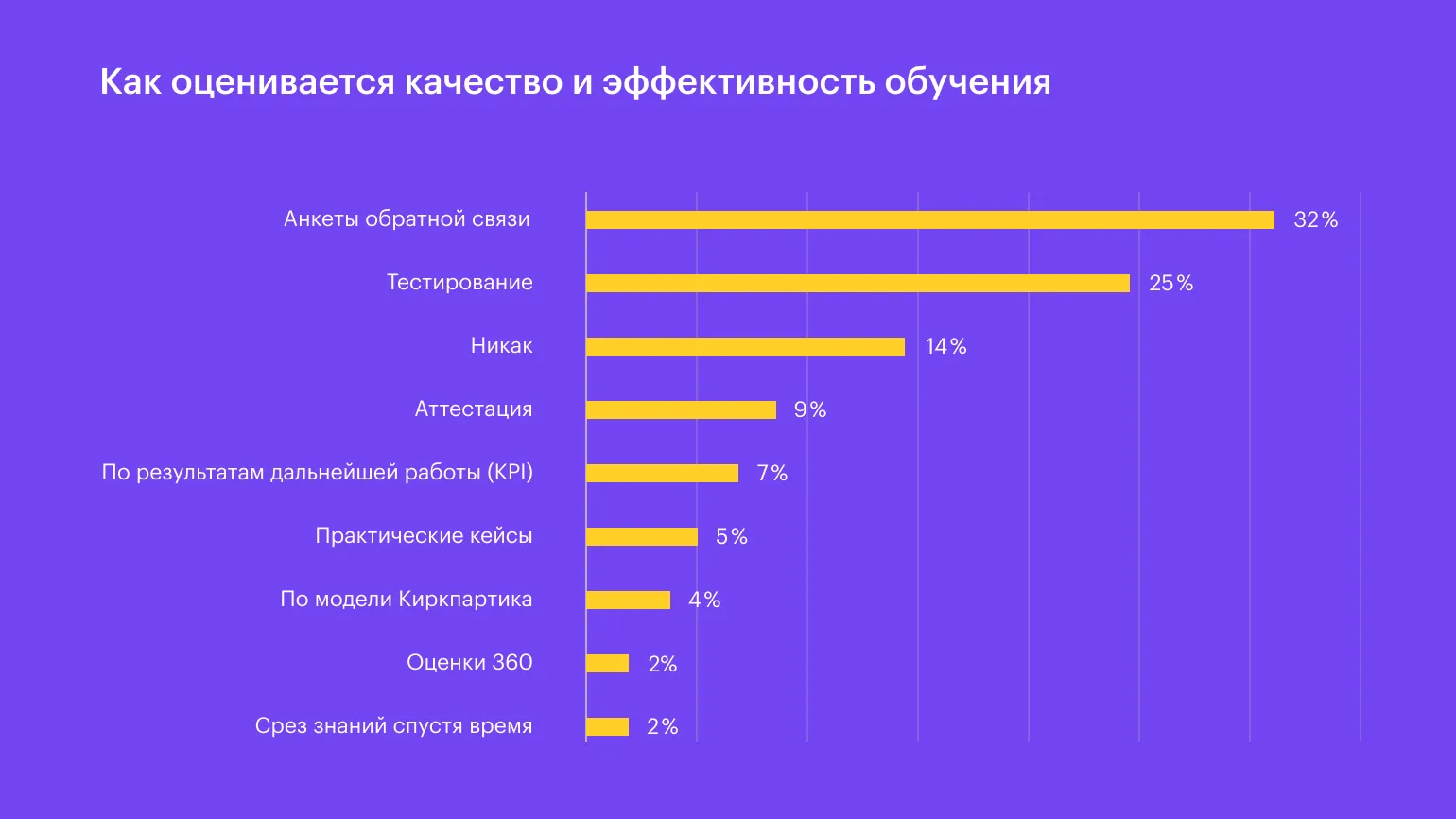
Third line The ranking is noteworthy: 14% of respondents do not evaluate the effectiveness and quality of training. This indicates that a significant portion of respondents do not have a clear understanding of the results of the educational process. The inability to evaluate training may be due to a lack of clear criteria or a lack of information about the methods and results.
This frank answer highlights that for companies, measuring the real impact of training on business metrics may not be so difficult as it is insignificant—management does not feel the need for it. Despite constant talk about how businesses increasingly require justification of training costs and demonstration of its effectiveness, as Pavel Bezyaev noted, the real need for such data remains questionable.
A comfortable situation for training and development (T&D) functions can lead to a potential crisis. It is important to recognize that stability and a lack of change can reduce employee motivation and hinder their professional growth. To avoid a crisis, it is necessary to regularly analyze current processes and implement innovations that promote skill development and improve work efficiency. It's important to create a dynamic learning environment that encourages employees to acquire new knowledge and skills, which will ultimately lead to improved company results.
Wide-based assessment of training quality and effectiveness has not yet become common practice, and discussions on this topic rarely progress beyond talk. It's a two-way street: on the one hand, relaxation can be beneficial, but in a crisis, training often becomes secondary. In such situations, those employees whose work doesn't directly impact the business are the first to suffer. Therefore, it's crucial to recognize the importance of training and development for a company's resilience under any circumstances.
Alexey Vagin emphasized that the inability to assess the quality and effectiveness of training makes it difficult for companies to select appropriate content and providers. Currently, the differences between internal and external products are primarily determined by price, as other parameters remain unassessed. This complicates a rational approach to employee training and development. To successfully optimize the learning process, it is important to develop criteria that will allow for a more accurate assessment of not only the cost but also the quality of educational materials.
What is more effective and higher quality – developing your own educational programs or purchasing ready-made solutions from online schools? Currently, there are no clear criteria for evaluating the effectiveness and quality of training, which complicates the decision-making process. Therefore, many clients prefer to develop their own methods rather than use existing ones. This leads to them wasting time and resources on creating unique programs instead of using proven and ready-made solutions.
Pavel Bezyaev noted that the lack of measurable results in corporate training contributes to the emergence of myths and misconceptions. This emphasizes the importance of implementing clear criteria for evaluating the effectiveness of educational programs to achieve real results in the development of employees and the organization as a whole.
There are aspects that are difficult to explain logically – such as ignoring content, abandoning online schools, and focusing on internal training in companies. In my opinion, this situation is full of myths, which are supported by representatives of corporate training. Lacking the skills to evaluate effectiveness and quality, they continue to assert their uniqueness: “We don’t need to be evaluated, we are unique, no one can do what we do.” However, this myth-making must give way to real assessment and analysis, although for now it remains predominant.

Reading is an important aspect of personal and professional development. It helps expand horizons, improve vocabulary, and develop critical thinking. Regularly reading books, articles, and specialized literature deepens knowledge in various fields and improves information analysis skills. Furthermore, reading stimulates imagination and creativity, which is especially important in today's rapidly changing world. Don't miss the opportunity to enrich your life with new knowledge and ideas through reading.
Measuring Training Effectiveness in Business: An Expert's View
In modern business, the importance of effective employee training cannot be overstated. Experts emphasize that successfully measuring training results requires considering several key factors. First, it is essential to establish clear goals and objectives to be achieved during the training process. This will allow for a more accurate assessment of how well the training program meets business needs.
Second, using various evaluation methods, such as testing, surveys, and participant feedback, will help to gain a complete understanding of the effectiveness of the training. Changes in employee performance after training completion should also be taken into account, which will allow us to assess the program's real impact on business processes.
Finally, it is worth noting that regular analysis and adjustment of training programs based on the data obtained will help companies remain competitive and adapt to market changes. Effective training is an investment in the future of a business, and the right methods for evaluating its results play a key role in achieving success.
How the pandemic and the events of 2022 have affected corporate training
According to the authors of the study, the pandemic has had a significant impact on the corporate training sector, radically changing its processes. At the same time, the geopolitical crisis did not have such a noticeable impact. Alexey Vagin noted that "the pandemic has affected corporate training much more than 10,000 sanctions." This underscores the importance of analyzing the factors that shape the modern educational environment in companies and the need to adapt to new conditions.
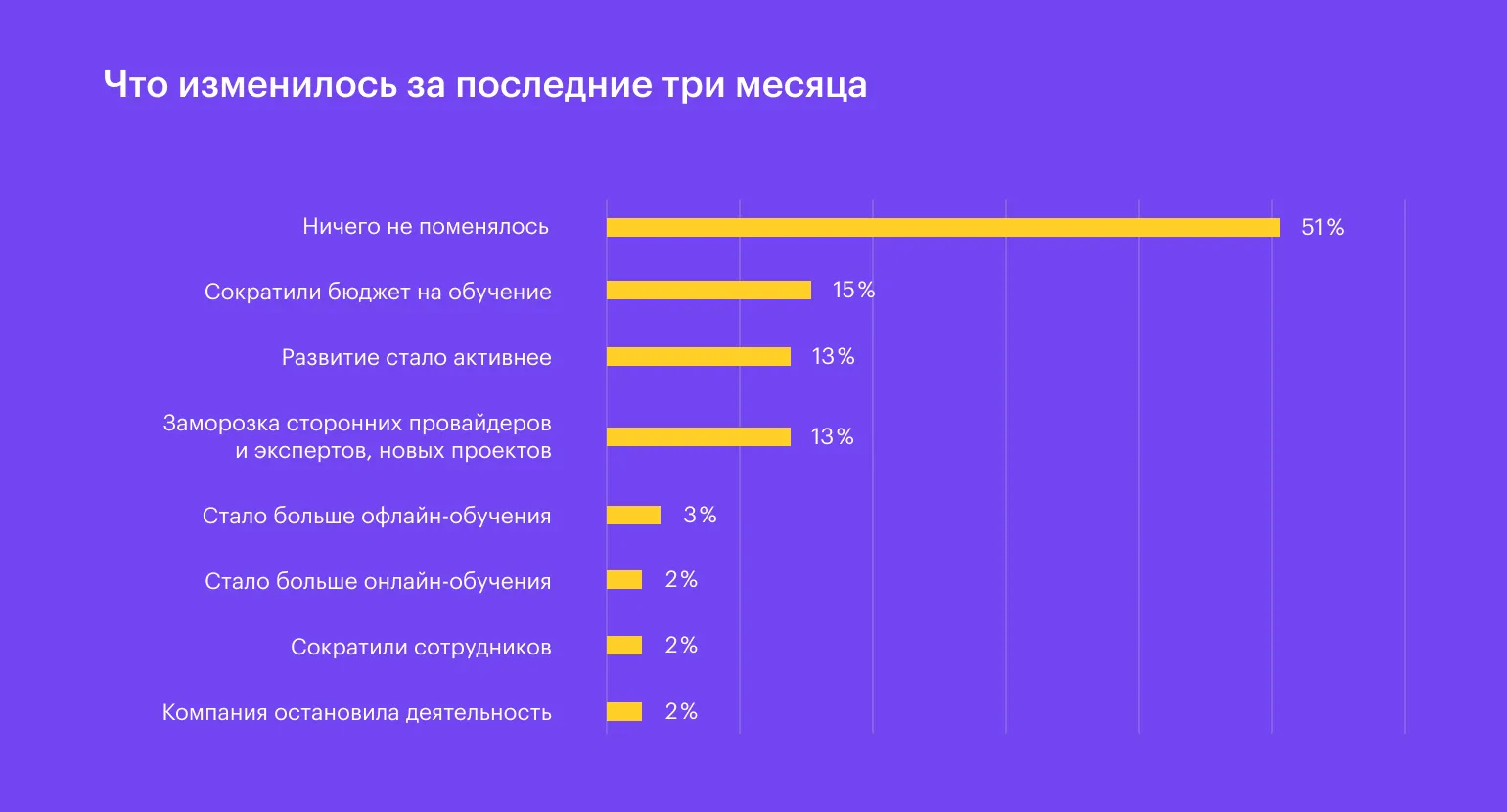
According to the survey, 51% of respondents noted that their companies had not changed during the spring months. However, 15% of organizations reduced training budgets, and 13% suspended cooperation with external providers and experts, as well as froze new projects. At the same time, the same number of respondents consider the current crisis an opportunity for transformation and note that their companies have begun to develop more actively.
According to the study results, approximately 66% of companies are not making changes to their plans for the coming year. A third of organizations prefer a wait-and-see approach, without making forecasts due to a limited planning horizon, while another 33% do not intend to change previously planned strategies. The remaining companies plan to intensify training and development processes, which can contribute to increasing their competitiveness in a changing market.
These findings are confirmed by the results of another study conducted by Netology. In this study, approximately 50% of respondents from various companies reported no plans to revise their employee training budgets. However, 40% of organizations did reduce their training spending. These data highlight the importance of investing in talent development despite economic challenges. Small and medium-sized businesses faced the most significant challenges, as they have limited resources and a low safety margin. In contrast, large companies feel much more confident in the current environment, noted Alexey Vagin. Some companies have begun actively transitioning to online tools, conducted an audit of their current employee training, replaced outsourcing with in-house specialists, and begun automating HR processes. In response to these changes, some organizations implemented employee retraining programs, while others have strengthened training to improve service quality and competitiveness. This study highlights the importance of adapting to new conditions and using modern technologies in personnel management.
Read also:
- "Everyone's a little bit in achtung": what was discussed at the Digital Learning 5.0 conference
- Experts named five international trends in corporate training in 2022
- How T&D functions can integrate into the super-new reality
- How to quickly create a corporate course if the deadline was "yesterday"