
Contents:

Learn: Management Profession in Online Education
Learn More
CEO and co-founder of the international EdTech company GoStudent, founded in 2016. The Austrian startup achieved unicorn status in just five years, which confirms its successful development in the educational technology market. In 2022, the company's valuation was 3 billion euros. GoStudent is actively operating in 22 countries and continues to expand its horizons, planning to scale its business.
During the interview, we covered the key aspects of the topic. We discussed important issues related to current trends and challenges in this field. We focused on practical examples illustrating the most pressing issues and solutions. We also exchanged views on development prospects and opportunities for further growth. In conclusion, we discussed recommendations for professionals seeking to improve their skills and deepen their knowledge in this area.
- How has the pandemic affected the global EdTech market and should we expect a return to in-person learning?
- How strong is the competition among educational startups now?
- Which EdTech companies are the most promising today?
- How will regulation of the educational market in China affect other countries?
- Are there any free niches left in the EdTech market?
- How long will global EdTech continue to develop at an accelerated pace and attract investors?
- Will the use of AI become a key advantage of educational platforms in the near future?
- What are the main trends emerging in the industry today?
- Why do different countries have different top 5 most popular subjects for tutoring?
During the COVID-19 pandemic, educational institutions around the world began actively switching to distance learning. This transition has had a significant impact on parents' perceptions of their children's education. Remote learning has forced parents to more closely evaluate the educational process, as well as the interactions between children and teachers. Many parents have begun to recognize the importance of organizing the learning process and the necessary support from the school. At the same time, new challenges have emerged, such as the need to create a comfortable learning environment at home and provide access to the internet and educational materials. As a result, parents' attitudes toward education have become more active and involved, which may contribute to improved educational outcomes in the future.
The pandemic is not the only reason for the transition to remote learning. Trends toward remote learning were observed long before COVID-19, approximately five years before its onset, and some researchers had documented them even earlier. However, the restrictions imposed due to the coronavirus have actually acted as a catalyst for accelerating these changes.
The transition to remote learning has had a significant impact on perceptions of well-being in education. This has affected both parents and children. Parents have become more concerned about the quality of education their children are receiving, while students have faced new challenges adapting to the online learning format. Distance learning has changed not only the methods of knowledge transfer but also attitudes toward the educational process as a whole. It has also created a need for both teachers and students to develop new skills, which in turn has affected the overall atmosphere in the educational environment.
In 2021, together with the market research agency Kantar, we conducted a survey in seven European countries and found that the majority of children faced learning difficulties during the pandemic. The main reasons for these problems were a lack of social connections and difficulty concentrating in online classes. The transition to distance learning has had a significant impact on the educational process and student well-being.
There is a belief that a return to in-person learning is possible after the pandemic ends. Many experts believe that traditional forms of education have their advantages, such as personal interaction between teachers and students, as well as the opportunity to create deeper social connections. However, it's worth considering that online formats have also demonstrated their effectiveness and convenience, allowing students to gain knowledge from anywhere in the world. It's important to understand that the future of education will likely combine both in-person and distance learning methods, allowing everyone to choose the most suitable option for themselves.
The online education market is experiencing rapid growth. As of the end of January 2022, there were 33 EdTech unicorns worldwide with a combined value exceeding $100 billion. Even significant regulatory restrictions on private education in China have failed to halt this growth. Online education continues to evolve, offering new opportunities for learning and professional growth.
Every year, the number of gadgets people own increases, and the internet reaches even the most remote corners of the world. The widespread use of artificial intelligence, virtual reality, gamification, and personalized learning indicates that the online education market will continue to grow rapidly. These technologies not only improve the quality of the educational process but also make it accessible to a wider audience, which in turn fuels interest in online courses and programs. Online learning is expected to become an integral part of the educational ecosystem in the future, offering new opportunities for learning and skill development. What will happen to traditional teachers in this situation? The competencies of a modern teacher have expanded significantly compared to what was required just ten years ago. Today, educators must not only impart knowledge but also be able to adapt to rapidly changing educational conditions. Modern teachers must master new technologies, utilize digital resources, and actively implement innovative teaching methods. Furthermore, developing emotional intelligence and interpersonal skills is crucial, enabling effective interaction with students and their parents. Therefore, today's teachers must be prepared to continually learn and improve their skills to meet the demands of the times and provide high-quality education.
Today's teachers fulfill many roles, including mentor, game master, facilitator, tutor, analyst, project coordinator, and lesson designer. These diverse functions allow them to adapt to changes in the educational environment, effectively interact with students, and utilize innovative teaching approaches. Teachers not only impart knowledge but also create conditions for active learning, developing critical thinking and collaboration skills in students.
Online education is a highly competitive industry. It is important to constantly stay abreast of the latest trends and changes in this field. It is necessary not only to follow current trends but also to strive to become their initiator. This allows you to attract more clients and improve the quality of educational content. Innovations in learning formats, teaching methods, and the use of technology play a key role in business success.
Competition among educational startups has significantly increased. The education market is attracting an increasing number of entrepreneurs seeking to offer innovative solutions and technologies. This is due to the growing demand for online education and adaptive learning methods. Startups face challenges such as the need to stand out from the crowd, attract users, and ensure high-quality content. In this highly competitive environment, it is important not only to offer unique educational products but also to actively use digital marketing strategies to increase visibility and engage audiences.
Competition manifests itself differently in different regions of the world. This applies not only to startups. In Europe, long-standing and experienced companies dominate, such as Schülerhilfe in Germany, MyTutor in the UK, and Acadomia in France. These organizations focus on small groups of students in offline educational centers. In Russia, the education market is dominated by government institutions and large, multi-industry internet companies that actively invest in various sectors, including educational services.
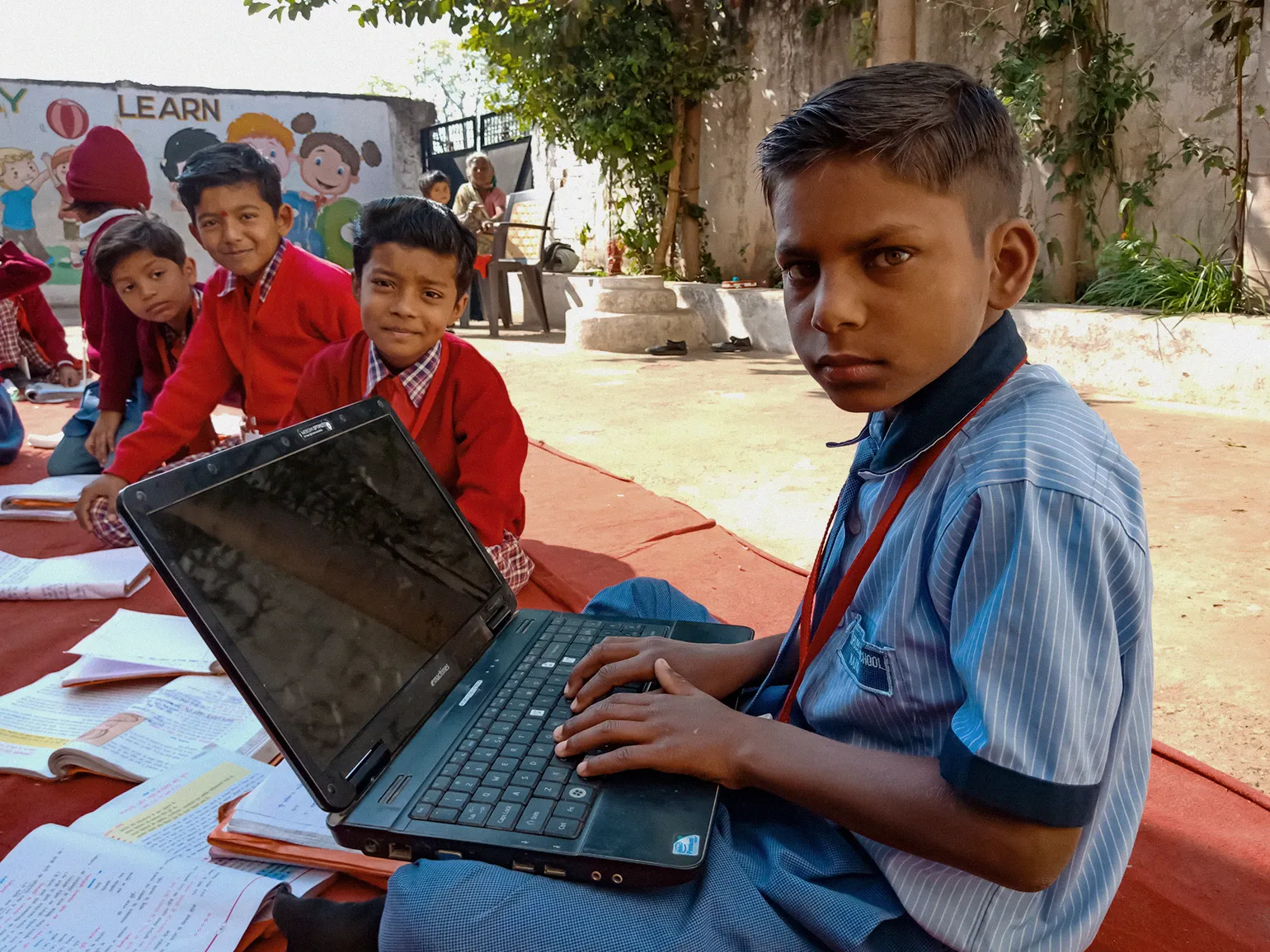
India has seen a significant growth in EdTech startups, making the country one of the leaders in this field. Unlike India, the development of EdTech startups in China has recently stalled. However, China offers unique examples of what the future of education could be. Technological innovations and new approaches to learning developing in these countries have the potential to transform educational systems, making them more accessible and effective.
What will the future of learning be like? What will be the key characteristics of such classes?
In the school of the future, an outstanding teacher will be able to conduct lessons via video streaming, reaching several classrooms around the world simultaneously. This will allow students from different parts of the world to gain knowledge from the best specialists, ensuring a high-quality education and access to a unique experience. Modern technologies will create an opportunity for interactive learning, where students can ask questions and receive instant answers, regardless of their location. The school of tomorrow will open new horizons for the educational process, making it more accessible and effective.
These classes will be staffed by a professionally trained teacher who will monitor the learning process, closely monitor the children, and provide any necessary additional assistance. Every child, anywhere in the world, will have the opportunity to learn from a highly qualified specialist, thereby overcoming the teacher shortage. This approach promotes the development of the educational environment and ensures a personalized approach to each student.
Today, several of the most promising players in the market can be identified. These companies demonstrate stable growth and an innovative approach, making them leaders in their field. Their strategies and products meet modern consumer demands and contribute to market development. It is worth paying attention to their achievements, as well as how they adapt to changing conditions and requirements. This will allow us to better understand which of them will be able to maintain their positions and expand their influence in the future.
In the EdTech industry, several large international companies stand out, such as TAL Education, New Oriental, VIPKid, and Yuanfudao, all of which have Chinese roots. However, interesting examples also exist in the United States, where platforms such as Coursera, Udacity, Outschool, and Newsela are worth noting. These companies demonstrate successful models of online education and can serve as inspiration for further development in this area.
The situation with regulation of the educational market in China may have a significant impact on other countries. Changes in Chinese education policy can serve as an example for other countries seeking reform in this sector. For example, increased oversight of private educational institutions in China may prompt other countries to reconsider their approaches to regulating such organizations.
Possible consequences also include changes in international educational exchanges and student flows. The decline in popularity of Chinese educational institutions among international students may lead to increased interest in studying elsewhere. It is also important to consider economic aspects: changes in education can affect the global education market, influencing demand for online courses and other forms of distance learning.
Thus, the situation in China could become a catalyst for reforms and changes in the educational systems of other countries, shaping new trends and approaches in education globally.
The Central Committee of the Communist Party of China and the country's government have significantly tightened their control over online education over the past year. These measures have led to a sharp decline in the market capitalization of leading companies in this sector, as regulatory actions have created an atmosphere of uncertainty. As a result, many educational businesses are forced to transform themselves into non-profit organizations to comply with new requirements.
The Chinese EdTech market will likely recover, adapting to new regulatory changes. The benefits of tutoring remain significant, making a sharp decline in interest in this sector unlikely. Consumers are increasingly recognizing the importance of high-quality education and a personalized approach, which is fueling robust demand for tutoring services. Given current trends and legislative changes, the EdTech market in China has every chance of successfully developing and further integrating technology into the educational process. International companies are likely to increasingly enter the Indian market, which is located nearby. It is the world's most populous country, with few significant business restrictions. Half of India's population is under 24 years of age, creating favorable conditions for consumer demand and innovation. Over the past 15 years, the number of internet users in the country has increased from 4% to 50%, indicating the growth of the digital economy and accessibility of information. School education levels vary by region, opening up opportunities for educational initiatives and investments in skilled workforce development. Currently, the EdTech market is significantly saturated in several segments, such as online courses and distance learning platforms. These areas already have many major players, making competition intense. However, at the same time, there are unfilled niches that have potential for growth. For example, solutions to problems associated with personalized learning, adaptive technologies, and tools for assessing and analyzing educational outcomes may be promising areas. It is also important to pay attention to the development of educational technologies for specialized fields, such as STEM education, which requires new approaches and resources. The integration of artificial intelligence and machine learning into the educational process also opens up new opportunities for creating unique EdTech solutions.
Vacant niches always exist, even in the most competitive markets. Key factors for success include a unique idea, a strong team, and the trust of clients and investors. There is opportunity to find your niche in the boxed online courses and club membership models. The key is desire and commitment to development.
Online hobbies represent an interesting and promising niche in EdTech, classified as soft niches. It is important to note that the demand for such hobbies is currently not fully satisfied. According to a 2021 study conducted by the American company Statista, over 50% of respondents named "music" as their favorite hobby. Popular interests also included "food," "travel," "video games," and "animals." These topics can serve as an excellent basis for launching a new online project, as they attract attention and engage a wide audience. Developing educational platforms, courses, or communities dedicated to these hobbies can be a successful business solution in the growing EdTech segment.

Coming soon Several EdTech companies are expected to go public in the next year or two. The educational technology market continues to grow, attracting investor attention and creating opportunities to go public. With increasing demand for online education and digital learning solutions, many companies are considering IPOs as a way to raise additional capital for further development. This could be an important milestone for EdTech companies looking to strengthen their market position and expand their operations. However, the success of an IPO will depend on various factors, such as financial performance, the competitive environment, and overall market conditions. Many companies are experiencing rapid growth, while others are in their infancy. Some are successfully developing thanks to their own resources and venture capital funding. In the current and future years, it is possible that a number of large companies will take steps toward an initial public offering. Our company does not currently plan to go public, but we will also consider this option in the future, likely after completing our active international expansion.
The global EdTech industry is developing rapidly, attracting significant attention from investors. However, the question arises: how long will this trend continue, given the market size and various influencing factors? Sustainable growth in educational technology depends on many factors, including innovation, user needs, and changes in educational policy. It is important to monitor how companies adapt to new requirements and how they integrate advanced technologies into the educational process. This will allow us to predict future trends and investment opportunities in EdTech.
Digitalization and digitization are becoming key trends that will shape the development of various industries for years to come. Although predicting further changes is difficult due to the rapid pace of transformation in the modern world, it is safe to say that these processes are leading the global transformation. The introduction of digital technologies into business and everyday life opens up new opportunities and prospects, changing approaches to work and interaction.
The EdTech, FinTech, FoodTech, and MedTech industries are demonstrating significant growth and attracting large volumes of venture capital investment. This is not just a temporary trend, but a sustainable phenomenon that has become the new norm in the current market conditions. The development of technology and its integration into various spheres of life open up new prospects and opportunities, making these industries attractive to investors and entrepreneurs.
Technology contributes to the development of convenience, increased efficiency, and accessibility. It becomes the basis for improving the quality of life and optimizing processes in various areas. Innovations in technology help create more comfortable conditions for users, improving their experience and interaction with products and services. The effectiveness of the implemented solutions allows for a reduction in time and resources, and the accessibility of technology opens up new opportunities for a wide audience. As a result, technological progress is becoming an important tool for achieving sustainable development and increasing competitiveness.
Please clarify what exactly you want to say.
Let's consider a situation where it is necessary to determine how to design unique individual lessons based on data. The question is why one teacher demonstrates greater efficiency and effectiveness in teaching compared to another. It is important to find out whether we can use the results of this analysis when selecting tutors in the future, which will help attract the most qualified specialists to the team. This approach will not only improve the quality of education but also create a competitive advantage in the tutoring industry, improving learning outcomes and client satisfaction.
We use neuromarketing tools to analyze the emotional state of children and tutors. Using the iMotions program, we measure 32 facial points, allowing us to gain a deep understanding of the emotions of participants in the learning process. Additionally, by tracking eye movements, we can determine how focused a child is on the screen. This helps us optimize the educational process and improve interaction between student and tutor.
Measuring emotions is just one component of a larger task. The key is how we can effectively use the data obtained to improve success. Understanding emotions allows us not only to analyze current results but also to develop strategies that will help us achieve better results in the future. It's important to focus on applying this knowledge to create effective solutions and achieve goals.
The goal is not to make children "glass-like," but to unlock the potential of education by removing uncertainty. Using artificial intelligence, we can analyze the methods and approaches used by each teacher and how these actions impact student achievement over the long term. This will allow us to create more effective educational strategies and improve the quality of learning.
The use of artificial intelligence may become a significant advantage for educational platforms in the near future. Personalization of educational content is becoming an important aspect of modern learning. A personalized approach allows us to better address the needs and knowledge level of each student, which promotes more effective learning.
An AI-powered system can analyze data on student progress, their preferences, and learning styles, helping to tailor courses and resources to the individual user. This, in turn, increases student motivation and engagement, and improves learning outcomes.
Therefore, the desire to personalize educational content using AI technologies is not only justified but also necessary for creating effective educational platforms that promote high-quality learning.
GoStudent's goal is to find the ideal teacher for every child and ensure access to high-quality education. We strive to create ideal matches by connecting students with tutors who are right for them. This is an example of true personalization in learning. Furthermore, we control the entire learning process, supporting our students until graduation and achieving their goals. In this process, we actively use artificial intelligence technologies, which allows us to improve the effectiveness and quality of the educational experience.
The situation at other online schools varies depending on a variety of factors, including the quality of educational programs, the caliber of teachers, and student feedback. Many online schools are striving to improve their courses by implementing new technologies and teaching methods to meet the needs of modern students. Some institutions offer a wide range of subjects and specializations, while others focus on narrow niches. Importantly, successful online schools actively work to build a student community, which facilitates better interaction and shared experiences. It is recommended to carefully review reviews and ratings before choosing an online school to ensure a quality education. According to our research, the use of artificial intelligence in education in Europe is still in its infancy. Only 18% of schools employ AI in the teaching process. However, there is growing interest from startups developing educational platforms tailored to student needs using AI technologies. This trend will undoubtedly continue next year. For companies, the integration of artificial intelligence into business processes and educational programs will become an important competitive advantage.

The main trends in EdTech, in addition to artificial These technologies include personalized learning, which allows the educational process to be tailored to the individual needs of students. Virtual and augmented reality are becoming increasingly popular, providing immersive experiences that promote a deeper understanding of the educational material. Mobile learning is also growing, making access to educational resources more convenient and flexible. Furthermore, the integration of gamification into educational platforms is an important trend, increasing student motivation and engagement. Finally, the use of data analytics to assess student progress and optimize learning processes is becoming a key tool for educational institutions.
I am observing the democratization of education, which is taking place thanks to the development of technology. Currently, more and more opportunities for free education are emerging, making education accessible to a wide range of the population, including the poor. Technological innovations open up new horizons for acquiring knowledge and skills, allowing anyone to develop and improve their skills, regardless of financial capabilities.
Metaverses are becoming an important tool in the educational process. They provide unique opportunities for interactive learning and student engagement. As technology advances, metaverses will play an even more significant role in education, opening new horizons for interaction and knowledge sharing.
The merging of the virtual and physical worlds will fundamentally change our lives in the coming decades. This transformation will impact multiple aspects, including education, work, and everyday interactions. Virtual technologies such as augmented and virtual reality will become an integral part of our daily experience, allowing us to interact more effectively with the world around us. We will see these innovations transform learning, creating immersive experiences that make the process more engaging and accessible. Furthermore, workflows will be optimized through virtual platforms, increasing productivity and facilitating collaboration. Ultimately, the integration of these technologies will lead to a more flexible and dynamic environment, where the boundaries between the physical and virtual worlds will become increasingly blurred.
We will soon see the implementation of many new technologies that will transform the educational process. Augmented reality will become an important tool for making learning more visual and interactive. Students will be able to use VR headsets to immerse themselves in historical events, allowing them to not just listen to a teacher's narration but to actually experience the atmosphere of the past. This will significantly increase engagement and interest in the educational material, which, in turn, will improve knowledge acquisition.
Gamification is a technique that uses game elements and mechanics in non-game contexts to increase engagement and motivation. It is actively used in various fields, including education, marketing, and corporate training. The main goal of gamification is to create an enjoyable and engaging environment, improving the user experience and encouraging activity. Through gamification, users are given the opportunity to achieve goals by completing tasks, earning rewards, and participating in competitions. This not only helps improve skills but also creates a community where participants can share experiences and receive support. Gamification is becoming an important tool for improving process efficiency and achieving meaningful results.
Technology and digital entertainment are becoming an integral part of today's children's lives. Almost every parent has used a tablet or smartphone at least once to calm a fussy toddler by providing them with access to a YouTube video or game. However, instead of entertainment, you can offer your child educational materials in a game format. This will not only entertain them but also help them master useful skills. This approach fosters positive emotions in children, which, in turn, increases their engagement in the learning process. The use of educational games and apps is becoming an important trend, harmoniously combining education and entertainment.
Is there a trend toward merging school education and tutoring? In recent years, there has been growing interest in integrating these two forms of education. School education traditionally focuses on group learning, while tutoring provides an individual approach. Combining these methods allows for the unique needs of each student to be taken into account, which facilitates deeper learning.
The merger of schooling and tutoring opens up new opportunities to improve the quality of education. Teachers can use tutoring methods to adapt the learning process, and tutors, in turn, can incorporate elements of the school curriculum into their lessons. This interaction promotes more effective learning and prepares students for exams.
Thus, the trend of merging schooling and tutoring is becoming increasingly relevant, offering more flexible and personalized approaches to education.
Modern educational practices increasingly integrate traditional school classes with additional learning. In a class, one teacher is typically responsible for 20-30 students, making it difficult to accommodate their individual characteristics and needs. This problem requires a solution, and effective collaboration between schools and private tutors can be a key factor. The more harmonious the interaction between students and teachers, the higher the level of academic achievement and the quality of education. Consolidating efforts in this area will allow for the creation of more tailored and effective educational programs, which in turn will contribute to the development of skills and knowledge in each student. Different countries have different lists of the most in-demand subjects for tutoring. This phenomenon can be explained by several factors. Firstly, educational systems and their priorities vary from country to country, which influences the popularity of certain subjects. Secondly, cultural and economic factors also play a significant role: some countries emphasize STEM subjects, while others emphasize the humanities. Furthermore, the demand for tutors may depend on the level of competition in the labor market and educational requirements in different regions. Ultimately, the diversity in student and parent preferences shapes the top 5 subjects for tutoring in each country. Although the top 5 subjects vary by country, they share many common features. English and mathematics remain the most popular subjects in most countries. English ranks first in countries such as Brazil, Chile, Colombia, Greece, Mexico, and the United Kingdom. Meanwhile, mathematics is the most popular subject in Russia, Canada, Austria, Germany, Switzerland, Spain, France, Italy, the Netherlands, and Poland. It is particularly interesting that in some countries, such as France, the Netherlands, Poland, and Sweden, English ranks significantly behind mathematics, not even ranking second.
Mathematics is the foundation not only of applied research but also plays a vital role in information technology, data science, and analytics, including marketing. Mastering mathematical concepts enables effective analysis and interpretation of data, which is critical in modern business. Languages, in turn, open the door to international communication and cultural exchange, enabling connections with people from different countries and expanding horizons. Knowledge of mathematical and linguistic foundations significantly increases competitiveness in the labor market.
You noted that one of the key challenges in education is the lack of access to qualified teachers. Was this the catalyst for you to create your startup, since you encountered this problem yourself?
The company initially started as a homework help chat service, run via WhatsApp. At the time, I was 21 years old and finishing my master's degree in financial mathematics at ETH Zurich. My younger brother, Moritz, was in school and began recommending it to his classmates who needed help with math. As a result, I quickly established myself as the math expert for his entire class.

It took me by surprise that students were regularly asking for help. I noticed a significant increase in the number of messages, which alarmed me. I realized they were lacking the support they needed. As a result, I decided to tackle a serious problem: limited access to qualified teachers.
My partner, Gregor Müller, and I developed a unique homework help app. This app allows users to interact with experienced and motivated teachers, receiving high-quality support in their studies. The launch of our app in the summer of 2016 was an important milestone in the history of GoStudent, marking the beginning of a new approach to educational services. We strive to make learning accessible and effective, giving everyone the opportunity to receive help at any time.
Read also:
- An American engineer of Ukrainian origin talks about Russian processors and technologies
- "There are companies that strive for profit, and there are those that build houses. We build houses."
- They returned to a completely different Earth, which had almost lost interest in space.
- "You either adapt to the surrounding reality, or you will crash into it."
- Founder of the Persona salons, Igor Stoyanov: "You can't do beauty unless it's a mission."
Profession Management in Online Education
You will learn how to launch in-demand online courses, manage a team, and generate a stable income. You can create an educational project from scratch or scale an existing one.
Find out more