
Contents:
Online education is becoming increasingly popular
A study of the Russian online education market showed that in 2021, the number of Russian adults studying online exceeded the number of those studying in traditional offline formats. This trend underscores the growing popularity of online education in Russia and demonstrates its significant influence on the educational preferences of adults. The convenience, accessibility, and diversity of online courses are facilitating this transition, opening up new opportunities for self-development and professional development.
Based on a representative telephone survey, analysts conducted the following estimates.
- Over the past 12 months, 18.1 million adults in Russia — 19.6% of the population aged 18 to 64 — have attended online continuing education programs, including free ones.
- During the same time, 12.2 million people — less than 14% of the adult population — were enrolled in offline continuing education programs.
According to the online survey, the number of people with online education experience in Russia has almost tripled over the past three years. 41.2% of respondents have attended online training in the past 12 months, while only 14.5% indicated that they had experience with online training more than three years ago. This indicates a sharp increase in the popularity of online education in the country, which may be due to technological advances and changing educational approaches.
The profile of the online education consumer, according to Netology research, remains stable and similar to the results of previous surveys. The primary audience for online schools is young women with higher education. This market segment continues to demonstrate interest in distance learning, underscoring the relevance and demand for online courses among this category of users.
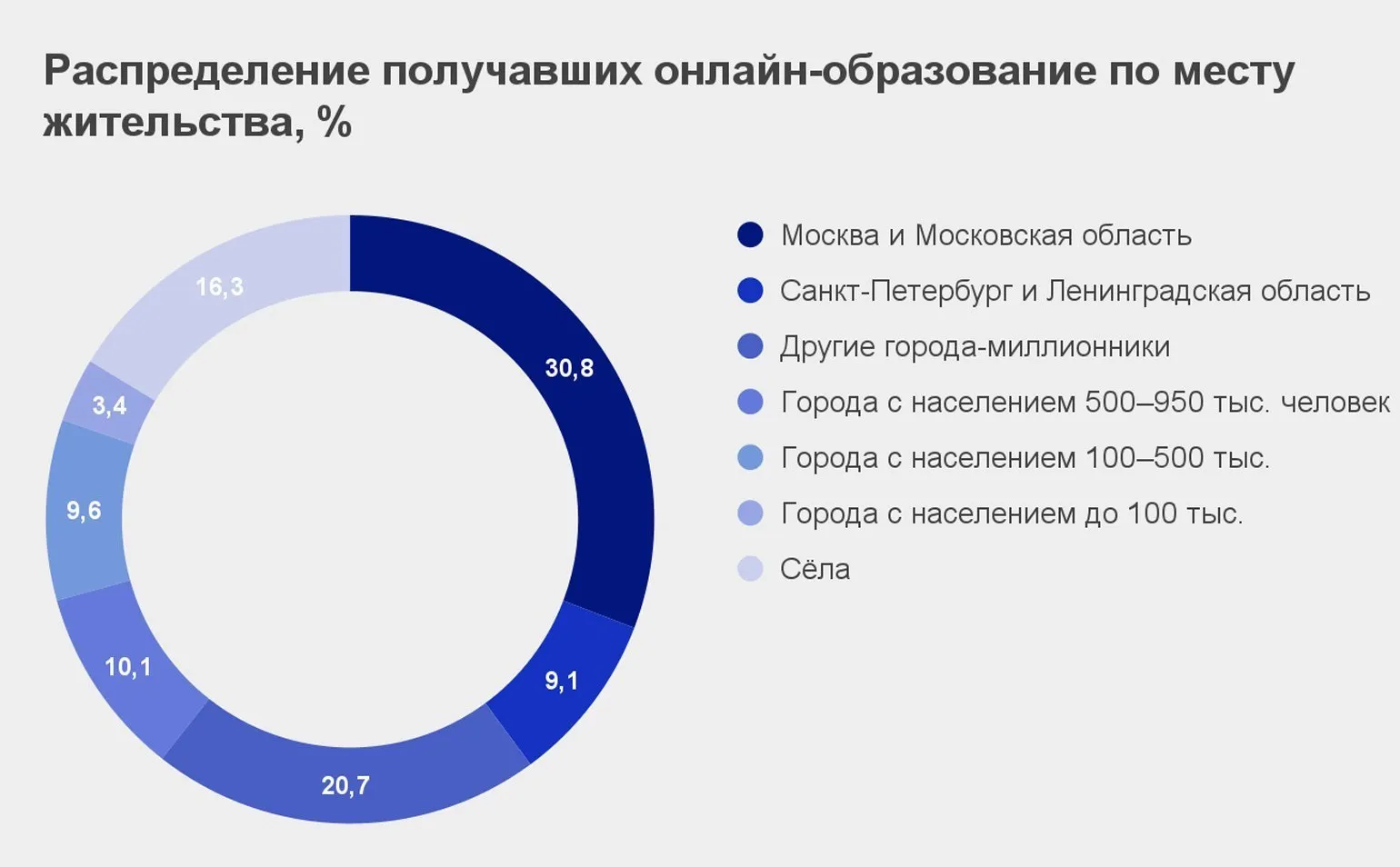
According to analysts from Data Insight and Netology, approximately 60% of online education users live in Moscow and the Moscow region, as well as in other large cities with populations over one million and St. Petersburg. This picture indicates a high concentration of interest in online learning in large urban centers, which emphasizes the importance of the geographic factor in the field of digital education.
Experts predict that online learning will remain in demand, although there will be changes in some aspects, such as the average cost of courses, as well as the topics and areas of study. Despite economic difficulties, people will continue to seek knowledge, and the most convenient method for them will be the online format. Online learning offers flexibility, accessibility, and variety, making it an ideal choice for learning in any setting.
Online education is not just a temporary phenomenon, but a sustainable trend that will continue to develop in the future. Sergey Mikhailov, co-owner and CEO of GetCourse, emphasizes that this market has every chance of recovery and further growth. In the context of rapid technological progress and changing societal needs, online education is becoming an important tool for acquiring knowledge and skills. It offers accessibility, flexibility, and a variety of formats, making it attractive to a wide audience. These trends indicate that online education will take a strong place in the educational ecosystem.
Evgeny Kuznetsov, Director of Orbita Capital Partners, fully agrees with this point of view.
Demand for digital educational products will remain high, even despite the market contraction. The need to acquire new skills and reorient professionally is most effectively met through digital solutions. This is confirmed by the growing trend of using online learning and digital platforms that provide access to high-quality educational resources anytime and anywhere.
Population spending on online learning has grown
Since the beginning of the pandemic, the EdTech market has demonstrated rapid growth. According to a study by Netology, in 2021, adult spending in Russia on online education exceeded spending on traditional offline education. This indicates a significant shift in user preferences, with flexible learning formats increasingly being chosen. Online education has become more accessible and diverse, offering a wide range of courses and programs, allowing everyone to find the right option for professional and personal growth. Spending on online programs amounted to 226 billion rubles; offline—213.7 billion. Offline education turned out to be more expensive for students, with an average cost of approximately 17,900 rubles per year. Meanwhile, online education cost an average of 15,500 rubles. This difference in cost may be due to the fact that the online format attracts a larger number of students. Thus, online learning is becoming a more accessible and cost-effective option for many.
The surveys took into account the costs of various types of online learning, including classes on specialized platforms, lessons with video tutors, official university courses, and educational products from bloggers. The total cost also included expenses incurred by respondents' employers, and only the cost of courses chosen by the survey participants themselves was taken into account.
Considering the same categories of online education, respondents estimated their future expenses. According to their forecasts made in February 2022, before the outbreak of hostilities in Ukraine, overall spending on online learning was expected to increase slightly. However, unfortunately, these forecasts have not come to fruition.
According to the study, a number of experts predict a decline in Russian EdTech revenue in 2022. Netology founder Maxim Spiridonov notes that the market could shrink by 10-15%. This prediction raises concerns about the future of the industry and its ability to adapt to changing economic conditions. In the face of declining revenues, innovative solutions and improved educational services will be key to company survival.
The published report does not provide market growth estimates, but in a commentary for Kommersant, Netology representatives forecast a market increase of only 20%, significantly lower than the expected 50%.
The decline in sales could be caused by a variety of factors. In their study, experts identified several key factors influencing the decline in sales. Firstly, changes in consumer preferences and demand can significantly impact a company's financial performance. Secondly, economic instability and market fluctuations also play a significant role. Competition among companies can exacerbate the situation, especially if competitors offer more attractive terms or innovative products. Internal management should also not be forgotten, where inefficient processes or a lack of a marketing strategy can contribute to a decline in sales. All these factors require careful analysis and a rapid response from businesses to restore positive momentum.
- a decline in the overall purchasing power of the population;
- a refusal to purchase entertainment courses, as well as courses dedicated to the development of soft skills;
- loss of traditional marketing tools due to the blocking of social networks;
- problems with payments from foreign clients.
Explore also:
Experts analyze current trends and changes in various segments of the EdTech market. Key development areas are discussed, including online education, distance learning platforms, and innovative technologies. Specialists emphasize that the demand for digital educational solutions continues to grow, due to changing approaches to learning and user needs. Adaptive technologies that enable personalized learning, as well as the integration of artificial intelligence to improve the educational experience, remain important aspects. The EdTech market demonstrates significant potential and promises further development focused on the modern challenges and needs of the educational sector. In the first weeks after February 24, many online schools encountered problems related to bank loan refusals. This resulted in many clients being unable to purchase courses on installment plans. According to GetCourse CEO Sergey Mikhailov, installment sales revenue on his company's platform decreased by 75%. This situation requires online schools to adapt their sales strategies and find new solutions to support clients in the face of economic instability. Mikhailov remains optimistic about the installment plan situation for schools. The problem has been virtually resolved, and email newsletters and other traditional promotional channels have been set up in place of banned social media. Overall, online education has all the prerequisites for continued growth and development.
Short Courses Are Becoming More Popular
Surveys conducted to study the Russian online education market did not take into account differences in the length of courses completed by participants. It can be assumed that long and medium-term programs were suppressed in most cases. Thirty-eight percent of respondents noted that they completed only one program in a year, while the same number of participants completed two to three programs. This may indicate a preference for more in-depth and lengthy learning among online education users.
In the first months after February 24, experts interviewed by the study's authors noted that EdTech companies could benefit from the growing interest in shorter educational courses. This trend is observed across all segments of the education sector. For example, Denis Kolodiy, CEO of Sinkhronizatsiya in Russia, emphasized that students are increasingly choosing three-week courses instead of longer programs that last one to two months. Despite a decline in demand for the company's products, including leisure lectures on culture and art, this decline was noticeable but not catastrophic for business.
Sergey Popkov, co-founder and program director of Skillbox, noted the growing popularity of single-course business courses lasting up to two months. Crisis management courses have become particularly popular, highlighting the need for effective management skills in an unstable economy. These short-term programs allow students to quickly acquire the necessary knowledge and tools, which is crucial for successful business in today's environment.
Sergey Mikhailov of GetCourse highlights the current trend of shortening course lengths using examples from various online schools. He notes that this spring, the most successful schools were those that introduced affordable mini-products. This approach attracts more customers and meets their need for knowledge in a short time. Reducing course duration can increase their appeal and boost conversions, making these formats particularly popular in a rapidly changing educational market. Experts, analyzing the current situation, predict that the trend toward short and accessible courses in online education will continue. Maxim Spiridonov, commenting on the study, notes that audiences are seeking quick returns: "In a crisis, people don't want to wait a year to complete their studies and only then start earning money." This approach to learning meets the modern demands of the labor market, which values the practical application of knowledge and skills. Short-term courses allow for quick adaptation to changing conditions and increased competitiveness. Elena Pugacheva, Head of Educational Projects at Yandex.Advertising, predicts a shift in emphasis in online education. She believes that learning trends will shift toward more interactive and adaptive formats that meet the demands of the modern market. This may lead to an increase in programs focused on developing the practical skills and competencies necessary for career success. Given rapid changes in technology and employer needs, it is important to consider new learning approaches that will promote a deeper understanding of the material and the effective application of knowledge in practice.
In uncertain times, there is a growing interest in monetizing existing expertise through cross-skill acquisition, rather than a radical career shift. The ability to adapt and repurpose one's experience, as well as quickly acquire new skills, is becoming key. This not only helps you maintain your job but also improves your competitiveness in the labor market. It is important to focus on training and development to effectively respond to changes in the professional environment.
Long-term retraining programs for mastering a new profession may lose their relevance. At the same time, mini-products aimed at learning new skills within the chosen career path will be in increasing demand. In a rapidly changing labor market, short-term courses and microprograms are becoming increasingly attractive to professionals seeking to adapt to new demands and trends. This allows for the effective development of essential competencies without taking a long break from work and personal commitments.
Elena Pugacheva believes that her opinion has not yet been confirmed. In fact, programs in new professions continue to be in high demand. This indicates a growing interest in new skills and knowledge in today's labor market. Technological advances and changing employer needs are driving many professionals to master new professions.
IT courses are the most popular among all others.
The "IT professions and marketing" segment was the most successful in terms of both audience reach and consumer spending. This conclusion is based on the results of a study that analyzed data from telephone and online surveys. Growing interest in IT and marketing demonstrates the dynamic development of these fields and their importance in the modern labor market.
According to experts, in 2021, more than 2.5 million people completed online training in IT and marketing professions. Total spending on these courses exceeded 46 billion rubles. Of this number, approximately 950,000 participants studied programming, while the rest were divided among various specialties, such as marketing, SMM, product and project management, and web design. Online training in these fields is becoming increasingly popular, confirming the growing interest in acquiring new skills and knowledge for a successful career in the digital space.
Professions in education continue to be a popular field, encompassing methodological work, teaching, curating, and producing educational projects. More than 2.2 million people completed training in these fields, and total spending by the population amounted to over 28 billion rubles. It is important to note that the cost calculation also includes courses paid for by employers, meaning that many of the students enrolled were teachers who completed mandatory online professional development. With growing interest in quality education and professional skills development, the demand for specialists in this field continues to grow.
In IT and education, as well as in manufacturing and repair, finance, accounting, and law, respondents most often chose these areas for professional growth. At the same time, the study of foreign languages and other disciplines occurred primarily for the purpose of broadening horizons and acquiring new knowledge.
The difference in learning goals is also reflected in the discrepancy between the audience sizes in various areas and the costs associated with them. According to the study, 12% of all online education participants were studying hobbies, creativity, and personal development. However, the share of expenses in this area only accounts for 9%. This indicates that a significant portion of the audience uses free resources and prefers inexpensive educational products.
The size of the online education audience and the costs associated with it by area are constantly growing. In recent years, there has been a significant increase in the number of users choosing online courses and educational platforms. This is due to the availability of information and the flexibility of learning formats. Online education expenditures span a variety of areas, including professional courses, language programs, technical skills, and personal development.
According to recent research, IT and digital technologies remain the most in-demand areas. Users are actively investing in training in programming, web design, and other relevant skills. Language training is also demonstrating sustained interest, as knowledge of foreign languages is becoming a necessity in a globalized world.
Overall, the audience for online education continues to grow, demonstrating high interest and demand for flexible learning methods. Investments in online education are becoming an important part of personal and professional development, which in turn contributes to the growth of the knowledge economy.
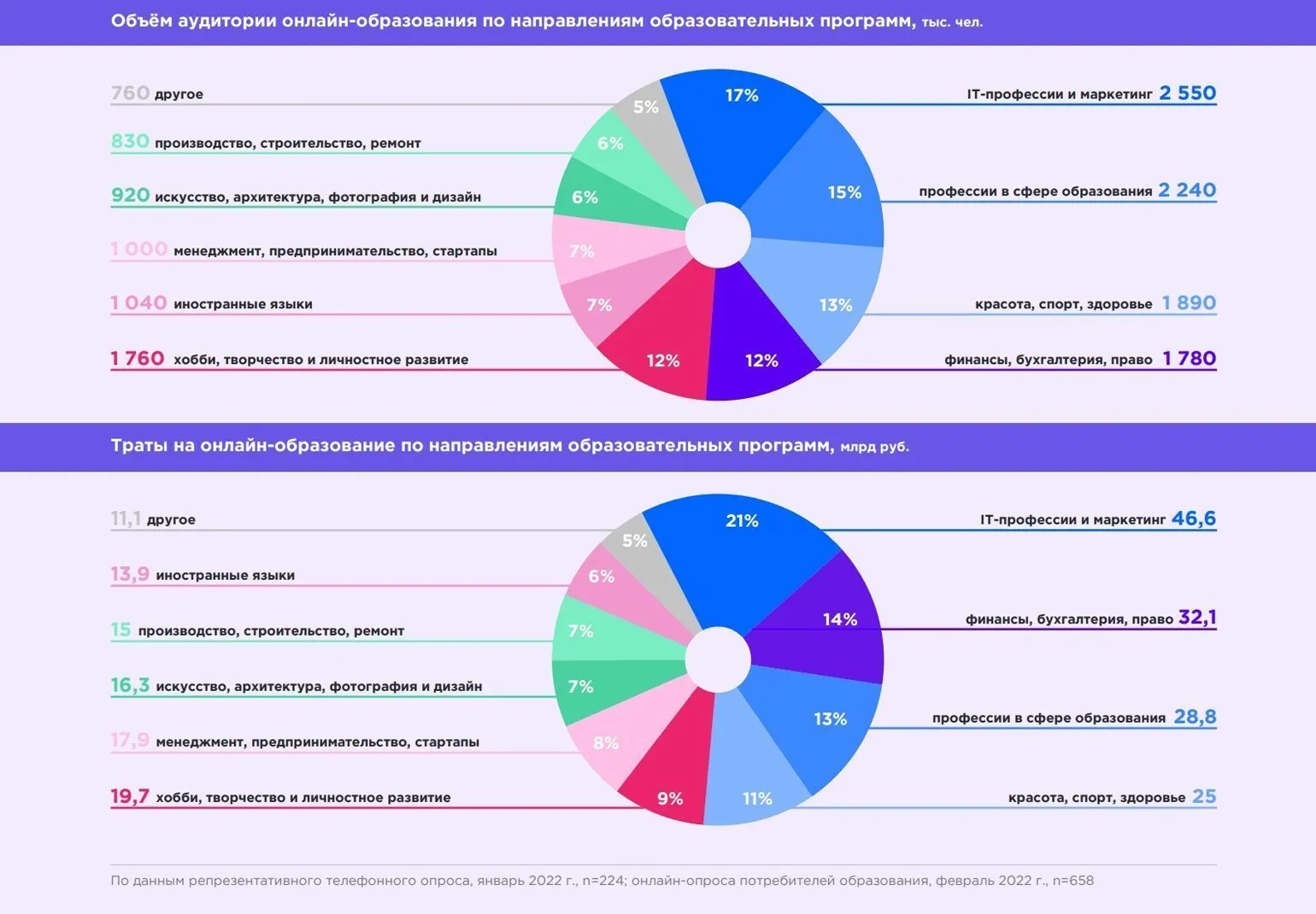
In At the beginning of the year, survey respondents actively expressed interest in learning foreign languages, pursuing IT professions, marketing, and pursuing hobbies, creativity, and personal development. These fields remain popular among those seeking to improve their qualifications and develop new skills. Learning foreign languages opens new opportunities for communication and career advancement, while IT professions offer a wide range of opportunities in the modern labor market. Marketing is becoming increasingly important in the digital economy, and pursuing hobbies and creativity contribute to a better quality of life and personal development.
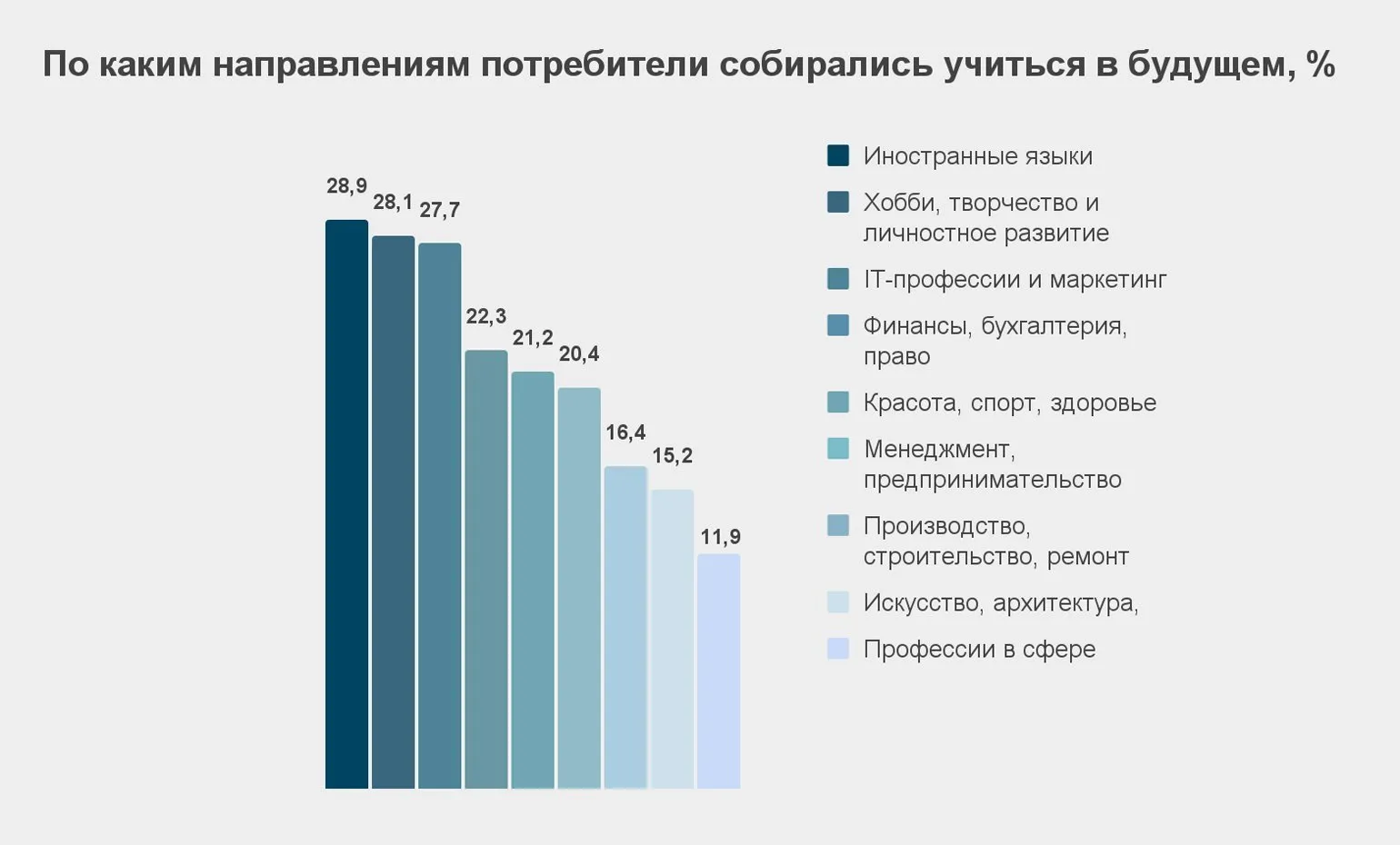
According to experts, subsequent events have significantly changed the plans of many people. Evgeny Lebedev, head of Yandex.Practicum in Russia, noted in a commentary on the study that learning as a hobby will not be a priority in the coming year. This underscores the importance of adapting to new conditions and rethinking approaches to learning and self-development. Demand for IT retraining courses continues to grow, and Lebedev believes this trend will continue. The head of Yandex.Practicum believes that new educational programs in IT professions should focus on narrow niches. For example, courses aimed at preparing specialists for relocation are relevant. This will allow us to better meet market demands and ensure higher competitiveness of graduates.

The importance of reading is undeniable. It not only develops thinking and enriches vocabulary, but also contributes to the formation of critical thinking. Reading books, articles and scientific publications allows you to deepen your knowledge in various fields, improve concentration and attention. Regular reading helps reduce stress and improves overall psycho-emotional well-being. Remember that reading is the key to new ideas and opportunities. Explore a variety of genres and authors to broaden your horizons and gain new experiences.
The quote of the week underscores an important point: "There is no surplus of IT specialists! We, as EdTech players, are seeing this." With the rapid development of technology and digitalization, many companies are facing a shortage of qualified IT specialists. Education and technology, particularly EdTech, play a key role in preparing future specialists, but the talent shortage remains a pressing issue. Therefore, it is important to invest in training and development of human resources to meet market demands and ensure sustainable growth in the IT sector.
Sergey Popkov, Program Director at Skillbox, expresses a pessimistic forecast for continuing education for adults this year. He believes that, overall, all areas of this sector will experience a decline. However, in IT professions, the decline in interest will be minimal, amounting to approximately 10-15%. This indicates that the IT sector will continue to be the most attractive to clients, despite general trends in the education market.
Experts researching the Russian online education market indicate that in the near future, clients may be interested in professions other than IT. Maxim Spiridonov emphasizes that the crisis will see an increase in demand for professions that provide additional income and help save money. Furthermore, financial literacy will become an important topic, which could also attract the attention of students.
Denis Kolodiy is confident that the edutainment segment will continue to develop. The need for self-education and quality leisure will remain relevant. With foreign distributors of evening entertainment content leaving the market, new opportunities for the creation and distribution of educational content are opening up.

Rework the text, preserving the essence and avoiding unnecessary information. Optimize it for search engines and add table of contents if necessary. Avoid using emojis and unnecessary characters. Don't use numbers or bullets. Simply provide plain text.
Read also:
Edutainment is a concept that combines learning and entertainment to make the learning process more engaging and effective. This approach is actively used in educational technologies, games, cartoons, and interactive applications, which promotes better information absorption. Edutainment not only helps develop cognitive skills but also maintains interest in learning, making it less boring and more accessible. Using this methodology, you can create a unique experience that effectively combines educational and entertaining elements, captivating students and encouraging their active participation in the learning process.
Course Quality Is Becoming Increasingly Important
A Netology study showed that most consumers expect online education to be of the same quality as traditional offline learning. At the same time, they do not exhibit significant distrust of digital formats. This demonstrates a high level of trust in online education and its ability to meet user needs.
In the online survey, only 213 respondents expressed a desire to study exclusively in an offline format. Approximately 57% of them noted that they prefer traditional education because they trust only certain educational institutions, do not trust online schools, or have had negative experiences with distance learning. The main reasons for abandoning online education are objective factors, such as a lack of suitable courses and necessary equipment.
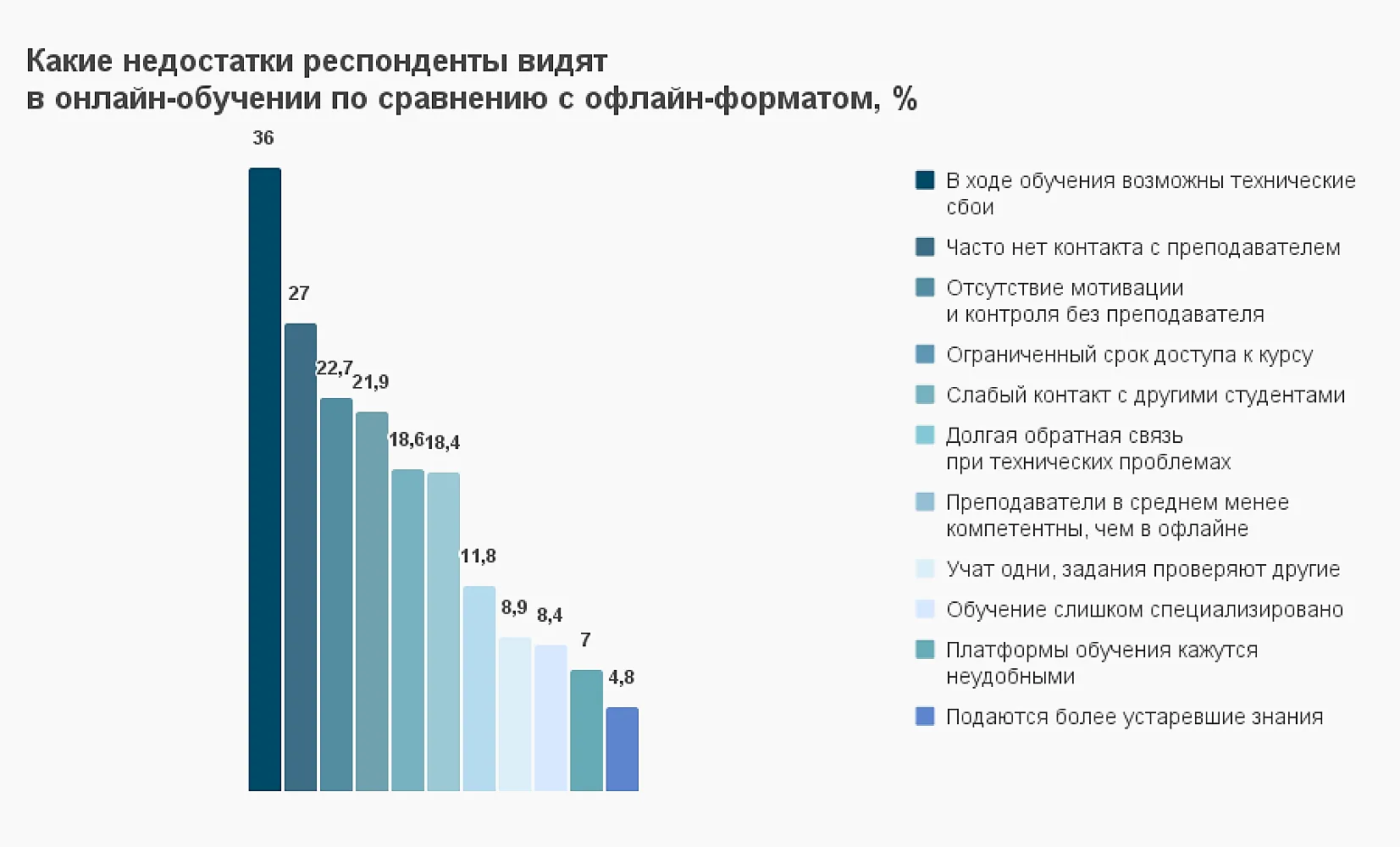
In response to the question about the disadvantages of the online format, survey participants did not express significant complaints about the quality of the content. The main problems encountered by respondents concerned technical glitches and difficulties communicating with the instructor. Only about 12% of respondents noted that online instructors are less competent than their offline colleagues. At the same time, almost 10% of participants did not identify any specific shortcomings inherent in the online learning format.
A survey conducted by Netology among more than 200 methodologists at Russian EdTech companies revealed that in 2021, educational course developers actively addressed the issue of lack of interaction with teachers and student motivation. The study results show that a key aspect of successful learning is creating effective communication between students and teachers, which contributes to increased engagement and academic performance.
- More than 70% of surveyed methodologists stated that synchronous online courses, in which students move at the same pace according to a common schedule, maintaining contact with the teacher, are most effective in achieving learning goals.
- And 92.2% of methodologists in 2021 introduced new ways of supporting learning into educational products, including meetings between students and mentors or psychologists.

Reworked text:
Please note the following materials:
Synchronous Activities for Asynchronous Online Courses
Asynchronous online courses provide flexibility and convenience, but adding synchronous activities can significantly increase student engagement. Including such elements helps strengthen interaction between participants and instructors, creating a more dynamic learning environment. Let's look at 13 effective synchronous activities that can be integrated into asynchronous courses.
Webinars and live lectures allow students to ask questions in real time and receive instant answers. Group discussions and online debates encourage peer-to-peer learning and critical reflection. Collaborative projects completed in real time develop teamwork skills and create a sense of community among students.
Using virtual classrooms for live, hands-on activities helps students better absorb the material through practical application. Live polls and quizzes can serve as a knowledge check and maintain interest in the learning process. Interactive question-and-answer sessions allow for deeper dives into course topics and clarification of complex concepts.
Role-playing and simulations allow students to apply theoretical knowledge in a safe environment. Masterclasses with experts help expand horizons and add variety to the learning process. Creating group chats or discussion forums allows participants and instructors to stay connected outside of formal classes.
Organizing virtual exhibitions or presentations of student work promotes public speaking and critical thinking skills. Final sessions, where students can share their findings and achievements, reinforce learning and create a sense of accomplishment.
Integrating synchronous activities into asynchronous online courses not only enriches the learning process but also fosters a community in which students can actively participate and grow.
EdTech clients are becoming increasingly demanding, and in a climate of growing competition, product quality will become a key competitive advantage. This opinion is confirmed by experts interviewed as part of the Netology study. In today's reality, this trend will continue to strengthen, emphasizing the need to focus on high standards and innovative solutions in educational technologies.
Russian audiences are expecting a decline in purchasing power, which will lead to increased demand for high-quality products. Users will become more attentive to the balance of price and quality. Andrey Sizov, CEO of the Foxford online school, noted that amid economic uncertainty, users will seek higher-value offerings. OTUS founder Dmitry Voloshin also emphasized that users are no longer willing to pay for courses that lack real value and content. It is important to address this trend and adapt educational offerings to meet new audience demands. Creating high-quality online courses in these changing circumstances will become more challenging. Companies are expected to see a decline in revenue, leading to cost savings on specialists. This opinion was expressed by Andrey Melnichenko, a methodologist at Yandex.Practicum, in his "Research on the Russian Online Education Market." Amid economic instability, it is crucial to find new approaches to developing educational programs that meet high standards and student needs. High-quality content and professional instructors remain key factors in successful online learning. Methodologists are increasingly multitasking, not only developing presentations but also creating training courses and teaching several courses simultaneously. In this context, I believe the market will return to a situation where the role and importance of the methodologist were not so obvious. As a result, methodologists often face a situation where they are assigned up to ten courses with an underestimation of their complexity and importance. This can reduce the quality of the educational process and negatively impact learning outcomes.
The state is becoming the most important player in the EdTech market
From 2019 to 2021, the EdTech market demonstrated significant development, expressed both in increased revenue and in increased investment in startups and more mature projects. Russian companies actively increased their investments abroad, including the launch of projects for additional adult education. According to a study by Netology, the average annual growth rate of investment over these years was 149%. This has attracted the attention of both Russian and foreign investors, demonstrating a high interest in educational technologies and their potential for further development.
Investments in educational products for preschool and school-age children are attracting the attention of investors. However, continuing vocational and higher education, as well as corporate training, remain underfunded. This creates opportunities for new investment and development in these segments. Investors can consider the prospects for growth and the implementation of innovative solutions in the field of advanced training and educational programs for adults.
Recently, there has been a trend towards the consolidation of companies in the adult education sector within large corporations. Competition in the market intensifies every year, and major players strive to create a universal educational ecosystem covering all levels: from preschool education to additional professional programs. This consolidation allows not only to expand the range of services offered but also to improve the quality of education, providing access to modern methods and resources.
The role of the state in online education continues to grow. This is particularly noticeable in the school sector, where state information system projects such as the Sferum platform and the My School GIS are being actively implemented. Furthermore, initiatives are being implemented for older age groups as part of the "Personnel for the Digital Economy" project. These steps contribute to the modernization of the educational environment and ensure access to high-quality educational resources for all categories of students.
Ideas for regulating the adult education market are being discussed, but currently, the government's role in this area is to attract private companies to state programs such as "Employment Promotion" and to establish their cooperation with state universities. This cooperation allows us to improve the quality of educational services and adapt training programs to the requirements of the labor market, which in turn contributes to the improvement of professional training and the competitiveness of graduates.

Please specify which text needs to be rewritten and optimized for SEO.
Quote of the week emphasizes the importance of interaction with government agencies structures for the successful development of EdTech in Russia. Without establishing effective relationships with the government, the creation and implementation of educational technologies becomes difficult. This is due to the need to comply with regulatory requirements, as well as the ability to obtain support and resources for the implementation of innovative projects. Successful EdTech initiatives in Russia require an active dialogue between entrepreneurs, educational institutions, and government agencies. Only through joint efforts can we create a sustainable ecosystem that promotes the development of educational technologies and improves the quality of education in the country.
In today's environment, EdTech companies face limited resources for their development in the market. This reduction in opportunities significantly impacts their ability to innovate and expand their offerings. As a result, companies are forced to seek new strategies and approaches to remain competitive in a changing economic environment. Effective resource management and adaptation to new realities will be key factors for success in the educational technology market.
The entry of Russian brands with roots into international markets has become a serious challenge. This limits growth opportunities in the EdTech sector, forcing companies to focus on the Russian audience or seek ways to enter foreign markets anonymously. Marianna Snigireva, CEO of Netology, highlighted this topic in her commentary on the study, noting that the current situation requires companies to develop new strategies and approaches to successfully integrate into the international educational environment.
Maxim Spiridonov notes that opportunities for successful business development exist in neutral countries in Latin America, Southeast Asia, the Middle East, and Africa. However, domestic investment is unlikely to be significant in the coming months, creating additional challenges for economic growth.
Spiridonov advises new projects in the early stages of development to consider in advance how to integrate their product into the infrastructure of a large corporation that could become a potential buyer. Moreover, the likelihood of a product being purchased is higher than receiving investment in an independent startup. This approach will help increase the chances of successful collaboration and accelerate market entry.
Experts note that, in a context of shrinking opportunities, the role of the state as a customer of educational services will become more significant. Vasily Alekseev, CEO of the Like Center, believes that the EdTech market will continue to develop, focusing on providing services to both government and corporate clients. This creates new opportunities to improve educational processes and enhance the quality of education across various sectors.
Other speakers interviewed by the researchers outline specific areas.
Sergey Pilipenko, head of the project for the development and implementation of a digital competency model in educational programs at RANEPA and a leading expert at Innopolis University, suggests that online course developers integrate them into university programs as part of the Digital Departments project. He notes that some universities are experiencing difficulties providing high-quality content and developing the necessary digital competencies in students. Integrating online courses will help improve the quality of education and prepare students for the modern labor market.
Valentina Kurenkova, GR Director at Netology, advises companies to designate "relations with the government" as a separate functional area. She emphasizes that the verification of online education will inevitably occur, and this process will have an impact on the adult supplementary education segment. It is important to prepare for changes in advance in order to adapt to new requirements and remain competitive in the educational services market.
- "The strongest will survive." How Russian EdTech is coping with the crisis
- EdTech in Russia: what is the state of affairs and what are the prospects
- Where is the dividing line between EdTech and the infobusiness?
- Why are Russian adults (not) studying?
- How EdTech is looking for approaches to assessing the quality of online courses