
Contents:
Course with employment: "The Methodologist Profession from Beginner to Advanced"
Find out moreYou can even get a bachelor's or master's degree on a tram
According to the G2R research group, 2021 will see a steady demand for digital content and online courses in higher education. Both bachelor's and master's degrees can be obtained through distance learning. Fields of study are diverse: from engineering, construction, and surveying to computer science, management, history, the arts, and even brewing. Online programs granting state diplomas are offered by both foreign and domestic universities. For example, at the end of 2020, the Higher School of Economics launched four new master's programs. Online education is becoming increasingly accessible and popular, opening up new opportunities for students worldwide. Students are increasingly choosing online programs over traditional in-person learning. The main reasons for this choice are flexibility, affordability, and the variety of educational opportunities available. Online learning allows students to manage their time independently and balance their studies with work or other commitments. Furthermore, many online programs offer a wide range of courses and specializations, allowing them to choose the most suitable option for their personal and professional goals. It's also worth noting that online education is often more cost-effective. Reduced costs for transportation, accommodation, and course materials make it attractive to students on a budget. With today's technology, online learning provides access to quality content and resources, allowing students to interact with instructors and other students anywhere in the world.
Therefore, choosing an online program is a logical step for students seeking a quality education without compromising on flexibility and cost.
- 63% — because it better suits their lifestyle and helps them combine education with work.
- 34% — because they prefer learning online.
- 3% were unable to find a similar program offline.
Distance to the university is becoming less important when choosing online education. According to a study by Learning House, 67% of students lived within 80 km of the educational institution. For most of them, mobility is more important — the ability to study using a smartphone or tablet. Thanks to this, students can move towards obtaining a degree and choosing a profession without being limited by location, even while using public transportation. The online learning format offers flexibility and convenience, making it increasingly popular among modern students.
Microlearning: How TikTok Ideas Are Helping Universities
The mobility of education has led to the emergence of a new approach – microlearning. This method involves delivering large amounts of information step by step, in small chunks focused on narrow topics. Extensive theoretical materials can be presented in the form of short videos, images, quizzes, games, and other interactive formats. Students receive only the essence, without unnecessary stories from teachers about personal experience or a multitude of similar examples. By reducing a 90-minute lecture to 10–15 minutes, you can retain only the most important and relevant knowledge, which promotes better information absorption and increases learning effectiveness.
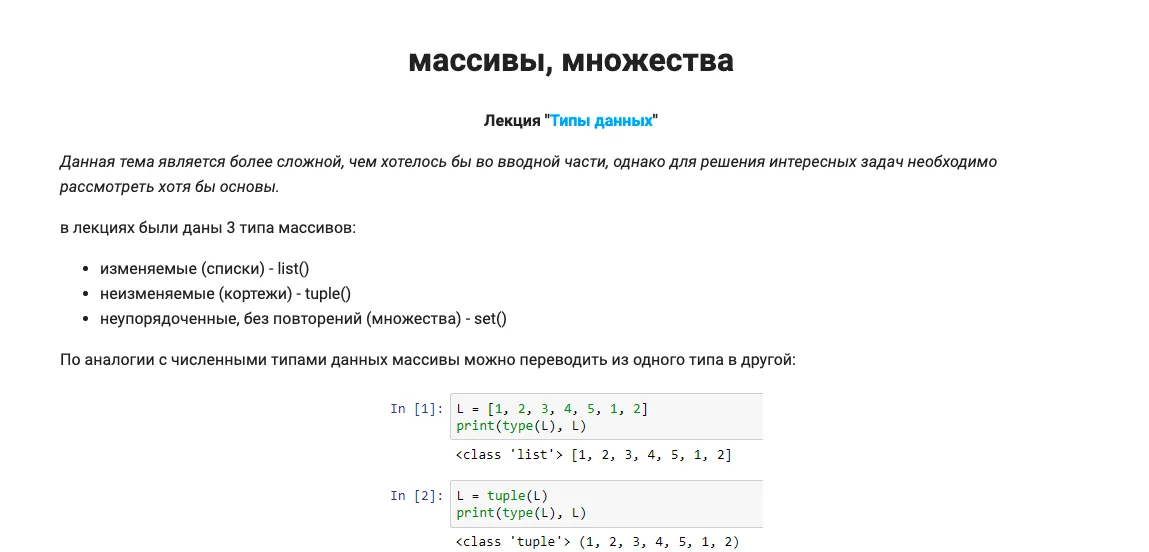
Microlearning is widely used in development courses, allowing for the effective study of programming languages. Each lesson focuses on one term or key point, making the learning process more structured. The "one term - one lesson - one practical session" format is ideal for capturing information within short time intervals, making it convenient for users. This approach promotes deep assimilation of the material and allows you to quickly apply the acquired knowledge in practice.
Cloud Education Is Available to Everyone
Nikolay Melnikov, CEO of Sebbia, a mobile software development company, highlights an important trend in mobile educational app development: cloud-native technologies. Cloud application development allows all calculations and operations to be performed on remote servers. This means users don't need expensive hardware; a device with a fast browser is sufficient. Furthermore, cloud technologies simplify the process of releasing updates and expanding courses, making learning more accessible and flexible.
Vocareum is a cloud platform designed for virtual digital skills training. It provides software labs that run directly in students' web browsers worldwide. Tasks on the platform can be configured in several programming languages, making learning more flexible and accessible. Teachers can promptly provide students with feedback, as well as manually grade completed assignments and leave comments on programming exercises. Vocareum promotes effective learning and digital skills development by providing a user-friendly interface and access to modern educational resources.
Currently, testing developed solutions is challenging, as it's critical for developers to have experience working in real-world conditions, not just in a simulated environment. However, educators are finding ways to address this challenge by offering innovative approaches and methods.
Our courses emphasize Git fundamentals and create GitHub profiles for students, allowing them to actively build their portfolios. Programming is conducted in integrated development environments (IDEs), which students can use in their future professional work. Valentin Dombrovsky, founder of the Learn Python courses, noted the importance of these skills for a successful start in the IT industry.
Gamification Isn't About Turning Learning into a Game
Educational video games such as Oregon Trail and Math Blaster began to develop in the 1980s and promised to transform the approach to learning. Current research conducted by the G2R group shows that online learning will not completely replace traditional education. Instead, educators will strive to integrate technology into the learning process, using game-based methods to increase student engagement and interest. These methods will help make learning more interactive and effective, which in turn will improve the quality of material assimilation.
Students spend more time with the teacher during joint games and interactive activities, which contributes to the formation of a positive attitude towards learning. These activities not only strengthen the bond between teacher and students but also make the educational process more engaging and effective. A positive perception of education contributes to better assimilation of material and increases motivation for learning.
34 hours spent in the Duolingo app is equivalent to a semester of language study at a university. This demonstrates how effectively this app can help users learn languages and improve their skills. Duolingo offers interactive lessons and practice exercises, making it quick and easy to master new vocabulary and grammar.
One of the most effective gamification models in the educational environment is the leaderboard, popular in colleges and universities. The desire to reach the top of the rankings motivates students to study and actively participate in events. For teachers without technical skills, there are many ready-made tools for creating educational games. For example, platforms like Quizizz and Kahoot! allow you to create interactive quizzes on various topics without programming knowledge. The Minecraft: Education Edition app also offers a unique opportunity for teachers to interact with students in a game format, immersing them in a world related to the course. These tools not only make learning more engaging but also promote better learning. Gamification expert and product manager Alexander Duchenchuk highlights one of the most common misconceptions about gamification: many believe that students will play rather than learn. In fact, gamification aims to enhance the educational process by motivating students through game elements. This approach promotes engagement and improves learning, allowing students not only to have fun but also to effectively acquire new knowledge and skills. Gamification creates an interactive learning environment where students become active participants in the process, which promotes deep understanding and long-term retention of information.
Gamification is the introduction of game elements into the educational process, rather than turning learning into a fun game. In education, motivational gamification is most common, helping students engage in the learning process, focus on assignments, and maintain pace with the group. Marathons and timed courses often use elements such as "lives," which are lost if a student fails to complete homework on time. If all lives are lost, the participant can be eliminated from the marathon, emphasizing the importance of completing assignments on time. Gamification promotes increased student engagement and accountability, which makes learning more effective.
The use of this game element increased the success rate of the course I worked on to 83%. This confirms the effectiveness of game mechanics in the educational process. These approaches foster deeper participant engagement and improve the overall learning experience.
Alexander developed an innovative gamified chatbot for selecting law students for internships. The bot features five difficulty levels, allowing the learning and testing process to be tailored to the participants' knowledge. Players have a limited time and three lives to successfully complete the game and earn a chance at an internship. Each level contains a unique set of questions, and players must answer 80% correctly to successfully complete them. Importantly, the questions are generated randomly, eliminating the possibility of memorization and ensuring that players will not encounter the same questions twice. This approach makes the selection process fairer and more effective, ensuring a high-quality selection of candidates.
The expert discussed Richard Bartle's system, which explores player motivation and identifies four main personality types. This system allows game elements to be adapted to different audiences, ensuring their effectiveness. Some players strive for competition, others value social interaction, others are captivated by collecting and accumulating rewards, and still others prefer to explore the world around them, even if it's virtual. Understanding these personality types helps developers create more engaging and engaging games that take into account the needs and interests of players.
Gamification has proven itself as an effective tool in the educational process. It continues to be actively implemented in education, improving student motivation and engagement. According to experts such as Duchenchuk, the profession of "gamifier" will be a key part of the future. It can become a separate specialty, which emphasizes the growing importance of this methodology in the field of education.