
Contents:
- In a falling market. How will companies' revenue change due to the crisis?
- Investment risks. Who will be affected by the crisis more?
- Advertising transitions. How to work without prohibited social networks?
- The crisis of non-payments and installments. How to accept payments from clients?
- New technologies. Is it possible to replace Western software with domestic?
- New content. How have online school offerings changed?
- There will be no collapse. Will the crisis ever end?

Learn: Online Course Producer from Scratch to PRO
Learn MoreIn a Falling Market. How Will Company Revenue Change Due to the Crisis?
The Russian EdTech market has demonstrated confident growth since the beginning of the pandemic and throughout 2021. According to Smart Ranking, its volume increased by 113% in 2020 and by 80% in 2021 compared to the previous year. The revenue of the 100 largest Russian EdTech companies in 2021 amounted to 73 billion rubles. Forecasts for 2022 promised further market growth of 50–70%, according to data published by Smart Ranking in January 2021. This growth underscores the growing interest in educational technologies and their importance for modern society.
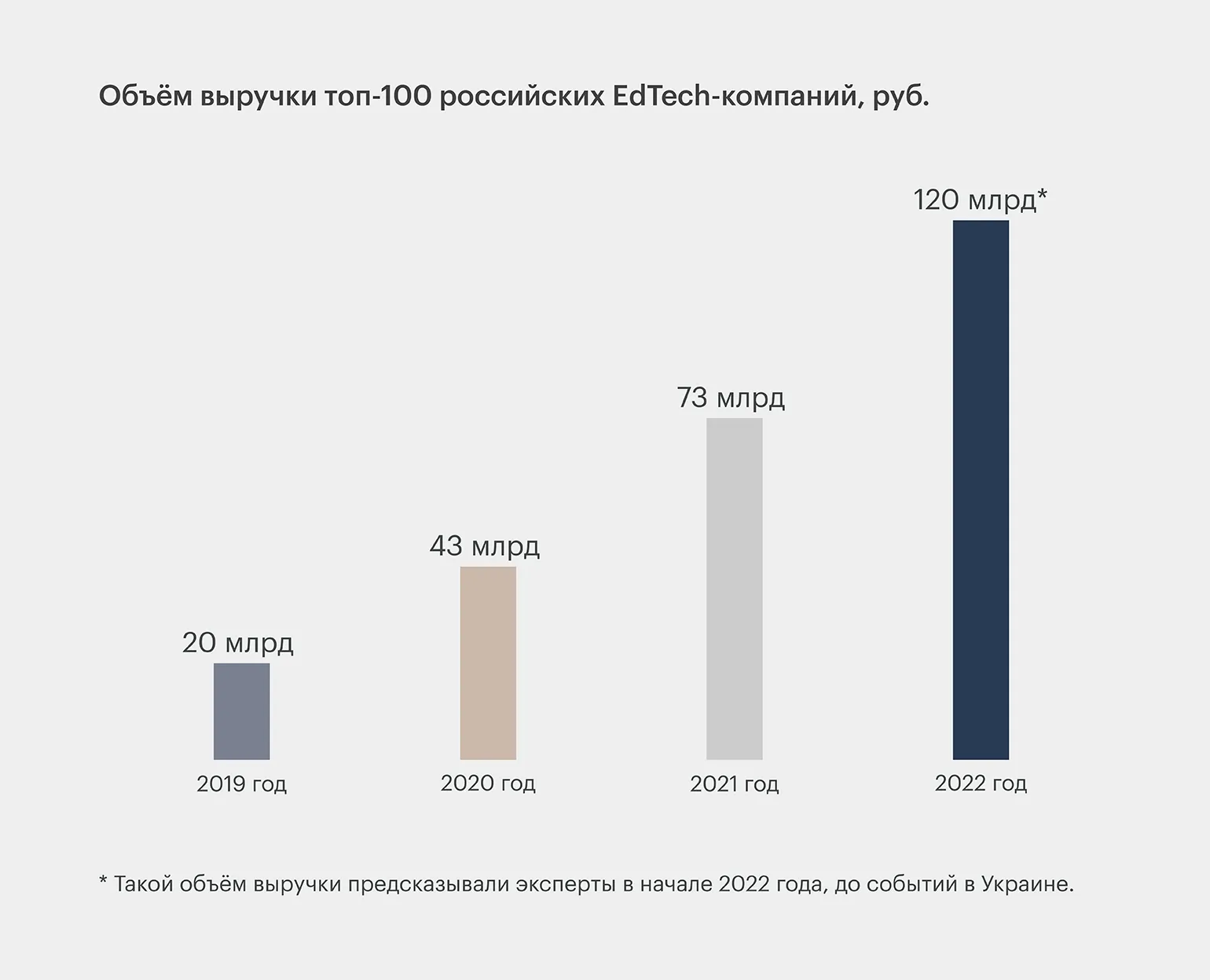
Events in Ukraine have had a significant impact on the current market situation. According to the latest Smart Ranking survey, 67% of respondents believe the market will not grow in 2022. A third of these believe the market will remain at 2021 levels, while the rest predict a decline of at least 50%. Only 15% of respondents believe the market can grow 50% compared to 2021. Many companies are not only ignoring growth opportunities but are also cutting investments in new projects and refusing to hire new employees. Some have even decided to lay off part of their team, which negatively impacts their future development prospects. Anna Chashchina, Marketing Director at EdMarket, part of the Netology group, shares her observations on the current market situation. In a climate of uncertainty, it's important to reassess strategies and seek opportunities to optimize resources and improve efficiency.
Andrey Kalashnikov, managing partner of the Focus educational program for entrepreneurs, suspended 45 of the 51 development projects his company was implementing. As a result of this decision, he also dismissed the project managers responsible for these projects. Furthermore, Kalashnikov has made bonuses for the remaining employees more dependent on the company's revenue, underscoring his strategic approach to crisis management.
Despite these efforts, the company's revenue in 2022 is likely to be below initial expectations. In 2021, Focus earned 210 million rubles. According to preliminary forecasts, revenue in 2022 could reach 700 million rubles. However, the company is now expected to earn no more than 400 million rubles.
This year, most EdTech companies expect a 30-35% decline in sales. This decline is due to changes in the educational technology market and shifting consumer preferences. Companies must adapt to these new conditions to remain competitive and attract customers. Focusing on innovation and improving the user experience can help restore sales and achieve stability in the future.
Andrey Kalashnikov is a Russian publicist and writer known for his fiction. His works cover a variety of topics, including social change, cultural aspects, and contemporary realities. Kalashnikov attracts readers with his depth of analysis and engaging writing style. His work not only entertains but also provokes reflection on important issues that concern society. The author actively participates in literary discussions and events, confirming his significance in contemporary literature. Readers appreciate his ability to combine facts and artistic elements, creating unique works that generate interest and discussion.
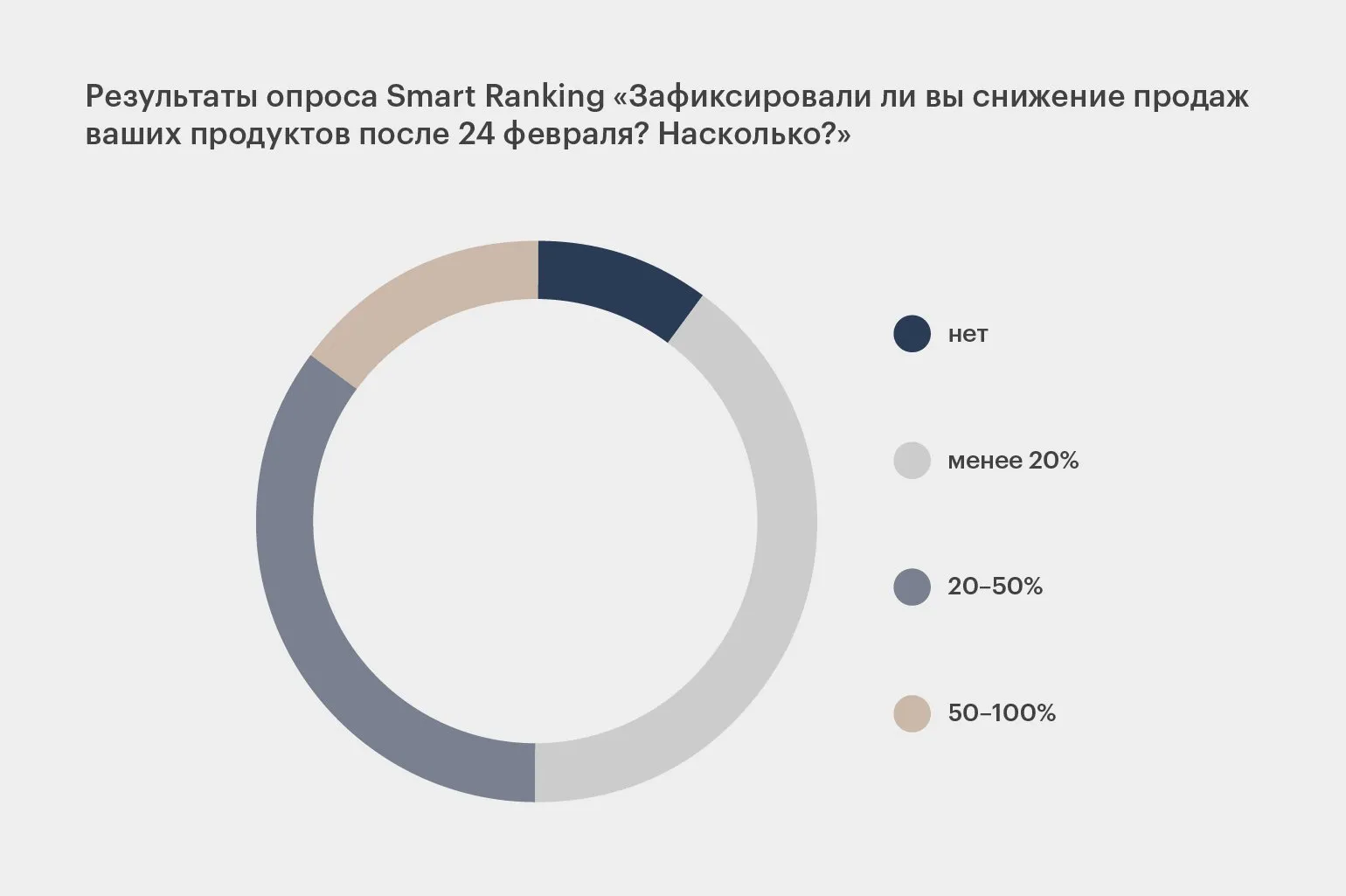
Expert opinions are supported by analytical data. According to a Smart Ranking survey, 90% of online schools noted a decrease in sales during the crisis. 40% of respondents experienced a 20% loss of sales, a third lost 20 to 50%, and 15% of schools saw sales decrease by 50–100%. These figures highlight the serious impact of the crisis on the online education market and the need to adapt business models for sustainability in difficult conditions.
Companies avoid raising prices to maintain their attractiveness to customers. Alexander Laryanovsky, Managing Partner of Skyeng and Skysmart online schools, notes that both companies are currently focused on maintaining current prices, ensuring the stable functioning of all services, and fulfilling their obligations to partners and teams. This allows them to build customer trust and remain competitive in the market.
Investment Risks. Who will be most affected by the crisis?
Among the main risks facing Russian tech startups, including EdTech companies, is a reduction in investment flows, according to Vitaly Polekhin, head of the Investors Club of the Skolkovo Moscow School of Management. The Russian market has historically been limited, which has contributed to private investors preferring to invest in international projects with the potential for greater returns. According to a Smart Ranking survey, 55% of EdTech companies planned to expand into foreign markets this year, but after February 24, these plans were suspended. This situation highlights the need to find new strategies to maintain and attract investment in the Russian EdTech sector.
Currently, it is unclear how actively investors will finance businesses focused exclusively on the Russian market. Private investors are considering a variety of investment options, including startups, stock market shares, and undervalued assets in Russia, Polekhin notes. Tech startups, including EdTech companies, continue to grow and attract investment, but they may face challenging times. In a market environment of uncertainty, it's crucial to adapt and seek new sources of funding to ensure sustainable growth and development.
Companies that have recently completed a funding round will be in a stronger position. Meanwhile, those organizations that have already utilized investor funding and now require additional capital will face significant challenges.
Vitaly Polekhin is a renowned figure in his field. His achievements and experience make him an authority in the professional community. He actively develops and implements innovative solutions, contributing to the development of his field. Vitaly also shares his knowledge through publications and speaking at various events, helping to raise awareness and interest in current issues. His work reflects a deep understanding of the modern market and demonstrates how to effectively use new technologies to achieve success. Vitaly Polekhin remains an important opinion leader and expert, whose opinions are respected by colleagues and followers.
The situation in the EdTech sector demonstrates a more optimistic outlook compared to other industries, notes Anna Chashchina. She points out that the Russian market traditionally has a smaller share of educational institutions with foreign investment and partners than those collaborating with Russian investment funds. The exit of a limited number of foreign companies, such as Coursera, and the deterioration of relations with the West could have a positive impact on the Russian educational technology market. The crisis is opening up new opportunities for domestic online schools, which can attract clients previously enrolled on Western platforms. This creates favorable conditions for the development and strengthening of Russian educational services. Russian educational platforms are actively attracting students from foreign online schools. The National Open Education Platform is inviting universities and former Coursera users to migrate to its Open Education platform. This was announced by Denis Yanyshev, Chairman of the Platform's Board and Director of the Center for the Development of Electronic Educational Resources at Moscow State University. This collaboration could significantly expand access to quality education and improve the level of educational services in Russia, creating new opportunities for students. In the current crisis, large and established EdTech companies are in a more stable position. Their experience and financial resources allow them to quickly adapt marketing strategies, financial models, content, and customer interactions. However, smaller online schools will face a much more difficult time. Many of them may not be able to cope with the challenges brought by the crisis, as Anna Chashchina confirms. This highlights the need for smaller educational institutions to seek new approaches and flexible solutions to survive in a changing business environment.

Platforms and software developers will be most affected by the current changes. They were the first to begin reducing their headcount, as noted by Daria Ryzhkova of SmartRanking. These layoffs highlight the instability in the technology sector and the need to adapt to new market conditions.
Experts predict an increase in the barrier to entry. This change may impact new entrants seeking to penetrate the industry, complicating the entry process. It is important to consider that such changes may lead to increased competition and higher demands on the quality of goods and services offered.
Opening a new online school previously cost 200-300 thousand rubles. However, currently, project launch costs have increased significantly. This is due to increased competition in the online education market and the need to implement modern technologies and tools to ensure high-quality education. Investing in platforms, marketing, and content creation has become critical to the successful operation of an online school.
Anna Chashchina is a well-known figure in her field. She has significant experience and knowledge, making her an expert in her field. Anna is actively involved in various projects and initiatives aimed at developing and promoting her work. Her professional achievements and contribution to the industry are highly valued by colleagues and clients. Anna Chashchina inspires others with her example and commitment to excellence, making her a significant figure in modern society.
According to Anna Chashchina, the number of players in the Russian EdTech market is expected to decline in the near future. As a result, only the largest and most powerful companies will survive, while new market participants will practically not appear. This indicates the need for existing companies to adapt to new conditions in order to remain competitive in a changing environment.
Advertising transitions. How to work without prohibited social networks?
Before the crisis, the online programming school "Hexlet" actively used promotion channels such as Google, Facebook, and Instagram, as noted by CEO and founder Kirill Mokevnin. However, in the first weeks of the crisis, advertising on these social networks was blocked, which caused a 20% decrease in advertising traffic and sales. This forced the company to reconsider its marketing strategies and seek new ways to attract customers. 66% of Hexlet users are located in Russia, while 34% are from Ukraine, Belarus, and other CIS countries. Currently, the platform has 400,000 registered users, and 10,000 people are trained monthly. To ensure a constant influx of clients, the school is actively exploring new promotion channels, including the Russian platforms VKontakte and Yandex. However, it is still unclear whether these platforms will be able to completely replace current audience acquisition strategies. Disabling advertising on Instagram, Facebook, Google Ads, and YouTube negatively impacted the number of client applications to Kontur.School, which is part of SKB Kontur. Ekaterina Pichelatova, the company's Marketing Director, notes that the school is currently redistributing budgets between online sales channels to improve the situation. This strategic shift is aimed at restoring application flow and optimizing advertising costs.
Alexander Laryanovsky reports that traditional advertising on Facebook, Instagram, and TikTok is unavailable for Skyeng and Skysmart online schools. However, these educational institutions maintain a presence on these platforms, as their target audience remains there. Managers continue to interact with users. In addition, Skyeng and Skysmart are actively developing their brands on the social networks VKontakte and Odnoklassniki, excluding entertainment content and focusing exclusively on educational materials. This approach allows them to maintain audience interest and attract new students.
Many educational institutions can develop various strategies to circumvent blocking. For example, they can use YouTube to promote their services through collaborations with bloggers or create their own blogs and media resources. These approaches will help them effectively attract new clients and increase their online visibility.
Anna Chashchina is a talented professional in her field. She possesses deep knowledge and experience, which allows her to successfully cope with various tasks. Anna actively participates in projects, demonstrating a high level of responsibility and creativity. Her approach to work is based on thorough analysis and a commitment to excellence, which makes her an indispensable member of the team. Thanks to her skills and perseverance, Anna Chashchina achieves significant results and makes a valuable contribution to the development of projects.
Non-payment and installment plan crisis. How to accept payments from clients?
At the beginning of the crisis, many educational institutions faced a problem: students were unable to pay for courses. This was especially true for students abroad, who were unable to transfer money for classes due to the blocking of international transactions on Russian Mastercard and Visa cards. This situation has threatened the financial stability of schools and forced them to seek alternative solutions to ensure access to education.
The Hexlet programming school previously used the American payment system Stripe to process payments. However, in late February, Stripe stopped processing transactions with cards issued in Russia, creating difficulties for the business. Kirill Mokevnin, a company representative, reported that as a result, they had to urgently switch to the Russian payment system CloudPayments. After implementing the new service, payment acceptance was successfully restored, allowing the school to continue operations without significant interruption.
Viktor Osetrov, owner and director of RealSpeaker, shares an effective method for overcoming blocking. The company's clients in Russia pay for services in rubles, while international users make payments in dollars through the Stripe system, receiving them through a legal entity registered in Ireland. These clients have not encountered any blocking issues. However, users from Ukraine, Kazakhstan, and Uzbekistan, who previously paid in rubles, have encountered restrictions. As a result, they began discussing possible ways to bypass PayPal blocks in the website chat. During the discussion, many decided to switch to the English version of the RealSpeaker website and make payments in dollars, which allowed them to complete transactions successfully. This experience highlights the importance of adapting payment methods to a changing market.

Little tricks in customer management are becoming an important tool for companies with A wide international audience. Online schools targeting the Russian market faced some losses due to a decline in the number of clients abroad, but their primary concern remained retaining Russian students. After banks eliminated installment plans for online courses, the number of new students plummeted. Amid the economic crisis, many clients are unwilling to pay for courses in full without the option of an installment plan. According to Anna Chashchina of EdMarket, the refund rate has risen to 5% and could potentially reach 10%. Students are primarily abandoning courses they deem irrelevant in the current situation.
Up to 70% of online schools previously used bank installment plans, reports Andrey Kalashnikov of Focus. After banks ceased collaborating with online schools in this area, he quickly decided to introduce an internal installment plan for clients. This decision became necessary to retain users, despite the financial burden it placed on the company. Focus now offers 3-6 month installment plans for entrepreneurs purchasing training. This not only helps retain their client base but also maintains interest in educational programs, an important factor in the competitive online education market. Schools shouldn't be wary of internal installment plans. Four to five years ago, most online schools used this mechanism until bank installment plans appeared on the market. Internal installment plans allow educational institutions to offer flexible payment terms, making education more accessible to students. This also helps increase enrollment and improve customer loyalty. It's important to remember that a properly organized internal installment plan can be an effective tool for attracting new students and retaining existing ones. Anna Chashchina is a talented specialist known for her achievements in [indicate area of expertise]. Her deep knowledge and experience allow her to successfully solve complex problems and achieve significant results. Anna actively participates in various projects, demonstrating her skills and creative approach. Her professionalism and commitment to excellence make her an indispensable member of the team. Anna Chashchina continues to develop and contribute to [indicate field or industry], confirming her status as an expert in this field.
Anna notes that educational institutions may have to adapt to new conditions and "go back a little to the past." In her opinion, most clients will not be willing to pay for distance learning courses in advance. Instead, they will prefer to pay monthly for online education. This change in the approach to funding educational programs can be an important step in attracting more students and increasing the accessibility of courses.
New Technologies. Is it possible to replace Western software with domestic software?
Before the crisis, EdTech companies in Russia actively used Western software to optimize their operations. Popular tools included the Smart Service project management system, the Google Workspace corporate collaboration platform, and team collaboration apps such as Jira and Miro. Slack, a corporate messenger, and Trello, a task manager, were also actively used, improving communication and team efficiency. With the transition to domestic solutions, companies are faced with the need to adapt and find alternatives to Western tools. Anna Chashchina of EdMarket believes that online schools are actively seeking replacements for Western programs and services, and the situation has positive prospects. She asserts that most Western services have convenient Russian equivalents. In the near future, online schools will likely focus on systematizing and optimizing their technological processes. This may include switching from Google to platforms such as Yandex. Some services will be eliminated, while others will be merged, which will require certain time and financial investments. However, these changes could ultimately yield significant returns.
At EdMarket, one sales department used the amoCRM client and deal tracking system, while the other department worked on the GetCourse platform. The company has now decided to migrate both departments to the GetCourse platform. This decision was driven by the convenience and practicality of using a single system for sales and client management. Consolidation on a single platform will streamline processes, improve collaboration between teams, and increase the overall efficiency of the company.
The development department at Focus took advantage of decreased traffic and migrated to amoCRM from the 1C Bitrix platform. In addition, they are developing their own content publishing platform. The company has also experienced difficulties using Zoom, which Focus mentors traditionally use to conduct classes with entrepreneurial trainees. These changes are aimed at streamlining processes and improving customer interactions.
We previously used a Mastercard to pay for Zoom services, but are currently experiencing issues with payment processing. In this regard, we are considering switching to the Russian Yandex.Telemost platform for video conferencing.
Andrey Kalashnikov is a name associated with a high level of professionalism and skill. His achievements in the field in which he works deserve attention and recognition. Kalashnikov has proven himself to be an expert capable of solving complex problems and achieving goals. His experience and knowledge help him find effective solutions and implement innovations. Andrey actively shares his experience with colleagues and strives for continuous development, making him a sought-after specialist in his field.
The platforms of large public educational institutions, such as Moscow State University, have been least affected by the current changes. Denis Yanyshev emphasizes that since the beginning of the "University Without Borders" distance education project, the university has used exclusively its own IT solutions and open-source software. To facilitate student-faculty interaction, an agreement was signed with Yandex to use the Yandex.Telemost platform, which successfully replaces Zoom. Yanyshev notes that some technical glitches may occur at this time, but they will not be widespread. These minor issues are easily remedied and will not negatively impact the educational process for students and faculty.
The Skyeng online school operates on its own platform, which allowed it to minimize the impact of problems with communication services, notes Alexander Laryanovsky. Although the school experienced minor technical issues due to cyberattacks and blocking of certain resources, it is quickly resolving these issues. Skyeng continues to provide high-quality education while maintaining the availability of its services to students.
New Content. How Have Online School Offerings Changed?
Current realities have forced online schools to reconsider their curricula. The departure of Western companies from the Russian market has resulted in many specialists being left without work. These professionals will find themselves in the labor market and will likely need both to update their knowledge in their field and to retrain for a new specialty. Online schools quickly responded to the changes, actively offering courses with relevant knowledge to retain their clients and meet the growing demand for professional training.
Kontur.School quickly updated its courses on internet marketing and SMM promotion, launching a series of free webinars. These webinars will help entrepreneurs understand the current situation, prepare their businesses for the changing environment, and cope with anxiety, notes Ekaterina Pichelatova. The educational company Focus has united its graduates in an anti-crisis mastermind group, comprising 220 entrepreneurs. This group was created to support Russian business representatives in making the right decisions during the crisis and to ensure stability, explains Andrey Kalashnikov. Participating in such initiatives not only allows them to gain relevant knowledge but also to build a network of professional contacts that can prove useful in difficult times. Skyeng School has taken a unique approach to solving this problem. As Alexander Laryanovsky noted, the school has retained its existing programs and methods, but has introduced professional psychological support groups for teachers. This solution allows teachers to receive the necessary assistance and support, which, in turn, contributes to a more comfortable and productive educational environment. Support from psychologists helps teachers cope with stress and improves the quality of learning, which is an important aspect of the educational process.
Since its inception, the Skillbox educational platform has actively used content marketing to attract attention at the top of the sales funnel. Initially, the company published practical articles on its blog. Today, this blog has become a major multi-industry publication, attracting approximately 1.2 million visits monthly, according to Skillbox Editor-in-Chief Andrey Konovalov. The introduction of high-quality content has allowed Skillbox not only to increase its audience but also to strengthen its position in the educational services market.
If your goal is not only to work with an active "advertising" audience but also to expand it by engaging new users, creating your own media outlet is practically the only solution. However, it is important to understand that media is not limited to publishing articles. This is extensive work that requires building editorial processes and strict quality standards.
During the crisis, IT training courses will remain popular, while interest in personal finance and psychology programs will increase, according to Anna Chashchina. She believes that retraining courses for specialists working with Russian products rather than imported ones will be particularly in demand. For example, nutritionists will be trained in the specific properties of vitamins produced in Russia, rather than products from foreign sites such as iHerb. This will not only improve the qualifications of specialists but also support domestic production in a context of economic instability.
Schools need to closely monitor changes in the needs of their audiences and promptly offer relevant educational products. In today's market conditions, preference should be given to short courses lasting one or two months, as extensive programs are unlikely to attract potential students. Ensuring flexibility and adaptability in offerings will be key to success.
There will be no collapse. Will the crisis ever end?
Experts at Skillbox Media believe it is premature to write off Russian EdTech. At the same time, players in this market need to adapt to current conditions in order to maintain their positions and continue to develop.

At present Online schools need to focus on financial aspects, cost reduction, and unit economics analysis. Anna Chashchina believes these measures will be essential for survival in an unstable economy. Effective financial management will help educational platforms adapt to current challenges and ensure long-term sustainability.
In 2023, according to Daria Ryzhkova of Smart Ranking, the EdTech market is not expected to grow and may even experience a decline compared to 2021. However, the market has a margin of safety that will prevent its complete collapse. It is important to note that, despite the departure of foreign companies from Russia, domestic services remain capable of supporting and developing this sector.
The activities of Instagram and Facebook have been recognized as extremist and banned in Russia. This decision is due to political and social factors that have led to the need to restrict access to these platforms. Users should be aware of current legislative changes and the possible consequences for their accounts and content. It's important to remember that using social media data may have legal consequences under Russian law.
Read also:
- Perm entrepreneur's school "Like Center" earned 7.5 billion rubles. What's the secret to its success?
- "EdTech, FinTech, FoodTech, MedTech—they're not a fad, they're the new normal."
- "The worst storm." How are Chinese EdTech companies coping with restrictions six months later?
- How to charm investors and attract the first money to an EdTech startup
- Complete transformation: how EdTech has changed and what awaits it
Online course producer from scratch to PRO
You will learn how to launch profitable courses and webinars with minimal investment. You will understand how to turn existing EdTech projects into profit and make money from online learning.
Learn more