
Contents:
- Why the Russian EdTech model failed to transfer to foreign markets
- Can university continuing education programs compete with online schools?
- How to use CustDev interviews in course creation
- Why games are needed in adult education and what types are there?
- How industry and universities are uniting in training IT specialists
- What helps develop students' critical thinking?
- What are popular group learning formats?
- How a teacher's image can help launch your own educational programs projects
- What are the similarities and differences between the work of a young teacher at school and at a university?
- Can a special organization of the school space solve the problems of bullying and teacher burnout?

Learn: The Profession of a Methodologist from Scratch to PRO
Find out moreWhy the Russian EdTech Model Failed to Transfer to Foreign Markets
Ivan Kotov is the former Commercial Director of Netology and co-founder of the Ultima School startup in Brazil, which unfortunately closed. His experience in managing and developing educational projects makes him a significant figure in the field of online education.
In the influencer marketing podcast "Vadim, Where Are the Bloggers?", Vadim Bordian, founder of the Grapzy agency, discusses current trends and strategies for working with bloggers. This podcast provides valuable insights on how to effectively use influencers to promote brands and increase audience reach. By listening to "Vadim, Where Are the Bloggers?", you will learn about the latest trends in influencer marketing and receive recommendations for choosing partners for successful campaigns.
Russian experience in EdTech has become an interesting example for many countries abroad. In recent years, we have seen how successful practices and innovative solutions developed in Russia are being applied in the international context.
One striking example is the use of adaptive learning. Russian companies have developed platforms that analyze student progress and offer personalized learning paths. This approach effectively takes into account the unique characteristics of each student and improves the quality of education.
Also worth noting is the use of gaming technologies in education. Russian developers have created gaming applications and platforms that make the learning process more engaging and motivating. These solutions are successfully applied in other countries, where an emphasis on gamification helps retain students' attention and improve learning.
Furthermore, Russian EdTech startups are actively developing artificial intelligence and machine learning technologies. These technologies automate assessment and feedback processes, as well as create intelligent systems that can adapt to user needs. Such solutions are already being implemented in educational institutions abroad, helping to improve the effectiveness of the educational process.
Thus, Russian experience in EdTech demonstrates successful approaches and technologies that are being applied internationally, helping to improve educational practices and expand opportunities for students around the world.
In this episode, Ivan Kotov shares his experience working at Netology. During his tenure with the organization, a rebranding and significant revenue growth occurred, particularly during the pandemic. By the end of 2021, many experts in the Russian EdTech market began discussing the possibility of expanding into international markets, including Southeast Asia, Latin America, the United States, and Europe. Ivan Kotov joined the founding team of Ultima School, a startup that offers retraining courses for new professions in Brazil, responding to the growing demand for educational services amid a changing labor market.
In Brazil, it quickly became clear that the traditional promotion channels in the Russian market were not working. The digital skills training segment was virtually unknown to the local audience, resulting in a lack of organic growth. The startup, like many other similar projects, suffered from the startup winter. In 2022, venture capital investments declined significantly, and the team lacked the resources to test new hypotheses.
The traditional approach of Russian EdTech in the continuing professional education (CPE) segment did not generate significant revenue. This is due to the fact that the level of basic student preparation and their solvency in Latin America are lower than in Russia. According to Ivan Kotov, developing an educational business with Russian roots in Latin America is possible, but this will require significant resources and, possibly, a change in the market climate. It is important to adapt educational programs and strategies to local conditions, which will help increase student interest and participation in continuing education. Reworking text for SEO involves using keywords, improving readability, and adding valuable content without unnecessary elements. Read also: Experts expect a prolonged investment "winter" in the global EdTech sector. Amid uncertainty in financial markets, investors are approaching investments in educational technologies more cautiously. A decrease in investment volumes could lead to a slowdown in the development of startups and technologies aimed at improving the educational process. It is important to note that despite the current difficulties, EdTech retains the potential for growth, as the demand for digital learning continues to grow. Investors should consider innovative solutions and sustainable business models to successfully adapt to changes in this dynamic industry.
Can University Continuing Professional Education Programs Compete with Online Schools?
Zoya Zapevalova, Head of the Educational Programs and Technologies Department at the HSE Executive Training Center in St. Petersburg (Kochubey Center), online course producer Natalya Gulyanskaya, as well as specialists in university continuing professional education Timofey Popov from ITMO and Evgeny Buravlev from Novosibirsk State University, participated in the discussion. This team of professionals combines experience and knowledge to develop educational initiatives and implement modern technologies in the educational process.
We invite you to a webinar organized by the Kochoubey Center. This is a unique opportunity to gain new knowledge and skills in your area of interest. Join the discussion of current topics and ask your questions to experts. Don't miss the chance to expand your horizons and improve your professional skills. We look forward to seeing you at the Kochubey Center webinar.
University continuing professional education (CPE) programs are increasingly facing competition from EdTech companies. This situation requires educational institutions to adapt and implement innovative approaches. The main areas in which university CPE programs compete with EdTech companies include the flexibility of the educational process, the availability of online courses, and the relevance of content.
To successfully advance in this market, universities need to focus on the quality of education and the uniqueness of the courses offered. It is important to develop partnerships with the industry, using up-to-date data to update curricula and programs. The use of modern technologies, such as interactive platforms and individualized courses, can significantly increase the attractiveness of CPE.
Furthermore, universities should more actively use digital marketing strategies to promote their programs. Creating search engine optimized content and leveraging social media to engage with target audiences will help increase visibility and interest in continuing professional education programs.
In the face of growing competition from EdTech companies, universities must recognize the importance of continually updating their educational offerings and actively engaging with potential students.
According to webinar experts, Russian universities rarely face direct competition from online schools in the continuing professional education (CPE) sector. Even when universities offer courses on relevant topics for individual students, the EdTech sector often dismisses them as competitors due to the slow pace of course development and limited scale of operations. Webinar participants and presenters noted that bureaucratic procedures and a shortage of qualified personnel significantly hinder the development of university CPE into a full-fledged business.
Despite popular belief, university courses can successfully compete with online school products. At a recent webinar, experts shared valuable recommendations for increasing the attractiveness of continuing professional education (CPE) at universities in the open market. Participants discussed the key benefits highlighted by online school clients in their reviews and proposed competitive analysis strategies for universities. The discussion highlighted common mistakes that universities make when promoting their courses, which allows educational institutions to more effectively position their offerings and meet the needs of the target audience.

Explore additional materials:
2024 EdTech Trends for Additional Professional Education
In 2024, EdTech in the continuing professional education (CPE) segment will continue to evolve, driven by new technologies and the changing needs of students. One of the key trends will be the integration of artificial intelligence into educational platforms. AI will help personalize learning by analyzing student progress data and offering adaptive courses.
Furthermore, the emphasis on hybrid learning will increase. The combination of online and offline formats will ensure deeper engagement and increase the accessibility of educational programs. It is also important to note the growing importance of microlearning, which allows students to master short, targeted modules of knowledge, which is especially relevant for professionals seeking to quickly update their competencies.
In 2024, interest in virtual and augmented reality in education will increase. These technologies create immersive experiences, allowing students to better absorb material through interactive simulations and practical assignments. We should also expect an increase in the use of educational games and gamification, which will make the learning process more engaging and effective.
Finally, an important trend will be an emphasis on sustainability and inclusion in education. Organizations will strive to create accessible and equitable educational programs that take into account the diverse needs of students. These trends will contribute to the formation of a more effective and adaptive system of continuing professional education in 2024.
How to use CustDev interviews in course creation
Methodologist Natalia Muratova is an expert in the development and implementation of educational programs. Her experience in methodology allows her to create effective and adaptive courses that meet modern learning requirements. Natalia actively works with various educational institutions and corporate clients, helping them optimize the learning process and improve the quality of educational content. Her approach is based on an analysis of the target audience's needs and the use of modern technologies, making training more accessible and effective.
The presentation at the "White Conference" was a significant event, attracting the attention of IT specialists and experts. Conference participants discussed current topics related to the latest IT trends, innovations, and cutting-edge solutions. The importance of such events lies in the exchange of experience and knowledge, which contributes to the development of the industry. Participants had the opportunity to learn about new approaches and tools that can improve their work efficiency. The conference became a platform for productive discussions and networking, promoting the strengthening of professional ties.
Interviews with target audience representatives are an important tool for understanding customer needs and preferences. They help collect valuable data that can be used to improve products and services. Conducting such interviews allows for a deeper understanding of the target audience's motivations, expectations, and challenges, which in turn facilitates more precise targeting of marketing strategies.
To conduct a successful interview, it is necessary to prepare questions in advance that will help uncover key aspects of respondents' opinions. It is important to create a comfortable atmosphere so that participants feel free and openly share their thoughts. Recording the interviews and subsequent analysis of the information obtained will help identify common trends and unique insights.
Furthermore, interviews with the target audience can identify gaps in existing products and services and offer ideas for improvement. This is a valuable resource for businesses seeking to remain competitive in the market. Surveys and focus groups can also complement the interview results, providing a more complete understanding of customer preferences. Therefore, regularly conducting interviews with representatives of the target audience is an important step for successful business development.
This year, the organizers of the "White Conference," a well-known online education event, began posting recordings of presentations and other videos on their YouTube and Rutube channels. One of the first publications was a detailed guide on the methodology of conducting in-depth interviews for audience research (customer development, custdev). This is an important step before launching new educational products, helping to more accurately determine the needs and preferences of the target audience.
Interviews play a crucial role not only before developing an educational course but also during its implementation. For example, they help identify the reasons why students may drop out of the course. Customer Development interviews serve a variety of purposes, including clarifying the target audience's needs and obtaining feedback on the course. It's important to know where to find interview participants, how to write a proper script, conduct the interview, and effectively process the results. For more detailed information and recommendations, listen to our presentation.

Read also:
Before designing a course, the methodologist must conduct a series of studies to ensure its effectiveness and meet the needs of the target audience. The most important research includes a training needs analysis, a target audience study, and an analysis of existing educational programs and materials.
First, it is important to conduct a needs analysis. This can be done through surveys, interviews, or focus groups to understand the knowledge and skills learners require. Their level of preparation and motivation for learning should also be considered.
A target audience study includes demographic data such as age, education, and professional experience. This will help tailor the course content to the specific interests and needs of learners.
An analysis of existing educational programs and materials will help identify successful practices and potential knowledge gaps that should be addressed when creating a new course.
After collecting and analyzing the data, the methodologist can begin designing the course based on the information obtained, which will increase its relevance and effectiveness. It's important to remember that regularly updating research and its results will help keep the course relevant and up-to-date.
Why Games Are Needed in Adult Education and What Types Are There?
The Skolkovo MBA program is led by Director Ivan Khvorov, Producer Artem Egorov, and Game Designer Vladimir Grachev. These specialists possess unique experience and knowledge that make the program engaging and relevant for students seeking advancement in business and technology.
The "Call a Person" podcast is a unique platform for discussing current topics and societal issues. Here you will find in-depth interviews with experts who share their experiences and opinions. Each podcast episode offers listeners the opportunity to immerse themselves in engaging discussions that help them understand complex aspects of life. We strive to provide high-quality content that will be useful for both professionals and the general public. Subscribe to "Call a Person" to stay up-to-date with new episodes and stay on top of the most important topics.
Games can effectively address a variety of educational challenges, helping to develop key skills and knowledge in students. Firstly, game-based learning methods stimulate creative thinking and a critical approach to problem solving. Secondly, they help improve teamwork and communication skills, which are especially important in today's society. Games also facilitate retention of educational material, making the learning process more engaging and interactive.
Furthermore, game-based techniques can be used to develop leadership skills and the ability to make decisions under uncertainty. They provide a safe environment for experimentation, allowing students to learn from their mistakes. Thus, integrating games into the educational process opens up vast opportunities for student development, improving their academic performance, and developing the necessary competencies for a successful future.
This is the first episode of a new podcast from the Skolkovo School of Management, which will be dedicated to the application of new technologies in business and education. The first conversation discusses the impact of generative artificial intelligence (GAI) on work processes. Guests share their experience that, previously, creating an educational game required a team of 12 specialists, including scriptwriters, artists, and animators. Today, similarly complex projects can be implemented by teams of 4-6 people, as a single specialist can create all the content using neural networks. This significantly simplifies the development process and saves resources, opening up new opportunities for the education industry.
This episode examines games used in business education and other fields, as well as their impact on participants. It discusses the results achieved through game-based methods, at which stages of learning they are most effective, and their significance. Guests discuss why the game format attracts attention more than other methods and how this feature is becoming increasingly relevant as generations change.

Read also:
Creating a useful and engaging educational game - tips for teachers
Educational games can significantly enrich the learning process by making It's more engaging and effective. To create such a game, it's important to consider several key aspects. First, define the goal of the game: what skill or knowledge do you want to develop in students. This could be developing critical thinking, improving memory, or mastering new material.
Second, think through the game's mechanics. They should be simple and straightforward so as not to distract players from the learning process. Use elements of competition or teamwork to increase participants' motivation. It's also worth incorporating various task formats to maintain interest and engagement.
Don't forget the age and skill level of your audience. The game should be adapted to their capabilities and interests. It's important to provide feedback so players can understand their mistakes and learn from them.
Finally, test your game on a small group to identify potential flaws and make any necessary adjustments. Creating an effective educational game takes time and effort, but the result will be an engaging and productive learning experience for your students.
How Industry and Universities Are Uniting to Train IT Specialists
Marina Kosheleva, Head of Education, Science, and Culture Projects at Yandex Cloud, Alexey Tolstikov, Head of the Yandex School of Data Analysis (SDA), and Eduard Allakhverdov, a SDA graduate, discuss current trends and prospects in data analysis. Their experience and expertise in technology and education are contributing to the development of new approaches and solutions that can change the face of modern education and scientific research. Importantly, the collaboration between educational institutions and tech companies like Yandex opens new horizons for students and professionals seeking to advance in data science. The Yandex Education podcast, "Uninvited Enlightenment," offers unique insights and discussions on current topics in education. In each episode, experts share their experiences, analyze trends, and offer practical advice to help listeners better navigate the world of knowledge. Delving into various aspects of the educational process, the podcast becomes a valuable resource for students, teachers, and anyone interested in modern teaching methods. Listen to "Uninvited Enlightenment" and expand your educational horizons. Studying at the School of Data Analysis (SDA) is a unique process that combines theoretical knowledge and practical skills. Students immerse themselves in modern methods of data analysis, machine learning, and artificial intelligence. The course includes work with real-world projects, allowing graduates not only to deepen their knowledge but also to gain the experience necessary to solve complex problems in various industries.
ShAD graduates are known for their unusual and innovative projects that impact business and society. They develop tools for analyzing big data, create algorithms for predicting trends, and optimize processes. Many of their projects are aimed at solving pressing problems, such as improving quality of life, developing healthcare, and protecting the environment.
As a result of this approach to education, ShAD graduates become sought-after specialists in the labor market, prepared for the challenges of the modern world. Their analytical thinking and practical application of knowledge make them valuable professionals in various fields, including finance, marketing, technology, and science. Studying at ShAD is not just gaining knowledge; it is a path to creating meaningful solutions and innovations in the world of data.
This video starts the new podcast "Uninvited Enlightenment." In each episode, the hosts explore unexpected applications of IT technologies in various fields of education, science, and culture. The podcast begins with a story about how specialists train a neural network, or more precisely, an ensemble of neural networks, to analyze hundreds of hours of video footage to recognize specific snow leopards. This is an example of how modern technologies can be integrated into teaching and research, opening new horizons for scientific analysis and conservation. Education specialists will find the section in which Alexey Tolstikov and Eduard Allakhverdov share their experiences mastering complex IT skills particularly interesting. The experts discuss which students are suitable for additional education in data analysis, as well as the need for a technical bachelor's degree beforehand. They consider the possibility of combining study with university and work, as well as the importance of industry participation in university projects. This issue will be useful for those interested in developing IT skills in the educational environment.

Read also:
Training personnel for the future is becoming an important task in the context of rapid changes in the labor market and technological progress. Companies and educational institutions recognize the need to adapt to new requirements to ensure a qualified workforce capable of addressing modern challenges. It is essential to implement modern teaching methods, such as digital technologies and practical skills, to prepare specialists ready to work in a rapidly changing environment. An emphasis on interdisciplinary approaches and continuous professional development will help create flexible and effective teams. Thus, successfully preparing future-ready personnel requires synergy between education, employers, and government agencies.
What helps develop students' critical thinking
Maria Solodikhina, Associate Professor of the Department of Gravitation and Cosmology at Peoples' Friendship University of Russia and Doctor of Pedagogical Sciences, is an expert in her field. Her research covers important aspects of gravity and cosmology, making her contribution significant to the development of science. Maria Solodikhina actively participates in educational programs, sharing her knowledge and experience with students, thereby facilitating the training of highly qualified specialists in astrophysics and space research.
The HSE Institute of Education seminar will be held in an open venue. This event provides a unique opportunity to discuss current topics in education and exchange experiences among professionals. Participants will be able to ask questions to experts and receive useful recommendations. Don't miss the chance to expand your knowledge and establish contacts with colleagues in the field of education.
Developing critical thinking at a university is an important task that promotes the development of an analytical approach in students. There are several effective approaches to this process. First, the integration of interactive teaching methods, such as group discussions and debates, allows students to exchange opinions and listen to different points of view. This promotes the development of the ability to analyze information and form their own judgments.
Second, the use of problem-based learning helps students face real-world challenges that require critical analysis and creativity. Students learn to evaluate information, identify problems, and propose informed solutions.
The third approach involves introducing courses aimed at developing argumentation and analytical skills. Such courses help students understand the structure of argumentation, distinguish between facts and opinions, and formulate logically sound conclusions.
Furthermore, it is important to create an atmosphere conducive to freedom of expression, where students can safely share their thoughts and concerns. This not only increases engagement but also develops confidence in their own analytical abilities.
Thus, the combination of interactive methods, problem-based learning, and argumentation courses creates a comprehensive approach to developing critical thinking in universities, which ultimately helps prepare students for successful professional careers.
At the seminar, Maria Solodikhina presented the results of a large-scale experiment she has been conducting with students from various fields at RUDN University for several years. The study showed that, despite the difficulties in defining critical thinking and measuring its level (as different instruments are based on different approaches), targeted work on developing these skills is beneficial. This means that regardless of how we understand critical thinking and what methods we use to assess it, it is important to teach students to analyze information, verify its validity, and reason logically. Thus, the development of critical thinking becomes a key aspect of the educational process, contributing to the development of competent specialists.
A study conducted at Peoples' Friendship University of Russia (RUDN University) found that assignments aimed at developing critical thinking are more effectively integrated into various academic disciplines. This is explained by the fact that transferring skills from one context to another is a difficult task for students. Furthermore, it is important to explicitly communicate to students that one of the course goals is to develop their critical thinking. Some methodological approaches propose developing critical thinking indirectly by integrating new assignments into traditional disciplines, but such methods prove less effective. The optimal solution is an explicit statement of course objectives and the active implementation of assignments that promote the development of critical thinking.
Maria Solodikhina discussed the limitations associated with teaching critical thinking. She noted that many high school students are not yet ready for such courses due to their age. Furthermore, during the experiment at RUDN University, a small percentage of students in all groups showed no improvement in their skills during the course. This emphasizes the importance of adapting educational programs to the age and psychological characteristics of students to achieve effective results.

Read also:
Teaching Adults Critical Thinking: Key Criteria for an Effective Course
Teaching critical thinking among adults is becoming increasingly relevant in modern society. A good course must meet several important criteria to ensure maximum learning effectiveness. First, the program must be flexible and tailored to the needs of the participants. This includes practical assignments and situations that students are likely to encounter in real life. Second, the experience and qualifications of the instructors are an important factor. Professionals with deep knowledge of critical thinking will not only be able to convey information but also inspire participants to develop their own analytical skills. Furthermore, the course should include a variety of teaching methods and approaches. This can include both group work and individual projects, which promote a deeper understanding of the material and the development of argumentation skills. Finally, an effective critical thinking course should provide opportunities for feedback and self-assessment. Participants should be able to evaluate their achievements and understand areas in which they need improvement. Thus, teaching critical thinking will become not only a process of knowledge transfer, but also a platform for personal growth and development.
What are popular group learning formats?
Anna Tsareva is an educational experience designer, methodologist, and mentor. She is the author of the popular Telegram channel "Tsareva in the Know," where she shares current news and insights in education and methodology. Anna helps develop skills and improve educational practices, focusing on modern trends and learners' needs.
Text rewriting for SEO:
On my personal channel, you will find a variety of content that will help you improve your knowledge and skills. We discuss current topics, share useful tips, and provide unique information that you won't find anywhere else. Join our community and stay up-to-date with the latest trends. Make sure you're subscribed to stay up-to-date with new videos and content.
Different group formats have their own unique characteristics and differences that affect their effectiveness and application. It's important to understand that the choice of format depends on the goals and objectives of the group.
One of the main group formats is an open discussion. This format allows for a free exchange of opinions and ideas among participants. It fosters creativity and allows for a diversity of perspectives. However, the lack of structure can lead to chaos and inefficiency without a clear moderator.
Another common format is brainstorming. It aims to generate new ideas and solutions. In this format, it is important to create an atmosphere in which participants can freely express their thoughts without fear of criticism. Brainstorming is effective for finding innovative solutions, but requires subsequent analysis and refinement of the proposed ideas.
A seminar or training format is more structured and focused on learning. In this case, experts share knowledge and experience, and participants can ask questions and receive feedback. This format is effective for conveying information and developing skills, but it requires careful preparation and planning.
Group work is another important format that allows participants to work on tasks in small teams. This promotes deeper understanding of topics and allows each participant to contribute. However, for successful work, it is necessary to establish clear roles and responsibilities to avoid confusion.
Each of these formats has its advantages and disadvantages, and their choice should be based on specific goals and context. Understanding the specific features of group formats will help you organize group activities more effectively and achieve the desired results.
Anna Tsareva publishes short videos on her channel dedicated to the work of methodologists. In her videos, she analyzes current vacancies, highlights key trends in the field of methodological work, and recommends useful professional literature. This channel's content is designed for professionals seeking to develop their skills and stay abreast of professional development.
This video examines popular group work formats in adult education, as well as their differences and application considerations. It's important to understand that the choice of format is related not only to the organization of the process but also to the learning objectives. Not every course can effectively utilize all formats. For example, for a short course lasting a month or less, it doesn't make sense to spend time organizing a discussion club. For a renowned expert, a simple question-and-answer session is more appropriate than a mastermind. Watch the video for details.

Read also:
Group learning can significantly improve the effectiveness of the educational process. Here are six tips to help you organize successful and productive classes.
First, define clear learning goals. Set specific objectives for the group so that participants understand what they must achieve. This will help create focus and increase motivation.
Second, create a comfortable atmosphere for communication. Ensure openness and trust among participants so that everyone can freely express their thoughts and ideas. This promotes better interaction and assimilation of the material.
Third, use a variety of teaching methods. Combine lectures, group discussions, and practical tasks to accommodate different learning styles and maintain participant interest.
Fourth, encourage active participation. Ask questions, initiate discussions, and involve all participants in the process. This will not only reinforce knowledge but also help develop teamwork skills.
Fifth, provide feedback. Regularly discuss the successes and difficulties of participants. This will allow you to adjust the learning process and improve the results.
Finally, sixth, evaluate the results. Use tests, surveys, or projects to understand how effective the training was and what aspects need improvement.
Following these recommendations, you can organize group training that is not only informative but also inspiring for all participants.
How a teacher's image can help launch your own educational projects
Ilya Korshunov, Head of the Laboratory of Continuous Adult Education at the Higher School of Economics; Evgeny Szhenov, Academic Director of the Expert and Analytical Center "Scientific and Educational Policy"; Ivan Gulienko, General Director of the Higher School of Stylistics, Design and Technology; Inessa Trubetskova, image expert; Evgenia Golitsyna, Head of the KairosDS community of stylists and designers; and Natalia Zolotareva, President of the Union of Directors of Secondary Vocational Education of Russia, represent key experts in the field of education and design. Their experience and knowledge play a vital role in the development of professional standards and educational programs aimed at training qualified specialists in the field of style and design. The collaboration of these professionals contributes to the development of current trends and innovative approaches in adult education, which is especially important in a rapidly changing labor market.
The broadcast is being broadcast on the official channel of the HSE Institute of Education.
Personal branding and style play a key role in a career in education. In today's highly competitive labor market, having a clearly defined personal brand helps you stand out from your colleagues and attract the attention of employers.
A personal brand is formed by your reputation, professional skills, and unique approach to teaching. It helps build trust with students, colleagues, and managers. Style, in turn, includes not only appearance but also communication style, approach to teaching, and interaction with the audience. An effective teaching style can significantly increase student engagement and improve their performance.
Key aspects of developing a personal brand in education include active participation in professional communities, publishing in scientific journals, and maintaining an educational blog or channel. This allows you to share your experience and knowledge, as well as strengthen your position as an expert in a particular field.
Modern technology offers numerous opportunities for promoting a personal brand. Social media, online courses, and webinars help expand your audience and increase recognition. Using these tools helps create the image of a professional who not only possesses the necessary knowledge but is also able to convey it to others.
Thus, personal brand and style are important factors contributing to career advancement in education. Recognizing their importance and actively developing them will help not only achieve professional goals but also create a positive image in the educational environment.
At the webinar, experts discussed resources that will help teachers and methodologists launch their own business projects, such as courses in the field of continuing professional education. They discussed opportunities for collaboration with various partners when launching new projects at universities and schools, as well as major programs in which participation can be beneficial. A key topic of discussion was the personal brand and image of an expert, which can be significant resources for the successful promotion of initiatives. According to the webinar participants, style and image are not only a matter of visual aesthetics but also an important strategy for promoting oneself as an expert and an educational product. The speakers emphasized that a person's perception is shaped not only by their clothing style but also by aspects such as gestures, posture, spatial organization, voice modulation, and intonation. The topic of digital etiquette and safety on social media was also raised, highlighting the importance of a comprehensive approach to creating a positive image in today's digital space.

Rework the text without changing its essence. Make sure it is optimized for search engines and add the necessary information. Avoid using emojis and unnecessary symbols. Don't include structured sections like 1, 2, 3, or *. Simply provide plain text. See also:
There are several opinions regarding the need for a teacher's presence on camera during a video lecture. Some believe that the teacher's personal participation promotes better comprehension of the material and creates a closer connection with the audience. Others argue that the content of the lecture is more important than visual presence and that the main focus should be on the quality of the information and its delivery. It is important to keep in mind that the video lecture format can vary depending on the target audience, topic, and learning objectives. The correct choice of video delivery approach can significantly impact the effectiveness of learning and comprehension of the material.
How the work of a young teacher at school and at university is similar and different
School teachers and university professors in Rostov-on-Don play a key role in the education and upbringing of the younger generation. Their professionalism and dedication contribute to the formation of the future of society. These specialists not only impart knowledge but also develop critical thinking, creativity, and social skills in students. In Rostov-on-Don, educational institutions offer a variety of programs and methods that help teachers effectively interact with students. Teachers here actively utilize modern technologies and innovative approaches to teaching, making the process more engaging and productive. Importantly, supporting and developing teachers' professional skills are a priority for the city's education system.
The "Teachers of the Year" podcast is a unique platform where the achievements and teaching methods of top teachers are discussed. In each episode, we introduce listeners to innovations in the educational field, sharing success stories and experiences of leading teachers. This podcast will be a valuable resource for anyone interested in the development of education and striving to improve the quality of teaching. Join us to learn more about best practices and be inspired to achieve new achievements in education.
Teachers beginning their careers often face numerous challenges that can hinder their professional development. One of the main difficulties is a lack of experience. New teachers may experience difficulties managing the classroom and interacting with students, leading to stress. Many teachers also face a lack of teaching materials and resources, which complicates the lesson preparation process. Furthermore, new teachers may have difficulty establishing relationships with colleagues and school administration. This can lead to feelings of isolation and a lack of support. Importantly, early-career teachers often face high demands on their professionalism and effective teaching, which can cause additional stress. Another challenge is the lack of time for self-education and professional development. Teachers must continually develop their skills and knowledge of modern pedagogical methods, which becomes a challenging task in a busy educational environment. Furthermore, new teachers may face financial difficulties, especially if their salary does not meet their expectations. These factors can negatively impact motivation and overall perception of the profession.
Therefore, early career teachers face a number of significant challenges that require attention and support from educational institutions and society at large.
In this episode of the podcast dedicated to the work of university teachers, we invited three school teachers. During a fascinating conversation, they shared their experiences, discussed their paths into the profession, and the importance of finding joy in working with children. They also discussed the challenges they face in communicating with students and parents, adding depth to the conversation and allowing them to see the profession from different perspectives.
Teachers note that, in addition to low salaries, one of the serious problems for beginning teachers is the lack of mentorship. More experienced teachers in schools are often overwhelmed with work and cannot devote time to consultations and answering questions from newcomers. During a discussion with university colleagues, possible solutions to this problem were explored and it was determined at which level—school or university—professional communities function more effectively. Teachers and educators also exchanged views on today's teenagers and their parents, sharing real-life situations from their own work. Discussing these topics is important for building support and developing the professional skills of both young and experienced teachers.

Read also:
Teachers' participation in professional online communities has many benefits. These communities provide a platform for sharing experiences, teaching methods, and resources. Teachers can ask questions, share their best practices, and receive feedback from colleagues. This promotes professional growth and improves the quality of the educational process.
Furthermore, online communities allow teachers to stay up-to-date on the latest educational trends, new technologies, and innovative approaches. Participation in such groups helps expand their professional network, which can be useful for exchanging ideas and collaborating.
Also, teachers can find support and motivation in online communities, which is especially important in times of stress and high workload. Discussing common problems and challenges helps create a community of like-minded people where everyone can feel heard and understood.
Finally, participation in professional online communities is an important aspect of teacher development, promoting both personal and professional growth.
Can a special organization of school space solve the problems of bullying and teacher burnout?
The conference on the development of school architecture in St. Petersburg, called "Defrosting," will bring together experts and participants to discuss modern approaches and solutions in the design of educational institutions. This event will serve as a platform for the exchange of experiences and ideas aimed at improving school infrastructure and creating a comfortable educational environment. Conference participants will share their knowledge and suggestions, which will significantly improve the quality of school architecture in the region.
The final discussion of the conference will be held at a designated location. This important event will bring together participants to discuss key topics and share experiences. Participants will be able to ask questions and make suggestions, making the discussion more interactive and productive. Attend this event to gain relevant information and insights from experts in your field. Don't miss the opportunity to expand your knowledge and establish new professional contacts.
Modern schools require innovative architectural and design solutions that take into account the needs of students and teachers. These solutions are aimed at creating a comfortable and safe educational environment that promotes creative thinking and effective learning.
Architectural solutions should ensure maximum functionality of the space. Spacious classrooms, multifunctional learning areas, and open spaces promote interaction between students and teachers. The use of natural light and high-quality ventilation improves the microclimate, which has a positive effect on student concentration and health.
Design solutions also play an important role. The use of bright and inspiring color schemes can stimulate creativity and activity. Furniture should be ergonomic and adaptable to various activities, whether group projects or individual assignments. The introduction of technologies such as interactive whiteboards and distance learning systems is also important, making the learning process more interactive and accessible.
Furthermore, it is important to consider environmental aspects when designing modern schools. The use of sustainable materials and the introduction of energy-saving technologies not only contribute to environmental protection but also reduce the operating costs of educational institutions.
Thus, modern architectural and design solutions play a key role in creating an effective and comfortable educational space that promotes student development and improves the quality of education.
The discussion brought together key education experts, including Maxim Pratusevich, Director of the Presidential Physics and Mathematics Lyceum No. 239, and Alexey Golubitsky, Director of the School of the Future in Kaliningrad. However, the bulk of the discussion consisted of the opinions of participants in the audience. Among them were teachers, heads of educational institutions, representatives of construction companies, as well as schoolchildren and their parents. The discussion touched on important aspects of the modern educational environment and the interactions between various stakeholders.
The discussion of popular school design solutions focused on elements such as open-plan offices, transparent classroom walls, open cloakrooms, and secluded "holes" for individual work. Participants shared their experiences and identified the needs of their schools. For example, for elementary grades, intimate spaces are critical, ensuring good visibility and allowing teachers to confidently allow first-graders to go to the cafeteria unaccompanied. Meanwhile, for teenagers, the ability to redesign and modify parts of the space is important, as this fosters a sense of belonging within the learning environment.
Despite the varied opinions, a common theme emerged throughout the discussion. Many experts believe that an organized educational environment that addresses the needs of both students and teachers is an important aspect of well-being. However, if the school staff is unprepared to address psychological and social issues such as bullying and teacher burnout, this environment may not have the desired impact. If teachers have the opportunity, desire, and conditions to communicate with each other, support, and jointly combat bullying among students, then such an environment can become a valuable tool in solving these problems.
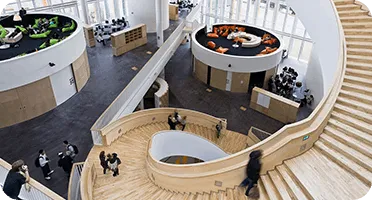
Reading is also an important aspect for expanding horizons and increasing the level of knowledge. It helps develop critical thinking and improves communication skills. Reading a variety of literature also helps enrich your vocabulary and improve your writing skills. Regular reading helps you stay current with current events and trends, which is especially important in today's world. Don't miss the opportunity to improve your knowledge and skills through reading. Unusual Schools: 5 Examples of Architectural Design Modern education requires not only high-quality teaching but also an inspiring atmosphere. The unique design of school buildings can significantly impact the learning process and create a comfortable environment for students. Let's look at five schools with outstanding architectural design. The first school, which deserves attention, stands out for its innovative approach to the use of space. The architects created open areas for collaboration, which promotes the development of teamwork skills in students. The second school attracts attention with its bright facades and unusual shape. This project is not only aesthetically pleasing but also environmentally sustainable, making it a role model for educational construction.
School No. 3 is located in a picturesque area and blends harmoniously with the natural landscape. The use of natural materials and large windows creates a bright and welcoming atmosphere conducive to learning.
School No. 4 impresses with its futuristic design. The interior spaces are organized to inspire creativity and innovation, which are important aspects of modern education.
School No. 5 is a shining example of the integration of technology and design. Smart classrooms and flexible spaces allow the learning process to be tailored to the needs of each student.
Schools such as these not only provide a high-quality education but also inspire students to achieve. The unique design of educational institutions plays an important role in creating a comfortable and productive learning environment.
The Methodologist profession from scratch to PRO
You will improve your skills in developing curricula for online and offline courses. Master modern teaching practices, structure your experience, and become a more sought-after specialist.
Find out more