
Content:

Learn: Educational Program Methodologist
Learn moreAmong the many pedagogical approaches, the student-centered approach, also known as learner-centered learning or student-centered learning, deserves special attention. The basic idea of this concept is that when developing a course, a teacher or methodologist focuses not only on the material that needs to be conveyed to students and on their expertise, but, above all, on the needs and interests of the students themselves. This approach allows for the creation of a more effective and motivating educational environment, where each student becomes an active participant in the learning process, which contributes to better knowledge acquisition and the development of critical thinking.
Each student in an educational program has unique needs, interests, experiences, talents, and potential. Designing a large-scale online or offline learning experience tailored to the individual needs of each student can seem like a daunting task. However, there's a simple checklist that can help you implement a learner-centered learning model. This approach not only accommodates student diversity but also improves the effectiveness of the learning process by tailoring it to the needs of each student. This promotes deeper learning and the development of essential skills, ultimately leading to higher-quality educational outcomes.
Knowing Who We're Teaching
Before developing a curriculum, it's crucial to conduct target audience research. A survey can be used, but qualitative research, including interviews with potential learners, is optimal. This will help you identify the challenges they face and how to overcome them without engaging in learning. Based on the data obtained, it's recommended to create a learner profile and empathy map. These tools will help you describe several typical learner types that represent your target audience. This approach will ensure that training content more closely matches the needs and expectations of participants, increasing its effectiveness and appeal.
An empathy map is a visual tool that helps collect and analyze audience research results, fostering a deep understanding of users. It is widely used by marketers and developers. The empathy map was created by Dave Gray, founder of the consulting firm XPLANE and author of books on design and visual thinking. Numerous adaptations of this map can be found online, as companies often modify its elements to suit their needs. The map was last updated by Dave Gray in 2017 and includes seven key blocks, each aimed at exploring and understanding the needs, desires, and motivations of the target audience. Using an empathy map allows companies to more effectively develop products and services that meet user expectations.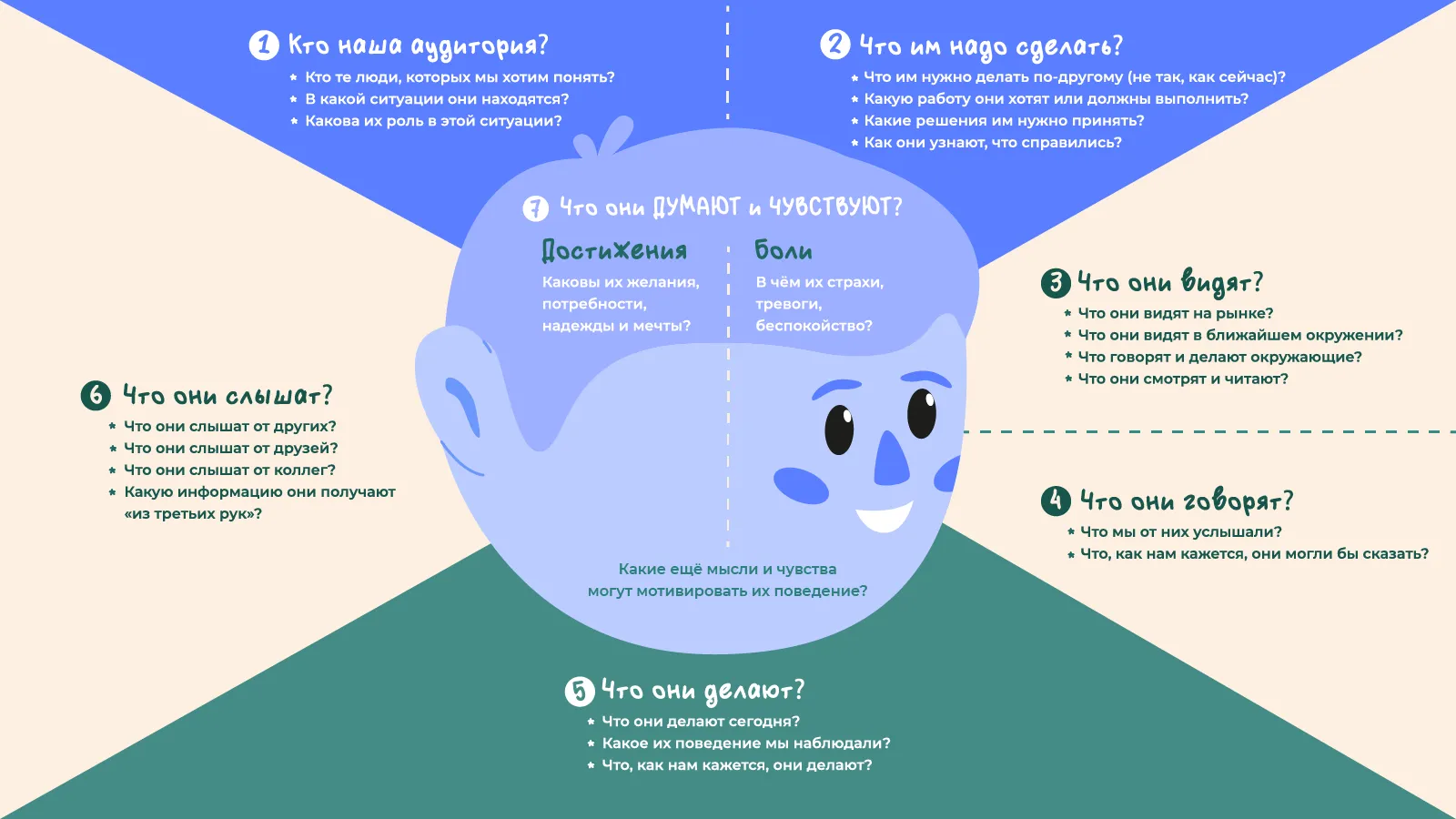
Speaking the Same Language
The study will determine how to optimize the learning process for students. We recommend using appropriate metaphors, an appropriate tone of communication, as well as examples and cases that are relevant to students in educational materials such as texts, videos, and letters. This will make the course more accessible and understandable for students, which contributes to better assimilation of the material.
Working with Goals
When a student begins a course, they find themselves in a new educational environment. The main task of the teacher, educational materials, and the learning platform is to create a comfortable environment for the student, facilitating their adaptation to new formats and the learning process. This is important for developing the confidence and motivation needed to successfully master the educational material. Working with goals in the educational process involves helping students define desired learning outcomes, as well as tracking their progress and achieving success. Setting clear goals allows students not only to focus on their achievements but also to increase motivation. Effective goal management promotes a deeper understanding of the educational material and the development of necessary skills. This is an important aspect that supports students throughout the educational process and helps them consciously move towards success. Expanding the Zone of Proximal Development The zone of proximal development is a key concept in the educational process, denoting the learning goals that a student should strive for. This is the area where a student can develop with the support of more experienced mentors or peers. Defining the zone of proximal development allows you to identify potential learning opportunities and helps create an individual approach to each student. Focusing on these goals promotes more effective learning and increases motivation to learn.
Organizing learning requires that teachers be able to connect new knowledge with students' existing knowledge. This is especially important when studying new material. Teachers can effectively use this approach, taking into account the level of student preparation. In the context of online courses, self-assessment methods can be used by asking questions at the beginning of a new module. It is also useful to provide links to additional materials that will help students prepare and deepen their knowledge. This approach promotes better assimilation of information and increases the overall effectiveness of learning.
Develop metacognition (mindfulness)
In the learning process, a key point is not only setting goals but also regularly assessing progress towards achieving them, as well as analyzing one's own experience. To increase the effectiveness of the course, it is recommended to integrate reflection assignments. This may include questions about personal learning experiences, the material learned, and providing students with the opportunity to reflect on their feelings about completing the course. This practice promotes a deeper understanding of individual learning strategies, making the process more focused and effective.
Look Beyond the Course
When developing a course, we create an educational space, which makes it important not only to design the content and thematic units, but also to create a comprehensive system of student interaction with the elements of the educational environment. An effective program considers all aspects of the learning process, including teaching methods, resources, and support, which promotes a deeper assimilation of knowledge and skills.
The student will interact with the instructor and other mentors through various formats, such as online classes, seminars, and group discussions. During the learning process, they will actively collaborate with other participants, exchanging experiences and opinions, which contributes to a deeper understanding of the material. The student will also have the opportunity to set their own learning goals and regularly reflect, analyzing their achievements and identifying areas for improvement. These elements of goal-setting and self-reflection will help them more effectively absorb information and develop skills. Student learning is influenced not only by educational institutions but also by the environment outside of them. Therefore, it is important to consider factors such as time zones, the possibility of combining them with school or university studies, and student work schedules when developing curricula. It is recommended to include assignments in the course that encourage student interaction with the environment. These aspects can significantly improve student satisfaction and academic performance. Considering the external learning environment contributes to a deeper understanding of the material and improved results.
Maintain an inclusive environment
Creating an inclusive educational environment in a course requires consideration of gender, physical and mental disabilities, and cultural differences among students. It is important to view the course through the eyes of a student with disabilities and make it user-friendly and accessible for everyone. Maintain a neutral tone in texts and communication with students, avoiding judgmental statements about differences between people. The educational environment should be a safe space where every student can feel comfortable and confident. Inclusion fosters deeper understanding and interaction between participants, which ultimately improves the quality of learning and promotes the harmonious development of all students.
Giving Choice
Creating a course that takes into account the experiences, goals, and preferences of each student is a complex task, especially if it is intended for a general audience. How can this problem be overcome? Provide students with a choice in learning methods. Include a variety of formats: online classes, recorded lectures, text materials, and video tutorials. Let students determine their own strategy for completing the course, choose the sequence of topics covered, the depth of homework, and the format of work—in groups or individually. This approach will create a sense of personalized learning, making the course more engaging and effective for each participant.
This list is not exhaustive and can be expanded and detailed. However, a quick checklist will help you assess how focused your teaching is on your students' interests and needs. If you notice that your learning isn't student-centered enough, you'll have the opportunity to make the necessary changes to create a more effective learning experience.
Read also:
- How to Use Emotions to Motivate Students to Complete a Course
- How to Create a High-Quality Online Course: 6 Conditions
- 5 Ways to Increase Online Course Completion Rates
Educational Program Methodologist
You will go through the full cycle of creating an educational product from scratch. Learn to design curricula for online and offline courses. You will become a universal specialist - you can launch your own project or get a job as a methodologist in a large company.
Find out more