Contents:
Learn: The Profession of Methodologist from Scratch to PRO
Learn More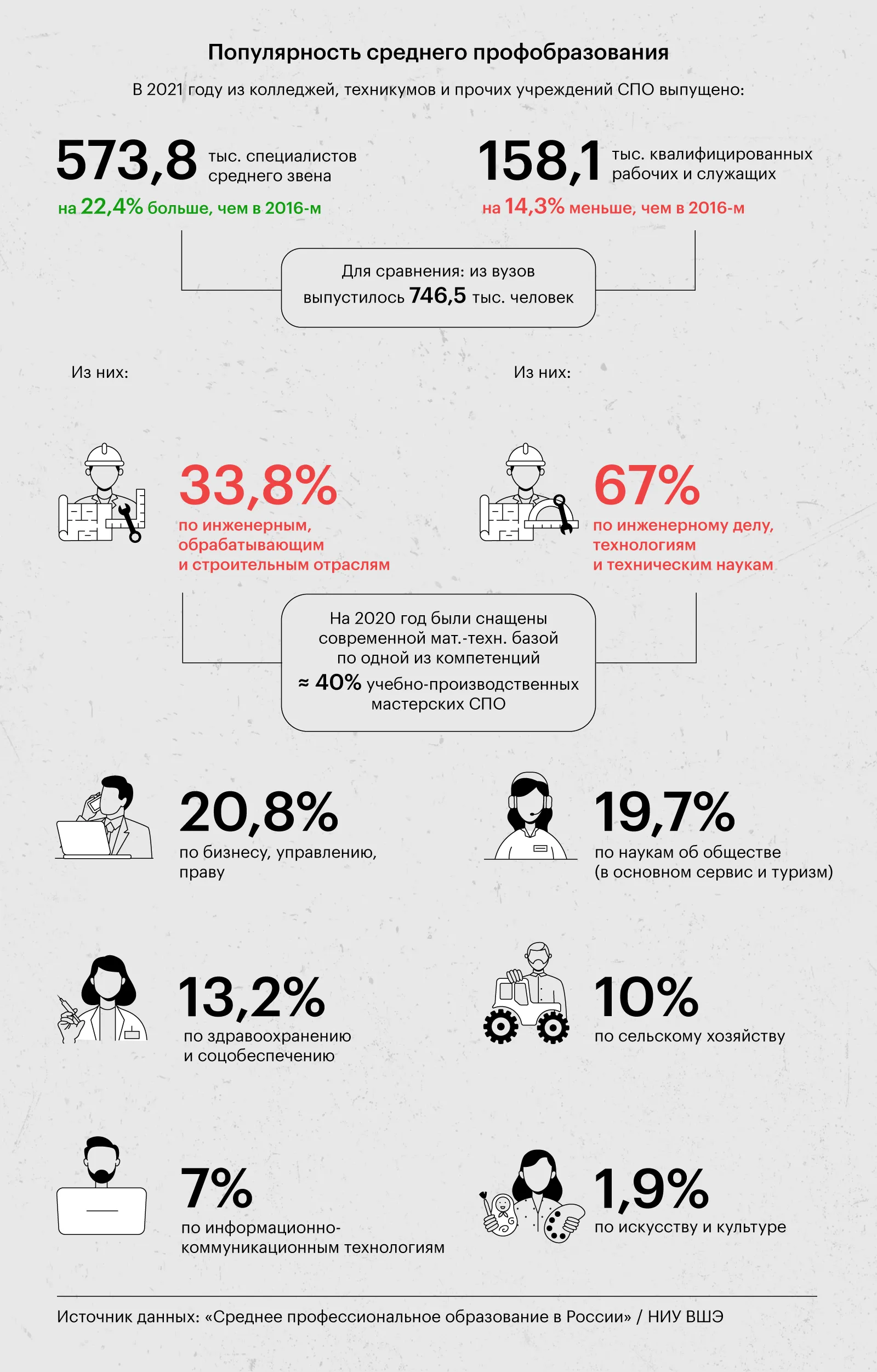
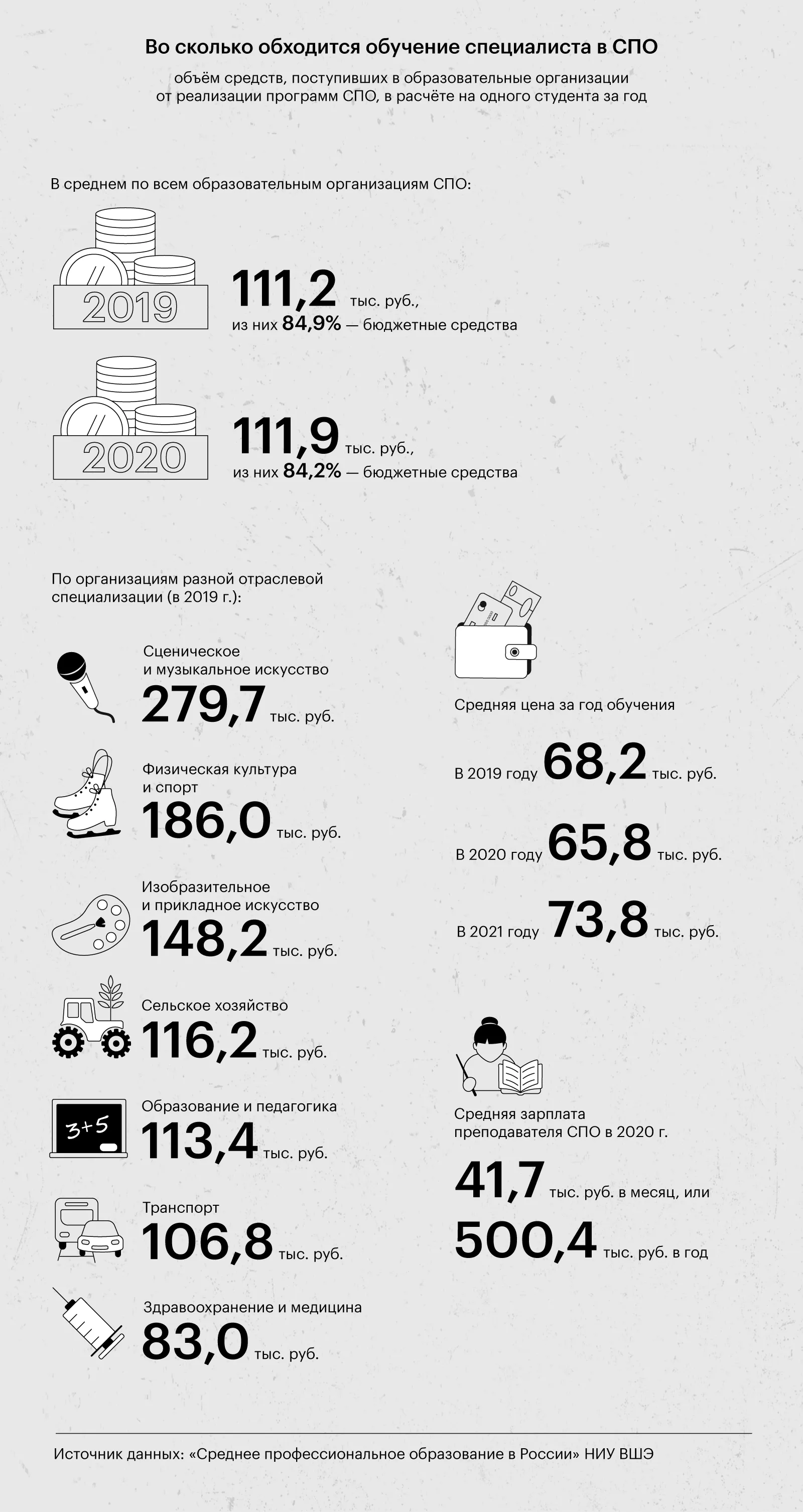
The Higher School of Economics presented a statistical review entitled "Secondary Vocational Education in Russia". In preparing this material, data from the Ministry of Education, the Ministry of Science and Higher Education, Rosstat, and the Federal Treasury were used. The Institute for Statistical Studies and Economics of Knowledge at the National Research University Higher School of Economics also utilized its own methodological and analytical developments. This review provides an in-depth analysis of the state and trends of secondary vocational education in Russia, making it a valuable resource for researchers and education policy specialists.
The collection provides extensive information on the number of people receiving secondary vocational education annually, as well as the dynamics of changes in this area over the past few years. It examines current issues of financing the secondary vocational education system, the state of infrastructure, and digitalization processes. Among the interesting facts from the collection, the following can be highlighted:
- In the 2020/2021 academic year, 20% of secondary vocational education students studied the most in-demand and promising professions;
- Among graduates from 2016–2020, only 61.4% of those who graduated from mid-level specialist training programs found jobs in their specialty, while 57.2% of those who graduated from skilled workers and employees training programs found employment in their specialty.
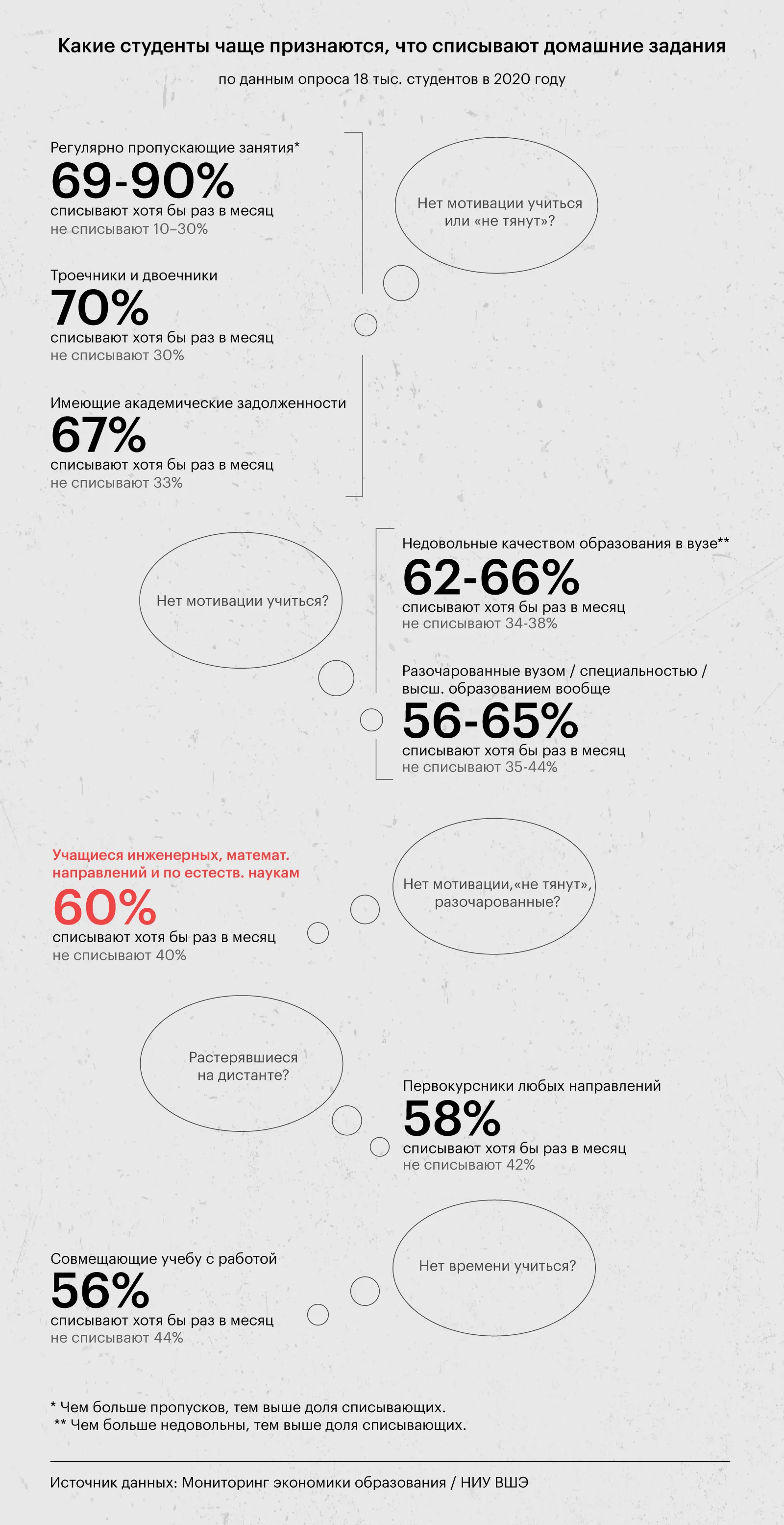
The HSE Institute of Education, as part of the Monitoring of Education Economics, presented a study on the topic "Cheating and Plagiarism: Student Attitudes and Teacher Reactions." This 2020 study analyzed a survey of over 18,000 students and 14,000 faculty members from various universities. Researchers examined both students' and faculty's attitudes toward cheating on homework and using cheat sheets on exams. Academic dishonesty, which encompasses these practices, is widespread worldwide, but attitudes toward it vary by country. This study provides a deeper understanding of the views of educational stakeholders and identifies potential solutions to address academic integrity.
Students were asked about the frequency of using various measures related to cheating. Although not everyone answers this question honestly, even in an anonymous survey, the collected data allowed us to identify groups more prone to this behavior. The most noticeable tendency to cheat is among students studying STEM fields, such as engineering, mathematics, and natural sciences. This may indicate a high level of stress and pressure that students face in these disciplines.
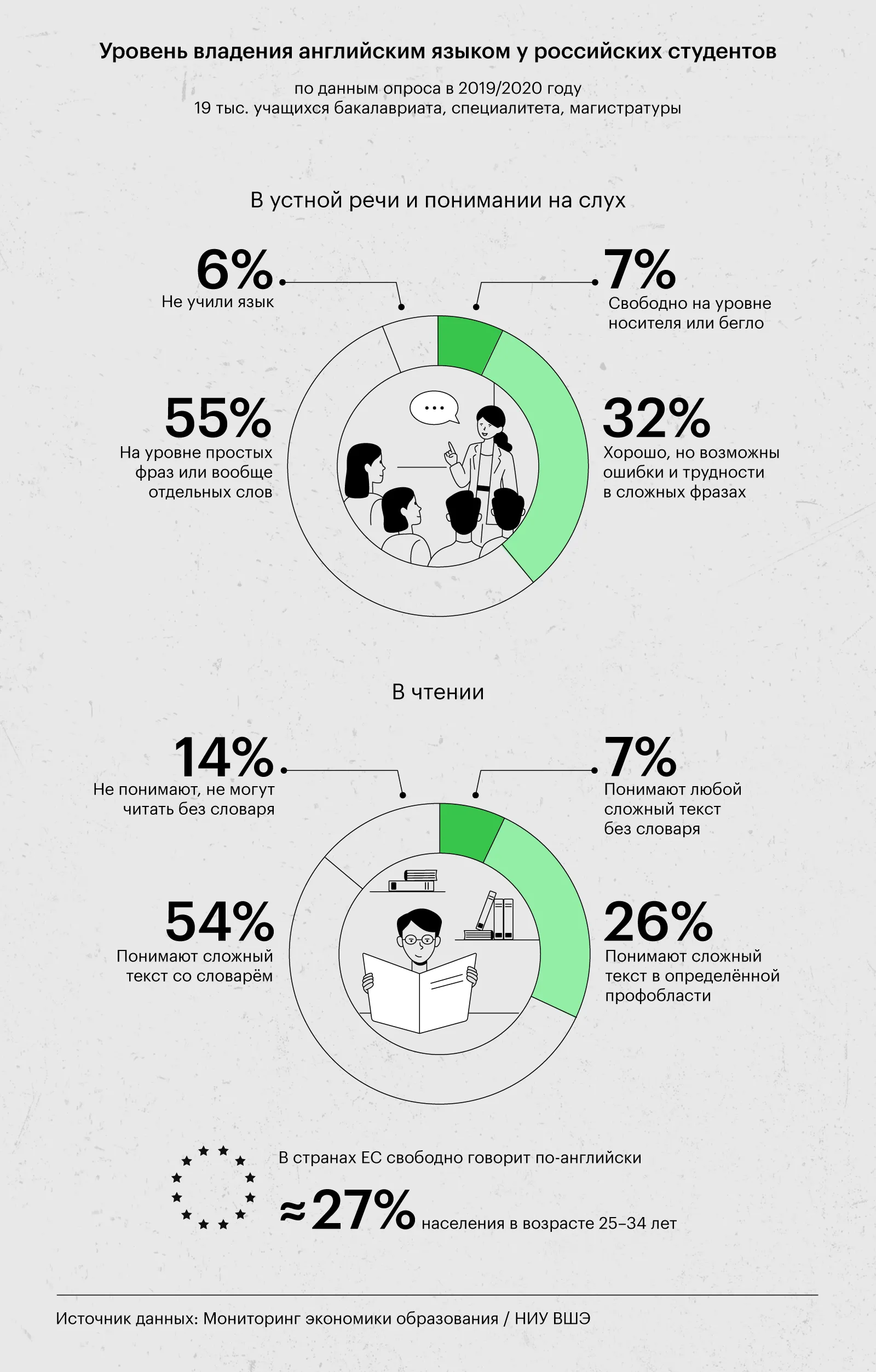
Experts of the Labor Market Research Laboratory HSE University conducted an analysis of English proficiency among Russian students. This issue is becoming increasingly relevant, as English remains the primary means of international scientific and technological communication. For successful professional development, students need to be able to work fluently with scientific and applied materials in English. Furthermore, many programming languages and digital services use English terminology, making English proficiency essential for specialists in IT and related disciplines. English proficiency in Russia is significantly lower than the European Union average, where approximately 27% of the 25-34-year-old population speaks English. The highest rates of English proficiency are observed among young people in Moscow and the Northwestern region, where 49% and 45% of students, respectively, have an advanced or intermediate level of English. Meanwhile, in the Volga and Central Federal Districts, these figures are lower—32% and 30%.
Students studying IT programs have a higher level of English proficiency than those studying humanities—48% versus 41%. Students in technical and medical programs have a proficiency level of only 35% and 32%, respectively. Future teachers are second to last, behind only students in agricultural schools, with 27% of students having an intermediate or advanced level of English.
This data highlights the need to improve English language teaching in Russian educational institutions, especially in regions with low performance.
Rework the text, but stay on-topic. Optimize it for SEO and add necessary information. Eliminate emojis and unnecessary characters. Don't include sections with numbers or symbols; simply provide plain text.
Check out these additional resources:
- What to watch and listen to about education: summer selection
- Thought language is forgotten over time? Scientists have found that this is not true.
- It has become known that the motivation to study among college students is higher than among high school students.
- In Russia, they will celebrate the Day of Secondary Vocational Education.
The profession of Methodologist from scratch to PRO.
You will improve your skills in developing educational Programs for online and offline courses. Master modern teaching practices, structure your experience, and become a more sought-after specialist.
Find out more