
Contents:
- "Ten Steps to Integrated Learning. A Four-Component Learning Design Model."
- "Rewiring. How to Protect Your Brain in the Digital Age"
- "Master's Programs at the HSE Institute of Education: Project-Based Learning Application Practices"
- "Metathinking. How Neuroscience Helps Us Understand Ourselves"
- "The Socratic Method. The Art of Asking Questions about the World and Yourself"
- "The Ignorant Teacher"
- "A Start in Life. Sociological essays on education, class inequality, and social exclusion in Russia"
- "A call for a parent. How to give your child a quality education outside the classroom"
- "A curriculum for a hero: Hercules and Achilles"

Learn: The Profession of a Methodologist from Scratch to PRO
Find out moreIn 2023, many high-quality books were published that will be useful both to professionals in the field of education and to those interested in this topic. We have prepared a selection of the best of them.
"Ten steps of comprehensive training. A four-component model of learning design."

The text will be useful to everyone involved in the design of training courses and educational programs for various age groups, including both adults and children. It will also be relevant for developers of integrated learning platforms seeking to create effective and interactive educational solutions.
The 4C/ID four-component learning design model is one of the most relevant pedagogical models based on problem-based learning. This model promotes the development of educational programs that are focused on solving practical problems and require a diverse set of knowledge and skills. The 4C/ID methodology is used in colleges, universities, and the EdTech sector, and has also demonstrated its usefulness in school education. Using this model effectively prepares students for real-world challenges, improving their critical thinking and practical application of theoretical knowledge. The author of the 4C/ID model, Jeroen van Marienboer, Professor of Learning and Pedagogy at Maastricht University, and Paul Kirschner, Professor of Educational Psychology at the Open University, described the curriculum design process in detail in their book, "Ten Steps to Integrated Learning." In 2023, with the support of Skillbox, the full Russian edition of the book was published by Zerde Publishing. An electronic version of the book is available free of charge by submitting a request on the official website. This book will be a useful resource for educators and education professionals seeking to implement effective approaches to teaching.

Read also:
Dynamic selection of tasks: adapting the program to the individual needs of students
Dynamic selection of tasks is an important aspect of the educational process, allowing you to adapt educational materials tailored to the unique needs of each student. This practice promotes increased student engagement, improved retention, and the development of critical thinking.
By adapting the curriculum, teachers can take into account the knowledge level, interests, and goals of students. This allows for the creation of personalized learning paths, which, in turn, promotes more effective learning. Dynamic assignment selection provides the ability to choose assignment formats and types, giving students more control over their learning.
Furthermore, the use of modern technologies and platforms for dynamic assignment selection makes it easy to track student progress and make necessary adjustments to the curriculum. This creates a flexible learning environment that promotes a deeper understanding of the material and the development of skills necessary for successful professional work in the future.
Thus, dynamic assignment selection not only improves the quality of learning but also helps build student confidence and the ability to learn independently.
"Reprogramming. How to protect your brain in the digital age"

The text will be useful to everyone involved in the development of educational programs, teaches children and adults, as well as those interested in the impact of technology on brain function. This material can help teachers, methodologists, and researchers understand how modern technologies influence the learning process and the perception of information.
Digital technologies not only change people's behavior, but also have a profound impact on the brain, reworking the areas responsible for memory, emotion, and attention. In his book, Rewired, scientist and physician Carl Marcy explores how modern technologies influence neuropsychology and shape our cognitive processes. This work opens new horizons for understanding the impact of the digital world on human consciousness and emphasizes the importance of conscious use of technology in everyday life.
Based on scientific research, the author explains in accessible language how frequent use of mobile devices affects the functioning of the prefrontal cortex, the development of children and adolescents, and the mental health of adults. The book presents the results of research conducted by Carl Marcy's company, Innerscope Research. Research has shown that the younger generation switches between different sources of information significantly more often compared to older participants. Digital natives quickly lose interest, which undoubtedly impacts learning processes using digital content. These changes in media consumption have a significant impact on attention and information retention, which is important to consider when developing educational programs and methods.

Digital technologies have significantly changed the way we perceive boring tasks. In the era of constant access to information and entertainment, we have become less tolerant of routine and monotonous actions. Automation of processes and the emergence of various applications allow us to effectively perform tasks that previously required a lot of time and effort. However, with the increasing speed of life and the availability of diverse content, our ability to focus on monotonous tasks has significantly diminished. As a result, we often experience impatience and irritation when faced with boring tasks. This phenomenon has its pros and cons. On the one hand, technology can increase productivity, but on the other, it can reduce our ability to concentrate and be patient with routine work.
"Master's Programs of the HSE Institute of Education: Project-Based Learning Practices"

This material will be useful for university administrators and staff involved in organizing and implementing project-based learning. It will help them understand the key aspects of effective project management in an educational environment and improve the quality of the educational process.
Project-based learning in higher education allows students to develop skills and competencies that cannot be obtained from textbooks alone. Key aspects include universal soft skills, as well as the ability to apply theoretical knowledge in practice to solve real-world problems. While working on projects, students find themselves in a professional environment, which significantly increases their chances of successful future employment. This approach helps develop critical thinking, creativity, and teamwork in future professionals, which are essential in today's labor market. Evgeniya Efimova and Tatyana Khavenson share their experience implementing project-based learning in the master's programs of the HSE Institute of Education. In a downloadable manual on the HSE website, the authors describe in detail the principles and theoretical foundations of the project-based method, as well as its importance in the curriculum. They explain which projects are suitable for master's students, how they are organized, and how their results are assessed. They also discuss the challenges students face during project work. The appendix to the manual provides methodological recommendations, useful templates, and examples of project proposals, making the material a valuable resource for teachers and students interested in effective project-based learning.

Read also:
Project-based learning is an educational method based on students completing real projects. This approach helps develop critical thinking, teamwork, and independence skills, as well as deepen knowledge in a specific field. Project-based learning is used in a variety of educational institutions, from schools to universities. It is actively used in fields such as engineering, information technology, arts, and social sciences.
Within project-based learning, students work on practical assignments that require the integration of theoretical knowledge and practical skills. This promotes a deeper understanding of the material and prepares students for real-world challenges they may face in their professional careers.
Modern educational standards increasingly include elements of project-based learning, emphasizing its importance in developing the competencies necessary for a successful career. Project-based learning also promotes creativity and innovative thinking, which is an important aspect in a rapidly changing world.
"Metathinking. How neuroscience helps us understand ourselves"

This material will be useful for teachers, methodologists and anyone interested in brain functioning. We offer a deep understanding of neuropsychological processes and their impact on learning and development. Research into brain function opens new horizons in pedagogical practice and methodology, which can significantly improve educational outcomes. In psychology, metathinking is a unique human ability to become aware of and analyze one's own thinking. This phenomenon is also known as self-awareness. Thanks to metathinking, we are able to critically evaluate our decisions, make sense of our experiences, and verify the veracity of our memories. This ability plays a key role in personal development and the improvement of cognitive processes, allowing us to more effectively cope with life situations and make informed decisions. Metathinking promotes a deep understanding of one's thoughts and emotions, which in turn leads to increased emotional intelligence and a better quality of life. The mechanisms of metathinking remained a mystery until advances in neuroscience and the development of functional magnetic resonance imaging (fMRI) revealed their essence. Neuroscientist Stephen Fleming, director of the Self-Awareness Neuroscience Lab at University College London, explains what happens in the brain when we reflect on our thinking. In his book, "Metathinking," he details the formation of the neural structures responsible for this ability, as well as the consequences of their damage due to injury and disease. Fleming examines the application of metathinking in various fields, such as learning, communication, and decision-making, as well as its implications for policy and science. In addition, the author discusses why even the most advanced modern artificial intelligence is not capable of self-awareness, emphasizing the uniqueness of human thinking.
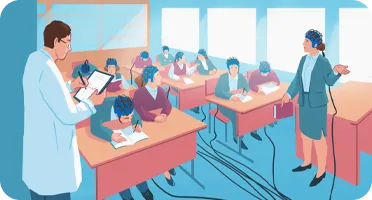
Educational neuroscience is an interdisciplinary field that studies the interaction between brain activity and the learning process. These sciences help us understand how the brain functions in the context of education and provide valuable insights for educators. Knowledge of neuroscience allows teachers to adapt their teaching methods to the cognitive characteristics of their students. This knowledge promotes more effective learning, helps develop critical thinking, and improves information retention. Using neuroscience principles in educational practice can significantly improve the quality of teaching and reduce student stress, which in turn leads to deeper learning. Thus, educational neuroscience plays a vital role in the modern educational process, making it more scientifically sound and effective.
«The Socratic Method. The Art of Asking Questions about the World and Yourself»
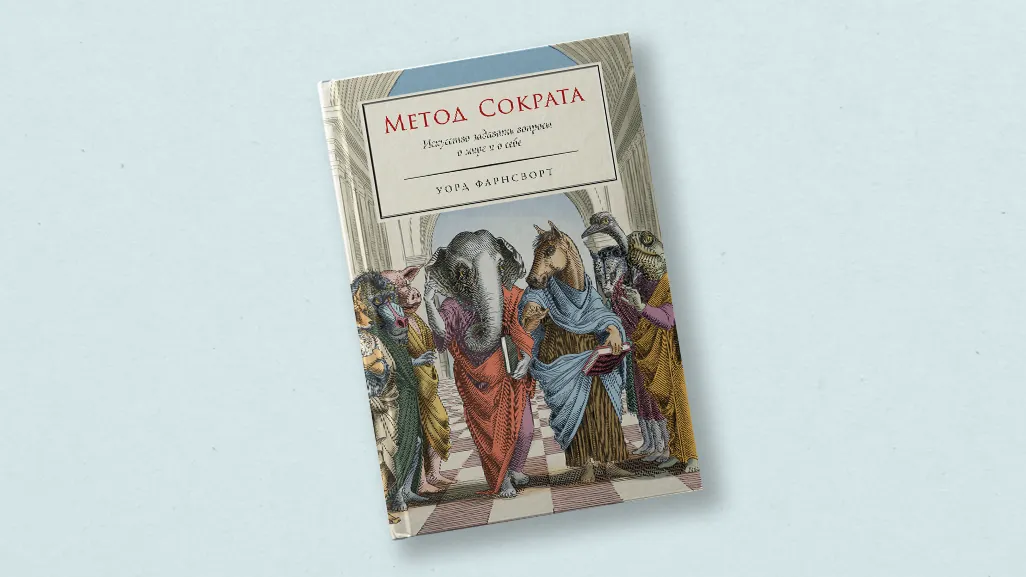
This material will be useful to everyone who teaches children and adults, as well as readers interested in ancient philosophy and rhetoric. It provides valuable knowledge and tools that will aid in the educational process and deepen the understanding of philosophical concepts. Teaching rhetoric and philosophy can significantly improve critical thinking and argumentation skills, which is especially relevant in the modern world.
In modern pedagogy, the Socratic method is a dialogue in which one participant asks leading and clarifying questions, and the other, based on these questions, independently finds the correct answer. This is an effective way to teach thinking and the search for knowledge. However, in its original form, described in the works of Plato, Socratic dialogue does not always lead to a specific result. Often, both interlocutors come to the conclusion that they cannot find a satisfactory answer. As University of Texas professor Ward Farnsworth notes in his book "The Socratic Method," this state can be productive, despite its apparent futility. Socrates demonstrates that the path to wisdom is endless, and the recognition of one's own ignorance is an important aspect of the educational process. The Socratic Method emphasizes the importance of questioning and independent pursuit of knowledge, making it relevant and useful in modern education. The author of "The Socratic Method" has deeply researched Socratic conversations, breaking them down into their key components and citing examples from Plato's Dialogues. He argues that these elements form a unique approach to thinking that can be applied in various areas of life and is accessible to everyone. This method facilitates the identification of both one's own and others' cognitive errors, helps debunk biases, and, undoubtedly, facilitates learning by eliminating the illusion of knowledge. Using the Socratic method in everyday life can improve critical thinking and increase your understanding of the world around you.

Check out additional materials:
The Socratic Method: Reasoning as the Basis of Modern Pedagogy
The Socratic Method is a unique way of reasoning that is actively used in modern pedagogy. This approach relies on dialogue and questioning to foster a deep understanding of topics and develop critical thinking. Rather than simply providing information, the teacher uses methods that encourage students to independently discover answers and formulate their own thoughts.
The Socratic Method helps students develop analytical skills, as each question encourages them to consider different aspects of a problem. This approach not only deepens knowledge but also develops self-confidence as students learn to express their ideas and argue their point of view.
Incorporating the Socratic Method into the educational process helps create an active learning environment where every student becomes a participant in the discussion. This not only increases engagement but also fosters the critical thinking necessary to solve complex problems in the future.
Thus, the Socratic method remains relevant in modern pedagogy, emphasizing the importance of dialogue and active participation of students in the educational process.
"The Ignorant Teacher"
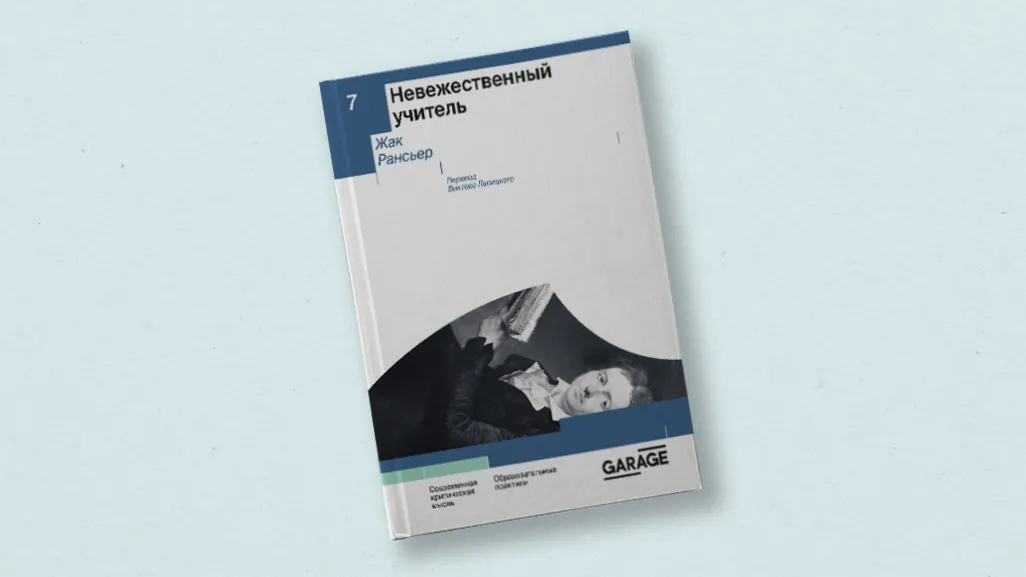
This text will be useful to anyone interested in the history of pedagogical thought. It covers key moments and important stages that shaped the modern educational space. Studying the history of pedagogy allows for a better understanding of the theoretical foundations and practical approaches used in modern educational systems. Understanding historical contexts facilitates a deeper analysis of current teaching and learning methods and helps identify key trends and innovations in pedagogy.
The traditional approach to teaching is based on the teacher possessing knowledge and conveying it to the student in an accessible form. The teacher methodically explains new material, starting with simple concepts and gradually moving on to more complex ones. For a long time, this method was considered the only correct one. However, in 1818, the French teacher Joseph Jacotot refuted the need for explanations from the teacher. His research demonstrated that students with no knowledge of French could teach themselves to read and write French using only a bilingual edition of the popular novel The Adventures of Telemachus. This experience inspired a rethinking of teaching methods and emphasized the importance of independent language learning.
In The Ignorant Teacher, philosopher Jacques Rancière analyzes the case of Joseph Jacotot, which led to a reconsideration of traditional approaches to education. Jacotot rejected the need for explanations and developed a unique method of "intellectual emancipation" based on the premise that every person has the ability to learn any knowledge. The important task of the teacher is not to transmit knowledge, but to liberate the student and support his belief in his own abilities. This approach emphasizes the equality of all students and their potential for independent knowledge.
"A Road to Life. Sociological essays on education, class inequality and social exclusion in Russia"

This material will be useful to a wide range of Readers interested in the sociology of education, as well as professionals working in the field of institutional care. The topic touches on key aspects of the interaction between educational institutions and social structures, making it relevant for researchers, teachers, and social policy specialists.
Children left without parental care formally have no barriers to completing 11th grade and entering university. However, in practice, only about 7% of such adolescents receive higher education. Most of them, after 9th grade, choose technical schools or colleges to master vocational professions. This is due to various factors, including a lack of support and resources for university preparation, as well as a desire to enter the labor market earlier.
St. Petersburg sociologists Zhanna Chernova and Larisa Shpakovskaya investigated the causes of educational inequality by interviewing mothers from the educated middle class, graduates of prestigious universities and boarding schools, as well as employees of non-profit organizations and workers of boarding institutions. The results of their research formed the basis of the book "Road to Life." The study's findings showed that family support plays a key role in the successful development of young people. It's not so much financial assistance that's important, but rather the active involvement of parents in their child's development. Researchers attribute the success of boarding school students in completing high school and enrolling in university to the availability of social support outside the institution. However, these young people remain significantly more vulnerable than their peers with access to family support.
"A call for a parent. How to give your child a quality education outside the school walls"

The text will be useful to parents considering alternative education formats for their children. Alternative education offers the opportunity to choose innovative approaches to the educational process, ensuring a personalized approach to each child. This may include homeschooling, distance learning, or specialized programs that take into account the student's interests and abilities. Parents interested in expanding educational opportunities for their children will find a wealth of resources and information on various methods and approaches to help them make an informed choice.
According to data from the HSE Institute of Education, only a small percentage of families in Russia choose homeschooling for their children, where learning takes place at home, with students attending school only for occasional refresher sessions. However, experts suggest that this form of education may become more popular in the future. Homeschooling offers parents the opportunity to tailor the learning process to their needs, which can contribute to deeper learning and child development.
Kristina Sandalova, a journalist and psychologist, in her book "A Call for a Parent," analyzes the reasons why some parents choose homeschooling over traditional school. She examines the legal aspects of this approach in detail and shares her own practical experiences and those of other homeschooling parents. The author notes that parents' fears and doubts are normal, but they can be overcome with logical arguments and informed decisions. The book also offers useful tips on creating curriculum, organizing the educational process, and providing psychological support to children.

Revised text:
Read also:
Family education is an alternative approach to the educational process, which allows parents to independently organize the educational process for their children. The main difference between this form of education and distance learning is that homeschooling emphasizes an individualized approach to each student and parental involvement in the learning process. Homeschooling offers the opportunity to choose the learning materials and methods most suitable for the child, which facilitates deeper learning. Unlike distance learning, where learning often takes place without direct parental involvement, homeschooling actively involves parents, allowing for better monitoring of progress and tailoring the program to the child's needs. The key advantages of homeschooling include schedule flexibility, the opportunity for a personalized approach, and the creation of a comfortable learning environment. Parents can tailor the learning experience to their child's interests and abilities, which can ultimately lead to higher academic achievement.
"Curriculum for a Hero: Hercules and Achilles"

This material will be useful to anyone interested in the history of pedagogy and ancient culture. Studying pedagogical concepts that originated in ancient times allows us to better understand modern education. In this context, the achievements of ancient Greek and Roman thinkers, who laid the foundations of pedagogical thought, are important. Understanding these historical roots helps in the analysis of modern educational practices and teaching methods. This information will be of interest not only to historians, but also to teachers, students, and anyone seeking to deepen their knowledge of the development of educational systems.
Ancient heroes, their training and upbringing represent an important aspect of ancient literature and mythology, which has remained insufficiently studied. Understanding this issue can significantly enrich our knowledge of pedagogical concepts that existed in early historical eras. The education of ancient heroes encompassed not only physical training but also the development of mental abilities, moral values, and social skills. These aspects were shaped by the cultural, philosophical, and educational traditions of the time, allowing us to better understand how ideas about upbringing and education were shaped in ancient times. Thus, studying the teaching and upbringing methods of ancient heroes opens new horizons for analyzing pedagogical ideas that remain relevant today. The book "Curriculum for a Hero," written by Victoria Pichugina, a leading researcher at the Institute of Education at the National Research University Higher School of Economics, and Anna Zhirnova, a methodologist at the Institute for Education Development Strategy, is dedicated to the upbringing and education of two of the most famous ancient Greek heroes—Achilles and Heracles. The authors provide a detailed analysis of the images of these semi-divine figures, as depicted in written sources and on ceramic paintings. The study traces the educational path of the characters, from their infancy to the moment when they become mentors for others. The book is a valuable resource for the study of ancient Greek culture and pedagogy, opening up new perspectives in understanding the educational traditions of that time.
Read also:
- 13 books on the history of education in Russia: how our ancestors studied and taught
- Books about education: 10 new releases of 2022
- 6 books on andragogy - about how to teach adults
- 8 books on psychometrics for those who develop educational tests
- 5 books on modern pedagogical approaches and teaching methods
The Profession of Methodologist from Scratch to PRO
You will improve your skills in developing curricula for online and offline courses. Master modern teaching practices, structure your experience, and become a more sought-after specialist.
Find out more