
Contents:

Learn: The Profession of a Methodologist from Scratch to PRO
Find out moreHow Contact with Nature Affects Working Memory
The researchers analyzed the short-term effects of interaction with nature, focusing on information processing in working memory. This includes the ability to concentrate, ignore distractions, and retain a certain amount of information, such as problem statements or teacher explanations, and work with it effectively. Interacting with nature can significantly improve these cognitive functions, promoting more effective learning and increased productivity. Two studies analyzed how interaction with nature affects working memory performance. Working memory is the maximum amount of information the human brain can hold and process simultaneously. The results show that time spent outdoors positively impacts cognitive function, improving concentration and recall. These findings highlight the importance of nature for enhancing mental performance and information management.
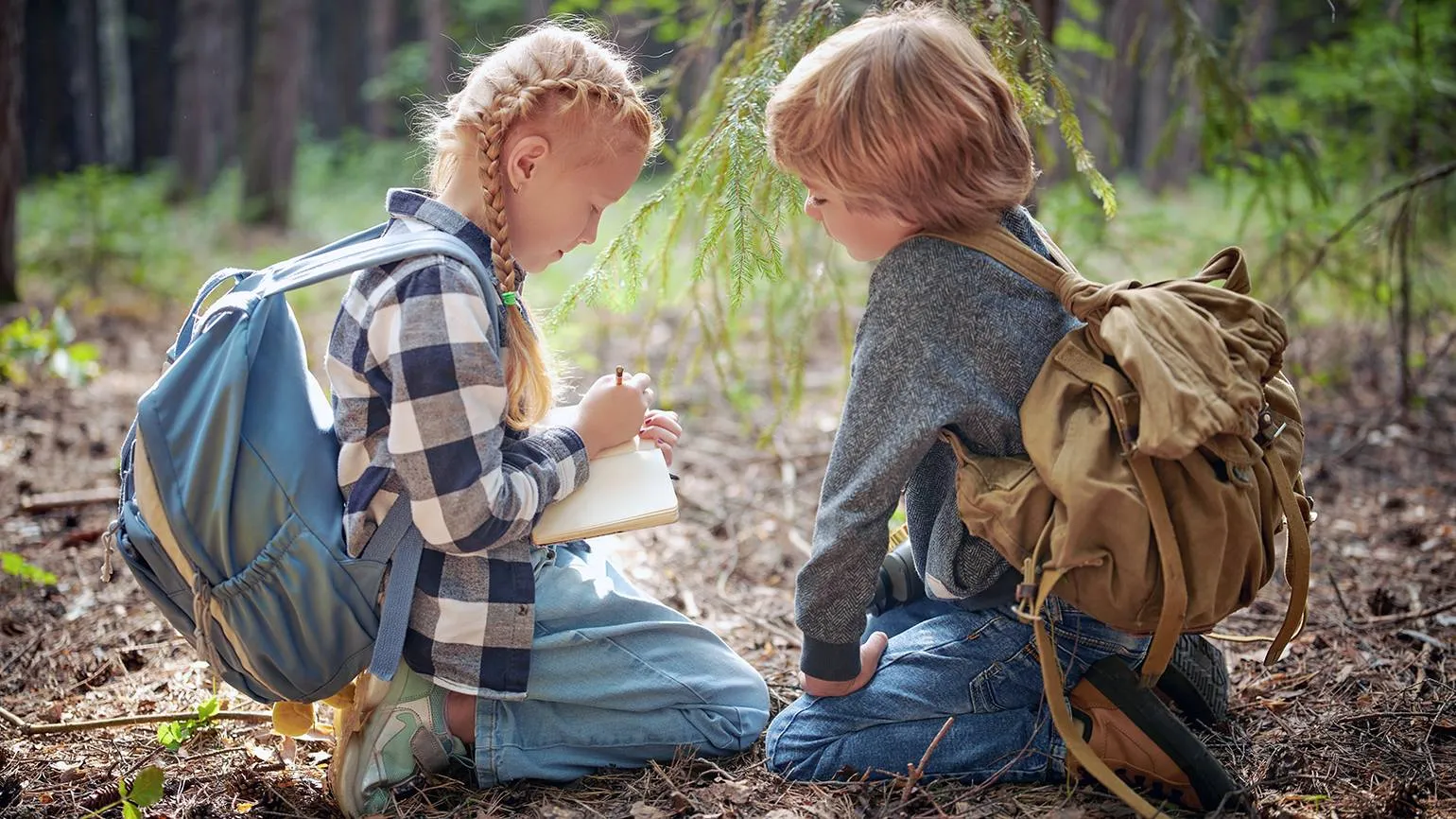
Working memory performance is variable and can depend on the type of information that needs to be remembered. For example, familiar concepts are learned more easily than new ones. Working memory efficiency is also affected by a person's state of mind, fatigue, and stress level. To assess this indicator, scientists used a specialized test in which participants were presented with a series of numbers. They were then asked to reproduce the numbers in both forward and reverse order. This approach allows us to assess short-term memory and information processing abilities.
In a 2016 American experiment, high school students were divided into three classrooms. The first classroom had no windows, the second had windows overlooking other school buildings, and the third classroom had a view of a green landscape. After the lesson, all participants rested in their classrooms for 10 minutes and then took the test. The students in the third group, who studied and rested with a view of nature, showed the best results. This experiment highlights the importance of the environment for the learning process and its impact on students' cognitive abilities.
In 2018, Italian researchers conducted an interesting experiment with fourth- and fifth-grade elementary school students. The children participated in a 30-minute recess, during which one group played in the school garden, while the other played in an empty courtyard. To evaluate the results, both groups took a working memory test twice: before and after the recess. The children who played in the garden were able to restore their working memory, which was significantly reduced immediately after school. In the final test, their scores were significantly higher compared to the students who played in the courtyard. This experiment highlights the importance of active outdoor play for improving cognitive function in schoolchildren.
Contact with nature, even in the form of simple observation, is significantly more effective in promoting brain recovery and rest after mental stress compared to relaxation in an artificial environment. Natural landscapes and fresh air have a positive effect on mental well-being, promoting improved concentration and creativity. It is important to recognize that time spent in nature plays a key role in restoring mental resources and improving overall productivity.
Selective attention, or selective attention, is the ability to focus on a specific stimulus while ignoring all others. This function plays a key role in our daily lives. For example, when putting together a puzzle, we search for the necessary pieces among a variety of colors and shapes, and when doing homework, we can focus on the study material despite distractions. Effective use of selective attention helps improve concentration and increase productivity in a variety of tasks.
This review examines various studies that measure selective attention using a variety of tests. Some of them ask participants to accurately indicate the direction of an object, such as an arrow, among a set of similar objects pointing in different directions. Other tests emphasize quickly and accurately finding the target object among a background of similar elements. These methods help to better understand the mechanisms of selective attention and its impact on information perception.
Two 2019 studies in Canada and Denmark found that schoolchildren aged 8 to 15 were significantly better at focusing on tasks after a 30-minute walk in nature. Similar results were found in an Italian study, where participants spent recess in a school garden or an empty courtyard. In these experiments, students participated in team games or simply relaxed outdoors. Results of selective attention tests confirmed that those who spent time in the garden performed better than those who spent time in a yard without vegetation. These findings highlight the importance of natural surroundings for improving concentration and academic performance in schoolchildren.
In 2016, British researchers conducted a similar study involving high school students. One group spent 20 minutes in a green school grounds after school, while the other remained inside the school. Results showed that the first group demonstrated higher scores on the selective attention test compared to the second. This study confirms the importance of outdoor activity for improving cognitive function in adolescents.

Revised text:
Explore additional materials:
The link between physical activity and academic achievement has been confirmed again. Research shows that regular exercise improves cognitive function, enhancing students' concentration and memory. Physical activity not only improves health but also has a positive impact on academic performance. Students who participate in sports perform better on exams and in academic activities. Thus, integrating physical activity into the educational process can be a key factor in improving student academic performance.
In learning, an important aspect is not only the ability to focus on a task but also the ability to maintain attention for an extended period. Research on this ability, known as sustained attention, has shown mixed results. Tests similar to those used to measure selective attention are typically used to assess sustained attention, but the emphasis is on those that require prolonged focus on a single task.
According to the study, elementary school students in classrooms with indoor plants perform better on tests of sustained attention than their peers in classrooms without plants. A significant effect was recorded after just four months. Another study examined the impact of greening schoolyards on students' mental performance during recess. The results showed that students' sustained attention improved only after two years of observation. These studies highlight the importance of natural elements in the educational environment for enhancing children's concentration and mental agility.
The results of experiments examining the effects of short-term contact with nature on attention have been mixed. A study of high school students in Switzerland found that after an hour-long walk in a forest or wooded park, especially in a forest, the students were able to maintain attention longer than their peers who walked in a small city park. However, the results among younger students in Denmark were less clear-cut: they demonstrated similar performance on tests both after spending time in nature and after classroom activities. This leads the authors of the review to the conclusion that the impact of contact with nature on mental performance may be inconsistent and individual.
The situation with research on information processing speed is similar. In the review of the presented studies, speed was measured through tasks in which participants were asked to quickly convert a sequence of numbers into letters using a deciphering key. This approach allows us to assess the efficiency of information processing and identify basic patterns in cognitive processes.
In a study conducted in the Netherlands, schoolchildren who studied in classrooms with plants on the walls for four months did not show significant improvements in academic performance. Their performance on tasks was comparable to the results of their peers in conventional classrooms. However, greening of school courtyards, mentioned in the same study, contributed to an increase in the speed of information processing in students. However, the effect of greening remains unstable and requires further study.
How contact with nature affects long-term memory and academic performance
Studies on the influence of nature on the academic achievement of schoolchildren have had mixed results. The review included only two scientific papers on this topic, which may indicate an insufficient research base. Future, larger-scale, in-depth studies may shed light on the situation. This will allow for a better understanding of how environmental conditions influence student learning and academic achievement.
In a large study in the United States, students aged 6-12 from 25 schools spent a year gardening on school grounds and studying botany and nutrition in class. When tested in these subjects, the participants demonstrated greater knowledge than students in the control group who did not garden. However, the amount of time students spent caring for plants varied across schools. The researchers took this into account and concluded that increased time devoted to gardening was directly correlated with improved student learning. This underscores the importance of hands-on learning in botany and nutrition for developing children's educational skills.

Read also:
An unusual practice: how a school garden contributes to children's learning
A school garden is becoming an increasingly popular tool in the educational process. Not only does it provide students with the opportunity to learn the basics of agronomy and ecology, but it also develops practical skills such as responsibility and teamwork. By working in a garden, children learn to observe nature, understand plant growth cycles, and appreciate the importance of sustainable agriculture.
Furthermore, school gardening activities can be integrated into various subjects, such as biology, chemistry, and geography. This makes learning more interactive and engaging. Children become more involved in the process, which has a positive impact on their motivation and academic performance.
Thus, a school garden not only enriches the educational experience but also instills environmental awareness and respect for nature in children.
A study was conducted in Sweden involving seventh- and eighth-graders aged 13 to 15 from four classes. All participants completed a two-month biology course with the same teacher. Half of the students spent six periods outdoors, while the other half spent only two. During the sessions, students collected plant and other organism samples for microscopic examination, observed birds and invertebrates, measured parameters such as soil moisture and acidity, and participated in educational games. This study highlights the importance of hands-on learning and interaction with nature to deepen knowledge of biology.
Five months after the completion of the course, interviews were conducted with participants from different classes. Questions focused on both the material covered and the students' opinions about the outdoor activities. The results showed that students in the group who spent more time outdoors remembered the material better, gave more detailed and specific answers, and also used scientific terminology more often than their peers in the other group.
Six months after completing the course, students were asked to write an essay in which they had to answer questions about the material covered. The results showed no significant differences between the groups in comprehension or long-term retention of information. However, seventh-graders who spent more time outdoors and studied the classification of living organisms in their natural environments were able to provide more examples than those who took the same course in a classroom setting. All students rated the outdoor lessons positively, noting that it was a pleasant change from the school routine. They particularly emphasized the importance of collaborative activities and the opportunity to apply theoretical knowledge in practice in natural settings.

Reading is an important aspect of personal and professional development. It helps to broaden horizons, improve concentration and develop critical thinking. Reading books, articles and other materials helps to deepen knowledge in various fields. Incorporating regular reading into your daily routine can significantly boost your productivity and creativity. Research shows that reading not only improves communication skills but also promotes emotional development. Your choice of literature depends on your interests and goals, making the reading process personalized and engaging. The variety of genres and topics ensures that everyone will find something to enjoy, from fiction to scientific articles to business books. Don't forget to share what you've read with others, discussing ideas and concepts; this will enrich your experience and deepen your understanding of the material.
The forgetting curve is a concept that describes how quickly learned information fades from memory. It was first proposed by psychologist Hermann Ebbinghaus in the 19th century. According to this theory, without repetition and reinforcement of knowledge, students lose most of the information in the first few days after learning.
To help students retain information for the long term, it's important to use effective study methods. Regular repetition of learned material promotes knowledge reinforcement. Using active methods, such as testing and discussion, also helps improve recall. Visualizing information, creating associations, and using mnemonics can significantly enhance learning.
Furthermore, structuring information and breaking it down into smaller chunks facilitates memorization. Creating connections between new knowledge and existing information facilitates learning. It's also important to consider individual student differences to tailor learning methods to their needs.
Incorporating these strategies into the learning process will help students not only successfully memorize the material but also apply it effectively in the future.
How exactly does contact with nature affect students?
Research shows various mechanisms explaining the positive impact of contact with nature on human mental abilities. The most frequently mentioned is the restorative effect of the natural environment, which has already been discussed earlier. This effect includes not only mental unloading, but also many other positive effects. For example, being in nature helps reduce stress levels, induces a feeling of relaxation, and provides an opportunity for active movement and curiosity. These factors can contribute to the development of intrinsic learning motivation based on interest. The authors of the scientific review argue that, taken together, such elements have a beneficial effect on the cognitive, psychological, and physiological state of students, which emphasizes the importance of interaction with nature for the educational process.
The study of the influence of the natural environment on mental abilities and learning was conducted by American scientists Ming Kuo, Michael Barnes, and Katherine Jordan. They analyzed numerous scientific studies studying interaction with nature among students of various age groups, including adults. In their study, the authors focused on both contact with green environments and interactions with animals. The identified factors were divided into two categories, allowing for a better understanding of how nature influences cognitive processes and educational outcomes.
The first category highlights the significant impact of interaction with nature on individuals. It includes not only the previously mentioned factors but also the development of self-discipline—the ability to control one's automatic impulses. For example, this manifests itself in the ability to resist distractions from social media notifications during a lecture and wait for a break. Research has shown that this positive effect is observed in both adults and children, including those facing learning difficulties. Contact with nature promotes the development of self-control skills, which is an important aspect for successful academic performance and personal growth.
The second category includes characteristics of the natural environment that are conducive to learning. These properties, such as clean air, access to water, and a variety of ecosystems, create optimal conditions for the educational process. Nature serves as a natural classroom where students can explore biology, ecology, and other sciences by interacting with the surrounding environment. The use of natural resources in educational programs promotes critical thinking and practical skills in students. Thus, the benefits provided by the natural environment play a significant role in creating a high-quality educational experience.
- A natural environment is quieter and calmer, which leads to students behaving much more calmly. For example, researchers note that by greening schoolyards or, for example, by caring for guinea pigs together, children are less likely to disrupt discipline, quarrel, and interrupt each other or the teacher.
- Learning in nature promotes cooperation. In addition to improving behavior, contact with nature strengthens social relationships. Perhaps this is because a natural environment is perceived as more comfortable, and students feel safe and free, which helps them establish connections with others. If a group of students is disunited, a joint hike or outdoor activities can improve the emotional climate within the group. Finally, in a natural setting, it's easier for teachers to build warm relationships with students—probably because the participants move beyond the strict teacher-student paradigm of the classroom and become more like learning partners. The natural environment can stimulate creativity and inventiveness. In 1972, architect Simon Nicholson formulated the "Theory of Loose Parts." Its key idea is that the built environment (such as a school building or urban area) is designed by others and therefore limits our imagination and creativity. While the natural environment is chaotic and unpredictable, when children play with sticks and stones or build sandcastles on the beach, this (in theory) allows them to develop free-flowing creative thinking. This influence has not yet been proven experimentally, but, as US researchers write, "the contribution of creative, active, and social play to mental, social, and physical development appears clear."
Interaction with nature plays an important role in the educational process. Although scientific research on the direct impact of this interaction on academic performance is still in its early stages, it is clear that nature provides significant benefits. In Russia, organizing outdoor lessons is only possible during limited months, such as September and May, and not in all regions. At the same time, using indoor plants in the classroom can be an excellent solution. They not only create a pleasant atmosphere, but also contribute to improved concentration and assimilation of material, helping students study more effectively throughout the year.
The profession of Methodologist from scratch to PRO
You will improve your skills in developing curricula for online and offline courses. Master modern teaching practices, structure your experience, and become a more sought-after specialist.
Find out more